
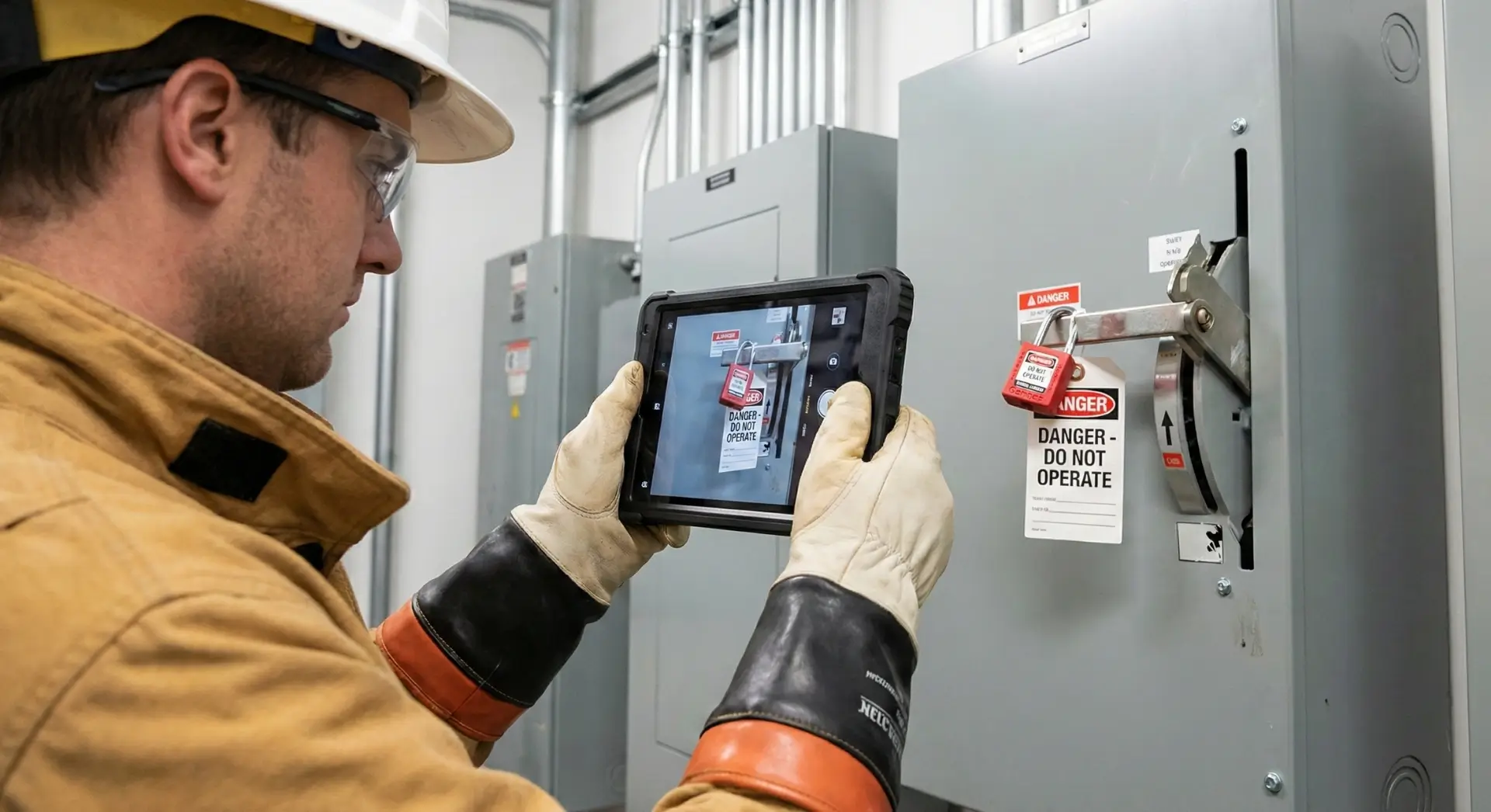
Imagine a maintenance technician with twenty years of experience. He knows the machinery inside and out. He has performed the same isolation procedure five hundred times. But on this specific Tuesday, he is tired. There is a production manager breathing down his neck because the line is down. He isolates the main electrical feed but, in a moment of “autopilot,” misses the secondary pneumatic valve.
He isn’t lazy. He isn’t malicious. He is simply human.
This scenario is not hypothetical. Despite decades of safety training, Lockout/Tagout (LOTO) violations remain a persistent plague in the industrial sector. In 2024, OSHA once again listed Lockout/Tagout (Regulation 1910.147) in its “Top 10” most cited violations, ranking it at #5 with over 2,400 citations.
If traditional training and paper binders were the solution, this number would be zero. The persistence of these violations suggests that the problem isn’t a lack of knowledge—it is a lack of engineering controls for human behavior. To truly eliminate the “forgotten lockout,” we must move beyond the honor system and embrace comprehensive digital safety platforms.
The Psychology of the “Skipped Step”
To solve the problem, we first have to stop blaming the worker and look at how the human brain actually functions under pressure. When a safety manager asks, “How could he miss that?”, the answer usually isn’t incompetence. It’s one of three very human mental traps.
1. Tunnel Vision (Cognitive Tunneling) In high-pressure situations—like when a production line is down and costing thousands of dollars a minute—the brain enters “survival mode.” It focuses entirely on the threat: the broken machine.
When a technician is hyper-focused on fixing a servo motor to get the line moving, safety steps are often filtered out as background noise. They don’t skip the step because they don’t care; they skip it because, in that high-stress moment, their brain literally stops seeing the safety protocol as a priority.
2. The “Nothing Bad Happened” Trap Safety experts call this “normalization of deviance,” but in the real world, it’s just a bad habit forming. It starts small: a worker skips a secondary lock to save five minutes. Nothing bad happens. They do it again a week later. Still safe.
Over time, the unsafe shortcut becomes the “standard” way of doing things. The brain learns that skipping the step saves time and carries no immediate penalty. By the time an accident finally happens, the worker has performed the unsafe act hundreds of times without consequence.
3. The Breakroom Audit (Pencil-Whipping) Paper checklists are flawed because they allow you to separate the checkfrom the action.
When a worker sits down in a quiet breakroom after the job is done to fill out their paperwork, they are relying on memory. Their brain, wanting to believe they did a good job, encourages them to tick every box. Paper asks, “Did you do this?” but it requires no proof. It’s too easy to tick a box with a coffee in hand, miles away from the actual hazard.
The Visibility Gap in Analog Systems
The fundamental flaw of traditional LOTO programs is that they are disconnected, analog systems trying to manage real-time risks.
In a paper-based environment, safety managers have zero visibility into the actual status of the plant floor. A permit might hang on a lockout station, but does that mean the locks are actually on the machine? Not necessarily. The “system” is just a collection of loose binders and clipboards.
Furthermore, complex machinery often has multiple energy sources—electrical, hydraulic, pneumatic, and thermal. A paper binder might list them, but it cannot force the worker to visit them. If a technician is fatigued, they might isolate the main breaker but forget the gravity latch on a press. In an analog system, this error remains invisible until the machine is re-energized, at which point it is often too late.
The Solution: The Digital Safety Ecosystem
The industrial sector is currently undergoing a shift from administrative controls (trusting people to follow rules) to engineering controls (systems that prevent errors). This is where digital lockout tagout technology bridges the gap.
Moving to a holistic digital platform does more than just digitize a checklist; it creates a connected ecosystem that guides the worker through the process. Modern platforms replace the clipboard with a mobile interface that introduces a concept known in safety engineering as a “Forcing Function.”
A forcing function is a design aspect that prevents a user from taking an action without consciously considering it—like a microwave that won’t start if the door is open. Digital platforms apply this logic to LOTO procedures through key verification mechanisms:
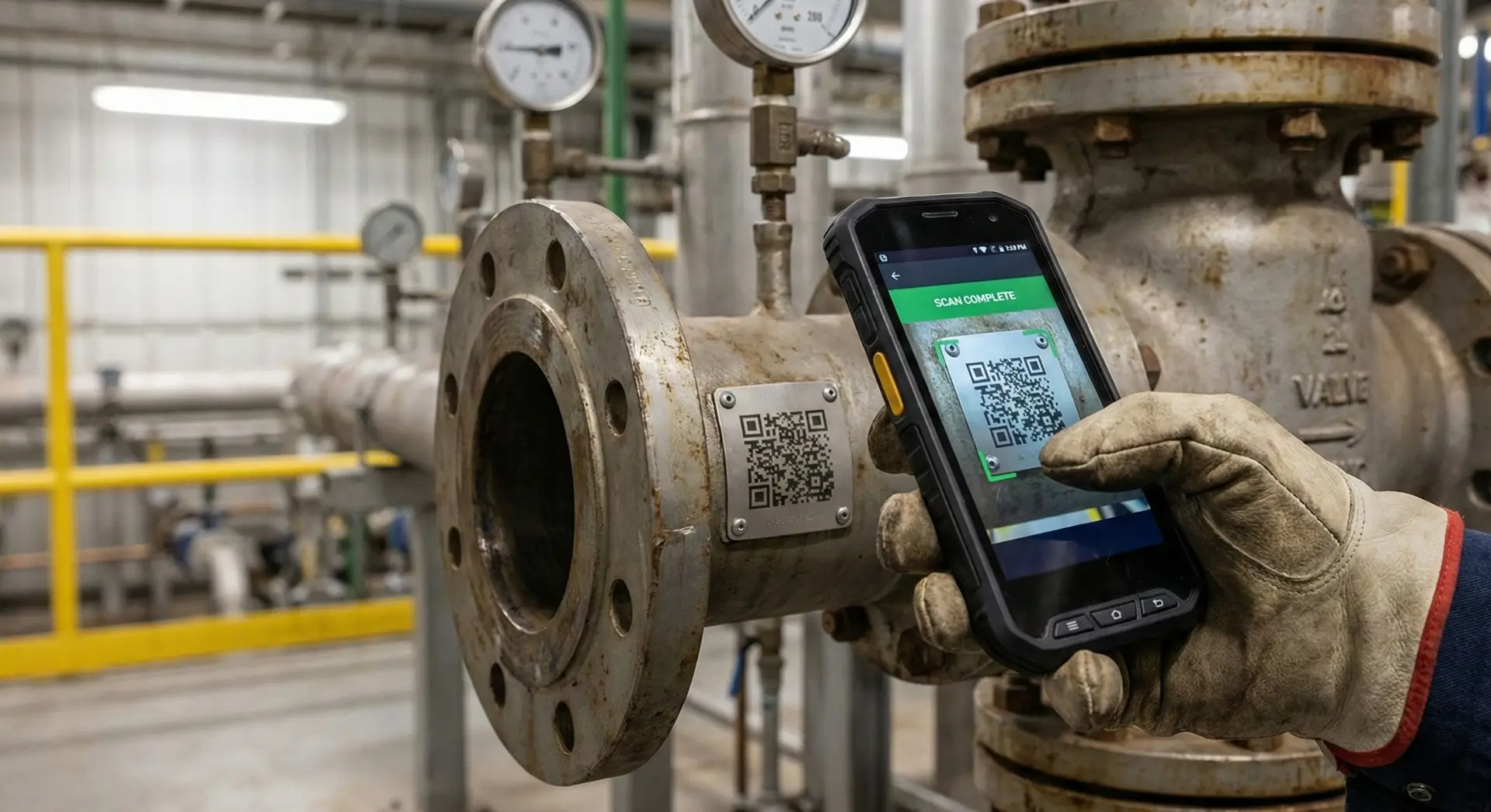
1. Proof of Presence (QR Verification)
Instead of simply ticking a box on a screen, the platform requires the worker to scan a QR code physically attached to the isolation point. This eliminates the “breakroom audit.” The system knows that the worker is standing in front of Valve #3 because they physically scanned it. It forces the worker to disengage from “autopilot” and acknowledge the specific hazard in front of them.
2. Proof of Action (Photo Verification)
Scanning the code proves the worker is there, but the platform takes it a step further by demanding proof of action. The software can require a photo of the applied lock and tag before allowing the worker to proceed to the next step.
This creates a digital “gate” within the platform. You cannot open the Permit to Work until all isolation points are verified. You cannot re-energize the machine until all locks are removed and verified. The platform acts as a digital guardian, ensuring that no step can be skipped, forgotten, or pencil-whipped.

Centralized Control and Accountability
The true power of a digital platform lies in its ability to centralize data and provide real-time oversight.
With a unified system, safety audits change from reactive to proactive. A safety director can look at a central dashboard and see exactly how many active permits are open, which isolation points have been verified, and who is currently working on the line.
Should a worker attempt to bypass a protocol, the discrepancy is immediately flagged by the system through the improved digital controls available in the software. This proactive monitoring ensures that missed steps and forgotten lockouts are caught and prevented before the procedure can continue, effectively stopping potential hazards at the source rather than identifying them after the fact.
Conclusion
For decades, we have relied on the professionalism of workers to keep themselves safe. While that professionalism is vital, it is not infallible. Humans get tired, they get distracted, and they make mistakes.
Relying on disconnected, analog methods for life-critical tasks is an outdated methodology. By integrating a comprehensive digital platform into our LOTO procedures, we provide a safety net that catches human error before it becomes a statistic. We cannot train away human nature, but with the right platform, we can engineer a system where safety is not just a promise, but a guarantee.
About the Author Sam Nugent is the Co-founder of Zentri. With a unique background in Chemical Engineering and Software Development, Sam helps organizations implement Zentri’s digital platform to solve the “visibility gap” in safety. By replacing paper systems with a solution that guarantees mandatory verification and real-time compliance, he helps safety leaders eliminate the risks of human error.