In an ever-evolving world where technology and innovation constantly change how we work and live, understanding how humans interact with their surroundings becomes increasingly essential. This interaction is at the heart of ergonomics. But what exactly is ergonomics? How can it improve our lives, and what are its different types? From the chair you’re sitting into the screen you’re reading this on, ergonomics is pivotal in ensuring your experiences are as seamless and comfortable as possible.
In this enlightening blog, we will delve into the fascinating world of ergonomics, explore its various types, and illuminate real-world examples where ergonomics triumphs in making our day-to-day life not just bearable but enjoyable and efficient. Whether you are a designer, a business owner, an employee, or looking to improve your living and working environment, understanding ergonomics is essential to a healthier and more productive life. So, tighten your seatbelts as we embark on this journey through the science of designing for humans.
What is Ergonomics?
Ergonomics is a scientific discipline that designs and arranges workplaces, products, and systems to ensure they fit and adapt to the people who use them. Ergonomics is often used interchangeably with ‘human factors,’ especially in North America. The primary goal of ergonomics is to create more comfortable, efficient, and safe environments by considering human beings’ physical and psychological needs and limitations.
Here’s a breakdown of the key aspects of ergonomics:
Understanding Human Needs and Limitations: Ergonomics is based on an understanding of human abilities and limitations, including body size, strength, cognitive abilities, sensory perception (such as vision and hearing), and psychological factors such as attitudes and behaviors.
Workplace Design: Ergonomics plays a crucial role in workplace design. It helps appropriately arrange and customize elements like desks, chairs, monitors, keyboards, and lighting to suit the user’s needs. It aims to enhance productivity while minimizing discomfort and the risk of injuries.
Physical Well-being: By emphasizing proper posture, adjustable furniture, and encouraging movement, ergonomics seeks to combat physical issues such as repetitive injuries, back pain, and eye strain, common in sedentary workplaces.
Interdisciplinary Approach: Ergonomics incorporates data and techniques from various scientific areas, such as anthropometry (body sizes and shapes), biomechanics (muscles and movement), environmental physics (noise, light, temperature), applied psychology (skill, learning, errors), and social psychology (group dynamics, communication).
Adapting to Technological Changes: As technology evolves, ergonomics must adapt to ensure new tools and equipment meet users’ physical and cognitive needs.
Application Beyond the Workplace: While often associated with the workplace, ergonomics is also applied to designing everyday products, vehicles, public transportation, and living spaces, especially considering the diverse and changing needs of a growing and aging population.
Importance in Safety and Economics: Implementing ergonomic solutions is essential for the well-being of individuals and from an economic perspective. Work-related injuries and illnesses due to poor ergonomic designs can have substantial economic costs.
In summary, ergonomics is the science of designing and arranging environments, products, and systems to fit the people who use them, aiming to enhance human well-being and performance.
Why Is Ergonomics Important?
Ergonomics is important for a multitude of reasons, encompassing the well-being of individuals, efficiency, and economic considerations:
Health and Safety: Proper ergonomic design is vital to prevent repetitive strain injuries and musculoskeletal disorders, which can develop over time and lead to long-term disability.
Comfort: Ergonomically designed workspaces and products are more comfortable as they accommodate the users’ physical requirements and movements. This minimizes strain and discomfort.
Productivity and Efficiency: Employees can work more efficiently by designing a workspace that provides comfort and allows for natural movements. An ergonomically optimized workspace often leads to increased productivity.
Quality of Work: A comfortable worker is likely to produce higher-quality work. Workers can focus better and make fewer errors when physical strain is minimized.
Employee Engagement and Morale: Employees who work in an ergonomically optimized environment are likely to be more engaged and have higher job satisfaction. This can lead to lower turnover rates.
Economic Benefits: Investing in ergonomic furniture and equipment can save costs in the long term by reducing the number of work-related injuries and associated costs, such as medical expenses and lost productivity.
Inclusivity and Diversity: Ergonomics is essential for accommodating a diverse workforce, including individuals of different sizes, ages, and physical abilities. This is particularly important as the workforce ages or for those with disabilities.
Adaptability to Change: With technological advancements and changes in work practices, ergonomics ensures that workspaces evolve accordingly, supporting the integration of new technologies in a human-centered manner.
Legal and Regulatory Compliance: In many countries, there are legal requirements related to ergonomics in the workplace. Adhering to these standards helps organizations avoid legal penalties and maintain a good reputation.
Consumer Appeal: Ergonomics isn’t just important in the workplace; products designed with ergonomic principles appeal more to consumers because they are easier and more comfortable to use.
In summary, ergonomics is crucial in optimizing the interaction between people and their environments, leading to health benefits, increased productivity, cost savings, and overall quality of life and work improvement.
How Does Ergonomics Work?
Ergonomics applies scientific principles and data to design and optimize the interaction between people and their environments. Here is how ergonomics generally works in different stages and aspects:
Assessment and Analysis: The first step in ergonomic design is to assess the existing environment, tools, tasks, and users. This involves analyzing physical postures, repetitive movements, environmental factors like lighting and noise, and the cognitive demands of tasks.
Gathering Data: Data on human capabilities and limitations are gathered from various sources. This includes anthropometric data (e.g., body dimensions), biomechanical data (e.g., strength), psychological data (e.g., attention, decision-making), and social factors.
User-Centered Design: Ergonomics emphasizes designing from the perspective of the end-user. This means considering the user’s physical and psychological characteristics, preferences and needs when designing a product or environment.
Application of Interdisciplinary Knowledge: Ergonomics is an interdisciplinary field. It uses knowledge and methods from physiology, kinesiology, psychology, and engineering to inform design decisions.
Prototyping and Testing: Ergonomically designed products or environments usually undergo several iterations of prototyping and testing. During this phase, mock-ups or prototypes are tested with real users, and feedback is gathered on usability, comfort, and efficiency.
Implementation: Once an ergonomic design is finalized, it is implemented. This might involve reconfiguring workstations, providing ergonomic chairs, or changing work processes in a workplace setting. In product design, this means manufacturing the product per ergonomic specifications.
Training and Education: In a workplace, it’s not enough to provide ergonomic tools and environments; workers must also be trained on proper postures, movements, and ways to use the equipment to maximize benefits.
Monitoring and Continuous Improvement: Ergonomics is an ongoing process. Once changes are implemented, it’s essential to monitor their effectiveness. This can involve regular assessments, employee feedback, and further adjustments.
Adaptability to Change: As tasks, technologies, and people change over time, ergonomics ensure that designs and environments are continually updated and adapted to meet these changes, maintaining optimum interaction and reducing the risk of injuries.
Customization and Flexibility: One of the key aspects of ergonomics is customization. Understanding that each individual might have different needs, ergonomically designed products and environments often have features that allow adjustments and customization.
In essence, ergonomics systematically examines and designs the interactions between people and system elements to optimize human well-being and overall performance.
Types Of Ergonomics
There are several types or branches of ergonomics, each focusing on specific aspects of human interaction with different environments. Here are some prominent types of ergonomics:
1. Physical Ergonomics
Physical ergonomics deals with the physical interaction between humans and their environment. It focuses on human anatomy and uses anthropometric, physiological, and biomechanical characteristics to design products and environments that sync with physical human capabilities. This can include designing chairs that promote good posture, ensuring work materials are within easy reach to reduce strain, and creating tools that require less force. It emphasizes maintaining the back’s natural curvature, ensuring proper neck and spine alignment, and promoting positions that reduce the risk of musculoskeletal disorders.
2. Ergonomics for Specific Needs
This subcategory of physical ergonomics focuses on the design requirements for individuals with specific needs, such as children or people with disabilities. It aims to create environments where these individuals can operate independently and effectively. For instance, it involves designing wheelchair-accessible spaces, creating educational environments that cater to children’s physical needs, or making products usable by people with limited mobility.
3. Cognitive Ergonomics
Cognitive ergonomics focuses on the mental processes involved in the interaction, such as perception, memory, reasoning, and motor response. It looks at optimizing systems and environments to reduce cognitive overload and facilitate mental processes. For example, it might involve designing an intuitive user interface that reduces the cognitive effort needed to complete a task or creating environments that reduce stress and promote concentration.
4. Organizational Ergonomics
Organizational ergonomics involves optimizing sociotechnical systems, including their organizational structures, policies, and processes. It focuses on how workplace organization affects human behavior and can lead to improvements in health and well-being, productivity, and quality. For instance, this might involve designing shifts that optimize sleep and performance or creating teamwork structures that maximize collaboration and morale.
5. Environmental Ergonomics
This branch of ergonomics studies human interactions with the physical environment in terms of climatic conditions, temperature, pressure, lighting, and noise. It aims to understand how these factors affect human performance and well-being and uses this understanding to design environments that optimize them. For example, it might involve choosing lighting conditions that minimize eye strain or ensuring that a workplace is well-ventilated and has an ambient temperature.
6. Corrective Ergonomics
Corrective ergonomics involves assessing existing environments and practices to identify areas where ergonomics can be improved. This is often a reactive approach, where issues are identified and corrected after they have been recognized. For example, if workers are experiencing discomfort or injuries, corrective ergonomics would involve assessing the workplace and making necessary adjustments.
7. Preventive Ergonomics
In contrast to corrective ergonomics, preventive ergonomics is proactive. It focuses on identifying and addressing potential ergonomic issues before they become problems. This might involve regular assessments of workstations, training employees on best practices, and ensuring that work environments are designed with ergonomics in mind.
8. Micro-ergonomics
Micro-ergonomics focuses on the design of individual elements within a system, such as tools, interfaces, and equipment, to ensure they are functional, reliable, comfortable, and safe. It is concerned with the small-scale aspects of ergonomics, focusing on the details that affect an individual’s immediate interaction with products.
9. Macro-ergonomics
Conversely, macro-ergonomics involves a broader perspective, considering the integration of human and technological factors within an organization. It is concerned with larger systems, focusing on the relationships between these systems and the people who use them. For example, it might involve designing software systems that improve organizational workflow.
In summary, ergonomics, in its various forms, aims to create environments, products, and systems aligned with human capabilities and limitations, improving safety, performance, comfort, and well-being.
Ergonomics Examples
Ergonomics is applied in numerous contexts to enhance the interaction between humans and the elements of various systems. Here are some examples:
Ergonomic Office Chair: Office chairs are designed with adjustable height, lumbar support, and armrests to promote proper posture and reduce back pain and strain during prolonged sitting.
Adjustable Computer Monitor: Monitor stands or mounts that allow users to adjust the height and angle of the screen, reducing neck strain and eye fatigue.
Split Keyboards: Keyboards are designed with a split down the middle, enabling users to type in a more natural hand position, reducing the risk of carpal tunnel syndrome.
Anti-Fatigue Mats: These are used in workplaces where employees stand for extended periods. The mats reduce fatigue and discomfort by providing cushioning and support.
Voice Recognition Software: This software reduces the need for extensive typing, which can benefit people with physical impairments or reduce the strain on the hands and wrists.
Control Layout in Cars: The placement of knobs, buttons, and controls in a car is designed ergonomically so that drivers can easily reach and use them without taking their attention off the road.
Tool Design: Tools like hammers and screwdrivers with handles shaped and sized to reduce grip strain and increase torque and control.
Mobile User Interface (UI) Design: The layout of buttons and menus on a mobile app is designed to be intuitive and easy for the user to navigate and interact with.
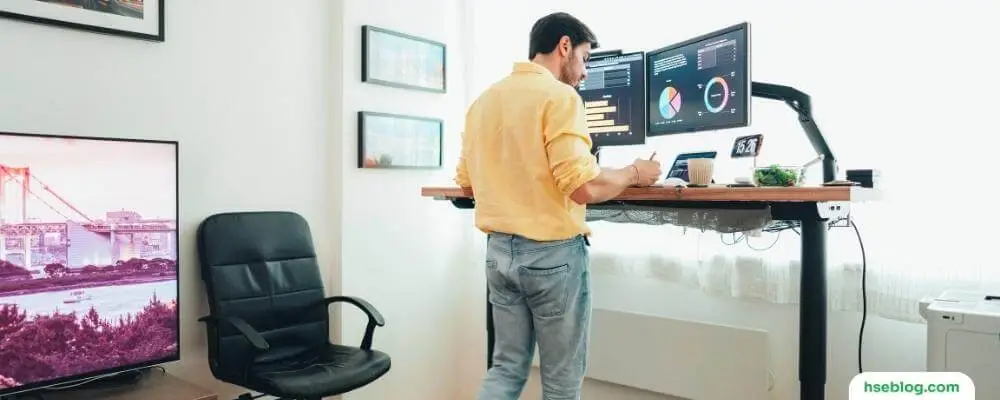
Height-Adjustable Desks: Desks that can be adjusted to allow users to alternate between sitting and standing, promoting movement and reducing the health risks of prolonged sitting.
Kitchen Utensil Design: For instance, knives with specially moulded handles that are easier to grip, reducing the effort and strain on the hand and wrist during cutting.
Ambient Lighting: Properly designed lighting in workspaces that reduces glare and shadows, which can decrease eye strain and headaches.
Airport Signage: Large, clear signs help travellers quickly and easily find their way, reducing cognitive stress during travel.
Public Transportation: Buses and trains are designed with handrails, seating, and space to accommodate passengers of various ages and physical abilities, considering the ease of entry and exit.
Exercise Equipment: Gym equipment designed to minimize the risk of injury, such as treadmills with cushioned surfaces to reduce impact and weights with grips that accommodate natural hand positions.
Packaging Design: Packaging that is easy to open, handle, and dispose of, considering various user capabilities.
These examples show how ergonomics is integrated into daily life and work environments to improve comfort, efficiency, safety, and accessibility.
Conclusion
In closing, ergonomics is an indispensable science that bridges human capabilities with the design of products, environments, and systems. It enhances comfort, efficiency, and well-being through its various types – physical, cognitive, organizational, and others. As we’ve seen through real-world examples, ergonomics has far-reaching applications, from furniture and tools to technology interfaces. By embracing and applying ergonomic principles, individuals and organizations can cultivate more productive environments that foster healthier, more harmonious interactions with the world around us.
Manage Consent
To provide the best experiences, we use technologies like cookies to store and/or access device information. Consenting to these technologies will allow us to process data such as browsing behavior or unique IDs on this site. Not consenting or withdrawing consent, may adversely affect certain features and functions.
Functional
Always active
The technical storage or access is strictly necessary for the legitimate purpose of enabling the use of a specific service explicitly requested by the subscriber or user, or for the sole purpose of carrying out the transmission of a communication over an electronic communications network.
Preferences
The technical storage or access is necessary for the legitimate purpose of storing preferences that are not requested by the subscriber or user.
Statistics
The technical storage or access that is used exclusively for statistical purposes.The technical storage or access that is used exclusively for anonymous statistical purposes. Without a subpoena, voluntary compliance on the part of your Internet Service Provider, or additional records from a third party, information stored or retrieved for this purpose alone cannot usually be used to identify you.
Marketing
The technical storage or access is required to create user profiles to send advertising, or to track the user on a website or across several websites for similar marketing purposes.
To provide the best experiences, we use technologies like cookies to store and/or access device information. Consenting to these technologies will allow us to process data such as browsing behavior or unique IDs on this site. Not consenting or withdrawing consent, may adversely affect certain features and functions.
Functional
Always active
The technical storage or access is strictly necessary for the legitimate purpose of enabling the use of a specific service explicitly requested by the subscriber or user, or for the sole purpose of carrying out the transmission of a communication over an electronic communications network.
Preferences
The technical storage or access is necessary for the legitimate purpose of storing preferences that are not requested by the subscriber or user.
Statistics
The technical storage or access that is used exclusively for statistical purposes.The technical storage or access that is used exclusively for anonymous statistical purposes. Without a subpoena, voluntary compliance on the part of your Internet Service Provider, or additional records from a third party, information stored or retrieved for this purpose alone cannot usually be used to identify you.
Marketing
The technical storage or access is required to create user profiles to send advertising, or to track the user on a website or across several websites for similar marketing purposes.