
TL;DR
- CIH is the gold-standard credential for professionals who anticipate, recognize, evaluate, and control workplace health hazards
- Board certification through ABIH requires a combination of education, experience, and a rigorous examination covering all industrial hygiene domains
- CIH holders protect workers from chemical, physical, biological, and ergonomic exposures that cause occupational disease
- Maintaining the CIH designation demands ongoing professional development and ethical practice throughout your career
- Employers and regulators recognize the CIH as the highest mark of competency in occupational health hazard assessment
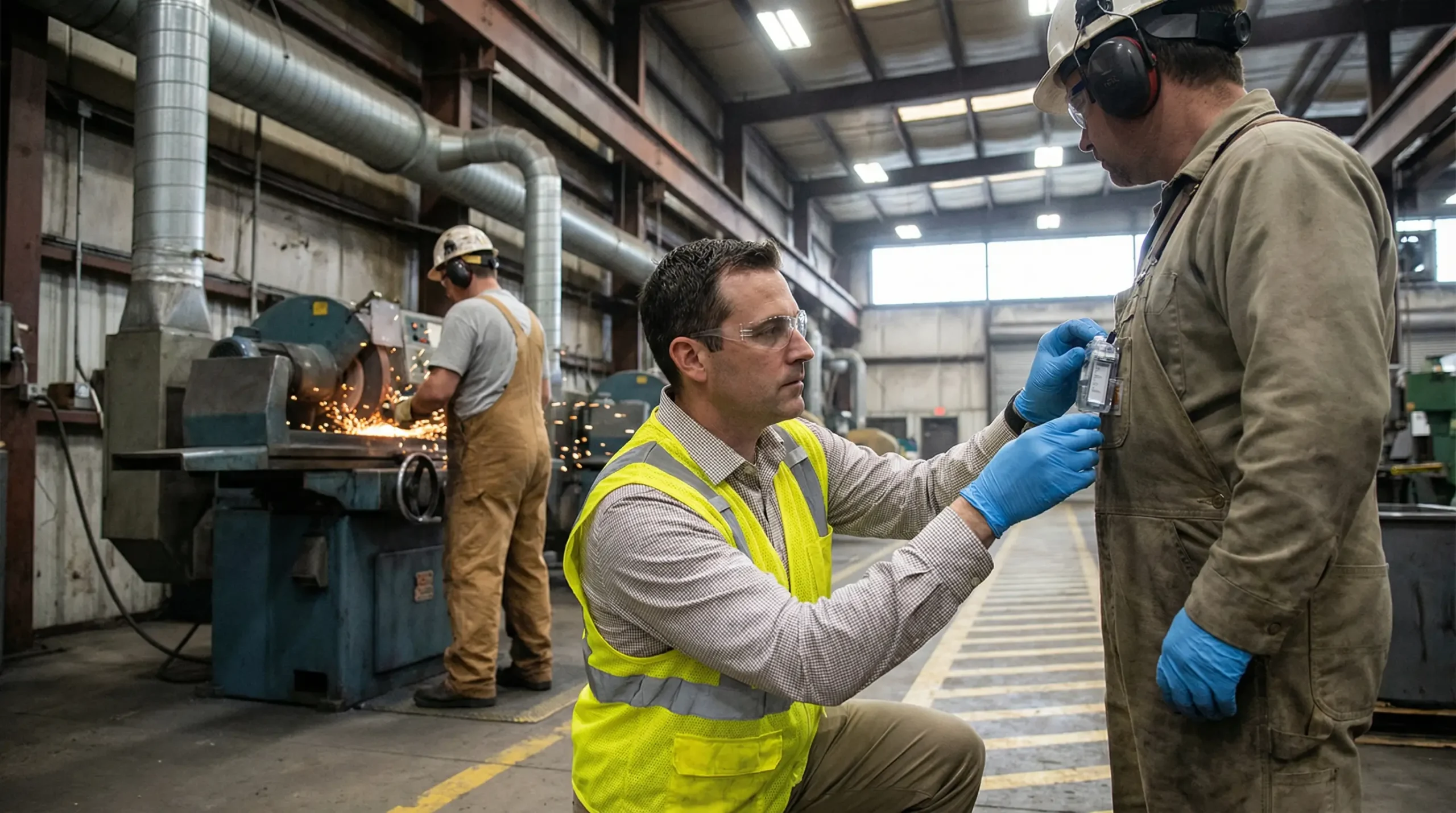
I was conducting an air monitoring survey inside a chromium electroplating shop at a metal finishing facility in the Midwestern United States when the plant manager asked a question I’ve heard dozens of times across my career: “Why does it matter that you’re a CIH? Can’t any safety guy take these samples?” I pointed to the real-time data streaming from my direct-reading instrument — hexavalent chromium concentrations approaching OSHA’s permissible exposure limit. Interpreting that data correctly, designing an exposure control strategy, and defending those conclusions under regulatory scrutiny required something beyond general safety training. It required the specific competency that the Certified Industrial Hygienist credential validates.
The CIH designation is the most recognized professional certification in the field of industrial hygiene worldwide. Awarded by the American Board of Industrial Hygiene (ABIH), it certifies that a practitioner possesses the knowledge, skills, and ethical foundation to protect workers from the health hazards that kill slowly — chemical exposures, noise-induced hearing loss, radiation, biological agents, and ergonomic stressors. Unlike safety certifications focused on preventing acute injuries, the CIH credential specifically addresses occupational disease prevention. This article covers what the CIH certification is, who qualifies, what the examination demands, how it applies in real operations, and why it matters to both practitioners and the organizations that employ them.
What Is a Certified Industrial Hygienist (CIH)?
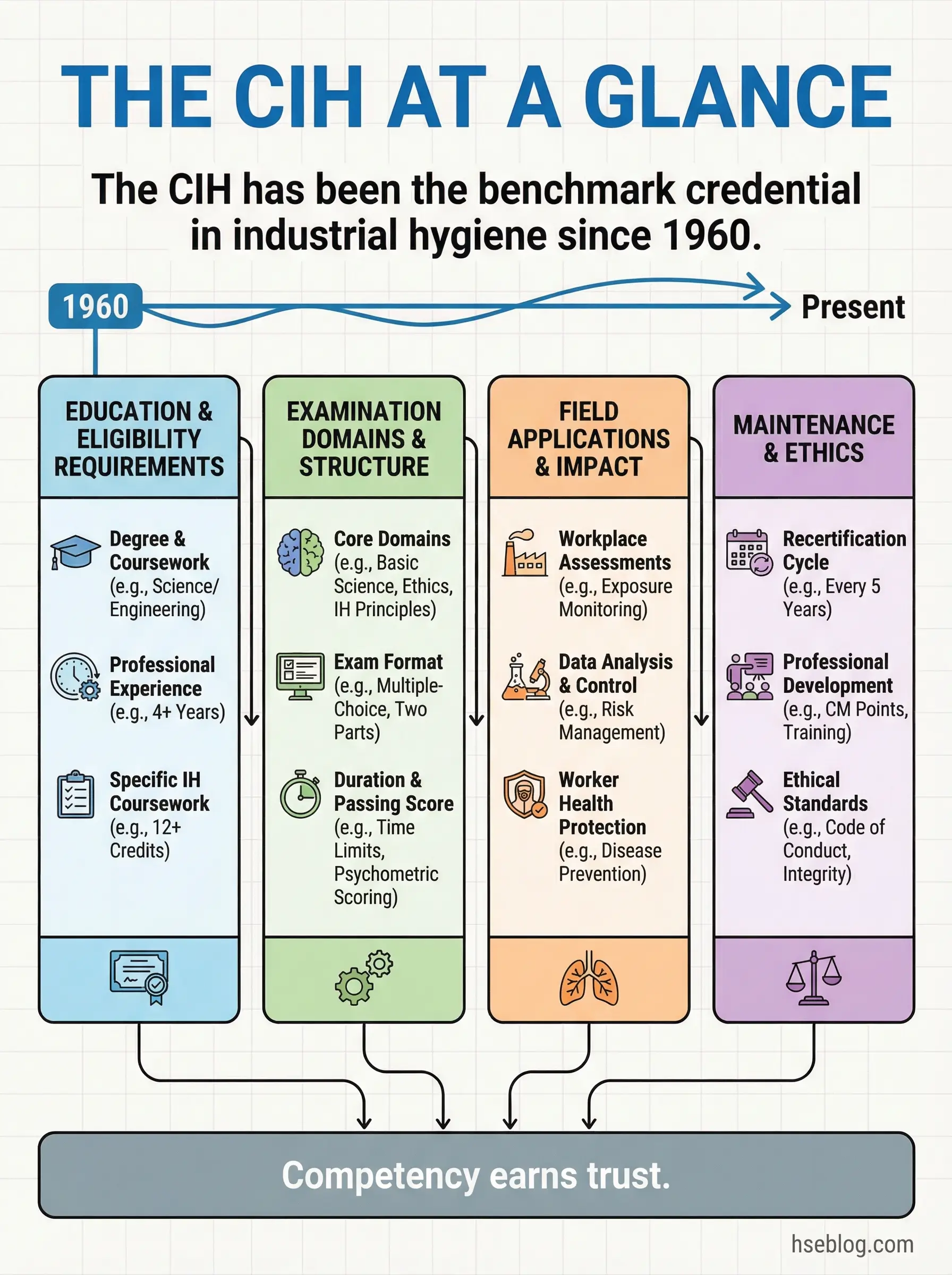
A Certified Industrial Hygienist is a professional who has met the rigorous education, experience, and examination requirements set by the American Board of Industrial Hygiene and demonstrated competency across the full scope of industrial hygiene practice. The CIH is not simply a training certificate you receive after attending a course. It is a board certification — meaning an independent credentialing body has verified that the practitioner meets a defined professional standard.
The scope of practice for a Certified Industrial Hygienist covers the anticipation, recognition, evaluation, and control of workplace environmental stressors that can cause illness, impaired health, or significant discomfort among workers or community members. These stressors fall into several broad categories:
- Chemical hazards: Airborne contaminants including gases, vapors, fumes, dusts, and mists — from solvent exposures in manufacturing to silica dust on construction sites
- Physical hazards: Noise, vibration, ionizing and non-ionizing radiation, temperature extremes, and abnormal pressure environments
- Biological hazards: Bacteria, viruses, fungi, mold, and other biological agents encountered in healthcare, wastewater treatment, agriculture, and laboratory settings
- Ergonomic hazards: Repetitive motion disorders, cumulative trauma, and musculoskeletal stress from sustained awkward postures or forceful exertions
The American Board of Industrial Hygiene defines a CIH as a person who has met the minimum requirements for education and experience and has demonstrated a minimum level of knowledge in industrial hygiene by passing the CIH examination.
What separates the CIH from other occupational health credentials is its depth. A CIH must understand exposure science, toxicology, epidemiology, ventilation engineering, analytical chemistry, biostatistics, and regulatory frameworks — not at a survey level, but at a level sufficient to make independent professional judgments that affect worker health.
Pro Tip: When hiring an industrial hygienist for exposure assessments, always ask for their ABIH certification number. You can verify active CIH status directly through the ABIH online directory. An expired or lapsed certification means the individual no longer meets continuing education and ethical practice requirements.
Who Administers the CIH Certification?
The American Board of Industrial Hygiene (ABIH) is the sole credentialing body that administers the Certified Industrial Hygienist designation. Understanding who stands behind the credential matters because it determines the rigor and credibility of the certification itself.
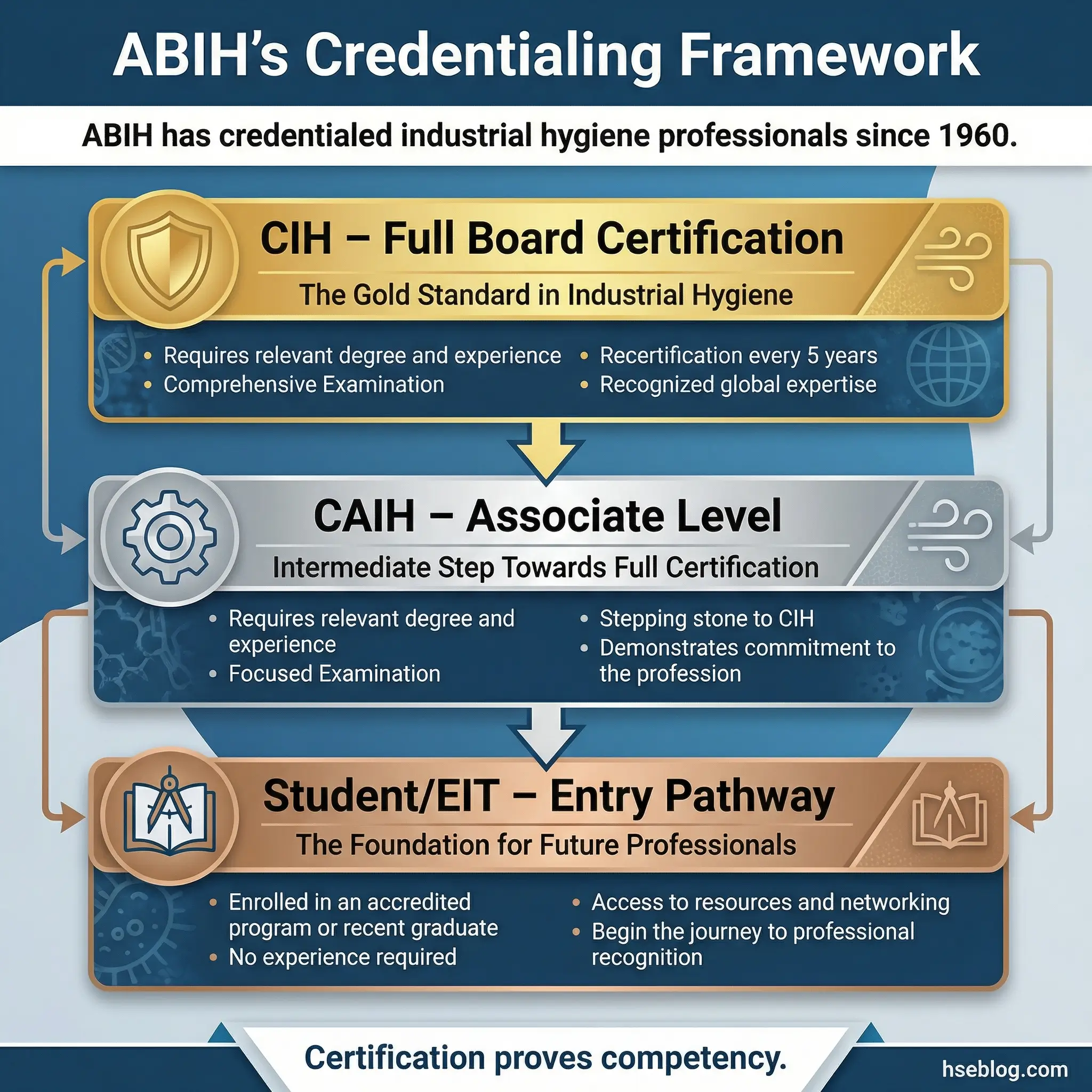
ABIH was established in 1960 as an independent organization dedicated to credentialing professionals in the practice of industrial hygiene. Several key facts define the organization’s role:
- Independence: ABIH operates independently from advocacy organizations, employers, and government agencies — its sole function is credentialing, not lobbying or training
- Accreditation: The CIH certification program is accredited by the International Accreditation Service (IAS) under ISO/IEC 17024, the international standard for personnel certification bodies
- Scope: ABIH administers both the CIH and the Certified Associate Industrial Hygienist (CAIH) designations, with the CIH representing the higher-level credential
- Ethics enforcement: ABIH maintains a code of ethics and has the authority to revoke certification from practitioners who violate professional standards or misrepresent their qualifications
- Global recognition: While ABIH is a U.S.-based organization, the CIH credential is recognized internationally and accepted by regulatory agencies, courts, and employers across multiple jurisdictions
I’ve worked alongside hygienists certified through various national bodies across the Gulf, Europe, and Southeast Asia. In every jurisdiction where I’ve practiced, the CIH carried immediate credibility — particularly in litigation support, regulatory negotiations, and multinational EPC project qualification processes. No other industrial hygiene credential opens as many doors globally.
CIH Eligibility Requirements: Education and Experience
Earning the CIH is not something you do casually. ABIH has structured its eligibility requirements to ensure that only candidates with both academic preparation and substantial field experience can sit for the examination. I’ve mentored three junior hygienists through the CIH process over the years, and the eligibility verification stage alone eliminated candidates who assumed the credential was just another exam.
Academic Requirements
ABIH requires candidates to hold a minimum of a bachelor’s degree from an accredited college or university. The specific academic pathways affect how much professional experience is required:
- Bachelor’s degree in industrial hygiene, occupational health, or a closely related natural science: Qualifies with the minimum experience requirement
- Bachelor’s degree in an unrelated field plus a graduate degree in industrial hygiene or a related discipline: Also qualifies at the minimum experience tier
- Bachelor’s degree in an unrelated field without a graduate degree in IH: Requires additional years of professional experience to compensate for the academic gap
- Degrees from non-ABET-accredited or non-regionally-accredited institutions: May require additional documentation and transcript review by ABIH
The academic requirement exists because industrial hygiene is fundamentally a science-based practice. You cannot properly interpret exposure data, design ventilation controls, or evaluate toxicological endpoints without grounding in chemistry, physics, biology, and mathematics. During one exposure assessment at a semiconductor fabrication facility in East Asia, I needed to calculate vapor-liquid equilibrium concentrations for a mixed solvent system to predict worker exposure under process upset conditions. That calculation drew directly on physical chemistry principles — the kind of academic foundation ABIH’s requirements ensure.
Professional Experience Requirements
Beyond education, ABIH requires candidates to demonstrate professional practice in industrial hygiene. The experience clock starts after the qualifying degree is completed.
The experience must meet specific criteria to count toward eligibility:
- Breadth of practice: Experience must span at least two of the four core IH functions — anticipation, recognition, evaluation, and control of health hazards
- Responsible charge: Candidates must demonstrate that they exercised professional judgment, not merely performed tasks under direct supervision
- Verification: Experience is subject to ABIH review and may require employer verification or reference letters from certified professionals
- Duration: Ranges from approximately four to seven years depending on the candidate’s academic pathway — those with graduate degrees in IH require fewer experience years than those with unrelated bachelor’s degrees
Pro Tip: If you’re building your experience portfolio toward CIH eligibility, maintain a detailed log of every exposure assessment, hazard evaluation, and control recommendation project you lead. ABIH reviewers want to see breadth — not just sampling, but also interpretation, recommendations, and follow-up verification of control effectiveness.
The CIH Examination: Structure, Domains, and What It Really Tests
The CIH exam is where preparation meets pressure. I sat for mine after months of study while still managing a full project workload at a refinery expansion in the Gulf. The exam tests your ability to apply industrial hygiene principles — not simply recall them.
Examination Format
ABIH designs the CIH examination as a rigorous, comprehensive assessment of applied knowledge across the full scope of industrial hygiene:
- Format: Computer-based, multiple-choice examination
- Question count: Approximately 180 scored items plus additional unscored pilot questions
- Duration: A full testing day — candidates should expect roughly five to six hours of examination time
- Testing locations: Administered at authorized Prometric testing centers worldwide
- Frequency: Offered during defined testing windows throughout the year, typically spring and fall
Examination Content Domains
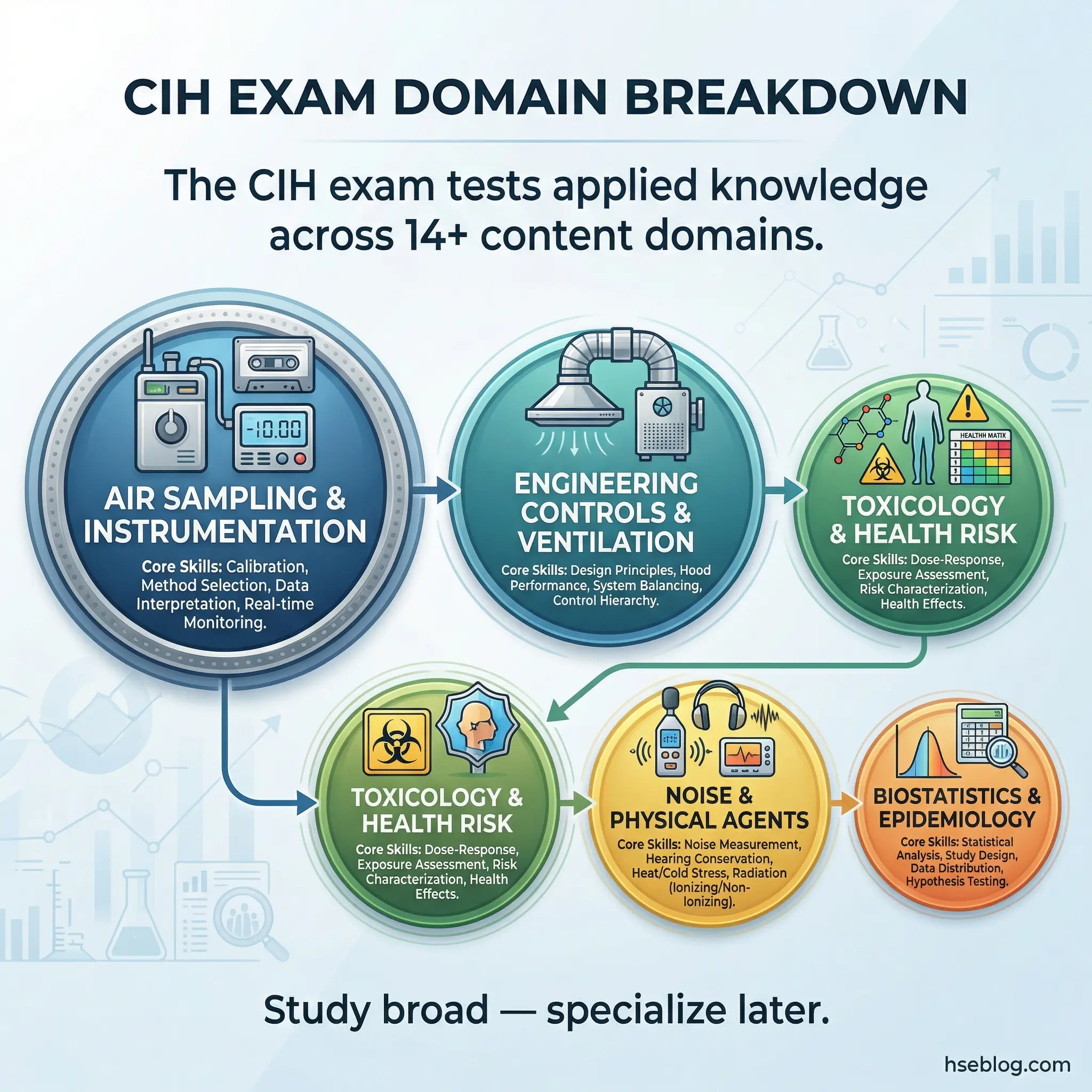
The CIH exam tests knowledge across defined content domains that reflect the breadth of industrial hygiene practice. Each domain carries a weighted percentage of the total exam, and candidates must demonstrate competency across all areas — not just their specialty.
The major content domains cover the following practice areas:
- Air sampling and instrumentation: Principles of aerosol science, gas and vapor sampling methods, direct-reading instruments, calibration procedures, and sampling strategy design
- Analytical chemistry: Laboratory analytical methods, quality assurance/quality control protocols, detection limits, and interpretation of laboratory reports
- Basic science: Applied physics, chemistry, biology, and mathematics as they relate to exposure assessment and hazard characterization
- Biohazards: Recognition and evaluation of biological agents in the workplace including bacteria, viruses, molds, and allergens
- Biostatistics and epidemiology: Statistical analysis of exposure data, dose-response relationships, epidemiological study design, and interpretation of health outcome data
- Community exposure: Environmental monitoring, community health risk assessment, and public exposure to industrial emissions
- Engineering controls and ventilation: Local exhaust ventilation design, general dilution ventilation, process modification, substitution, and containment strategies
- Ergonomics: Biomechanical principles, workstation design, manual materials handling assessment, and cumulative trauma disorder prevention
- Health risk analysis and hazard communication: Occupational exposure limits, risk characterization, safety data sheets, and hazard classification systems
- Noise: Sound measurement, noise dosimetry, hearing conservation program management, and engineering and administrative noise controls
- Non-ionizing radiation: Radiofrequency, microwave, laser, ultraviolet, and infrared radiation hazards — measurement and controls
- Ionizing radiation: Alpha, beta, gamma, X-ray, and neutron radiation — dosimetry, shielding, and regulatory dose limits
- Thermal stressors: Heat and cold stress assessment, WBGT measurement, physiological monitoring, and work-rest cycle design
- Toxicology: Routes of entry, dose-response relationships, acute and chronic toxicity, and interpretation of occupational exposure limits
What the Exam Really Tests
Having taken the exam and coached others through it, I can tell you the CIH examination does not reward memorization. The questions are scenario-based. You’re given a workplace situation — a spray booth with specific dimensions, a known solvent mixture, measured air velocities — and asked to determine whether the exposure control is adequate, what additional sampling is needed, or what regulatory threshold applies.
The exam also tests professional judgment calls. One domain that surprises candidates is the ethics and professional conduct section. You’re presented with scenarios where a client pressures you to alter sampling results, where your data contradicts a colleague’s assessment, or where economic constraints conflict with worker protection recommendations. ABIH wants to know that you’ll make the right call under pressure.
Pro Tip: The single most effective CIH exam preparation strategy is solving practice problems, not reading textbooks. Work through ventilation calculations, noise exposure computations, and air sampling problems until the formulas become reflexive. The exam clock punishes candidates who need to derive equations from first principles during the test.
CIH vs. Other Occupational Health and Safety Certifications
Professionals entering the occupational health and safety field encounter multiple certifications, and confusion about which credential serves which purpose is common. The CIH occupies a specific niche — and understanding its boundaries prevents misaligned career investments.
The following comparison clarifies how the CIH relates to other major credentials in the HSE profession:
| Credential | Focus Area | Awarding Body | Primary Scope |
|---|---|---|---|
| CIH | Industrial Hygiene / Occupational Health | ABIH | Exposure assessment, toxicology, ventilation, health hazard control |
| CSP (Certified Safety Professional) | Occupational Safety | BCSP | Accident prevention, safety management systems, regulatory compliance |
| NEBOSH Diploma | Occupational Health & Safety | NEBOSH (UK) | Broad OHS management, risk assessment, UK/international regulatory frameworks |
| CIH + CSP (Dual Certification) | Combined Health & Safety | ABIH + BCSP | Full-spectrum OHS practice — rare and highly valued in senior roles |
| CAIH (Certified Associate IH) | Industrial Hygiene (entry-level) | ABIH | Foundation-level IH practice under supervision of a CIH |
The critical distinction: the CSP credential focuses on preventing injuries and acute safety incidents — falls, electrical contact, machine guarding, fire. The CIH focuses on preventing occupational disease — the exposures that don’t kill immediately but destroy lungs, kidneys, hearing, and neurological function over years or decades. Both credentials are essential, but they serve different professional functions.
I hold both the CIH and CSP, and in practice, the workloads rarely overlap. When I’m conducting noise dosimetry in an engine testing facility, I’m working as a CIH. When I’m reviewing fall protection plans for the same facility’s rooftop HVAC maintenance program, I’m working as a safety professional. The science base, the regulatory frameworks, and the investigative methods are fundamentally different.
What Does a Certified Industrial Hygienist Actually Do in the Field?
Certifications matter only if they translate into real impact on worker health. The CIH credential validates a practitioner’s ability to perform work that directly prevents occupational disease — the kind of work that doesn’t make headlines because its success is measured in illnesses that never happen.
Exposure Assessment and Air Monitoring
The core function of industrial hygiene — and the area where CIH competency is most critical — is exposure assessment. This means determining what workers are actually breathing, touching, or absorbing during their shifts.
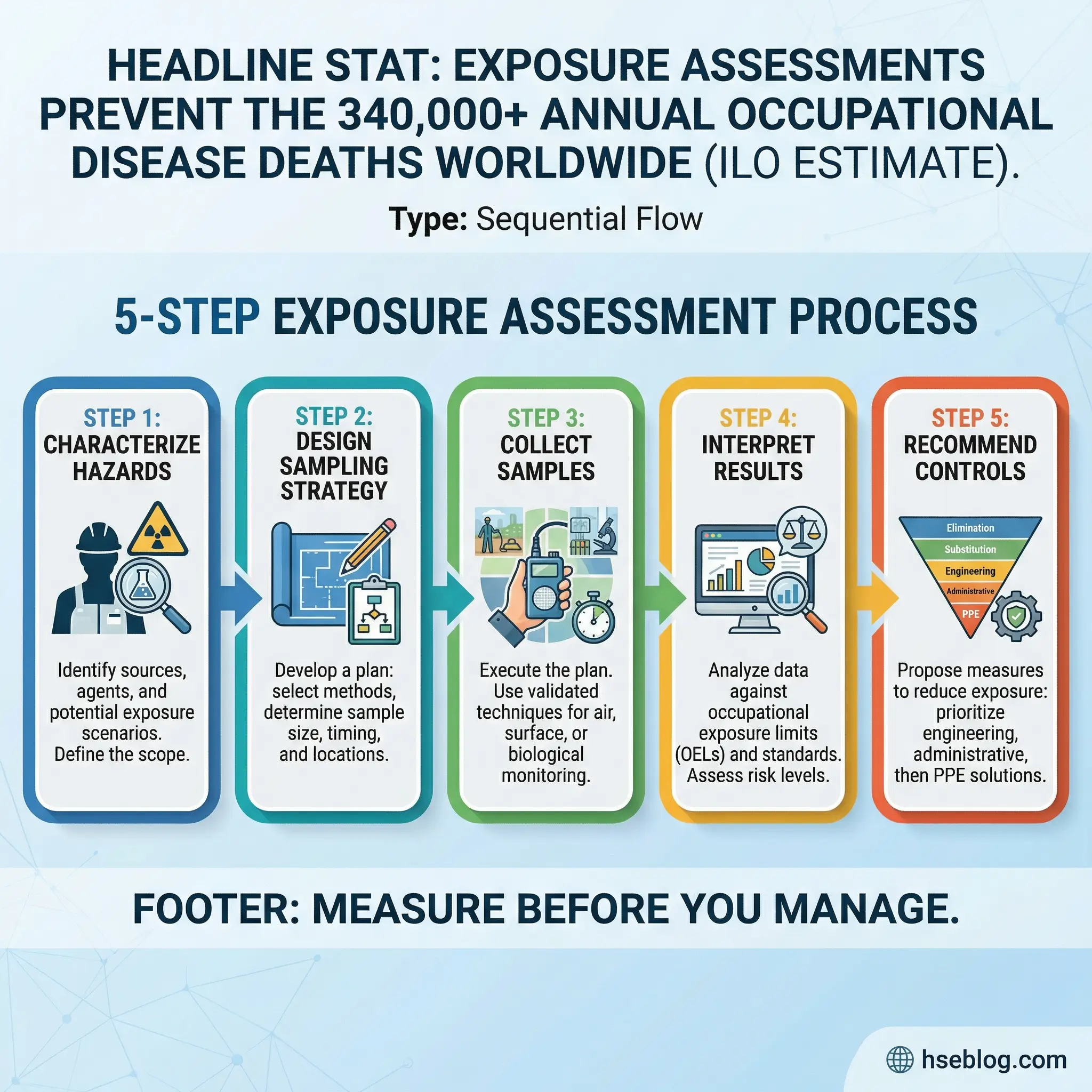
A typical exposure assessment project involves multiple technical steps:
- Characterize the exposure scenario: Identify the chemical agents, physical agents, or biological agents present and the tasks that generate exposure
- Select the appropriate sampling strategy: Choose between personal sampling, area sampling, and direct-reading instruments based on the exposure scenario and regulatory requirements
- Deploy sampling equipment: Calibrate pumps, prepare sampling media, attach dosimeters, and establish sampling durations aligned with occupational exposure limits
- Collect and document samples: Maintain chain-of-custody protocols, record environmental conditions, and document task observations during sampling
- Interpret laboratory results: Compare analytical results against OSHA PELs, ACGIH TLVs, or other applicable occupational exposure limits
- Prepare professional reports: Document findings, exposure characterization, and control recommendations in defensible written reports
During a refinery turnaround in the Middle East, I led an exposure assessment for benzene during tank cleaning operations. The work involved confined space entry with residual hydrocarbon atmospheres, and the results informed critical decisions about respiratory protection selection and work-rest scheduling. That assessment required CIH-level competency in air sampling strategy, analytical method selection, and toxicological interpretation — skills the certification process specifically validates.
Ventilation Design and Engineering Controls
CIH holders don’t just identify problems — they design solutions. Engineering controls, particularly ventilation systems, are the backbone of industrial hygiene control strategies. A CIH must understand airflow principles well enough to evaluate whether existing ventilation adequately controls worker exposure or whether redesign is necessary.
Ventilation work in the field typically includes these responsibilities:
- Local exhaust ventilation (LEV) evaluation: Measuring capture velocities at hoods, checking duct transport velocities, and verifying that systems operate within design parameters
- General dilution ventilation assessment: Calculating air change rates, identifying dead zones, and evaluating whether supply and exhaust air volumes maintain contaminant concentrations below exposure limits
- Process enclosure design input: Working with engineers to design containment systems for high-hazard operations such as abrasive blasting, chemical mixing, and powder handling
- Ventilation troubleshooting: Diagnosing why a system is failing — collapsed ducts, plugged filters, reversed fan rotation, or inadequate make-up air
On one assignment at a pharmaceutical manufacturing facility in Northern Europe, I discovered that a laminar flow hood used during active pharmaceutical ingredient (API) weighing had a cracked HEPA filter — invisible to the naked eye but detectable through aerosol challenge testing. The CIH training in ventilation testing protocols caught a failure that routine visual inspections had missed for months.
Regulatory Compliance and Expert Testimony
CIH holders frequently serve as the technical authority during OSHA inspections, regulatory negotiations, and legal proceedings. The credential carries weight in courtroom settings because it demonstrates that the expert has been independently verified by a credentialing body accredited under international standards.
Common regulatory and legal functions performed by CIH holders include:
- OSHA inspection support: Accompanying compliance officers during walkthroughs, reviewing citations for technical accuracy, and preparing abatement documentation
- Expert witness testimony: Providing professional opinions on causation in occupational disease cases, particularly asbestos litigation, noise-induced hearing loss claims, and chemical exposure lawsuits
- Regulatory interpretation: Advising employers on how OSHA health standards apply to specific operations and what constitutes adequate compliance
- Due diligence assessments: Evaluating occupational health liabilities during mergers, acquisitions, and facility purchases
Pro Tip: If your organization faces an OSHA health-related citation, retain a CIH to review the citation before the informal conference. A CIH can identify sampling methodology errors, misapplied occupational exposure limits, or incorrect exposure calculations that may provide grounds for citation reduction or dismissal.
How to Maintain the CIH Certification
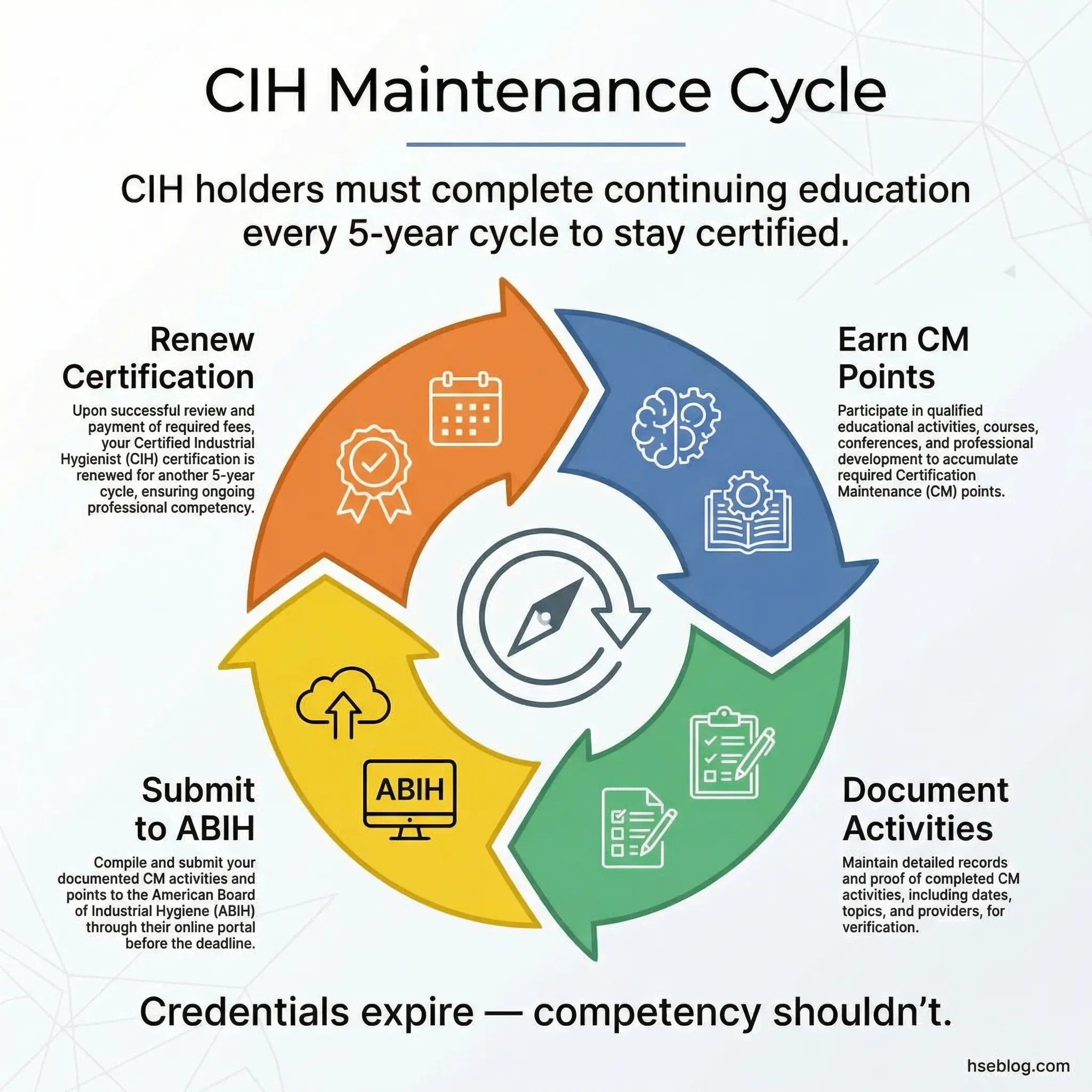
Earning the CIH is a milestone, but maintaining it is a career-long commitment. ABIH requires ongoing professional development to ensure that certified practitioners stay current with evolving science, regulations, and best practices in industrial hygiene.
The maintenance requirements are structured to prevent credential stagnation:
- Certification maintenance (CM) points: CIH holders must earn a defined number of CM points during each five-year certification cycle through continuing education, professional contributions, and practice activities
- Acceptable CM activities: Attending IH-related conferences and workshops, completing approved continuing education courses, publishing peer-reviewed papers, teaching industrial hygiene courses, and serving on professional committees
- Ethical practice: CIH holders must adhere to the ABIH Code of Ethics throughout their certification period — violations can result in certification suspension or revocation
- Re-examination option: If a CIH holder fails to accumulate sufficient CM points, they may be required to retake the examination to maintain certification
- Lapsed certification: Practitioners who allow their CIH to lapse must cease using the credential and may need to reapply through the full certification process
I’ve seen colleagues lose their CIH status because they treated maintenance as an afterthought. One hygienist I worked with on a mining project in Western Australia had let his CM points lapse for two consecutive cycles. When the client’s pre-qualification team checked his ABIH status during project mobilization, he was disqualified from leading the occupational health program — despite having 20 years of field experience. The credential only works if it’s current.
Industries and Sectors Where the CIH Credential Is Most Valued
The CIH credential applies across every industry where workers face health hazard exposures — which effectively means every industry. However, certain sectors place exceptionally high value on CIH-qualified practitioners because of the complexity and severity of their occupational health challenges.
The following sectors consistently require or strongly prefer CIH involvement:
- Oil, gas, and petrochemical: Benzene, hydrogen sulfide, silica, noise, and NORM (naturally occurring radioactive material) exposures during drilling, production, refining, and turnaround operations
- Mining and minerals processing: Respirable crystalline silica, diesel particulate matter, noise, and whole-body vibration in underground and surface operations
- Pharmaceutical and chemical manufacturing: Potent compound handling, active pharmaceutical ingredient exposure control, and laboratory chemical hygiene program oversight
- Construction: Silica, lead, asbestos, noise, and welding fume exposures across demolition, renovation, and new-build activities
- Semiconductor and electronics: Cleanroom chemical exposures, arsine and phosphine gas handling, and photolithographic solvent management
- Healthcare: Bloodborne pathogen programs, anesthetic gas monitoring, hazardous drug handling, and tuberculosis exposure control
- Environmental consulting: Site characterization at contaminated properties, community air monitoring, and occupational health support during remediation operations
- Government and military: Occupational health programs at military installations, shipyard exposure assessment, and depleted uranium monitoring
During my time supporting a large-scale LNG project in Southeast Asia, the project specification required that all occupational health assessments be conducted or reviewed by a CIH. Contractor hygienists without the credential could collect samples under a CIH’s sampling plan, but all data interpretation, exposure characterization, and control recommendations required CIH sign-off. That’s the reality of how major projects use this credential.
Common Misconceptions About the CIH
Several persistent misunderstandings surround the CIH credential, and these misconceptions create confusion for both aspiring hygienists and the organizations that hire them.
The following table addresses the most common myths I encounter in the field:
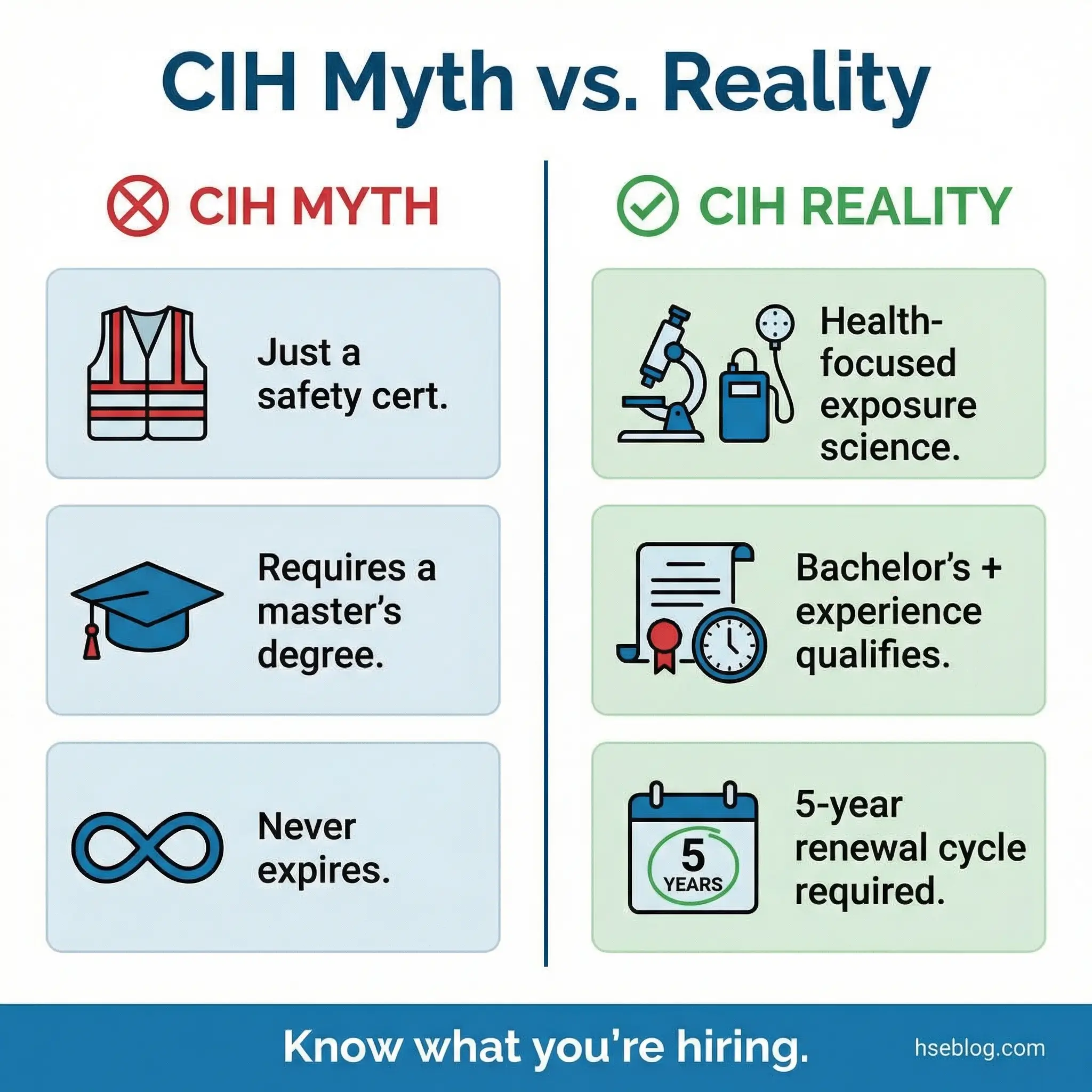
| Myth | Reality |
|---|---|
| “CIH is just another safety certification” | The CIH is specifically an occupational health credential focused on disease prevention through exposure science — it does not cover safety management, accident investigation, or injury prevention |
| “You need a master’s degree to sit for the CIH exam” | A bachelor’s degree in a qualifying field plus sufficient professional experience meets the minimum eligibility — a graduate degree reduces the required experience but is not mandatory |
| “Once certified, the CIH never expires” | CIH certification requires active maintenance through continuing education points during each five-year cycle — lapsed certifications become inactive |
| “A CIH can only work in the United States” | While ABIH is U.S.-based, the CIH is recognized globally and CIH holders practice on every continent in consulting, industry, government, and academic roles |
| “Any CIH can handle any IH problem” | CIH validates broad competency, but complex subspecialties like radiation hygiene, indoor air quality forensics, or nanoparticle exposure assessment often require additional specialized training beyond the CIH |
Pro Tip: If you’re an HSE manager evaluating whether your organization needs a CIH, ask this question: do your workers face chronic health hazard exposures that require quantitative assessment and engineered controls? If the answer is yes — and it almost always is in heavy industry — a CIH should be involved in your occupational health program design.
The Career Impact of CIH Certification
The decision to pursue CIH certification is both a professional and financial investment. Candidates invest significant study time, examination fees, and years of qualifying experience. Whether that investment pays off depends on how the credential positions you within the occupational health profession.
Based on my experience and the trajectories of colleagues across multiple industries, the CIH delivers measurable career advantages:
- Salary differentiation: CIH holders consistently command higher compensation than non-certified industrial hygienists in equivalent roles — the credential signals verified competency that justifies premium billing rates in consulting and higher salary bands in industry
- Project qualification: Major EPC contractors, multinational operators, and government agencies frequently specify CIH qualification as a mandatory requirement for occupational health lead positions on large projects
- Expert witness eligibility: Courts and regulatory bodies recognize the CIH as evidence of professional qualification — this opens a high-value career pathway for experienced practitioners
- Global mobility: The CIH’s international recognition enables practitioners to work across jurisdictions without needing multiple country-specific certifications
- Leadership credibility: CIH holders carry authority in multidisciplinary project teams, particularly when occupational health recommendations conflict with production schedules or cost constraints
I’ve sat in project meetings where a production manager challenged an exposure control recommendation because it required a two-hour process shutdown. The CIH credential behind my name didn’t make the technical argument any stronger — but it made the decision-makers listen differently. They understood that the recommendation came from someone whose competency had been independently verified, not someone offering an unsubstantiated opinion.
Preparing for the CIH Examination: A Field Practitioner’s Guide
Study advice from people who haven’t taken the exam is easy to find. Here’s what actually worked for me and the hygienists I’ve mentored through successful CIH attempts.
Study Strategy
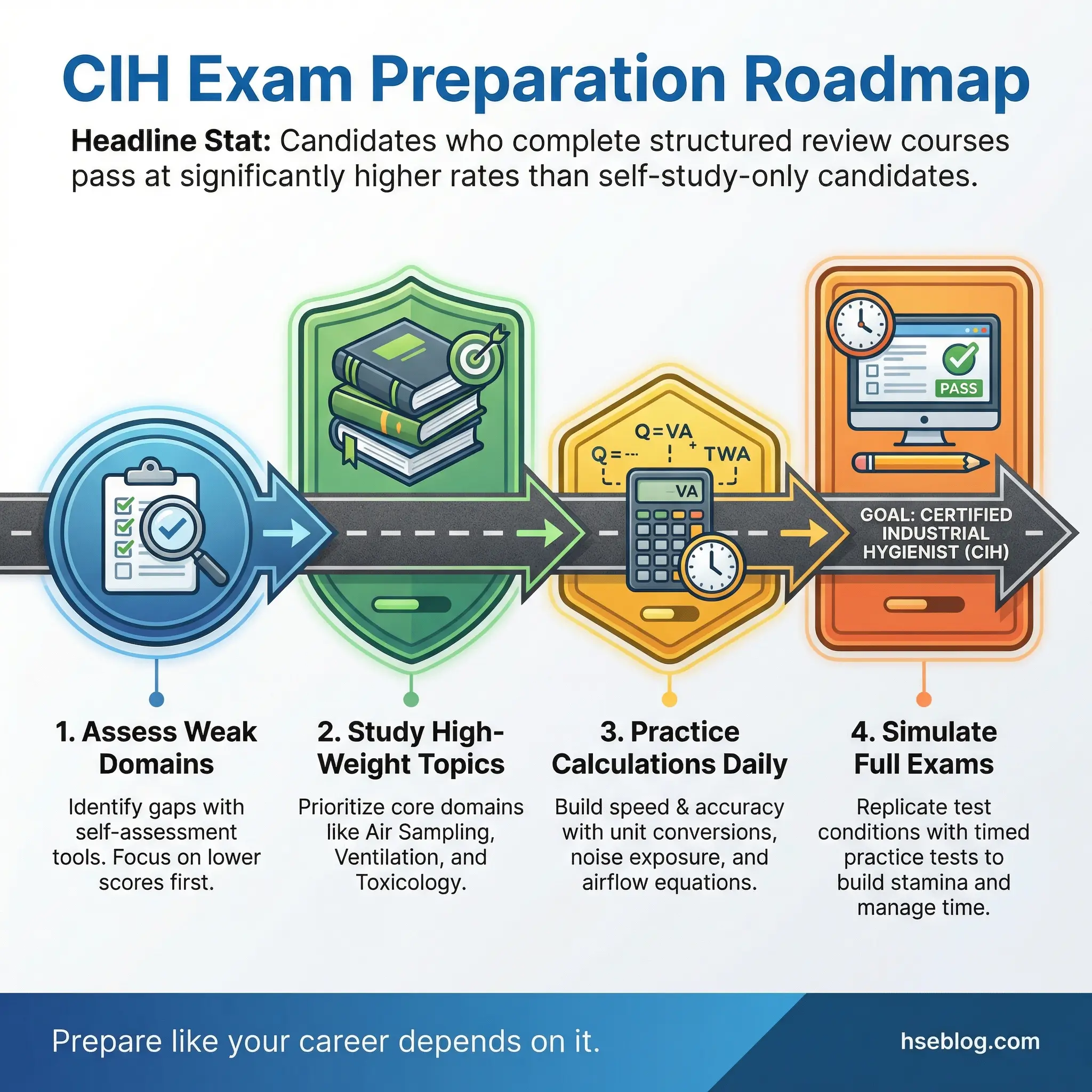
A structured approach to CIH exam preparation separates candidates who pass from those who don’t. The following strategies reflect what works in practice:
- Obtain the ABIH Exam Blueprint: Download the current exam content outline from the ABIH website — this document tells you exactly what percentage of the exam covers each domain
- Assess your weak domains: Rate your confidence in each content area honestly — most experienced hygienists are strong in their practice specialty but weak in domains outside their daily work
- Prioritize high-weight domains: Focus study time proportionally — air sampling, ventilation, and toxicology typically carry the heaviest exam weights
- Practice quantitative problems daily: Dedicate at least 30 minutes per study session to calculation-based problems — ventilation rates, noise exposure calculations, radiation dose computations, and statistical analysis
- Use multiple review sources: Combine a comprehensive review course with self-study materials, practice exams, and peer study groups
- Take full-length practice exams under timed conditions: The exam is long and mentally exhausting — simulating real test conditions builds the stamina needed to perform through the final hour
Resources That Matter
Several preparation resources have consistently helped candidates I’ve worked with:
- ABIH-approved review courses: Structured multi-day review courses taught by experienced CIH practitioners — these compress broad content into exam-focused review
- AIHA publications: The American Industrial Hygiene Association publishes reference texts that align closely with CIH exam content
- ACGIH documentation: TLV and BEI documentation provides the scientific basis for occupational exposure limits — a critical exam topic
- NIOSH technical resources: Sampling method manuals, criteria documents, and health hazard evaluation reports offer applied examples of CIH-level practice
- Peer study groups: Studying with other candidates forces you to explain concepts aloud — if you can’t explain a concept clearly, you don’t understand it well enough for the exam
Conclusion
The Certified Industrial Hygienist credential represents more than professional advancement — it represents a verified commitment to the science of protecting worker health. Every air sample a CIH collects, every ventilation system evaluated, every exposure report written carries the weight of a credential that has defined the industrial hygiene profession for over six decades. In a world where occupational disease kills far more workers annually than acute workplace injuries, the role of the CIH has never been more critical.
The path to certification demands years of education, field experience, rigorous examination, and ongoing professional development. It is not a credential you earn passively. But that difficulty is precisely what gives it value — employers, regulators, and courts trust the CIH because they know what it took to earn and what it takes to maintain.
If you’re working in occupational health without pursuing the CIH, ask yourself whether you’re comfortable making exposure decisions without the independent verification that the credential provides. Workers whose lungs, hearing, and neurological function depend on your professional judgment deserve to know that someone has tested your competency — and that you passed.