Surface Mining Safety: Risks, MSHA Rules & Best Practices

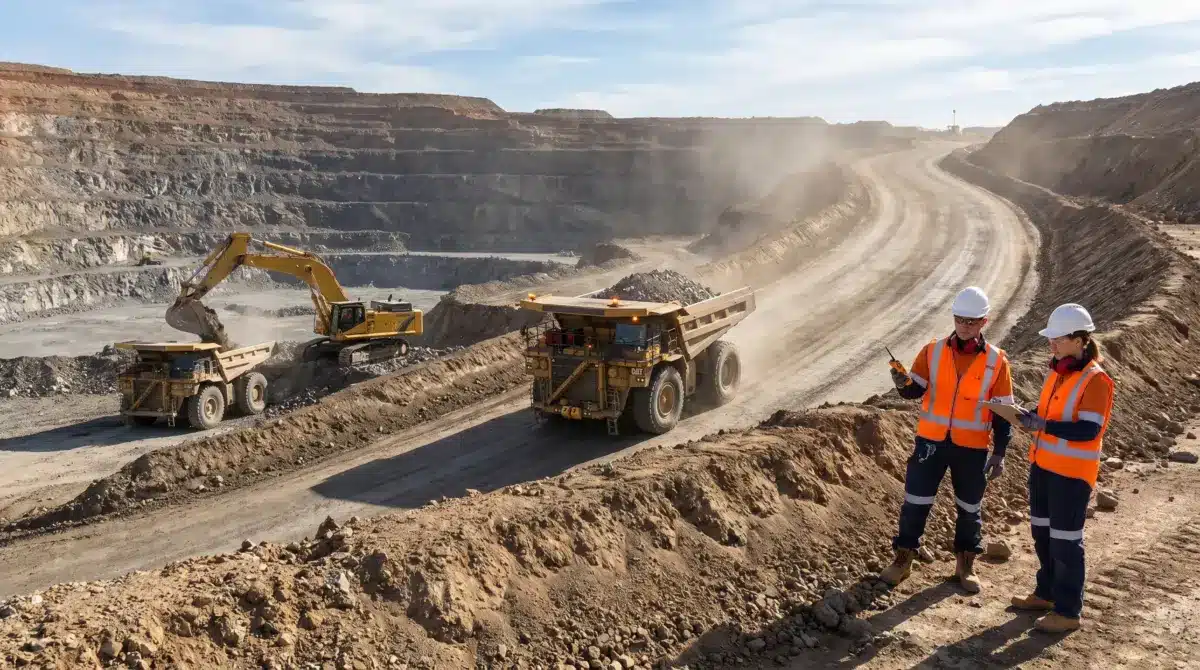
Two workers in orange safety vests and hard hats oversee a large open-pit mine operation with excavators, dump trucks, and terraced earthen walls under a dusty sky.

TL;DR Surface mining hazards include powered haulage accidents (the leading cause of fatalities), machinery entanglement and crushing, highwall and slope failures, respirable silica dust exposure, slips and falls, blasting misfires, electrical contact, and environmental stressors such as heat, noise, and UV radiation. MSHA’s 30 CFR Part 56 sets the primary safety and health standards for … Read more

Underground Mining Hazards and Safety Procedures | HSE Guide

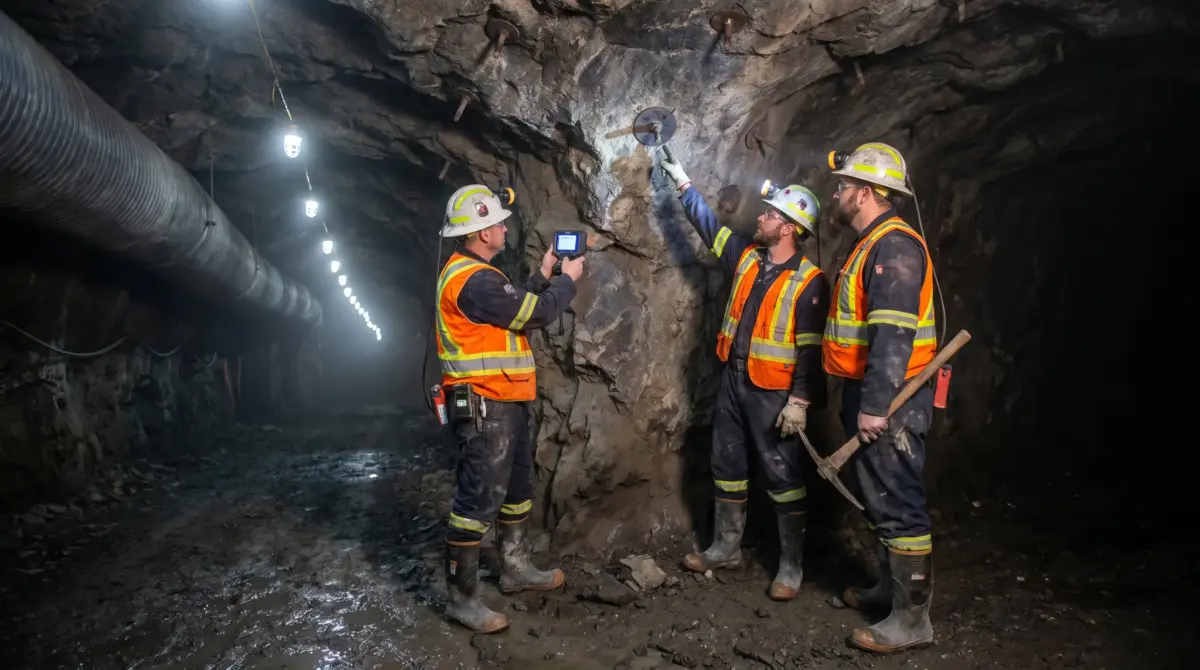
Four mine workers in safety gear and hard hats conduct an inspection inside an underground tunnel, with one holding a measuring device while examining the rock face under bright LED lighting.

TL;DR — Key Numbers Underground mining hazards span ground failure, atmospheric contamination, fire and explosion risk, equipment-related injuries, noise-induced hearing loss, heat stress, and chronic dust exposure. Controlling these hazards requires integrated ventilation engineering, ground support systems, continuous atmospheric monitoring, personal protective equipment, mandatory pre-shift examinations, emergency evacuation planning, and structured training programs governed by … Read more

Crane Wire Rope Inspection: When to Replace | Criteria by Standard

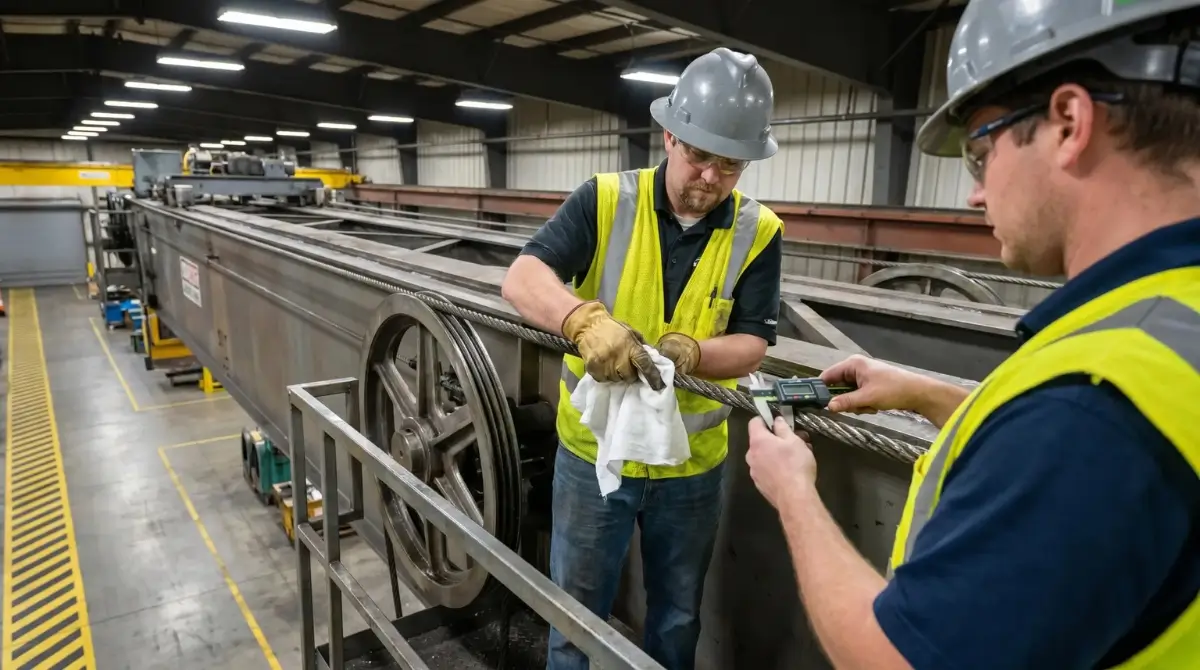
Crane Wire Rope Inspection When to Replace Criteria by Standard

TL;DR Crane wire rope must be replaced when inspection reveals broken wires exceeding the threshold for the specific crane type and governing standard — 12 randomly distributed broken wires in one rope lay for overhead cranes under ASME B30.2 (US), or 6 in one lay for mobile cranes under ASME B30.5 (US). Immediate replacement is … Read more

TBM Safety: Key Risks in Tunnel Boring Machine Operations

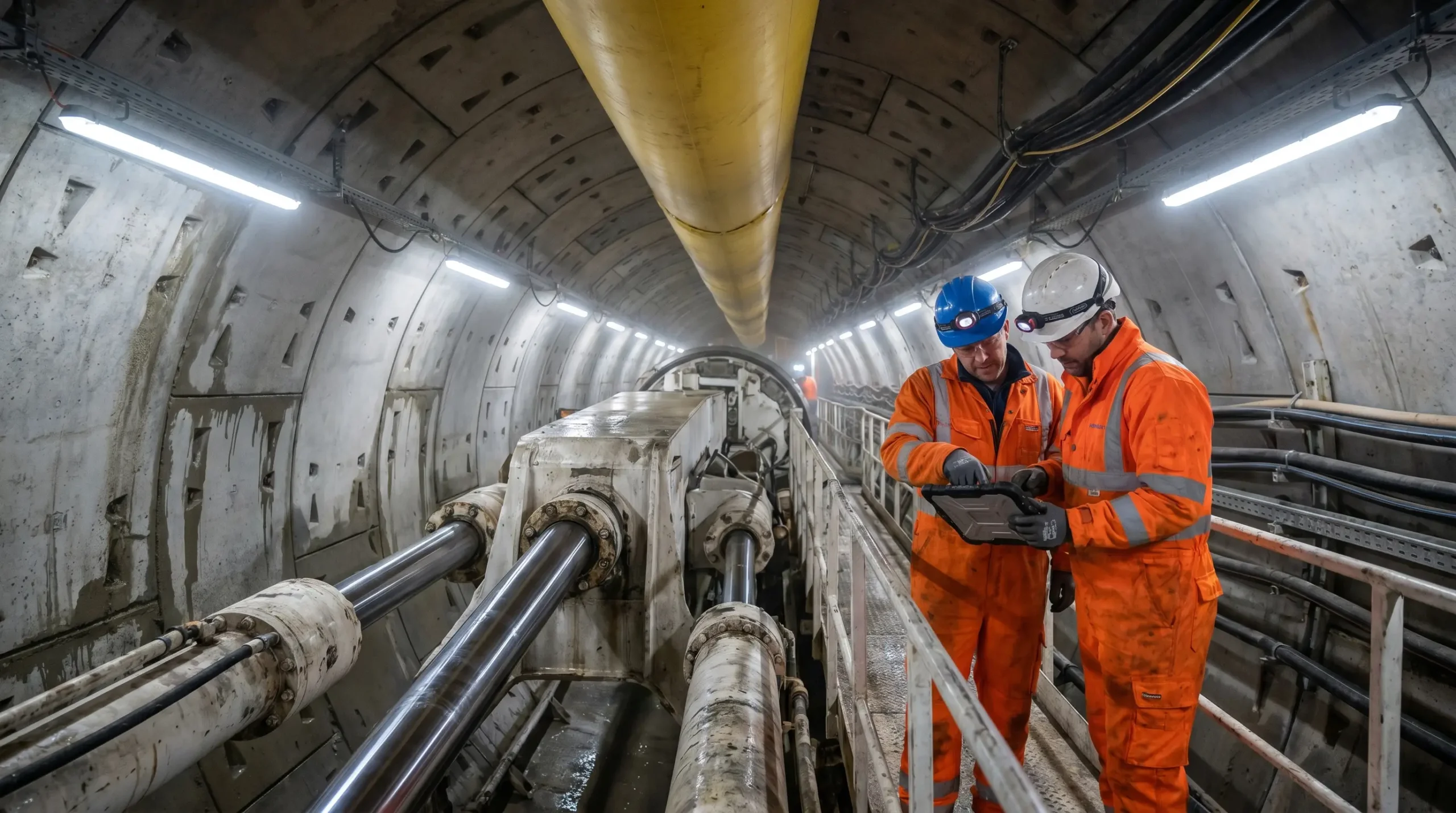
Two workers in orange safety suits and hard hats inspect industrial pipes inside a large concrete tunnel, with one holding a tablet device while reviewing equipment data.

TL;DR Tunnel boring machine operations present risks across six categories: geological hazards (ground collapse, water inrush), mechanical hazards (cutterhead failures, muck transport injuries), atmospheric hazards (gas exposure, silica dust), hyperbaric intervention risks (decompression sickness during cutterhead maintenance), emergency evacuation challenges in long tunnels, and chronic occupational health effects including noise-induced hearing loss and respiratory disease. … Read more

Ground Collapse in Tunnelling: Causes, Mechanisms & Prevention

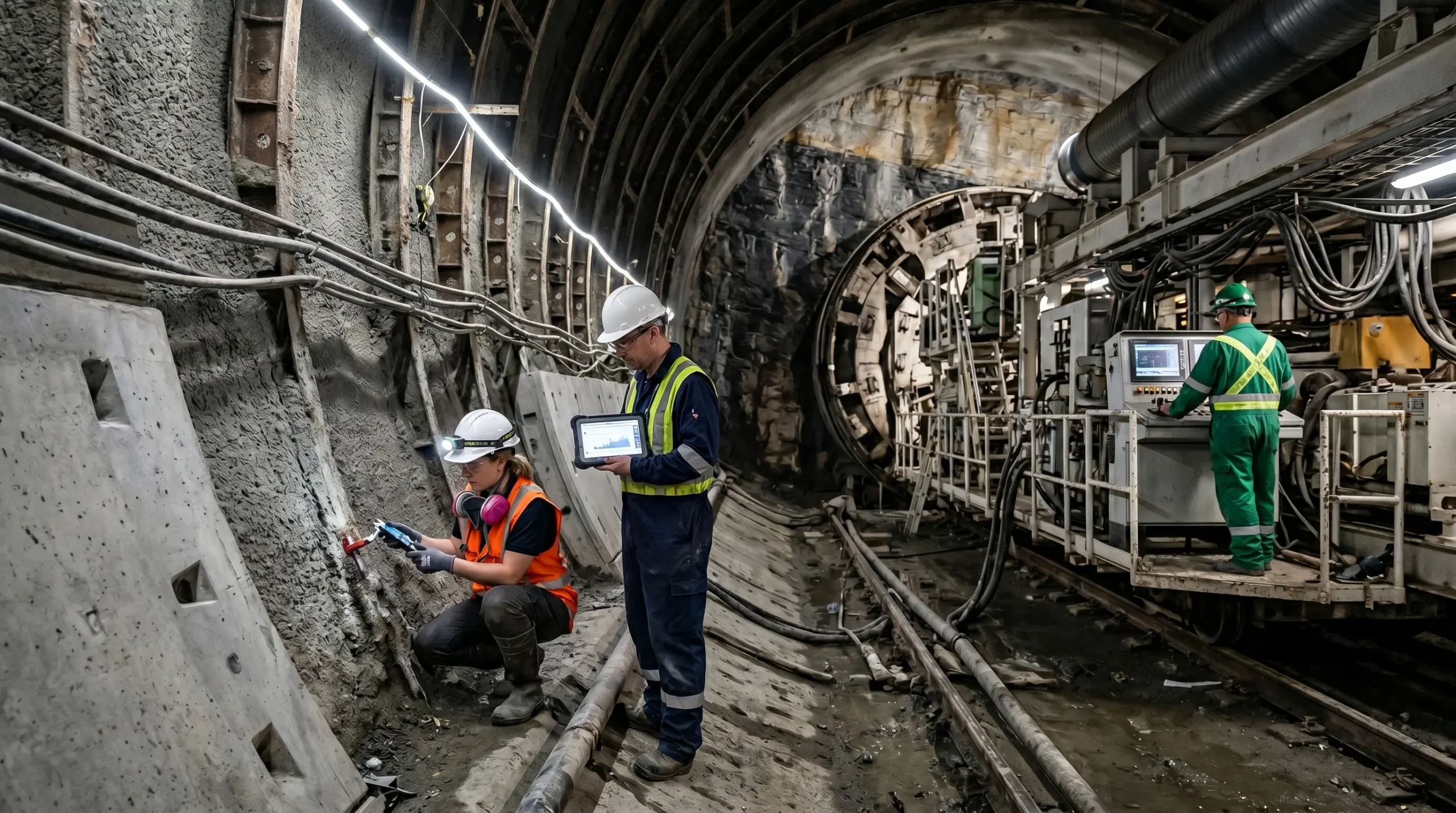
Workers in safety gear conduct inspection and monitoring inside a tunnel boring machine during underground construction, with equipment and control stations visible in the background.

TL;DR Ground collapse in tunnelling is the loss of excavation stability beyond design tolerance, spanning local roof falls, face instability, wedge failure, seepage-driven chimney collapse, and full daylight breakthrough to the surface. Prevention works only when each mechanism is matched to its specific control — face support pressure, ground improvement, initial lining, monitoring with pre-defined … Read more

Soft Strip Demolition: Process, Safety Measures & Regulations

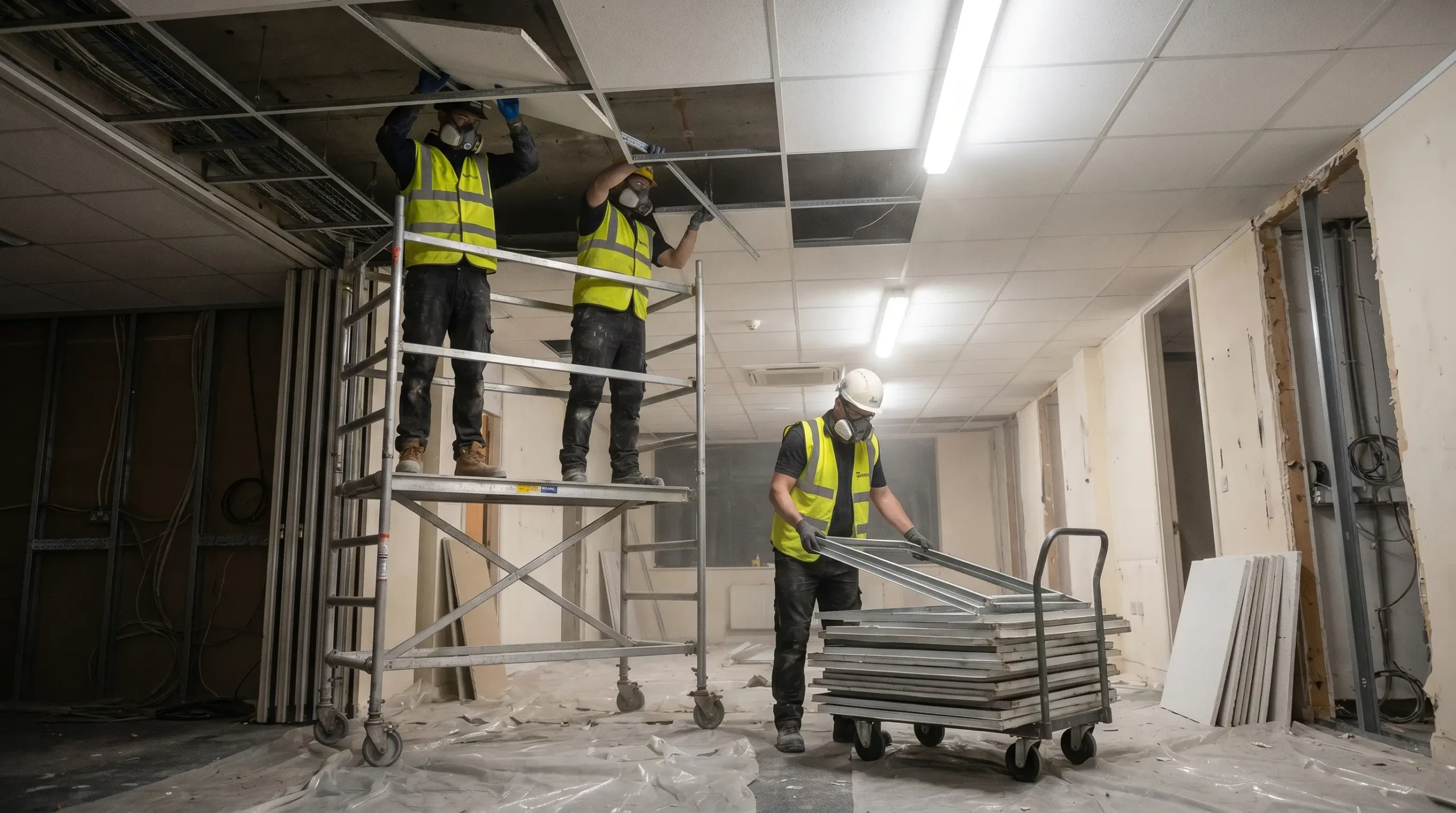
Three construction workers in safety vests and hard hats perform interior renovation work on a commercial building ceiling and walls, with metal scaffolding and building materials visible.

TL;DR Soft strip demolition is the controlled removal of all non-structural elements from a building — fixtures, fittings, partition walls, suspended ceilings, floor coverings, and mechanical and electrical services — while preserving the structural shell. It requires phased planning, hazardous-material surveys, systematic removal with integrated dust and noise controls, and segregated waste management under CDM … Read more

Mental Health First Aider: Role, Training & Workplace Benefits

Three professionals have a conversation in a modern office break room with large windows, potted plants, and contemporary furniture while one person stands in the background holding a coffee mug.

TL;DR A mental health first aider is a trained individual in the workplace who provides initial support to someone experiencing a mental health difficulty or crisis, connecting them with appropriate professional resources. Unlike physical first aiders — whose role is universally understood — mental health first aiders operate in a space where role boundaries, training … Read more

Hydraulic Press Safety: Procedures and Controls (US/UK/EU)

Factory worker in safety gear operating an industrial hydraulic press machine while a colleague observes in a manufacturing facility.

TL;DR Hydraulic press safety in the United States is governed primarily by OSHA 29 CFR 1910.212 (general machine guarding) and 1910.147 (lockout/tagout), with ANSI B11.2-2013 (R2020) as the consensus standard — not 1910.217, which explicitly excludes hydraulic presses. UK sites operate under PUWER 1998 and HSE guidance HSG236. EU sites apply EN ISO 16092-3 under … Read more

Occupational Lung Disease: Types, Causes & Prevention Guide

Worker in blue jacket and safety gear uses angle grinder on metal sheet in industrial workshop with wet floors, dust extraction system, and colleagues in background.

TL;DR Occupational lung disease is a group of lung conditions caused or made worse by inhaling substances at work — dusts, fumes, gases, vapours, or biological agents. The main types include silicosis, asbestosis and mesothelioma, coal workers’ pneumoconiosis, occupational asthma, hypersensitivity pneumonitis, and work-related COPD, many of them preventable with proper controls. About 12,000 people … Read more

Top 10 Workplace Safety Games Ideas for Workers

Workers in safety gear conduct a training session in a warehouse, with one group examining protective equipment at a table while others discuss safety procedures near a chart in the background.

TL;DR Workplace safety games are interactive training activities that teach employees about hazards, emergency procedures, and safe work practices through active participation rather than passive instruction. The most effective formats include trivia challenges, hazard scavenger hunts, PPE relay races, and scenario-based role-plays. They function best as reinforcement tools embedded within a structured safety training programme … Read more