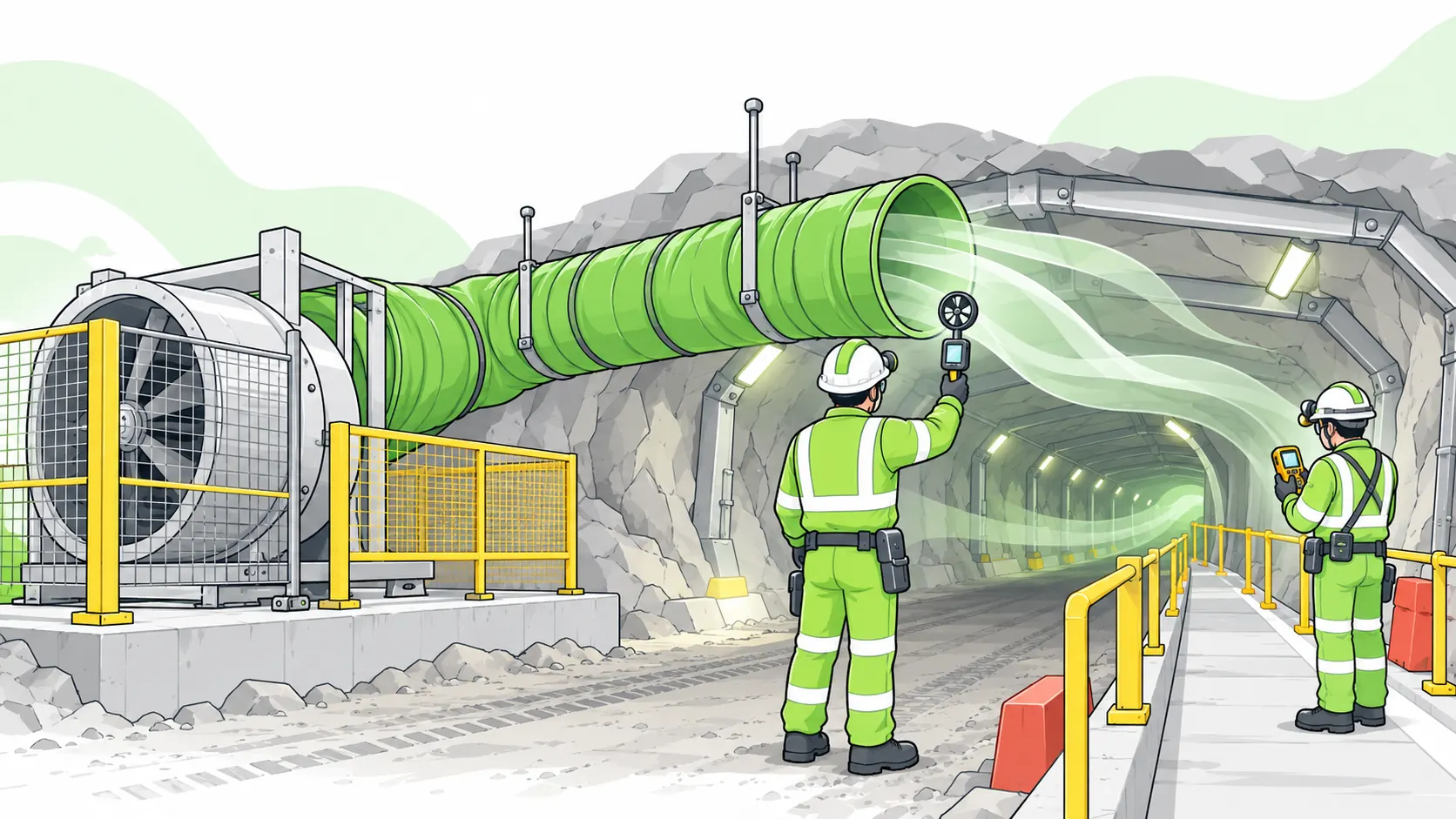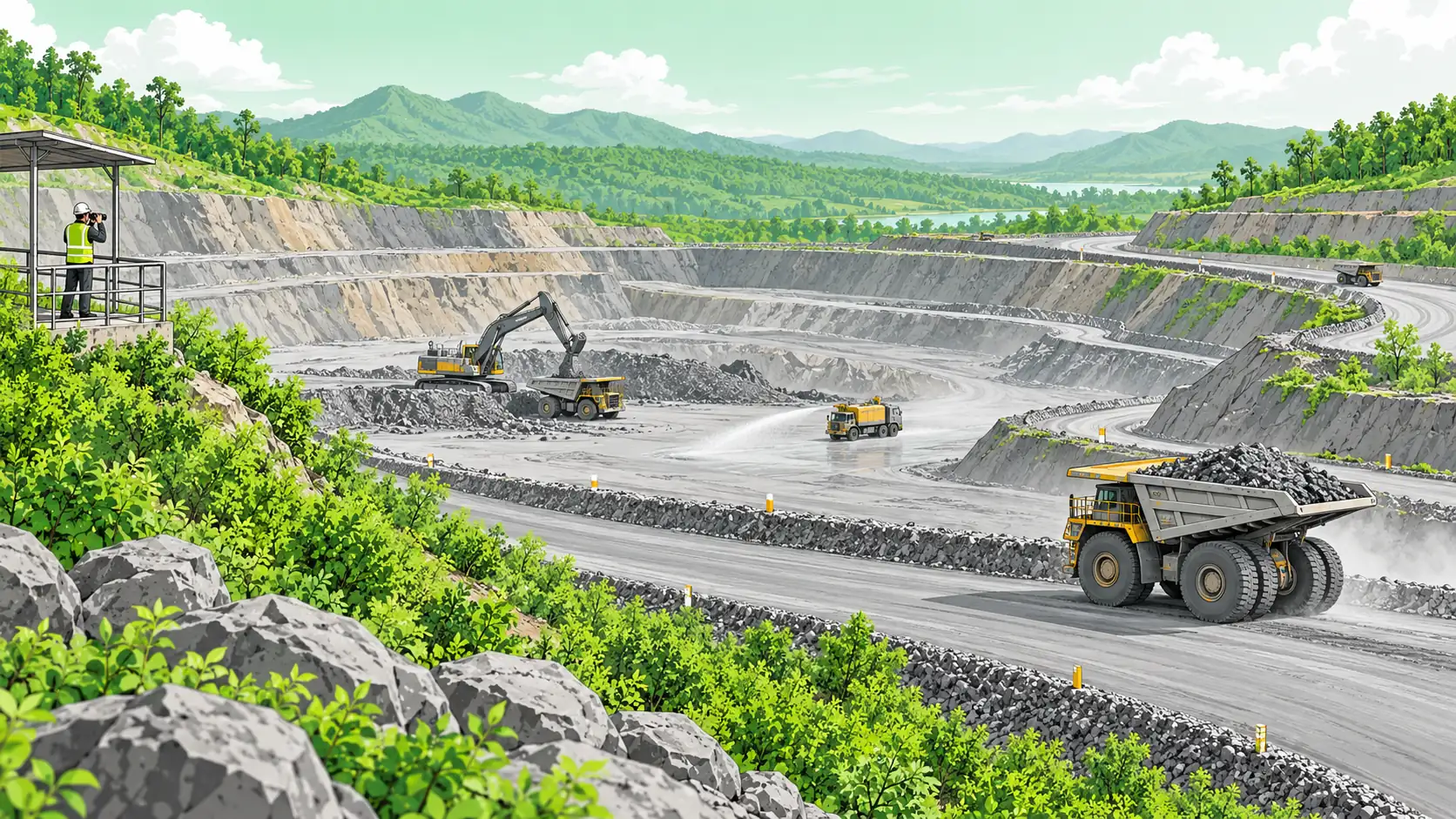
Surface mining hazards include powered haulage accidents (the leading cause of fatalities), machinery entanglement and crushing, highwall and slope failures, respirable silica dust exposure, slips and falls, blasting misfires, electrical contact, and environmental stressors such as heat, noise, and UV radiation. MSHA's 30 CFR Part 56 sets the primary safety and health standards for surface metal and nonmetal mines in the United States.
What Is Surface Mining and Why Does Safety Demand Specific Attention?
Thirteen powered haulage deaths in a single year. That was 2025's toll across US mining operations — the highest powered haulage fatality count since 2006 (Pit & Quarry / MSHA, 2026). Every one of those deaths occurred in an environment with open sky, clear sightlines, and fresh air. The assumption that surface mining is inherently safer than working underground deserves direct challenge.
Surface mining encompasses several distinct methods — open-pit extraction, strip mining, quarrying, and dredging — each with its own geometry, equipment fleet, and hazard profile. What they share is scale: massive mobile equipment operating on engineered benches and haul roads, blasting in open air, and continuous dust generation from drilling, crushing, and transport. Surface operations constitute the majority of active mine sites in the United States and employ the bulk of the mining workforce. The hazards are not theoretical. In 2025, 25 of 33 total US mining fatalities occurred at metal/nonmetal operations (Pit & Quarry / MSHA, 2026), the vast majority of which are surface mines.
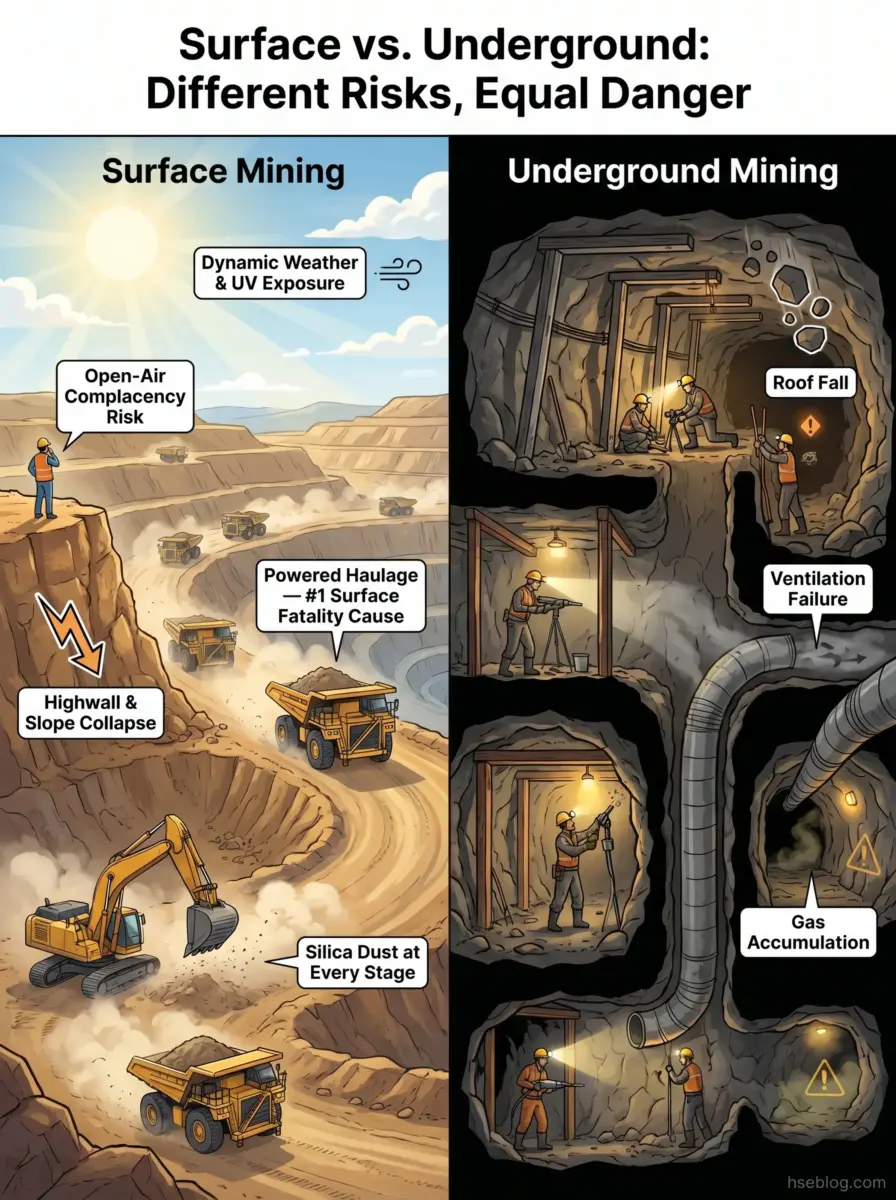
A pattern I consistently observe when reviewing surface mine safety programs is what I call the "open-air fallacy." Because teams can see hazards and breathe freely, they treat visibility and ventilation as substitutes for formal controls. Underground operations impose structured hazard management through their very environment — restricted egress, ventilation planning, ground support. Surface operations must impose that same discipline deliberately, against the comforting illusion that being outdoors means being safe. The dynamic surface environment — shifting weather, evolving pit geometry, mixed equipment traffic, changing bench stability — demands continuous reassessment, not complacency.
What Are the Most Common Hazards in Surface Mining?
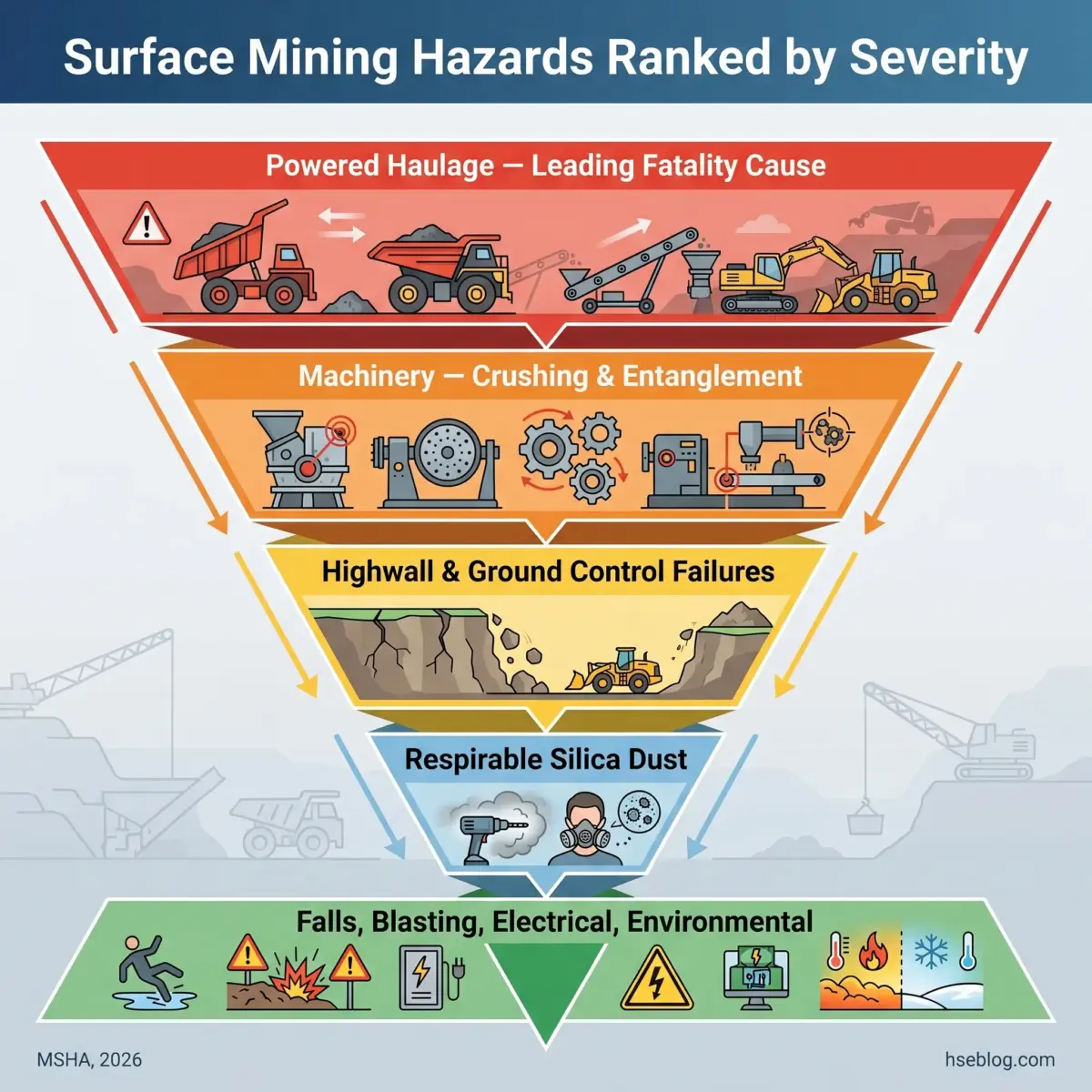
A safety professional's first instinct with any operation is to rank hazards by severity and frequency — not alphabetize them. The published MSHA fatality record makes the priority order clear for surface mining: powered haulage leads, followed by machinery incidents, ground control failures, respiratory hazards, falls, blasting, and a cluster of environmental stressors. Each category operates through a distinct mechanism and demands specific controls.
Powered Haulage and Mobile Equipment Risks
Powered haulage has been the single deadliest hazard classification in US mining for years, and 2025 reinforced the pattern — 13 powered haulage fatalities out of 33 total mining deaths (MSHA, 2026). The hazard mechanism is straightforward but relentless: haul trucks with 200+ ton payloads operating on engineered roads alongside lighter vehicles, with blind spots that can conceal a pickup truck entirely. Conveyor systems add entanglement risk at transfer points, tail pulleys, and idler stations.
Reviewing MSHA fatality investigation reports across multiple years reveals a frustrating consistency in root causes. The same failures appear repeatedly: operations without written traffic management plans, operators not wearing seatbelts, and blind-spot mitigation that exists on paper but not in practice. The problem is rarely that mines lack knowledge of the hazard. It is that the operational discipline required to sustain controls — enforcing seatbelt use on every shift, maintaining berms to specification, confirming right-of-way rules are understood by every driver including contractors — erodes over time. MSHA's best practices for mobile equipment at surface mines detail these controls, but the gap between publication and implementation remains the central challenge.
Highwall and Ground Control Hazards
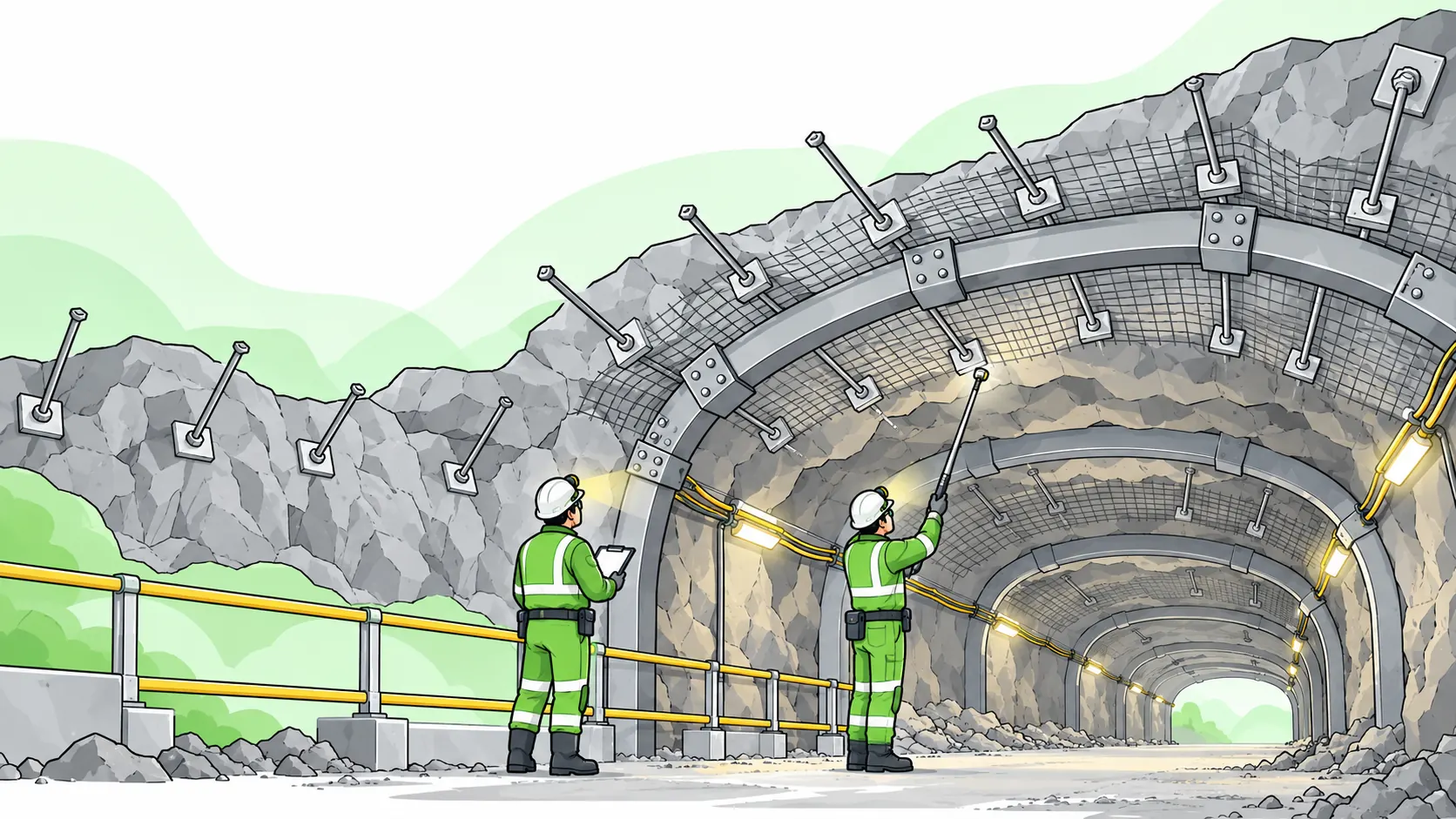
Highwall and slope failures kill quickly and with little warning. The hazard operates through geological discontinuities — bedding planes, joints, faults — that become failure surfaces when disturbed by blasting vibration, water infiltration, or improper bench design. MSHA classifies these fatalities under "fall of face, rib, side or highwall," and the pattern in investigation reports is consistent: inadequate scaling after blasting, failure to identify geological weak zones during pre-shift workplace examinations, and workers positioning themselves within the fall zone during drilling or loading.
Bench geometry is the primary engineering control. Proper bench height, face angle, and catch-bench width are determined by the site's geology, not by production convenience. When bench design is driven by extraction targets rather than geotechnical assessment, the highwall becomes the most dangerous structure on the mine site. Weather compounds the risk — freeze-thaw cycles, heavy rainfall, and rapid snowmelt destabilize faces that were stable the previous shift.
Respiratory Hazards: Silica Dust and Airborne Contaminants
Respirable crystalline silica is generated at virtually every stage of surface mining — drilling, blasting, crushing, screening, conveying, and hauling on unpaved roads. Unlike powered haulage, silica exposure does not produce acute, visible casualties. It produces silicosis, lung cancer, kidney disease, and autoimmune conditions over years and decades, affecting a far larger population of workers than any single accident category.
The regulatory landscape for silica in mining shifted significantly in 2024. MSHA's final rule (30 CFR Part 60, US) reduced the permissible exposure limit to 50 µg/m³ as an 8-hour time-weighted average, with an action level at 25 µg/m³ triggering exposure monitoring and corrective actions. MSHA estimates the rule will prevent 1,067 deaths and 3,746 silica-related illnesses over the working life of affected miners (MSHA Regulatory Impact Analysis, 2024). However, a court-ordered judicial stay issued in April 2025 has indefinitely delayed the metal/nonmetal conforming amendments to Parts 56 and 57 — meaning surface metal/nonmetal operators must currently follow existing standards while monitoring for resolution. The MSHA silica rulemaking page provides current status updates.
The practical reading of the stay is not "silica compliance can wait." Existing Part 56 air quality standards (30 CFR §56.5001, US) remain enforceable, and the previous PEL — based on the 1973 ACGIH TLV formula, roughly equivalent to 100 µg/m³ — still applies. The prudent approach for any operator is to move toward the 50 µg/m³ standard now, because the stay is temporary and the health science supporting the lower limit is not in dispute.
The remaining hazard categories — slips, trips, and falls (the second leading cause of non-fatal mining injuries, per NIOSH-funded research published 2024), blasting misfires and flyrock, electrical contact, noise exposure governed by 30 CFR Part 62 (US), whole-body vibration, UV radiation, and heat stress — each deserve dedicated controls. While they individually produce fewer fatalities than powered haulage or ground control failures, their cumulative injury burden is substantial, and they disproportionately affect the long-term health of the surface mining workforce.
How Do MSHA Regulations Govern Surface Mining Safety?
The regulatory architecture governing US surface mining safety is layered, and misunderstanding its structure leads to compliance gaps. The Federal Mine Safety and Health Act of 1977 provides the statutory foundation. From it, MSHA has promulgated detailed standards organized by mine type and hazard category.
30 CFR Part 56 (US) is the primary standard for surface metal and nonmetal mines — covering ground control (Subpart B), fire prevention (Subpart E), air quality and dust (Subpart D), electrical systems (Subpart K), explosives (Subpart P), mobile equipment (Subpart M), and personal protective equipment (Subpart N). Every surface aggregate, sand, gravel, stone, clay, and cement operation falls under Part 56. Surface coal operations fall under a separate standard — 30 CFR Part 77 (US).
30 CFR Part 46 (US) governs training for surface metal/nonmetal mines. It mandates 24-hour new miner training, 8-hour annual refresher training, task training for each new work assignment, and site-specific hazard awareness training for contractors and visitors. Training plans must be written (§46.3) and documented on Form 5000-23.
A common misconception among smaller aggregate operations is that Part 46's comparatively lighter training structure — compared to Part 48 (US), which governs underground and surface coal mines — signals a lighter overall compliance burden. That interpretation is dangerous. Part 46 addresses training requirements only. The substantive hazard standards in Part 56 apply with full force regardless of operation size. A three-person gravel pit faces the same mobile equipment guarding standards, ground control obligations, and air quality requirements as a 500-worker open-pit copper mine.
Two 2024 regulatory developments directly affect surface mine operators. First, the Surface Mobile Equipment Safety Program rule (30 CFR Part 56 Subpart T, US), enforceable since July 17, 2024, requires every surface mine to maintain a written safety program for mobile equipment. The program must include hazard identification, miner input, evaluation of available technology, and designation of a responsible person for annual updates. Second, the silica rule (30 CFR Part 60, US) — discussed in the respiratory hazards section above — which introduced the 50 µg/m³ PEL with MNM conforming amendments currently under judicial stay. A delay of conforming amendments was confirmed in April 2026 (Federal Register, 2026), extending the interim compliance period.
For operations outside the United States, ILO Convention No. 176 (International, 1995) establishes a minimum floor for mine safety — ratified by over 35 countries — including hazard identification, worker consultation rights, and inspection obligations. The EU's Directive 92/104/EEC (EU) governs extractive industries and requires risk assessment, health surveillance, and emergency planning. Australian mining follows Model Codes of Practice under the Work Health and Safety Act, with principal mining hazard management plans as the central compliance mechanism. When MSHA, EU, and ILO standards specify different thresholds, the stricter standard should govern site practice.
Jurisdiction Note: MSHA inspection frequency for surface mines is set by the Mine Act, Section 103(a) (US): at least two complete inspections per year. This differs from underground coal mines, which receive four. Operations with elevated hazard profiles or histories of repeat violations may see more frequent inspections and increased enforcement action.
Best Practices for Preventing Surface Mining Accidents
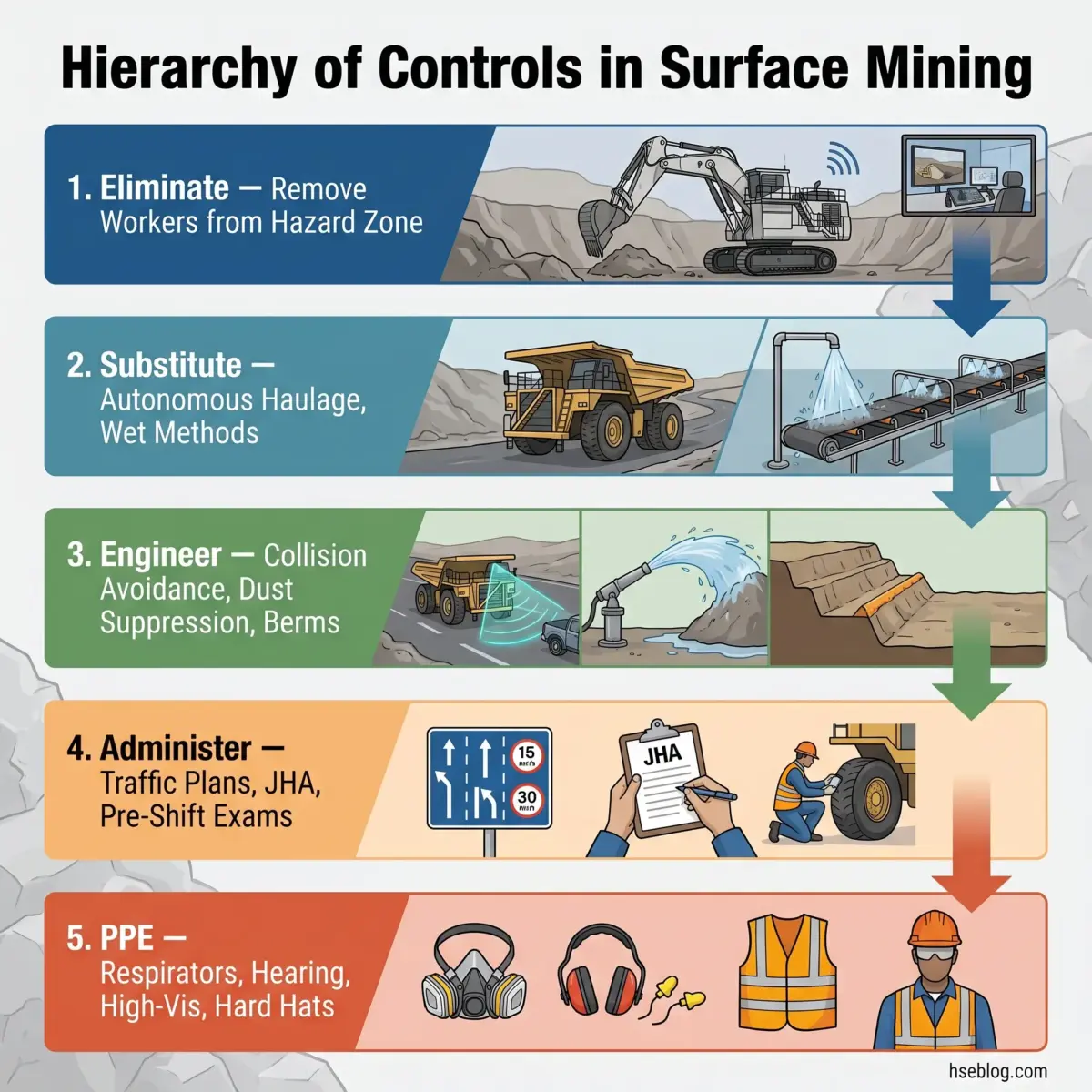
Effective surface mining safety follows the hierarchy of controls — elimination, substitution, engineering, administrative, PPE — applied to the specific hazards of the surface mine environment. The distinction between operations with sustained low-incident performance and those that cycle through reactive safety programs lies in how rigorously each tier is implemented before defaulting to the next.
Traffic Management and Powered Haulage Controls
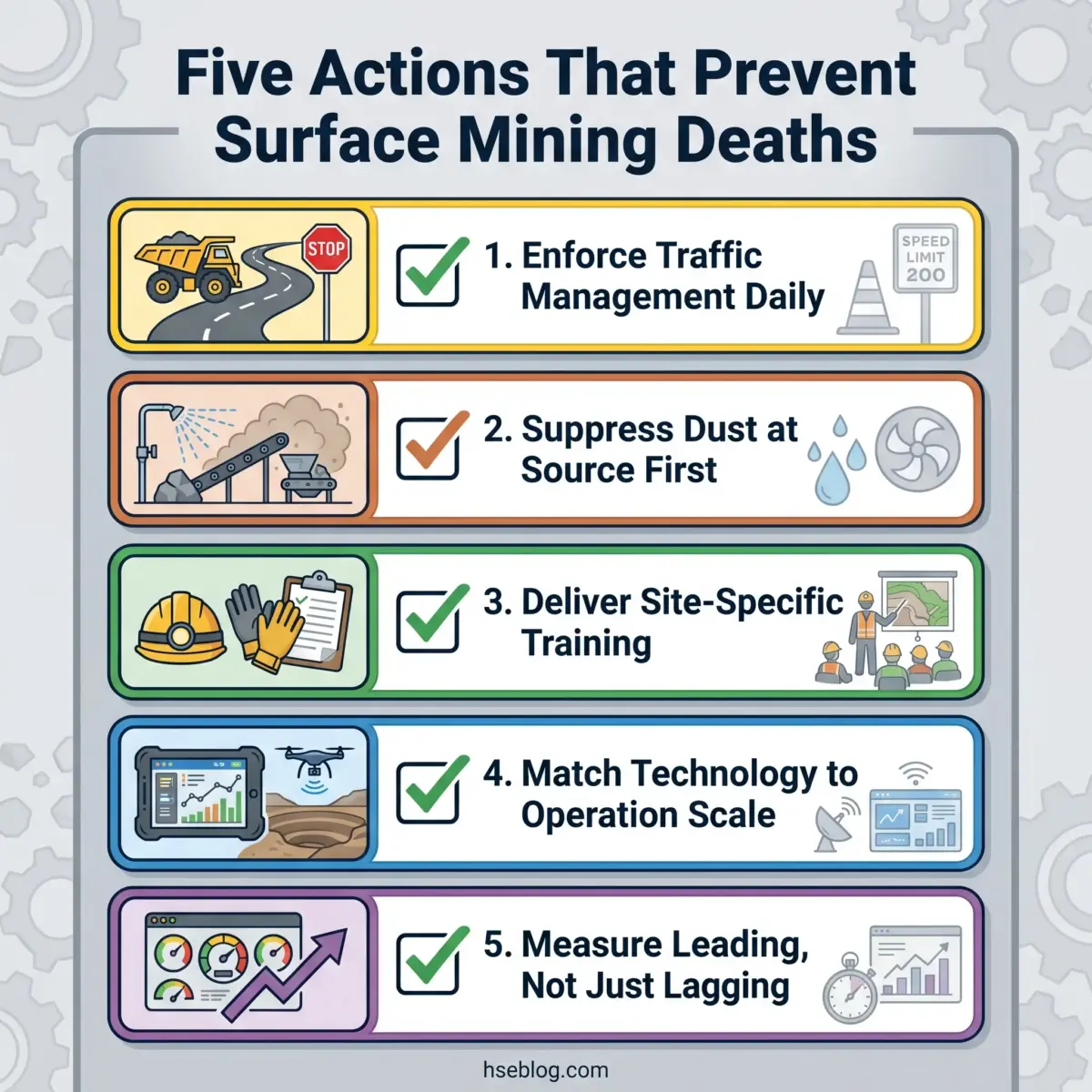
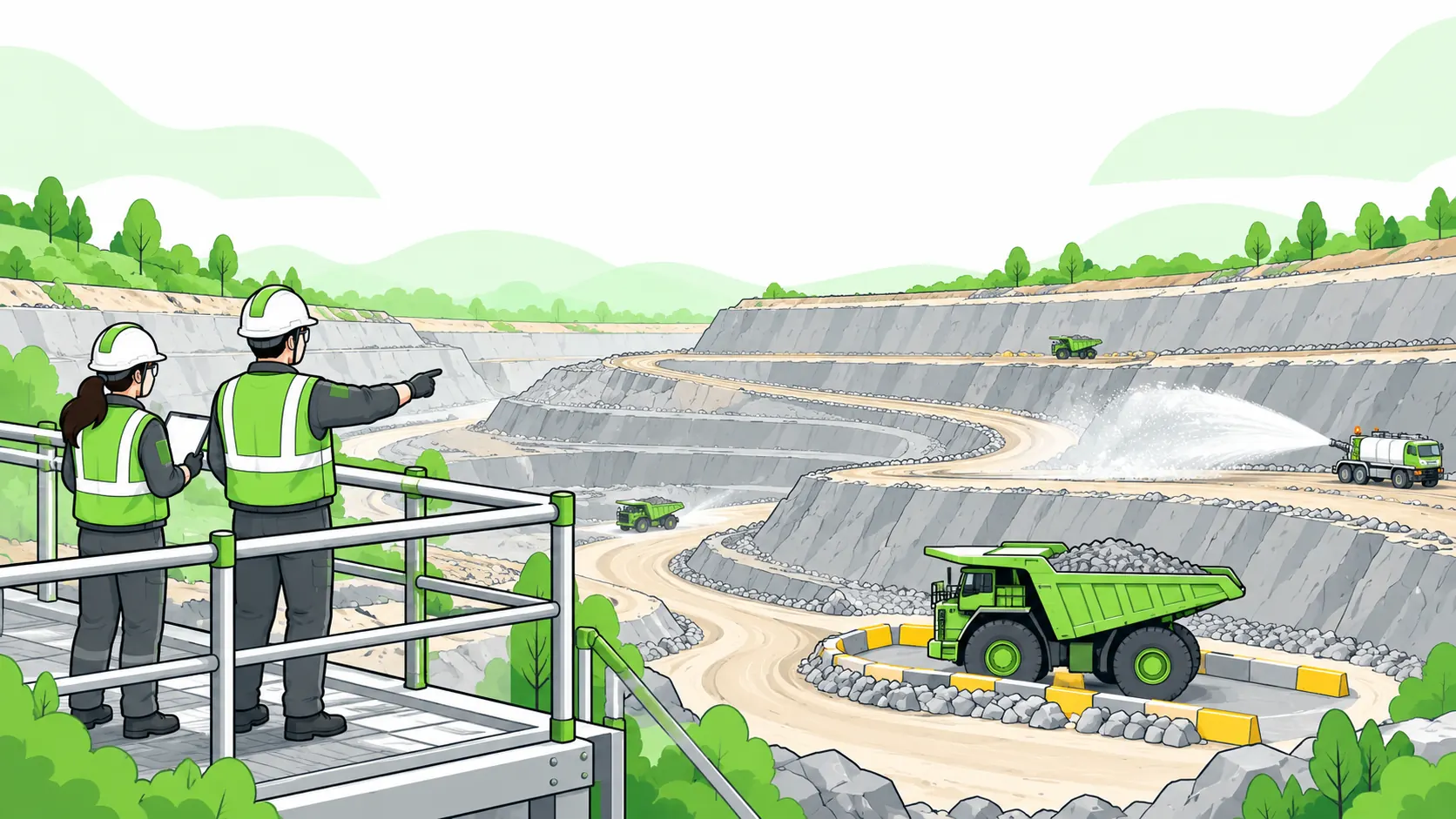
The single most impactful engineering control for powered haulage risk is a comprehensive traffic management plan — and its absence is the single most common finding in powered haulage fatality investigations. An effective plan defines haul road design standards (width, gradient, super-elevation), speed limits by road segment, right-of-way rules between equipment classes, and communication protocols for intersections and dump points.
Collision avoidance and proximity detection systems — radar, LiDAR, and camera-based technologies — add a critical technology layer. But the judgment call that separates effective implementation from wasted investment is this: without the traffic management plan that defines routes, speeds, and right-of-way, proximity detection systems generate nuisance alarms at every intersection and passing point. Operators learn to dismiss them. The technology requires the administrative framework to function.
The 2024 MSHA rule (30 CFR Part 56 Subpart T, US) now codifies this integration. The required written safety program must include hazard identification specific to the operation's equipment fleet, documented miner input, evaluation of current and emerging technology, and annual review. Berms and guardrails on haul roads, seatbelt interlock systems, and adequate rollover protective structures (ROPS) on all mobile equipment are baseline engineering requirements under existing Part 56 provisions.
Dust Suppression and Respiratory Protection
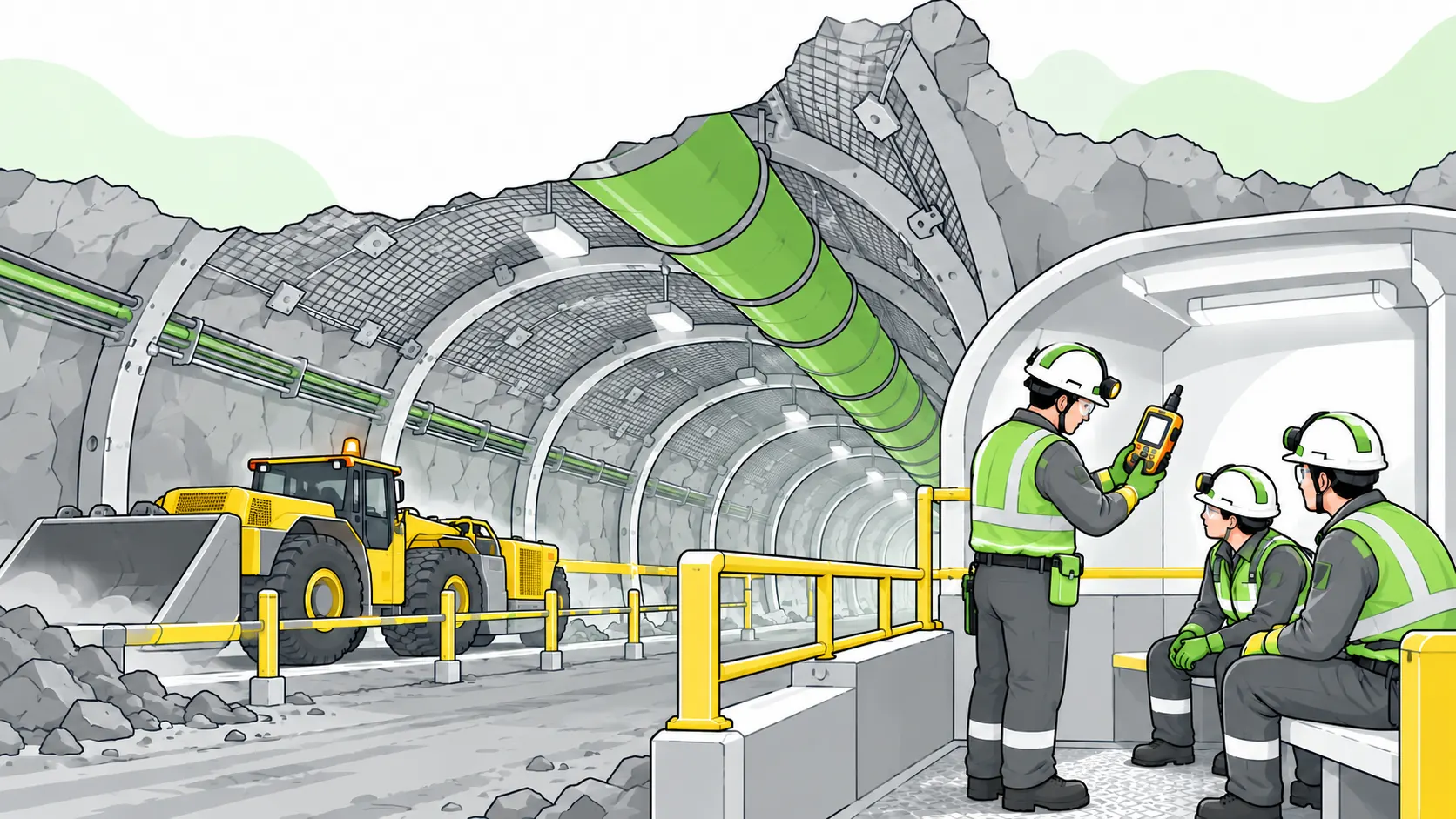
Engineering controls for silica start at the source: water sprays on haul roads and at crusher feed points, chemical dust suppressants for long-term road treatment, enclosed operator cabs with HEPA-filtered positive-pressure ventilation, and dust collection systems at transfer points and screening plants. These controls reduce airborne concentrations before any worker needs a respirator.
When engineering controls cannot reduce exposure below the applicable PEL, respiratory protection becomes necessary. Respirators must be NIOSH-approved and selected based on the measured exposure concentration and assigned protection factor. Fit testing and a written respiratory protection program are regulatory requirements, not optional good practice. The distinction between the new Part 60 PEL (50 µg/m³) and the previous 1973 TLV-based standard (approximately 100 µg/m³) matters for program design — an operation that previously measured exposures at 70 µg/m³ and considered itself compliant will need corrective action once the judicial stay is resolved.
Beyond powered haulage and dust, the hierarchy of controls applies across every hazard category. Job hazard analysis (JHA) before non-routine tasks, pre-shift workplace examinations conducted by competent persons, lockout/tagout (LOTO) procedures for all maintenance on conveyors and crushers, fall protection systems for elevated work on stockpiles and plant structures, and fatigue management programs for long-haul shifts — each addresses a specific failure mode in the surface mine risk profile.
Watch For: The failure mode where operations invest heavily in one tier of the hierarchy — typically PPE procurement — while neglecting the engineering and administrative controls above it. A respirator program with poor fit testing compliance and no dust suppression at the crusher is not a respiratory protection strategy. It is a documentation exercise.
Surface Mining Safety Training: MSHA Part 46 and Beyond
Part 46 (30 CFR Part 46, US) applies specifically to surface metal/nonmetal mines — the aggregate, sand, gravel, stone, clay, and cement operations that constitute the majority of surface mine sites. It is distinct from Part 48 (US), which governs training at underground mines and surface coal operations, and confusing the two creates compliance exposure.
The Part 46 framework requires 24 hours of new miner training (which may be completed over time while the miner works under close supervision), 8 hours of annual refresher training, task training before each new work assignment, and site-specific hazard awareness training for all persons at the mine — including short-term contractors and visitors. Training plans must be written per §46.3, and all training must be documented on MSHA Form 5000-23 or equivalent.
| Requirement | Part 46 (Surface MNM) | Part 48 (Underground & Surface Coal) |
|---|---|---|
| New miner training | 24 hours (concurrent work allowed under supervision) | 40 hours (underground); 24 hours (surface coal) — must be completed before independent work |
| Annual refresher | 8 hours | 8 hours |
| Instructor approval | No MSHA approval required — competent person standard | MSHA-approved instructors required |
| Task training | Required for each new task | Required for each new task |
| Hazard awareness | Required for all site visitors and contractors | Required for all site visitors and contractors |
| Applicable operations | Surface metal/nonmetal (aggregate, sand, gravel, stone) | All underground mines + surface coal |
The gap between compliance-minimum training and effective safety education is where the highest-value work happens. A common pattern across the industry is that operations satisfy Part 46 requirements with generic online courses covering broad mining hazards, then check the box and move on. The component that actually reduces incidents — site-specific hazard awareness — gets minimal investment. Site-specific training should address the particular geology (is the operation in fractured limestone or stable granite?), the equipment fleet (what are the blind-spot zones on this specific haul truck model?), the traffic patterns (where do haul trucks and light vehicles share routes?), and the current operational phase (is the pit deepening, creating new highwall exposure?). Generic content cannot deliver this.
Training for surface mining should extend beyond the Part 46 minimum to include scenario-based exercises for emergency response, equipment-specific lockout/tagout procedures, and hands-on recognition of ground control warning signs. For operations seeking recognized professional development pathways, NEBOSH, IOSH Managing Safely, and MSHA's own Part 46 outreach resources provide structured frameworks.
Emerging Technologies Improving Surface Mining Safety
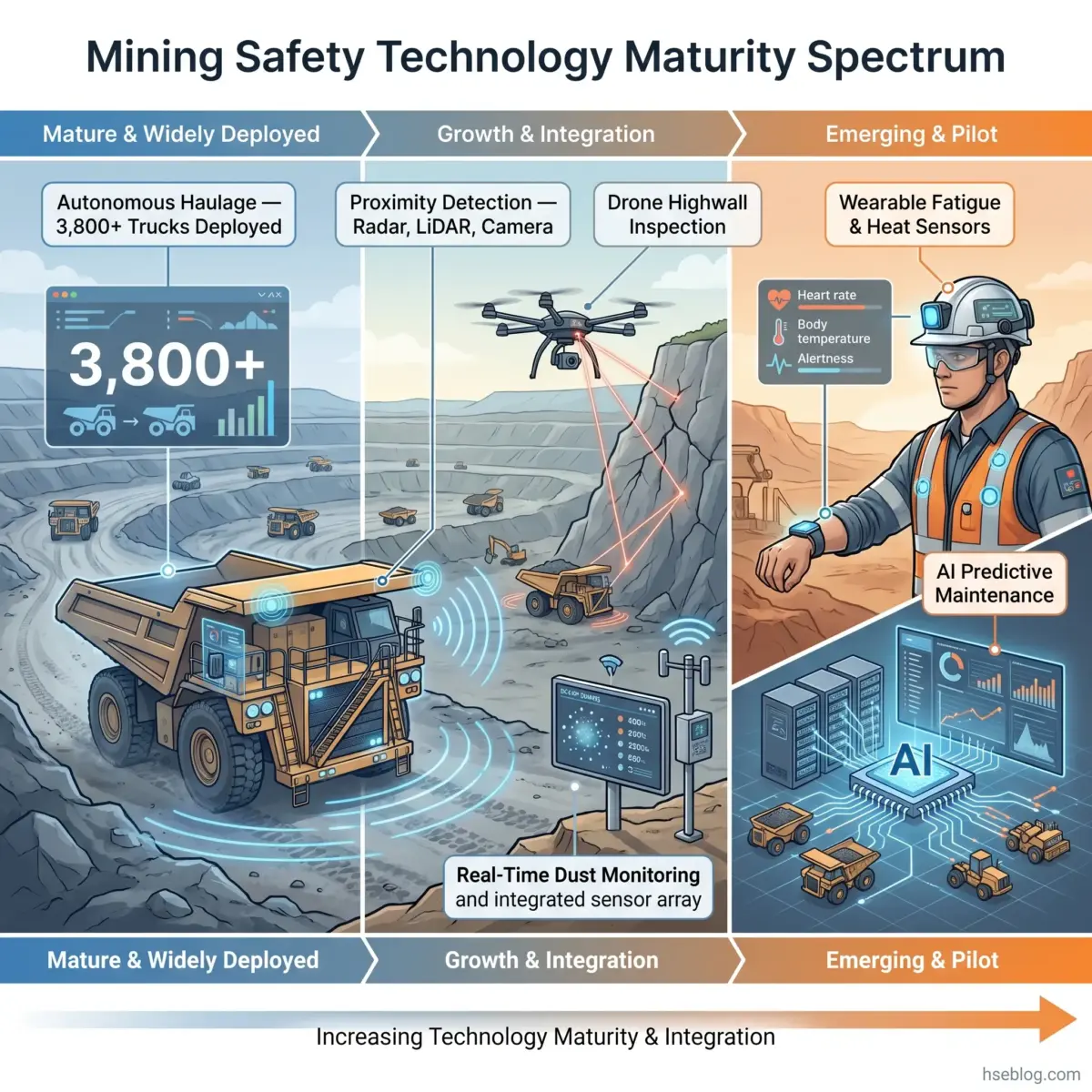
Autonomous haul trucks represent the most mature safety technology in surface mining. As of mid-2025, over 3,800 autonomous haul trucks were operating on surface mines globally (GlobalData / Mining Technology, 2025). Removing the operator from the cab eliminates the two dominant powered haulage fatality mechanisms — rollover with unbelted operator and collision in blind-spot zones. Major multinational mining companies now operate entire fleets autonomously on dedicated haul circuits.
The practitioner challenge is that technology adoption across the industry is starkly uneven. Large operations run fully autonomous fleets with redundant safety systems. Small aggregate operations — which constitute the numerical majority of surface mines — may not have basic collision warning on their haul trucks. The 2024 MSHA rule (Subpart T, US) requires all surface mine operators to evaluate current and future technology for mobile equipment safety, which pushes even smaller operations to assess what is available and appropriate for their scale.
Proximity detection systems using radar, LiDAR, and camera fusion provide collision prevention below the full autonomy threshold. Drone-based inspection has matured rapidly for highwall stability assessment, post-blast evaluation, and stockpile measurement — removing workers from fall-zone and unstable-ground exposure during survey tasks. Wearable sensors for fatigue detection (eye-tracking, head-position monitoring) and heat stress monitoring are operational at pilot and early-deployment stages but not yet standardized across the industry.
Real-time air quality monitoring systems — continuous dust monitors deployed at crusher stations, along haul roads, and at operator breathing zones — are replacing periodic grab sampling as the exposure assessment standard. This shift enables immediate corrective action when concentrations spike rather than discovering overexposures days later from laboratory analysis. For silica compliance under the new Part 60 standard once the judicial stay lifts, real-time monitoring will move from advantage to necessity.
The judgment call for safety professionals evaluating technology is not "what is the most advanced system available?" It is "what system matches this operation's scale, hazard profile, and maintenance capability?" A proximity detection system that is not maintained, calibrated, and integrated into the traffic management plan adds cost without reducing risk.
Building a Surface Mining Safety Culture That Outlasts Audits
Operations that sustain low incident rates over years — not just the quarter before an MSHA inspection — share a characteristic that has nothing to do with equipment or regulation: they measure the right things. The industry-wide default is to track lagging indicators — lost-time injury rate, recordable incident rate, days away from work. These numbers tell you what already went wrong. They do not tell you whether the next shift is safe.
Leading indicators are harder to collect and less satisfying to report, but they predict outcomes. Near-miss reporting volume (and specifically the ratio of near-misses to actual incidents) reveals whether the workforce trusts the reporting system. Pre-shift workplace examination quality — not whether the form was completed, but whether the findings led to corrective action — reveals whether the examination is a safety tool or a paperwork ritual. Corrective-action close-out rates reveal whether identified hazards are being fixed or accumulating in a backlog.
Management commitment is tested, not declared. A safety policy signed by the site manager means nothing if that manager never walks the active pit, never participates in a pre-shift meeting, and never responds personally to a near-miss report. Stop-work authority is the cultural litmus test: do haul truck operators, drillers, and contract laborers genuinely believe they can halt production when they identify an uncontrolled hazard, without career consequences? If the answer requires hesitation, stop-work authority exists on paper only.
Contractor integration is a persistent weak point at surface mines, where drilling, blasting, and hauling may each be performed by different contractors with separate safety management systems. Treating contractors as separate entities — with separate toolbox talks, separate reporting, and separate expectations — creates the interface gaps where fatalities occur. The operation's safety management system must encompass every person on the mine site, not just direct employees.
Continuous improvement means treating MSHA inspection findings, fatality alert bulletins, and internal incident investigations as learning inputs rather than compliance burdens. An operation that reads an MSHA fatality alert about a powered haulage death at another mine and asks "could this happen here?" — then verifies its own traffic management plan, seatbelt compliance, and blind-spot controls — is learning from the industry's losses. An operation that files the alert in a binder is waiting for its own.
Frequently Asked Questions
What is the difference between MSHA Part 46 and Part 48 training for surface mines?
Part 46 (30 CFR Part 46, US) applies to surface metal/nonmetal mines — aggregate, sand, gravel, stone, clay, and cement operations. Part 48 (US) applies to surface coal mines and all underground mines. Key differences include instructor qualifications (Part 48 requires MSHA-approved instructors; Part 46 requires a "competent person"), new miner training structure (Part 46 allows concurrent work under supervision during the 24-hour program), and documentation requirements.
How often does MSHA inspect surface mines?
Under the Mine Act, Section 103(a) (US), surface mines receive at least two complete inspections per year. This contrasts with underground coal mines, which receive four annual inspections. Operations with elevated hazard profiles, histories of significant violations, or recent fatalities may face increased inspection frequency and special investigations.
What is the new MSHA silica rule and does it apply to surface mines?
The 2024 final rule (30 CFR Part 60, US) reduced the permissible exposure limit for respirable crystalline silica to 50 µg/m³ (8-hour TWA) with an action level at 25 µg/m³. It applies to all mines, including surface operations. However, MNM conforming amendments to Parts 56 and 57 are under a judicial stay as of April 2025, with the delay confirmed in April 2026. Existing Part 56 air quality standards remain enforceable in the interim.
Is a written safety program required for surface mobile equipment?
Yes. Since July 17, 2024, MSHA's final rule (30 CFR Part 56 Subpart T, US) requires all surface mine operators to maintain a written safety program for mobile equipment — excluding belt conveyors. The program must include hazard identification, documented miner input, technology evaluation, and designation of a responsible person for annual updates.
What are the most common causes of death at surface mines?
Powered haulage consistently leads all fatality categories. In 2025, powered haulage caused 13 of 33 total US mining fatalities (MSHA, 2026). Machinery incidents, ground control failures (highwall collapse), and electrical contact follow in frequency. Metal/nonmetal operations — predominantly surface mines — accounted for 25 of the 33 fatalities that year.
How do autonomous haul trucks affect safety at surface mines?
Autonomous haulage eliminates the two primary powered haulage fatality mechanisms: rollover with an unbelted operator and blind-spot collisions. Over 3,800 autonomous haul trucks were operating globally on surface mines as of mid-2025 (GlobalData, 2025). New risks emerge at human-autonomous interaction zones, and regulatory frameworks for autonomous mining equipment are still developing.
Conclusion
The consistent lesson from MSHA's fatality record is that surface mining deaths are not caused by unknown hazards. Powered haulage, highwall instability, and silica exposure are thoroughly understood. They are documented in regulation, addressed in training curricula, and covered by available technology. What fails is the sustained operational discipline to implement controls — and the organizational honesty to measure whether those controls are working, not just whether the paperwork exists.
The single highest-impact change most surface operations could make is not purchasing new equipment or attending another conference. It is closing the gap between written programs and daily practice — verifying that traffic management plans govern actual traffic, that pre-shift examinations produce actual corrective actions, that stop-work authority produces actual work stoppages, and that near-miss reports produce actual investigation. The 2024 Subpart T rule formalizes this expectation for mobile equipment safety, but the principle applies across every hazard category.
Surface mining safety is not a problem of insufficient knowledge. It is a problem of insufficient implementation consistency. The operations that sustain safe performance treat every shift as a test of whether their controls are functioning — not a repetition of assumptions that they are.