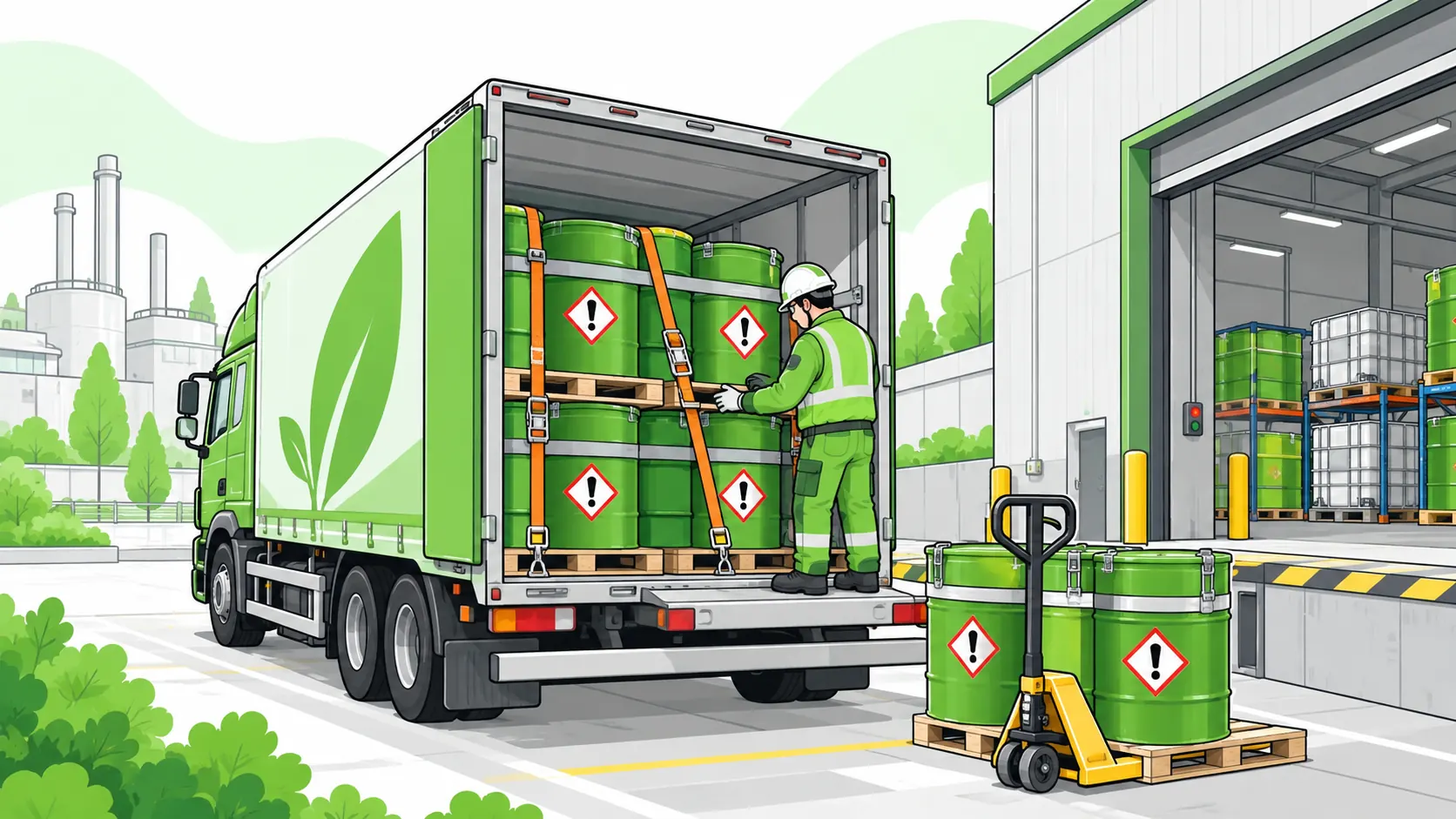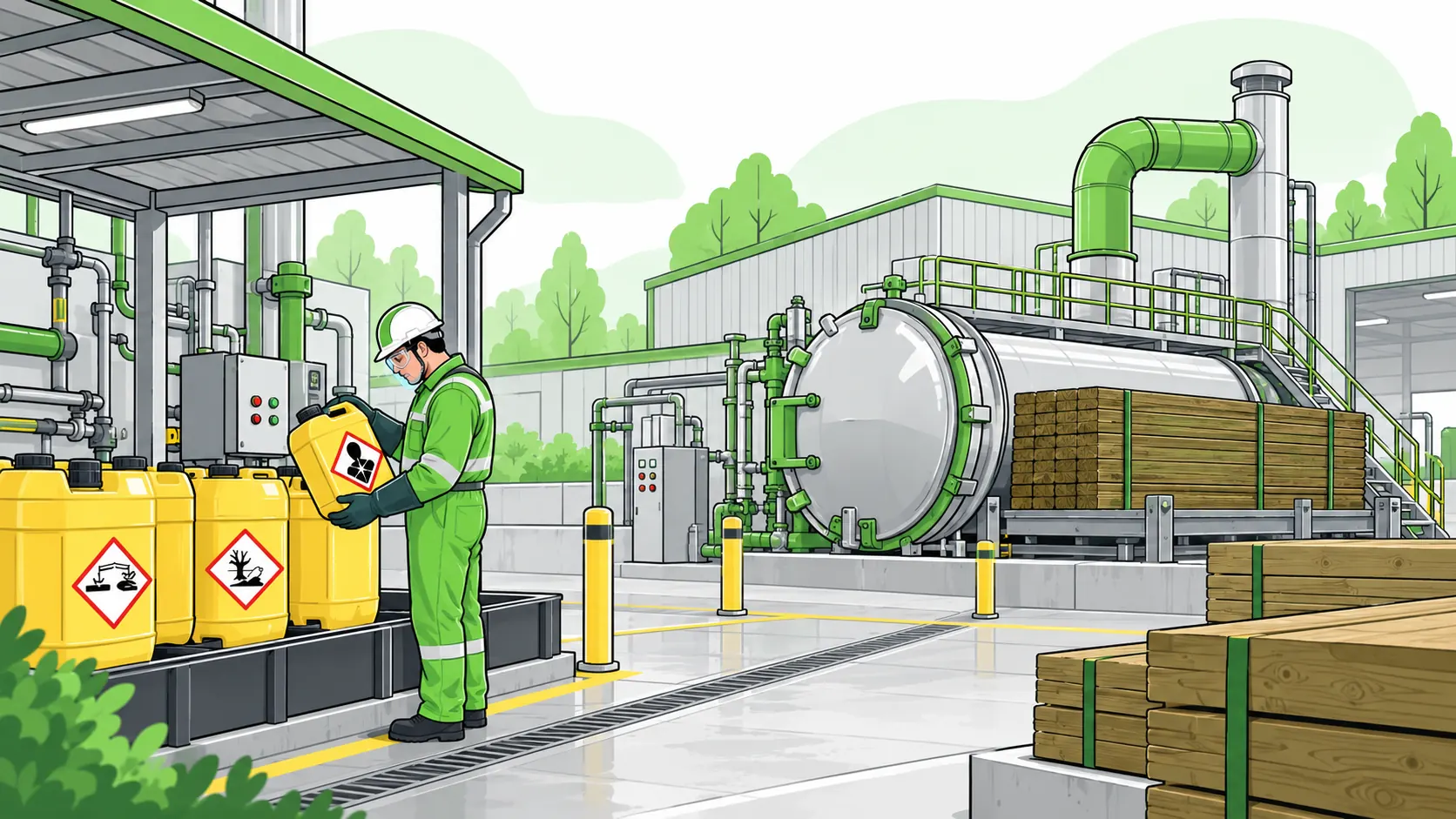
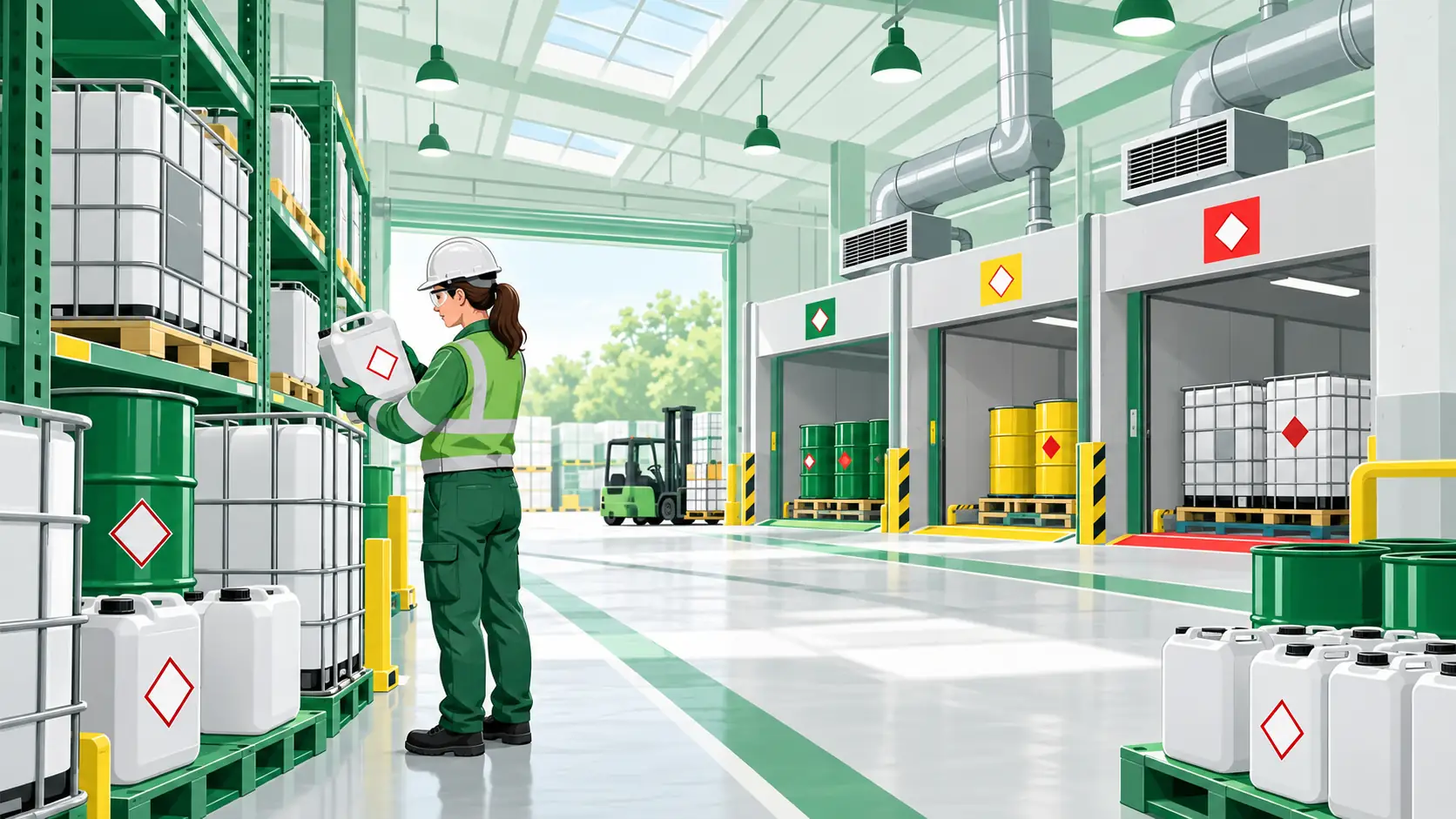
The CLP Regulation — Regulation (EC) No 1272/2008 — is the European Union's legally binding framework requiring manufacturers, importers, and downstream users to classify chemical hazards and communicate them through standardised label elements including pictograms, signal words, and hazard statements. It implements the UN Globally Harmonised System within the EU and is administered by the European Chemicals Agency (ECHA). CLP works alongside REACH to protect workers, consumers, and the environment from chemical risks.
Regulatory content in this article reflects general HSE professional understanding of EU and GB requirements as of 2025. It is not legal advice. Specific compliance questions, enforcement situations, or prosecution risk should be directed to qualified legal counsel in the applicable jurisdiction.
What Is the CLP Regulation and Why Does It Matter for Workplace Safety?
Regulation (EC) No 1272/2008 carries a title most people shorten to three letters, but those three letters govern every hazard label on every chemical container in a European workplace. CLP — Classification, Labelling, and Packaging — is the EU's legal mechanism for translating chemical hazard data into the standardised warnings that drive safety data sheets, COSHH assessments, storage segregation decisions, and emergency response. It is directly applicable across all EU member states without national transposition. ECHA administers the regulation, and the C&L Inventory now holds data on approximately 350,000 substances, with over 4,400 harmonised classifications and 7 million industry self-classifications (ECHA, 2025).
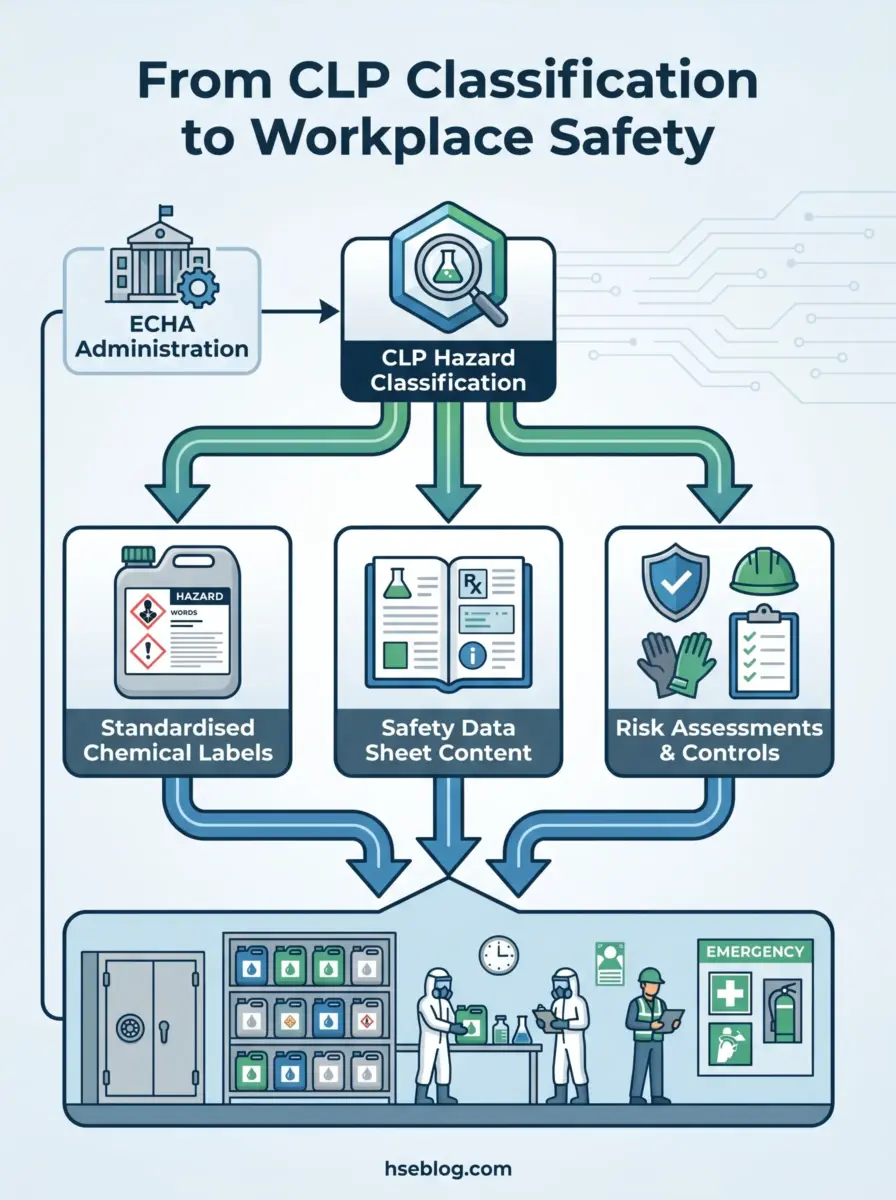
CLP replaced two older directives — the Dangerous Substances Directive (67/548/EEC) and the Dangerous Preparations Directive (1999/45/EC) — from 1 June 2015. The practical consequence for anyone managing chemicals on site is straightforward: CLP classification is the starting point for hazard communication. It determines what appears on the label, what goes into Sections 2 and 3 of the safety data sheet, and what triggers downstream risk management obligations. For a fuller explanation of the regulation's legal architecture, ECHA's official CLP guide provides the institutional reference.
A pattern worth flagging: many downstream users treat CLP classification as something that arrives pre-determined from the supplier. In reality, anyone formulating mixtures holds their own classification obligation. This is one of the most common compliance gaps surfaced during enforcement inspections — and one that connects upstream classification quality directly to workplace hazard communication accuracy.
How CLP Implements the UN Globally Harmonised System (GHS)
The Globally Harmonised System of Classification and Labelling of Chemicals is a UN framework, not a regulation. It has been available since 2003 and provides standardised hazard classification criteria alongside harmonised label elements — pictograms, signal words, hazard statements, and precautionary statements. The distinction matters: GHS is a set of recommendations. CLP is the EU's legally binding implementation of those recommendations.
The relationship is not a simple copy. CLP includes EU-specific provisions that GHS does not — supplemental hazard information coded as EUH statements, for example, and specific concentration limits that differ from GHS defaults. More significantly, the EU has now moved ahead of GHS by introducing hazard classes for endocrine disruption, PBT/vPvB, and PMT/vPvM properties through Delegated Regulation (EU) 2023/707. These classes do not yet exist in the UN GHS framework. The EU has proposed their adoption at the UN level, creating a reversal of the usual relationship where international frameworks lead and regional implementations follow.
Jurisdiction Note: A common misconception is that "GHS-compliant" means universally identical labelling. A product classified as CLP-compliant may still require re-classification for the US market because OSHA's Hazard Communication Standard (29 CFR 1910.1200) aligns to a different GHS revision and applies different cut-off values for certain hazard categories. Similarly, Australia's WHS Regulations implement GHS building blocks selectively. "GHS-aligned" does not mean "identical."
| Aspect | EU CLP | OSHA HazCom (US) | UN GHS |
|---|---|---|---|
| Legal status | Binding EU regulation | Binding federal standard | Voluntary recommendations |
| Administering body | ECHA | OSHA | UN SCEGHS |
| GHS revision alignment | 7th/8th revised edition | 7th revised edition (2024 final rule) | Current: 10th revised edition |
| New ED/PBT/PMT classes | Yes (2023) | No | Not yet adopted |
| Digital labelling provision | Yes (voluntary supplement, 2024) | No | No |
Who Must Comply with CLP? Scope and Duty Holders
Four categories of duty holder carry obligations under CLP, and the distinctions between them determine the scope and nature of those obligations.
Manufacturers and importers bear the primary classification burden. They must classify substances based on available hazard data, label and package them in compliance with CLP, and notify the C&L Inventory within one month of placing a substance on the EU market. Downstream users — companies that use substances or mixtures in industrial or professional activities, including formulators of mixtures — must classify and label the mixtures they create. They must also assess whether their suppliers' classifications are adequate for the uses they intend. Distributors do not alter substances but must ensure that labelling and packaging remain compliant throughout the supply chain.
CLP covers substances, mixtures, and certain articles such as explosives. It excludes radioactive substances, non-isolated intermediates, substances under customs supervision not yet released for free circulation, and waste as defined by the Waste Framework Directive.
The judgment call that catches companies most often involves the distinction between "importer" and "distributor." Under CLP, an importer is an entity bringing substances from outside the EU into the EU market. A distributor supplies within the EU without altering the substance. Post-Brexit, many former EU-based downstream users became importers for GB CLP purposes — a shift in legal obligation that some companies have not yet recognised.
Substances vs Mixtures vs Articles: What CLP Covers
These three categories trigger different CLP requirements. Substances (chemical elements and their compounds) and mixtures (two or more substances intentionally combined) are subject to full classification, labelling, and packaging obligations. Articles — objects given a specific shape, surface, or design that determines their function — generally fall outside CLP's scope unless they contain substances intended to be released during normal or reasonably foreseeable use, or unless they are classified as explosives. The boundary can be less clear than it appears: treated wood, coated materials, and articles containing fragranced substances have all raised classification questions in enforcement practice.
CLP Hazard Classes: Physical, Health, Environmental, and Additional Hazards
CLP organises chemical hazards into classes, each divided into categories that reflect severity. Classification involves evaluating available data — test results, published literature, analogous substance data — against defined criteria. The structure runs: hazard class → hazard category → hazard statement code → pictogram assignment.
Physical hazards span 17 classes, covering explosives, flammable gases, flammable liquids, flammable solids, oxidising substances, gases under pressure, self-reactive substances, pyrophoric materials, self-heating substances, substances reactive with water, organic peroxides, corrosive to metals, and desensitised explosives. Health hazards include 10 classes: acute toxicity (four categories by route of exposure), skin corrosion and irritation, serious eye damage and irritation, respiratory and skin sensitisation, germ cell mutagenicity, carcinogenicity, reproductive toxicity, specific target organ toxicity (single and repeated exposure), and aspiration hazard. Environmental hazards address acute and chronic aquatic toxicity.
The 2023 additions changed the landscape substantially. Delegated Regulation (EU) 2023/707 introduced four new hazard classes: endocrine disruption for human health (ED HH, Categories 1 and 2), endocrine disruption for the environment (ED ENV, Categories 1 and 2), persistent, bioaccumulative, and toxic / very persistent and very bioaccumulative properties (PBT/vPvB), and persistent, mobile, and toxic / very persistent and very mobile properties (PMT/vPvM).
Watch For: The message that "no new testing is required" for the new hazard classes is accurate — CLP requires assessment of existing data, not generation of new data. But "no new testing" does not mean "no action." Companies must review existing toxicological, ecotoxicological, and environmental fate data for their entire substance portfolio and document their assessment conclusions. That documentation obligation exists even when the conclusion is that data are insufficient for classification. Many companies have not begun this work despite the May 2025 obligation date for new substances.
Harmonised Classification vs Self-Classification
When Annex VI of CLP assigns a harmonised classification to a substance, that classification is mandatory for every supplier placing the substance on the EU market. Harmonised classifications are agreed at EU level, typically for substances classified as carcinogenic, mutagenic, or toxic for reproduction (CMR, Categories 1A and 1B) and respiratory sensitisers, though other substances may be harmonised on a case-by-case basis.
Where no harmonised classification exists, the manufacturer or importer must self-classify the substance using available data and sound scientific judgment. Self-classification entries appear in the C&L Inventory, and disagreements between notifiers show up as divergent entries — multiple companies classifying the same substance differently. Under the 2024 CLP revision (Regulation (EU) 2024/2865), notifiers must now provide reasons when their self-classification diverges from the majority view in the Inventory. This is a direct response to the long-standing problem of unjustified classification inconsistencies that undermine hazard communication credibility.
CLP Labelling Requirements: Pictograms, Signal Words, and Hazard Statements
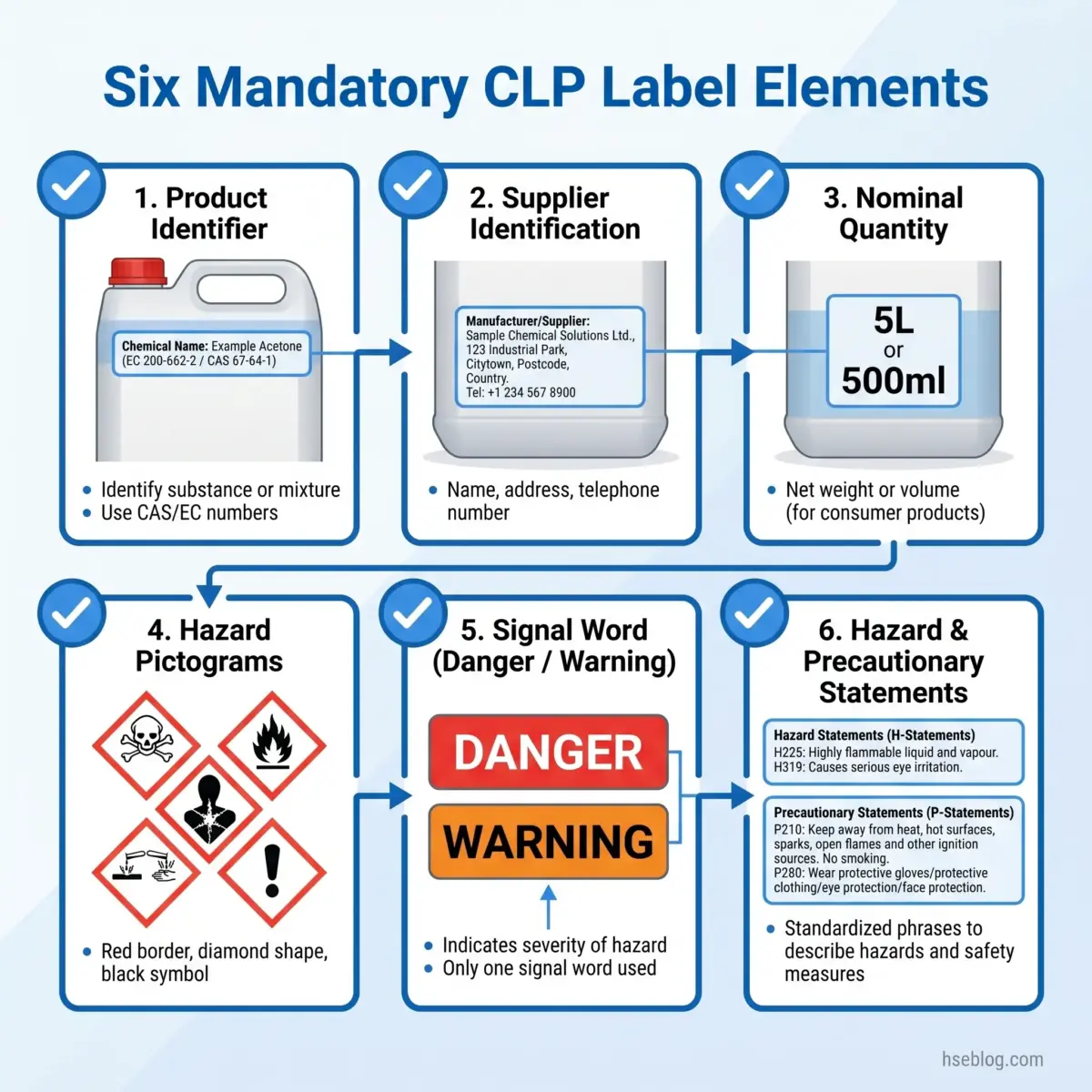
Article 17 of CLP defines six mandatory label elements: product identifier, supplier identification, nominal quantity (for substances/mixtures supplied to the general public), hazard pictograms, signal words, and hazard and precautionary statements. Each element serves a specific communication function, and getting any of them wrong is the most commonly cited non-compliance in enforcement inspections.
Nine GHS pictograms are used under CLP — each a diamond shape with a red border, white background, and black symbol. Every pictogram must cover at least one-fifteenth of the label surface area, with a minimum size of 1 cm². The pictograms are not interchangeable: precedence rules under Article 26 prevent label overload. When GHS01 (exploding bomb) is required, GHS02 (flame) and GHS03 (flame over circle) become optional. When GHS06 (skull and crossbones — acute toxicity) is required, GHS07 (exclamation mark) does not appear.
Signal words are binary: "Danger" for more severe hazard categories, "Warning" for less severe. Only one signal word appears per label, and "Danger" takes precedence when both would otherwise apply.
The 2024 CLP revision brought significant changes to label format requirements. Labels must now use sans-serif fonts with black text on white background, subject to minimum font sizes determined by container volume. Line spacing requirements apply. Fold-out labels — previously restricted to small containers — are now permitted for all products. Digital labelling was introduced as a voluntary supplement: a QR code or data carrier linking to a digital label containing all Article 17 elements, accessible free of charge for at least 10 years.
Audit Point: Regulation (EU) 2025/2439, published in December 2025, postponed several of these label format provisions from 2026 to 1 January 2028 — including the font size, advertising, and refill station rules. However, the underlying hazard class assessment obligations remain on their original schedule. Companies that delay classification work until the label-format deadline will find themselves doing classification and label-content work simultaneously under pressure. The operational advice is to decouple the two: classify now, redesign labels when format rules apply.
CLP Packaging Requirements: Safety Beyond the Label
CLP's packaging provisions receive far less attention than its labelling rules, but they carry their own enforcement weight. The general requirement is functional: containers must withstand normal handling stresses and must not react with their contents in a way that compromises integrity.
Specific provisions target consumer protection. Child-resistant fastenings are mandatory for substances and mixtures supplied to the general public that carry certain classifications — acute toxicity, STOT-SE Category 1, skin corrosion, aspiration hazard — as well as methanol at concentrations of 3% or above and dichloromethane at 1% or above. Tactile warnings (a raised triangle perceptible by touch) must appear on packaging supplied to the public for products with specified hazard classifications.
The 2024 revision introduced entirely new territory: rules for refill stations. Companies operating refill systems for cleaning products, paints, or solvents must now treat each dispensing point as a labelling obligation. Certain hazardous substances are prohibited from sale via refill stations altogether. This is an area where enforcement frameworks are still developing, and many retailers have not yet integrated refill-point compliance into their CLP management systems.
How CLP Relates to REACH and Safety Data Sheets
The question "what is the difference between CLP and REACH" is one of the most searched queries in EU chemicals compliance, and the answer is complementary rather than competitive. CLP classifies hazards and communicates them. REACH — Regulation (EC) No 1907/2006 — handles the registration, evaluation, authorisation, and restriction of chemicals. They are two pillars of a single EU chemicals policy framework, both administered by ECHA.
| Aspect | CLP | REACH |
|---|---|---|
| Core function | Classify hazards, label, package | Register, evaluate, authorise, restrict |
| Key output | Labels, C&L notifications | Registration dossiers, SDSs, authorisations |
| Applies to | Substances and mixtures on EU market | Substances manufactured/imported ≥1 tonne/year |
| Primary obligation | Classification and hazard communication | Substance data submission and risk management |
The connection between the two is direct: CLP classification drives the content of SDS Section 2 (Hazards identification) and shapes the exposure scenarios attached to extended safety data sheets under REACH. A substance's REACH registration dossier must be consistent with its CLP notification. When they diverge, enforcement authorities treat the inconsistency as a compliance failure in both regulations.
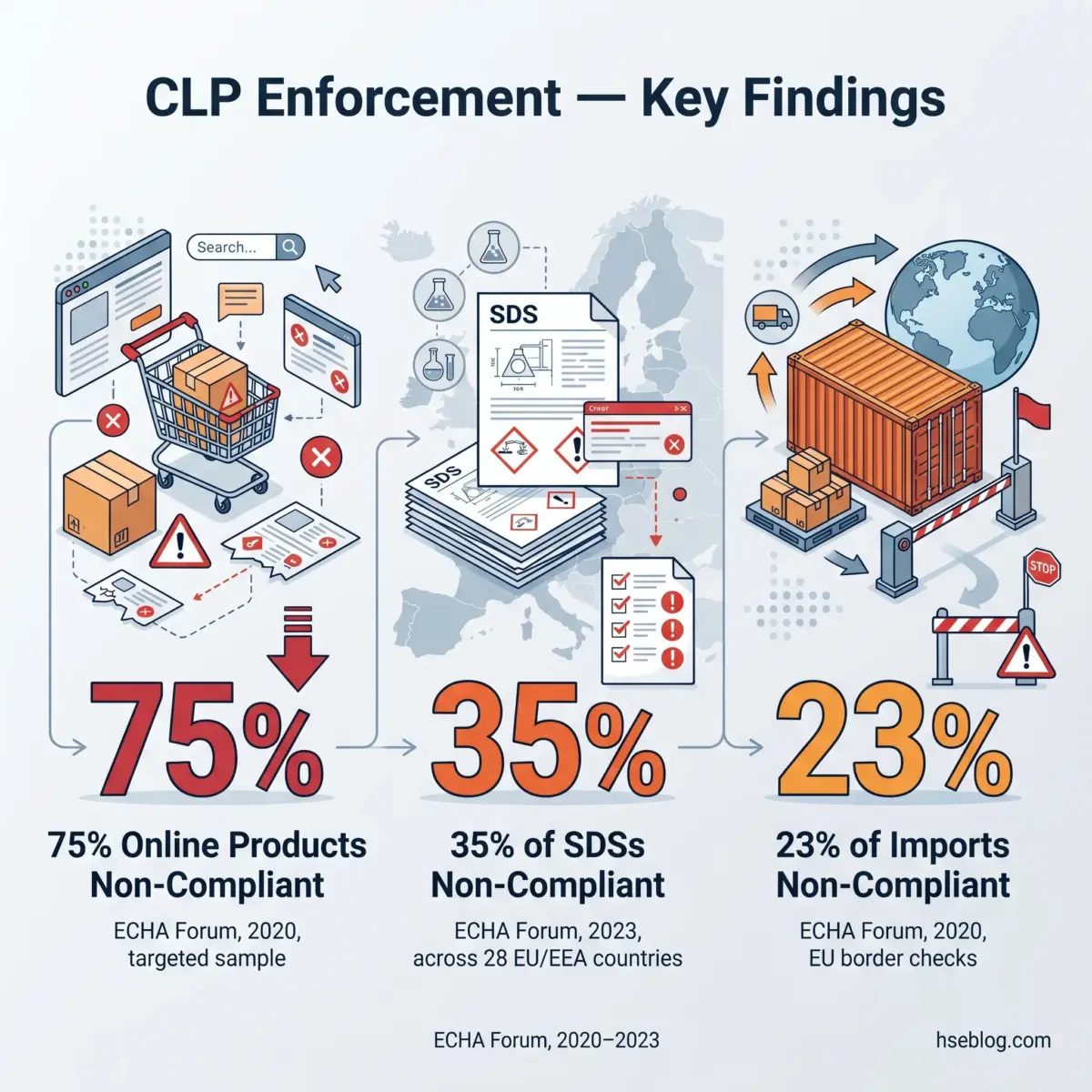
Enforcement data confirms this linkage. ECHA's REF-11 enforcement project found 35% of safety data sheets non-compliant across 28 EU/EEA countries (ECHA Forum, 2023), with a significant proportion of errors traceable to outdated or incorrect CLP classifications that had not been updated when Annex VI ATPs revised harmonised entries. The pattern is consistent: classification errors upstream produce labelling and SDS failures downstream.
GB CLP After Brexit: What Changed for the UK?
From 1 January 2021, EU CLP was retained in Great Britain's domestic law as "GB CLP," applying in England, Scotland, and Wales. EU CLP continues to apply in Northern Ireland under the Windsor Framework. HSE became the GB CLP Agency, assuming the ECHA functions for Great Britain.
All EU harmonised classifications in force on 31 December 2020 were retained as the GB Mandatory Classification and Labelling (GB MCL) list. EU Adaptations to Technical Progress (ATPs) published after that date do not automatically apply in GB — they undergo independent GB assessment, meaning classifications can diverge over time.
The most significant divergence is structural: the new EU hazard classes for endocrine disruptors, PBT/vPvB, and PMT/vPvM have not been adopted into GB CLP. Companies operating across both markets now maintain two classification regimes that started identically but are drifting apart.
| Divergence Point | EU CLP | GB CLP |
|---|---|---|
| New hazard classes (ED, PBT, PMT) | Adopted (2023) | Not adopted |
| SDS format edition | 8th revised GHS edition | 7th revised edition |
| UFI requirement | Mandatory on labels | Voluntary |
| Digital labelling | Voluntary supplement (2024) | No provision |
| Administering body | ECHA | HSE (GB CLP Agency) |
| Harmonised classification updates | Ongoing ATPs | Independent GB assessment |
The temptation for dual-market operators is to use the stricter EU classification for both markets, avoiding the cost of maintaining parallel systems. That approach carries its own risk: over-classification in GB may trigger unnecessary downstream regulatory burdens under UK-specific workplace legislation. The judgment call requires case-by-case assessment against both classification regimes.
CLP Enforcement: Compliance Checking and Penalties
Enforcement under CLP is a national responsibility. Each EU member state designates its own enforcement authorities, and ECHA coordinates cross-border enforcement through the Forum for Exchange of Information on Enforcement. The enforcement picture that emerges from coordinated projects is sobering.
A 2020 ECHA enforcement project targeting suspected non-compliant products sold online found 75% non-compliant with CLP labelling requirements (ECHA Forum, 2022). That figure represents targeted inspections of suspected non-compliant products — it does not reflect overall market compliance — but it illustrates the scale of the problem in online sales channels where enforcement has historically been weaker. Separately, a pilot project checking imports at EU border entry points found 23% of approximately 1,400 products non-compliant with REACH and CLP requirements across 16 member states (ECHA, 2020).
The most common non-compliances are visible ones: missing or incorrect pictograms, absence of required national-language labelling, signal word errors, and divergence between the label and the safety data sheet. However, the upstream classification errors that produce these visible failures are harder to detect and typically surface only during SDS audits or post-incident investigations.
CLP Article 47 requires penalties to be "effective, proportionate and dissuasive," but the specifics are set at member-state level — ranging from written improvement notices to financial penalties and market withdrawal orders. The 2024 revision extended enforcement obligations to online sales: sellers must display hazard information on product listings, and advertisements must include pictograms and signal words.
What Are the New CLP Hazard Classes Introduced in 2023–2025?
Delegated Regulation (EU) 2023/707, which entered into force on 20 April 2023, introduced four hazard classes that did not previously exist in CLP or in the UN GHS framework: endocrine disruption for human health (ED HH, Categories 1 and 2), endocrine disruption for the environment (ED ENV, Categories 1 and 2), persistent, bioaccumulative, and toxic / very persistent and very bioaccumulative properties (PBT/vPvB), and persistent, mobile, and toxic / very persistent and very mobile properties (PMT/vPvM). These additions emerged from the EU's Chemicals Strategy for Sustainability, published in October 2020.
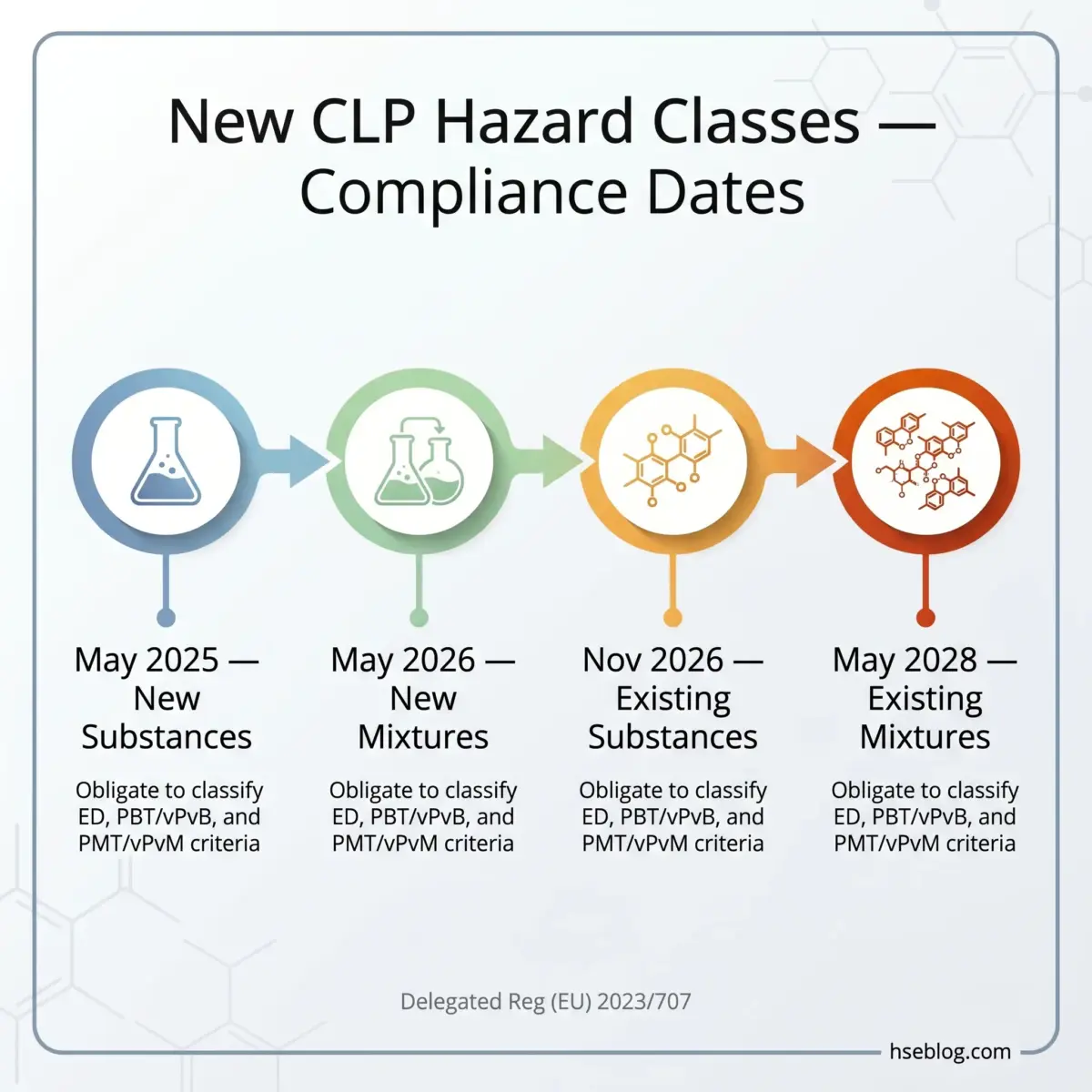
The compliance timeline is staggered. Substances placed on the market after 1 May 2025 must already be classified against these criteria. Mixtures placed on the market for the first time follow from 1 May 2026. For substances and mixtures already on the market, extended deadlines apply: 1 November 2026 for existing substances and 1 May 2028 for existing mixtures. ECHA published updated CLP guidance documents — now reorganised into five parts — in November 2024 to support classification under the new criteria.
The European Commission's CLP overview contextualises these new classes within the broader revision objectives: strengthening hazard identification for chemicals that disrupt hormonal systems or persist in the environment, ahead of international adoption at the UN GHS level.
Frequently Asked Questions
What are the 9 CLP hazard pictograms and what do they mean?
CLP uses nine diamond-shaped pictograms with red borders, white backgrounds, and black symbols. They range from GHS01 (exploding bomb — explosives and self-reactive substances) through GHS09 (environment — aquatic toxicity). Each pictogram is assigned to specific hazard classes and categories. When multiple apply, Article 26 precedence rules prevent redundancy — for example, if GHS06 (skull and crossbones) is required for acute toxicity, GHS07 (exclamation mark) does not appear on the same label.
Is CLP the same as GHS?
No. GHS is a voluntary UN framework providing standardised hazard classification criteria and label elements. CLP is the EU's legally binding implementation of GHS. CLP includes EU-specific provisions — such as EUH supplemental hazard statements — and now contains hazard classes (endocrine disruptors, PBT/vPvB, PMT/vPvM) that do not yet exist in GHS. Other jurisdictions implement GHS differently, meaning a CLP-compliant label may not satisfy US or Australian requirements.
Does the UK still follow CLP after Brexit?
Great Britain retained EU CLP as domestic law from 1 January 2021, now administered by HSE as the GB CLP Agency. Northern Ireland continues to follow EU CLP. However, EU amendments published after Brexit — including the new hazard classes and the 2024 CLP revision — do not automatically apply in GB. The two regimes are diverging, requiring companies operating across both markets to maintain separate classification and labelling assessments.
What is the difference between harmonised classification and self-classification under CLP?
Harmonised classification is agreed at EU level and listed in Annex VI of CLP — it is mandatory for all suppliers of that substance. Self-classification is performed by the individual manufacturer or importer when no harmonised classification exists, using their own hazard data assessment. Under the 2024 revision, notifiers must now justify divergence when their self-classification differs from the majority position in the C&L Inventory.
When do the new CLP hazard classes for endocrine disruptors take effect?
The staggered deadlines run as follows: 1 May 2025 for substances placed on the market for the first time, 1 May 2026 for new mixtures, 1 November 2026 for substances already on the market, and 1 May 2028 for mixtures already on the market. These dates apply to classification and C&L notification obligations. Certain labelling format provisions from the 2024 CLP revision have been delayed to January 2028 by Regulation (EU) 2025/2439, but the classification assessment deadlines remain unchanged.
What is the Unique Formula Identifier (UFI) and when is it required?
The UFI is a 16-character alphanumeric code linking a product's market identity to its exact formulation, used by poison centres for emergency response. Under Annex VIII of CLP, it is mandatory on labels of hazardous mixtures placed on the EU market. In Great Britain, UFI use remains voluntary. The code must appear on the label in a visible, legible, and indelible format, and it changes whenever the mixture's formulation changes beyond defined thresholds.
Conclusion
CLP is not static regulation. The framework that entered force in 2008 is undergoing its most significant evolution in fifteen years, driven by the 2023 new hazard class introduction, the 2024 revision's labelling and digital provisions, and the 2025 timeline adjustments — all operating on overlapping but different schedules. For companies managing chemical portfolios, the immediate operational priority is the new hazard class assessment: classification obligations for new substances are already live, and mixture deadlines follow within the next two years. Waiting for the label format deadline — now pushed to January 2028 — is not a reason to delay the classification work that feeds those labels.
The jurisdictional split between EU CLP and GB CLP adds a layer that did not exist before 2021. Companies treating the two regimes as identical are accumulating compliance risk with each new EU ATP or amendment that GB does not adopt. The divergence on new hazard classes alone means that a substance fully classified under EU CLP may carry no equivalent classification under GB CLP — a gap that propagates through safety data sheets, workplace risk assessments, and supply chain communication.
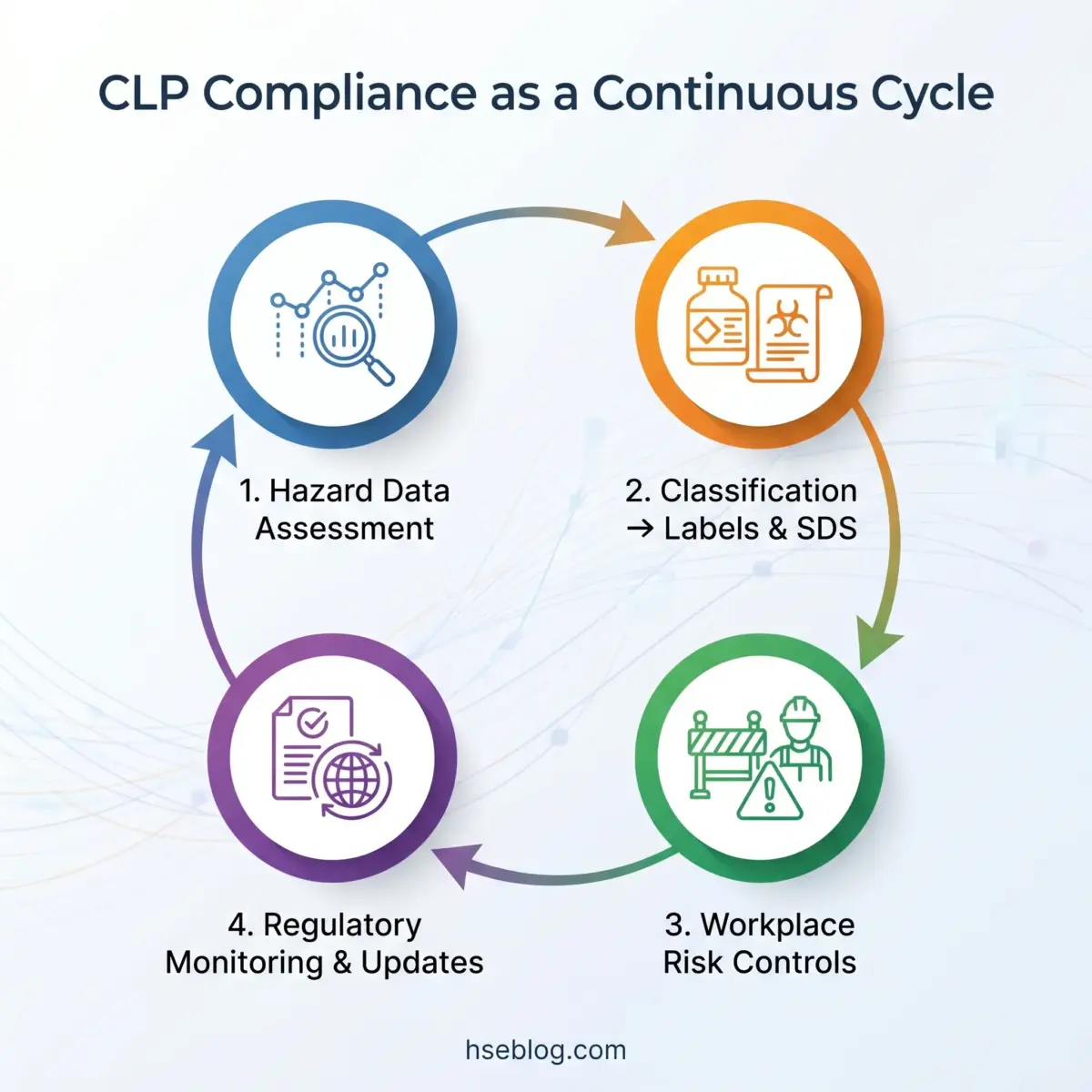
What makes CLP compliance genuinely difficult is not the complexity of any single provision. It is the integration: classification feeding into labelling, labelling feeding into SDS, SDS feeding into workplace controls, all governed by a regulation that is actively being amended across multiple legislative instruments simultaneously. The companies that manage this well are the ones that treat classification as a continuous process linked to regulatory monitoring — not as a one-time exercise completed at product launch.