SOP for Fire Prevention: Components, Development & Compliance

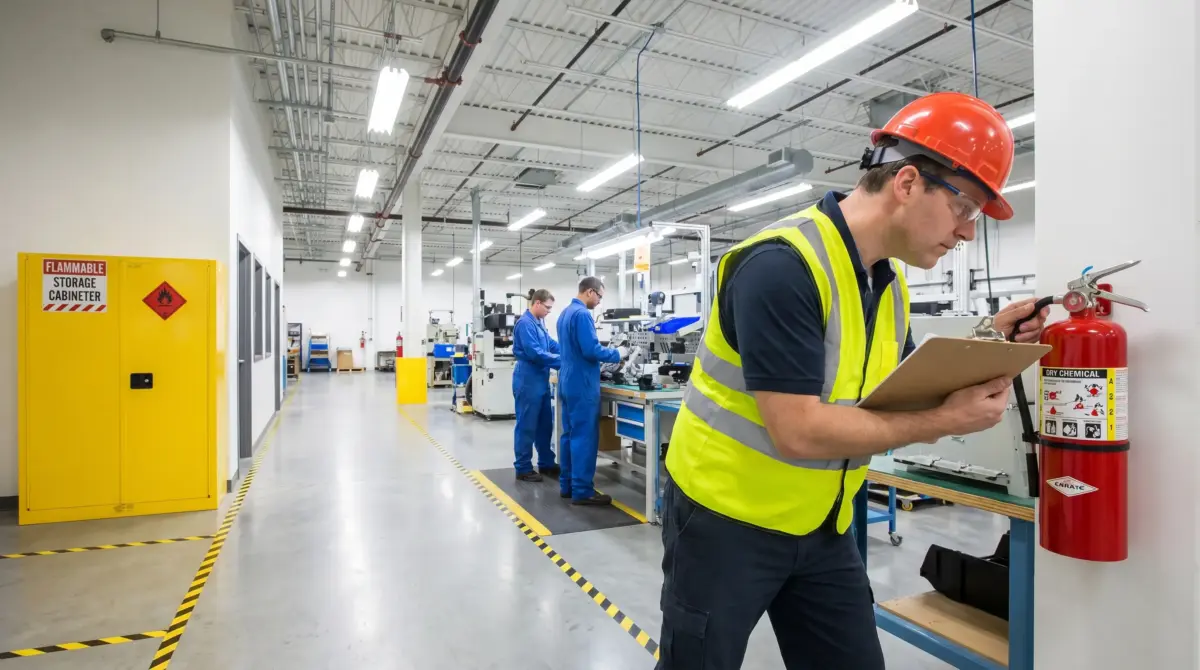
A worker in a red hard hat and high-visibility vest checks a clipboard in an industrial manufacturing facility, with colleagues in blue uniforms working in the background and safety equipment including a flammable storage cabinet and fire extinguisher visible.

TL;DR — What Your Fire Prevention SOP Must Deliver A fire prevention SOP is a documented set of procedures that outlines how an organization identifies fire hazards, controls ignition sources, maintains fire protection systems, manages combustible materials, and trains employees to prevent workplace fires. Required under OSHA 29 CFR 1910.39 in the US and under … Read more

International Workers’ Day: Labor Rights and Workplace Safety

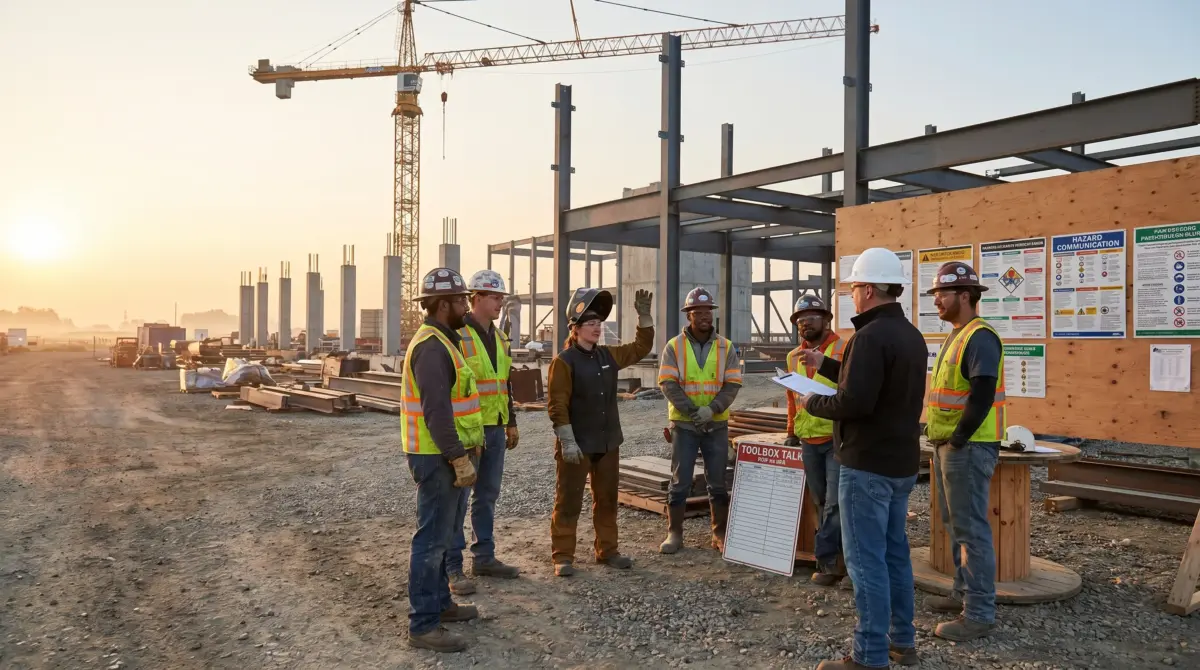
Construction workers in hard hats and safety vests gather around a toolbox talk board on an active job site at sunrise, with steel framing and cranes visible in the background.

TL;DR I was standing on a refinery platform in the Gulf during a turnaround shutdown — 3,000 contractor workers spread across the complex, twelve-hour shifts, compressed timelines. A young scaffolder flagged me down. He had been working fourteen consecutive days without a rest day because his supervisor told him the contract didn’t allow refusal. He … Read more

Visitor Induction: What to Include and Why It Matters | HSE Guide

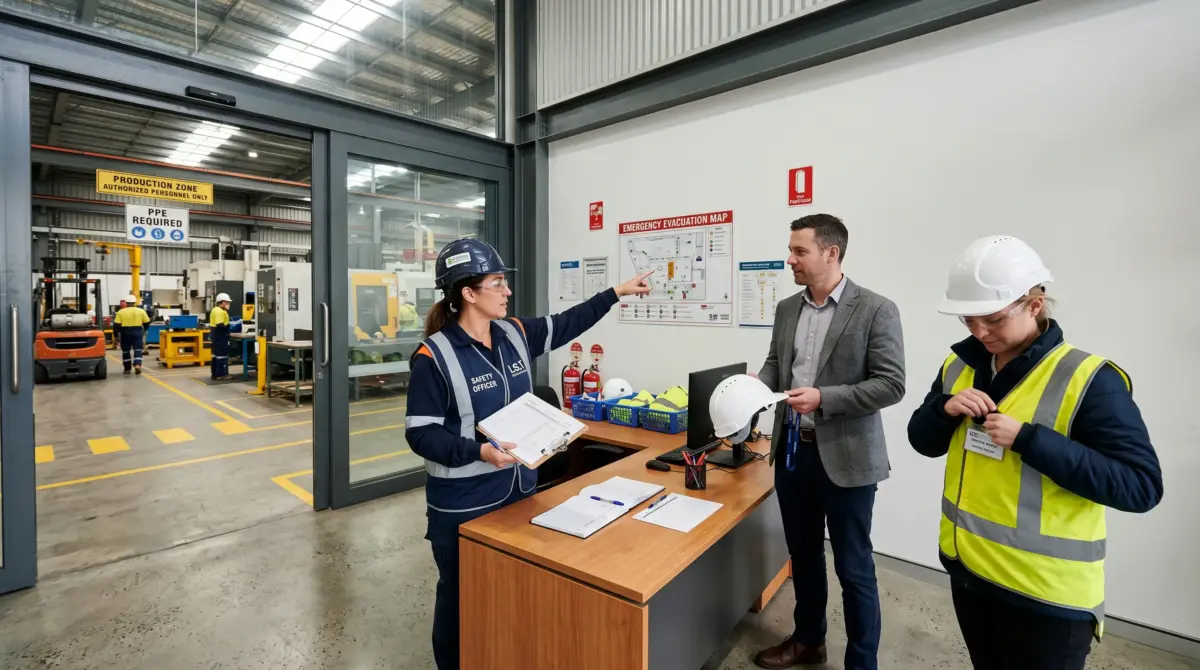
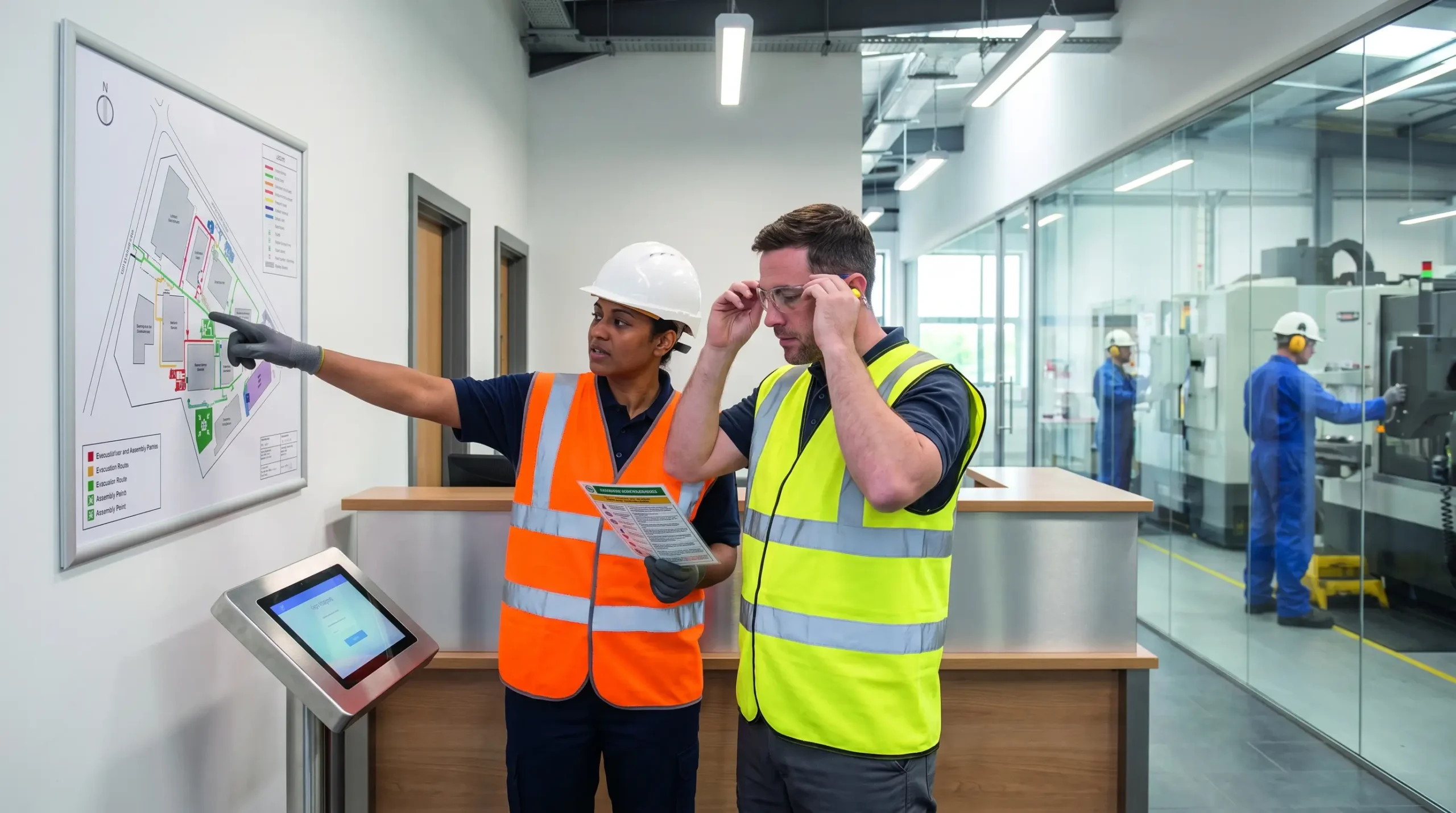
Safety officer in hard hat points to emergency evacuation map while discussing workplace safety procedures with two colleagues in an industrial manufacturing facility.

TL;DR A visitor induction is a structured safety briefing given to any non-employee before they access a workplace. It covers site-specific hazards, emergency procedures, PPE requirements, restricted areas, and behavioural expectations. While no jurisdiction names “visitor induction” in legislation, the obligation to protect visitors is legally established under duty-of-care provisions in the UK (HSWA 1974 … Read more

Maritime PPE: Essential Protective Equipment at Sea

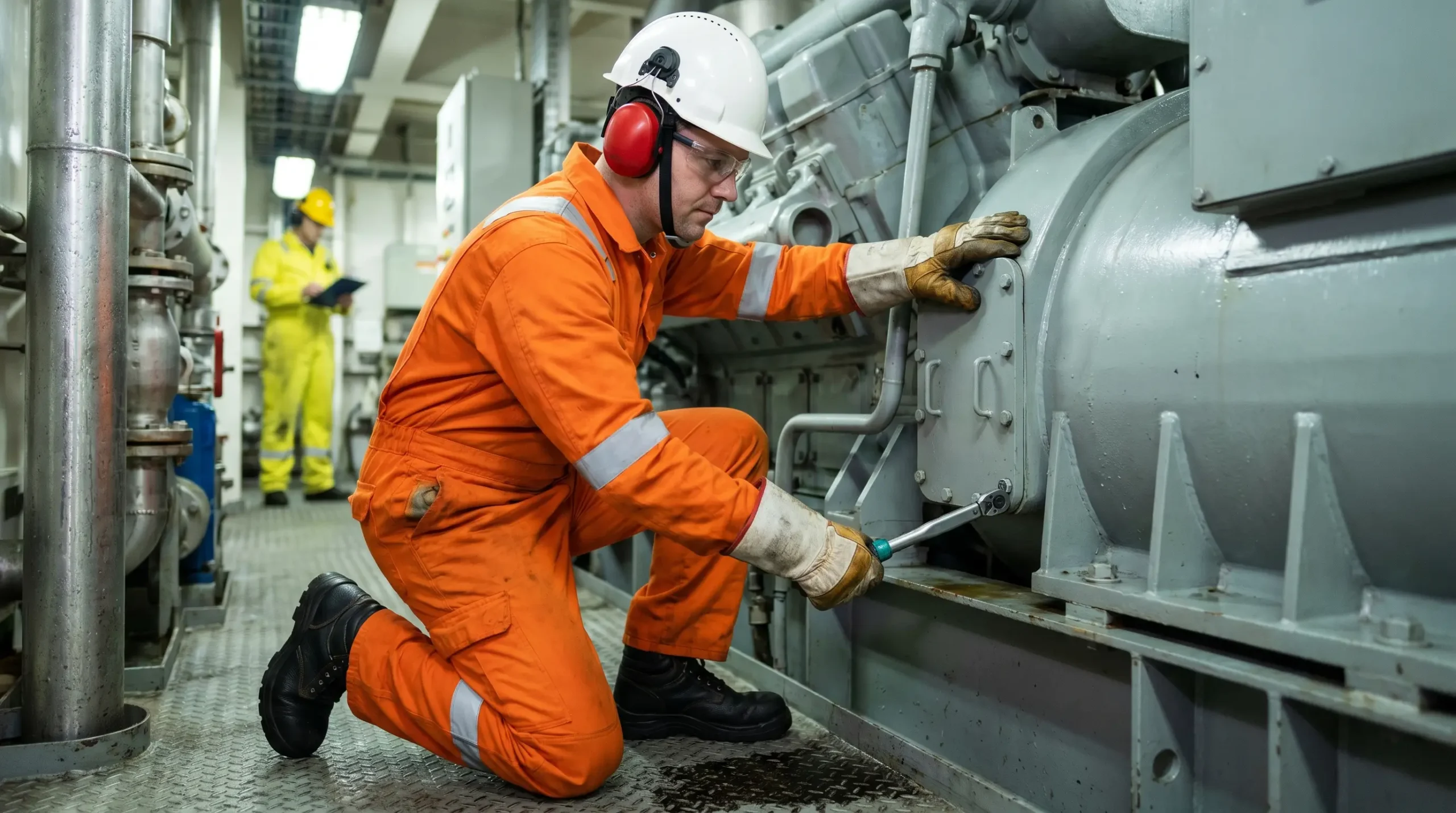
Worker in orange safety suit and white hard hat kneels while adjusting equipment on large industrial machinery in a factory setting with colleagues in background.

TL;DR Maritime PPE is the personal protective equipment shipowners are legally required to provide to seafarers under SOLAS, the MLC 2006, and the ISM Code. It covers head, eye, hearing, respiratory, hand, foot, body, and fall protection, plus lifesaving items such as SOLAS lifejackets and immersion suits — selected through documented hazard assessment for the … Read more

Hydraulic System Safety: Common Failures and Prevention Guide

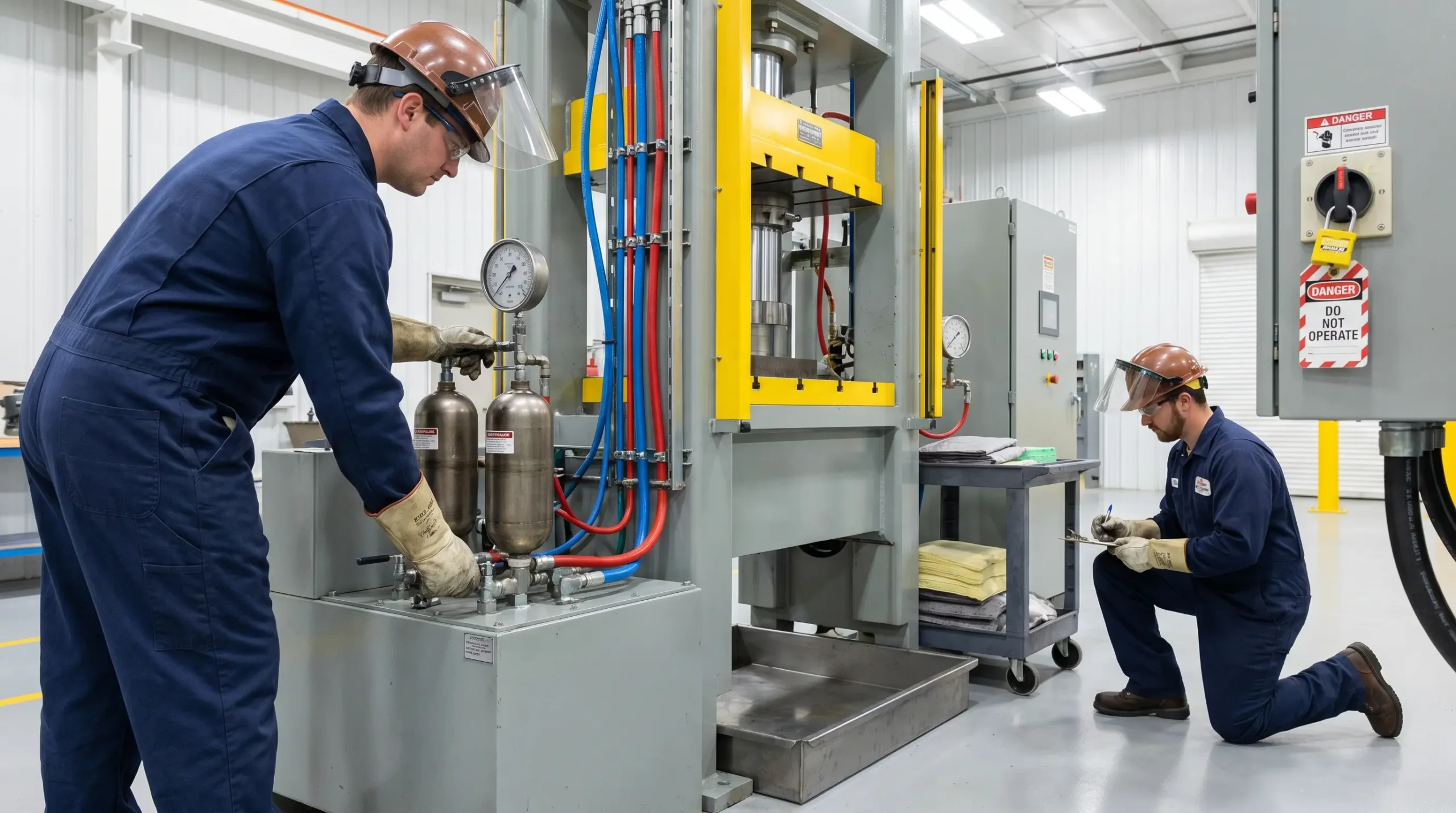
Two technicians in safety gear work in an industrial laboratory, one adjusting pressure gauges on hydraulic equipment while the other prepares materials, with yellow industrial machinery and danger warning signs visible.

TL;DR Hydraulic system safety is the engineering and procedural discipline of preventing injuries from pressurised fluid systems — including high-pressure injection through pinhole leaks, burns from hot fluid, impact from whipping hoses, and crushing from dropped loads. It combines failure-mode prevention, lockout/tagout for stored energy, and emergency medical response for injection injuries. A hydraulic line … Read more

Visitor Safety Management: Risk Tiers & Controls

Two construction workers wearing safety vests and hard hats review a site plan together in an industrial facility, with one pointing at a detailed blueprint on the wall while holding a clipboard.

TL;DR Visitor safety management is the systematic process of identifying, assessing, and controlling health and safety risks to non-employees on a workplace — including clients, contractors, delivery drivers, inspectors, and members of the public. It encompasses risk assessment, induction, emergency accountability, PPE, escort protocols, and visitor data protection, and arises from the employer’s legal duty … Read more

10 Types of Permit to Work Systems With Examples | HSE Guide

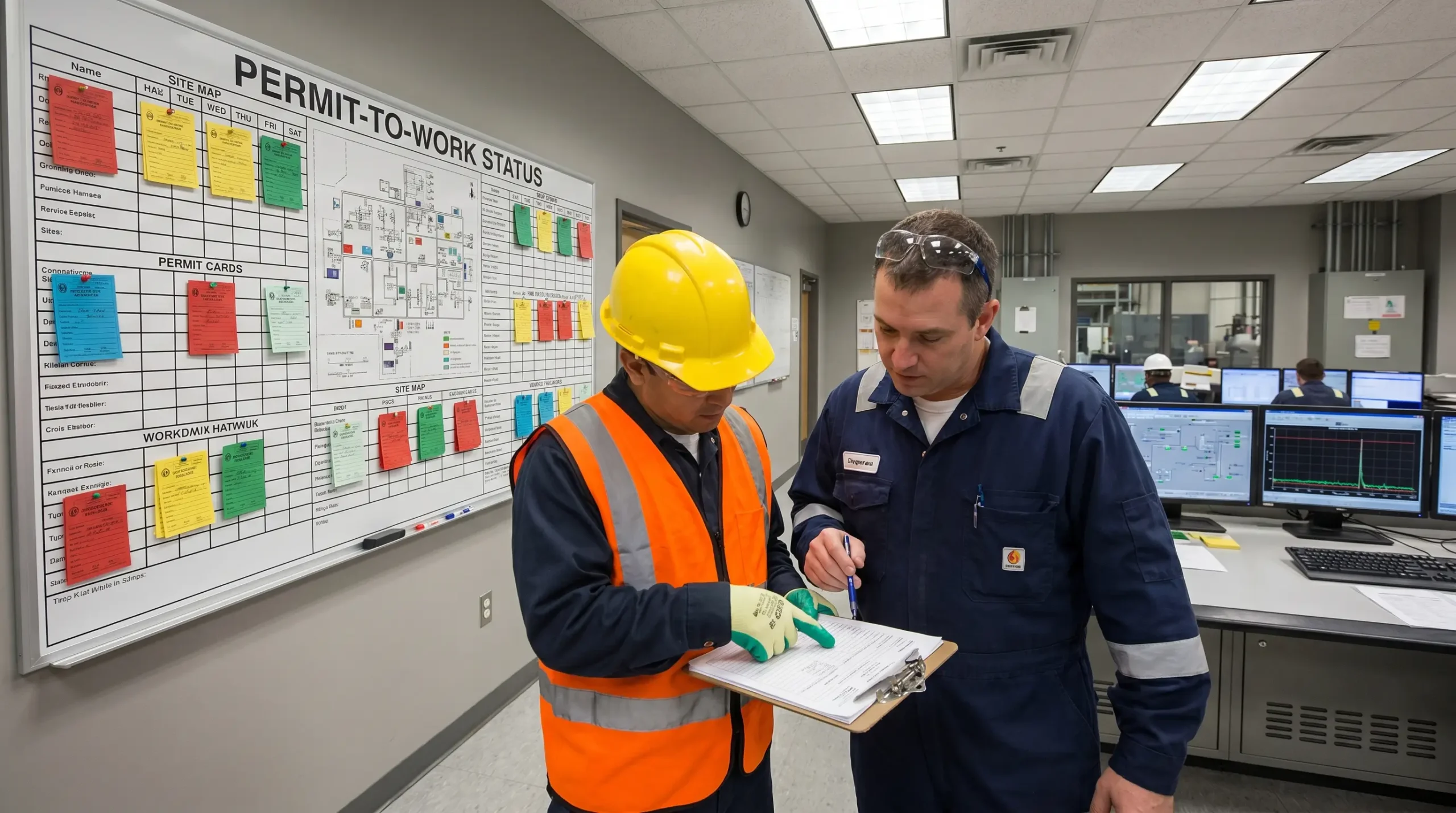
Two construction workers review a clipboard in an industrial control room with a permit-to-work status board displayed on the wall behind them, showing safety documentation and site maps.

TL;DR — What You Need to Know About Permit to Work Types A permit to work (PTW) is a formal documented system that authorizes specific people to carry out defined high-risk work within a set time frame and location. It identifies hazards, specifies required safety controls, assigns responsibilities, and ensures all precautions are verified before … Read more

Flammable Liquids Storage DSEAR: Complete Compliance Guide

Two workers in safety gear inspect a blue hazardous materials drum at an industrial facility marked with explosive warning signs and fire extinguishers.

TL;DR Twenty years ago a coatings plant could keep drums of toluene and xylene stacked against a warehouse wall and call it storage. Since 9 December 2002 that arrangement has been a criminal offence under the Dangerous Substances and Explosive Atmospheres Regulations 2002 — DSEAR — which implements the workplace provisions of ATEX 153 across … Read more