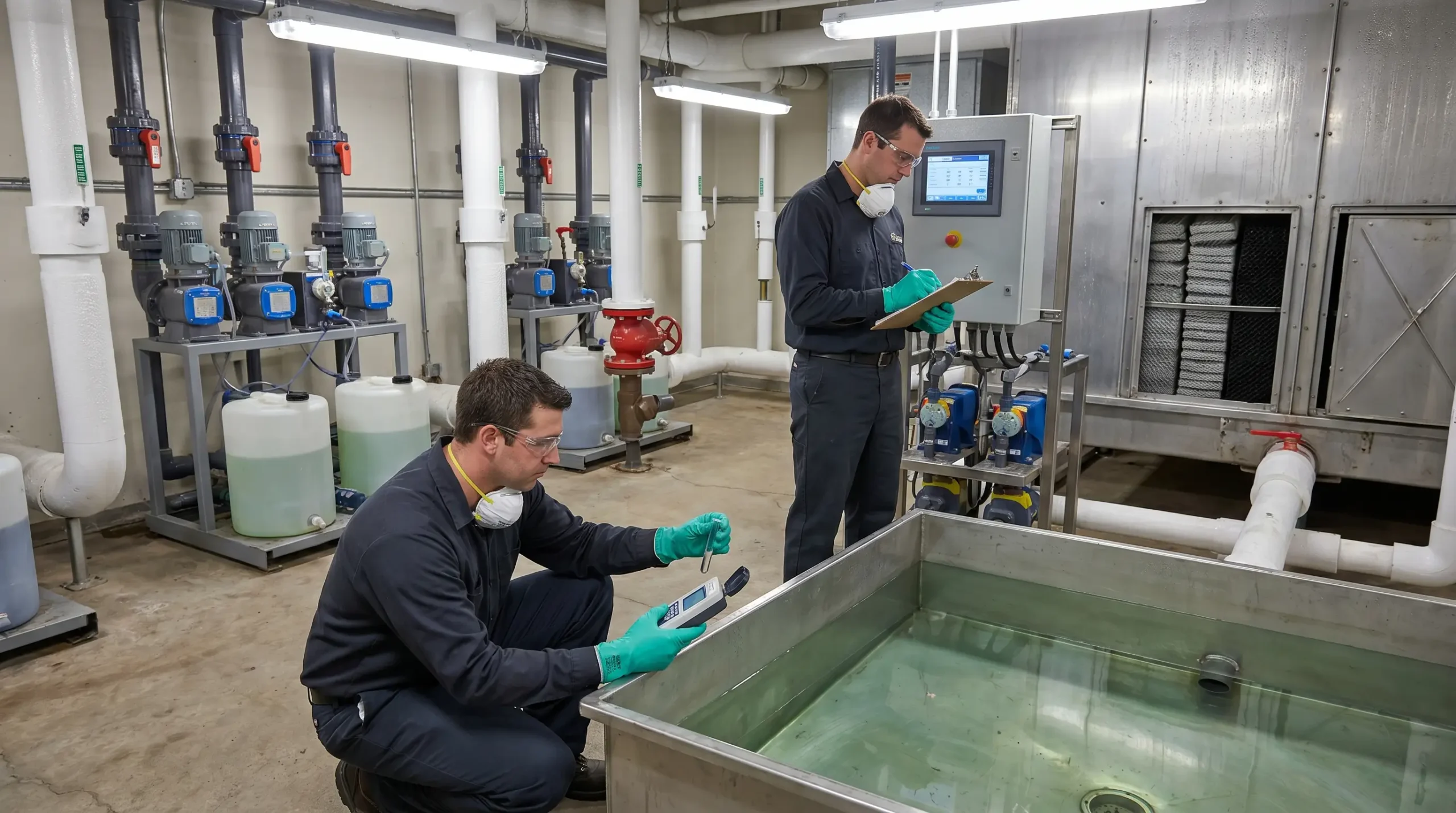
Cooling tower Legionella prevention requires a systematic water management plan that controls four simultaneous growth factors — sediment and biofilm, temperature, water age, and disinfectant residuals. ASHRAE Standard 188-2021 establishes the minimum risk management framework, the CDC's STAR model provides the operational logic, and multiple US states now mandate compliance with enforceable testing, registration, and notification requirements.
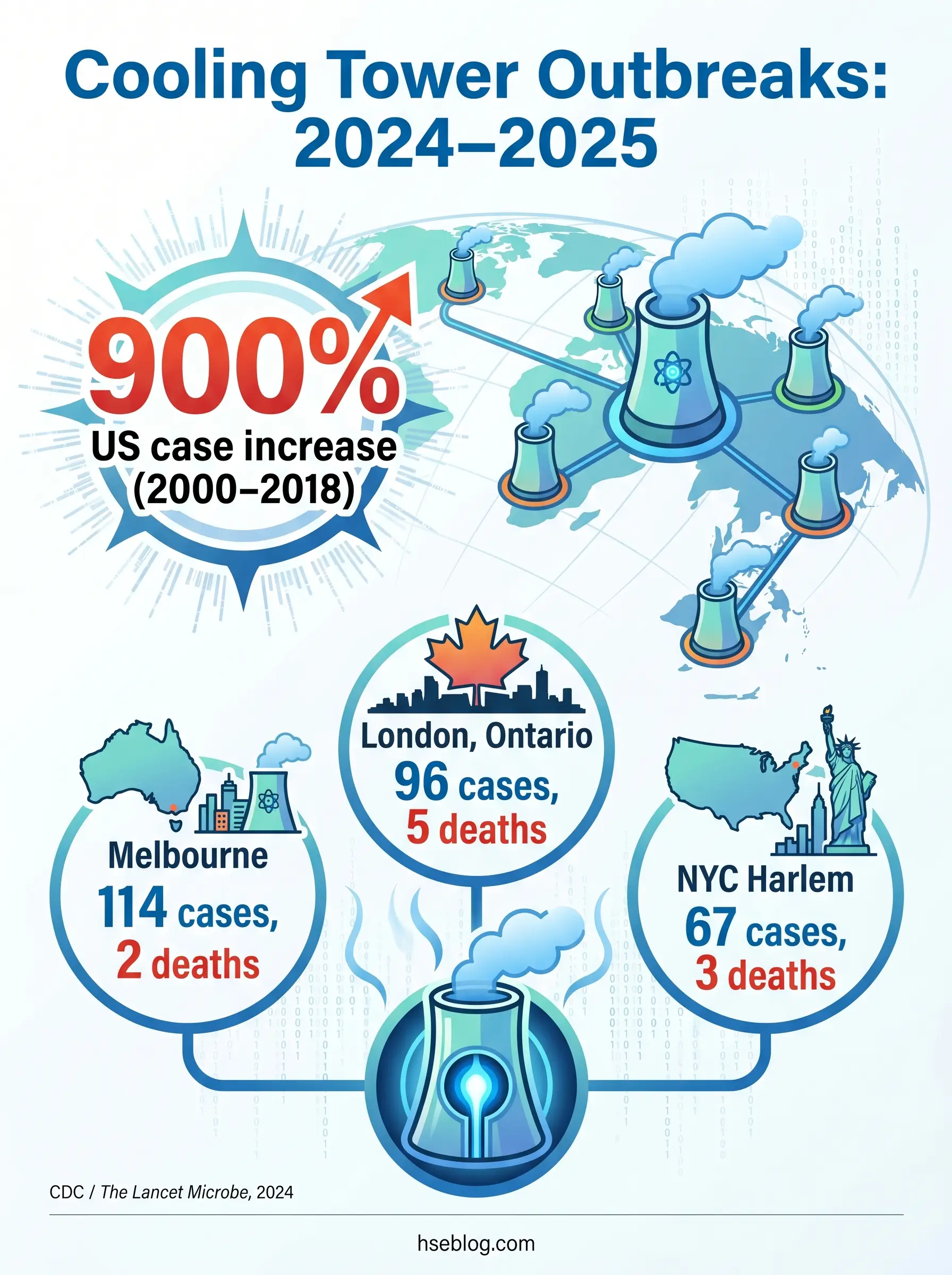
Reported Legionnaires' disease cases in the United States increased by approximately 900% between 2000 and 2018 (CDC surveillance data, referenced in The Lancet Microbe, 2024). That trajectory has not flattened. In 2024 alone, a single cooling tower in Laverton North, Melbourne caused 114 cases and 2 fatalities (Victorian Department of Health / The Lancet Microbe, 2024). In London, Ontario, cooling towers at a meat processing plant were linked to 96 confirmed cases and 5 deaths across 2024–2025 (Middlesex-London Health Unit / Siskinds LLP, 2025). In the summer of 2025, contaminated cooling towers in Harlem, New York City produced 67 cases and 3 deaths — the largest NYC cluster since the 2015 Bronx outbreak (IWC Innovations, reporting NYC Health Department data, 2025). The common factor across every one of these events: cooling towers with inadequate water management.
These are not isolated mechanical failures. They represent a systemic gap between what regulations require and what facilities actually execute on a daily basis. Cooling tower Legionella prevention is not a once-a-year compliance filing — it is a continuous operational discipline that demands understanding the biology, the engineering, the chemistry, and the regulatory framework simultaneously. This article covers all four dimensions, organized around the CDC's STAR risk model, with multi-jurisdictional regulatory requirements synthesized so that facility managers, HVAC professionals, and HSE officers can identify exactly which obligations apply to their operations.
What Is Legionella and Why Are Cooling Towers a Primary Risk Source?
Legionella pneumophila is a gram-negative waterborne bacterium that causes two distinct clinical conditions: Legionnaires' disease — a severe, often fatal pneumonia with a 10–25% case fatality rate in vulnerable populations — and Pontiac fever, a milder, self-limiting flu-like illness. Infection occurs exclusively through inhalation of aerosolized water droplets containing the bacteria. Person-to-person transmission does not occur.
Cooling towers rank among the highest-risk engineered water systems for Legionella proliferation because they combine three conditions the organism requires. First, operating water temperatures typically fall within Legionella's optimal growth range of 25–45°C (77–113°F). Second, the evaporative cooling process concentrates dissolved solids, nutrients, and organic matter that feed bacterial populations. Third — and most critically — cooling towers generate drift: fine water droplets that escape the tower and become airborne. Those aerosols can carry Legionella over distances of hundreds of meters or more, exposing not just building occupants but the surrounding community.
The populations at greatest risk include adults over 50, current and former smokers, immunocompromised individuals, and those with chronic lung disease. This means a contaminated cooling tower on a hospital, senior care facility, or densely occupied commercial building creates an exposure risk that extends well beyond the workforce.
One persistent misconception deserves correction early: closed-circuit cooling towers do not eliminate the Legionella hazard. The closed loop protects the process fluid circulating through the heat exchanger, but the cooling water in the open loop — the water that contacts the atmosphere and generates drift — is subject to the same contamination dynamics as any open-circuit tower. The CDC Legionella Control Toolkit — Cooling Towers Module is explicit on this point: both types require the same basic operation and maintenance protocols.
What Causes Legionella Growth in Cooling Towers? The STAR Risk Factors
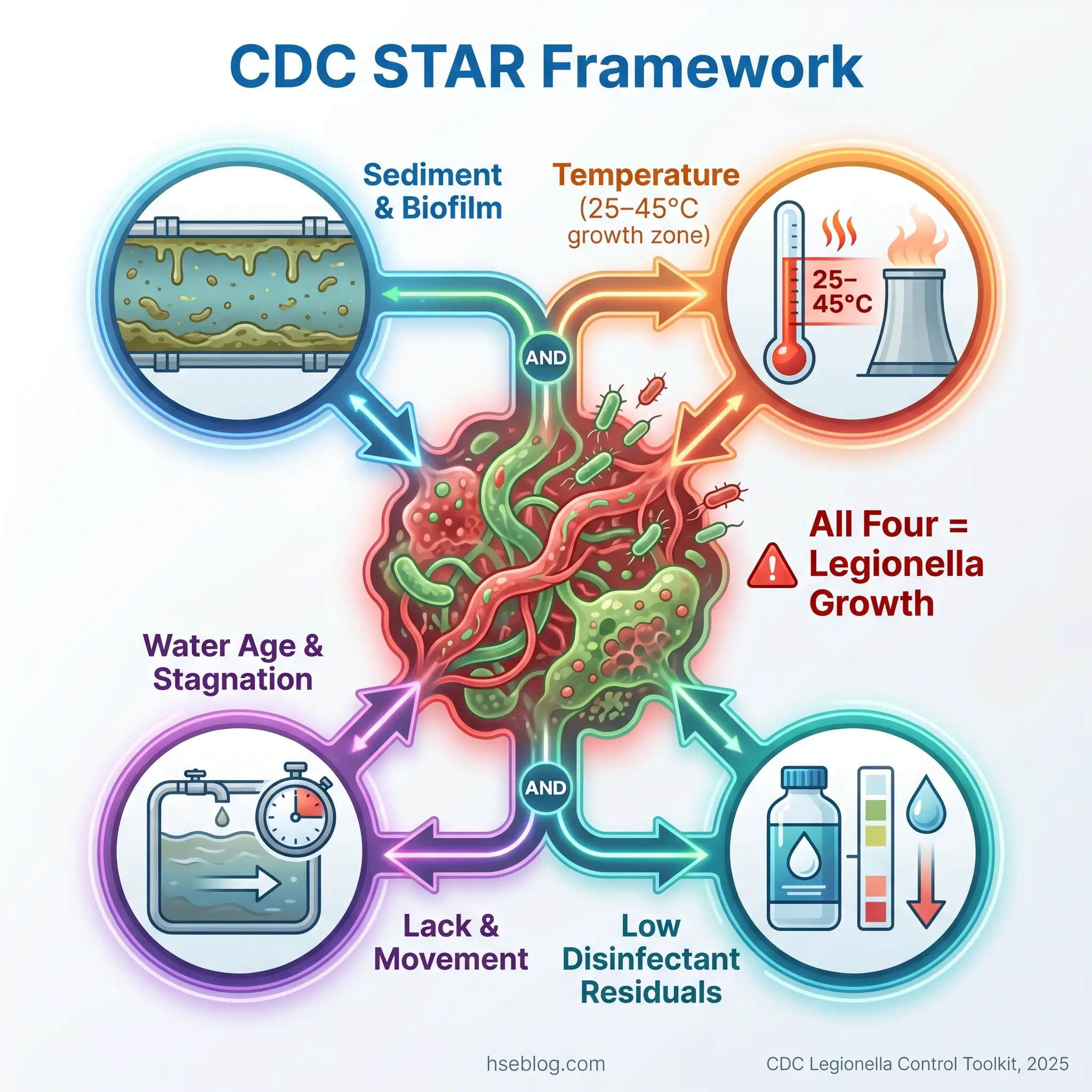
The CDC's STAR framework identifies four interdependent factors that govern Legionella proliferation in cooling water systems. Understanding these factors as a system — not as a checklist of independent items — is what separates effective prevention from the compliance-on-paper programs that fail during outbreaks. Each factor is a necessary condition for bacterial growth; when all four align, the cooling tower becomes an incubation chamber.
Sediment and Biofilm. Organic matter, mineral scale, and corrosion products accumulate in cooling tower basins, fill media, and distribution decks. These deposits serve a dual purpose for Legionella: they provide nutrients for bacterial metabolism, and they form biofilm — a complex microbial community encased in a protective polysaccharide matrix. Biofilm is the critical factor that most water treatment programs underestimate. Once established, biofilm shields Legionella from biocides that would kill free-floating (planktonic) bacteria. A system can show acceptable biocide residuals in the bulk water while harboring thriving Legionella colonies inside biofilm just centimeters away from the sampling point.
Temperature. Legionella multiplies most rapidly between 25°C and 45°C (77–113°F). Below 20°C (68°F), growth is suppressed. Above 60°C (140°F), the bacteria are killed — which is why thermal disinfection at 70°C or above is effective for hot water systems but impractical for cooling towers that operate by design in the danger zone. The operational reality is that temperature control in cooling towers means managing the other three STAR factors more aggressively, because operating temperature cannot be brought outside the growth range without defeating the tower's purpose.
Water Age (Stagnation). Anywhere water sits without circulation or treatment creates conditions for Legionella colonization. Dead legs — pipe sections that branch off the main flow path and carry little or no flow — are the classic stagnation risk. Standby equipment, redundant pumps, and seasonal shutdown without draining all create zones where untreated water sits at favorable temperatures for days, weeks, or months. Published outbreak investigations repeatedly identify stagnation as the factor that allowed colonization to establish before the system was returned to service.
Disinfectant Residuals. Inadequate biocide concentration is the final enabling factor. This failure has several operational causes: underdosing, inconsistent automated feed, biocide degradation at elevated pH, empty chemical containers left unnoticed, and sensor fouling that causes the automated system to report adequate levels when actual residual has dropped. HSE UK's April 2024 update to HSG274 Part 1 specifically added guidance on pH correction of DPD No. 1 free-halogen test results — because without correcting for pH, the test can indicate adequate dosing when biocide efficacy is actually degraded in the alkaline conditions common to cooling water.
The practitioner takeaway is that these four factors are multiplicative. A facility can maintain excellent biocide residuals and still experience Legionella colonization if biofilm has established in dead legs where the biocide never reaches. The most dangerous operational scenario is when one or two STAR factors are well-controlled and the rest are assumed to be acceptable by default.
How to Develop a Cooling Tower Water Management Plan
A water management plan is the governing document for cooling tower Legionella prevention. ANSI/ASHRAE Standard 188-2021 (Sections 5–7) establishes the minimum risk management requirements for building water systems, including a mandatory water management program for any facility operating a cooling tower. In the UK, ACOP L8 and HSG274 Part 1 impose equivalent obligations — a documented risk assessment and written control scheme, with the responsible person identified by name. Both frameworks share the same core logic: identify hazardous conditions, define control measures, monitor, correct, verify, and document.
The practical components of a water management plan include a process flow diagram of the cooling water system (showing every pipe run, dead leg, bypass line, and piece of standby equipment), control locations where monitoring occurs, measurable control limits for each parameter, monitoring frequency, corrective action protocols when limits are exceeded, and a verification and validation schedule to confirm the program is working as intended. ASHRAE Guideline 12-2023 provides detailed implementation guidance for translating the 188 framework into operational reality, including specific control measures for cooling towers.
The distinction between a plan that exists and a plan that works is the single most important concept in this entire article. The most common failure mode across outbreak investigations is a water management program that was professionally written, technically sound, and never operationalized. The document was filed. The staff who maintain the tower daily never read it, were never trained on it, and had no authority to escalate when something went wrong. A well-written plan sitting in a binder is functionally equivalent to no plan at all. The people who open valves, check chemical levels, and clean basins need to understand not just what to do but why — and they need clear escalation pathways when control limits are breached.
Multiple US jurisdictions now mandate compliance with ASHRAE 188 or equivalent frameworks. New York State's 10 NYCRR Subpart 4-1 is the most prescriptive: mandatory cooling tower registration, maintenance per ASHRAE 188, Legionella culture testing every 90 days, inspection every 90 days, annual certification by November 1, and 24-hour notification to the local health department if Legionella culture exceeds 1,000 CFU/mL. Similar frameworks are emerging in Illinois, Michigan, New Jersey, Ohio, and Virginia. The CMS directive requires Medicare-certified healthcare facilities to maintain water management programs consistent with ASHRAE 188.
Roles and Responsibilities in the Program Team
ASHRAE 188 requires a designated program team responsible for the water management plan's implementation and ongoing management. At minimum, this team includes a facility manager with operational authority, a water treatment professional with chemistry and microbiology expertise, and maintenance or operations staff who execute daily tasks. In healthcare settings, an infection preventionist should be part of the team.
Under UK ACOP L8, the equivalent role is the "responsible person" — the duty holder with overall accountability for Legionella risk management. This person need not be the technical expert, but must ensure competent persons are appointed to carry out the actual risk assessment, implement controls, and conduct monitoring. The distinction matters: the responsible person carries the legal liability; the competent persons carry out the technical work.
Audit Point: During compliance audits, the first question is often whether the program team is actually functioning. Can the facility manager name the team members? Can maintenance staff describe the corrective action procedure for a high Legionella result? If the answer to either question is no, the program exists on paper only.
Cooling Tower Maintenance Procedures for Legionella Control
Routine maintenance is where the water management plan either translates into contamination control or collapses into a compliance exercise. The maintenance schedule must address every STAR factor at an appropriate frequency, with clear accountability for who performs each task and how deviations are escalated.
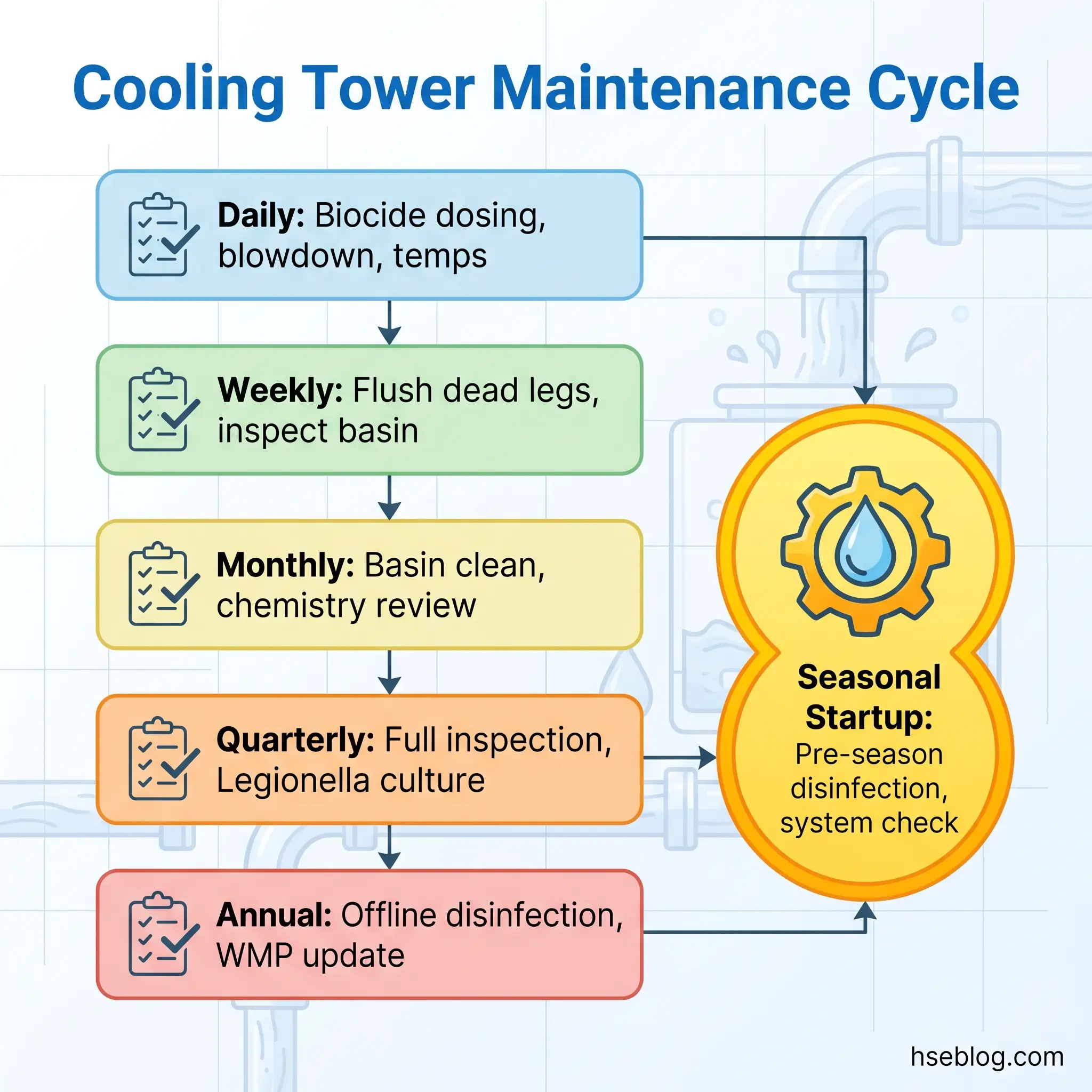
Daily and continuous operations form the foundation. Automated biocide dosing systems must be verified for proper operation — not assumed to be working. Blowdown control maintains cycles of concentration within design parameters, preventing the mineral and nutrient accumulation that accelerates biofilm formation. Temperature logging provides trend data that reveals system anomalies before they become colonization events.
Weekly tasks include flushing low-flow pipe runs and dead legs to prevent stagnation, visual inspection of the basin for sediment, slime, or algae accumulation, and checking drift eliminators for physical damage or displacement. These weekly interventions target the Sediment/biofilm and Water Age factors directly.
Monthly activities expand to include basin cleaning when visible deposits are present, a formal review of water chemistry logs for trends, and heterotrophic plate count (HPC) sampling as a general indicator of biological activity in the system. HPC results are not Legionella-specific, but a rising HPC trend is an early warning that the biocide program is losing ground.
Quarterly requirements include comprehensive system inspection and Legionella culture sampling. New York State mandates both every 90 days while the tower is in operation. Even where not legally required, quarterly Legionella sampling provides the minimum data density for meaningful trend analysis.
Annual maintenance requires a full offline cleaning and disinfection of the entire system, along with a formal review and update of the water management plan.
Watch For: Seasonal startup is one of the highest-risk moments in the cooling tower operating cycle. Facilities that shut towers down for winter and restart in spring without a full clean-and-disinfect procedure are aerosolizing whatever grew during the stagnant warm-season residual period. Biofilm, sediment, and concentrated nutrients from the previous operating season create an ideal incubation environment — and the fans disperse it immediately upon restart.
Shutdown protocols are equally critical. If a cooling tower will be idle for more than 3–5 days, the system should be fully drained. For wet standby periods shorter than 5 days, the water treatment program must continue and water must be circulated through the system at least 3 times per week to prevent stagnation.
Chemical and Physical Treatment Methods for Legionella in Cooling Towers
Biocide selection is not a matter of picking a product off a shelf. The choice between oxidizing and non-oxidizing biocides — and how they are deployed — determines whether the treatment program controls Legionella or merely creates a false sense of security.
Oxidizing biocides (chlorine, bromine, chlorine dioxide) are fast-acting and produce a measurable residual that can be monitored continuously. However, their effectiveness is highly pH-dependent. Free chlorine requires water pH below 8.0 to maintain adequate germicidal activity. In the alkaline conditions common to cooling tower water — where pH frequently runs between 8.0 and 9.5 — chlorine's effectiveness drops dramatically. Bromine is less pH-sensitive and maintains better efficacy across typical cooling water pH ranges, making it operationally preferable in many systems. Chlorine dioxide is effective across a broader pH range and penetrates biofilm more effectively than either chlorine or bromine, but requires on-site generation and more complex handling.
Non-oxidizing biocides (isothiazolone, glutaraldehyde, DBNPA) work through different kill mechanisms and are useful in rotation with oxidizers to prevent resistant populations from establishing. Their limitation is slower kill rates and the inability to maintain a continuously measurable residual in the way oxidizers do, making field verification more difficult.
The OSHA guidance on Legionella control and prevention specifically flags quaternary ammonium compounds as potentially ineffective against biofilm-embedded Legionella. This is a practitioner caution that matters: facilities relying solely on quats for Legionella control may meet general bacterial count targets while leaving the specific organism of concern protected within biofilm.
The April 2024 update to HSE UK's HSG274 Part 1 addressed a critical testing gap. DPD No. 1 colorimetric testing — the standard field method for measuring free halogen residual — gives results that must be corrected for pH. Without pH correction, a test result of 0.5 mg/L free chlorine at pH 8.5 represents far less actual germicidal activity than the same 0.5 mg/L at pH 7.2. Facilities that dose based on uncorrected DPD results may believe they are maintaining adequate biocide levels when the actual disinfection capacity is a fraction of what the number suggests.
Physical treatment methods — UV disinfection, side-stream filtration, ozone injection — serve as supplementary controls, not standalone solutions. Filtration removes particulates and reduces the nutrient load that supports biofilm. UV kills bacteria passing through the irradiation chamber but provides no residual protection downstream. These methods are most effective when integrated into a comprehensive treatment program that also addresses the chemical and operational fundamentals.
A common failure pattern: relying on a single biocide without rotation, which allows biofilm populations to develop resistance. Another: trusting automated dosing without manual verification. Sensor fouling, calibration drift, and empty chemical containers are routine operational realities — not rare equipment failures.
Field Test: Pull a manual biocide residual sample from the return water downstream of the tower, not from the chemical injection point. Compare it to the automated system reading. If there is a significant discrepancy, the automated system needs recalibration — and every reading since the last manual check is suspect.
How Often Should Cooling Towers Be Tested for Legionella?
The minimum recommended frequency for culture-based Legionella testing is quarterly — consistent with CDC guidance and the New York State requirement of testing every 90 days while the tower is in operation. Healthcare facilities, senior living communities, and other settings serving high-risk populations may warrant monthly testing. The judgment call depends on the vulnerability of the exposed population, the system's historical results, and the regulatory framework that applies.
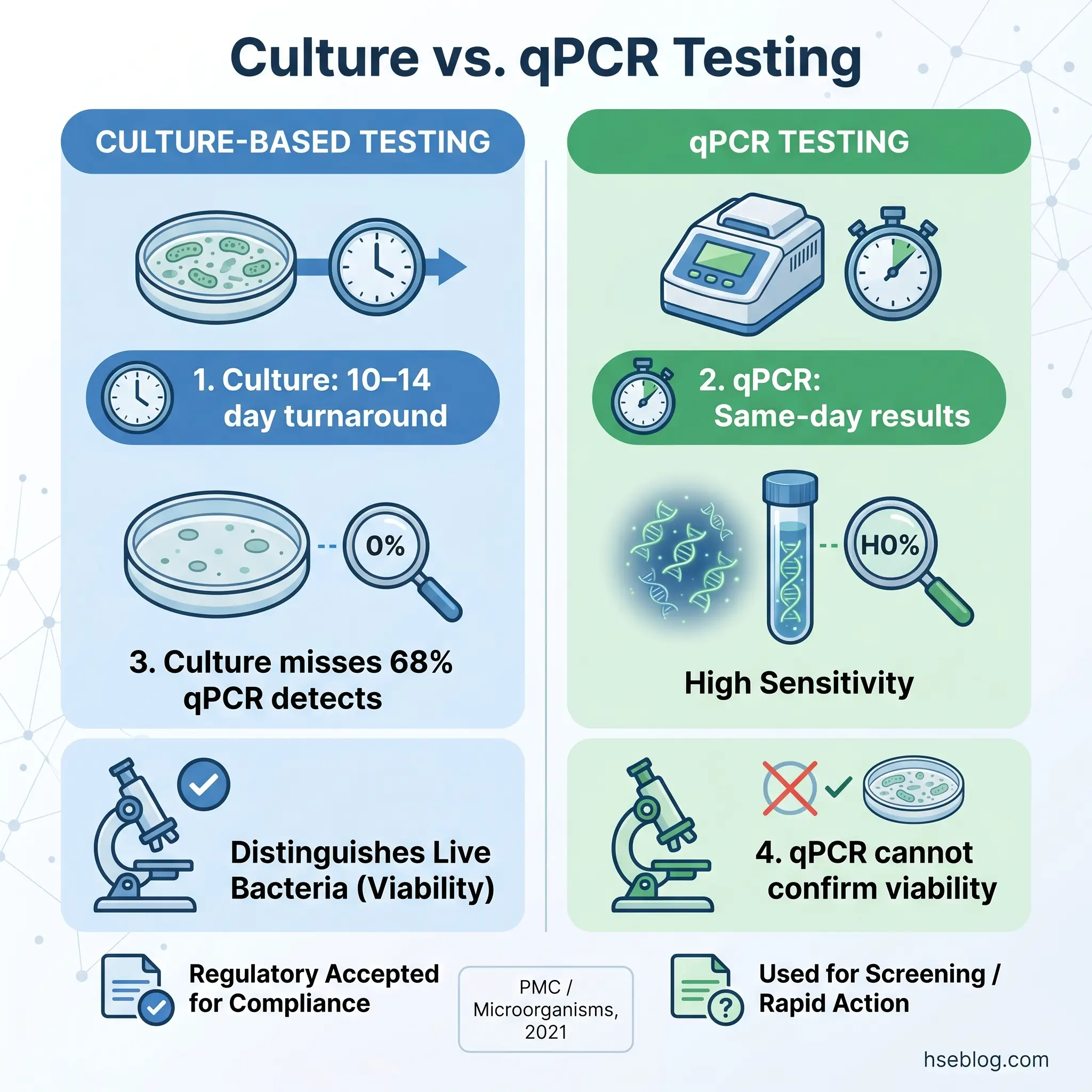
Culture-based testing (following ISO 11731 methodology) remains the gold standard for regulatory purposes. It identifies viable, culturable Legionella and quantifies the result in colony forming units per milliliter (CFU/mL). Its limitation is turnaround time: 10–14 days from sample collection to result, during which conditions in the tower may change significantly.
qPCR (quantitative polymerase chain reaction) offers same-day or next-day results and can detect Legionella DNA at much lower concentrations than culture. A 2021 study published in Microorganisms (PMC, 2021) found that qPCR detected Legionella in 68% of cooling tower samples that were negative by culture-based testing over a 39-month monitoring period. This finding has significant implications: facilities relying exclusively on culture may be operating under a false negative assurance. The limitation of qPCR is that it does not distinguish between viable and non-viable bacteria — a high qPCR result after a successful disinfection may reflect dead bacterial DNA rather than ongoing contamination.
The practical approach is to use both methods in combination. Culture provides the legally accepted quantification of viable Legionella. qPCR provides rapid screening that can trigger interim corrective actions days before culture results are available.
OSHA's guidance provides action-level thresholds based on CFU/mL results: below 0.1 CFU/mL, continue the current treatment program; above 0.1 CFU/mL, review the water management plan and treatment program; above 1.0 CFU/mL, implement corrective actions immediately. New York State requires 24-hour notification to the local health department if Legionella culture exceeds 1,000 CFU/mL.
Testing without action is not a control measure. Facilities that test quarterly but do nothing with the results between sampling events are using the program as a compliance checkbox rather than a risk management tool. The real value of a testing program is trend analysis — a rising baseline, even when individual results fall below action levels, signals that controls are degrading and intervention is needed before a threshold is crossed.
Regulatory Requirements for Cooling Tower Legionella Control
The regulatory landscape for cooling tower Legionella prevention is fragmented across jurisdictions and evolving rapidly — driven by the 2024–2025 global outbreak surge that prompted a Lancet Microbe editorial calling for heightened awareness and preparedness (The Lancet Microbe, November 2024). Facilities operating in multiple jurisdictions or those uncertain which framework applies need to identify the strictest applicable requirement and use it as their operational baseline.
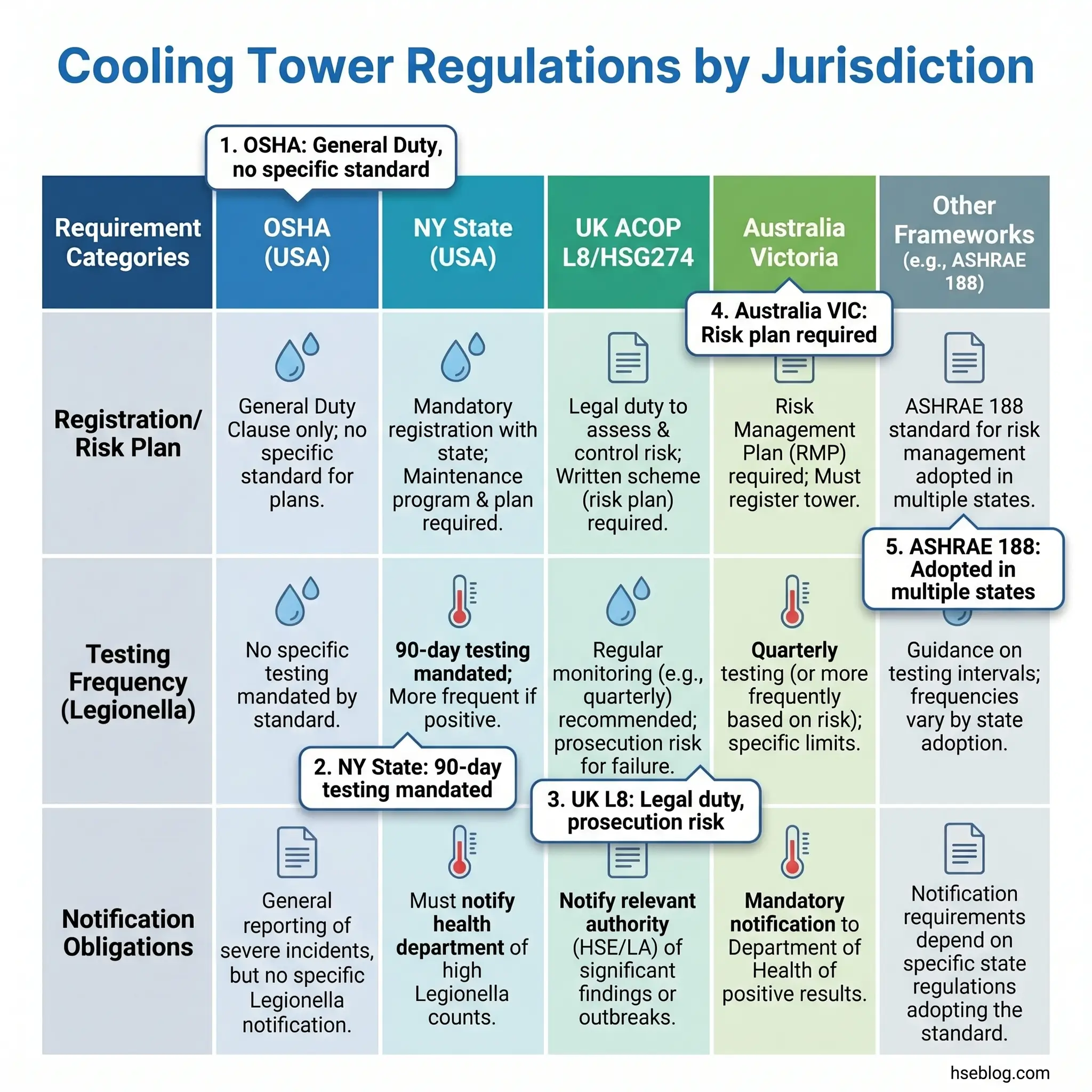
United States — ASHRAE 188-2021. This voluntary national standard establishes minimum risk management requirements for building water systems, including mandatory water management programs for any building with a cooling tower. While ASHRAE 188 is not itself federal regulation, it has been adopted by reference in multiple state codes and is required by CMS for Medicare-certified healthcare facilities. The standard requires a program team, building water system survey, hazardous condition analysis, control measures with defined limits, monitoring, corrective actions, and verification. ASHRAE Guideline 12-2023 supplements it with detailed implementation procedures.
United States — OSHA. No specific Legionella standard exists at the federal level. The General Duty Clause (Section 5(a)(1) of the OSH Act) creates the enforceable obligation: employers must provide a workplace free from recognized hazards likely to cause death or serious harm. OSHA's technical guidance recommends cleaning and disinfecting cooling towers at least twice annually, biocide treatment, N95 respirators at minimum for maintenance workers, and provides sampling action levels.
United States — State and Local. New York State 10 NYCRR Subpart 4-1 remains the most prescriptive US regulation: mandatory registration, 90-day inspections, 90-day Legionella culture testing, annual certification, 24-hour notification for results exceeding 1,000 CFU/mL, and a requirement that biocide application be performed by a certified pesticide applicator. Several other states — Illinois, Michigan, New Jersey, Ohio, Virginia — have enacted or are developing similar frameworks.
United Kingdom — ACOP L8 and HSG274 Part 1. The UK framework imposes a legal duty to identify and assess Legionella risk, designate a responsible person, implement control measures, and maintain records. ACOP L8 has a special legal status: failure to follow its provisions can be used as evidence of non-compliance in prosecution. HSG274 Part 1, updated in April 2024, provides technical guidance specific to evaporative cooling systems, including the pH correction requirement for DPD testing that has significant operational implications.
Australia — Victoria. The Public Health and Wellbeing Regulations 2019 require risk management plans, biocide treatment, and monitoring for cooling tower systems. The 2024 Laverton North outbreak — 114 cases from a single tower — has intensified regulatory scrutiny in this jurisdiction.
NSF/ANSI P453 establishes minimum practices for cooling tower treatment, operation, and maintenance specifically aimed at preventing Legionnaires' disease, providing an additional benchmark for facilities seeking to demonstrate compliance with recognized standards.
Jurisdiction Note: Testing frequency requirements diverge significantly. NY State mandates Legionella culture every 90 days. OSHA recommends cleaning and disinfection at least twice yearly. CDC recommends offline disinfection and cleaning at least annually. UK HSG274 Part 1 requires quarterly Legionella sampling for evaporative cooling systems. Applying the strictest applicable requirement — quarterly Legionella culture sampling with continuous water chemistry monitoring — covers all major regulatory frameworks.
Design Considerations That Reduce Legionella Risk in Cooling Towers
Design-phase decisions create or eliminate Legionella risk that no amount of downstream chemical treatment can fully compensate for. Retrofitting a poorly designed system is always more expensive and less effective than getting the design right from the start — but for existing systems, understanding these principles helps prioritize capital improvement decisions.
Tower placement matters. CDC guidance recommends locating cooling towers at least 25 feet (7.6 meters) from building air intakes to reduce the risk of aerosolized drift entering the HVAC system. In practice, many existing installations violate this separation — towers placed on rooftops directly adjacent to air handling units are a common configuration that increases exposure risk for every occupant of the building.
High-efficiency drift eliminators reduce the volume of aerosolized water escaping the tower. Modern drift eliminators can achieve drift rates as low as 0.0005% of the circulating water flow — a fraction of the drift produced by older designs. Replacing degraded or outdated drift eliminators is often one of the most cost-effective risk reduction measures available for existing towers.
Piping design should eliminate dead legs and stagnant zones from the outset. Every pipe section that branches off the main flow path without regular circulation is a potential Legionella incubation zone. Systems designed with valved dead legs for future expansion — pipe runs that are capped and filled with stagnant water — are a recurring finding in outbreak investigations.
Access is a design feature, not an afterthought. If maintenance personnel cannot easily reach basins, fill media, distribution decks, and drift eliminators for cleaning and inspection, those components will not be maintained at the frequency required. Tower internals that require scaffolding or confined space entry for routine inspection create a practical barrier to the maintenance schedule that the water management plan depends on.
Automated water treatment and monitoring systems — including continuous biocide dosing, blowdown control, and remote monitoring of key parameters — should be specified during design rather than added later. Retrofitting automation to an existing system is feasible but introduces integration challenges that a clean design avoids.
For facilities evaluating system alternatives entirely, air-cooled systems eliminate the Legionella risk by removing the recirculating water reservoir from the equation. Air-cooled systems carry higher energy costs and may not be viable for all cooling loads, but where the thermal demand permits, they eliminate the biological hazard entirely.
Outbreak Response: What to Do If Legionella Is Detected
The response to a positive Legionella detection depends on the severity of the result, whether cases of illness have been identified, and the applicable regulatory notification requirements. Not every positive result requires emergency action — but every positive result demands a documented response.
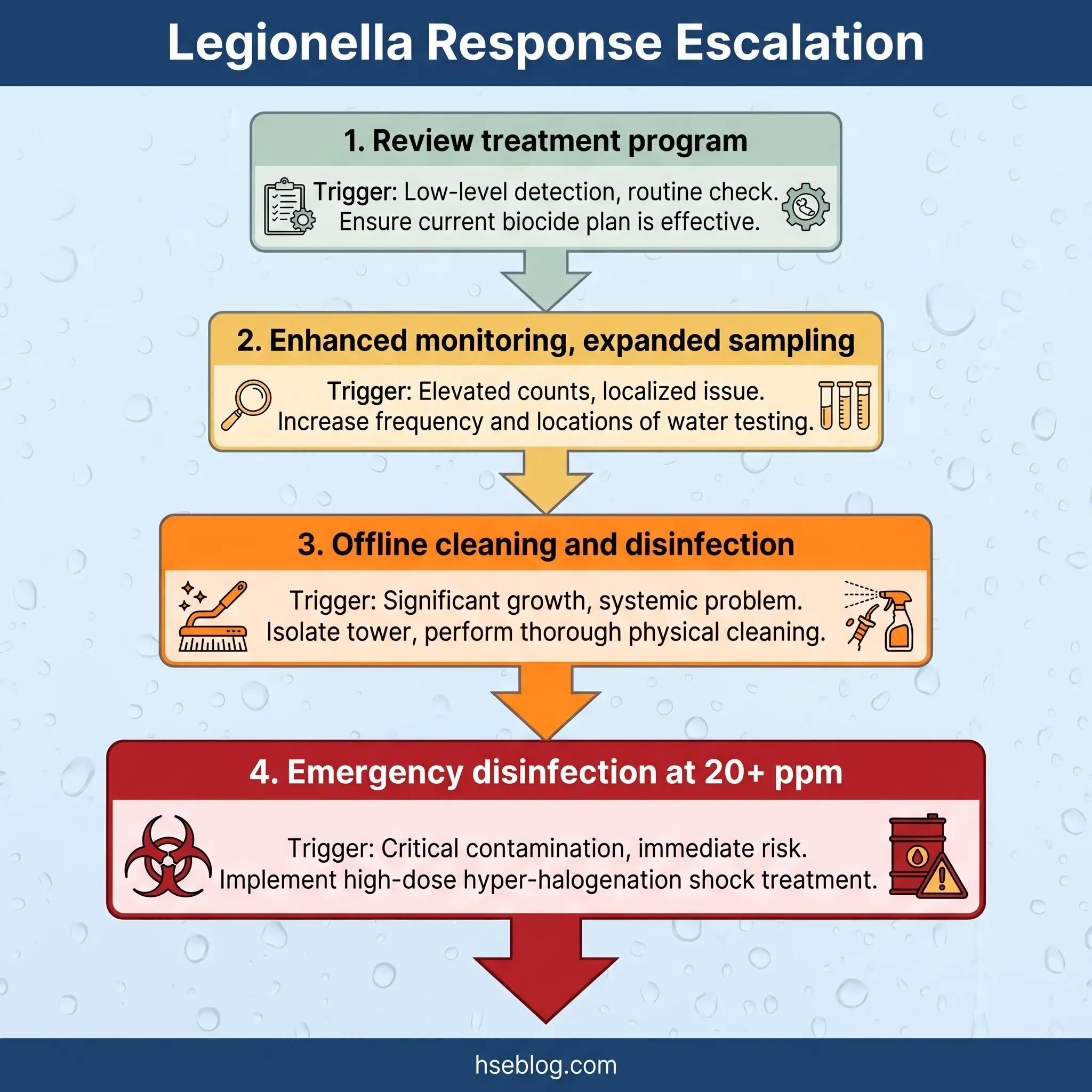
The CDC outlines a hierarchy of escalating responses. At the lowest level, a result above baseline but below action thresholds triggers a review of the water management plan and treatment program — verifying biocide dosing, inspecting for biofilm, checking for new stagnation sources. At higher levels, enhanced monitoring increases sampling frequency and expands sample locations to map the extent of contamination. When results exceed action levels or when cases of Legionnaires' disease have been identified, the tower must be taken offline for full cleaning and disinfection.
Emergency disinfection involves circulating a high concentration of free available oxidant — typically 20 ppm or above — through the entire system with fans off and automated chemical feed disengaged. Building air intake vents near the tower must be closed during the procedure. The disinfection must be followed by confirmation sampling to verify that Legionella has been eliminated before the system returns to normal operation.
The critical decision point for facility managers is whether to attempt online treatment adjustment or take the tower offline. Many facilities resist offline disinfection because of the cooling load impact on building operations. However, attempting online remediation when colonization is heavy — especially when biofilm is established — often results in partial kill followed by rapid recolonization from surviving biofilm populations. The result is a series of escalating positive results, lost time, and eventually the offline shutdown that should have happened initially.
Worker protection during remediation activities requires specific attention. OSHA recommends N95 respirators at minimum for personnel conducting cleaning and disinfection. Power washing operations present particular risk because they aerosolize biofilm-embedded bacteria at close range. Full hazard assessment should determine whether additional PPE — eye protection, chemical-resistant gloves, protective clothing — is required based on the specific chemicals used and the scope of the cleaning operation.
In healthcare settings, even a single confirmed case of Legionnaires' disease in a patient with potential facility-acquired exposure can trigger a full outbreak investigation, including environmental sampling across the entire building water system. The threshold for action is lower, and the regulatory response is more intensive.
The Fix That Works: When a tower requires offline disinfection, treat it as a reset — not just a chemical flush. Physically clean basins, fill media, and distribution components. Replace degraded drift eliminators. Flush every dead leg and standby line. Then disinfect the clean system. Chemical disinfection applied to a system still loaded with biofilm and sediment is treating the symptom, not the cause.
Frequently Asked Questions
Can Legionella spread from person to person?
No. Legionnaires' disease is contracted exclusively by inhaling aerosolized water droplets containing Legionella bacteria. A person diagnosed with Legionnaires' disease is not contagious and cannot transmit the infection to others. The risk comes from the contaminated water source — typically a cooling tower, hot water system, or other engineered water system generating aerosols. This is a common misconception that can delay investigation of the actual environmental source when cases are identified.
How far can Legionella travel from a cooling tower?
Published epidemiological investigations have documented community-acquired Legionnaires' disease linked to cooling towers at distances of several hundred meters to several kilometers from the source, depending on wind speed, atmospheric conditions, and the volume of drift produced. Risk decreases with distance, but the exposure zone extends well beyond the building footprint. This is why cooling tower Legionella prevention is a public health concern, not just an occupational one — community members who never enter the building can be exposed.
Do closed-circuit cooling towers need the same Legionella controls as open-circuit towers?
Yes. The CDC states that both open-circuit and closed-circuit cooling towers require the same basic operation and maintenance protocols. The closed loop in a closed-circuit tower protects the process fluid circulating through the heat exchanger, but the cooling water in the open loop — which contacts the atmosphere and passes through the evaporative section — generates aerosols and is subject to the same Legionella colonization dynamics as any open-circuit system.
What is the difference between ASHRAE 188 and ASHRAE Guideline 12?
ASHRAE Standard 188-2021 establishes minimum risk management requirements for building water systems and is increasingly adopted into state codes and regulatory frameworks. ASHRAE Guideline 12-2023 provides detailed implementation guidance for meeting those requirements, including specific Legionella control measures for cooling towers. In practical terms, 188 tells you what you must do; Guideline 12 tells you how to do it. Both are published by ASHRAE, and using them together provides a comprehensive compliance and operational framework.
Is quarterly Legionella testing enough for cooling towers?
Quarterly culture-based testing is a minimum baseline consistent with CDC recommendations and several state requirements, including New York State's 90-day mandate. However, high-risk facilities — healthcare, senior living, and settings serving immunocompromised populations — may warrant monthly testing. Supplementing culture with qPCR testing can provide rapid interim screening between quarterly cultures, since qPCR detected Legionella in 68% of samples negative by culture (PMC / Microorganisms, 2021). The key is that testing frequency should match the risk profile and produce enough data points for meaningful trend analysis.
What PPE is required when cleaning cooling towers?
OSHA recommends N95 respirators at minimum for workers performing cooling tower cleaning and disinfection activities. Power washing operations that aerosolize biofilm-embedded bacteria present particular inhalation risk. A full hazard assessment should determine additional PPE requirements — chemical-resistant gloves, splash-proof eye protection, and protective clothing — based on the biocides being used and the physical scope of the work. Workers should be trained on the specific biological and chemical hazards they will encounter, not just issued equipment.
Conclusion
The regulatory landscape for cooling tower Legionella prevention has shifted from voluntary guidance to enforceable obligation in multiple jurisdictions — and the 2024–2025 global outbreak surge is accelerating that transition. Facilities that treated ASHRAE 188 as optional three years ago are now finding it referenced in state codes, CMS requirements, and enforcement actions. The direction is clear: mandatory water management programs with documented maintenance, testing, and corrective action protocols will become the universal standard, not the exception.
What the outbreak record demonstrates consistently is that the gap between plan and execution is where people die. The cooling towers linked to the Melbourne, London Ontario, and New York City outbreaks were not unregulated rogue systems — they were facilities operating within a regulatory framework that failed at the operational level. Prevention requires daily discipline applied to all four STAR factors simultaneously: controlling sediment and biofilm through physical cleaning, managing temperature awareness, eliminating stagnation through design and operational protocols, and maintaining verified biocide residuals with pH-corrected monitoring.
For facility managers and HSE professionals responsible for cooling tower systems, the operational question is not whether your water management plan exists but whether the people who maintain the tower can describe it, execute it, and escalate when controls fail. That is the difference between a document and a defense — and it is the difference between a routine maintenance quarter and an outbreak investigation.