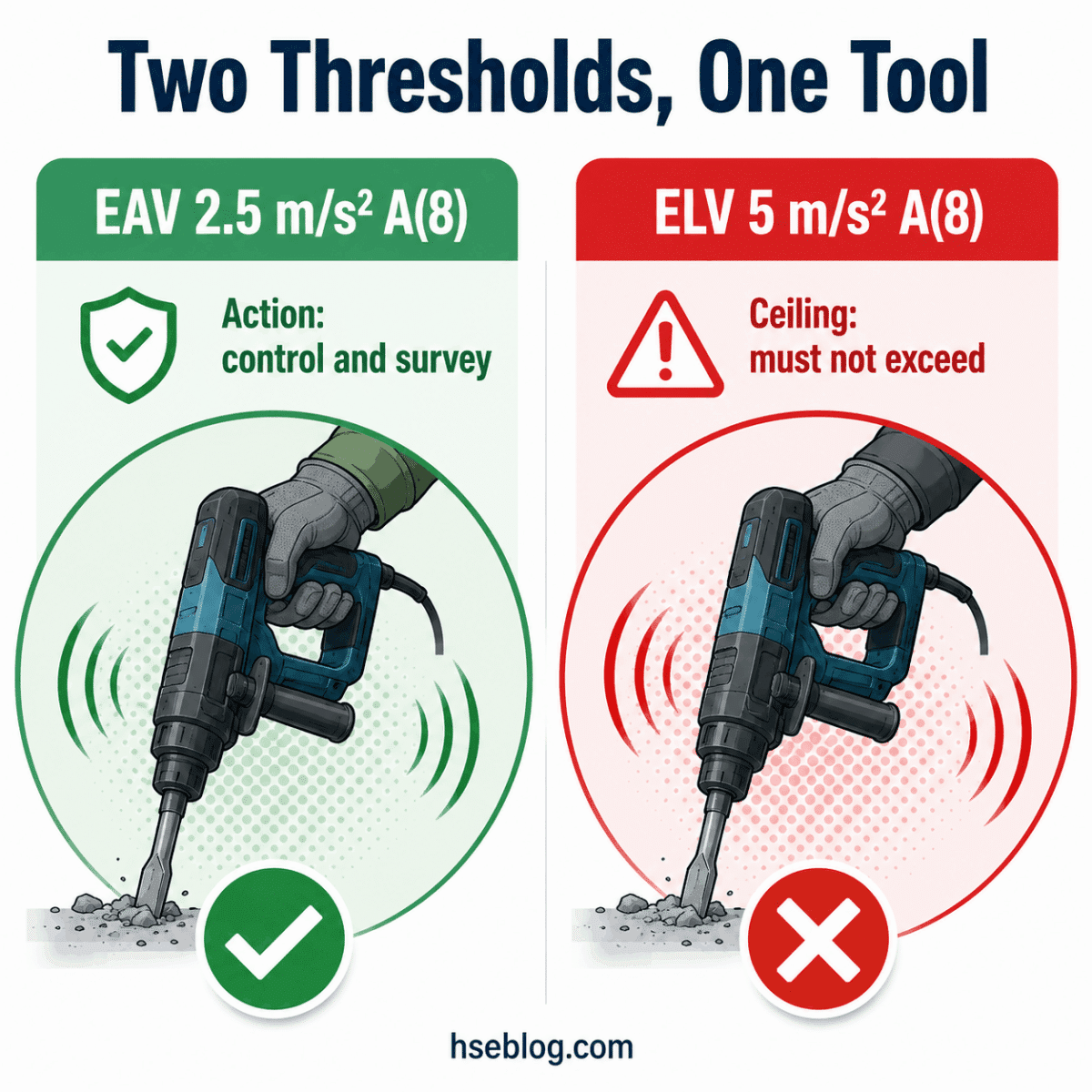
Hand-arm vibration exposure limits are set under the UK Control of Vibration at Work Regulations 2005. The Exposure Action Value is 2.5 m/s² A(8), above which employers must control exposure and provide health surveillance. The Exposure Limit Value is 5 m/s² A(8) — a legal ceiling that must never be exceeded.
In 2024, 220 new cases of hand-arm vibration syndrome were assessed for Industrial Injuries Disablement Benefit in Great Britain (UK HSE, 2025). Every figure is a worker whose hands will not fully recover, because the nerve and blood-vessel damage behind HAVS does not heal once established.
That permanence is the whole reason hand-arm vibration exposure limits exist as binding numbers rather than gentle advice. This guide sets out the EAV and ELV precisely, shows how daily exposure is calculated and measured, compares how the UK, EU and US regulate the same hazard, and walks through the controls and health surveillance that keep workers below the line.
What Is Hand-Arm Vibration and Why Do Exposure Limits Exist?
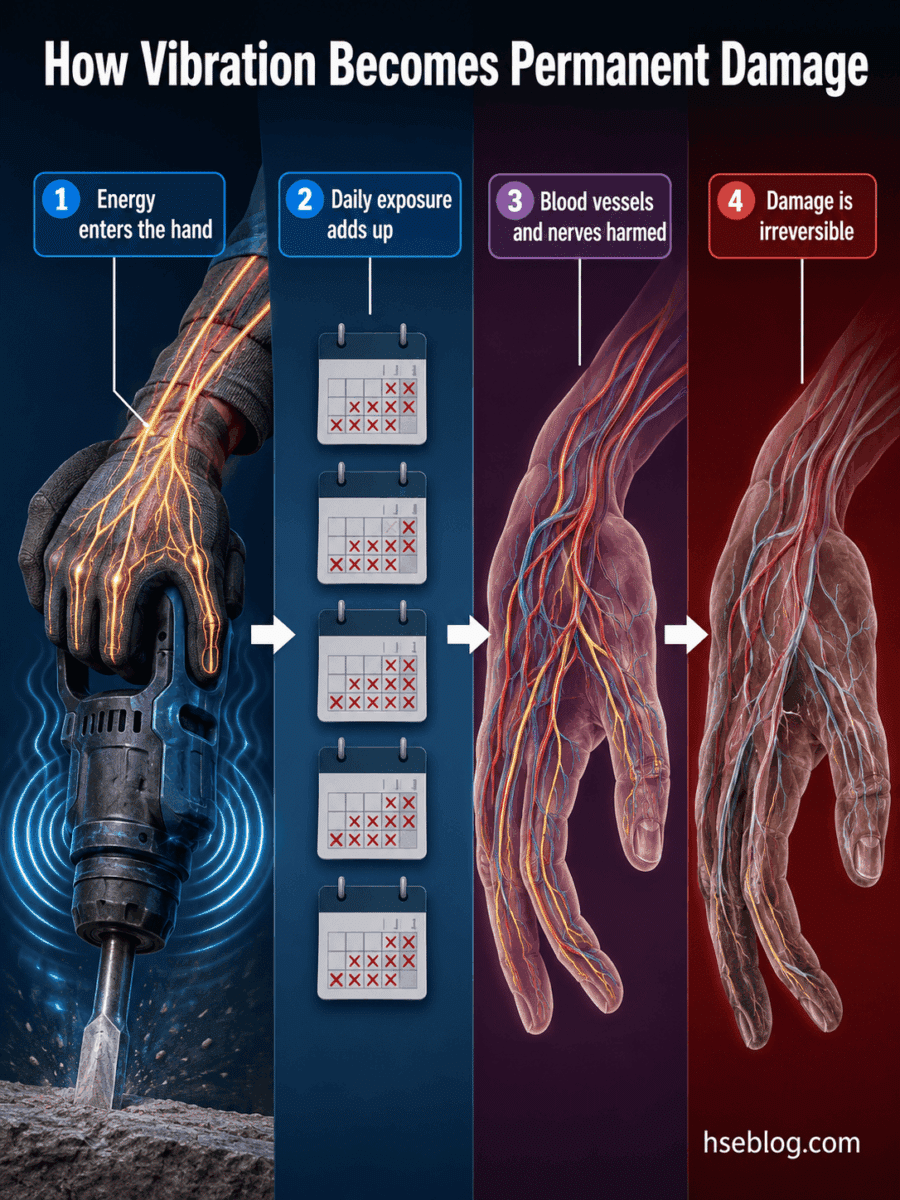
Hand-arm vibration is the mechanical energy that travels from a powered tool into the operator's fingers, hands and arms — and over enough exposure it does measurable, permanent harm. Limits exist because that harm is dose-dependent: it is driven by vibration magnitude multiplied by time, and it stays silent until it is already irreversible.
A useful distinction sits at the centre of the topic. Hand-arm vibration is the exposure; hand-arm vibration syndrome (HAVS) is the disease it produces, including vibration white finger and the sensorineural damage that erodes grip and dexterity.
The exposure comes from any tool you hold, guide or feed by hand, not just the obviously brutal ones:
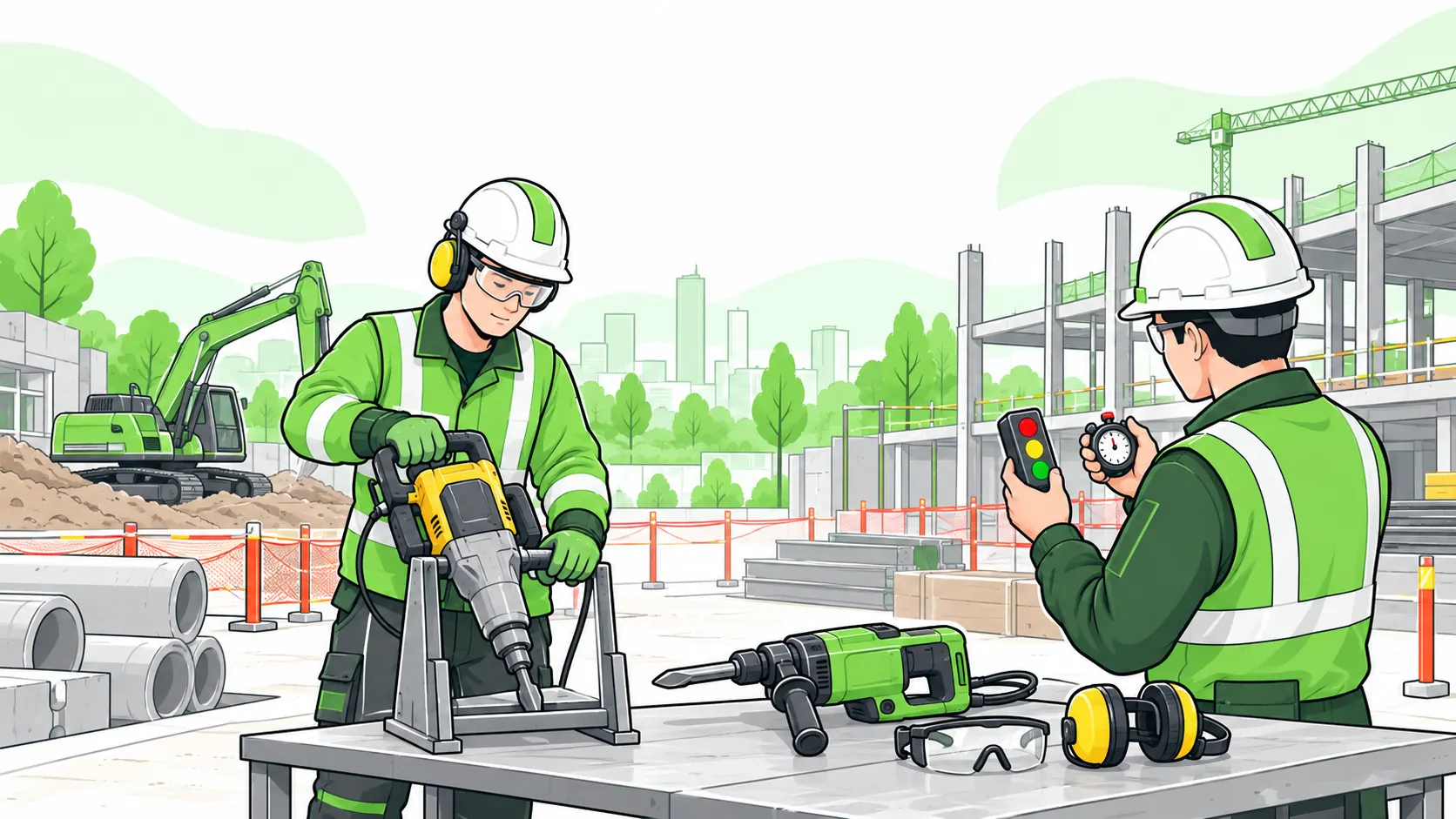
- Percussive tools — concrete breakers, demolition hammers, needle scalers and chipping hammers.
- Rotary tools — angle grinders, drills, sanders and die grinders.
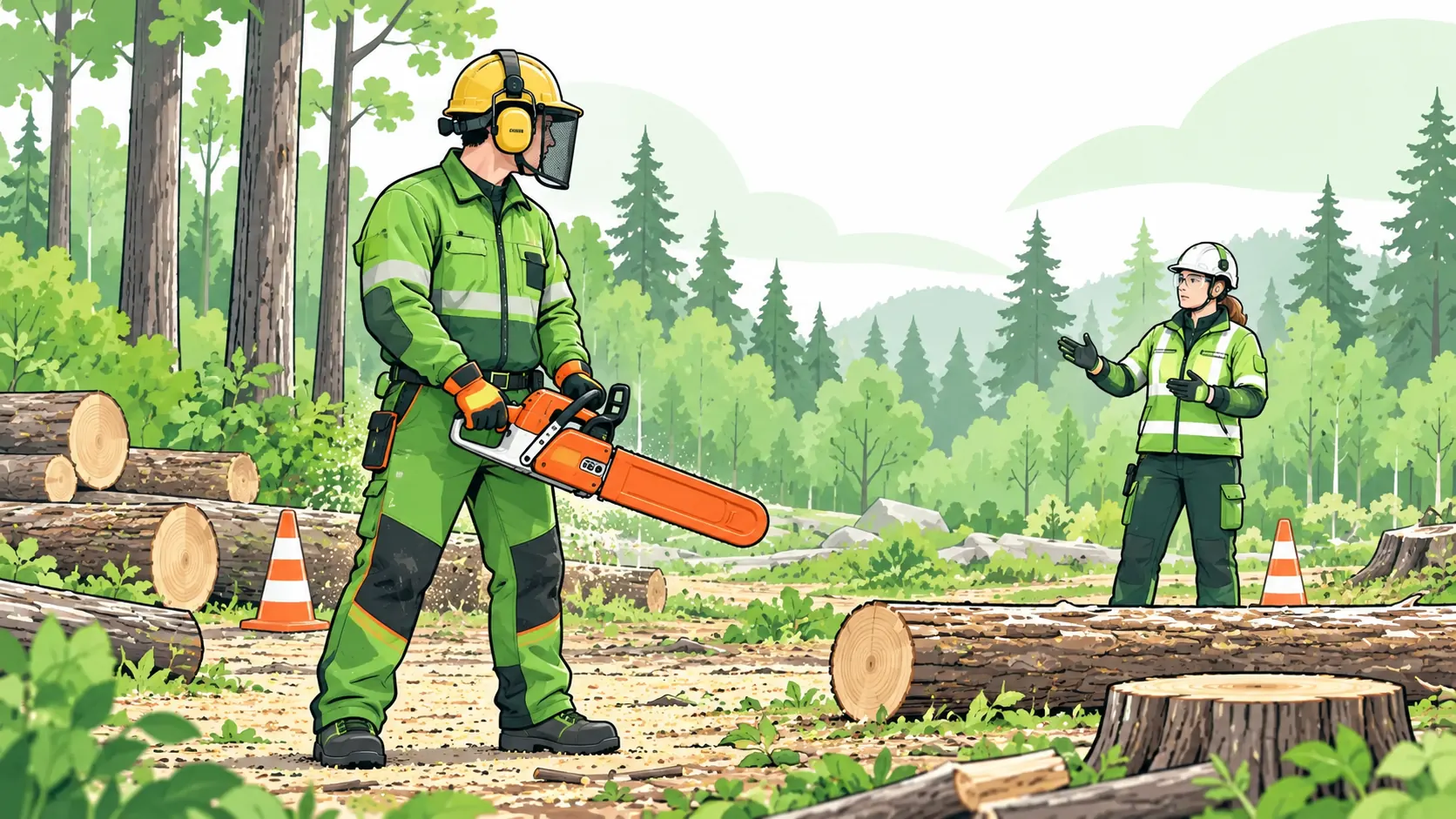
- Grounds-maintenance kit — strimmers, brush cutters, hedge trimmers and pedestrian mowers.
- Compaction and fettling — plate compactors, and foundry fettling or grinding work.
The most common misconception is that only "heavy" tools count. In practice a modest-vibration tool used for long trigger time can reach a daily limit faster than an aggressive tool used in short bursts — and teams underestimate risk constantly because they judge a tool by how violent it feels, not by magnitude times duration.
Hand-Arm Vibration Exposure Limits: EAV and ELV Explained
The two numbers that govern everything are 2.5 m/s² A(8) and 5 m/s² A(8). The first is an action threshold; the second is a legal ceiling — and confusing the two is where many programmes quietly fail.
The values employers must work to are fixed by the Control of Vibration at Work Regulations 2005 (SI 2005/1093), Reg. 4, in Great Britain. The HSE's guidance on employers' legal duties for hand-arm vibration sets out what each value triggers.
| Value | Threshold | What it triggers (UK/EU) |
|---|---|---|
| Exposure Action Value (EAV) | 2.5 m/s² A(8) | Employer must assess and control exposure and provide health surveillance |
| Exposure Limit Value (ELV) | 5 m/s² A(8) | Hard legal ceiling — must not be exceeded; if reached, exposure must be reduced below it |
To make the values usable on site, HSE also expresses them as exposure points: the EAV equals 100 points and the ELV equals 400 points, so partial exposures from several tools can be added together across a shift.
Here is the judgment call that catches employers out. Sites often treat the ELV as their operational target, running tools just under 5 m/s² and calling it compliant. The law does not allow that — exposure must be reduced as low as reasonably practicable, so a workplace permanently parked just below the ceiling is non-compliant despite being "within the limit."
How Daily Exposure Is Calculated: Magnitude, Trigger Time and A(8)
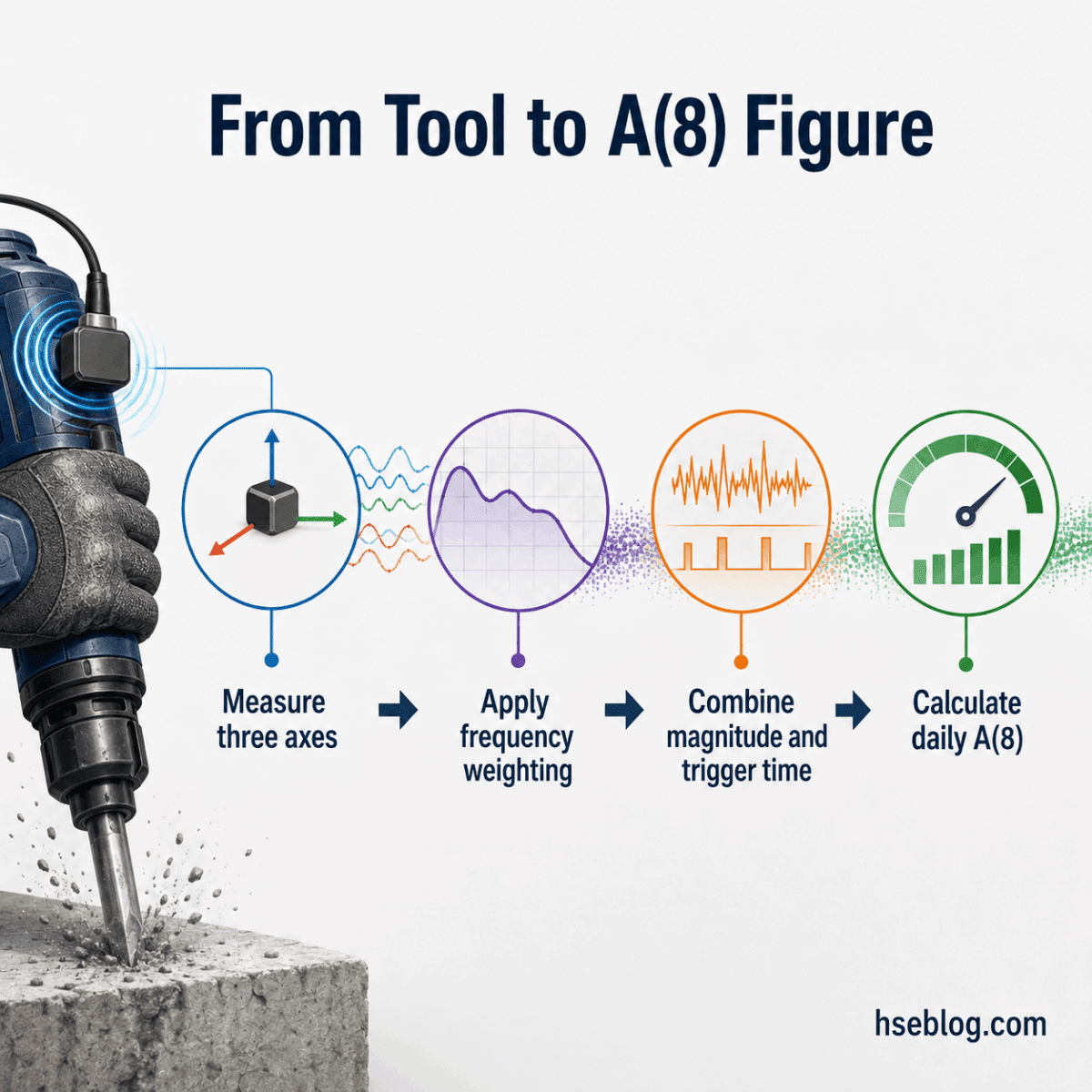
A(8) is the daily vibration exposure normalised to an eight-hour reference period. It combines two inputs: the tool's vibration magnitude (in m/s²) and the actual trigger time — the time the tool is genuinely vibrating in the hand, not the length of the shift.
Two cautions matter more than the arithmetic. Manufacturer-declared magnitudes are frequently lower than real in-use exposure, so leaning on a datasheet alone tends to understate risk. And where a worker uses several tools, each partial exposure is calculated and summed — a fast way to breach the EAV without any single tool feeling dangerous. A high-vibration breaker can reach the EAV in roughly 15 minutes of trigger time.
How Are Exposure Limits Measured? The ISO 5349 Framework
A limit is meaningless without a standardised way to measure against it, and that method is ISO 5349. Every value above — UK, EU and the US guideline alike — rests on the same international measurement basis.
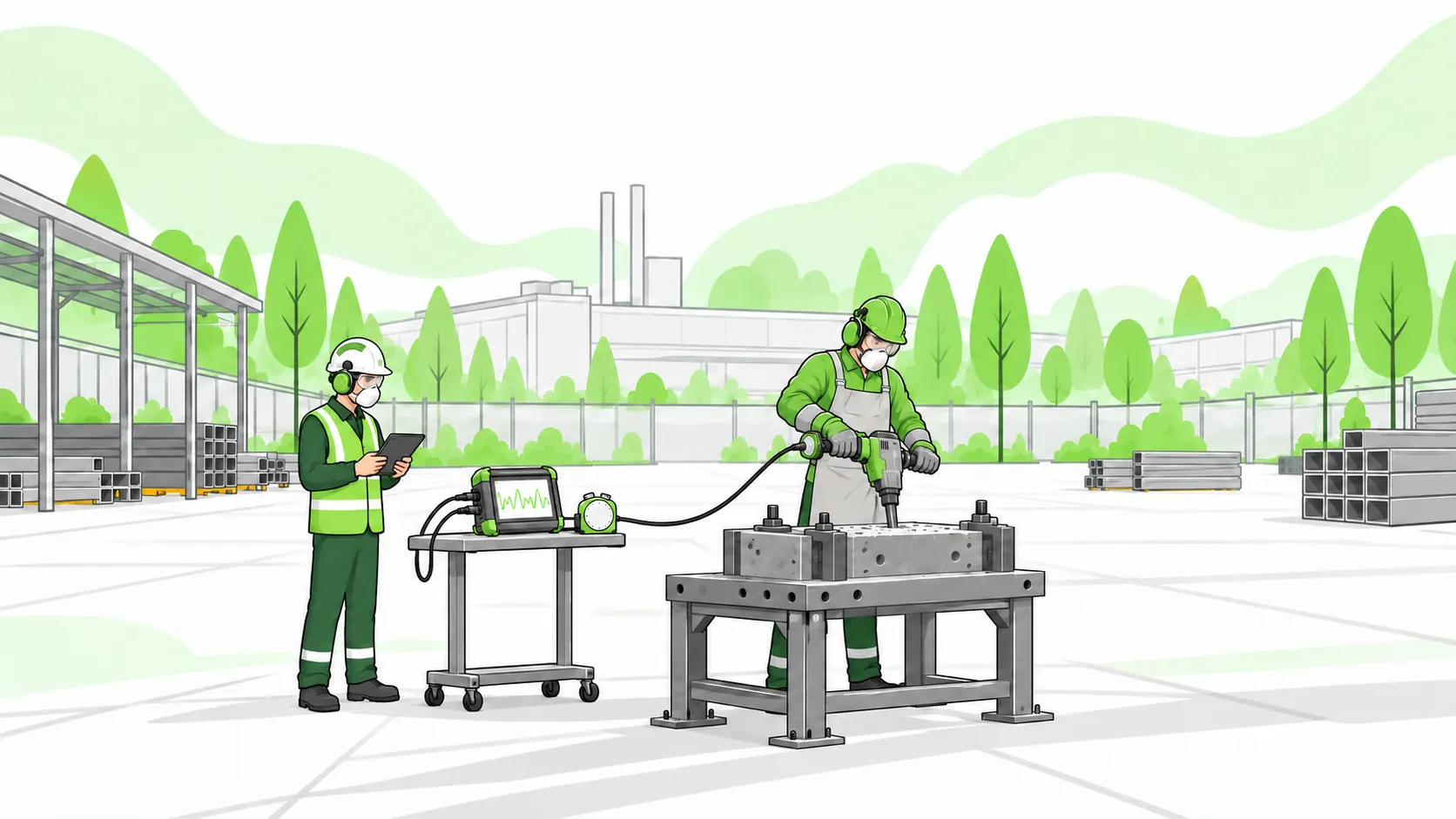
When a workplace measurement is taken correctly, the ISO 5349-1 measurement standard (general requirements, reviewed and confirmed current 2021) governs what is captured, and ISO 5349-2 covers how to do it representatively on site.
The core measurement inputs are:
- Three-axis acceleration (x, y, z). Vibration is captured on all three axes at the point the hand grips the tool.
- Frequency weighting (Wₕ). The signal is weighted to reflect which frequencies actually damage the hand-arm system.
- Compliant instrumentation. Meters and accelerometers must meet ISO 8041 to give defensible figures.
- Energy-equivalent A(8). Measured magnitude and real trigger time are combined into the daily exposure value.
One device limitation trips up buyers. Some "monitoring" tools sold to employers only log usage time, not true acceleration — useful for managing trigger time, but they do not measure exposure and cannot confirm compliance against the EAV or ELV.
A recurring assessment error is taking the datasheet magnitude at face value. Real exposure depends on tool condition, the accessory or consumable fitted, the workpiece material and operator technique — and a worn or poorly maintained tool drifts well above its declared figure.
How Different Jurisdictions Regulate Hand-Arm Vibration
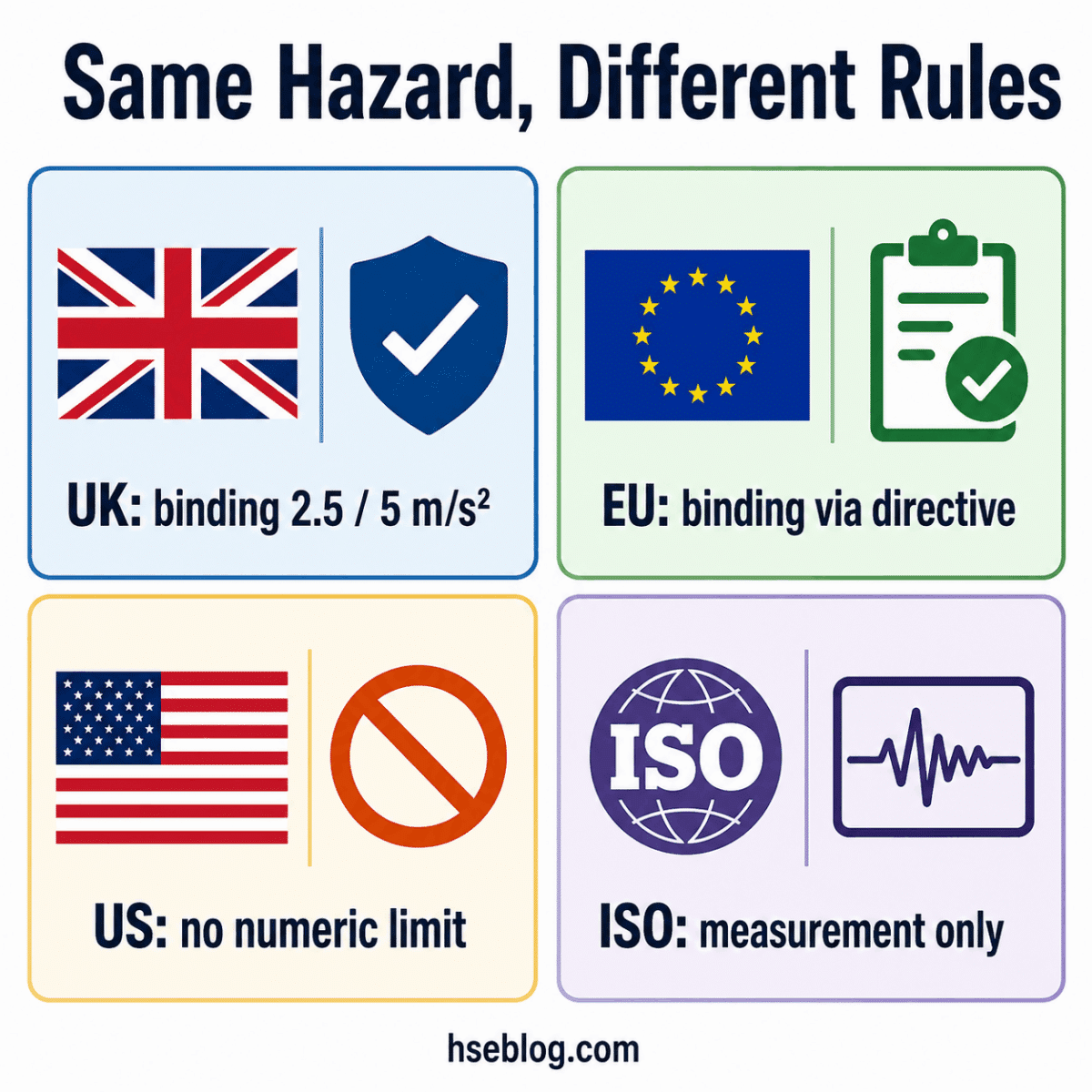
The same hazard is governed very differently depending on where the work happens — and this is exactly where multinational employers get caught out. The UK and EU impose binding numeric limits; the US imposes none.
Compare the regimes directly:
| Jurisdiction | Instrument | Legal status | Threshold |
|---|---|---|---|
| UK | Control of Vibration at Work Regulations 2005 | Binding | EAV 2.5 / ELV 5 m/s² A(8) |
| EU | Directive 2002/44/EC (Physical Agents – Vibration) | Binding via national transposition | Action 2.5 / limit 5 m/s² A(8) |
| US | OSHA General Duty Clause + ACGIH TLV | Non-binding guideline | Acceleration-vs-duration table (no single A(8)) |
| International | ISO 5349 | Measurement method | No limit defined |
The UK values are not home-grown: they transpose EU Directive 2002/44/EC, the source of the 2.5 and 5 m/s² figures across member states. The full UK legal text sits in the Control of Vibration at Work Regulations 2005.
The US picture is the genuine outlier. OSHA sets no HAV-specific numeric limit; it relies on the General Duty Clause to require a workplace free of recognised hazards, while ACGIH publishes a non-binding TLV as an acceleration-versus-duration table and NIOSH criteria document 89-106 provides recommendations. Where the UK and US conflict, the UK/EU EAV/ELV are the stricter and clearer reference — and ACGIH and NIOSH should be flagged explicitly as guidance, not law.
The practical consequence is sharp. A US employer can be "compliant" with no numeric limit and still be liable under the General Duty Clause — and treating a US site as automatically safe because there is no federal figure is one of the most common cross-border mistakes I see in multinational vibration programmes.
How to Prevent Hand-Arm Vibration Exposure: The Control Hierarchy
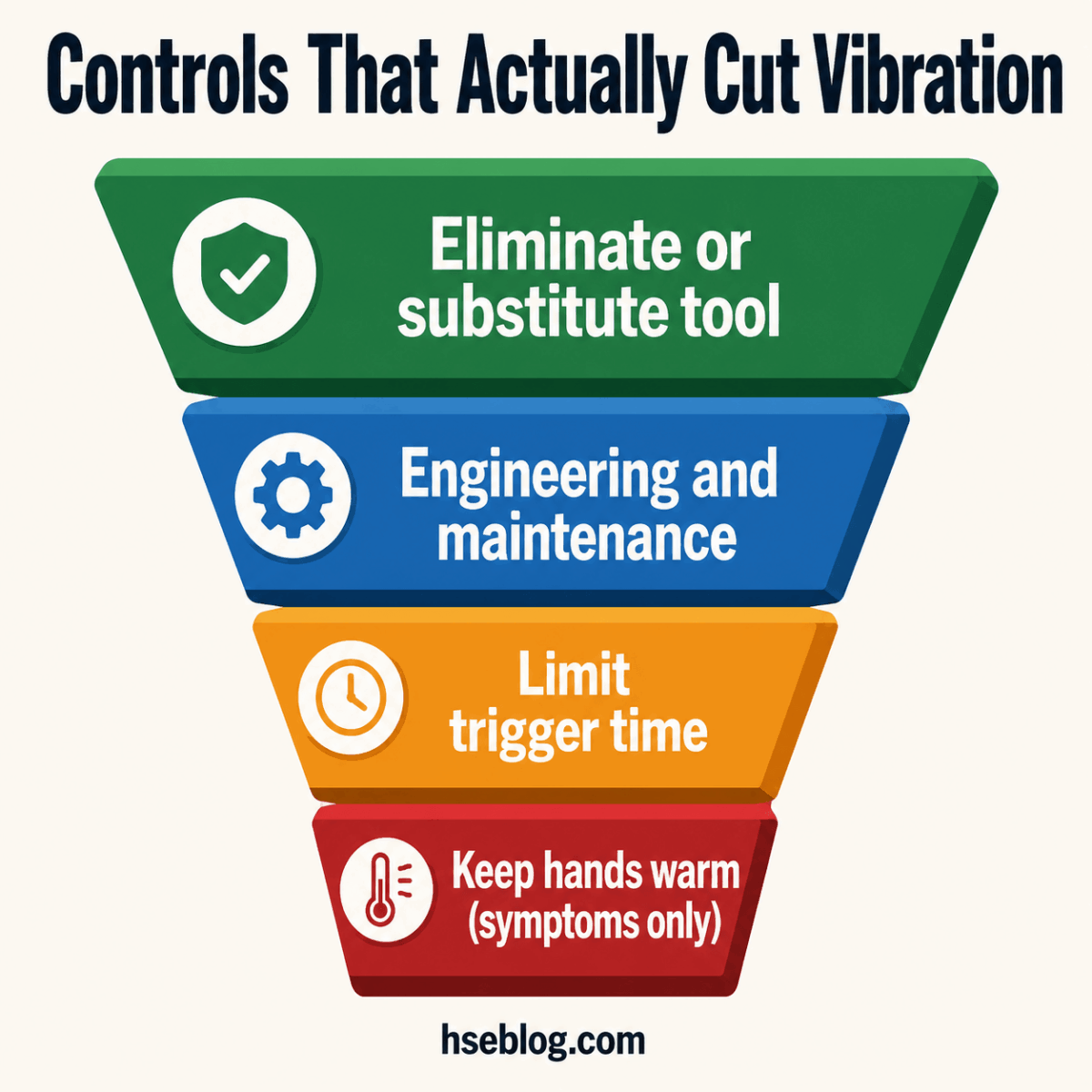
Effective prevention follows the hierarchy of controls, and the uncomfortable truth is that the controls most teams reach for first are the weakest. The only reliably effective measures sit at the top — removing or reducing the vibration at source.
Work the hierarchy in this order:
- Eliminate or substitute. Remove the task, mechanise it, or swap to a lower-magnitude tool or method — for example, replacing hand breaking with mobile plant. This is the only step that reliably lowers actual exposure.
- Engineering controls. Select tools by measured magnitude rather than feel, enforce a maintenance regime, and use validated anti-vibration mounts or handles where they have been proven effective.
- Tool maintenance as a frontline control. Worn bearings, blunt consumables and unbalanced accessories all raise vibration above the datasheet figure, so maintenance is risk control, not housekeeping.
- Administrative controls. Cap trigger time, rotate jobs, schedule high-vibration work in shorter blocks, and train operators to recognise their own limits.
- Keep hands warm and dry. Cold worsens the vascular symptoms of HAVS, so warmth supports the other controls — but it controls symptoms, not exposure.
The standard failure pattern is jumping straight to gloves and job rotation while skipping substitution entirely. Teams reach for the cheapest, least-disruptive options first, which inverts the hierarchy and leaves the underlying exposure untouched.
Do Anti-Vibration Gloves Actually Work?
Largely, no — not as a primary control. Anti-vibration gloves provide little protection at the low frequencies most responsible for HAVS, and in some cases can alter grip in ways that increase effort. Their one legitimate value is keeping hands warm, which helps the vascular picture; they must never be treated as the answer to an exposure problem.
Health Surveillance: Catching HAVS Before It Becomes Permanent
Where workers are regularly exposed at or above the EAV, health surveillance is a legal requirement in the UK and the only mechanism that catches HAVS while early-stage damage can still be halted by removing exposure. It is the early-warning half of any credible vibration programme.
Content covering health surveillance and HAVS symptoms is for HSE practitioner reference. It is not medical advice. Workers with specific symptoms or exposure concerns should consult an occupational physician or qualified medical professional, and all clinical staging must be clinician-led.
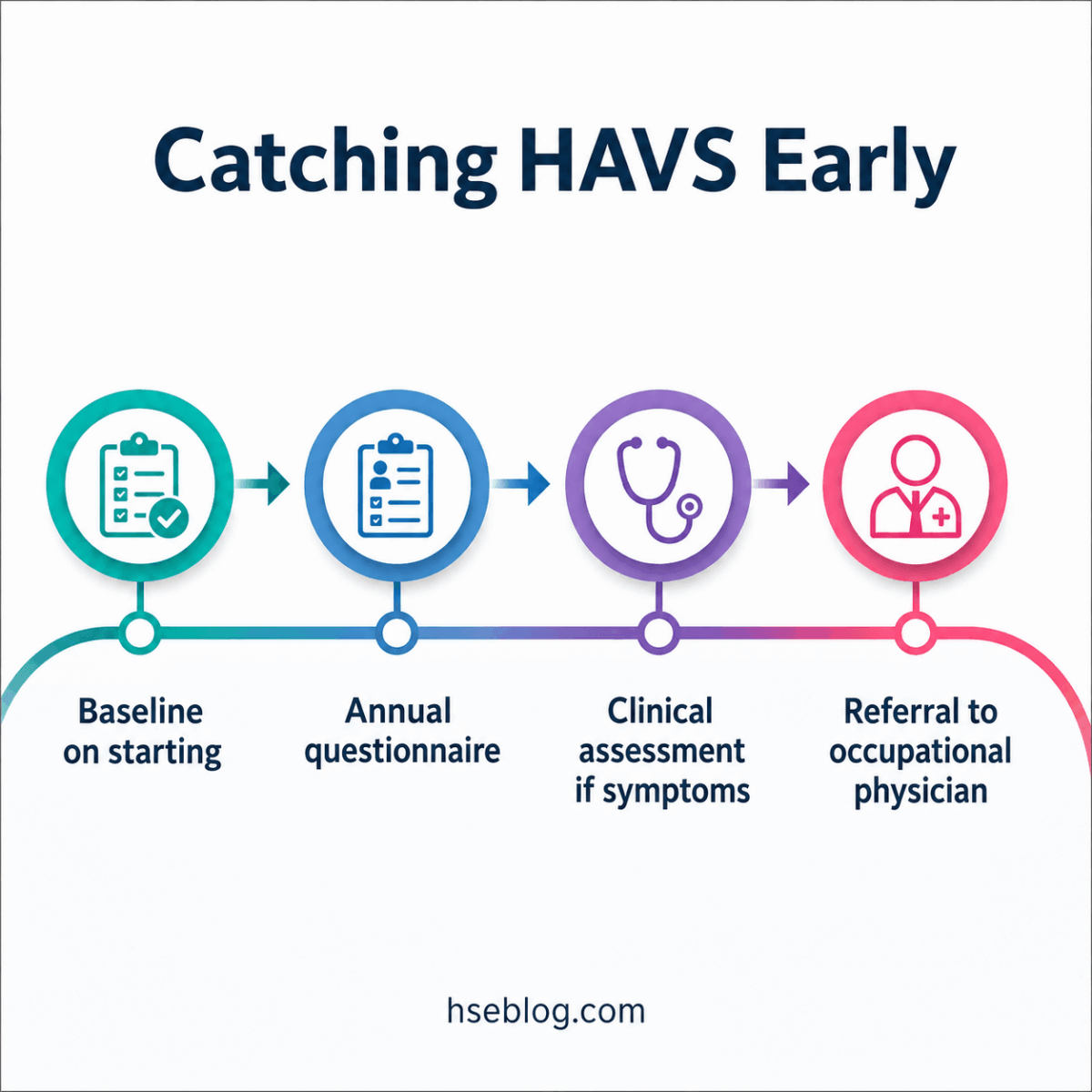
HSE's surveillance model runs in tiers, escalating only when responses warrant it:
- Tier 1 — Baseline. A starting questionnaire for new and existing exposed workers, establishing where each person begins.
- Tier 2 — Annual questionnaire. Routine screening that flags new or worsening symptoms.
- Tier 3 — Clinical assessment. Triggered by positive responses; carried out by a qualified health professional.
- Tier 4 — Formal referral and diagnosis. Occupational physician assessment, staging and management decisions.
Clinicians stage HAVS using the Stockholm Workshop Scale, which separates the vascular and sensorineural effects:
| Component | What it tracks | Range |
|---|---|---|
| Vascular | Cold-induced finger blanching (white finger) | Stage 0 (none) to severe, by number of fingers and frequency of attacks |
| Sensorineural | Numbness, tingling, loss of sensation and dexterity | Stage 0SN to 3SN, by severity of nerve involvement |
Establishing a baseline for new starters is non-negotiable — without it you cannot prove whether damage is pre-existing or work-related. The compliance gap I see most often is running questionnaires but never escalating positive responses to clinical assessment. Surveillance then becomes a paperwork ritual rather than an early-warning system — and that is exactly the failure HSE prosecutions repeatedly expose.
What Happens If You Exceed the Limits? Enforcement and Consequences
Exceeding the limits is now a live prosecution risk, not a legacy concern — and recent fines show HSE pursuing management failure rather than only acute injury. In 2025, grounds-maintenance provider Stonewater Limited was fined £140,000 after two estate assistants developed HAVS, one using vibrating equipment around 90% of the working day (UK HSE, 2025). Months later, Nottingham City Homes Limited was fined £32,000 following more than ten reports of vibration-related ill-health among trades and caretakers (UK HSE, 2025).
Regulatory content here reflects general HSE professional understanding of UK requirements as of 2025. It is not legal advice. Specific compliance questions, enforcement situations or prosecution risk should be directed to qualified legal counsel in the applicable jurisdiction.
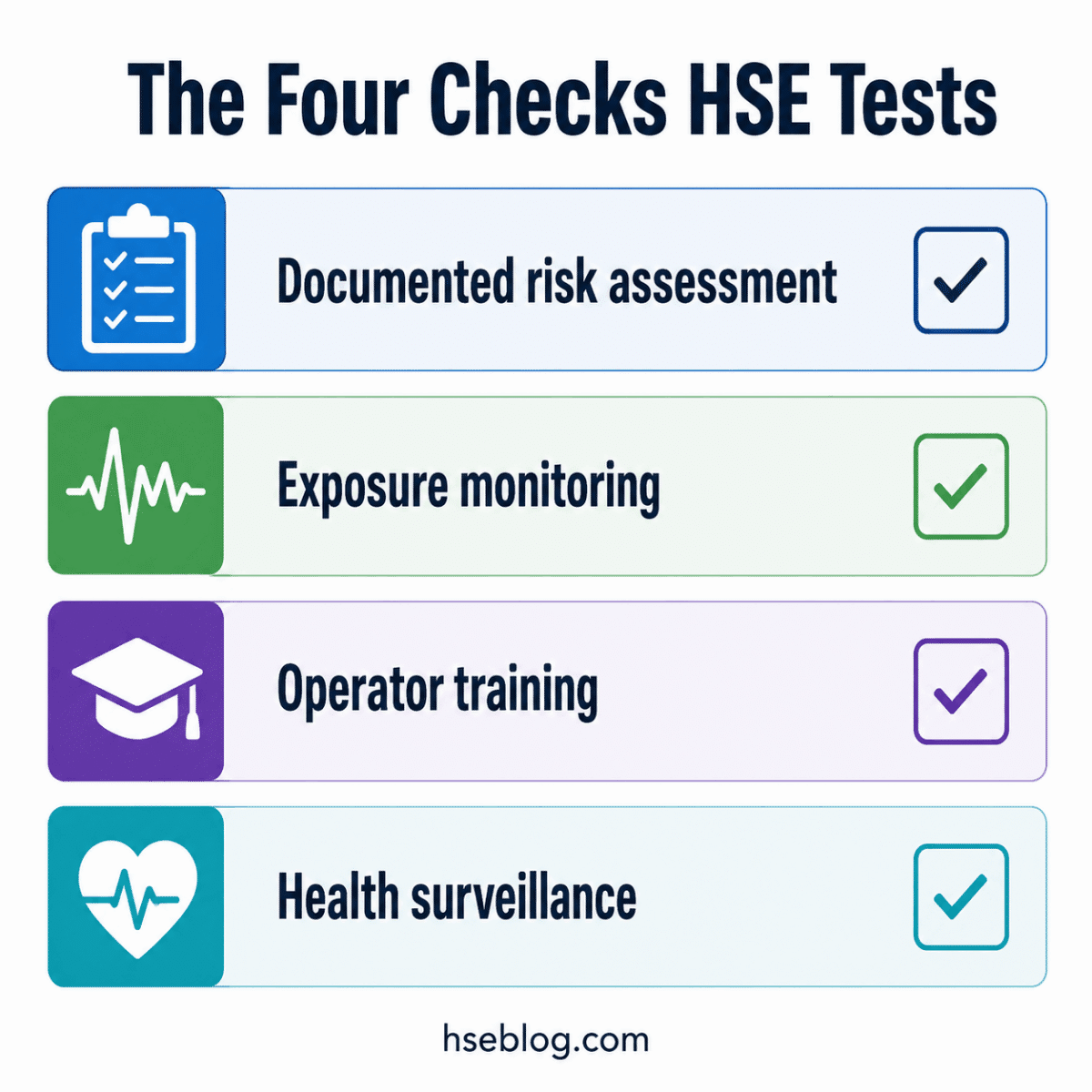
Employers prosecuted over vibration almost always show the same cluster of gaps — which doubles neatly as a self-audit checklist:
- No adequate risk assessment. Exposure was never properly evaluated against the EAV and ELV.
- No exposure monitoring. Trigger time and magnitude were never tracked, so breaches went unseen.
- No training. Operators could not recognise the hazard or their own daily limits.
- No health surveillance. Symptoms surfaced only when workers were already diagnosed.
Beyond the fines, the obligations stack up: diagnosed cases are reportable under RIDDOR, and civil compensation claims sit on top of any regulatory penalty. The combined exposure is why the 220 IIDB cases recorded in 2024 (UK HSE, 2025) should read as a standing warning rather than background noise.
Frequently Asked Questions
How long can you safely use a vibrating tool before reaching the exposure limit?
It depends entirely on the tool's vibration magnitude, not the length of your shift. The higher the magnitude, the faster you reach the EAV — a high-vibration concrete breaker can hit the 2.5 m/s² action value in roughly 15 minutes of trigger time. Always work from measured trigger time, because clock time wildly overstates how much safe use you actually have.
Does OSHA have a hand-arm vibration exposure limit?
No. There is no OSHA-specific numeric standard for hand-arm vibration in the US. OSHA relies on the General Duty Clause to require a workplace free of recognised hazards, while ACGIH publishes a non-binding TLV and NIOSH (criteria document 89-106) offers recommendations. That contrasts sharply with the UK and EU, where the 2.5 and 5 m/s² values are legally enforceable.
Is hand-arm vibration syndrome reversible?
Once established, no. Early-stage symptoms may stabilise if exposure stops promptly, but the underlying nerve and blood-vessel damage does not reverse. That irreversibility is the whole argument for prevention over cure — by the time HAVS is diagnosed, the priority shifts to halting further harm rather than recovery.
Are anti-vibration gloves effective against HAVS?
Their protection is limited. Gloves do little at the low frequencies most responsible for HAVS, so they cannot be relied on as a primary control or counted toward reducing measured exposure. Their genuine value is warmth, which helps the vascular symptoms, but exposure itself must be controlled at source through substitution and engineering.
Who needs health surveillance for hand-arm vibration?
Under UK law, workers regularly exposed at or above the EAV (2.5 m/s² A(8)) require health surveillance. New starters should receive a baseline assessment so any later change can be attributed correctly. Surveillance is clinician-led: positive questionnaire responses must escalate to clinical assessment, not simply be filed.
What are the early warning signs of HAVS?
The early markers are tingling and numbness in the fingers, cold-triggered finger blanching (white finger), and reduced grip strength or dexterity. These should be treated as report-early triggers, not symptoms to push through. Anyone experiencing them should be referred for occupational health assessment — this article is HSE guidance, not medical advice.
Conclusion
The industry's recurring mistake with hand-arm vibration is mental: treating the ELV as a target and the EAV as a formality, when the law reads the other way round. The single highest-impact change available to most employers is to stop managing toward the 5 m/s² ceiling and start measuring real trigger time against the 2.5 m/s² action value — because everything that matters, controls and health surveillance alike, hangs off that lower number.
Two patterns decide whether a programme works or merely exists. Controls are chosen from the wrong end of the hierarchy — gloves and rotation before substitution — and surveillance runs as a questionnaire that never escalates. Fix those two, and you have answered the four questions HSE asks in every vibration prosecution.
The 2025 fines and the 220 fresh HAVS cases recorded in 2024 carry the same message: hand-arm vibration exposure limits are not a compliance abstraction but a measure of whether a real person keeps the feeling in their hands. That is the standard worth auditing your own site against this week.