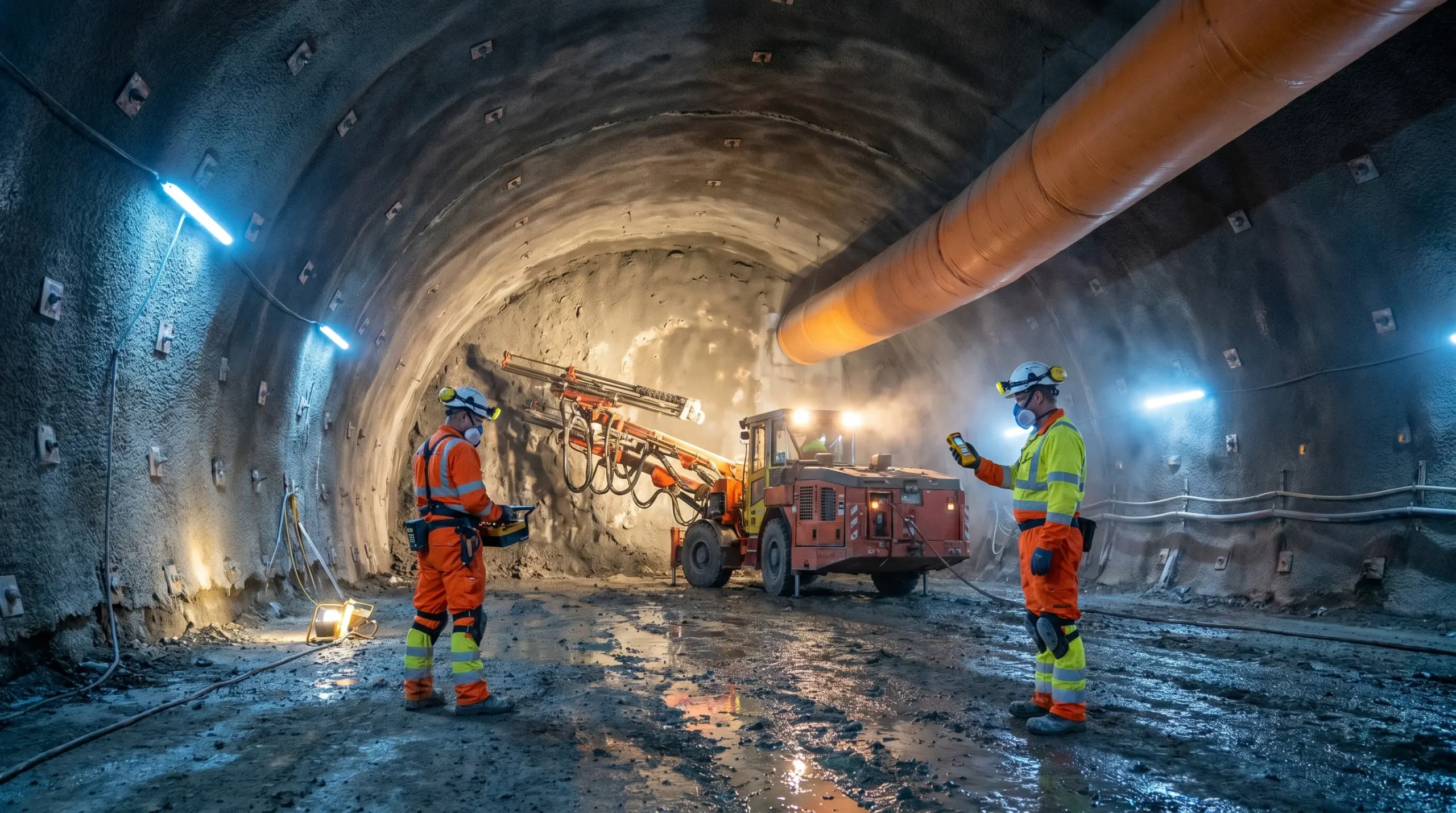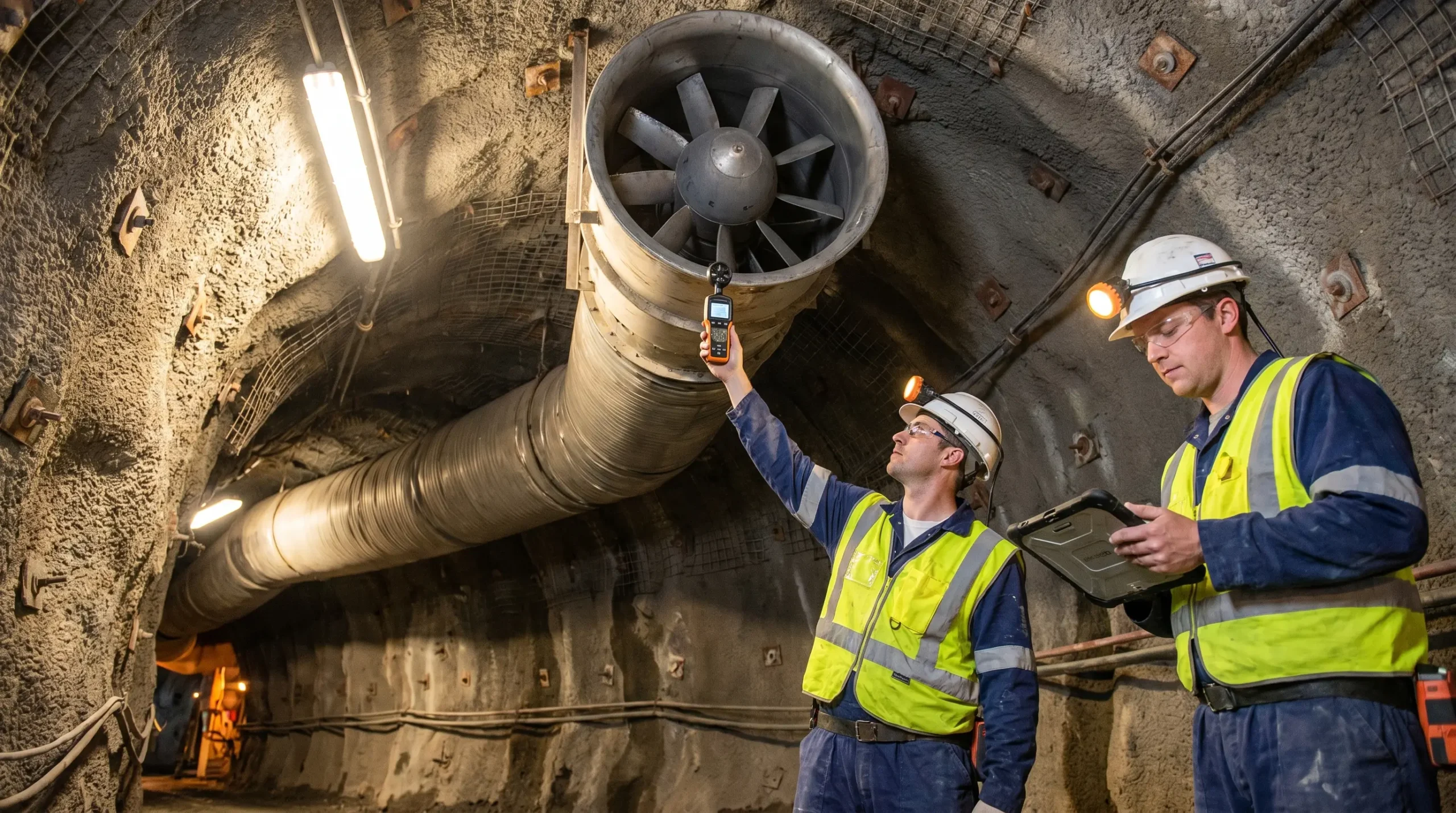
Mine ventilation is the engineered process of supplying fresh air to underground mine workings and removing contaminated air. It prevents the accumulation of explosive gases like methane, controls toxic fumes and respirable dust, regulates underground temperatures, and maintains breathable oxygen levels — protecting miners' lives and enabling safe, productive operations.
This article provides general HSE knowledge. Life-critical ventilation design, installation, and modification must be planned and supervised by qualified ventilation engineers with jurisdiction-specific authorization, site-specific risk assessment, and relevant competency. The information here does not replace that.
What Is Mine Ventilation and Why Does It Matter?
Between 1986 and 2010, ten multiple-fatality explosions struck US underground coal mines (NIOSH/CDC Mining Program). Every one of those events involved a failure — partial, cumulative, or catastrophic — in the system responsible for keeping explosive gas concentrations below lethal thresholds. That system is mine ventilation.
Mine ventilation is the controlled movement of air through underground workings: fresh air delivered to where people and equipment operate, contaminated air drawn out before it can accumulate to dangerous concentrations. Without it, underground environments become lethal within hours through oxygen depletion, methane accumulation, toxic fume buildup, or uncontrolled heat. Ventilation is not one system among many — it is the infrastructure upon which every other underground safety measure depends. It also happens to be the largest single energy consumer in most underground mines, commonly absorbing 40–50% of total electrical consumption (Engineering Applications of Artificial Intelligence, 2024). Understanding how ventilation works, why it fails, and what modern methods offer is essential for any HSE professional operating in or around underground mining.
The characteristic that makes ventilation failures so dangerous is their tendency toward incremental degradation. A damaged stopping in one entry. A fan running slightly off its design curve. A brattice curtain left partially rolled. Individually, each seems minor. Collectively, they erode the planned airflow distribution until the gap between what the ventilation plan assumes and what the mine actually delivers becomes a serious hazard — one that often escapes detection precisely because no single event triggers an alarm.
Key Functions of Mine Ventilation Systems
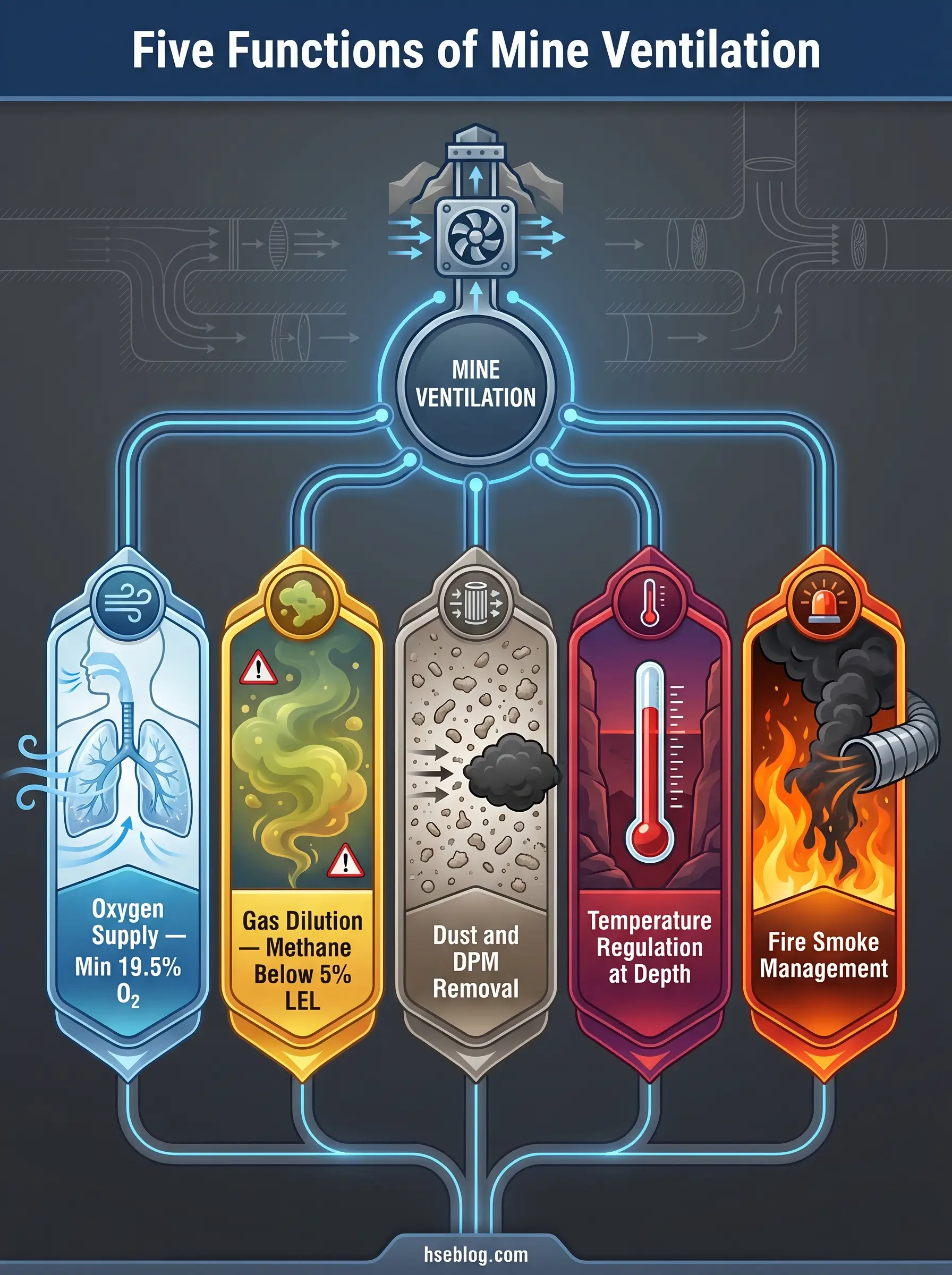
Ventilation serves multiple distinct functions underground, and each one addresses a different mechanism of harm. Treating ventilation as simply "providing fresh air" misses the complexity of what the system actually manages.
Oxygen Supply
Human physiology requires a minimum oxygen concentration of approximately 19.5% — the threshold established under MSHA regulations in the US (30 CFR Part 75, Subpart D). Below that level, cognitive impairment begins rapidly, and the risk of loss of consciousness follows. Ventilation maintains breathable oxygen concentrations by continuously replacing the atmosphere consumed by workers, diesel equipment, oxidation processes, and biological activity in the rock mass.
Hazardous Gas Dilution and Removal
Methane is explosive at concentrations between 5% and 15% in air (NIOSH/CDC Mining Program). Coal mines release methane continuously from the seam and surrounding strata. Ventilation dilutes methane well below its lower explosive limit — MSHA mandates methane monitor warnings at 1% CH₄ on cutting equipment (US jurisdiction), with power cutoff at 1.5%. Beyond methane, ventilation removes carbon monoxide from blasting and diesel exhaust, nitrogen oxides, hydrogen sulfide in certain geologies, and radon where uranium-bearing strata are present. Each gas presents a different exposure profile, but ventilation is the primary engineering control for all of them.
Dust and Diesel Particulate Matter Control
Respirable coal dust and silica dust cause progressive, irreversible lung disease. Diesel particulate matter (DPM) is classified as a Group 1 carcinogen. Ventilation carries airborne particulates away from the breathing zone and toward exhaust airways, working alongside water suppression, filtration, and enclosed cabs as part of a layered dust control strategy. The shift toward battery electric vehicles (BEVs) is beginning to change this equation significantly — a point explored in detail in the emerging technologies section.
Temperature and Humidity Regulation
Geothermal heat increases roughly 1°C for every 30–40 meters of depth. In deep mines, rock temperatures can exceed 50°C, and without ventilation to deliver cooler surface air and remove heat, working conditions become physiologically dangerous. Several jurisdictions set wet-bulb temperature limits — for example, 33.5°C in certain Australian state regulations. A common practitioner observation across deep mining operations is that ventilation systems originally designed around gas or dust control reach a point where temperature management becomes the dominant constraint, particularly as mines extend deeper than their original design anticipated.
Fire and Emergency Response Support
During an underground fire, ventilation determines whether smoke and toxic combustion products travel toward workers or away from them. The ability to maintain, redirect, or reverse airflow is critical to emergency egress. Main mine fans in most jurisdictions are required to have reversal capability — a design feature that exists specifically because the wrong airflow direction during a fire converts a survivable event into a fatal one.
Natural Ventilation in Mines
Before mechanical fans existed, underground mines relied entirely on natural ventilation — airflow driven by temperature differentials between the surface and underground workings. The mechanism is straightforward: warm air underground is less dense than cooler surface air, creating a pressure difference between the upcast and downcast shafts (the stack effect). Air moves from the higher-pressure to the lower-pressure shaft, and a circuit forms.
The problem is that this circuit is governed by weather, not engineering. When surface temperatures rise in summer, the temperature differential shrinks and airflow drops. In transitional seasons, the differential can reverse entirely, sending air through the mine in the opposite direction from what the layout assumes. A mine that breathes in one direction in January may exhale in the same direction in July — or, worse, stagnate during the crossover periods when surface and underground temperatures equalize.
Natural ventilation alone is considered inadequate for any modern underground mining operation. The airflow volume is uncontrollable, the direction is unpredictable, and distribution to specific working areas is impossible without mechanical assistance. Several jurisdictions make this explicit in regulation: Ontario Regulation 854, §252(2) (Canada) requires that underground mine ventilation systems be mechanical. Natural airflow may supplement mechanical systems in very shallow workings or surface structures, but no responsible ventilation design depends on it for occupied underground areas.
The most dangerous characteristic of natural ventilation, historically, was its inability to respond during emergencies. Mines that relied on thermal draft had no mechanism to control airflow direction during fires — the fire itself altered the thermal gradient, often pulling smoke and toxic gases directly through occupied workings.
Mechanical Ventilation Methods
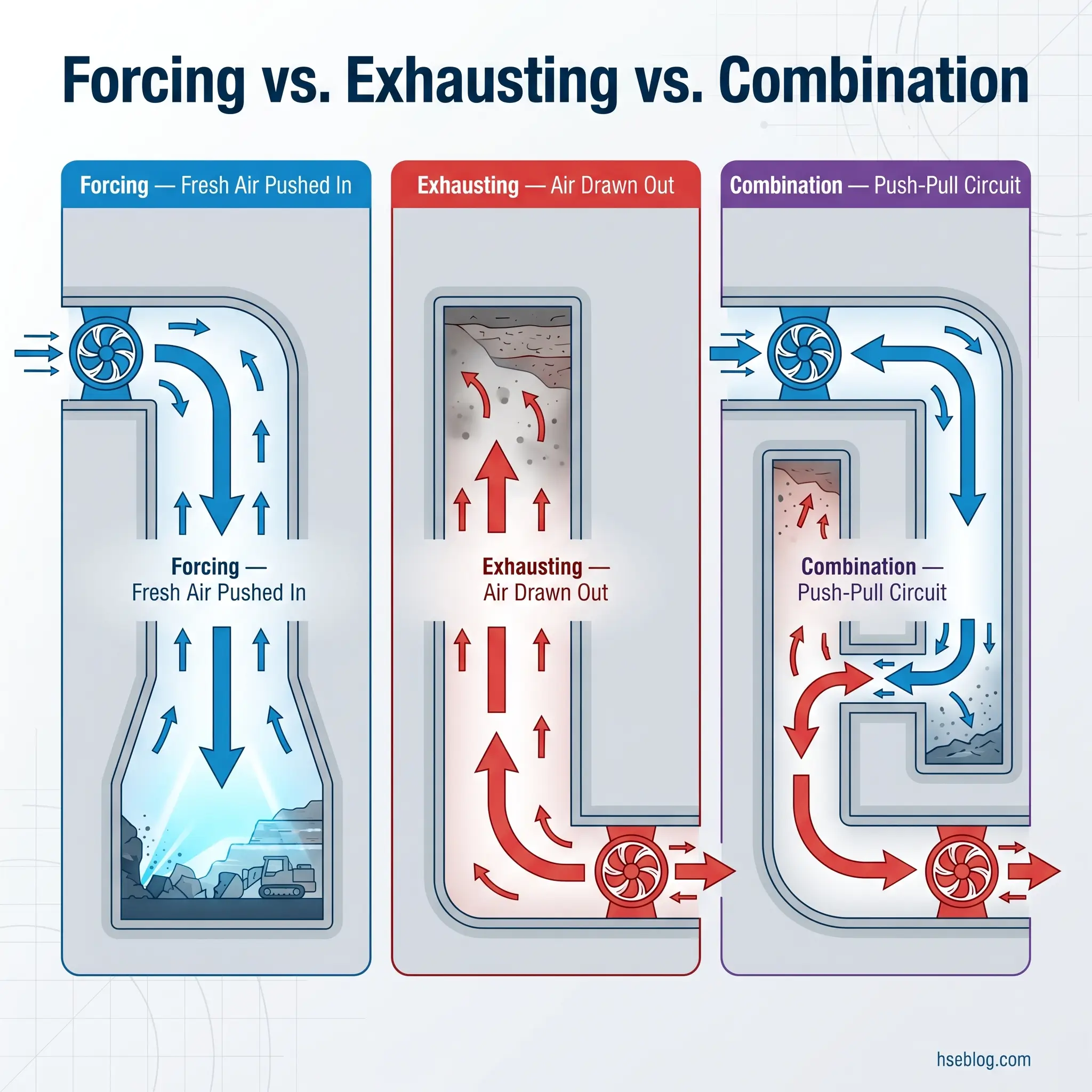
Mechanical ventilation replaces the uncertainty of natural airflow with engineered control. The fundamental configurations are forcing, exhausting, and combination systems — and the choice between them is driven less by engineering preference than by the dominant hazard the ventilation must control.
Forcing (Blowing) Systems
In a forcing configuration, fans push fresh air into the mine through the intake airways. Clean air reaches the working face first, and contaminated air travels back through the return airways toward the exhaust. This arrangement is commonly used in development headings and is favored in hard-rock metal mines where DPM control at the face is the primary design driver — workers breathe fresh intake air rather than air that has passed through diesel exhaust plumes upstream.
Exhausting (Suction) Systems
Exhausting systems draw air out of the mine by creating negative pressure at the exhaust shaft. Air enters through intake openings, flows through the workings, and is pulled out by the main fan. This configuration is the standard in coal mining because it keeps methane moving continuously toward the return airways and out of the mine. The tradeoff is that contaminants generated between the intake and the working face — dust, DPM, gases from sealed areas — may pass through occupied zones before reaching the exhaust.
Combination (Push-Pull) Systems
Combination systems use both forcing and exhausting fans in a coordinated circuit. This provides greater control over airflow distribution and velocity, particularly in complex mine geometries with multiple working levels. The coordination requirement is also the vulnerability — if the fans are not properly balanced, the system can create uncontrolled recirculation zones where contaminated air cycles rather than being removed.
The following comparison summarizes the three configurations:
| Configuration | Airflow Direction | Best Application | Key Advantage | Key Limitation |
|---|---|---|---|---|
| Forcing | Fresh air pushed to face | Development headings, metal mines (DPM control) | Clean air at face first | Contaminated air disperses through mine |
| Exhausting | Air drawn toward exhaust | Coal mines (methane management) | Continuous gas removal toward returns | Contaminants may pass through work zones |
| Combination | Both pushing and pulling | Complex multi-level geometries | Greater distribution control | Requires careful fan balancing |
Primary vs. Auxiliary Ventilation
Primary ventilation refers to the main mine fans — large axial or centrifugal units capable of moving 150+ m³/s — that drive the bulk airflow circuit through the entire mine. Auxiliary ventilation uses smaller local fans and flexible ductwork to deliver fresh air to specific locations that the primary circuit cannot reach: dead-end development headings, stopes, and isolated work areas. Booster fans are sometimes installed underground to supplement the primary circuit in extended or particularly deep workings, though their use is regulated in some jurisdictions due to the risk of recirculation if improperly positioned.
Ventilation Network Layouts
The physical layout of ventilation circuits depends on the mine's geometry and extraction method. A U-tube layout — where air enters and returns through the same set of entries — is the simplest and most common in room-and-pillar operations. Through-flow layouts, where intake and return are on opposite sides of the working area, provide better separation of clean and contaminated air and are typical in longwall mining. Boundary ventilation routes air around the perimeter of a panel, while central systems use a dedicated return airway running through the middle. The selection interacts directly with seam geometry, pillar layout, and production sequencing — there is no universally optimal layout, only the one that best fits the specific mine's constraints.
Ventilation Control Devices and Infrastructure
The fans generate airflow. The control devices direct it. Without functional stoppings, regulators, doors, and overcasts, a mine's ventilation circuit collapses into short-circuit paths where air takes the route of least resistance rather than the route of greatest need.
Stoppings — permanent or temporary barriers that seal off entries to prevent air from bypassing the intended circuit. Permanent stoppings are constructed from block, concrete, or steel panels. Temporary stoppings use brattice cloth or other flexible materials during development.
Regulators — adjustable openings in stoppings that control the quantity of air flowing through a specific path. By varying the size of the opening, the ventilation officer controls how much air each branch of the circuit receives.
Ventilation doors and airlocks — allow personnel and equipment to pass through stoppings without breaking the pressure seal. Airlocks use two doors in sequence: one closes before the other opens, maintaining the pressure differential.
Overcasts and undercasts — structural crossings that allow intake and return air courses to pass over or under each other without mixing. These are critical at intersections where different air circuits must cross.
Brattice cloth and line curtains — flexible barriers hung in development headings to direct auxiliary ventilation air to the working face and prevent recirculation.
Airflow measurement devices — anemometers, pitot tubes, and smoke tubes used during ventilation surveys to measure air velocity, volume, and direction throughout the mine.
Watch For: The weakest link in any ventilation system is usually the stoppings and doors. They suffer physical damage from equipment traffic, get neglected during maintenance cycles, and are deliberately propped open for convenience by workers who underestimate the downstream consequences. Ventilation surveys frequently reveal that planned airflow is dramatically different from actual airflow because of these degraded controls — a gap that accumulates silently until an incident forces its discovery.
What Is Ventilation on Demand (VoD)?
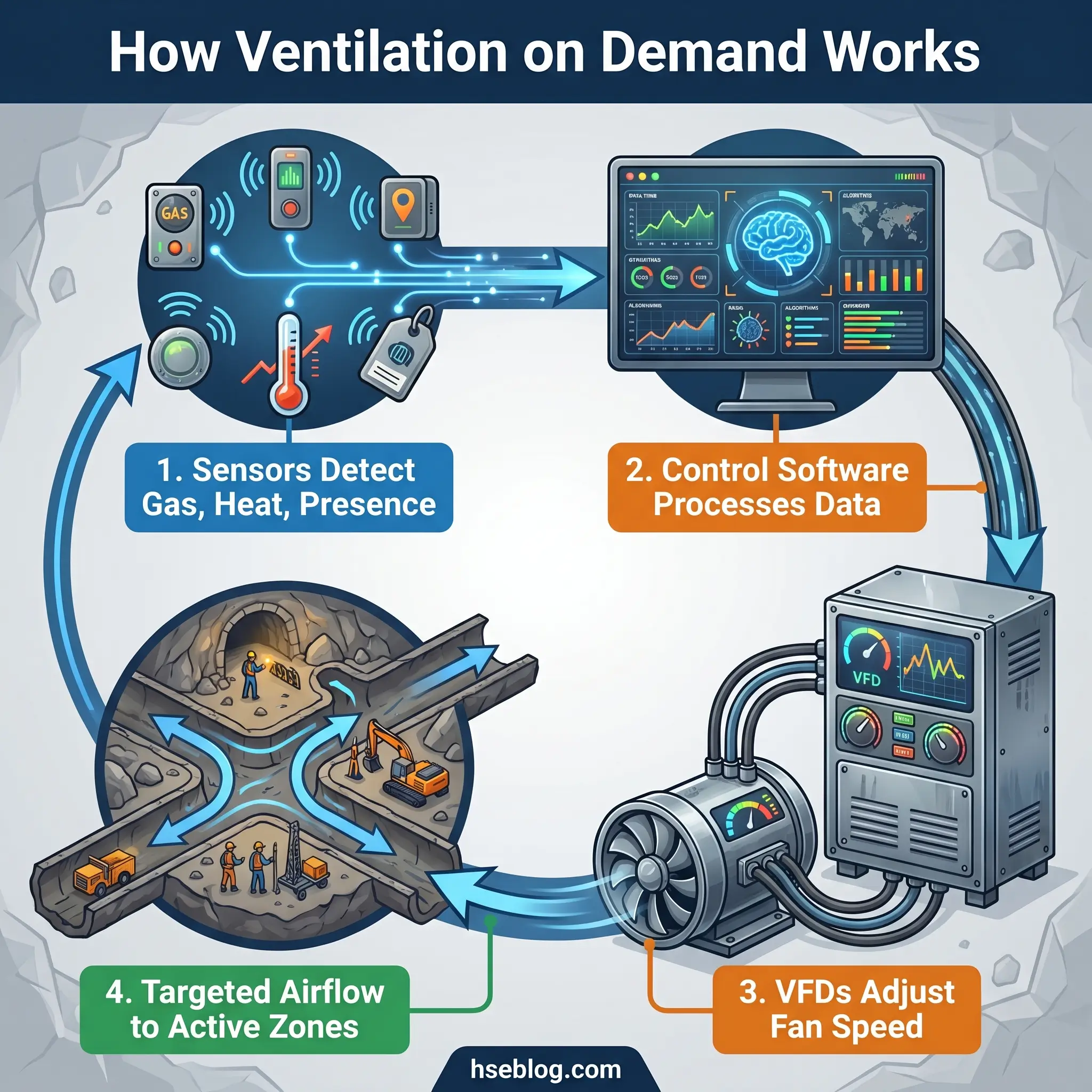
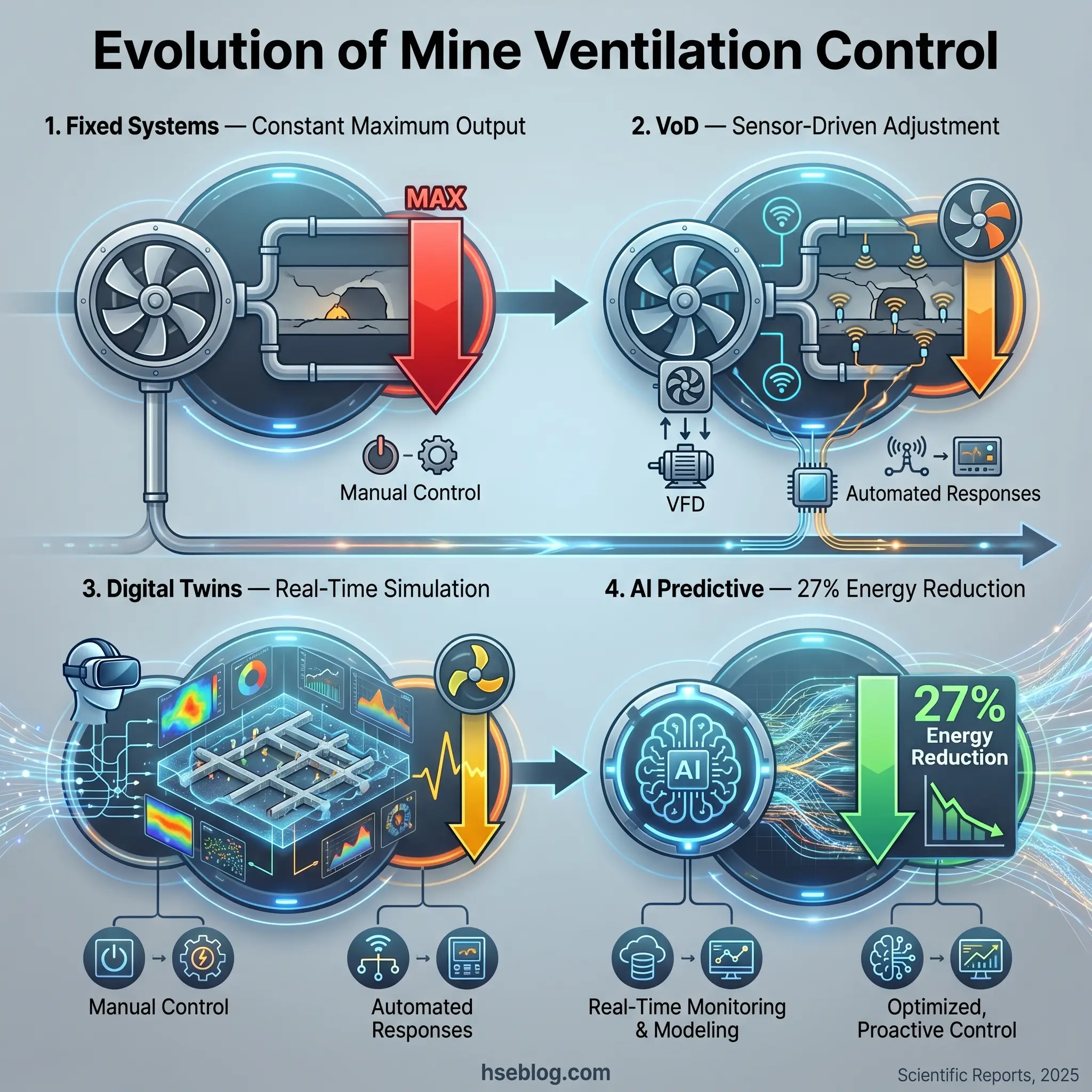
Traditional mine ventilation systems operate at fixed, maximum capacity — every fan runs at full speed regardless of whether anyone is actually working in the area it serves. Ventilation on Demand (VoD) replaces this approach with adaptive delivery: airflow is adjusted dynamically based on real-time data about where people are, what equipment is operating, and what the environmental sensors are reading.
The technology stack behind VoD typically includes environmental sensors (gas, temperature, humidity, dust), personnel and vehicle tracking systems, variable frequency drives (VFDs) on fan motors, and centralized control software that integrates the data and adjusts fan speeds accordingly. When a heading is unoccupied and no equipment is running, airflow drops to a minimum maintenance level. When a diesel loader enters, airflow ramps up to handle the exhaust load. When gas sensors detect an uptick in methane, airflow increases to the affected zone.
The energy savings are substantial. Peer-reviewed research consistently reports 25–50% reduction in ventilation energy consumption with properly implemented VoD systems. Given that ventilation already consumes 40–50% of total mine electrical energy, the operational cost impact is significant.
VoD also delivers targeted safety improvements. Instead of distributing airflow uniformly across an entire mine — including areas that are empty — the system concentrates ventilation capacity where the hazard is actually present. Zones with active diesel equipment or elevated gas readings receive priority airflow.
The most common barrier to successful VoD implementation is not the technology. It is the transition from a fixed-system mindset. Operations teams accustomed to hearing fans at constant speed associate any reduction with danger. Workers who have spent years equating loud fan noise with safety perceive a quieter heading as under-ventilated, even when sensor data confirms adequate airflow. Successful VoD rollouts invest as much in change management — training, gradual commissioning, visible data dashboards — as they do in hardware and software.
Audit Point: During VoD system audits, verify that override protocols are documented and that manual overrides are logged with timestamps and justification. Unrestricted manual override capability can systematically defeat the system's adaptive logic, returning the operation to fixed-mode energy consumption while creating gaps in coverage that the control system cannot compensate for.
How Mine Ventilation Systems Are Designed
Ventilation design is not a one-time calculation performed when the mine opens. It is a continuous process that must respond to a changing underground environment — new headings, shifting production zones, sealed areas, and evolving equipment fleets.
The starting point is airflow quantity. Under MSHA 30 CFR §75.325 (US jurisdiction), underground coal mines must provide air quantities based on the number and power rating of diesel equipment operating underground, methane emission rates from the seam and gob areas, and the number of personnel. The minimum airflow velocity at an exhausting coal working face is 60 feet per minute under 30 CFR §75.326 (US). Other jurisdictions use different thresholds — Australian state regulations, for instance, tend toward performance-based outcomes where the operator must demonstrate through risk assessment that the ventilation achieves safe conditions, rather than meeting a prescriptive flow rate.
Pressure loss and resistance are the next design layer. Every airway resists airflow based on its cross-sectional area, surface roughness, length, and obstructions. The total resistance of the ventilation network determines how large the fans must be to deliver the required air volume. Ventilation simulation software — programs that model the entire network as a set of connected airways with assigned resistance values — is now standard practice for medium to large underground operations.
Depth adds complexity exponentially. Deeper mines face higher geothermal heat loads, longer airways (and therefore greater total resistance), and potentially higher methane liberation rates. At a certain depth, ventilation alone cannot maintain tolerable working temperatures, and refrigeration plants become necessary — an engineering reality that fundamentally changes the cost structure of deep mining.
One recurring design error is treating the ventilation plan as a static document. Mines are dynamic systems. A new development heading changes the circuit's resistance. A sealed panel alters the pressure balance. Replacing diesel loaders with battery electric vehicles can reduce the required air volume by 30–50% for that zone — or, if not accounted for in the plan, leave fans running at capacity they no longer need. The best operations reassess their ventilation network at least quarterly, adjusting fan curves, regulator settings, and duct routing to match the mine's current state rather than the state it was in six months ago.
Mine Ventilation Regulations by Jurisdiction
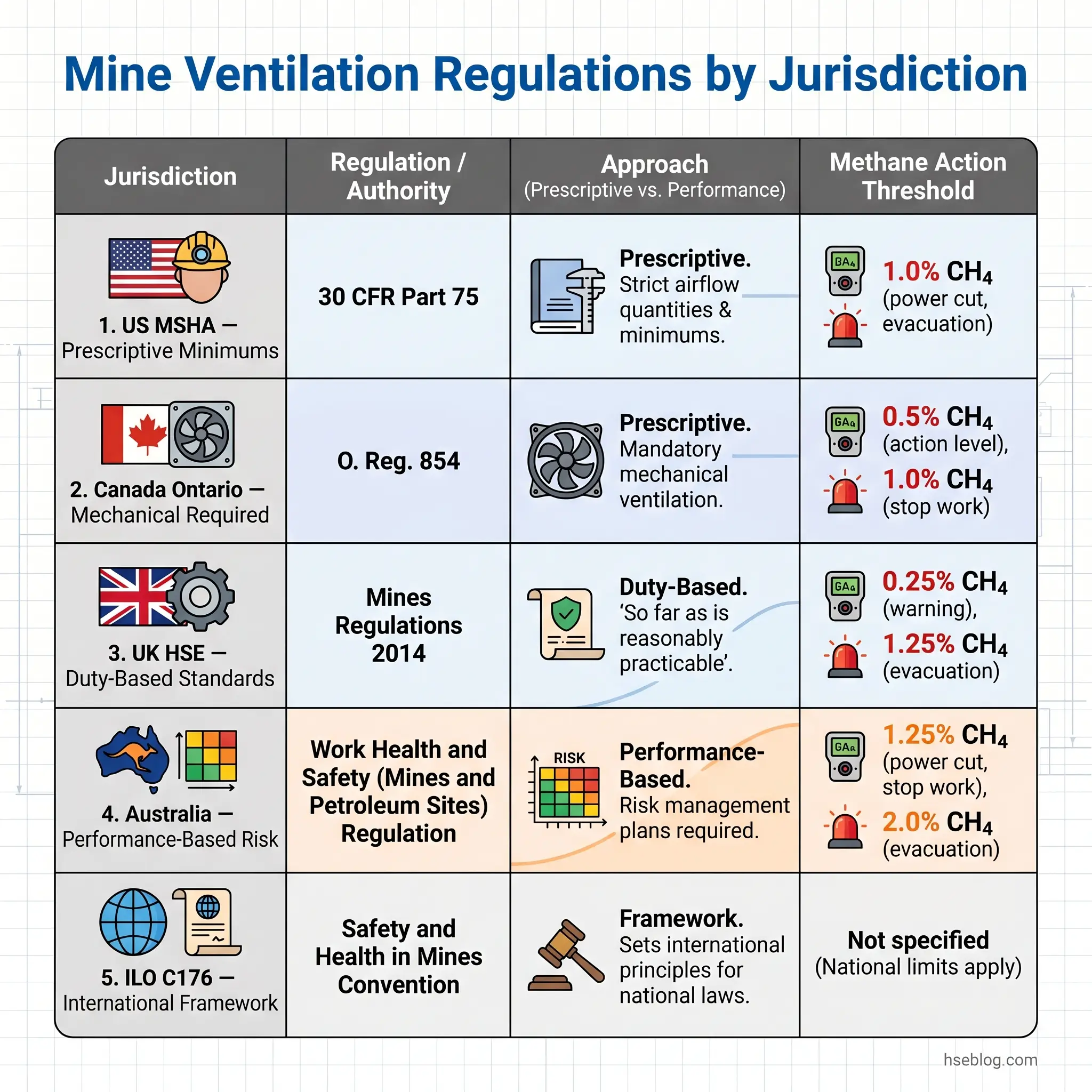
Regulatory frameworks for mine ventilation differ not just in threshold values but in enforcement philosophy. Understanding this distinction matters when transferring ventilation experience across jurisdictions or when operations span multiple regulatory regimes.
In the United States, MSHA's 30 CFR Part 75, Subpart D governs underground coal mine ventilation. Mines must operate under an approved ventilation plan, maintain minimum airflow velocities, monitor methane continuously on cutting equipment, and ensure main fans can reverse airflow direction. 30 CFR Part 57, Subpart D covers metal and non-metal underground mines, with air quality standards for specific contaminants. MSHA's approach is prescriptive: specific minimum airflows, specific monitoring requirements, specific equipment mandates.
A significant regulatory development is underway: MSHA published a proposed rule in July 2025 (Docket MSHA-2025-0084) to amend ventilation plan approval criteria for underground coal mines. The proposal would eliminate the District Manager's discretionary authority to require additional ventilation plan provisions beyond those specified in regulations — a change that could affect how ventilation plans are negotiated and approved at the district level. The comment period was extended to September 2, 2025 (Federal Register, 2025).
In Canada, mine ventilation is regulated at the provincial level. Ontario Regulation 854, §252 explicitly requires mechanical ventilation in underground mines and sets minimum oxygen and contaminant thresholds. Other provinces have comparable requirements under their respective mining acts.
In the United Kingdom, the Mines Regulations 2014 under HSE jurisdiction establish duties for ventilation management, including requirements for ventilation officers and systematic monitoring.
In Australia, mine safety is governed by state-based legislation — Queensland's Coal Mining Safety and Health Act and Western Australia's Mines Safety and Inspection Regulations are among the most referenced. The Australian approach leans toward performance-based regulation: rather than prescribing specific airflow numbers, the operator must demonstrate through documented risk assessment that the ventilation system achieves safe outcomes.
Internationally, the ILO Safety and Health in Mines Convention (C176), adopted in 1995, provides a framework requiring adequate ventilation in all underground mines. Ratified by over 30 countries, it establishes baseline obligations but leaves specific thresholds to national implementation.
| Jurisdiction | Key Regulation | Approach | Methane Action Level |
|---|---|---|---|
| US (Coal) | MSHA 30 CFR Part 75 | Prescriptive — specific minimum airflows | 1% CH₄ warning, 1.5% power cutoff |
| US (Metal/Non-metal) | MSHA 30 CFR Part 57 | Prescriptive — contaminant-specific limits | Varies by contaminant |
| Canada (Ontario) | Reg. 854, §252 | Prescriptive — mechanical ventilation mandated | Varies by province |
| UK | Mines Regulations 2014 | Duty-based with ventilation officer requirements | Per HSE guidance |
| Australia (Qld/WA) | State mining safety acts | Performance-based — risk assessment driven | Per state regulation |
| International | ILO Convention C176 | Framework — national implementation required | Deferred to national law |
Jurisdiction Note: Oxygen thresholds and methane action levels vary between jurisdictions. MSHA triggers methane warnings at 1% CH₄ and power cutoff at 1.5% on mining equipment. Australian and UK thresholds may differ. Always verify local regulatory requirements before applying any threshold cited in this article.
Regulatory content here reflects general HSE professional understanding of the jurisdictions listed, current as of the review date above. It is not legal advice. Specific compliance questions, enforcement situations, or prosecution risk should be directed to qualified legal counsel in the applicable jurisdiction.
Emerging Technologies in Mine Ventilation
Digital twins represent the most significant development in mine ventilation control in recent years. A digital twin is a virtual replica of the physical ventilation network — every airway, fan, stopping, and regulator modeled in software and updated continuously with real-time sensor data. This allows operators and engineers to simulate the effect of changes before implementing them: what happens to methane levels in Panel 3 if we reduce fan speed on the north circuit by 15%? The model answers in seconds. The real mine answers in casualties if the decision is wrong.
A 2025 field validation published in Scientific Reports demonstrated what calibrated digital twins can achieve. Researchers deployed an LSTM-Attention neural network integrated with a digital twin framework in an operational coal mine over eight months. The system achieved a 27% reduction in ventilation energy consumption with 97.3% control accuracy (Scientific Reports, 2025). This is significant because it represents peer-reviewed, field-validated performance — not a simulation exercise or a vendor claim.
AI and machine learning extend the digital twin concept further. Pattern recognition algorithms can predict methane concentration spikes based on production rates and geological conditions, optimize fan speeds across the entire network simultaneously, and detect ventilation anomalies — a sudden drop in airflow in one branch — that might take hours to identify through manual survey.
IoT sensor networks provide the data substrate for all of these technologies. Distributed environmental monitors measuring gas concentrations, temperature, humidity, airflow velocity, and dust levels at dozens or hundreds of points throughout the mine feed the continuous stream of data that digital twins and AI systems require. The density of the sensor network directly determines the resolution of control — sparse sensors mean coarse control; dense networks enable granular, zone-by-zone optimization.
Mine electrification intersects with ventilation in a transformative way. Battery electric vehicles eliminate diesel exhaust — DPM, carbon monoxide, nitrogen oxides — as a ventilation load. For operations with large diesel fleets, this can reduce required airflow by 30–50%, enabling smaller fans, reduced energy consumption, and potential deferral of ventilation infrastructure expansion in growing mines. The ventilation system designed around a fleet of 20 diesel trucks looks fundamentally different from one designed around 20 battery trucks.
The practitioner caution on digital twins is calibration fidelity. The model is only as accurate as its representation of the physical system. When stoppings degrade, when regulators are adjusted without logging the change, when informal modifications accumulate — the twin diverges from reality. At that point it becomes a planning fiction rather than a control tool, and decisions based on its output carry risk proportional to the divergence.
Frequently Asked Questions
What happens if a mine has inadequate ventilation?
Oxygen levels drop below the 19.5% threshold required for safe breathing. Methane can accumulate into the explosive range of 5–15% concentration in air, creating catastrophic explosion risk. Carbon monoxide and other toxic gases build to dangerous levels. Heat stress becomes acute in deeper workings where geothermal gradients go unmanaged. Over longer periods, uncontrolled dust exposure leads to irreversible lung disease. Published NIOSH data on mine fires and explosions documents the pattern: ventilation failures precede the worst underground disasters.
What is the difference between primary and auxiliary ventilation in mines?
Primary ventilation uses main mine fans — large axial or centrifugal units — to drive bulk airflow through the entire mine's interconnected airways. Auxiliary ventilation uses smaller local fans with flexible ductwork to deliver air to specific locations the primary circuit cannot reach: dead-end development headings, isolated stopes, or areas separated from the main circuit by distance or geometry. Most operating mines require both systems working together.
How much energy does mine ventilation consume?
Ventilation typically accounts for 40–50% of total underground mine electrical energy consumption, making it the single largest energy user in most operations (Engineering Applications of Artificial Intelligence, 2024). This proportion drives strong economic interest in efficiency technologies like VoD, which peer-reviewed research shows can reduce ventilation energy use by 25–50% through adaptive airflow delivery.
Can natural ventilation be used in modern underground mines?
Natural ventilation is unreliable and insufficient for modern underground operations. It depends on temperature differentials between surface and underground, varies seasonally, and can reverse direction unpredictably. Some jurisdictions — including Ontario, Canada, under Regulation 854, §252 — explicitly require mechanical ventilation. Natural airflow may supplement mechanical systems in shallow workings or surface structures, but no credible ventilation plan relies on it for occupied underground areas.
What is the minimum oxygen level required in a mine?
The commonly cited minimum is 19.5% O₂, established as the threshold under MSHA regulations in the US. Below this concentration, cognitive impairment begins and physiological risk escalates rapidly. Other jurisdictions set comparable thresholds. Continuous monitoring through atmospheric sensors is required in most regulatory frameworks to ensure oxygen remains above safe levels throughout all occupied areas.
How does battery electric vehicle adoption affect mine ventilation requirements?
BEVs eliminate diesel particulate matter, carbon monoxide, and nitrogen oxides from the underground atmosphere. For mines with large diesel fleets, this can reduce required ventilation airflow by 30–50% for diesel-heavy zones. The downstream effects include smaller fan requirements, reduced energy consumption, potential redesign of ventilation circuits, and possible deferral of costly ventilation infrastructure expansion. The transition also requires updating the ventilation plan to reflect the changed contaminant profile.
Conclusion
The consistent lesson from published mine disaster investigations is not that ventilation systems fail spectacularly. It is that they degrade incrementally — one damaged stopping, one propped-open door, one fan drifting off its design curve — until the gap between planned and actual airflow becomes the precondition for catastrophe. The industry's highest-impact change is not better fan technology or smarter software. It is the discipline of treating ventilation as a living system that requires continuous verification: regular surveys, prompt repair of damaged controls, and immediate documentation of any physical changes to the circuit.
The methods described here — from the fundamental physics of forcing and exhausting systems to the sophisticated integration of digital twins and AI-driven predictive control — represent a ventilation toolkit that is more powerful than at any point in mining history. Field-validated research demonstrating 27% energy reductions with near-perfect control accuracy (Scientific Reports, 2025) shows where the technology is heading. The MSHA 2025 proposed rulemaking on ventilation plan approval criteria signals that the regulatory framework is evolving alongside the technology.
None of this sophistication matters if the stoppings are crumbling, the regulators are stuck, and the last ventilation survey was six months ago. Mine ventilation saves lives through the unglamorous, continuous work of maintaining airflow where it needs to be — measured, verified, and corrected, every shift, in every heading.