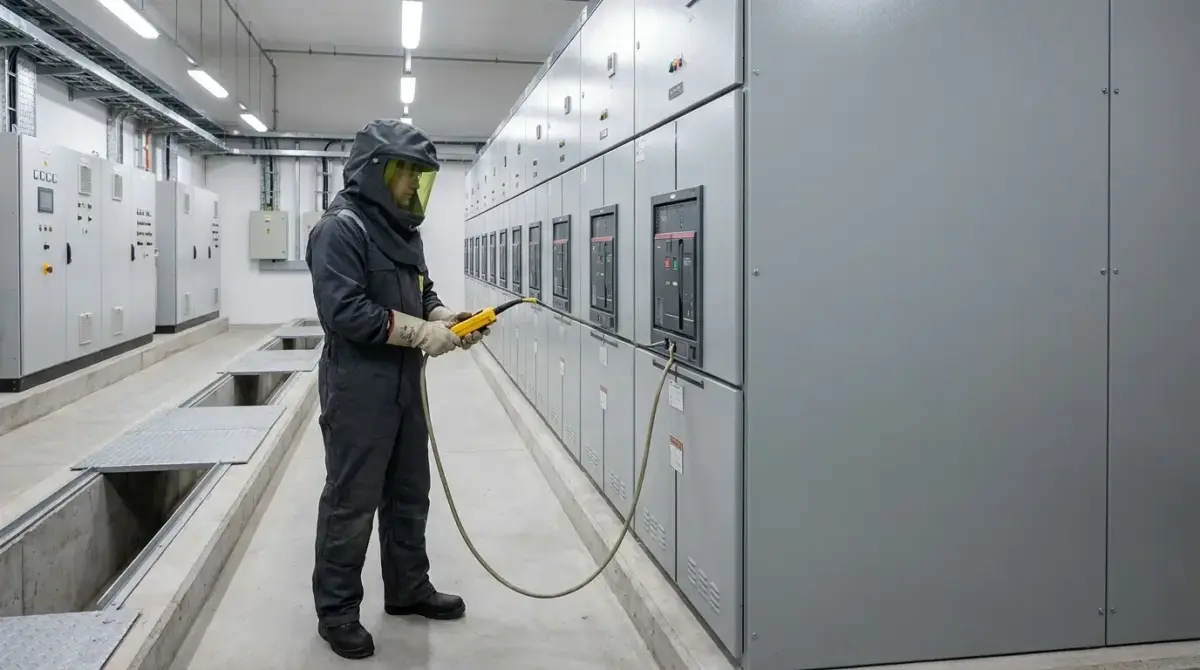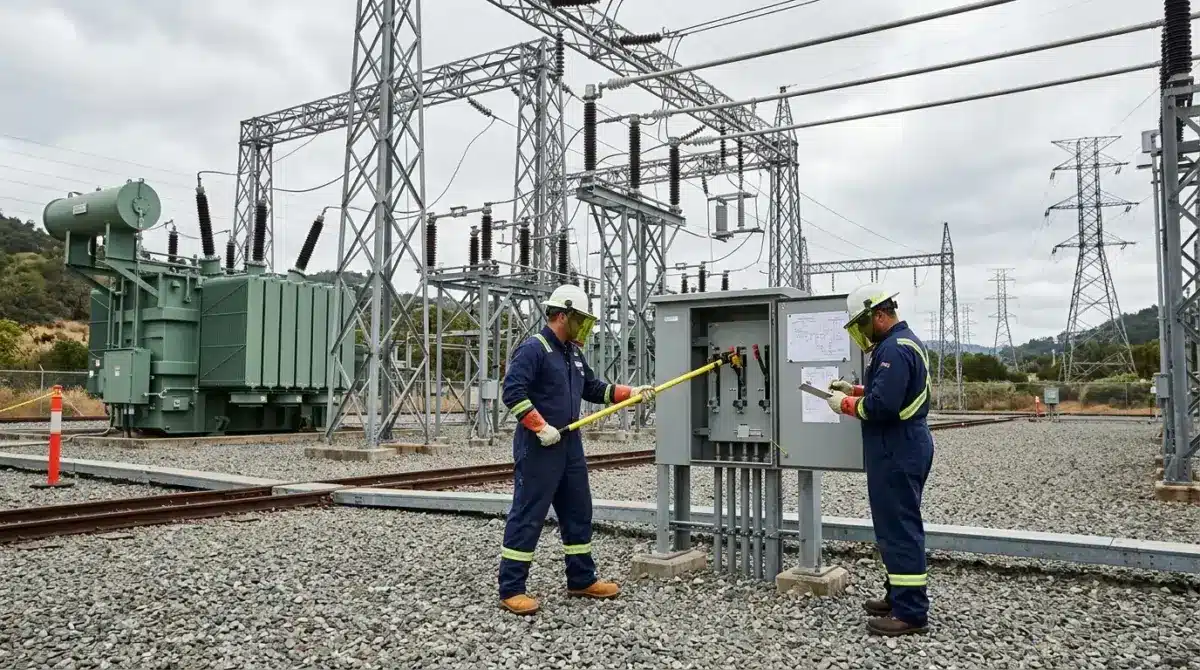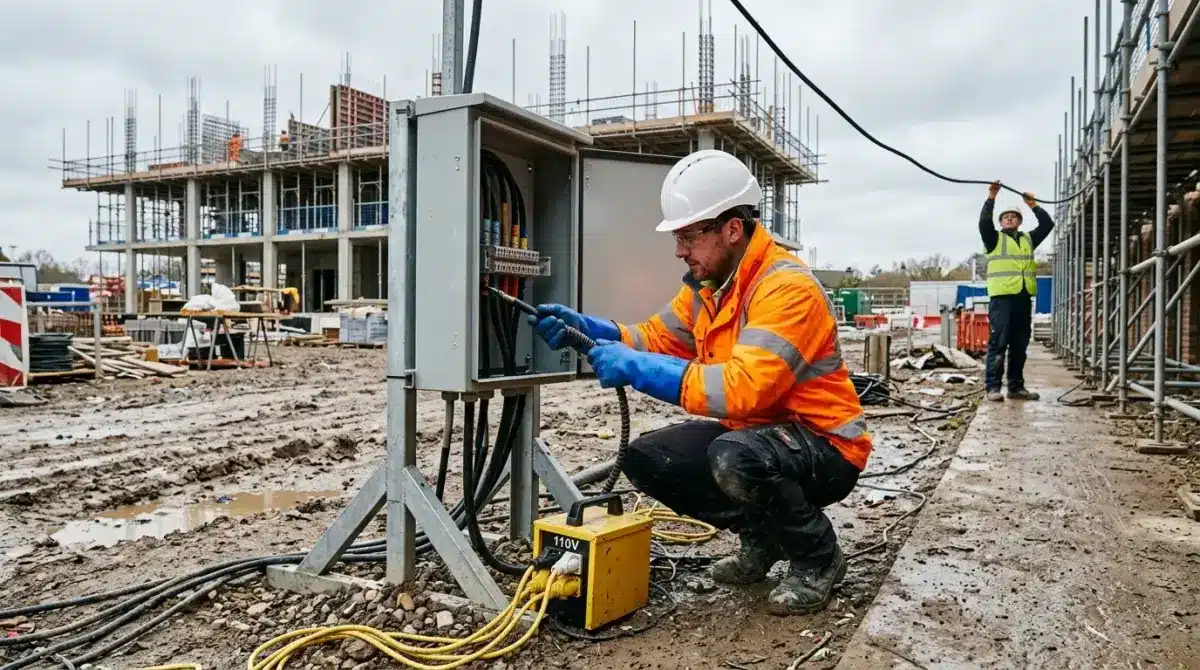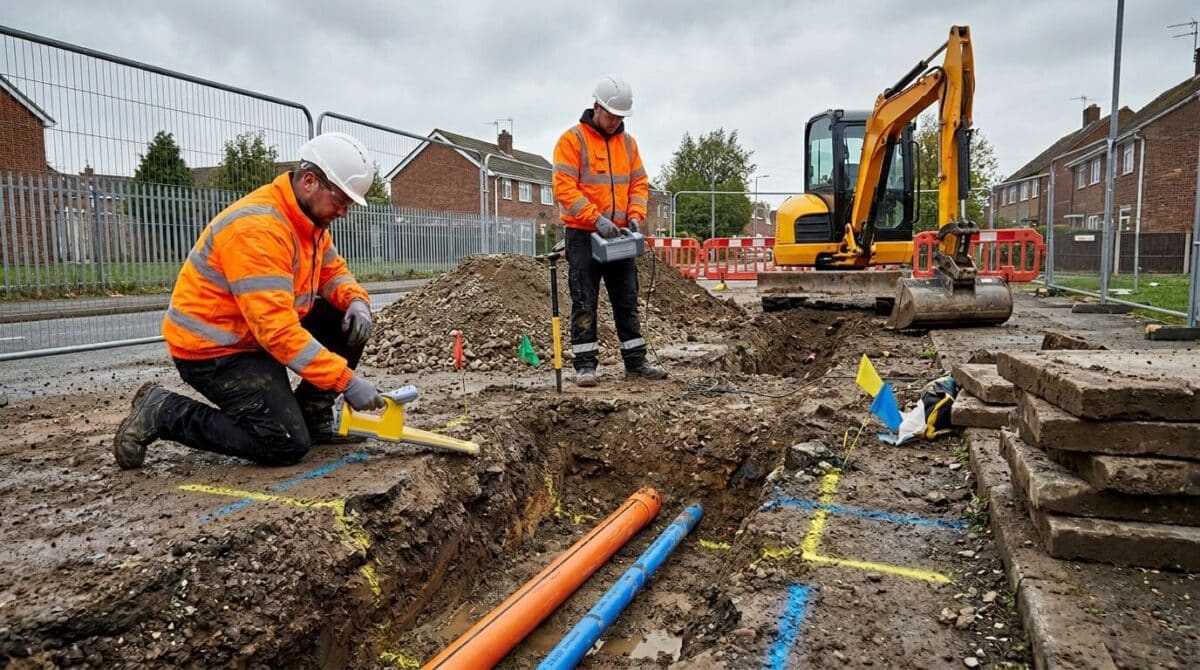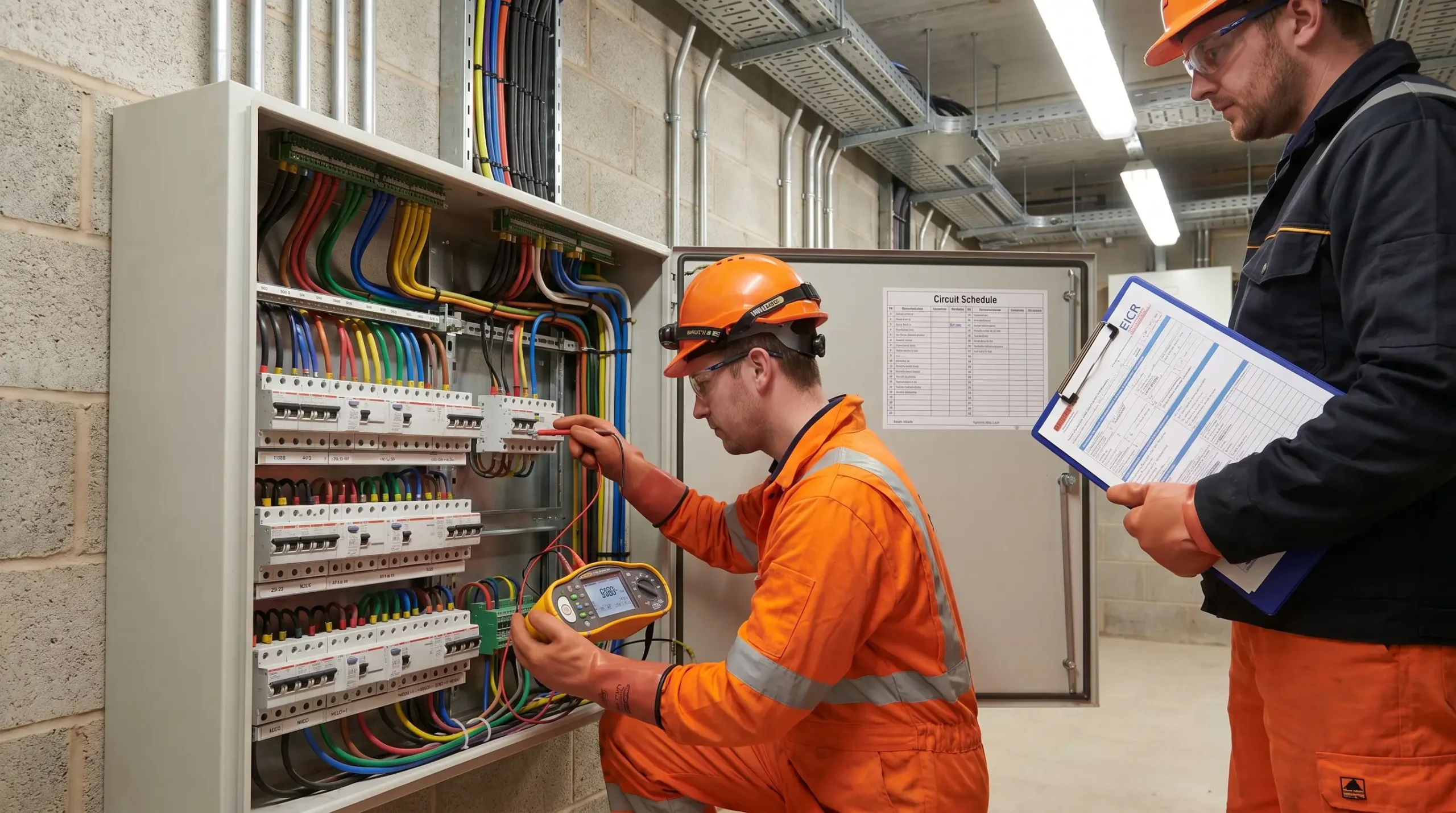
Fixed wire testing is the systematic inspection and testing of a building's permanent electrical installation — cables, circuits, consumer units, distribution boards, sockets, switches, light fittings, and earthing arrangements — to determine whether it remains safe for continued use. The formal output is an Electrical Installation Condition Report (EICR), which codes any defects by severity and classifies the overall installation as satisfactory or unsatisfactory. In the UK, it is a legal requirement for all workplaces under the Electricity at Work Regulations 1989 and for rented residential properties under the 2020 and 2025 Electrical Safety Standards Regulations.
Regulation 4(2) of the Electricity at Work Regulations 1989 (Great Britain) states that all electrical systems shall be maintained so as to prevent danger, so far as is reasonably practicable. That single clause has driven more enforcement action, more improvement notices, and more prosecution submissions than any other provision in the Regulations — and fixed wire testing is the primary mechanism through which dutyholders demonstrate they have met it. Electrical faults account for approximately 53.4% of all accidental dwelling fires in England (Home Office / Electrical Safety First, year ending September 2024). The wiring behind the walls, above the ceilings, and under the floors of every occupied building deteriorates with age, load changes, and environmental exposure — and it does so invisibly, without warning, until a fault declares itself through shock, arc, or fire.
This article explains what fixed wire testing is, what it covers, how the process works, what the resulting EICR codes mean in practice, who is legally required to arrange it, and how often. The regulatory landscape here is not straightforward — there is no single statute that mandates a fixed wire test every X years for every building type. Instead, the obligation is constructed from overlapping legislation, non-statutory technical standards, and sector-specific regulations that differ between England, Scotland, and Wales. Getting this wrong creates both safety risk and legal exposure, so jurisdictional precision matters throughout.
What Is Fixed Wire Testing?
Fixed wire testing is the inspection and testing of a building's permanent electrical installation to verify it is safe for continued use. The term is widely used across the facilities management and landlord sectors, but it is not a formal regulatory term — the technical description is "periodic inspection and testing," and the formal output document is an Electrical Installation Condition Report (EICR), which replaced the older Periodic Inspection Report (PIR).
The distinction between the process and the document matters more than it might seem. Building managers frequently conflate the two, requesting "an EICR" when they mean "a fixed wire test" — or, more problematically, specifying a scope of work that covers only the report document without understanding the inspection and testing activities required to produce it. The EICR is the paper trail. The inspection and testing is the safety-critical activity behind it.
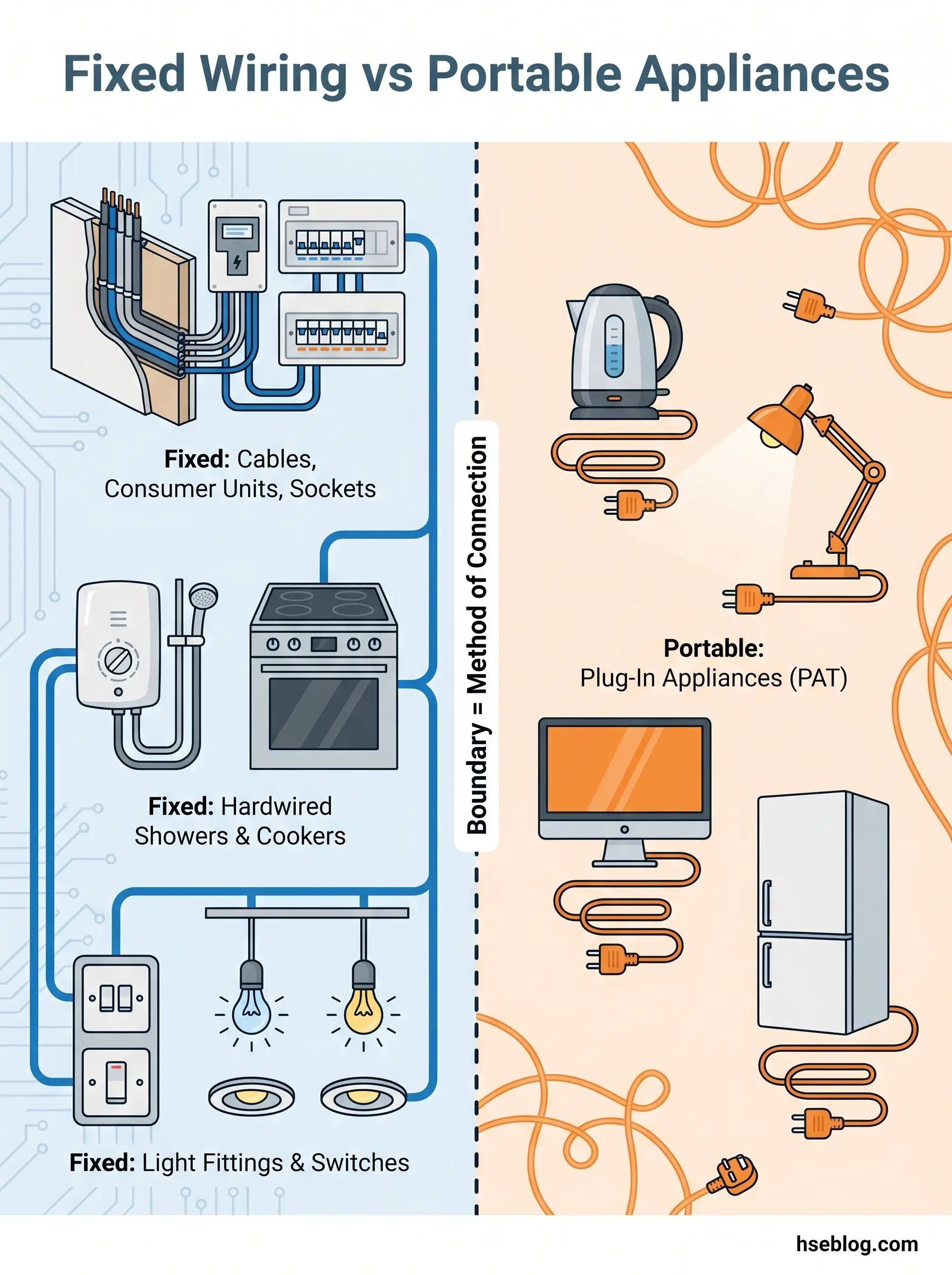
In practical terms, fixed wire testing covers everything on the building side of the electricity meter that is permanently installed. This includes cables concealed within walls, ceilings, and floors; consumer units and distribution boards; miniature circuit breakers (MCBs) and residual current devices (RCDs); sockets, switches, and light fittings; and hardwired equipment such as electric showers, cookers, and immersion heaters. It does not include portable appliances — anything that connects to the installation via a plug falls under Portable Appliance Testing (PAT), which is a separate process with a different scope, different qualifications, and different documentation.
What Does "Fixed Wiring" Actually Include?
A persistent source of confusion for landlords and facilities managers is exactly where the boundary falls between fixed wiring and portable equipment. The distinction is not always intuitive.
Fixed wiring includes all permanently connected components: the cables running through the fabric of the building, the consumer unit or distribution board that distributes power to individual circuits, all protective devices (MCBs, RCDs, RCBOs), socket outlets, switches, ceiling roses and light fittings, and any equipment that is hardwired directly into a circuit without a plug — electric showers, cooker connections, immersion heaters, extractor fans wired into spurs, and towel rail heaters on fused connection units.
Portable appliances — kettles, monitors, desk lamps, fridges, microwaves, anything with a standard plug — fall outside the scope entirely. These require PAT testing under a separate process.
The grey area sits with equipment that is technically portable but functionally stationary: a fridge-freezer plugged in and never moved, a wall-mounted TV connected via a standard plug, a water cooler on a dedicated socket. These are portable appliances by definition (they connect via a plug and can be disconnected by hand), but building managers often assume they are covered by fixed wire testing because they appear permanent. They are not. The scope distinction is determined by the method of connection, not by how often the equipment is moved.
How Does Fixed Wire Testing Work?
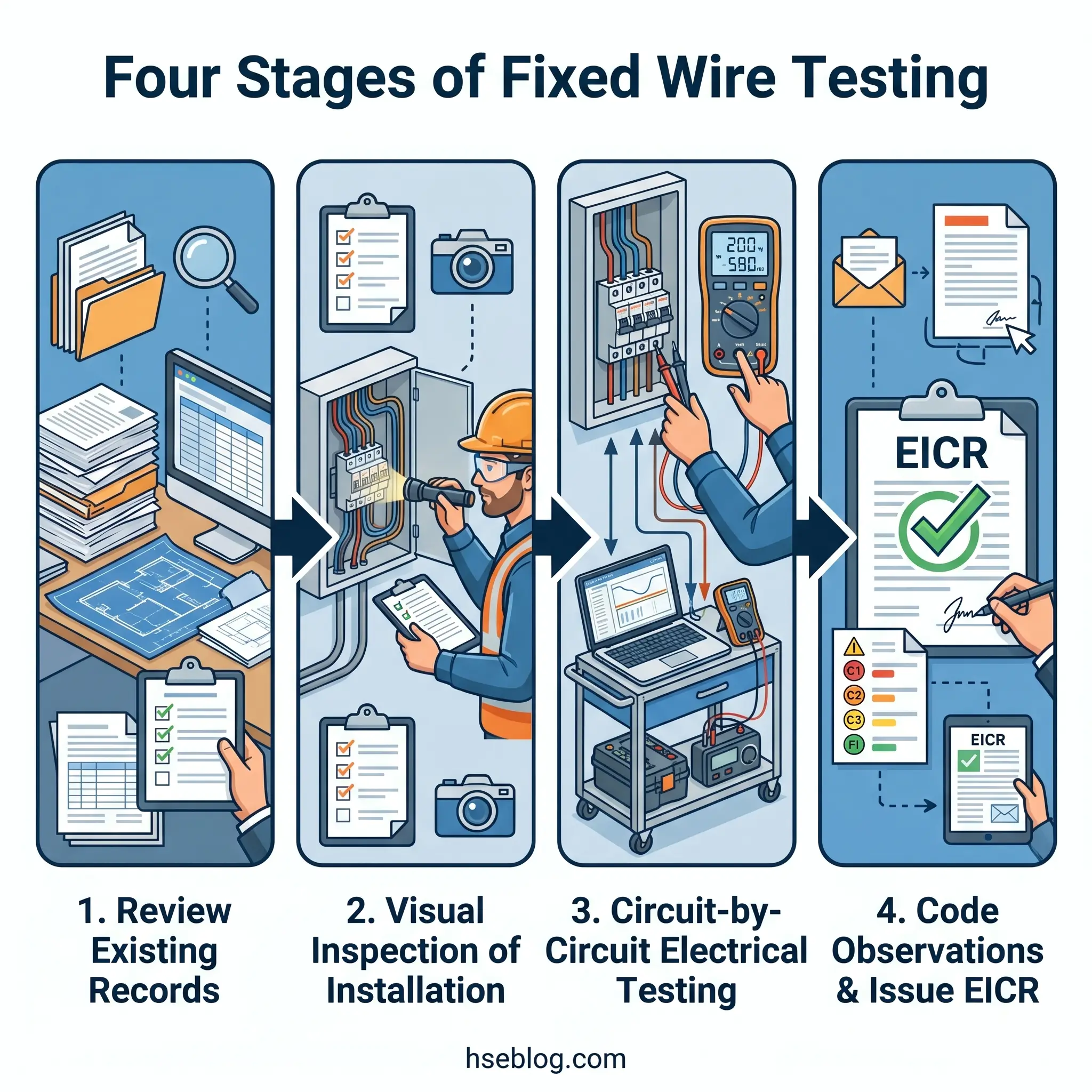
The testing process follows a structured sequence that moves from documentation review through visual inspection to live and dead circuit testing, culminating in a formal report. Understanding this sequence matters because it clarifies why testing takes as long as it does, why power interruption is necessary, and why the visual inspection stage — often perceived as the "easy part" — frequently uncovers the most serious faults.
Stage 1 — Documentation review. The inspecting engineer begins by reviewing existing records: previous EICR or PIR reports, installation certificates, minor works certificates, and any available circuit diagrams or schedules. This review establishes baseline knowledge of the installation's age, the number of circuits, any previously identified defects, and whether prior remedial work was completed. Missing documentation is itself a finding — it indicates that the installation's history is unverified, which influences how thoroughly the engineer needs to test.
Stage 2 — Visual inspection. Before any test instrument is used, the engineer conducts a systematic visual inspection of all accessible parts of the installation. This covers the condition of the consumer unit and its protective devices, the integrity of cables where visible, the condition of sockets, switches, and light fittings, the presence and adequacy of earthing and bonding conductors, and any signs of thermal damage, water ingress, or physical deterioration.
A pattern that runs consistently through published inspection data is that a significant proportion of coded observations originate from the visual inspection stage alone. Experienced engineers routinely identify dangerous DIY wiring, missing earth connections, incompatible cable types used as extensions, and incorrect protective device ratings — all before opening the test equipment case. The visual stage is frequently undervalued, but it is where the inspector's experience has the greatest impact on the quality of the report.
Stage 3 — Circuit testing. With the visual inspection complete, the engineer proceeds to electrical testing of each circuit. This requires isolating circuits (switching off power to the circuit under test), which is why testing typically involves some disruption. The specific tests performed are detailed below.
Stage 4 — Reporting. Each observation is recorded and coded by severity (C1, C2, C3, or FI — explained in the next section). The engineer then makes an overall determination: satisfactory or unsatisfactory. The completed EICR is issued to the client, who is responsible for arranging any required remedial work.
What Tests Are Performed on Each Circuit?
The circuit testing stage involves a series of standardised electrical measurements, each designed to verify a specific aspect of the installation's safety. For non-electrical professionals reading an EICR, understanding what these tests measure helps interpret the results.
- Continuity of protective conductors — verifies that earth conductors provide a continuous path from each point on the circuit back to the main earthing terminal. A break in this path means a fault on that circuit would not be safely cleared by the protective device.
- Ring final circuit continuity — confirms that ring circuits (the standard arrangement for socket outlets in UK installations) are complete and continuous, with no breaks or spurs that would cause uneven loading.
- Insulation resistance — measures the resistance of cable insulation between live conductors and earth. Low insulation resistance indicates deterioration — from age, heat, moisture, or physical damage — and is a precursor to earth faults or short circuits.
- Polarity verification — confirms that live, neutral, and earth conductors are correctly connected at every point. Reversed polarity means a socket or switch could remain live when switched off.
- Earth fault loop impedance — measures the total impedance of the fault current path from any point on the circuit back through the earth. If impedance is too high, the protective device (MCB or fuse) will not trip fast enough to prevent electric shock in a fault condition.
- RCD testing — confirms that residual current devices (RCDs) disconnect within the required timeframe when a fault current is detected. BS 7671 specifies maximum disconnection times depending on the RCD type and rating.
Understanding EICR Observation Codes: C1, C2, C3, and FI
The coding system used on the EICR is where most confusion — and most unnecessary alarm — occurs. Each observation identified during the inspection is assigned a code based on its severity. The code determines what action is required and whether the overall EICR outcome is satisfactory or unsatisfactory.
| Code | Meaning | Action Required | Effect on EICR Outcome |
|---|---|---|---|
| C1 | Danger present | Immediate risk of injury — the installation or affected circuit must be made safe immediately, ideally before the engineer leaves site | Unsatisfactory |
| C2 | Potentially dangerous | Risk of injury exists — urgent remedial action required | Unsatisfactory |
| C3 | Improvement recommended | Does not comply with the current edition of BS 7671 but is not unsafe in its present condition | Satisfactory (C3 alone does not trigger an unsatisfactory outcome) |
| FI | Further investigation required | Insufficient information to assign a definitive code — additional inspection is needed to determine whether a fault exists | Unsatisfactory |
The most common misinterpretation is around C3 codes. A C3 observation means the installation was acceptable under the edition of BS 7671 that applied when it was installed, but would not meet the current edition's requirements. This is normal for any installation more than a few years old, because the standard is updated periodically — most recently with BS 7671 Amendment 4:2026, published 15 April 2026 by IET and BSI. A C3 code does not mean the installation is dangerous. An EICR containing only C3 observations is classified as satisfactory.
The opposite pattern is equally problematic. FI codes are sometimes dismissed as administrative inconveniences — an area the engineer couldn't access, a circuit they couldn't fully test. But an FI code exists precisely because the engineer could not rule out a C1 or C2 fault behind whatever obstruction prevented full inspection. Treating FI codes as trivial delays the investigation of potentially dangerous conditions. Under the ESSPRS 2020 (England), an FI code triggers the same 28-day remedial obligation as a C1 or C2.
Watch For: An EICR with multiple FI codes and no C1 or C2 findings may look "nearly clean" at first glance — but it means large parts of the installation were not fully inspected. The satisfactory/unsatisfactory determination for those areas is still unresolved. Arrange further investigation promptly; do not treat FI as "no fault found."
Is Fixed Wire Testing a Legal Requirement in the UK?
The short answer is yes — but the legal basis differs depending on whether the building is a workplace, a privately rented home, a socially rented home, or an owner-occupied dwelling, and which part of the UK it sits in. No single statute says "you must have a fixed wire test every X years." The obligation is constructed from multiple overlapping legal instruments, and courts assess compliance by examining whether the dutyholder took reasonable steps — with a current EICR being the most widely recognised evidence.
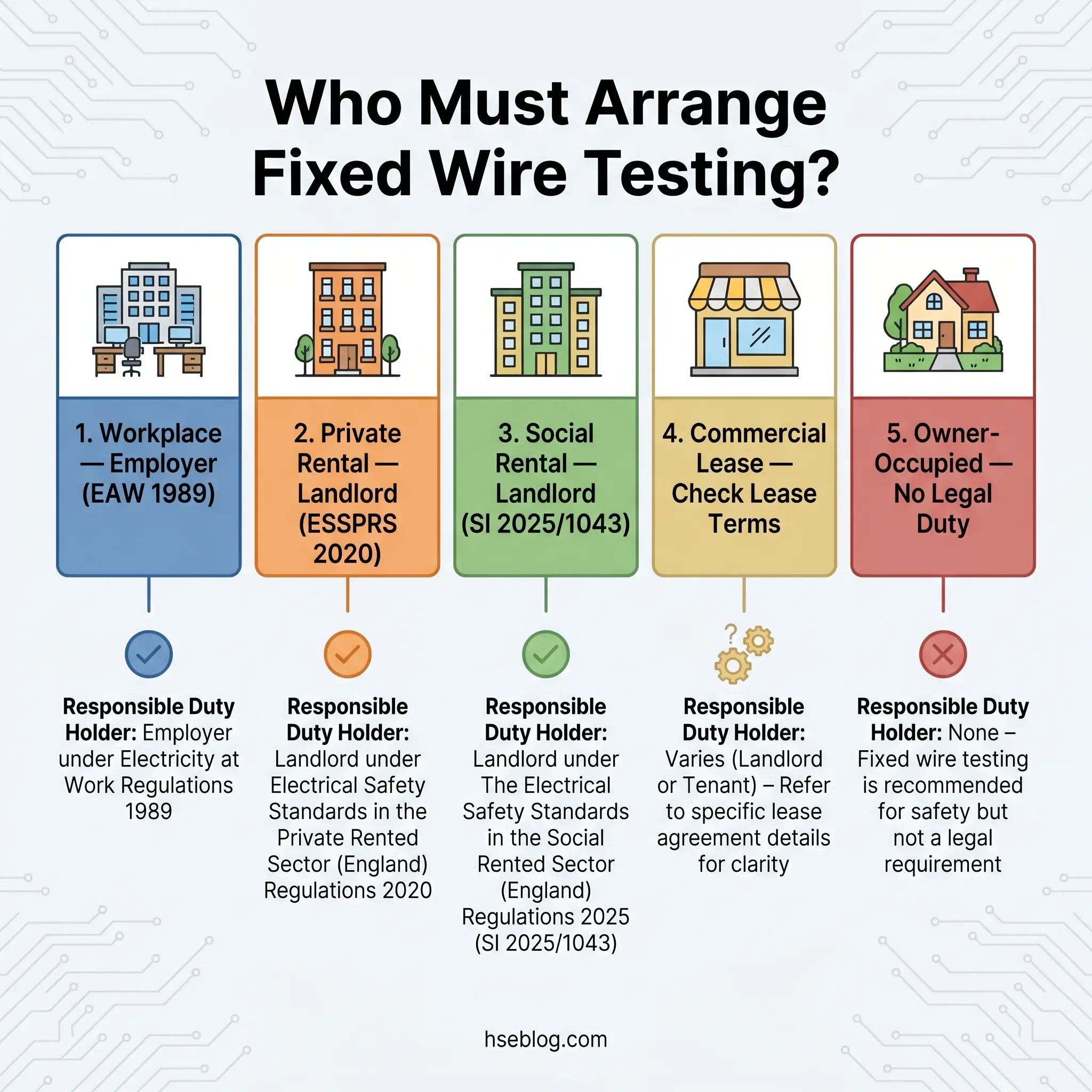
Workplaces (all of Great Britain). The Electricity at Work Regulations 1989 (Great Britain), Regulation 4(2), require that all electrical systems shall be maintained so as to prevent danger, so far as is reasonably practicable. The HSE guidance on the Electricity at Work Regulations 1989 (HSR25, 5th edition) provides practical guidance on how this duty is met, including through periodic inspection and testing. The Health and Safety at Work etc. Act 1974, Sections 2–3, imposes a broader duty on employers to ensure the health, safety, and welfare of employees and others affected by their undertaking. Periodic inspection and testing of fixed wiring — documented through a current EICR — is the accepted method for demonstrating compliance. HSE can issue improvement notices for non-compliance, and prosecution is possible under either the 1989 Regulations or the 1974 Act.
Private rented properties (England). The Electrical Safety Standards in the Private Rented Sector (England) Regulations 2020 (SI 2020/312) impose a statutory duty on private landlords. The requirements are explicit: electrical installations must be inspected and tested at least every five years by a qualified and competent person, a copy of the EICR must be provided to tenants within 28 days, and any remedial work required by a C1, C2, or FI code must be completed within 28 days (or sooner if specified by the inspector). Civil penalties of up to £30,000 per offence apply for non-compliance (UK Government / MHCLG, 2020). The UK Government guidance on electrical safety standards for landlords sets out the requirements in detail.
Social rented properties (England). The 2020 Regulations were extended to the social rented sector via SI 2025/1043, coming into force 1 November 2025 for new social housing tenancies (existing tenancies from 1 May 2026). Social landlords must ensure electrical installations are inspected and tested by a qualified person before 1 November 2026. The same penalties and remedial timeframes apply.
Scotland and Wales. Both jurisdictions have separate but broadly equivalent requirements for the private rented sector. Scotland's requirements are embedded within the Repairing Standard (Housing (Scotland) Act 2006, as amended), which requires landlords to ensure electrical installations are in a reasonable state of repair and proper working order, with periodic inspection as the recognised method. Wales introduced its own Renting Homes regime, with electrical safety requirements under the Renting Homes (Wales) Act 2016 and associated fitness standards. The detail differs, but the practical outcome is similar: landlords must arrange periodic inspection and testing.
Jurisdiction Note: When citing "UK law" on fixed wire testing, be precise about which part of the UK you mean. The 2020 EICR Regulations apply only to England. Scotland and Wales have their own frameworks. Conflating them is a common error in contractor marketing materials — and one that can mislead landlords operating across borders.
Owner-occupiers. There is no statutory requirement for owner-occupiers in any part of the UK to arrange fixed wire testing. However, the IET recommends inspection every 10 years, at change of ownership, or when concerns arise about the installation's age or condition. Mortgage lenders and home insurance providers may request evidence of electrical safety as a condition of lending or cover.
Who Is the Duty Holder?
Identifying the responsible party is straightforward in some contexts and genuinely complex in others.
For workplaces, the dutyholder is the employer or, in multi-tenanted buildings, the party responsible for common areas and shared electrical infrastructure — typically the building manager or managing agent.
For residential rentals, the landlord bears the statutory duty under the ESSPRS 2020 (England) and equivalent devolved legislation.
Commercial leases introduce a complication that catches many tenants off guard. Responsibility for maintaining the electrical installation in the demised (leased) area often falls to the tenant under the terms of the lease, while the landlord retains responsibility for communal areas and the main incoming supply. The lease itself is the determining document — and many commercial tenants are unaware of their obligations until an enforcement query or insurance review raises the question.
How Often Should Fixed Wire Testing Be Carried Out?
Testing intervals are governed by IET Guidance Note 3: Inspection & Testing (9th Edition, 2022), which sets recommended maximum intervals by building type. These are not hard statutory numbers — the Electricity at Work Regulations 1989 require maintenance sufficient to prevent danger but do not prescribe specific intervals. Courts and enforcement authorities treat the IET intervals as the benchmark for reasonable diligence. The five-yearly interval for private (and now social) rented properties is the one exception: that interval is statutory under the ESSPRS 2020 (England).
| Building Type | Recommended Maximum Interval |
|---|---|
| Domestic (owner-occupied) | 10 years or at change of occupancy |
| Private / social rented residential (England) | 5 years (statutory) |
| Commercial — offices, retail, schools | 5 years |
| Industrial — factories, workshops | 3 years |
| Swimming pools, launderettes | 1 year |
| Construction site installations | 3 months |
| Petrol filling stations | 3 years |
| Cinemas, leisure centres | 3 years |
| Agricultural and horticultural | 3 years |
Source: IET Guidance Note 3, 9th Edition (2022), published by IET. Referenced via IET Wiring Regulations (BS 7671).
Two critical points sit beneath this table. First, the inspecting engineer has the authority to recommend a shorter retest interval based on the condition of the installation. If the engineer finds significant deterioration or a high number of remedial observations, they may set the next inspection date at half the standard interval or less. That recommendation carries real weight — if a future incident occurs and the earlier inspection recommended a three-year retest that the dutyholder extended to five, the dutyholder's position is difficult to defend.
Second, mixed-use buildings — a hotel with a swimming pool, a school with a commercial kitchen, an office block with a server room — may require different intervals for different zones. The swimming pool area operates on a one-year cycle regardless of what applies to the rest of the building. Building managers responsible for these properties need to manage a schedule, not a single date.
Audit Point: The stated intervals are maximum ceilings, not target dates. Many building managers treat the maximum as the default and defer testing until the last possible date. From an enforcement perspective, the question is not "has the maximum interval expired?" but "was the interval reasonable given the installation's age, condition, and environment?" An ageing installation in a harsh environment — high humidity, chemical exposure, vibration — may warrant testing well inside the published maximum.
What Is the Difference Between Fixed Wire Testing and PAT Testing?
This is one of the most frequently confused distinctions in workplace electrical safety, and the confusion has real consequences. Businesses that assume PAT testing covers their full electrical safety obligation leave the permanent wiring installation uninspected — sometimes for decades — while diligently testing every kettle and monitor on a rolling schedule.
Fixed wire testing inspects everything up to the socket: the permanent electrical installation, from the meter through the consumer unit and distribution board, along every circuit, to the final connection point. PAT testing inspects everything plugged into the socket: portable and transportable appliances.
The two require different qualifications. Fixed wire testing requires an electrician holding inspection and testing qualifications — typically City & Guilds 2391 (or the older 2394/2395 combination) or equivalent — and ideally registered with a certification body such as NICEIC or NAPIT. PAT testing has a significantly lower qualification threshold; while formal training is recommended, it can be carried out by a competent person with appropriate PAT testing equipment and training, and does not require a full electrical qualification.
The documentation differs too. Fixed wire testing produces an EICR — a detailed report covering every circuit, with coded observations and an overall satisfactory/unsatisfactory determination. PAT testing produces a register or schedule of tested appliances with pass/fail outcomes for each item.
Both are necessary for full electrical safety compliance. A satisfactory EICR tells you nothing about whether the 200 portable appliances plugged into the installation are safe. A complete PAT register tells you nothing about whether the wiring supplying those sockets is deteriorating. One does not substitute for the other.
Who Can Carry Out Fixed Wire Testing?
The Electricity at Work Regulations 1989 use the term "competent person" without prescribing specific qualifications — competence is determined by the knowledge, training, and experience of the individual relative to the work being undertaken. In practice, competence for fixed wire testing is demonstrated through a combination of formal qualifications and professional registration.
The standard qualification pathway is City & Guilds 2391 (Inspection and Testing of Electrical Installations) or the older combination of 2394 (Initial Verification) and 2395 (Periodic Inspection and Testing). These qualifications, combined with a relevant base electrical qualification (such as City & Guilds 2365 or NVQ Level 3), provide the competence to carry out inspection and testing and issue EICRs.
Registration with an approved certification body — NICEIC, NAPIT, ELECSA, or Stroma — provides external validation of competence and access to the Competent Person Register. For landlords operating under the ESSPRS 2020 (England), using a registered contractor is effectively required — the regulations specify that testing must be carried out by a "qualified and competent person," and registration is the primary method by which competence is verified by local authorities and enforcement bodies. An EICR issued by an unregistered contractor may not be accepted as evidence of compliance.
The judgment call for building managers and landlords is recognising that the cheapest quote is not always the best value. A superficial inspection by a contractor under time pressure may miss genuine faults — resulting in a satisfactory EICR that provides false assurance. Conversely, an over-coded report that flags minor cosmetic issues as C2 observations generates unnecessary remedial work and cost. The quality of the EICR depends directly on the competence, experience, and professional integrity of the person conducting the inspection. Registration with a certification body provides a baseline, but it does not guarantee thorough workmanship. The Electrical Safety First guide to condition reports provides independent guidance on what a competent EICR should include.
What Happens If You Don't Arrange Fixed Wire Testing?
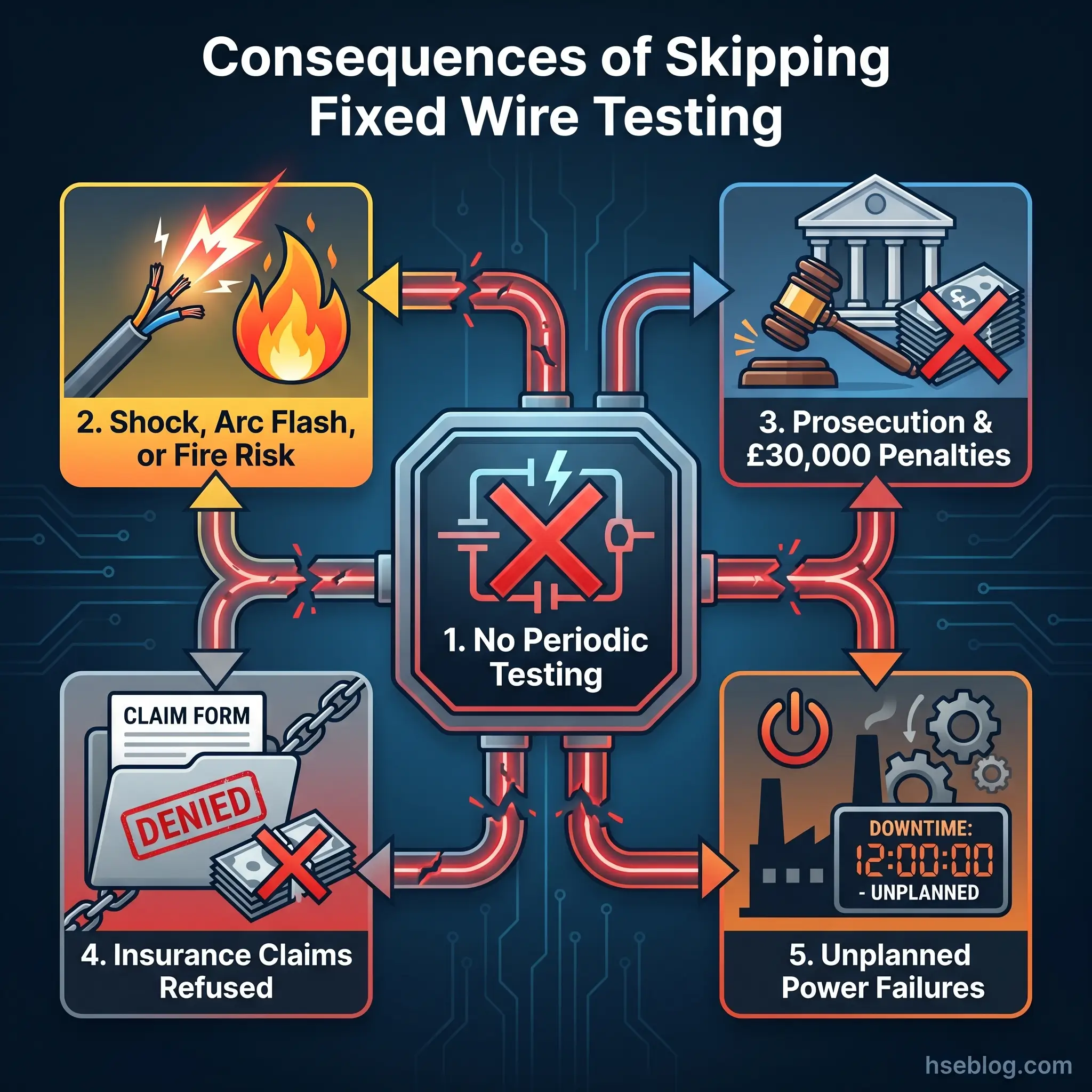
The consequences of not testing fall into four categories, and none of them are hypothetical.
Safety risk. Electrical wiring deteriorates through mechanisms that produce no visible warning: insulation breaks down with age and thermal cycling, connections loosen under vibration, cables degrade when exposed to moisture or chemical atmospheres, and overloaded circuits heat beyond their design capacity. Approximately 1,000 electricity-related workplace accidents are reported to HSE annually (HSE / Electrical Safety First, rolling average 2019/20–2023/24). In 2024/25, 7 fatalities and 150 non-fatal injuries from contact with electricity or electrical discharge were reported under RIDDOR in Great Britain (HSE, RIDDOR RIDKIND Tables, 2025 — figures provisional). These figures represent reported workplace injuries only; domestic incidents add significantly to the total.
Legal exposure. For employers, non-compliance with the Electricity at Work Regulations 1989 can result in HSE investigation, improvement notices, prohibition notices, and criminal prosecution. For landlords in England, non-compliance with the ESSPRS 2020 can result in civil penalties of up to £30,000 per offence (UK Government / MHCLG, 2020). Enforcement does not require an incident to have occurred — improvement notices and penalties can be, and are, issued on the basis of non-compliance alone. The enforcement pattern in recent years has been increasingly proactive: local housing authorities are auditing landlord compliance with EICR requirements and issuing penalties for missing or expired reports, not waiting for a fire or electrocution to trigger investigation.
Insurance implications. Insurers can refuse claims arising from electrical incidents if the installation has not been maintained and tested as recommended. A lapsed EICR — or no EICR at all — materially weakens any insurance claim involving fire, electrical injury, or property damage attributed to an electrical fault. Some commercial insurers now require evidence of a current satisfactory EICR as a condition of cover.
Operational disruption. Beyond the safety and legal dimensions, uninspected electrical installations are more likely to produce unplanned failures — tripped circuits, loss of power to critical systems, data loss, and evacuation. The cost of a planned inspection and testing schedule is trivial compared to the cost of an unplanned electrical failure in a working building.
Frequently Asked Questions
Does fixed wire testing require the power to be turned off?
Yes, for most circuit tests the power must be isolated to the circuit under test. Dead tests — continuity, insulation resistance, polarity — require the circuit to be de-energised. Some measurements, including earth fault loop impedance and RCD trip testing, are performed live. Testing is typically scheduled outside normal working hours for commercial premises to minimise disruption. The extent and duration of power interruption depends on the installation's size, the number of circuits, and the design of the distribution system — smaller installations with fewer circuits can often be tested during a working day with only brief interruptions.
How long does a fixed wire test take?
Duration depends on the property size, the number of circuits, and the installation's age and condition. A small domestic property with a single consumer unit may take two to four hours. A large commercial building with hundreds of circuits across multiple distribution boards can require several days. Industry guidance suggests approximately 15–20 minutes per circuit for a two-person team as a benchmark for thorough inspection, but older or poorly documented installations take longer because each circuit requires more investigation to identify and trace.
Can I fail a fixed wire test?
The EICR is classified as satisfactory or unsatisfactory — not pass or fail. An unsatisfactory outcome means that C1, C2, or FI observations were identified. An EICR with only C3 observations is still classified as satisfactory, because C3 codes represent improvements recommended against the current edition of BS 7671, not unsafe conditions. An unsatisfactory result is not permanent: once the remedial work for all C1, C2, and FI observations is completed and verified by a competent person, the EICR outcome can be updated to satisfactory.
Is fixed wire testing the same as an EICR?
Not exactly. Fixed wire testing is the process — the physical inspection and electrical testing of the permanent installation. The EICR is the document produced as the output of that process. The terms are commonly used interchangeably, which rarely causes problems in conversation but can create ambiguity when specifying a scope of work. If you are contracting an electrician, specify that you require periodic inspection and testing of the fixed wiring installation with an EICR issued on completion — this eliminates any scope for misunderstanding.
Does fixed wire testing cover emergency lighting and fire alarms?
No. Emergency lighting systems are maintained and tested under BS 5266 (Great Britain), and fire detection and alarm systems under BS 5839. These are separate regulatory frameworks with their own inspection schedules, testing procedures, and competency requirements. Some electrical contractors offer combined services covering fixed wiring, emergency lighting, and fire alarm testing, but these are distinct inspections producing distinct reports. A satisfactory EICR does not confirm that emergency lighting or fire alarms are functional or compliant.
What happens after an unsatisfactory EICR?
Remedial work must be carried out by a competent person to address all C1, C2, and FI observations. For landlords operating under the ESSPRS 2020 (England), remedial work must be completed within 28 days of the report date (or sooner if the inspector specifies a shorter timeframe for C1 observations). Once remedial work is complete, the electrician issues Minor Electrical Installation Works Certificates for the repairs, and the EICR outcome can be updated to satisfactory. The landlord must then provide a copy of the updated documentation to the tenant and, if applicable, to the local housing authority.
Conclusion
The industry consistently gets one thing wrong with fixed wire testing: treating it as a compliance checkbox rather than an engineering assessment. The EICR is not a certificate to hang on the wall — it is a technical document that tells you the condition of an asset that, when it fails, fails catastrophically and invisibly. Electrical insulation does not visibly fray. Loose connections do not announce themselves. Overloaded circuits run warm behind plasterboard until they don't.
The single highest-impact change any building manager or landlord can make is to stop treating the recommended testing interval as a target date and start treating it as a ceiling. An installation in a harsh environment, an installation with a history of remedial findings, an installation that pre-dates the current edition of BS 7671 — all of these warrant inspection ahead of the standard schedule, not on the last permissible day. The inspecting engineer's recommended retest date, written on the EICR itself, carries more weight than the generic table in a guidance note.
Fixed wire testing is the mechanism that catches silent deterioration before it produces consequences. Every statistic cited in this article — the fire data, the fatality figures, the enforcement penalties — represents a failure to inspect, a failure to act on findings, or a failure to engage a competent person. The wiring is already there. The question is whether anyone has looked at it recently enough to know what condition it is in.