Piling operations generate vibration through two distinct pathways: occupational exposure to workers operating or standing near piling equipment, and ground-borne vibration transmitted through soil to adjacent structures and communities. Worker exposure is regulated under the UK Control of Vibration at Work Regulations 2005 and the EU Physical Agents Directive 2002/44/EC, which set a hand-arm vibration exposure action value of 2.5 m/s² A(8) and a limit value of 5.0 m/s² A(8). Structural vibration from piling is assessed against peak particle velocity thresholds in BS 7385-2 and BS 5228-2, with cosmetic damage risk beginning at approximately 15 mm/s PPV for residential buildings.
This article provides general HSE knowledge. Life-critical work such as vibration risk assessment for piling operations, occupational exposure monitoring, and structural vibration evaluation must be planned and supervised by a competent person with relevant training, jurisdiction-specific authorization, and site-specific risk assessment. The information here does not replace that requirement. For recognized training pathways, see NEBOSH, IOSH, or OSHA Outreach programs in your jurisdiction.
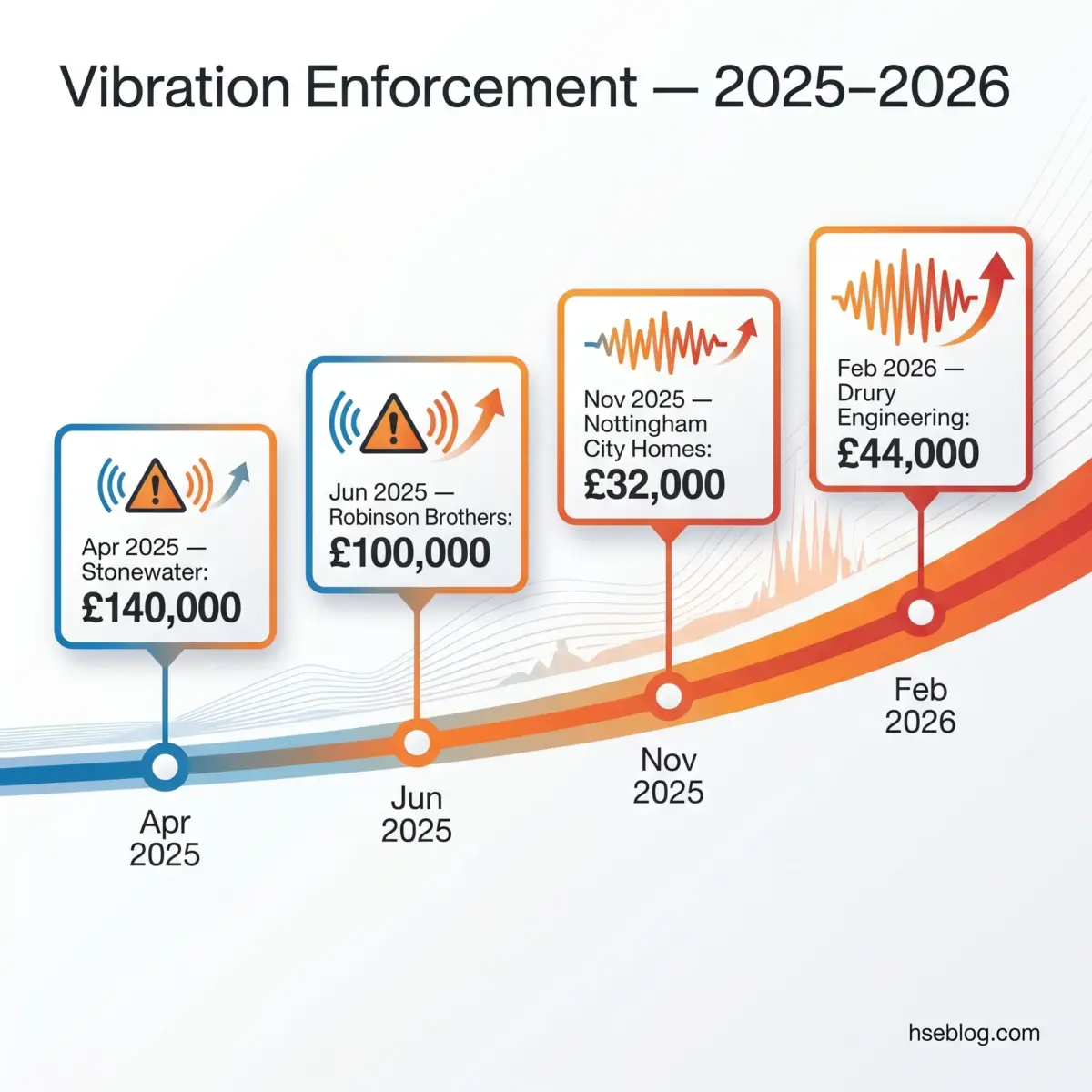
In February 2026, Drury Engineering Services Ltd was fined £44,000 after seven of its workers were diagnosed with vibration-related illness (HSE Media Centre, 2026). Months earlier, Robinson Brothers Ltd received a £100,000 fine (HSE, June 2025), and Stonewater Limited was fined £140,000 (HSE, April 2025). These are not legacy cases from a neglected era — they represent a clear enforcement escalation by the HSE in 2025–2026, and piling operations sit squarely in the crosshairs because of the intensity, duration, and multi-pathway nature of the vibration they produce.
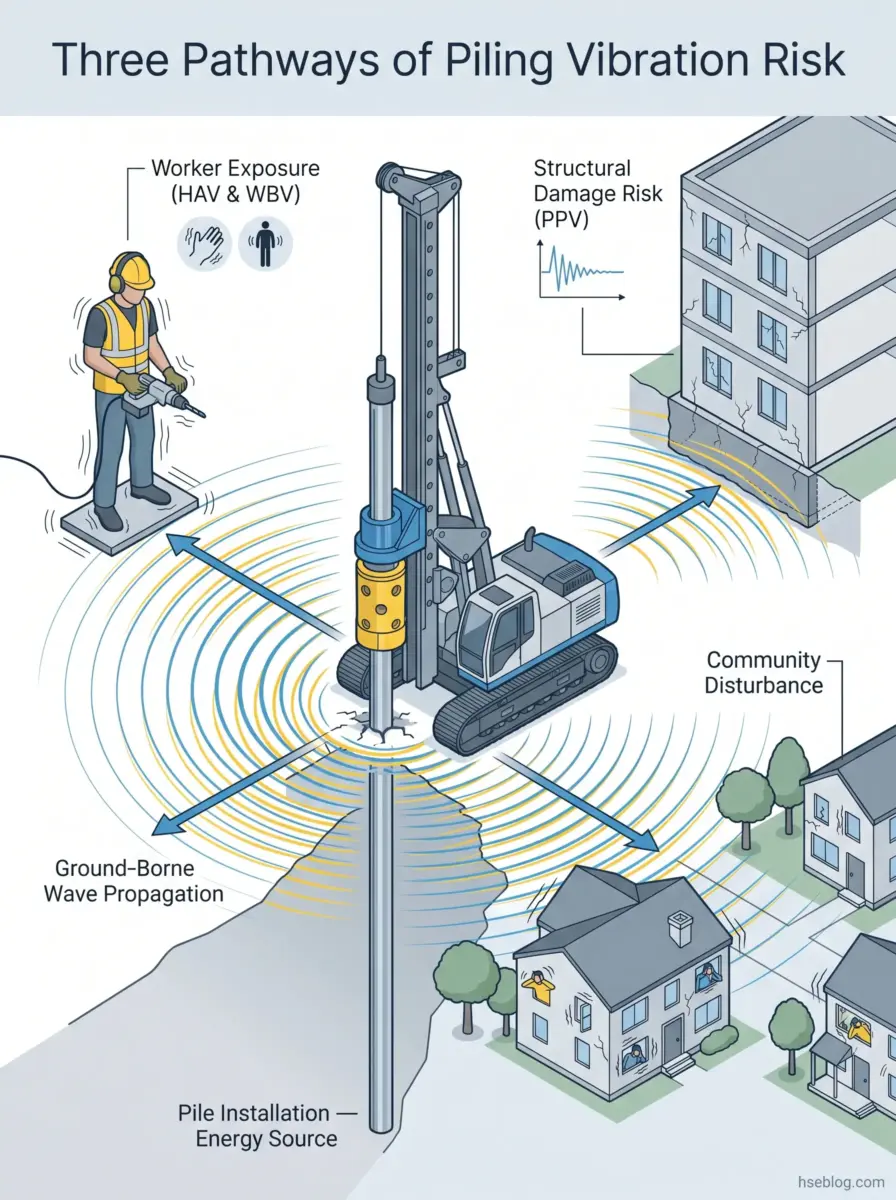
Vibration hazards from piling operations are uniquely dangerous because they affect three separate groups simultaneously: the workers installing piles, the structures standing nearby, and the communities living around the site. Most guidance addresses these pathways in isolation — geotechnical engineers manage structural risk while occupational health teams manage worker exposure, and neither reads the other's assessment. This article integrates all three under one frame, with jurisdiction-tagged regulatory thresholds, piling-method-specific vibration profiles, and control measures mapped to each hazard pathway.
What Makes Piling Operations a Significant Vibration Source
Piling generates some of the highest vibration intensities of any construction activity — higher per event than excavation, compaction, or demolition — because the entire purpose of the operation is to transfer concentrated energy into the ground. Every hammer strike or vibratory cycle drives energy through the pile tip and along shaft friction, producing body waves and surface waves that propagate outward through the soil.
This energy transfer creates three distinct hazard pathways that operate simultaneously.
- Occupational exposure — operators and nearby crew receive hand-arm vibration (HAV) from handheld tools and whole-body vibration (WBV) from rig operation, seats, and vibrating platforms.
- Structural risk — ground-borne vibration travels through soil to adjacent buildings, buried utilities, and sensitive equipment, causing strain that ranges from cosmetic cracking to structural compromise.
- Community disturbance — vibration becomes perceptible to building occupants at peak particle velocity (PPV) levels far below those that cause any structural damage, generating complaints and regulatory scrutiny disproportionate to actual risk.
The critical failure mode in vibration risk assessment for piling is treating these pathways as separate workstreams. A decision to switch from impact driving to vibratory driving may reduce PPV at the nearest building — solving the structural concern — while simultaneously increasing the rig operator's WBV exposure over a longer installation duration. Controls optimized for one pathway can quietly worsen another when the assessments are siloed.
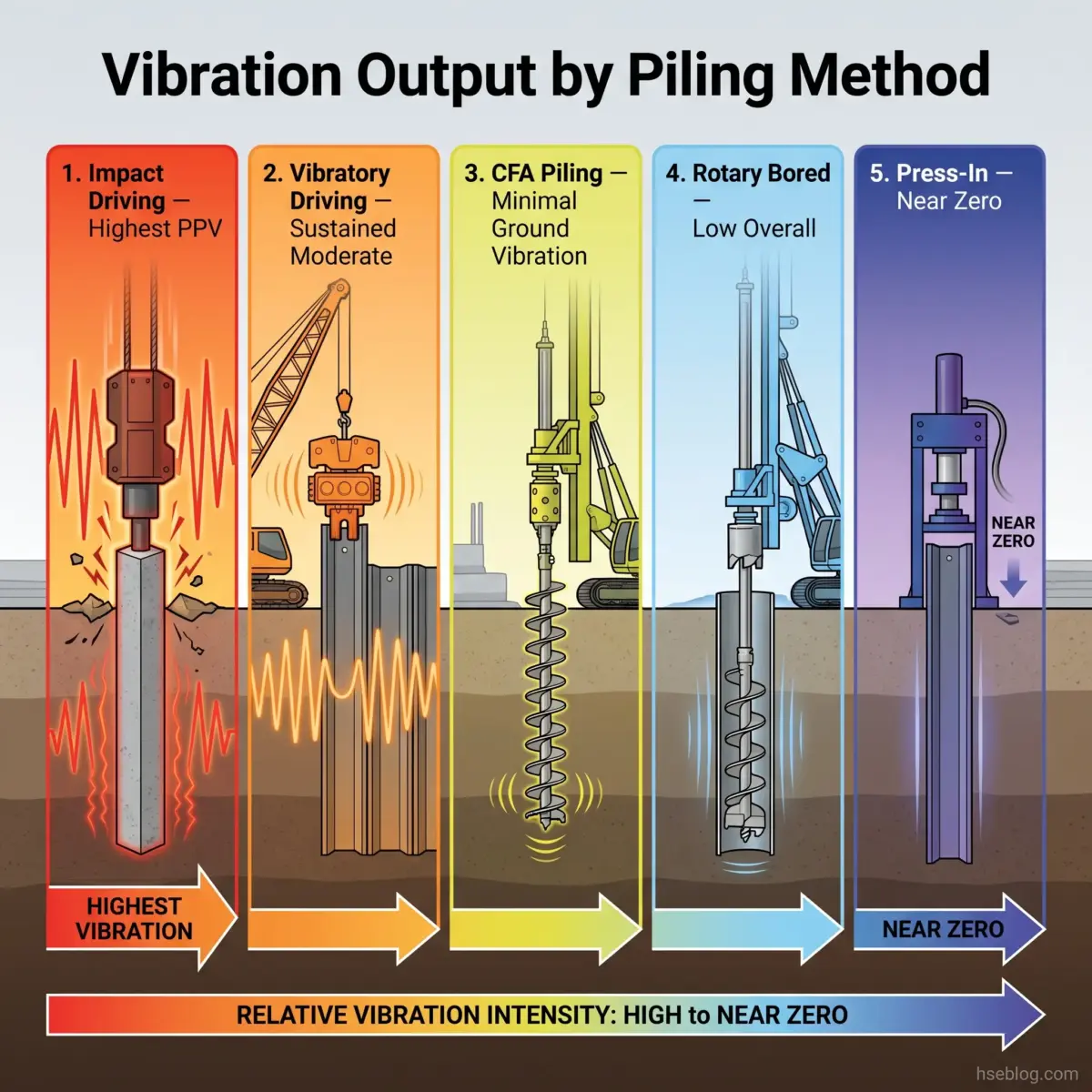
| Piling Method | Typical Ground Vibration | Primary Hazard Pathway |
|---|---|---|
| Impact driving (drop/hydraulic hammer) | High transient PPV | Structural damage, noise |
| Vibratory driving | Moderate sustained PPV | WBV to operator, potential resonance |
| Continuous flight auger (CFA) | Minimal | WBV to operator |
| Rotary bored | Low | WBV to operator, noise |
| Press-in / screw piling | Near-zero | Minimal vibration hazard |
How Vibration from Piling Affects Worker Health
HAVS prevalence averages approximately 50% among workers with sustained occupational vibration exposure (British Columbia Medical Journal, 2023) — a figure that makes vibration one of the most under-recognized occupational diseases in construction. Piling crews face both hand-arm and whole-body vibration, often without realizing that ancillary tasks are the primary source of their HAV exposure.
Hand-Arm Vibration in Piling Work
HAV affects piling workers not from operating the rig itself, but from the handheld tools that support the operation. Breaking out obstructions with pneumatic breakers, vibrating concrete pile caps, grinding weld preparation on steel piles, and using hand-operated compactors for backfill — these tasks accumulate HAV exposure that goes untracked because none of them is "the main job."
The damage from sustained HAV exposure follows three pathways through the hand and arm:
- Vascular — blood vessel damage causes Raynaud's phenomenon (vibration white finger), where fingers blanch white and lose sensation in cold conditions.
- Neurological — nerve damage produces numbness, tingling, and progressive loss of fine touch and temperature sensation.
- Musculoskeletal — joint and muscle damage leads to grip weakness, pain in wrists and elbows, and reduced manual dexterity.
Cold-weather conditions — standard on outdoor piling sites — significantly amplify vascular symptoms. The combination of vibration exposure and cold vasoconstriction accelerates the onset and severity of HAVS.
Whole-Body Vibration from Rig Operation
Piling rig operators absorb WBV through the seat for extended periods during each pile installation cycle. Crane operators supporting piling work and crew members standing on vibrating ground or platforms near the pile also receive WBV exposure.
Prolonged WBV causes lower back pain, spinal disc degeneration, and digestive disorders. Among the 543,000 workers in Great Britain who reported a work-related musculoskeletal disorder in 2023/24 (HSE, 2024), construction and transportation sectors showed higher-than-average rates — and WBV is a recognized contributing factor.
Recognizing Early Symptoms on Site
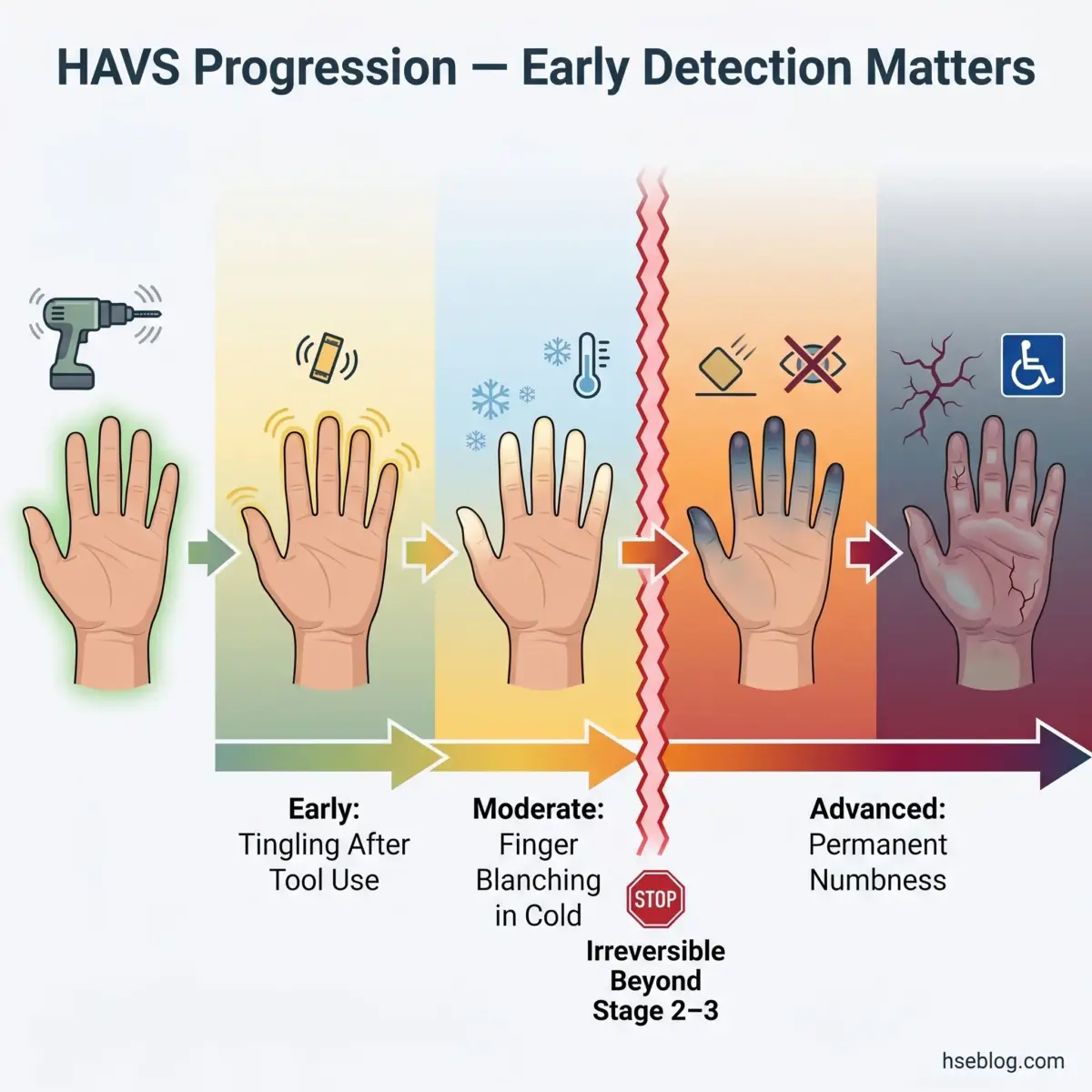
Early detection is the difference between reversible and permanent damage. The Stockholm Workshop Scale stages HAVS progression, and by Stage 2–3, the vascular and neurological damage is generally irreversible. Supervisors and workers should treat the following as action triggers, not as normal consequences of the job:
- Finger tingling or numbness persisting after tool use ends — even briefly.
- White or blue discoloration of fingertips in cold or cool conditions.
- Reduced grip strength — difficulty holding small objects or fastening buttons.
- Persistent lower back stiffness that worsens during or after rig operation and does not resolve overnight.
None of these should be dismissed as "just part of the work." Each is an early indicator that exposure is exceeding what the body can tolerate and requires referral to occupational health surveillance.
Ground-Borne Vibration: Risks to Structures and Communities
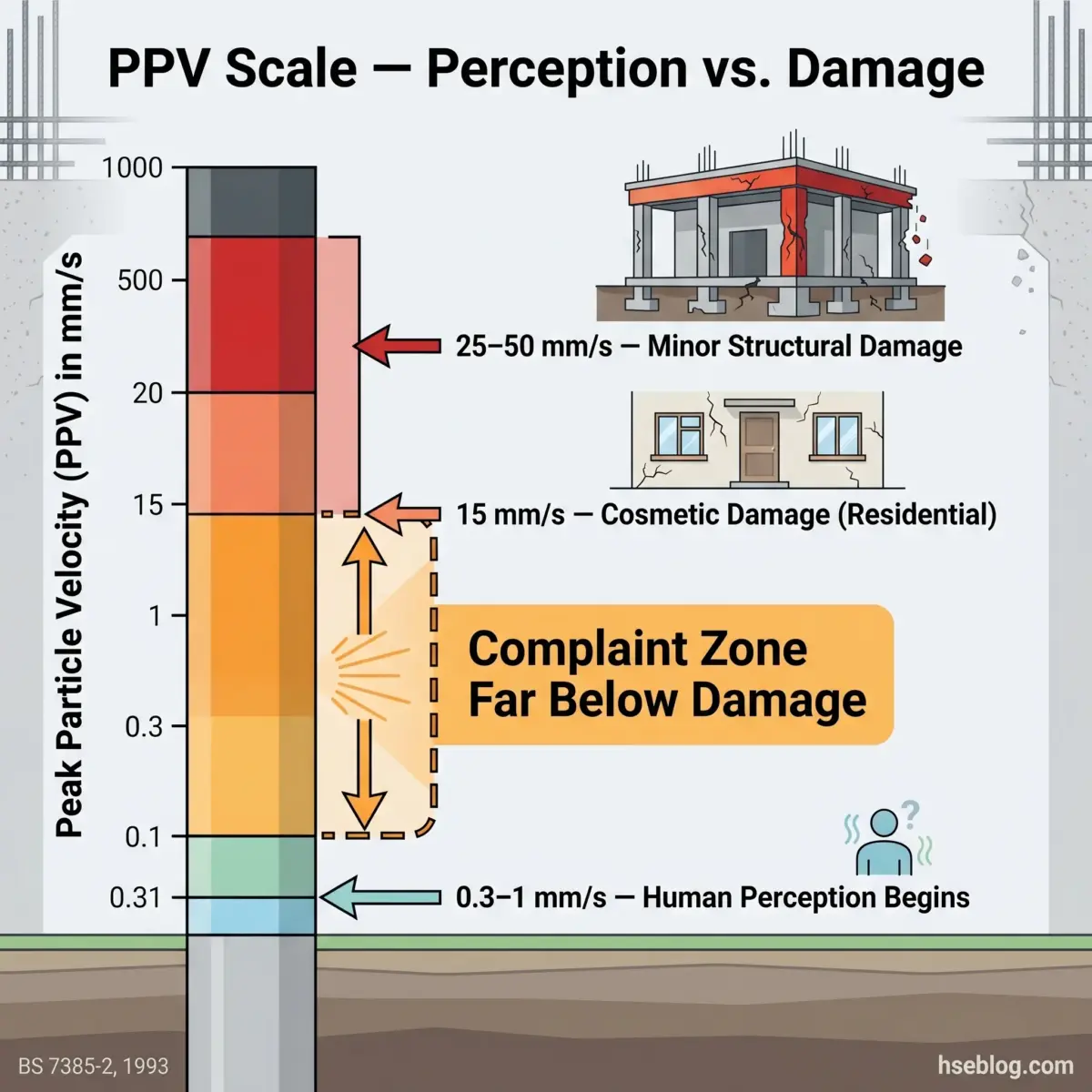
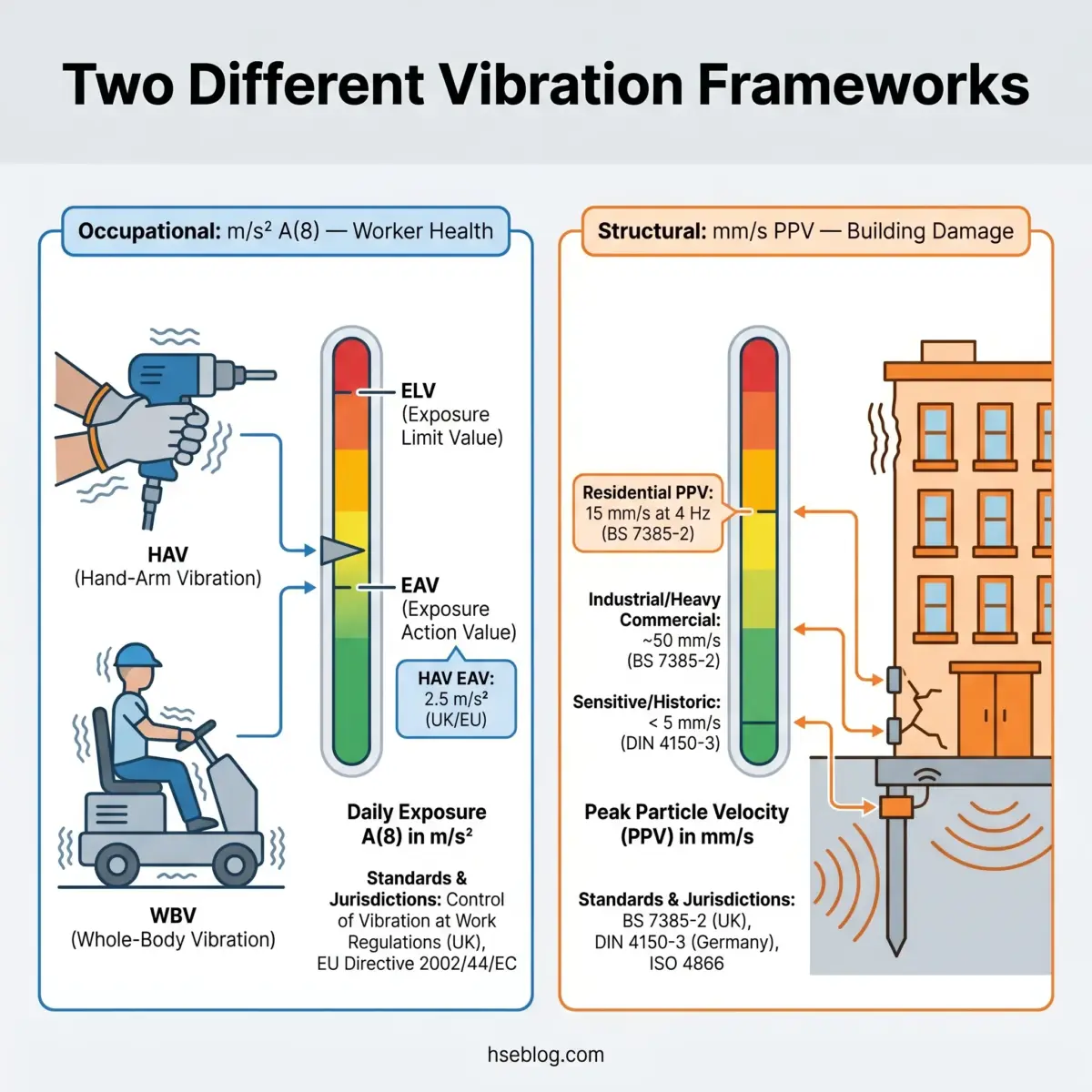
Cosmetic damage to residential buildings begins at a PPV of approximately 15 mm/s at 4 Hz, according to BS 7385-2 (1993, UK — widely referenced internationally). Below 12.5 mm/s PPV, the risk of structural damage tends toward zero. But human perception of vibration starts at roughly 0.3–1 mm/s — meaning residents feel piling vibration at levels ten to fifty times lower than those that threaten their walls.
This perception gap drives the majority of complaints, legal disputes, and project delays related to ground vibration from pile driving.
How PPV Is Measured and What It Means
Peak particle velocity measures the maximum instantaneous speed at which a point in the ground moves as a vibration wave passes through it. Triaxial geophones placed at building foundations record PPV in three axes simultaneously. The resultant PPV — or the peak in the dominant axis — is compared against published guidance values.
Several factors determine how much vibration reaches a given receptor:
- Hammer energy — higher energy per blow means higher source vibration.
- Soil type — stiff clays and rock transmit vibration efficiently over longer distances; soft soils attenuate faster but may amplify at certain frequencies.
- Distance — PPV decreases approximately proportionally with distance from the source, but the relationship is not linear and varies with soil stratification.
- Pile type and driving depth — friction piles generate different vibration profiles than end-bearing piles, and vibration characteristics change as the pile penetrates different soil layers.
Structural Damage Thresholds
BS 7385-2 (UK, 1993) and BS 5228-2:2009+A1:2014 (UK) provide the most widely referenced guidance values for assessing vibration-induced damage to buildings.
| Building Type | PPV Threshold (Transient) | Frequency Range | Damage Level |
|---|---|---|---|
| Residential (cosmetic) | 15 mm/s | 4 Hz | Hairline plaster cracks |
| Residential (cosmetic) | 20 mm/s | 15 Hz | Fine cracking |
| Commercial / industrial | 25–50 mm/s | 4–40 Hz | Cosmetic to minor structural |
| Heritage / sensitive | Case-specific assessment | — | Requires specialist input |
Values derived from BS 7385-2:1993 and summarized in BS 5228-2:2009+A1:2014 (UK).
Heritage buildings, hospitals housing sensitive imaging equipment (MRI, CT), and laboratories with precision measurement instruments require bespoke assessment well below standard thresholds. Buried utilities — particularly older cast-iron water mains and clay sewer pipes — are also vulnerable to vibration-induced joint displacement.
Pre-Condition Surveys: The Primary Liability Defence
Pre-condition surveys of adjacent structures are standard practice before piling begins. The judgment call most practitioners get wrong is treating them as a tick-box exercise — photographing existing cracks without documenting orientation, width measurement, or precise location. When vibration damage claims arise months or years later, a vague photographic record cannot distinguish pre-existing settlement cracking from new vibration-induced movement. That documentation gap becomes the primary liability exposure.
Vibration Characteristics by Piling Method
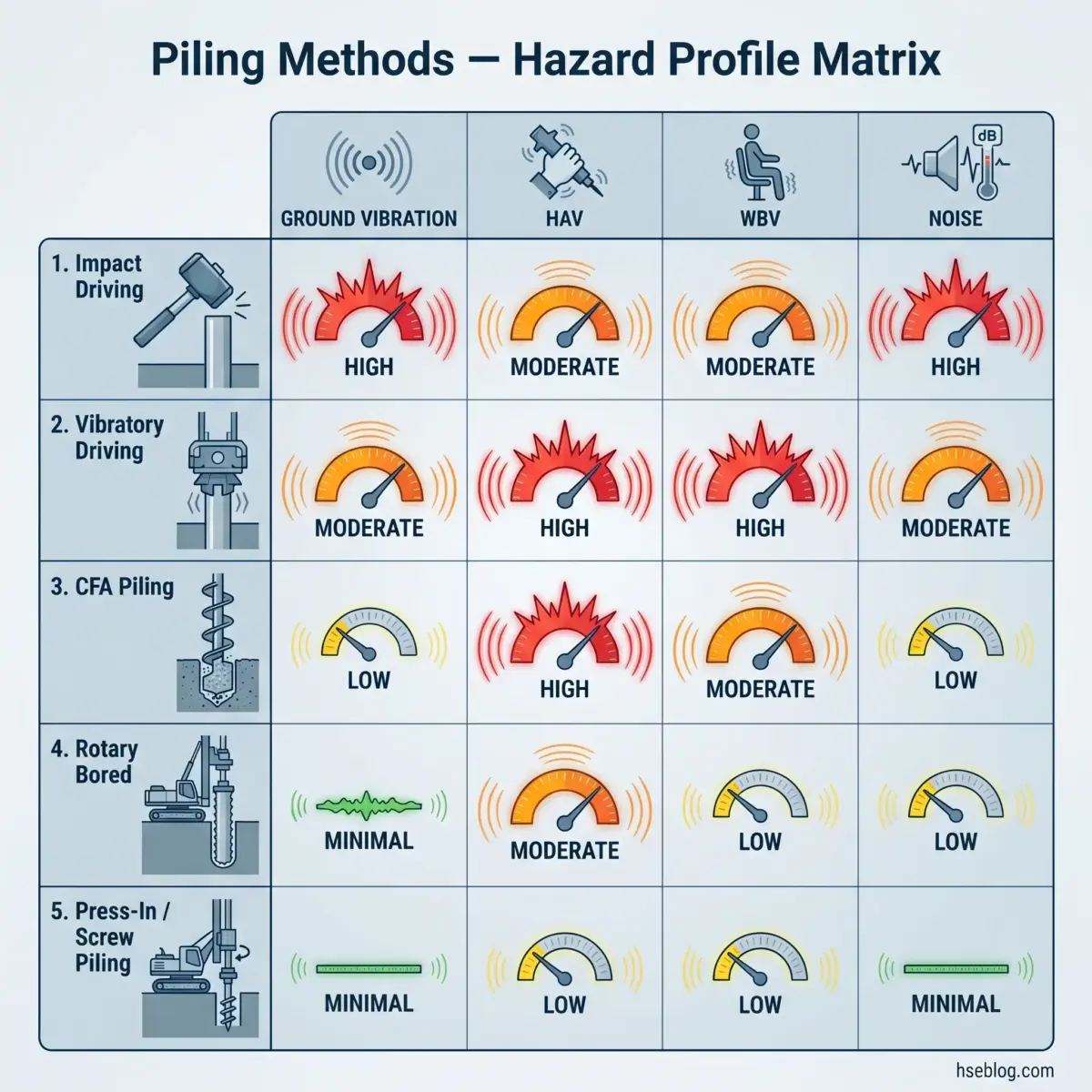
Selecting the right piling method is the single most effective control for vibration hazards — but the decision requires understanding that "low vibration" does not mean "no vibration." Each method shifts the hazard profile rather than eliminating it.
The comparison below maps vibration type, magnitude, and dominant hazard pathway for the methods most commonly encountered on sites where vibration is a concern.
| Piling Method | Ground Vibration (PPV) | HAV Risk | WBV Risk | Noise Level | Best Application |
|---|---|---|---|---|---|
| Impact driving (drop/hydraulic hammer) | High (transient peaks) | Low (mechanized) | Moderate | Very high | Open sites, no sensitive receptors |
| Vibratory driving (sheet piles, H-piles) | Moderate (sustained) | Low | High (prolonged) | High | Sheet pile walls; risk of resonance in certain soils |
| CFA piling | Minimal | Low | Moderate–high (slow process) | Moderate | Near sensitive structures |
| Rotary bored | Low | Low | Moderate | Moderate | Urban sites, variable ground |
| Press-in piling | Near-zero | Low | Low | Low | Vibration-critical environments |
| Resonance-free vibratory | Very low | Low | Moderate | Moderate | Urban, vibration-sensitive projects |
A common misconception is that switching to CFA or bored piling eliminates vibration risk. These methods dramatically reduce ground-borne vibration — making them the correct choice near sensitive structures — but the installation process is slower per pile, which extends the operator's WBV exposure duration. The hazard shifts from structural to occupational.
Resonance-free piling technology represents a genuine advancement. Systems such as variable-moment vibratory hammers ramp frequency through the soil's natural frequency range without dwelling at resonance, significantly reducing ground vibration peaks (Dieseko Group / Pile Buck Magazine, 2024–2025). These are gaining adoption on urban and vibration-sensitive projects, though they add cost and require operator training on the frequency-management protocols.
What Are the Regulatory Vibration Exposure Limits for Piling Work?
Two entirely different regulatory frameworks govern vibration from piling, and confusing them is one of the most frequent errors practitioners make. Occupational vibration limits protect workers from health damage over an 8-hour reference period, measured in m/s² A(8). Structural vibration limits protect buildings from physical damage per event, measured in mm/s PPV. They use different instruments, different units, and different assessment methodologies — yet site managers routinely treat "vibration monitoring" as a single activity covering both.
Occupational Exposure Limits
The UK Control of Vibration at Work Regulations 2005 (SI 2005/1093, UK) and the EU Physical Agents (Vibration) Directive 2002/44/EC (EU) set identical thresholds. Post-Brexit, the UK retained these values.
| Vibration Type | Exposure Action Value (EAV) | Exposure Limit Value (ELV) | Jurisdiction |
|---|---|---|---|
| Hand-arm (HAV) | 2.5 m/s² A(8) | 5.0 m/s² A(8) | UK / EU |
| Whole-body (WBV) | 0.5 m/s² A(8) | 1.15 m/s² A(8) | UK / EU |
UK: Control of Vibration at Work Regulations 2005. EU: Directive 2002/44/EC.
Above the EAV, employers must introduce controls and offer health surveillance. The ELV is the absolute ceiling — exposure must not exceed it under any circumstances.
In the US, OSHA currently has no specific vibration permissible exposure limit (OSHA General Duty Clause, Section 5(a)(1) of the OSH Act, 1970, US). Vibration exposure falls under the general duty clause, which requires employers to provide a workplace free from recognized hazards. ACGIH publishes threshold limit values consistent with the EU/UK framework, and NIOSH provides criteria documents, but both are advisory rather than enforceable.
Structural and Environmental Vibration Limits
For ground-borne vibration affecting structures, BS 7385-2 (1993, UK) and BS 5228-2:2009+A1:2014 (UK) provide the widely-referenced PPV guidance values. In the US, no single federal standard governs construction vibration — state and local ordinances vary significantly. As one example, Florida DOT requires vibration monitoring within 200 feet of sheet pile installation and extraction.
The measurement methodology for occupational vibration follows ISO 5349-1:2001 (International) for HAV and ISO 2631-1:1997 (International) for WBV. These are the internationally recognized standards underpinning all jurisdictional limits, and any vibration assessment that does not reference them should be questioned.
Vibration Risk Assessment for Piling Operations
A piling vibration risk assessment that addresses only one hazard pathway — either occupational health or structural damage — is incomplete by definition. The assessment must integrate both, because the control decisions for one directly affect exposure on the other.
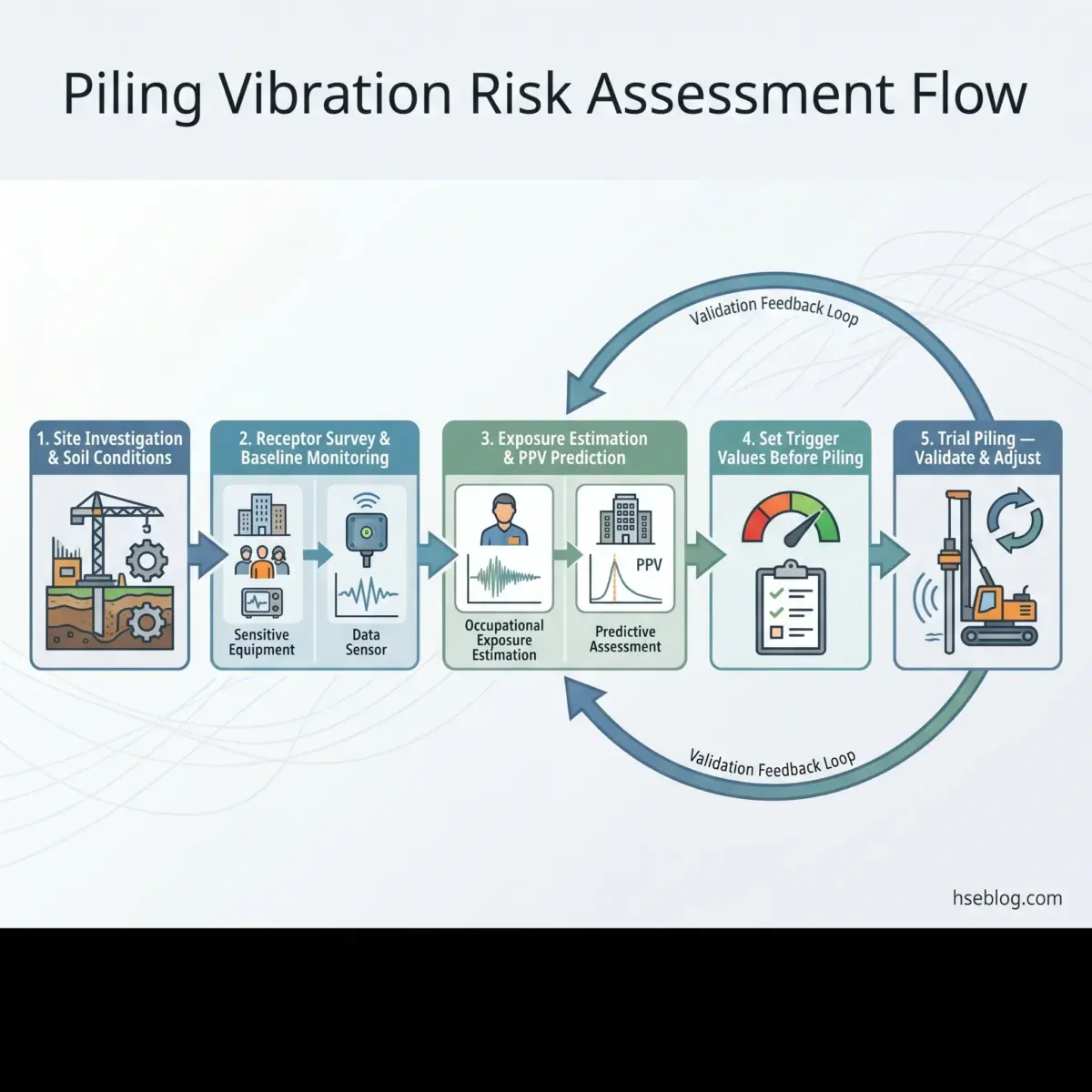
The following steps represent the minimum process for a competent assessment. Each must be completed before production piling begins.
- Site investigation — determine soil conditions (type, stratification, groundwater level) that govern vibration propagation characteristics. Stiff clay transmits vibration further than soft alluvial deposits; saturated granular soils may liquefy under sustained vibratory driving.
- Receptor survey — identify every sensitive receptor within the zone of influence: adjacent buildings (noting age, construction type, and current condition), buried utilities (material, age, joint type), sensitive equipment (MRI suites, precision manufacturing), and residential occupants.
- Baseline vibration monitoring — measure ambient vibration levels before piling begins. Without this baseline, any claim of vibration-induced damage becomes unanswerable.
- Occupational exposure estimation — use manufacturer vibration emission data as a starting point, recognizing that these figures are measured under controlled conditions and frequently underestimate real-world exposure, particularly on older or poorly maintained equipment. The HSE exposure calculator provides a practical ready-reckoner for converting emission data and trigger times into A(8) projections.
- Predictive vibration assessment — use empirical attenuation models relating hammer energy, distance, soil type, and predicted PPV at each receptor. BS 5228-2:2009+A1:2014 (UK) provides the methodology.
- Trigger values and stop-work criteria — establish these before the first pile is driven, not during production. Trigger values should be set at a percentage of the damage criterion to allow operational adjustment before a breach.
- Trial piling — drive 2–5 trial piles to validate predictions against actual measured vibration. Adjust the assessment, controls, and trigger values based on real data.
Field verification during the first piles is essential, not optional. The gap between manufacturer-declared vibration data and field-measured values can be substantial enough to shift exposure from below the EAV to above it.
Control Measures to Reduce Vibration from Piling
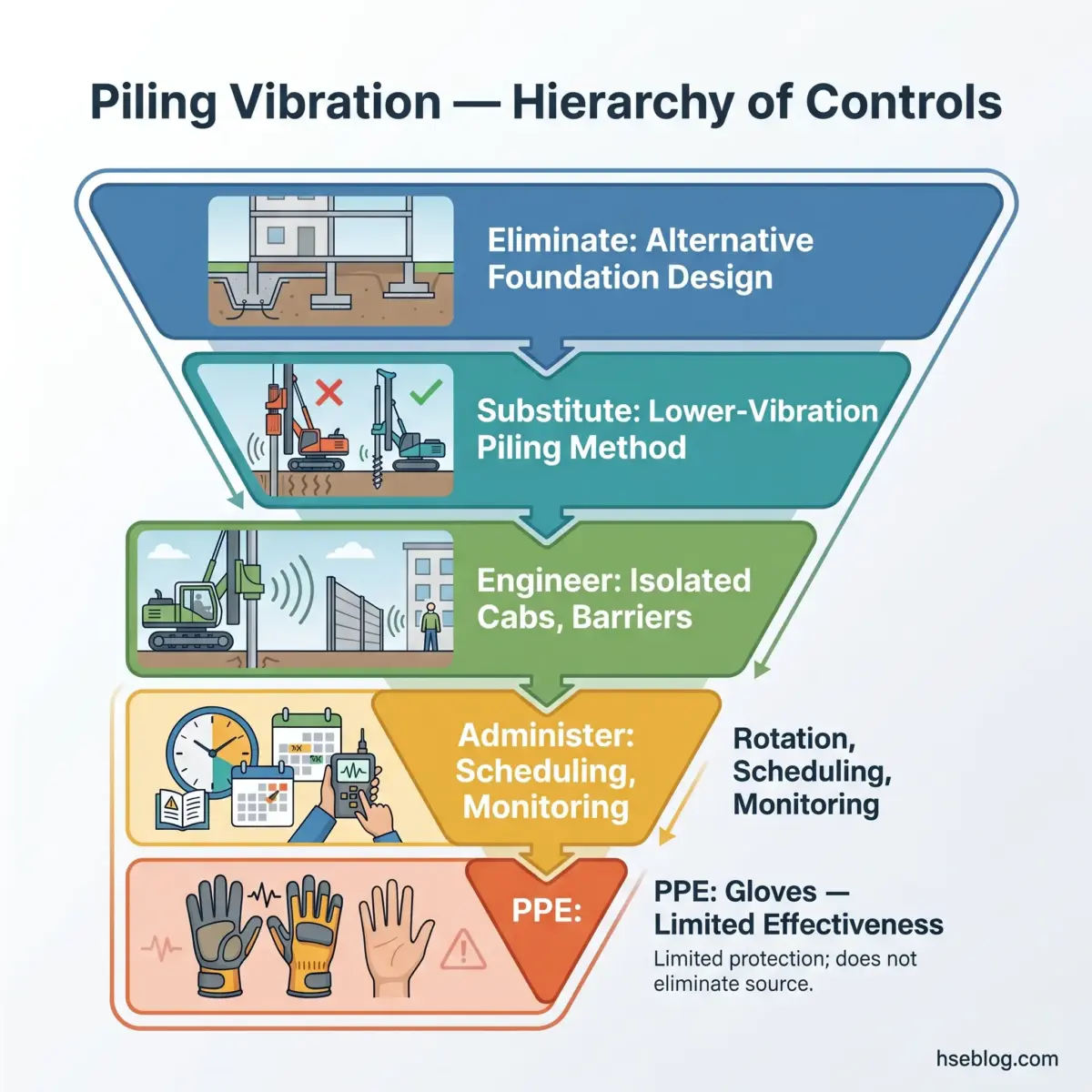
The most common enforcement finding in vibration-related HSE prosecutions is over-reliance on PPE — specifically anti-vibration gloves — as the primary control. This is an error rooted in a fundamental misunderstanding of where piling vibration sits in the frequency spectrum.
Applying the hierarchy of controls to piling vibration means starting with the question most site teams skip: can this foundation avoid piling entirely?
Elimination
- Alternative foundation design — raft foundations, ground improvement (vibro-compaction, jet grouting), or shallow pad foundations may eliminate the need for piling altogether on suitable ground.
- Design-stage review — challenging the structural engineer's piling specification during design, before mobilization, is the only point where elimination is practical.
Substitution
When piling is unavoidable, method selection is the highest-impact control decision.
- CFA or bored piling instead of impact driving reduces ground-borne vibration by an order of magnitude, making these preferred near sensitive structures.
- Press-in or screw piling produces near-zero ground vibration and is increasingly specified in the most vibration-sensitive environments.
- Resonance-free vibratory hammers allow vibratory installation with dramatically reduced PPV peaks by avoiding frequency dwell at soil resonance (Dieseko Group, 2024–2025).
Engineering Controls
- Vibration-isolated cabs on piling rigs reduce WBV transmitted to operators through the seat and floor. Cab suspension condition must be maintained — worn isolators are a common finding on older equipment.
- Anti-vibration gloves — these provide modest attenuation above 150 Hz, but the dominant vibration frequencies from piling-associated handheld tools (breakers, compactors) are well below this range. HSE construction vibration guidance confirms that gloves are supplementary, not primary.
- Isolation trenches or barriers between the pile and adjacent structures can attenuate surface-wave transmission, though effectiveness depends on trench depth relative to the dominant wavelength.
Administrative Controls
- Job rotation — limit individual exposure time to keep daily A(8) below the EAV. This requires knowing each tool's vibration magnitude and calculating permissible trigger times.
- Scheduling — restrict piling to hours when adjacent buildings are unoccupied or when temperature is warmer (reducing cold-amplified HAVS risk).
- Hammer energy restriction — reducing hammer drop height or energy input when driving near structures, accepting slower driving rates as a trade-off.
- Real-time monitoring with automated alerts — trigger alarms at a set percentage below the damage criterion so operations can adjust before a breach.
Health Surveillance
Under the UK Control of Vibration at Work Regulations 2005 (UK) and EU Directive 2002/44/EC (EU), health surveillance is mandatory when worker exposure exceeds the EAV. The tiered approach moves from screening questionnaire to clinical assessment to specialist referral. Given that 2,860 new HAVS compensation cases were assessed in Great Britain between 2015 and 2024 (HSE, 2024), the surveillance programme is not bureaucracy — it is the early-warning system that prevents irreversible disability.
Vibration Monitoring During Piling Operations
Monitoring verifies that controls are working — it is not a control in itself. A common audit finding is sites that monitor vibration meticulously but have no documented protocol for what happens when a trigger level is approached or exceeded. The monitoring system records a value; the response protocol converts that value into an operational decision.
Occupational Vibration Monitoring
Personal exposure measurement for HAV requires accelerometers mounted on the tool handle near the hand, following the methodology in ISO 5349-1:2001 (International). For WBV, a seat-pad accelerometer placed on the operator's seat measures vibration transmitted through the rig, per ISO 2631-1:1997 (International).
Recording exposure duration is as critical as measuring magnitude. The A(8) calculation normalizes actual exposure to an 8-hour reference period — a high-magnitude exposure over a short duration may produce a lower A(8) than moderate exposure over a full shift.
Environmental Vibration Monitoring
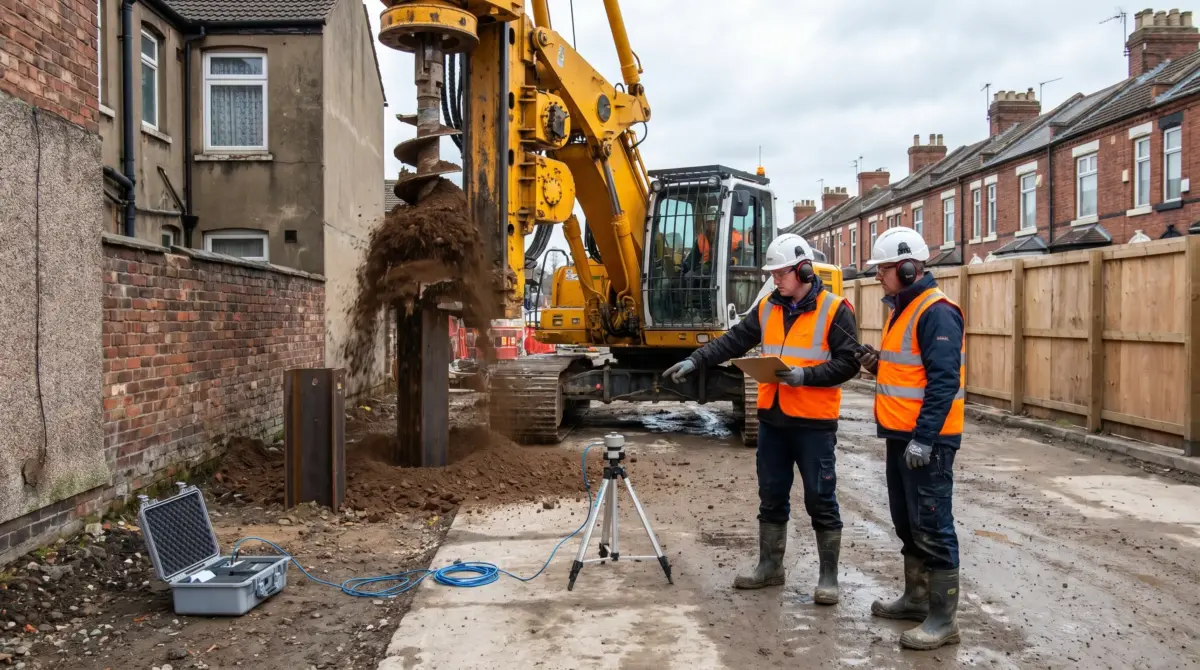
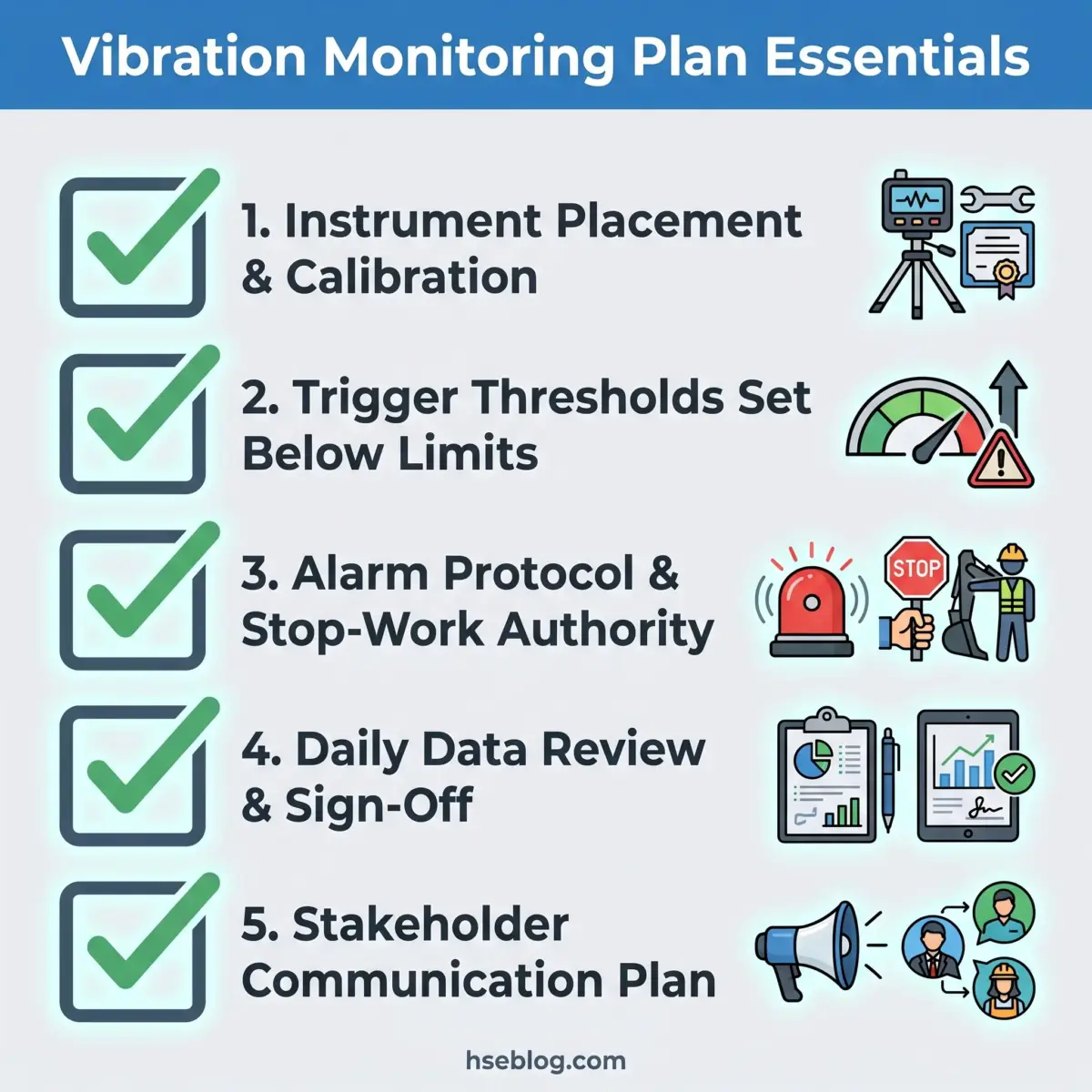
Ground-borne vibration monitoring uses triaxial geophones or seismographs positioned at building foundations nearest to the piling operation. The minimum monitoring plan should document:
- Instrument placement — distance and direction from the pile, mounting method (ground spike, foundation bolt, sandbag coupling), axis orientation.
- Trigger thresholds — set at a defined percentage (typically 75–80%) of the damage criterion to provide an operational buffer.
- Alarm protocol — who receives the alert, what operational changes are authorized, and who has stop-work authority.
- Data review cycle — daily review of monitored data against predictions, with documented sign-off.
- Stakeholder communication — how monitoring results are shared with adjacent property owners, the local authority, or the planning authority if required by condition.
Real-time cloud-connected monitoring systems are increasingly standard on urban piling projects. These transmit PPV readings to site managers, the client's representative, and relevant stakeholders simultaneously, removing the delay between measurement and response that attended monitoring inherently introduces.
Legal Consequences of Uncontrolled Vibration Exposure
HSE enforcement data from 2025–2026 makes one point unmistakably clear: regulators are treating vibration exposure as a current enforcement priority, not a legacy issue buried in guidance documents. The fines are escalating, and the prosecutions increasingly target failures in exposure management rather than acute incidents.
In April 2025, Stonewater Limited was fined £140,000 for failing to manage vibration exposure among its workers (HSE Media Centre, 2025). Two months later, Robinson Brothers Ltd received a £100,000 fine for HAVS-related failures (HSE Media Centre, June 2025). In November 2025, Nottingham City Homes was fined £32,000 (HSE, 2025). By February 2026, Drury Engineering Services Ltd was prosecuted and fined £44,000 after seven workers were diagnosed with vibration-related illness (HSE Media Centre, 2026).
This pattern is not coincidental. HSE sentencing guidelines weight the number of affected workers and the duration of non-compliance, producing fines that are proportional to the scale of failure rather than capped at a fixed amount. Larger organizations with more exposed workers face correspondingly higher penalties.
The Latency Problem
The gap between HAVS exposure and diagnosis can stretch over years. A piling operative absorbing excessive HAV in 2026 may not present with clinically significant symptoms until 2030 or later. This latency creates a specific legal vulnerability: by the time the claim materializes, the project is long complete and the only defence is the contemporaneous exposure records and health surveillance documentation from the original works.
Under RIDDOR (Reporting of Injuries, Diseases and Dangerous Occurrences Regulations, UK), HAVS and carpal tunnel syndrome are reportable diseases. Failure to report is a separate offence — and it creates an evidence trail that regulators use to establish how long the employer knew (or should have known) about exposure levels.
Civil Liability
Criminal prosecution by the HSE is only one avenue. Adjacent property owners pursue civil claims for vibration damage to buildings, and workers pursue personal injury claims for HAVS diagnosed after exposure. In both cases, the quality of pre-condition surveys, monitoring records, and health surveillance documentation determines whether the claim succeeds or fails. The records produced during piling — or the absence of them — become the decisive evidence years after the rig has left the site.
Frequently Asked Questions
Can piling vibrations damage my house?
Cosmetic damage — hairline cracking in plaster, fine fractures along mortar joints — becomes a realistic risk when PPV exceeds approximately 15 mm/s at 4 Hz for residential buildings, based on BS 7385-2 (1993, UK). However, occupants typically feel vibration at 0.3–1 mm/s, which is far below any damage threshold. If piling is occurring near your property, you are entitled to request the contractor's vibration monitoring plan and a copy of the pre-condition survey conducted on your building before work began.
What is the safe distance from pile driving for vibration?
There is no universal safe distance because vibration propagation depends on hammer energy, pile type, soil conditions, and driving depth. PPV generally decreases with distance from the source, but the attenuation rate varies significantly across different ground conditions. BS 5228-2:2009+A1:2014 (UK) provides predictive methodology, but a site-specific assessment — ideally validated by trial piling — is the only reliable way to determine the zone of influence for a particular project.
How long can a worker use a vibratory tool before exceeding the exposure limit?
This depends on the tool's vibration magnitude. Using the UK/EU exposure action value of 2.5 m/s² A(8) as the threshold: a concrete breaker emitting 10 m/s² reaches the EAV in approximately 15 minutes of trigger time. At 20 m/s², the EAV is reached in under 4 minutes. The HSE exposure calculator converts any tool's declared vibration magnitude into permissible daily trigger times for both the EAV and ELV.
Do CFA piles cause vibration?
CFA piling generates minimal ground-borne vibration compared to impact or vibratory driving, which is why it is frequently specified near sensitive structures and in urban environments. However, it does not eliminate all vibration hazards. The rig operator still receives WBV through the seat during what is a slower installation process per pile, and the operation generates noise. CFA shifts the dominant hazard pathway from structural to occupational rather than removing it.
Is HAVS reversible if caught early?
Early-stage vascular symptoms (intermittent finger blanching) and mild neurological symptoms (tingling after tool use) may stabilize or partially improve if vibration exposure ceases promptly. Beyond Stockholm Workshop Scale Stage 2–3, however, the vascular and neurological damage is generally irreversible. Health surveillance under the UK Control of Vibration at Work Regulations 2005 (UK) exists specifically to detect symptoms at treatable stages — before workers normalize them as part of the job.
Does OSHA have a vibration exposure standard?
OSHA currently has no specific vibration permissible exposure limit. Vibration hazards fall under the general duty clause — Section 5(a)(1) of the Occupational Safety and Health Act (1970, US) — which requires employers to address recognized hazards. ACGIH publishes threshold limit values for HAV and WBV that align with EU/UK regulatory values, and NIOSH provides criteria documents, but both are advisory. US-based practitioners typically reference these alongside the EU Directive 2002/44/EC framework as the international benchmark.
Conclusion
The recurring pattern across published vibration enforcement actions is remarkably consistent: the hazard was known, the regulations existed, and the failure was in implementation — specifically, in treating occupational vibration exposure as a lower priority than structural vibration monitoring. Sites invest in geophones and real-time PPV dashboards to protect adjacent buildings while the rig operator absorbs WBV through a worn seat suspension for the entire shift, and nobody calculates the A(8).
The single highest-impact change most piling operations can make is integrating occupational and structural vibration assessment into a single process, led by a single competent person or coordinated team. Method selection, exposure duration, monitoring response protocols, and health surveillance all flow from this integrated view. When the structural assessment and the occupational health assessment never reference each other, controls for one pathway quietly amplify the other — and the enforcement consequences, as the HSE's 2025–2026 prosecution record demonstrates, are no longer theoretical.
Vibration damage to workers is slow, cumulative, and irreversible past a threshold that health surveillance exists to catch. Every piling project that treats vibration as someone else's problem — the geotechnical engineer's, the occupational health provider's, the next contractor's — is generating liability that will materialize years after the last pile is driven. The records produced during the works, or their absence, will determine the outcome.