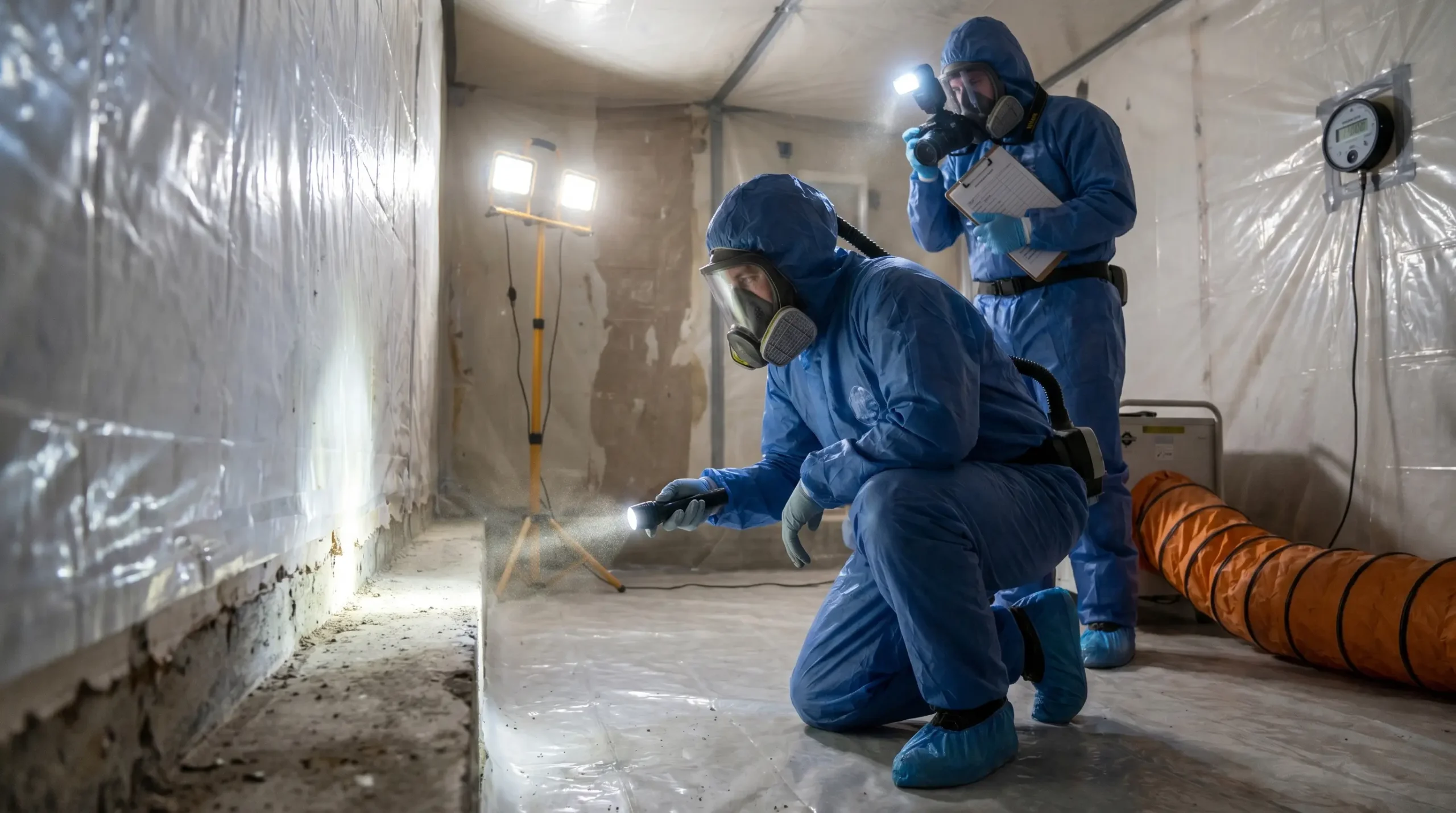
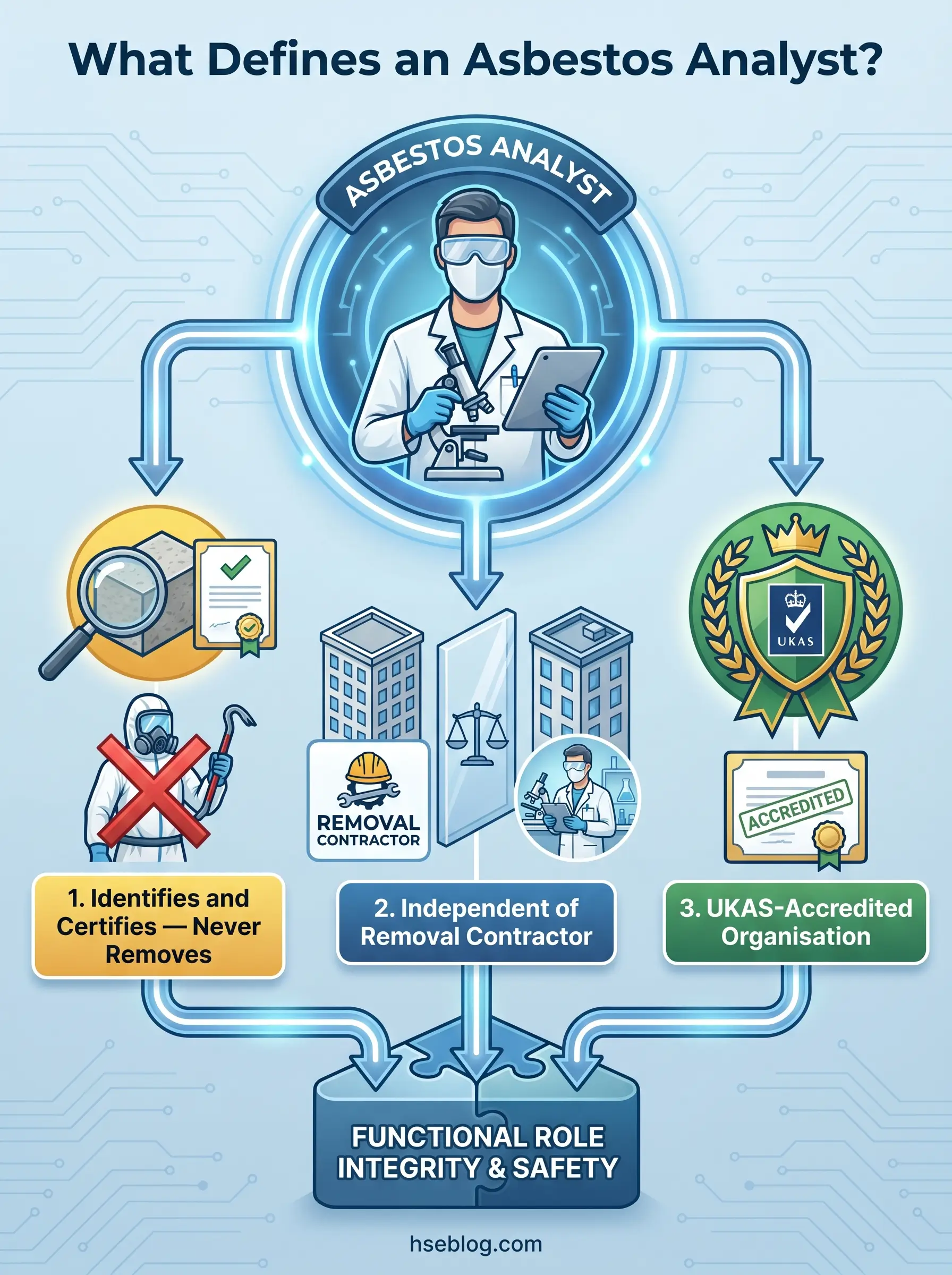
An asbestos analyst is a qualified professional who samples, monitors, and analyses asbestos fibres in air and bulk materials, and certifies areas as safe for re-occupation following asbestos removal. In the UK, analysts must hold BOHS P403 and P404 qualifications — or RSPH equivalents — and work for a UKAS-accredited organisation. Independent of the removal contractor, the analyst plays a critical role in protecting public health from residual fibre exposure.
What Is an Asbestos Analyst?
Approximately 5,000 people die each year in Great Britain from asbestos-related diseases, including mesothelioma, asbestos-related lung cancer, and asbestosis (Health and Safety Executive, 2025). That figure represents exposure that occurred decades ago — and the material responsible is still present in the majority of buildings constructed before the year 2000.
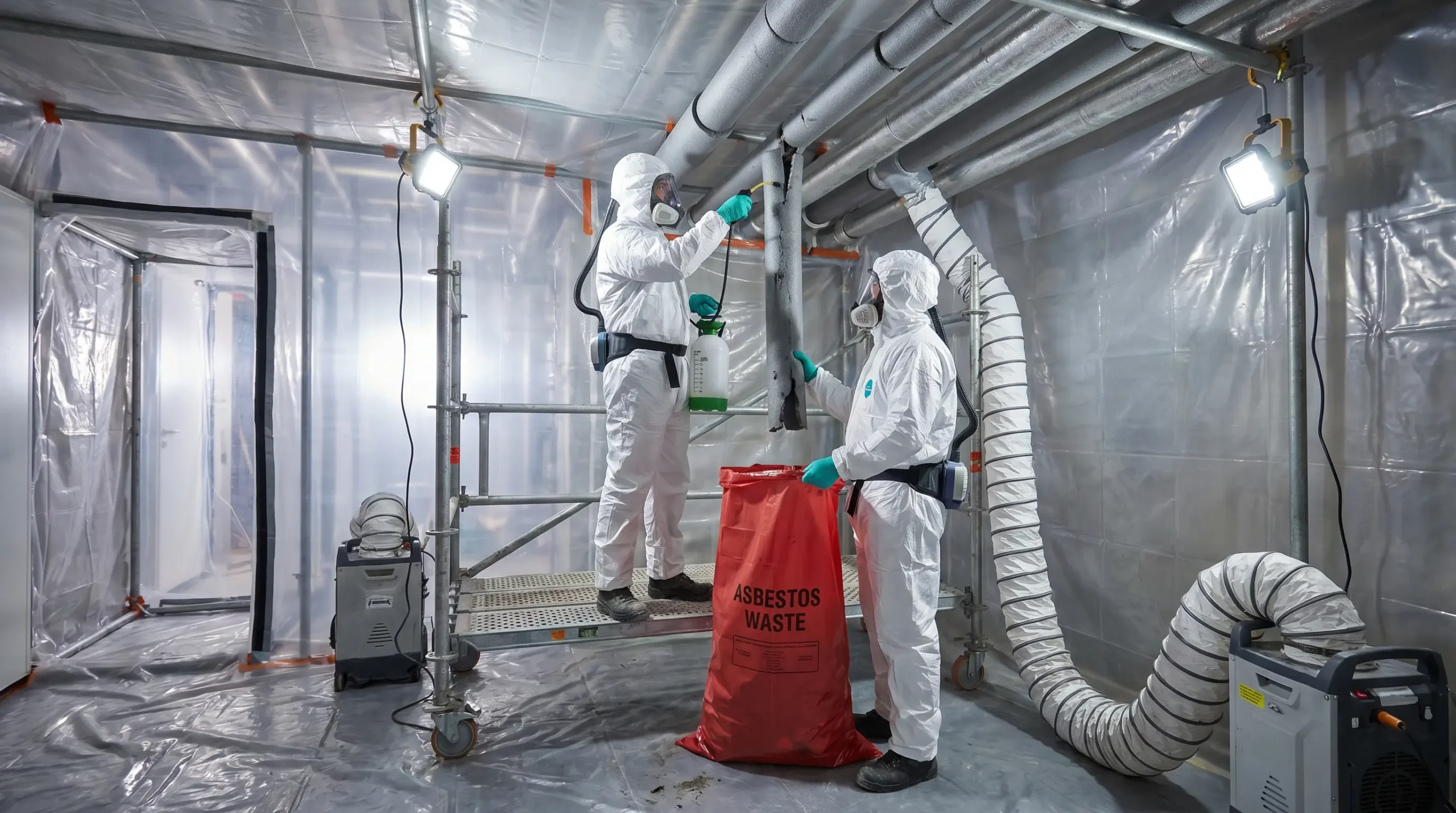
The asbestos analyst exists because of that ongoing burden. The role sits at the boundary between removal work and re-occupation: the analyst identifies asbestos in bulk materials, monitors airborne fibre concentrations during removal, and — critically — certifies that a stripped area is safe for people to re-enter.
Three characteristics define the role:
- Identification, not removal. The analyst samples, monitors, and certifies. They never physically remove asbestos-containing materials.
- Independence from the contractor. HSG248 second edition (HSE, 2021) strongly recommends that the client appoints the analyst directly, not the licensed removal contractor — a change designed to eliminate the conflict of interest that historically allowed contractors to pressure analysts toward favourable clearance outcomes.
- Accredited competence. In the UK, analysts must work for an organisation accredited by UKAS to ISO/IEC 17025. Individual analysts hold BOHS P403 and P404 proficiency qualifications or RSPH equivalents.
The independence requirement deserves particular attention. Practitioners consistently identify it as the most contested aspect of the role. Before HSG248 second edition, removal contractors routinely appointed their own analysts, creating commercial relationships that undermined impartiality. The 2021 guidance sought to break that pattern, but commercial pressure still pushes against genuine independence in practice — a tension every working analyst navigates.
Asbestos Analyst vs Asbestos Surveyor: Key Differences
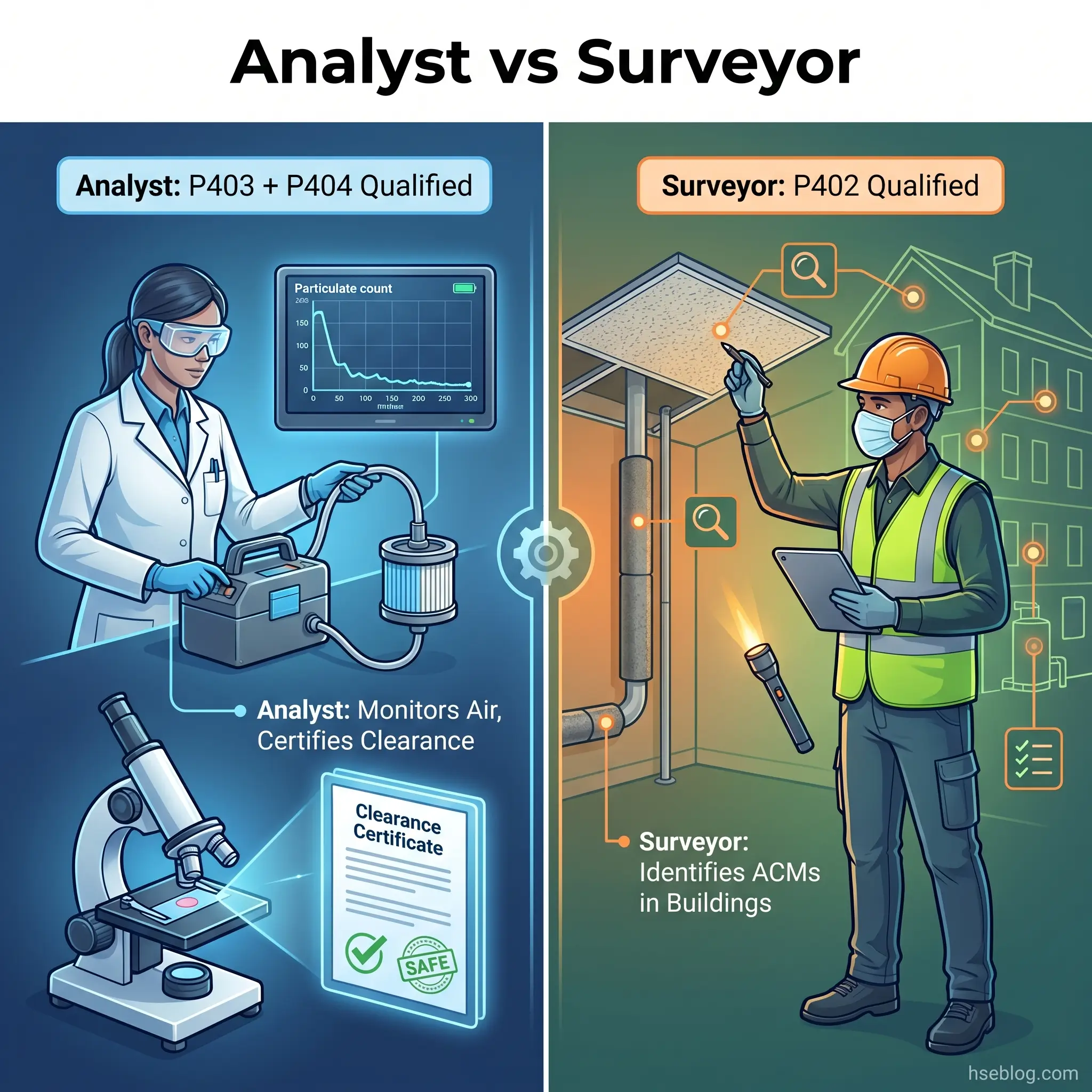
The most common confusion across competitor job descriptions, career pages, and even some employer postings is treating "analyst" and "surveyor" as interchangeable terms. They are not. These are distinct sub-roles operating at different stages of the asbestos management lifecycle, requiring different qualifications, and governed by different technical standards.
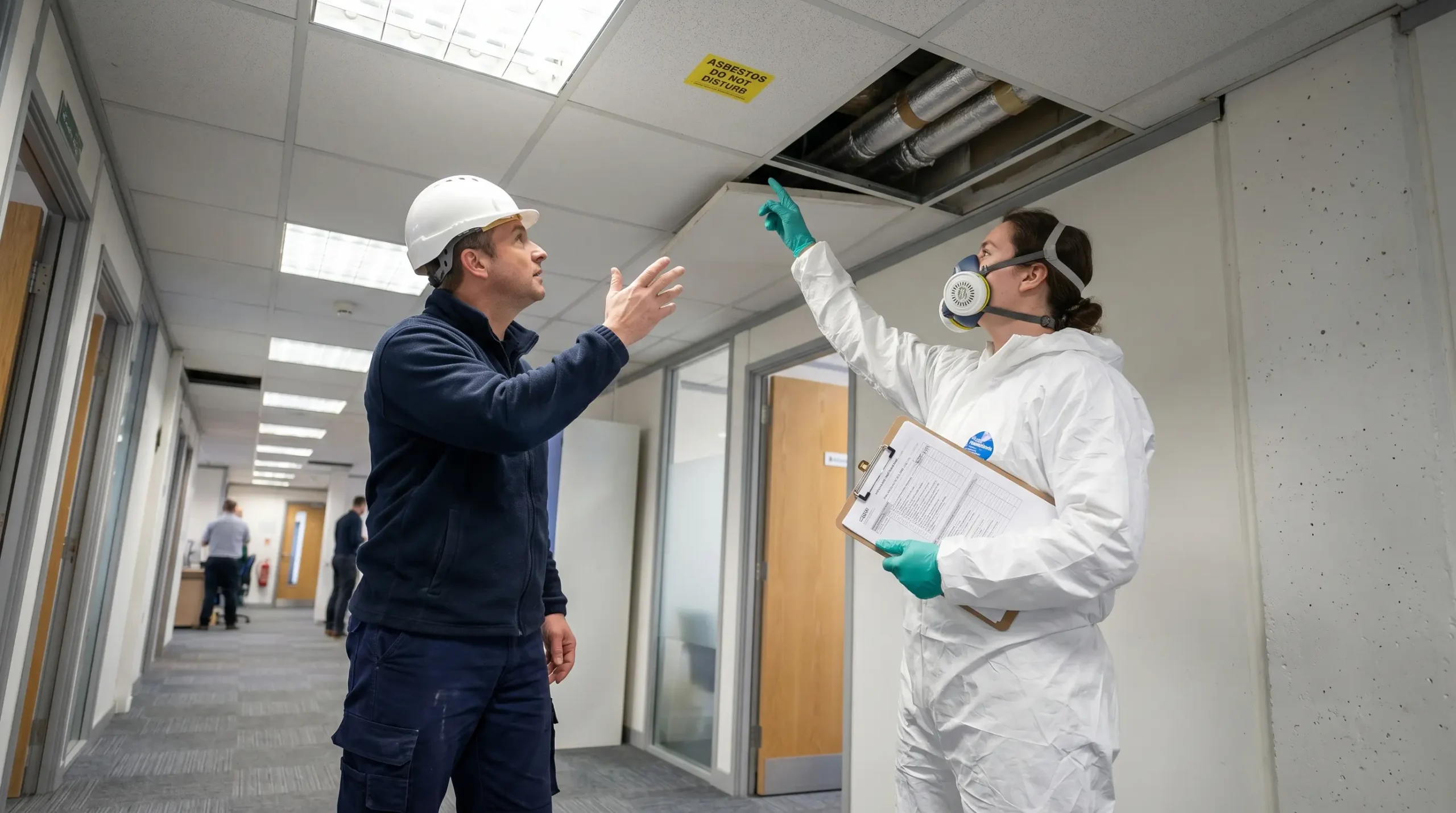
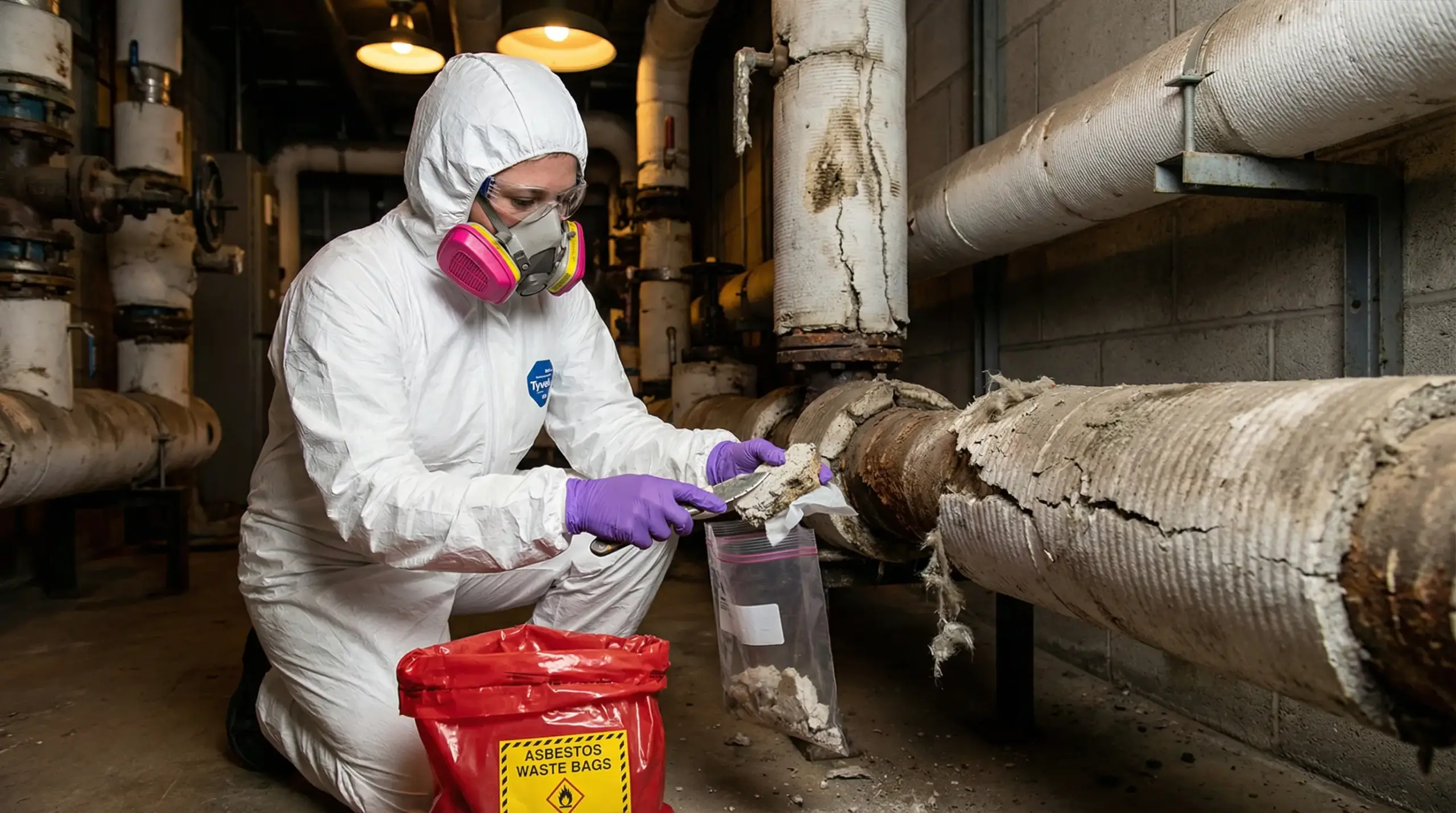
The surveyor inspects buildings to locate and assess asbestos-containing materials (ACMs) — working before any removal decision is made. The analyst monitors airborne fibre levels and certifies safe re-occupation — working during and after removal.
| Aspect | Asbestos Analyst | Asbestos Surveyor |
|---|---|---|
| Primary focus | Air monitoring, fibre counting, clearance certification | Identifying and assessing ACMs in buildings |
| UK qualification | BOHS P403 + P404 (or RSPH Level 3) | BOHS P402 (or RSPH equivalent) |
| Project stage | During and after removal | Before removal — survey and management |
| Key UK standard | HSG248 (The Analysts' Guide) | HSG264 (Asbestos: The Survey Guide) |
| Typical setting | Removal enclosures, site perimeters, laboratory | Occupied and unoccupied buildings |
| US equivalent | Air monitoring technician / laboratory analyst | Asbestos inspector (AHERA-accredited) |
In the US, these functions split differently. The "inspector" role under AHERA covers building assessment, while laboratory analysts work under NVLAP-accredited facilities for bulk and air sample analysis. The two are separately accredited.
Dual qualification — holding both P402 and P403/P404 — is increasingly common and expected by employers. But this creates a workload compression risk that HSG248 second edition specifically sought to address. An individual running between survey commitments and clearance obligations may be tempted to rush the four-stage clearance procedure. The guidance counters this by requiring time estimates for clearance and flagging any deviation greater than 20% from those estimates.
Core Duties and Responsibilities of an Asbestos Analyst
The analyst's responsibilities span the full lifecycle of an asbestos removal project — from scoping the work before it begins, through monitoring during active removal, to certifying the space after stripping is complete. Laboratory-based analysts add another dimension: microscopy analysis of bulk and air samples under quality-controlled conditions.
Pre-Project Planning and Scoping
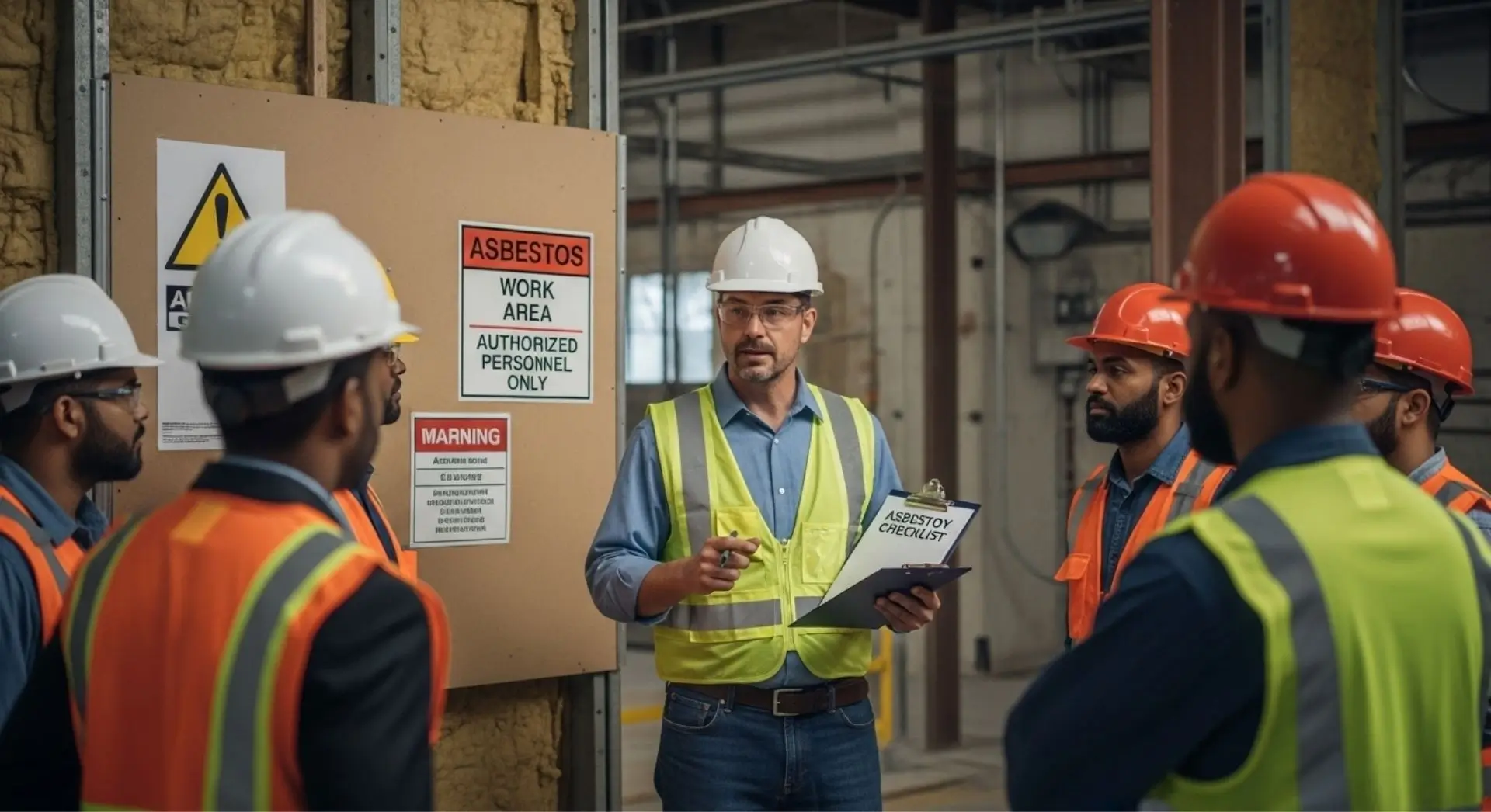
HSG248 second edition significantly expanded the analyst's pre-project role. Under the previous edition, analyst involvement often began at the clearance stage — effectively, the end of the project. The current guidance expects analysts to participate in scoping, review the contractor's plan of work, and agree outcomes before removal begins.
This early involvement serves a practical purpose. An analyst who understands the scope, the type of asbestos being removed, the enclosure design, and the expected duration can plan sampling strategies and anticipate clearance challenges. Arriving cold at the clearance stage — a pattern still common on smaller projects — produces weaker outcomes.
Key pre-project duties include:
- Plan of work review — assessing whether the contractor's proposed method aligns with the risk level and regulatory requirements
- Scope agreement — defining sampling locations, monitoring frequencies, and clearance expectations with the client
- Risk assessment input — advising on enclosure design, negative pressure requirements, and transit route decontamination
Air Monitoring During Asbestos Removal
During active removal, the analyst performs several distinct types of air monitoring, each serving a different purpose:
- Background monitoring — establishing baseline fibre levels before removal begins, typically at the site perimeter and in adjacent occupied areas.
- Reassurance monitoring — ongoing sampling during removal to confirm that the enclosure is containing fibres effectively and occupied areas remain safe.
- Personal exposure monitoring — sampling the breathing zone of removal operatives to verify compliance with exposure limits.
- Leak testing — using smoke tubes or DOP (dioctyl phthalate) testing to check enclosure integrity.
- Perimeter monitoring — sampling at the enclosure boundary and in surrounding areas throughout the project.
The clearance indicator level used in the UK is 0.01 fibres per millilitre of air (f/ml). This is distinct from the US OSHA permissible exposure limit (PEL) of 0.1 fibres per cubic centimetre (f/cc), which is an 8-hour time-weighted average workplace exposure limit under 29 CFR 1926.1101. These two thresholds serve different purposes — clearance versus occupational exposure — and conflating them is a common error in less rigorous guidance documents.
The Four-Stage Clearance Procedure
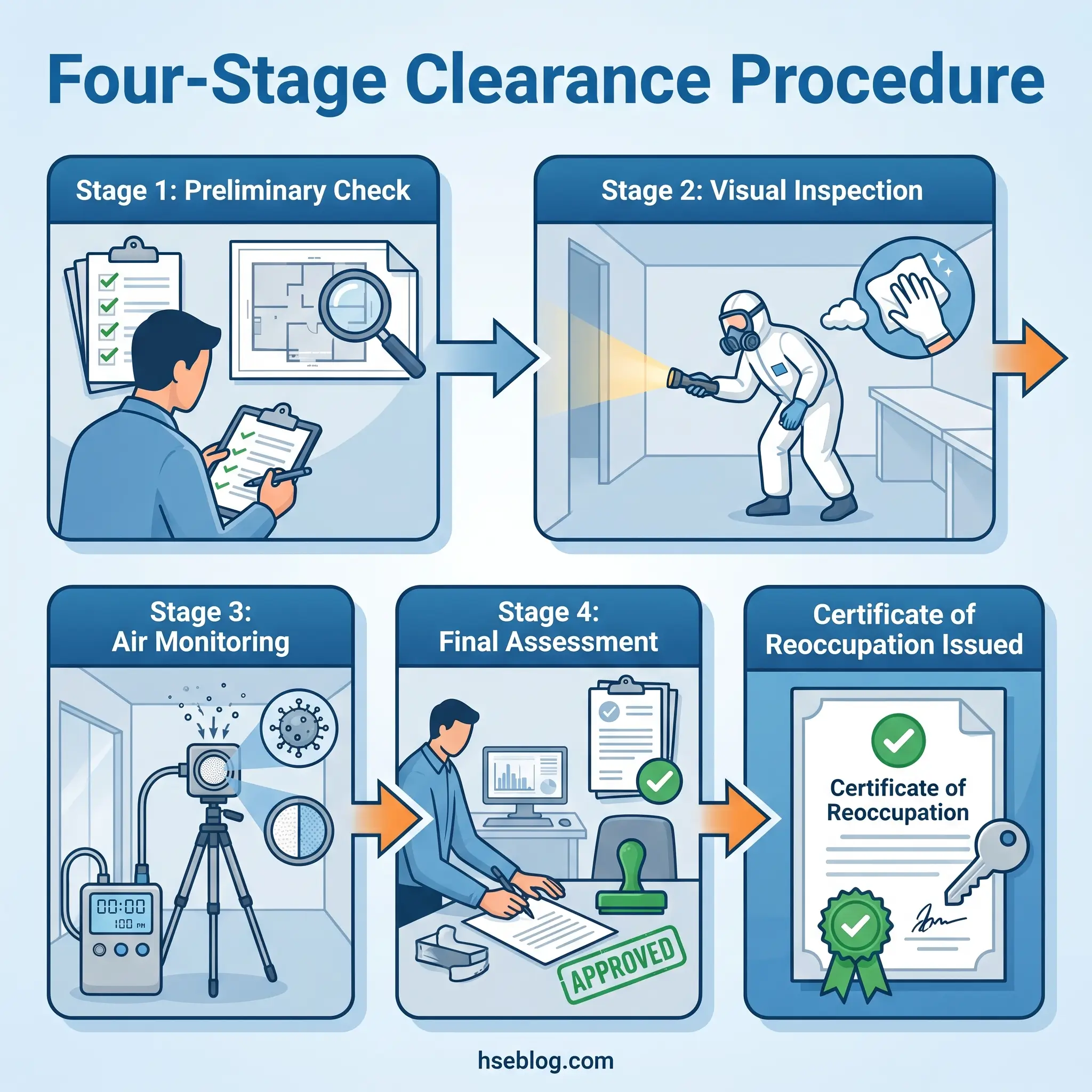
The four-stage clearance is the analyst's most consequential responsibility. It determines whether a stripped space can be re-occupied. Each stage has specific pass/fail criteria defined in HSG248: Asbestos — The Analysts' Guide.
- Stage 1 — Preliminary check. The analyst reviews completed paperwork, waste consignment notes, and the contractor's notification that stripping is complete. The enclosure remains sealed.
- Stage 2 — Visual inspection. The analyst enters the enclosure in full RPE and conducts a thorough visual inspection of all stripped surfaces — walls, ceilings, floors, ledges, service risers, pipe runs, and concealed areas. Any visible debris or residue constitutes a fail.
- Stage 3 — Air monitoring. Static air samples are collected within the enclosure using calibrated pumps and analysed by phase contrast microscopy. Results must fall below the clearance indicator of 0.01 f/ml.
- Stage 4 — Final assessment. The analyst reviews all accumulated evidence — visual inspection results, air monitoring data, photographic records — and issues the certificate of reoccupation if all criteria are met.
HSG248 second edition introduced several enhanced requirements: mandatory handover forms between contractor and analyst, time estimates for each clearance stage, a rule that any cleaning taking more than 10 minutes at Stage 2 constitutes a fail (requiring re-cleaning and re-starting), and enhanced photographic records with date and time stamps.
The common failure pattern across published incident reports and enforcement actions is treating the four-stage clearance as a box-ticking exercise. Stage 2 — the visual inspection — is particularly vulnerable. Time pressure from contractors waiting for clearance can lead analysts to under-inspect corners, ledges, and service risers. The 10-minute cleaning threshold was introduced specifically to counter this: if the space needs significant cleaning at the inspection stage, it was not properly cleaned by the contractor, and the clearance should not proceed.
Laboratory Analysis: PLM, PCM, and TEM
Analysts working in laboratory settings use three primary microscopy techniques:
- Polarized Light Microscopy (PLM) — used for bulk sample identification, determining whether a material contains asbestos and identifying the fibre type (chrysotile, amosite, crocidolite, or others). This is the standard method for survey sample analysis.
- Phase Contrast Microscopy (PCM) — used for airborne fibre counting following the WHO recommended method. The analyst prepares slides from membrane filters and counts fibres meeting defined dimensional criteria (length > 5 μm, diameter < 3 μm, length-to-width ratio > 3:1). This is the technique covered by the BOHS P403 qualification.
- Transmission Electron Microscopy (TEM) — used for confirmation analysis and low-level fibre detection. TEM can identify fibre type at much lower concentrations than PCM and is used when PCM results are ambiguous or when regulatory requirements demand fibre-type-specific data.
HSG248 second edition introduced daily sample throughput limits for laboratory analysts, recognising that excessive workload degrades counting accuracy. Quality control requirements include RICE (Regular Interlaboratory Counting Exchange) slide proficiency testing and round-robin participation.
Qualifications Required to Become an Asbestos Analyst
The qualification landscape differs significantly between jurisdictions, but both the UK and US systems share a common principle: asbestos analytical work must be performed by individuals with recognised training, working within accredited organisational structures.
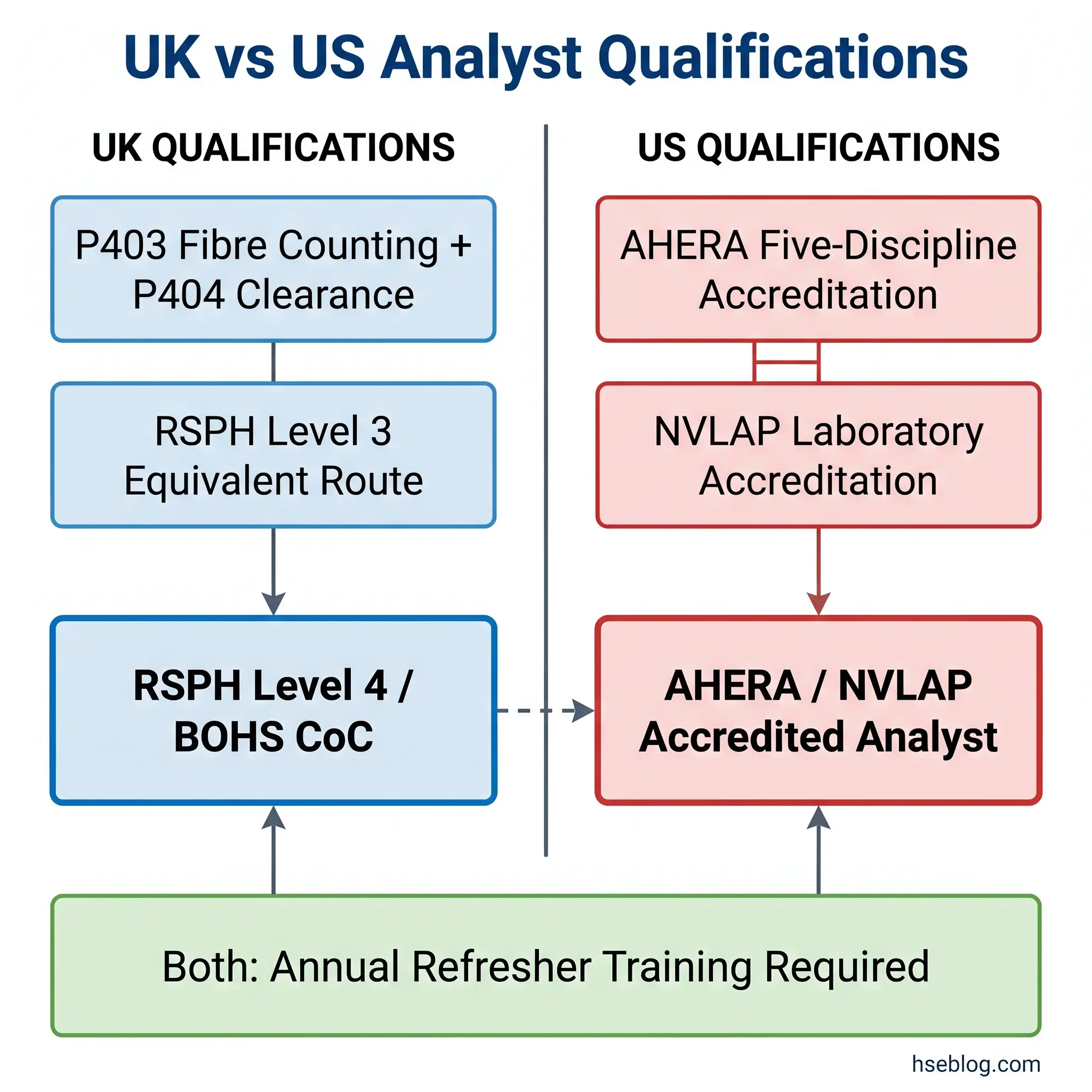
UK Qualification Pathway: BOHS and RSPH Routes
The UK offers two parallel routes to analyst qualification. Both are recognised by UKAS and HSE.
Route 1 — BOHS Proficiency Modules:
- P400 — Foundations in Asbestos. A prerequisite module covering basic asbestos knowledge, health effects, legislation, and safety. Not always mandatory if equivalent prior knowledge can be demonstrated, but strongly recommended.
- P403 — Asbestos Fibre Counting (PCM). A typically two-day course covering air sampling, slide preparation, and fibre counting using phase contrast microscopy. Examination includes a practical fibre counting test.
- P404 — Clearance Testing and Certificate of Reoccupation. Requires prior P403 and practical experience. Covers the full four-stage clearance procedure, documentation requirements, and professional judgment in clearance decisions.
Route 2 — RSPH:
- RSPH Level 3 Certificate in Air Monitoring and Clearance Procedures — covers equivalent ground to P403 + P404 as a single qualification.
- RSPH Level 4 Certificate in Asbestos Laboratory and Project Management — the senior/competent person qualification, equivalent to the BOHS Certificate of Competence in Asbestos.
The qualification gap that catches many aspiring analysts is assuming that P403 and P404 alone are sufficient. Employers increasingly expect candidates to hold or be working towards P401 (Identification of Asbestos in Bulk Materials) and P402 (Surveying and Sampling). UKAS-accredited organisations are required to have at least one senior person holding the BOHS Certificate of Competence or RSPH Level 4 — a significantly higher bar that many smaller companies struggle to meet.
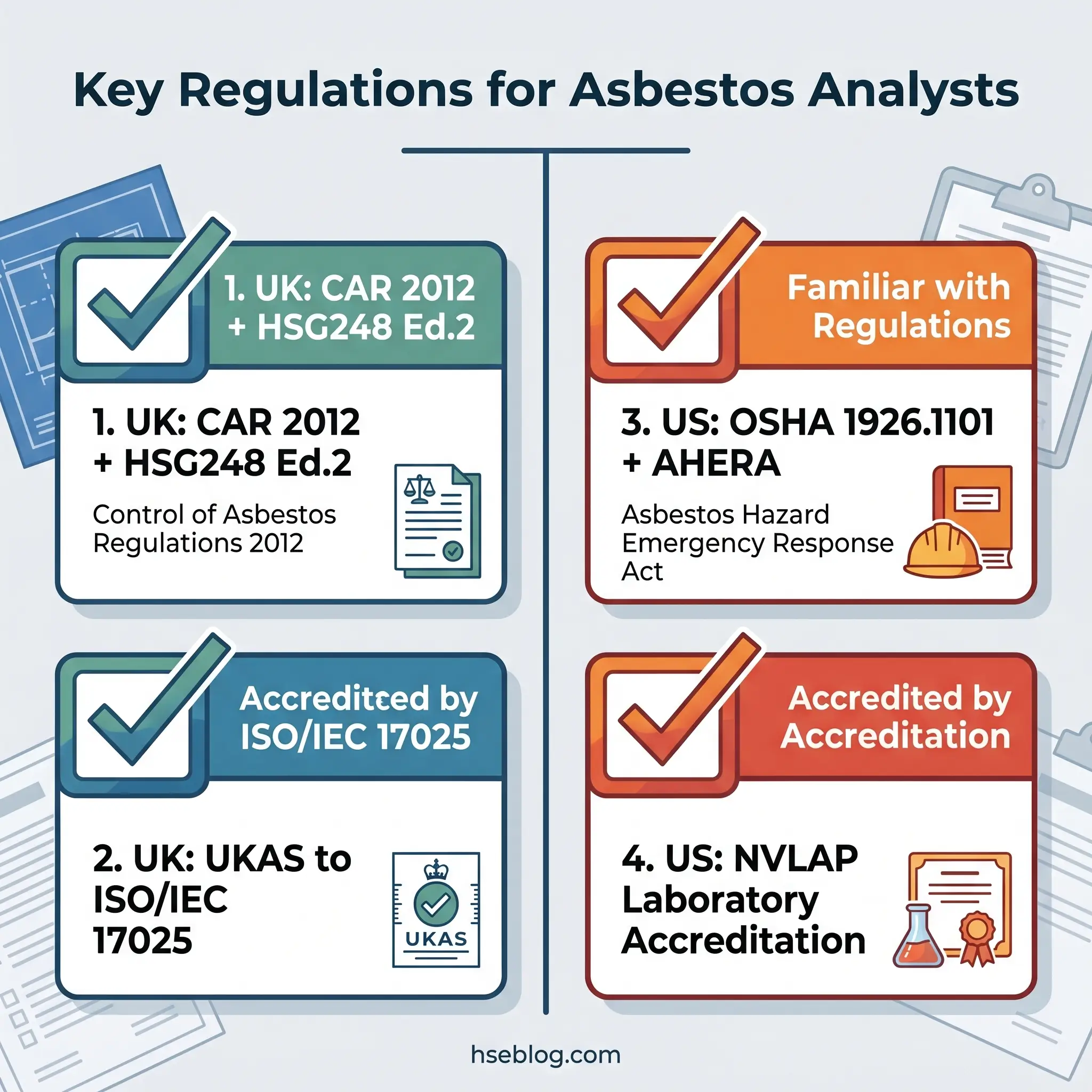
Organisational accreditation through UKAS to ISO/IEC 17025 is a legal requirement under CAR 2012 Regulations 20 and 21. Individual analysts are not personally accredited by UKAS, but they cannot perform regulated analytical work outside an accredited organisation.
US Qualification Pathway: EPA, AHERA, and State Licensing
The US system operates under the Asbestos Hazard Emergency Response Act (AHERA), which established the Model Accreditation Plan (MAP) administered by the EPA. Five training disciplines are defined:
- Inspector — building assessment and sampling (closest to the UK surveyor role)
- Management Planner — developing asbestos management and abatement plans
- Project Designer — designing abatement projects
- Worker — hands-on asbestos removal
- Supervisor — overseeing removal operations
Each discipline has separate initial training requirements and mandatory annual refresher training. States must operate accreditation programmes at least as stringent as the federal MAP, and many impose additional requirements — meaning state-level certification variations are significant and must be checked by jurisdiction.
For laboratory work, NVLAP (National Voluntary Laboratory Accreditation Program) accreditation or AIHA (American Industrial Hygiene Association) proficiency testing participation is required for bulk and air sample analysis. OSHA's construction standard, 29 CFR 1926.1101, requires that bulk analysis be performed by laboratories meeting these accreditation criteria.
Skills and Competencies for Asbestos Analysts
Generic job descriptions list "attention to detail" and "good communication." Those tell a prospective analyst nothing about what the role actually demands. The competencies that distinguish effective analysts from adequate ones are specific and worth understanding before committing to this career path.
Microscopy proficiency sits at the technical core. PCM fibre counting is not mechanical — it requires the analyst to distinguish between asbestos fibres and non-asbestos particles, apply the WHO counting rules consistently across hundreds of fields, and maintain counting discipline over hours of repetitive microscope work. PLM bulk identification demands familiarity with the optical properties of six regulated fibre types under varying preparation conditions.
The skill that separates competent analysts from outstanding ones is the ability to interpret borderline fibre counts and make defensible professional judgments. A count of 0.009 f/ml does not always mean the same thing. In one context — a long sampling duration, a well-sealed enclosure with no integrity issues — it represents strong evidence of clearance. In another — a short sampling duration with known enclosure breaches — the same number demands caution and professional scepticism.
Beyond the microscope, effective analysts need:
- Equipment calibration discipline — sampling pumps, flow meters, and microscopes all require regular calibration. Drift in any of these produces unreliable data, and the analyst is responsible for recognising it.
- Airflow and enclosure dynamics understanding — knowing how negative pressure systems work, where leaks are most likely, and how air movement affects fibre distribution within an enclosure.
- Communication under pressure — the ability to deliver unwelcome news. Failing a clearance means the contractor must re-clean, the client's programme slips, and cost increases. Analysts who cannot communicate a fail clearly and hold their professional ground face intense commercial pressure to reconsider.
- Regulatory literacy — working knowledge of CAR 2012, HSG248, and ACOP L143 in the UK, or OSHA standards and AHERA requirements in the US. This is not theoretical knowledge — it is the ability to cite the correct clause when challenged about a decision.
- Physical resilience — extended periods in full RPE (respiratory protective equipment) within hot, confined enclosures. The physical demands are significant and not always apparent from job descriptions.
What Does an Asbestos Analyst Earn? Salary and Career Outlook
Salary data for asbestos analysts varies by region, employer size, and qualification breadth, but industry aggregations provide useful benchmarks.
| Experience Level | UK Salary Range | US Equivalent Role Range |
|---|---|---|
| Entry-level / trainee | £20,000–£30,000 | $40,000–$50,000 |
| Experienced (P403/P404, 3+ years) | £30,000–£45,000 | $50,000–$65,000 |
| Senior / dual-qualified (analyst + surveyor) | Up to £70,000 | $65,000–$75,000+ |
UK data: GoConstruct / ONS / Randstad UK, 2025. US ranges are approximate based on asbestos inspector/analyst role aggregations and vary significantly by state.
Dual-qualified professionals — those holding both surveyor (P402) and analyst (P403/P404) credentials — command a premium. The versatility of being deployable on both survey and clearance work makes these individuals significantly more valuable to employers, particularly in smaller UKAS-accredited firms where headcount is limited.
Career progression follows a recognisable ladder:
- Trainee analyst — supervised site and laboratory work, working towards P403/P404.
- Site analyst — independent clearance and monitoring work.
- Senior analyst — quality auditing, mentoring, complex project oversight.
- Laboratory manager / competent person — requiring RSPH Level 4 or BOHS Certificate of Competence; responsible for the organisation's technical standards and UKAS compliance.
- Consultant / project director — strategic advisory roles, expert witness work, policy input.
The career trajectory that delivers the highest long-term value is not chasing day-rate analyst work but building towards the competent-person qualification. UKAS-accredited organisations are required to employ such a person, making individuals with RSPH Level 4 or BOHS Certificate of Competence indispensable — and difficult to replace.
Demand outlook remains strong. Asbestos is present in vast quantities across the UK and global building stock. With 2,218 mesothelioma deaths recorded in Great Britain in 2023 alone (HSE, 2025), and emerging evidence of a potential "fourth wave" of mesothelioma linked to environmental exposure in schools and public buildings (British Safety Council, 2025), the need for qualified analysts will persist for decades.
How to Become an Asbestos Analyst: Step-by-Step Career Path
No specific degree is required to enter this profession in either the UK or the US. The field is accessible through apprenticeships, vocational training, and employer-sponsored routes. Science backgrounds — particularly chemistry or biology — are advantageous but not mandatory. Construction industry experience also helps, as it provides familiarity with site protocols and CSCS card requirements.
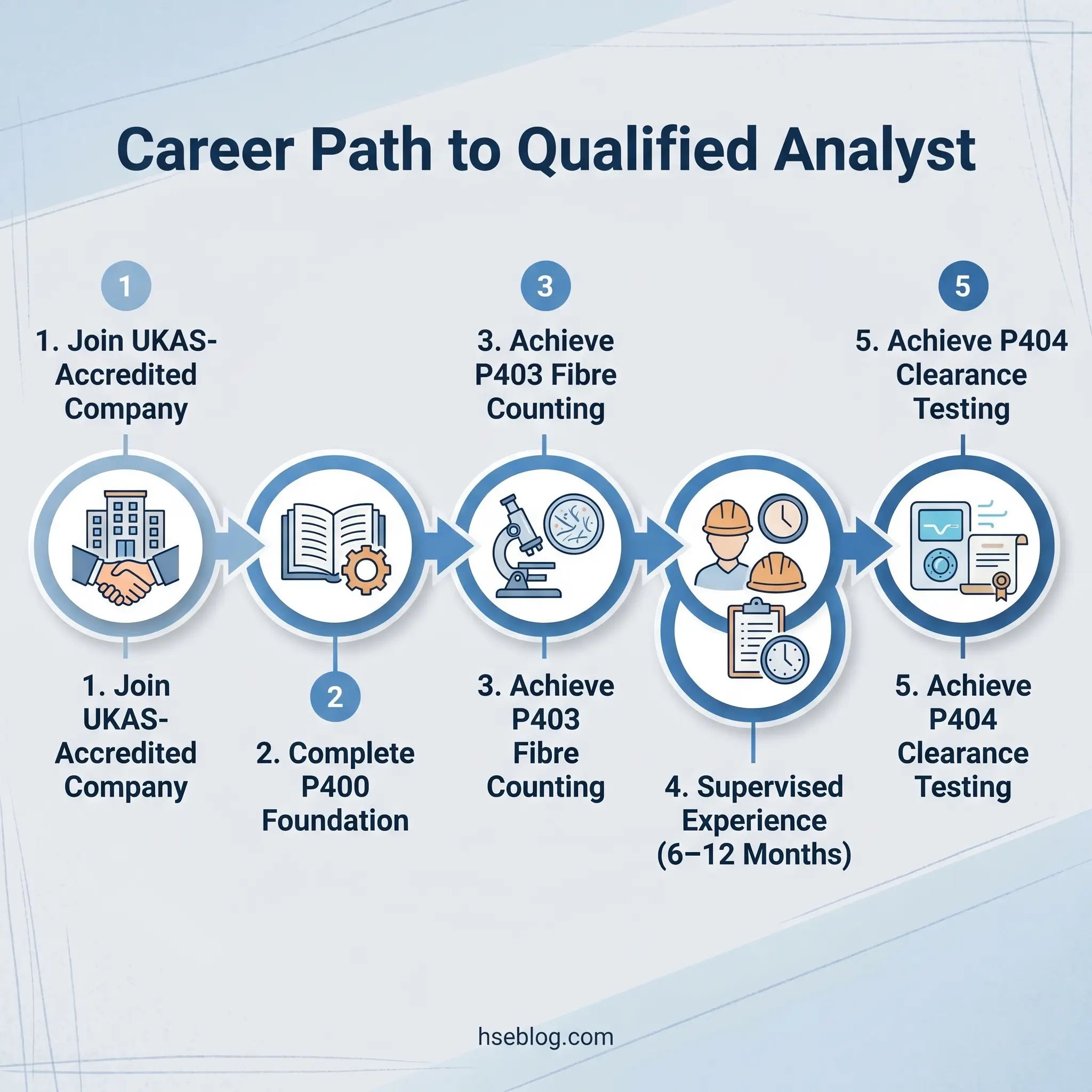
The following progression applies to the UK pathway, which is the most structured:
- Secure a position with a UKAS-accredited company. This is the most overlooked step. Training and qualifications obtained outside an accredited environment may not be recognised by UKAS, and practical experience logged under non-accredited conditions may not count towards competence assessments. Starting with an accredited employer from the outset avoids wasted time and money.
- Complete the P400 foundation module (or demonstrate equivalent prior knowledge). This covers asbestos types, health effects, legislation, and basic safety — the foundational knowledge every subsequent qualification builds on.
- Achieve P403 — Asbestos Fibre Counting (PCM). Typically a two-day course with practical examination. This qualifies the individual to prepare and analyse air sample slides using phase contrast microscopy.
- Gain supervised practical experience. Typically 6–12 months of working under a qualified senior analyst. During this period, the trainee performs clearances, air monitoring, and laboratory work under direct supervision, building the practical competence that qualifications alone cannot provide.
- Achieve P404 — Clearance Testing. Requires prior P403 and sufficient practical experience. Covers the full four-stage clearance procedure and the professional judgment required to issue certificates of reoccupation.
- Obtain a CSCS card. The Construction Skills Certification Scheme card is required for site access on most UK construction projects. Analysts typically hold the Professionally Qualified Person card or equivalent.
- Pursue additional qualifications. P401 (Bulk Identification), P402 (Surveying), and P405 (Management of Asbestos in Buildings) broaden career options. The BOHS Certificate of Competence or RSPH Level 4 opens the door to senior/competent person roles.
- Maintain CPD and refresher training. Annual refresher training is mandatory. HSG248 second edition requires quality audits at least four times per year per individual analyst — meaning ongoing competence is actively monitored, not passively assumed.
For the US pathway, the sequence begins with EPA-approved initial training in the relevant AHERA discipline, followed by state-level certification (which varies by jurisdiction), and annual refresher training to maintain accreditation.
The UK apprenticeship route — the Level 3 Asbestos Analyst/Surveyor apprenticeship standard — provides an alternative structured pathway that combines employment, training, and qualification achievement over approximately 24 months.
Regulatory Framework Governing Asbestos Analysts
A common misconception among less experienced analysts is that HSG248 is "just guidance" and therefore optional. In practice, HSE inspectors use HSG248 as the benchmark for competent analytical work, and deviation from its procedures without demonstrable equivalent protection is treated as non-compliance with the Control of Asbestos Regulations 2012 (CAR 2012). Understanding the distinction between law and guidance — and why guidance is effectively mandatory — is fundamental to practising as an analyst.
UK regulatory structure:
The legal foundation is the Control of Asbestos Regulations 2012, which impose specific duties relevant to analysts:
- Regulation 10 — mandates adequate training for anyone liable to be exposed to asbestos, including analysts who enter enclosures.
- Regulation 17 — requires thorough cleaning and clearance after asbestos removal — the statutory basis for the analyst's clearance role.
- Regulation 20 — requires air testing to be carried out by bodies accredited by UKAS (or an equivalent).
- Regulation 21 — requires bulk analysis to be performed by UKAS-accredited laboratories.
Supporting the Regulations, ACOP L143 provides an approved code of practice with quasi-legal status, and HSG248 second edition (published May 2021, amended July 2021) defines the authoritative analytical procedures that analysts must follow.
Penalties for non-compliance are severe: fines up to unlimited amounts and imprisonment of up to two years for breaches of CAR 2012.
US regulatory structure:
Sites operating under US jurisdiction face OSHA's asbestos construction standard (29 CFR 1926.1101), which sets the PEL at 0.1 f/cc as an 8-hour TWA and the excursion limit at 1.0 f/cc over 30 minutes. The EPA's AHERA framework governs professional accreditation, and NESHAP (National Emission Standards for Hazardous Air Pollutants) regulates asbestos removal and disposal practices.
International standards:
ISO/IEC 17025:2017 provides the framework against which UKAS assesses asbestos testing organisations. UKAS LAB 30 offers asbestos-specific application guidance for this standard. The WHO fibre counting methodology underpins PCM analysis in both UK and US practice.
A 2025 development worth noting: UKAS announced an expression of interest (EOI) programme for laboratories seeking to extend their accreditation scope to include asbestos bulk identification testing under a deviating method aligned with an adjusted HSG248 second edition process, with a response deadline of 30 June 2025 (UKAS, 2025). This signals a potential broadening of the accredited scope that could affect analyst workload and laboratory procedures.
Regulatory content here reflects general HSE professional understanding of UK and US requirements as of 2025. It is not legal advice. Specific compliance questions, enforcement situations, or prosecution risk should be directed to qualified legal counsel in the applicable jurisdiction.
Frequently Asked Questions
Is an asbestos analyst the same as an asbestos surveyor?
No — these are distinct sub-roles with different qualifications, different daily activities, and different positions in the asbestos management lifecycle. The analyst focuses on air monitoring, fibre counting, and clearance certification, holding P403 and P404 qualifications. The surveyor identifies asbestos-containing materials in buildings, holding the P402 qualification. Many professionals hold both sets of qualifications, and the apprenticeship standard covers both, but the regulatory and procedural frameworks governing each role are separate.
How long does it take to become a qualified asbestos analyst?
The classroom training for P403 and P404 can be completed within approximately one week. However, achieving competence requires 6–12 months of supervised practical experience, during which the trainee works alongside a qualified analyst on live projects. The full pathway from entry to independent analyst — including securing a position with a UKAS-accredited company, completing foundation training, and building a portfolio of supervised work — typically takes 1–2 years.
Can you become an asbestos analyst without a degree?
Yes. No specific degree is required in either the UK or the US. The profession is accessible through apprenticeships (the Level 3 Asbestos Analyst/Surveyor standard in the UK), vocational training, and on-the-job development with accredited companies. Science A-levels or equivalent qualifications are beneficial — particularly for laboratory-based microscopy work — but they are not mandatory entry requirements.
What is the four-stage clearance procedure in asbestos removal?
The four-stage clearance is conducted by an independent analyst after asbestos removal to determine whether a space is safe for re-occupation. Stage 1 is a preliminary check of completed documentation. Stage 2 is a thorough visual inspection inside the enclosure. Stage 3 involves air monitoring to confirm fibre levels are below 0.01 f/ml. Stage 4 is the final assessment and issue of the certificate of reoccupation. Enhanced requirements under HSG248 second edition include time estimates for each stage and mandatory photographic records.
Do asbestos analysts need UKAS accreditation?
Individual analysts are not personally accredited by UKAS. However, they must work for an organisation that holds UKAS accreditation to ISO/IEC 17025 for asbestos testing — a legal requirement under CAR 2012 Regulations 20 and 21 (UK). Analytical work performed outside an accredited organisation has no regulatory standing. The US equivalent is NVLAP accreditation or participation in AIHA proficiency testing programmes.
What is the difference between P403 and P404 qualifications?
P403 covers asbestos fibre counting using phase contrast microscopy — the practical technique for preparing air sample slides and counting fibres according to the WHO method. P404 covers the complete four-stage clearance procedure, including visual inspection standards, sampling strategy, and the professional judgment required to issue a certificate of reoccupation. Both are BOHS proficiency qualifications, P404 requires prior P403, and both are essential for a site analyst role.
Conclusion
The asbestos analyst role is evolving, and the direction of that evolution is toward greater independence, stricter quality assurance, and broader pre-project involvement. HSG248 second edition represented a significant step in that trajectory — redefining the analyst not as a clearance rubber-stamp at the end of a project, but as an independent technical authority engaged from scoping through to certification.
Two developments signal where the profession is heading. UKAS's 2025 expression of interest for extending accreditation scope to bulk identification testing suggests a broadening of the analyst's regulated responsibilities. Meanwhile, emerging evidence of a potential fourth wave of mesothelioma linked to non-occupational exposure in schools and public buildings (British Safety Council, 2025) — alongside 497 asbestosis deaths recorded in 2023 (HSE, 2025) — confirms that the demand for competent analysts is not diminishing. The asbestos analyst career path leads into decades of sustained, essential work.
For individuals entering the profession, the strategic priority is clear: join a UKAS-accredited organisation from day one, build the P403/P404 foundation, accumulate supervised experience under rigorous quality standards, and plan a trajectory toward the competent-person qualification that makes you irreplaceable to any accredited firm. The asbestos problem is not going away. The analysts who manage it need to be genuinely qualified to do so.