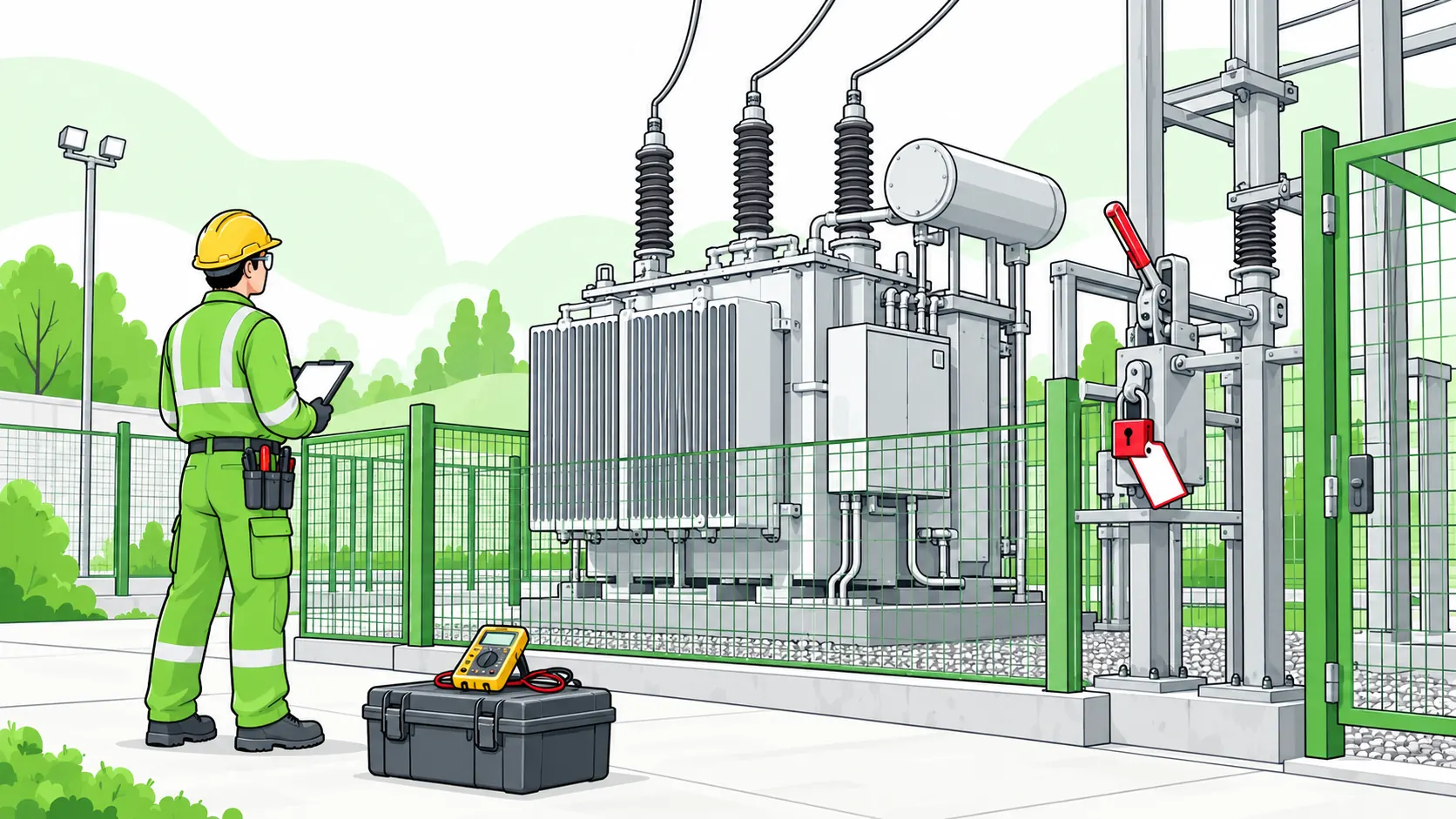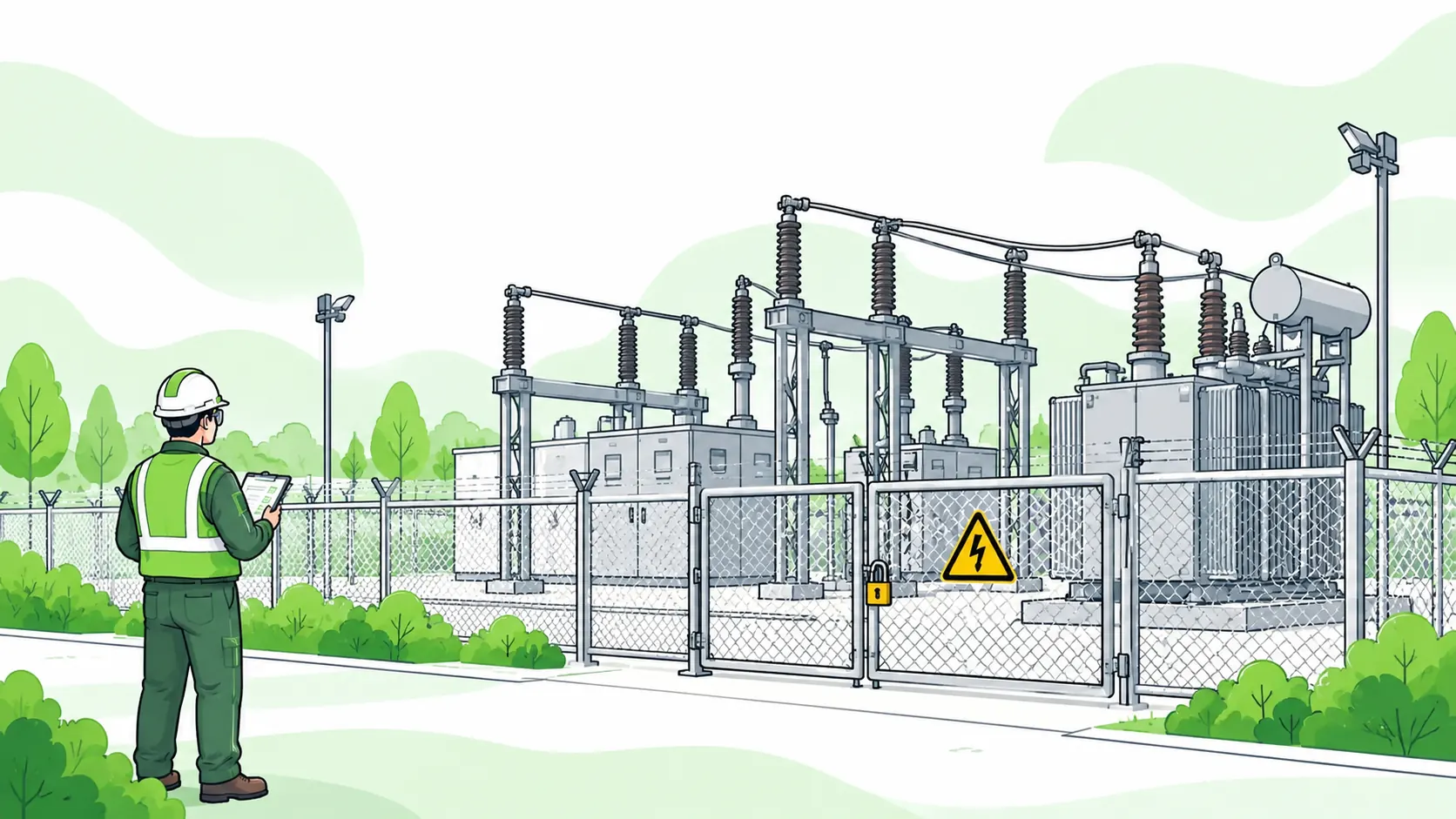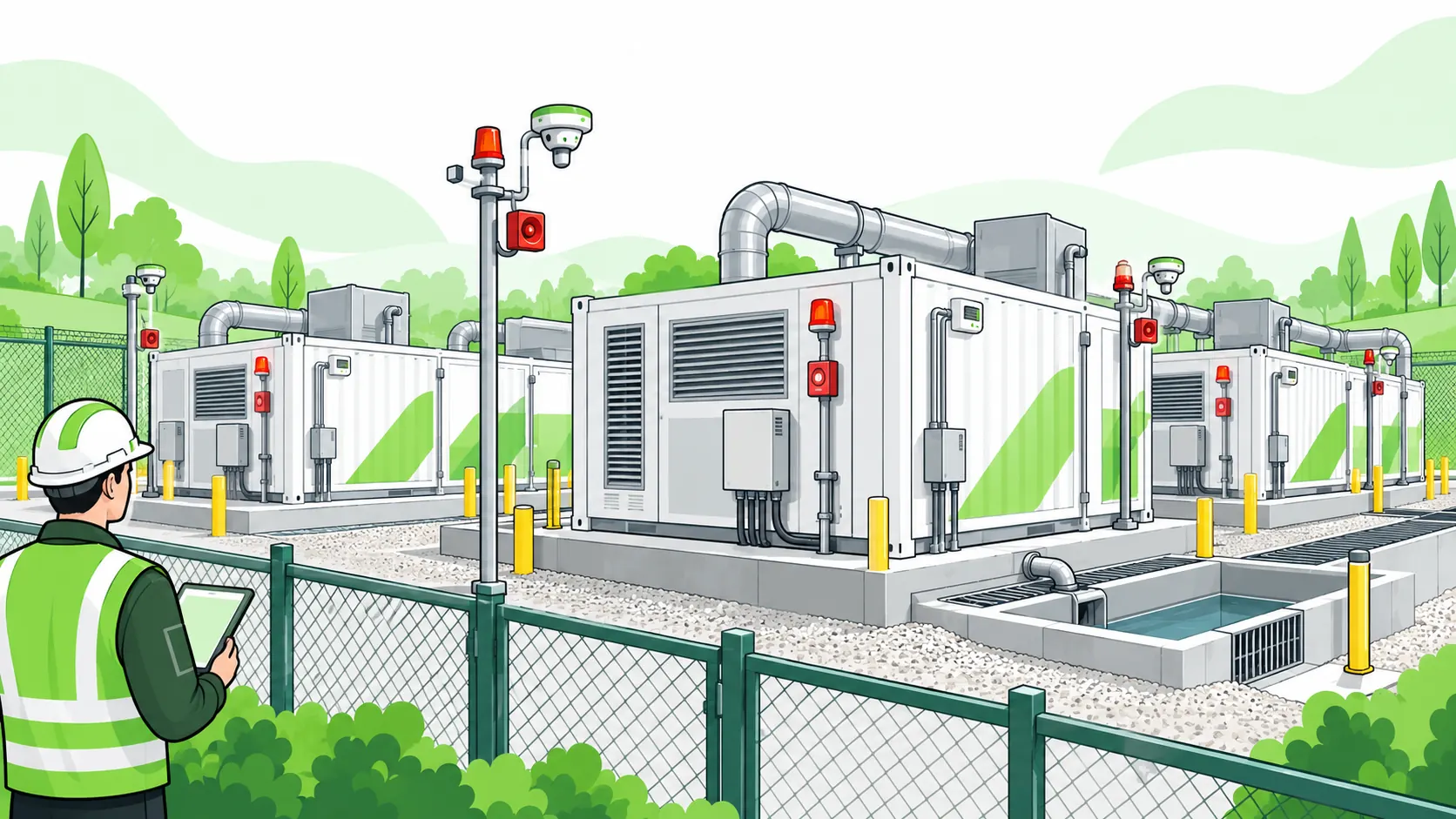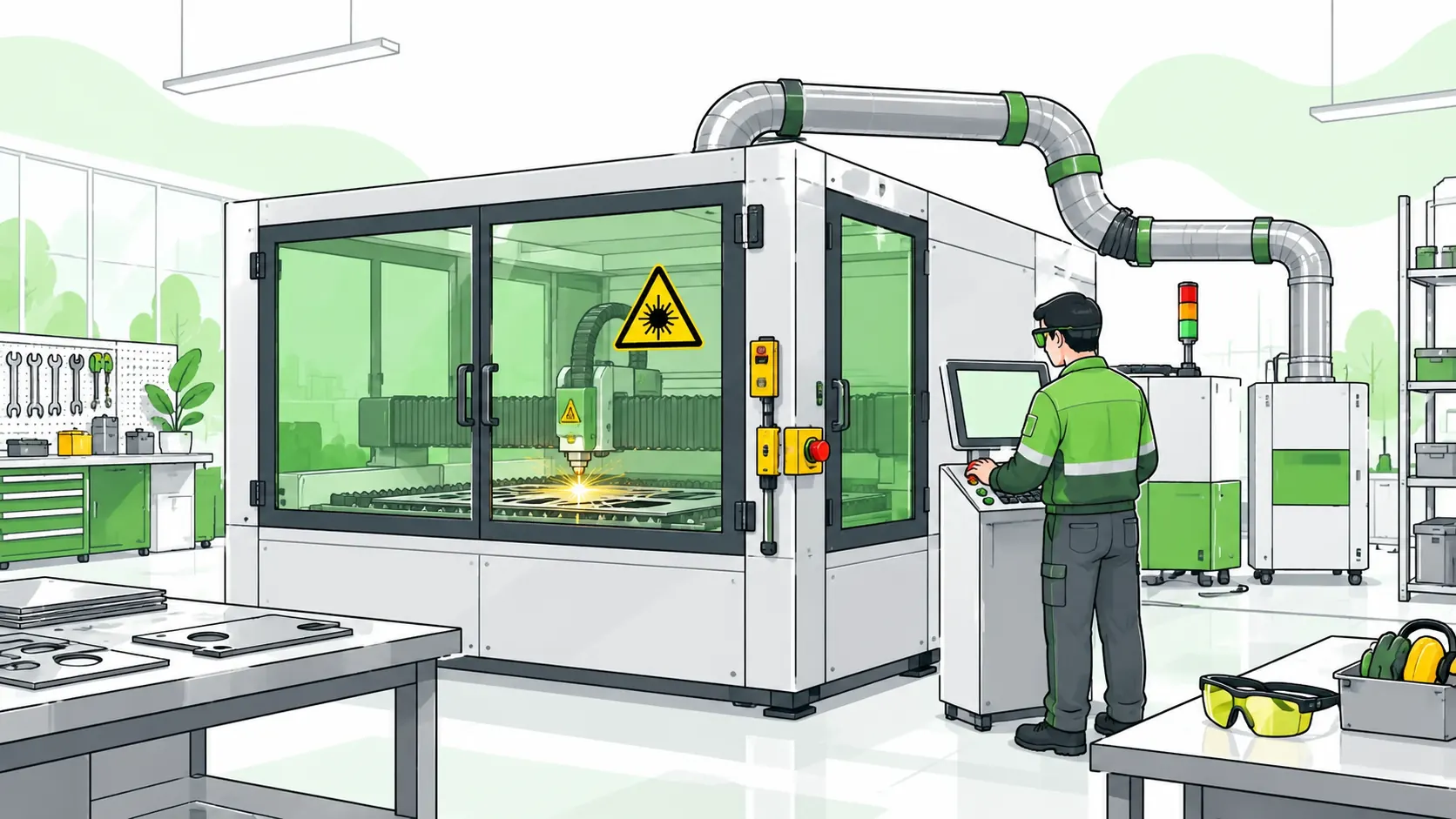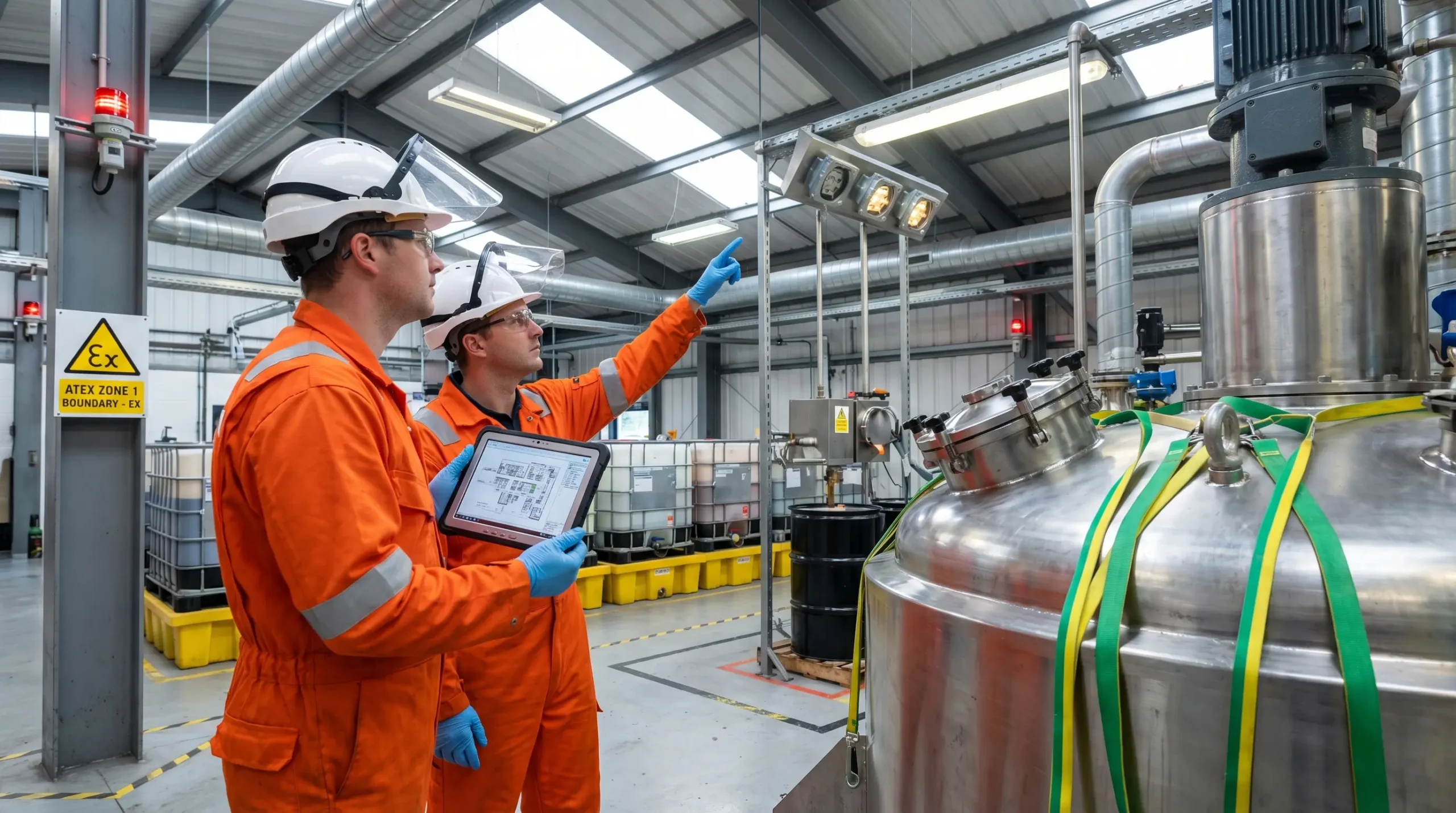
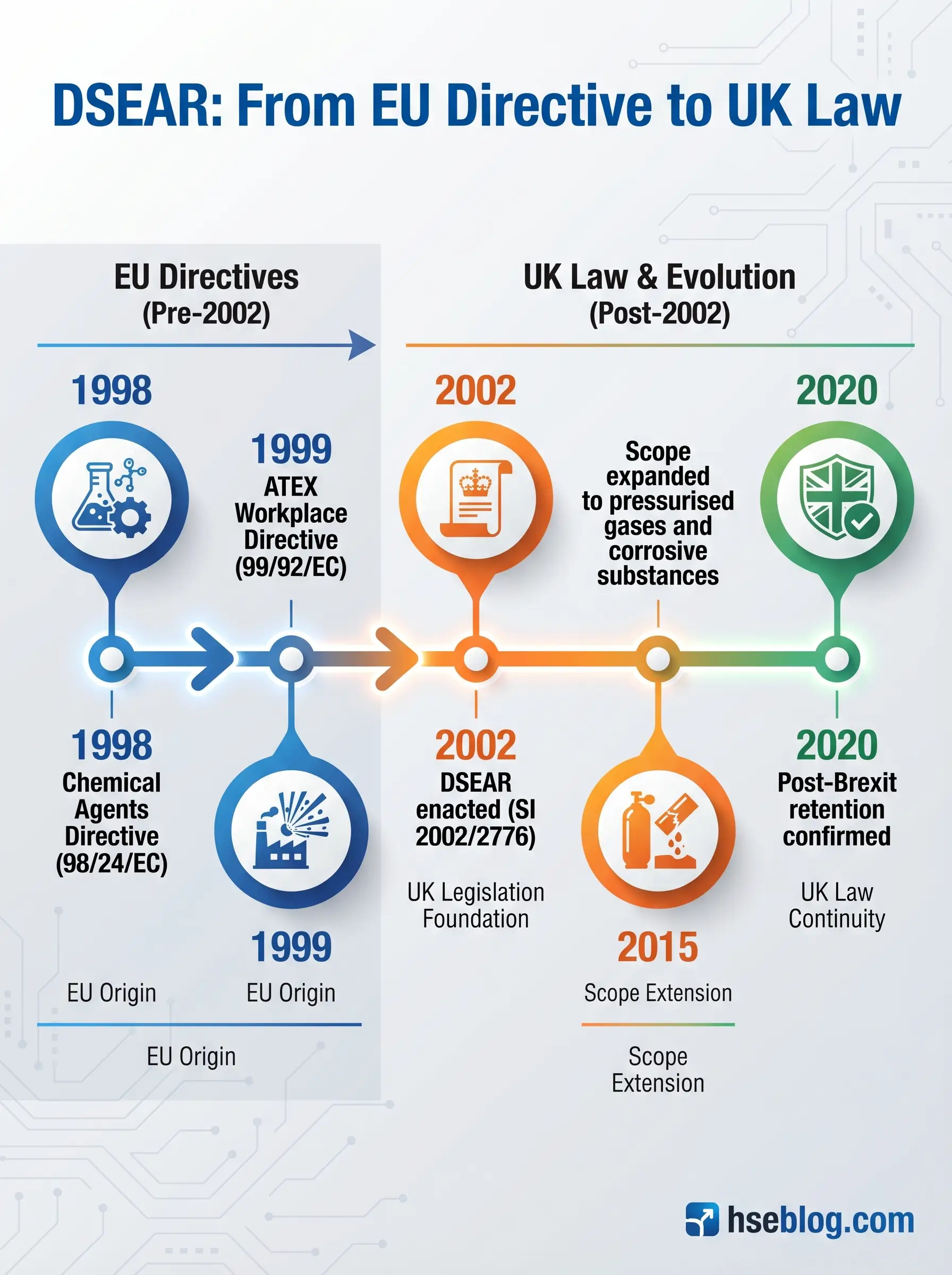
DSEAR — formally cited as Statutory Instrument 2002 No. 2776 — is the principal UK legislation governing fire, explosion, and corrosion risks arising from dangerous substances in the workplace. It applies to any premises where such substances are present, used, stored, or produced. The regulations didn't emerge in isolation. They implement two EU Directives into UK law: the Chemical Agents Directive (98/24/EC), which addresses risks from chemical agents at work, and the Explosive Atmospheres Directive (99/92/EC), commonly known as the ATEX Workplace Directive, which sets minimum safety requirements for workers in potentially explosive atmospheres.
DSEAR sits within the broader enforcement framework of the Health and Safety at Work Act 1974 and complements the Management of Health and Safety at Work Regulations 1999. The Health and Safety Executive (HSE) is the enforcing authority, with powers to inspect, issue improvement and prohibition notices, and prosecute. In 2015, the regulations were amended to expand their scope — gases under pressure and substances corrosive to metals were brought within the DSEAR definition of "dangerous substances." That amendment caught several facilities off guard; a neighbouring plant in our industrial corridor had been storing pressurised nitrogen cylinders for years without considering them under DSEAR, and the 2015 change meant they needed an immediate reassessment.
Post-Brexit, DSEAR remains fully in force. UK ATEX regulations mirror the original EU directives, and businesses operating across both UK and EU markets must continue to comply with parallel requirements. The HSE's 2022–2032 strategy has reinforced a proactive compliance focus, making it clear that reactive enforcement after an incident is no longer the primary model.
What Are Dangerous Substances Under DSEAR?
The statutory definition is broader than most employers expect. Under DSEAR, a "dangerous substance" is any substance or preparation that could create a risk to safety from fire, explosion, or similar energetic event — or, following the 2015 amendment, from corrosion of metals. This includes any substance or mixture classified under the CLP Regulation as explosive, oxidising, flammable, extremely flammable, or highly flammable.
In practical terms, the substances triggering DSEAR duties span nearly every industrial sector. The following categories illustrate the range:
- Flammable liquids: Solvents such as acetone, toluene, and isopropyl alcohol; petroleum-based products including petrol, diesel, and kerosene; cleaning agents and degreasers with low flash points.
- Flammable gases: LPG, acetylene, hydrogen, methane, and natural gas used in heating, welding, or process applications.
- Combustible dusts: Wood dust from machining, flour and grain dust in food manufacturing, metal powders from grinding and polishing, pharmaceutical powders, and sugar dust.
- Oxidising substances: Concentrated hydrogen peroxide, sodium hypochlorite, potassium permanganate — substances that accelerate combustion or generate explosive mixtures on contact with flammable materials.
- Pressurised gases: Compressed air systems, nitrogen cylinders, CO₂ storage — added to DSEAR scope in 2015.
- Substances corrosive to metals: Acids, alkalis, and salt solutions capable of attacking containment structures — also a 2015 addition.
The CLP Regulation provides the classification framework through hazard statements: H220 (extremely flammable gas), H222 (extremely flammable aerosol), H224 (extremely flammable liquid and vapour), H225 (highly flammable liquid and vapour), and H250 (catches fire spontaneously if exposed to air). Safety data sheets — Section 2 in particular — are the starting point for identifying which substances in your facility fall under DSEAR.
One distinction that causes persistent confusion: DSEAR addresses safety risks — fire, explosion, thermal runaway, corrosive attack on containment. The same substance may also present health risks — toxicity, sensitisation, chronic exposure effects — but those fall under COSHH, not DSEAR. A drum of toluene in a blending hall triggers both regulations simultaneously, but through entirely different risk pathways.
Which Workplaces Does DSEAR Apply To?
"We're just a small warehouse — DSEAR doesn't apply to us." I've heard that statement in three different facility audits, and in every case, a walk through the storage area revealed aerosol cans, cleaning solvents, or LPG-fuelled forklift trucks that brought the site squarely within scope.
DSEAR applies wherever three conditions are met simultaneously: work is being carried out by an employer or self-employed person, a dangerous substance is present or liable to be present, and that substance could create a risk to safety from fire, explosion, or corrosion. Self-employed individuals are treated as employers for DSEAR purposes, which is a point frequently overlooked in smaller operations.
The regulation's reach extends far beyond heavy industry. Food manufacturing facilities handling flour or grain dust face DSEAR duties. Woodworking shops generating combustible dust are in scope. Automotive workshops using spray paints and volatile solvents must comply. Hotels and restaurants with LPG heating or cooking systems are covered. Warehouses storing aerosols, adhesives, or cleaning chemicals are included. Laboratories using flammable reagents fall within the regulations. Even office buildings with natural gas boiler rooms or backup generator fuel stores can trigger DSEAR requirements.
Specific exemptions exist, but they're narrow: shipboard activities governed by merchant shipping legislation, the manufacture or storage of explosives under the Explosives Regulations 2014, and mineral extraction activities covered by separate mining regulations. If your operation doesn't fall into one of these carved-out categories and dangerous substances are present, DSEAR applies.
Watch For: The most common compliance gap isn't in high-hazard sites — it's in workplaces that genuinely don't realise DSEAR covers them. If you have a cleaning cupboard full of aerosol cans and a gas boiler in the basement, you already have dangerous substances on your premises.
Core Employer Duties Under DSEAR: Regulations 5 to 11
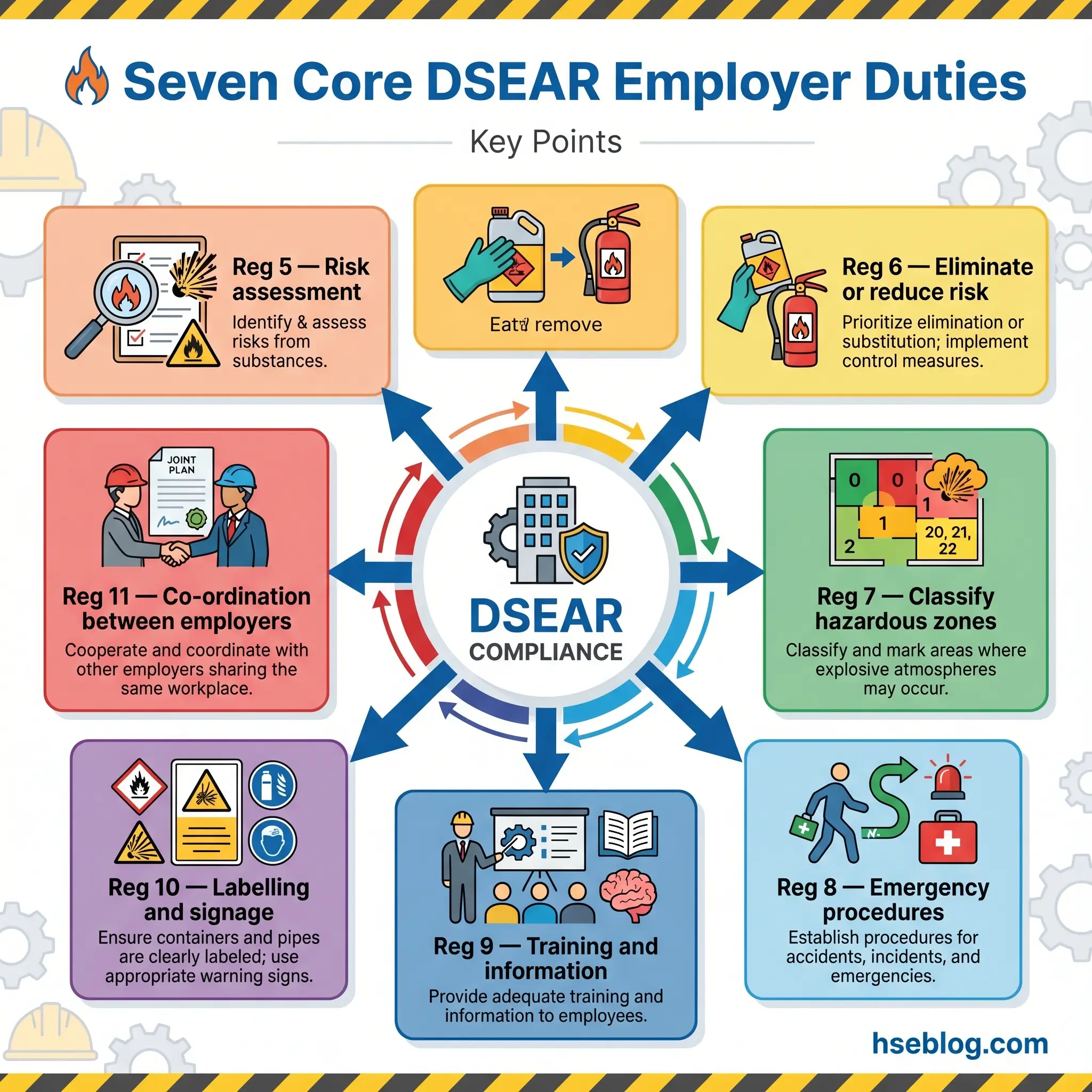
The seven core regulations impose specific, enforceable duties on every employer whose workplace falls within DSEAR's scope. What follows is a regulation-by-regulation breakdown — the kind of structured walkthrough that turns abstract legal text into actionable compliance steps.
Regulation 5: Risk Assessment
Before any work with dangerous substances begins, the employer must carry out a suitable and sufficient risk assessment. This is not a generic fire risk assessment. DSEAR demands an assessment specifically targeting fire, explosion, and corrosion risks from the dangerous substances identified on site.
The assessment must examine the hazardous properties of each substance — flammability, volatility, ignition energy, explosive limits. It must consider how those substances are actually used: quantities handled, storage conditions, process temperatures, potential for release, and whether multiple substances could interact. Safety data sheets provide the starting data, but they don't replace site-specific evaluation of how vapours accumulate in your particular ventilation configuration or how dust settles on your specific cable trays.
Employers with five or more employees must record the significant findings. The assessment must be reviewed whenever it's no longer valid — after process changes, the introduction of new substances, incidents, or near-misses. The HSE recommends a review cycle of three to five years at minimum, even when no obvious trigger event has occurred. I've seen assessments dated eight years back, still sitting in the management system as "current," covering processes that had changed three times since the original survey.
Regulation 6: Elimination or Reduction of Risk
Once risks are identified, the duty follows the hierarchy: eliminate, then reduce, then mitigate. Elimination means substituting the dangerous substance entirely — replacing a flammable solvent with a water-based alternative, for instance, or switching from a combustible powder to a pre-wetted slurry.
Where elimination isn't reasonably practicable, Schedule 1 of the regulations specifies control measures: designing workplaces to minimise accumulation of dangerous substances, providing adequate ventilation and extraction, controlling sources of ignition through permit-to-work systems and hot work procedures, and using engineering controls such as containment, earthing, and bonding to prevent static discharge. Personal protective equipment sits at the bottom of this hierarchy — rarely appropriate as a sole control for DSEAR risks, though it may supplement engineering and procedural measures.
Mitigation — reducing the severity of a fire or explosion that does occur — includes measures like explosion relief venting, suppression systems, blast-resistant construction, and emergency isolation. "We fitted the extraction system but never commissioned the explosion relief panel," a maintenance supervisor told me during a system review. That gap meant the reduction measures were in place, but the mitigation layer was entirely absent.
Regulation 7: Hazardous Area Classification (Zones)
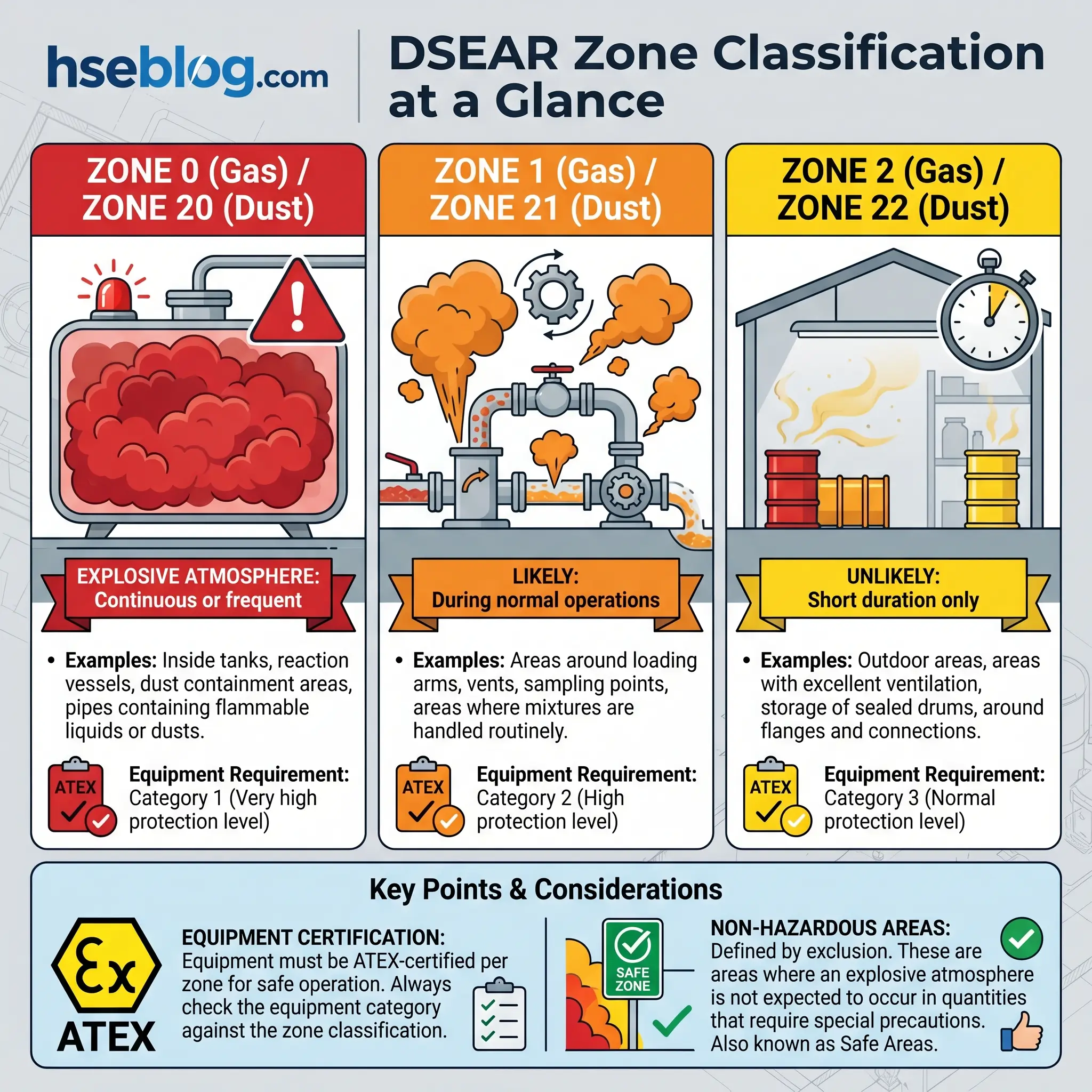
This is where compliance most frequently breaks down. Regulation 7 requires employers to classify areas of the workplace where explosive atmospheres may form into designated hazardous zones. For gas and vapour environments, the zones are:
- Zone 0: An explosive atmosphere is present continuously, or for long periods, or frequently. Typically the inside of tanks, vessels, or pipework containing flammable liquids or gases.
- Zone 1: An explosive atmosphere is likely to occur during normal operations. Areas around filling points, vents, sample points, and relief valves where vapour release is expected during routine work.
- Zone 2: An explosive atmosphere is not likely during normal operations, but if it does occur, it will persist only for a short period. Areas surrounding Zone 1, or locations where releases only happen during abnormal conditions such as gasket failures or spillage.
For combustible dust environments, the parallel classification applies:
- Zone 20: Explosive dust cloud present continuously or frequently. Inside dust processing equipment, hoppers, and silos.
- Zone 21: Explosive dust cloud likely during normal operations. Areas near dust discharge points, bag-filling stations, and open transfer points.
- Zone 22: Explosive dust cloud unlikely, but possible for short periods. Areas where dust accumulates on surfaces and could be disturbed into a cloud.
Equipment installed within each zone must carry appropriate ATEX certification for that zone classification. A standard light fitting acceptable in a non-hazardous area becomes an ignition source in Zone 2 if it isn't rated for that environment. Hazardous Area Classification (HAC) drawings must document the extent of each zone, and the classification should be carried out by a competent person using methodologies from IEC 60079-10-1 (gas atmospheres) and IEC 60079-10-2 (dust atmospheres).
Regulation 8: Emergency Procedures
Employers must prepare and maintain procedures for dealing with accidents, incidents, and emergencies involving dangerous substances. During a joint emergency drill at a blending facility, we discovered that the evacuation assembly point was directly downwind of the solvent tank farm — a positioning error that only became obvious when we ran the scenario with actual wind direction data.
Emergency procedures must address evacuation routes and assembly points, audible and visual warning systems, communication protocols with emergency services, first aid and medical provisions, and escape equipment where necessary. These procedures require regular testing through drills — not just desktop exercises. Documentation must be available for emergency services, identifying the types, quantities, and locations of dangerous substances on site. Procedures must be updated when circumstances change: new substances, new storage locations, changes to site layout, or lessons learned from drills and real incidents.
Regulation 9: Information, Instruction, and Training
Every person who may be affected by dangerous substances must receive sufficient information, instruction, and training. This includes permanent employees, temporary workers, agency staff, and contractors — a point that catches many sites where contractor induction programmes don't cover DSEAR-specific content.
Training must address the identity and hazards of dangerous substances present, the findings of the risk assessment, the control measures in place and how to use them correctly, emergency procedures and escape routes, and safe working practices for specific tasks. Training must be delivered before work begins and refreshed whenever circumstances change — new substances, modified processes, updated emergency procedures. The depth of training should be proportionate to the level of risk: a warehouse operative stacking aerosol cartons needs different content than a process technician managing a solvent blending vessel.
Regulation 10: Identification of Containers and Pipelines
Dangerous substances in containers and pipelines must be identifiable through proper labelling and signage. Warning signs must be posted at entry points to classified hazardous zones. Markings must comply with the CLP Regulation and the Health and Safety (Safety Signs and Signals) Regulations 1996. This regulation is straightforward in principle but frequently fails in practice — labels degrade in outdoor storage, temporary containers lack proper marking, and pipework identification fades or disappears after repainting.
Regulation 11: Duty of Co-ordination
Where two or more employers share a workplace — a common reality on multi-tenanted industrial estates, during contractor operations, or at construction sites with multiple trade contractors — there is a duty to co-ordinate DSEAR measures. One employer's control measures must not compromise another's safety arrangements.
The practical mechanism for demonstrating co-ordination is the Explosion Protection Document (EPD), which brings together the risk assessment findings, hazardous area classification, equipment lists, control measures, emergency procedures, and co-ordination arrangements into a single compliance package. Before any zoned area is used for the first time, overall explosion safety must be verified by a competent person. The EPD isn't explicitly required by name in the regulations, but L138 — the Approved Code of Practice — identifies it as the expected means of documenting compliance.
How to Conduct a DSEAR Risk Assessment
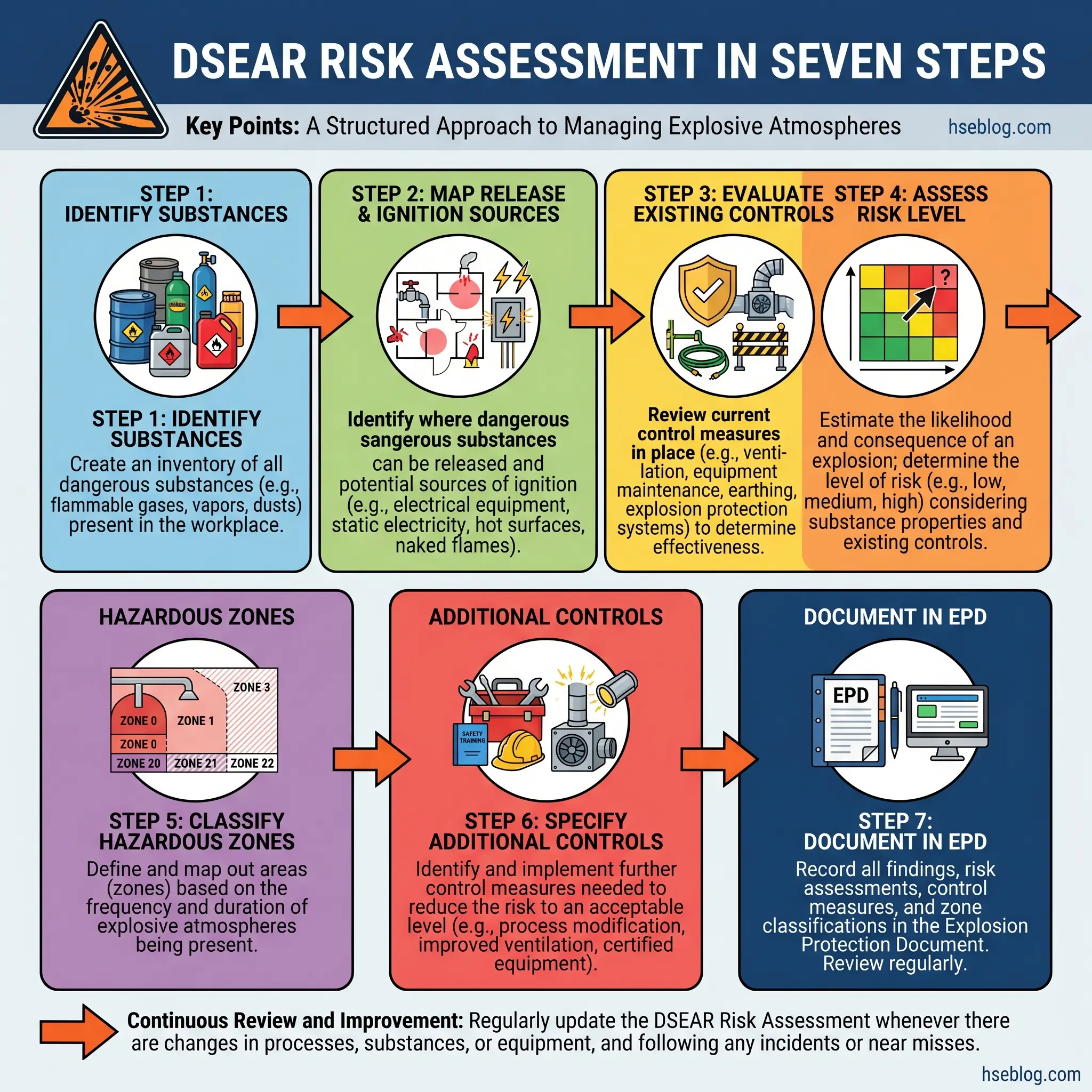
A colleague once described the difference between a good DSEAR risk assessment and a poor one in two words: "source identification." If you don't know what's releasing, where it's releasing, and under what conditions, everything downstream — from zone classification to control selection — is built on guesswork. The following steps outline what a competent DSEAR assessment looks like in practice, drawing on the methodology recommended by the HSE and detailed in the ACOP L138 guidance.
- Identify all dangerous substances present or liable to be present. This goes beyond the obvious bulk-stored materials. Include cleaning agents, maintenance chemicals, process by-products, and substances that may be generated during work activities — such as welding fumes or dust from cutting operations. Safety data sheets and CLP classifications are the primary identification tools.
- Identify potential sources of release and ignition. Map every point where a dangerous substance could escape its containment — flanges, valves, fill points, vents, transfer connections, damaged containers. Then map every potential ignition source — electrical equipment, hot surfaces, static discharge, mechanical sparks, open flames, and lightning.
- Evaluate existing control and mitigation measures. Document what's already in place: ventilation rates, extraction systems, gas detection, earthing and bonding arrangements, permit systems, and PPE. Assess whether each measure is adequate, properly maintained, and actually in use — not just documented.
- Assess the risk level considering likelihood and severity. Determine how likely an explosive atmosphere is to form and how likely it is to be ignited. Consider both normal operations and foreseeable abnormal conditions — maintenance activities, equipment failures, spillage scenarios. Severity assessment must account for the potential consequences: flash fire, explosion overpressure, projectile fragments, thermal radiation.
- Classify hazardous areas and document zones. The risk assessment and the Hazardous Area Classification are parallel exercises that inform each other. Zone boundaries should be drawn on site layout plans and must reflect actual release scenarios, ventilation conditions, and substance properties — not default template distances.
- Recommend additional controls where gaps are identified. Where residual risk remains unacceptable, specify additional engineering controls, procedural changes, or mitigation measures. Recommendations must be practical and actionable, with assigned responsibilities and target completion dates.
- Document findings and prepare the Explosion Protection Document. The EPD consolidates the risk assessment, HAC drawings, equipment schedules, control measures, emergency procedures, and maintenance requirements into one reference document. It must be kept current and accessible.
The assessment must be carried out by a competent person with appropriate knowledge and experience of the substances, processes, and applicable standards. Existing process safety assessments — HAZOP, HAZID, bow-tie analyses — may partially satisfy DSEAR requirements, but they rarely cover hazardous area classification in sufficient detail.
Field Test: Pull out your current DSEAR assessment and check one thing: does it include a Hazardous Area Classification with zone drawings? If it contains only a written risk rating matrix without mapped zone extents, it doesn't meet Regulation 7.
How DSEAR Relates to ATEX, COSHH, and COMAH
The regulatory landscape around dangerous substances in the UK involves several overlapping frameworks, and confusing them leads to either duplicated effort or — more dangerously — gaps in compliance. Three relationships cause the most confusion, and each deserves clear differentiation.
DSEAR and ATEX operate as two halves of a single system. DSEAR is the UK's implementation of the ATEX Workplace Directive (99/92/EC) — it requires employers to assess risks, classify hazardous zones, and implement controls. The Equipment and Protective Systems Intended for Use in Potentially Explosive Atmospheres Regulations 2016 (EPS Regulations) implement the ATEX equipment directive — they govern what equipment manufacturers must certify for use in those zones. In short, DSEAR defines where the hazardous zones are; ATEX ensures the equipment placed within them won't become an ignition source. They are complementary, not alternative. A site can't claim ATEX compliance without first having a DSEAR-compliant hazardous area classification, and zone classification is meaningless without ATEX-certified equipment installed to match.
DSEAR and COSHH address the same substances through entirely different risk lenses. DSEAR manages safety risks — fire, explosion, energetic release, corrosive attack on containment. COSHH manages health risks — inhalation toxicity, skin absorption, sensitisation, carcinogenicity. A single drum of xylene in a mixing area requires a DSEAR assessment for its flash point and vapour flammability and a COSHH assessment for its occupational exposure limit and chronic health effects. Neither regulation substitutes for the other. I've reviewed facilities where the COSHH assessment was thorough but the DSEAR assessment didn't exist — and vice versa.
DSEAR and COMAH overlap when dangerous substances are stored above threshold quantities. The Control of Major Accident Hazards Regulations 2015 (COMAH) applies an additional layer of requirements to sites classified as upper-tier or lower-tier major accident hazard establishments. COMAH requires a Major Accident Prevention Policy and, for upper-tier sites, a full Safety Report. DSEAR duties still apply in full at COMAH sites — COMAH doesn't replace DSEAR but adds to it.
Post-Brexit, UK regulations continue to mirror the original EU directive frameworks. Businesses with operations in both jurisdictions should be aware that while the technical requirements are currently aligned, future divergence remains possible.
Audit Point: When reviewing a site's regulatory compliance file, check whether DSEAR, COSHH, and (where applicable) COMAH assessments are cross-referenced. If the DSEAR assessment doesn't acknowledge the substances also covered under COSHH, and vice versa, the assessments were likely produced in isolation — a common sign of fragmented compliance.
Penalties for DSEAR Non-Compliance
The HSE's enforcement data for 2024/25 recorded 124 worker fatalities and an estimated 680,000 self-reported non-fatal injuries across UK workplaces, with 40.1 million working days lost at an estimated cost of £22.9 billion. Fire and explosion incidents involving dangerous substances contribute to these figures, and the HSE treats DSEAR breaches with corresponding seriousness.
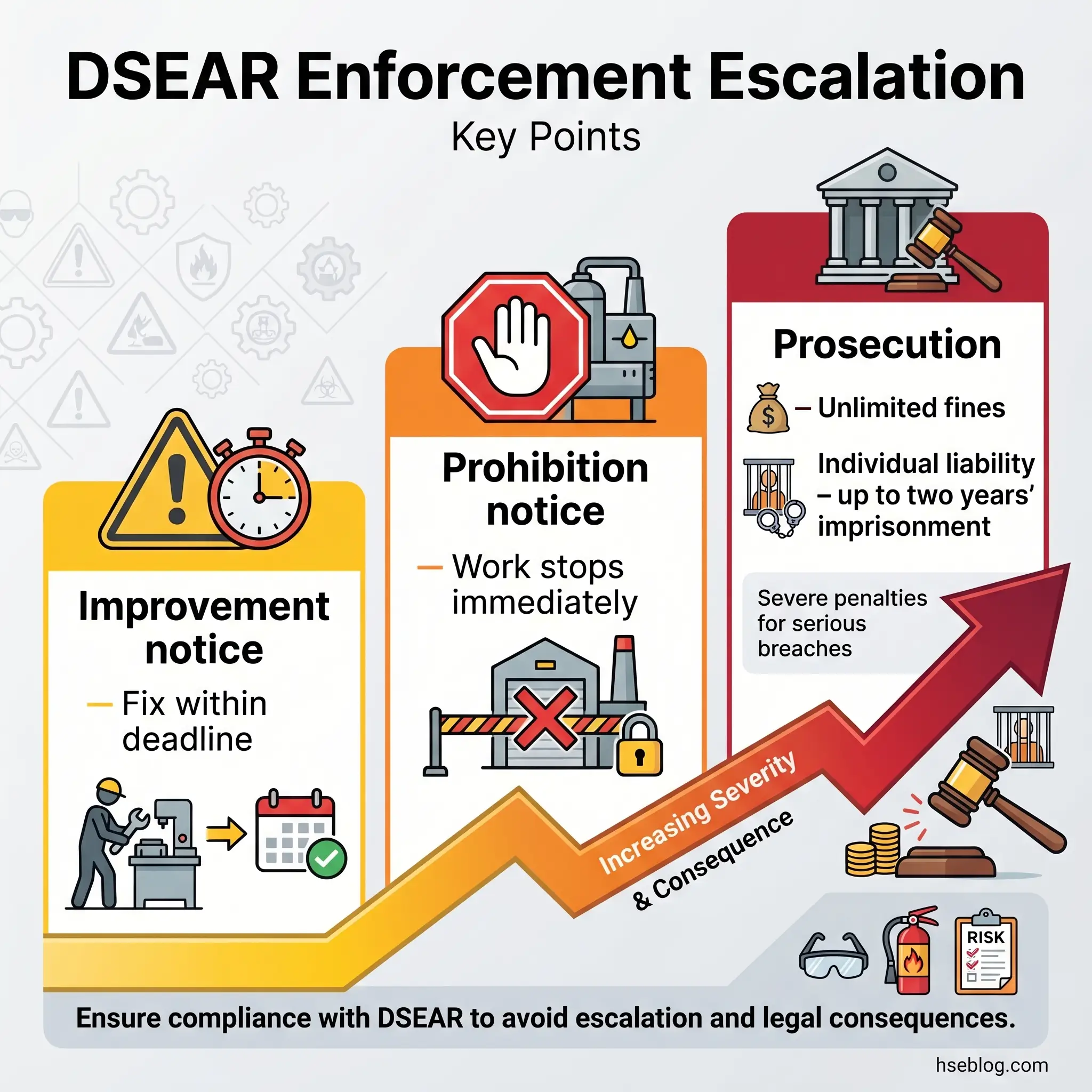
Enforcement follows a graduated framework. An improvement notice requires the employer to remedy a breach within a specified timeframe. A prohibition notice — the one that concentrates minds — stops the activity immediately until compliance is achieved. No appeal suspends a prohibition notice; the work stops until the HSE is satisfied. Prosecution follows for serious or persistent breaches, and DSEAR offences are criminal matters under the Health and Safety at Work Act 1974.
In the Crown Court, fines for DSEAR breaches are unlimited. Individuals — directors, managers, or any person whose consent or connivance contributed to the offence — face imprisonment of up to two years. Between 2020 and 2021, approximately 11,916 fires occurred in non-residential buildings and an estimated 270 gas explosions were reported in workplaces, underscoring the scale of risk that drives enforcement intensity.
Beyond criminal penalties, DSEAR non-compliance carries insurance implications. Several major insurers now require documented evidence of DSEAR compliance — risk assessments, HAC drawings, EPDs — before underwriting fire and explosion coverage. A serious incident at an uncompliant site can void coverage entirely, leaving the employer exposed to civil claims on top of criminal prosecution.
Common DSEAR Compliance Mistakes Employers Make
The most frequent failure isn't a failure of control implementation — it's a failure of recognition. Employers across hospitality, warehousing, food manufacturing, and light industry routinely don't realise DSEAR applies to their operations. That blind spot means no risk assessment is conducted, no zones are classified, and no controls are evaluated until an HSE inspector or insurer asks the question.
Even among employers who acknowledge DSEAR applicability, several recurring errors undermine compliance. Conducting risk assessments without including a Hazardous Area Classification is the most common Regulation 7 breach — assessors produce a risk matrix and control schedule but omit zone drawings entirely, leaving the most technically demanding element of DSEAR unaddressed.
Generic assessment templates present another problem. A DSEAR assessment downloaded from a template library and populated with site-specific substance names, but without site-specific evaluation of release sources, ventilation rates, and ignition source mapping, doesn't satisfy the "suitable and sufficient" standard. During an assessment review at a chemical distribution warehouse, I found the template still contained default zone extents from the provider's example site — distances that bore no relationship to the actual warehouse layout or the substances stored there.
Failure to review assessments after change is endemic. New substances introduced to a process line, modifications to ventilation systems, changes in storage quantities or configurations — any of these should trigger a reassessment. Assessments frozen at the date of original completion lose validity incrementally with every unreviewed change.
Non-routine activities are a persistent blind spot. Maintenance shutdowns, vessel cleaning, equipment changeovers, and abnormal operations often involve higher-risk activities than normal production — opening flanges, breaking containment, using hot work in areas normally classified as Zone 2. If the DSEAR assessment only addresses steady-state operations, it misses the conditions most likely to generate an incident.
Finally, combustible dusts remain underestimated. Employers handling organic powders, food ingredients, wood dust, metal fines, or pharmaceutical intermediates frequently assess flammable liquid and gas risks but overlook the dust explosion hazard — despite dust explosions historically producing some of the most destructive industrial incidents on record.
Frequently Asked Questions
What does DSEAR stand for?
DSEAR stands for the Dangerous Substances and Explosive Atmospheres Regulations 2002. It is the primary UK legislation requiring employers to control risks from fire, explosion, and corrosion caused by dangerous substances in the workplace.
Does DSEAR apply to my workplace?
If three conditions are met — you are an employer or self-employed person, a dangerous substance is present or could be present, and that substance creates a safety risk from fire, explosion, or corrosive attack on metals — then DSEAR applies. This isn't limited to chemical plants or refineries. Offices with gas boilers, warehouses storing aerosols, food factories handling flour, and workshops using spray paint are all within scope. The threshold is the presence of the substance, not the size or sector of the operation.
What is the difference between DSEAR and COSHH?
DSEAR governs safety risks — the potential for fire, explosion, or corrosive damage to containment structures. COSHH governs health risks — toxic inhalation, skin contact, chronic exposure effects. The same substance frequently falls under both regulations. A solvent like methanol requires a DSEAR assessment for its flammability and vapour explosion potential, and a separate COSHH assessment for its toxicity and occupational exposure limit. Compliance with one does not discharge the duty under the other.
What are DSEAR zones?
Zones are classified areas where explosive atmospheres may form. Gas and vapour environments use Zone 0 (explosive atmosphere present continuously or frequently), Zone 1 (likely during normal operations), and Zone 2 (unlikely, or only for short periods). Dust environments use the parallel Zone 20, 21, and 22 classifications. Equipment used within each zone must be ATEX-certified for that specific zone rating, and zone extents must be documented on site layout drawings.
How often should a DSEAR assessment be reviewed?
The HSE recommends a review cycle of three to five years as a minimum baseline. However, reassessment must occur immediately after any significant process change, introduction of new dangerous substances, modification of storage or handling arrangements, incidents or near-misses involving dangerous substances, or changes to relevant standards and guidance. An assessment that hasn't been reviewed since its original completion is unlikely to reflect current site conditions accurately.
What are the penalties for not complying with DSEAR?
The HSE can issue improvement notices requiring compliance within a set timeframe, prohibition notices that halt operations immediately, and prosecute under the Health and Safety at Work Act 1974. Fines in the Crown Court are unlimited. Individuals — including company directors and managers — can face imprisonment of up to two years. Insurance coverage may also be affected, as several insurers now require documented DSEAR compliance evidence before covering fire and explosion risks.
Every regulation reviewed in this article points back to the same operational question: do you know exactly where explosive atmospheres can form in your workplace, and is every piece of equipment in those areas certified to operate safely within them? That question — not the paperwork, not the assessment template, not the filing system — is the core of DSEAR compliance.
The employers who get DSEAR right treat it as an engineering and operational discipline, not an administrative exercise. They invest in competent hazardous area classification, maintain their zone drawings as living documents, and build DSEAR review triggers into their management of change processes. The employers who get it wrong treat the regulations as a one-time checkbox, file a generic assessment, and move on — until an incident, an inspection, or an insurance query exposes the gap.
Here is the challenge worth sitting with: walk through your facility tomorrow and count the sources of ignition within ten metres of every point where a flammable substance could be released. If you can't identify them, neither can your risk assessment. And if your risk assessment can't identify them, Regulation 5 isn't satisfied — regardless of what's written in the file.