
TL;DR
- Match self-rescuer duration to egress distance — a 30-minute SCSR is useless when the working face sits 5 km from the portal. Recalculate every time the tunnel advances.
- Staff a rescue team that has actually trained in your tunnel — listing a local fire department’s phone number does not satisfy OSHA 29 CFR 1926.800(g)(5) (US) unless the department has verified capability, site-specific familiarity, and equipment matched to your tunnel length.
- Treat the ERP as a living document — a plan written at mobilization becomes dangerously inaccurate as the tunnel face advances. Build revision trigger points tied to distance milestones, geological changes, and gassy classification upgrades.
- Install redundant communication systems — the single leaky-feeder line that works for daily shift handovers will fail under the conditions (power loss, ventilation shutdown, smoke) that define an actual emergency.
- Drill at actual tunnel length — an evacuation exercise staged at the portal when the working face is 3 km away tests mobilization, not rescue.
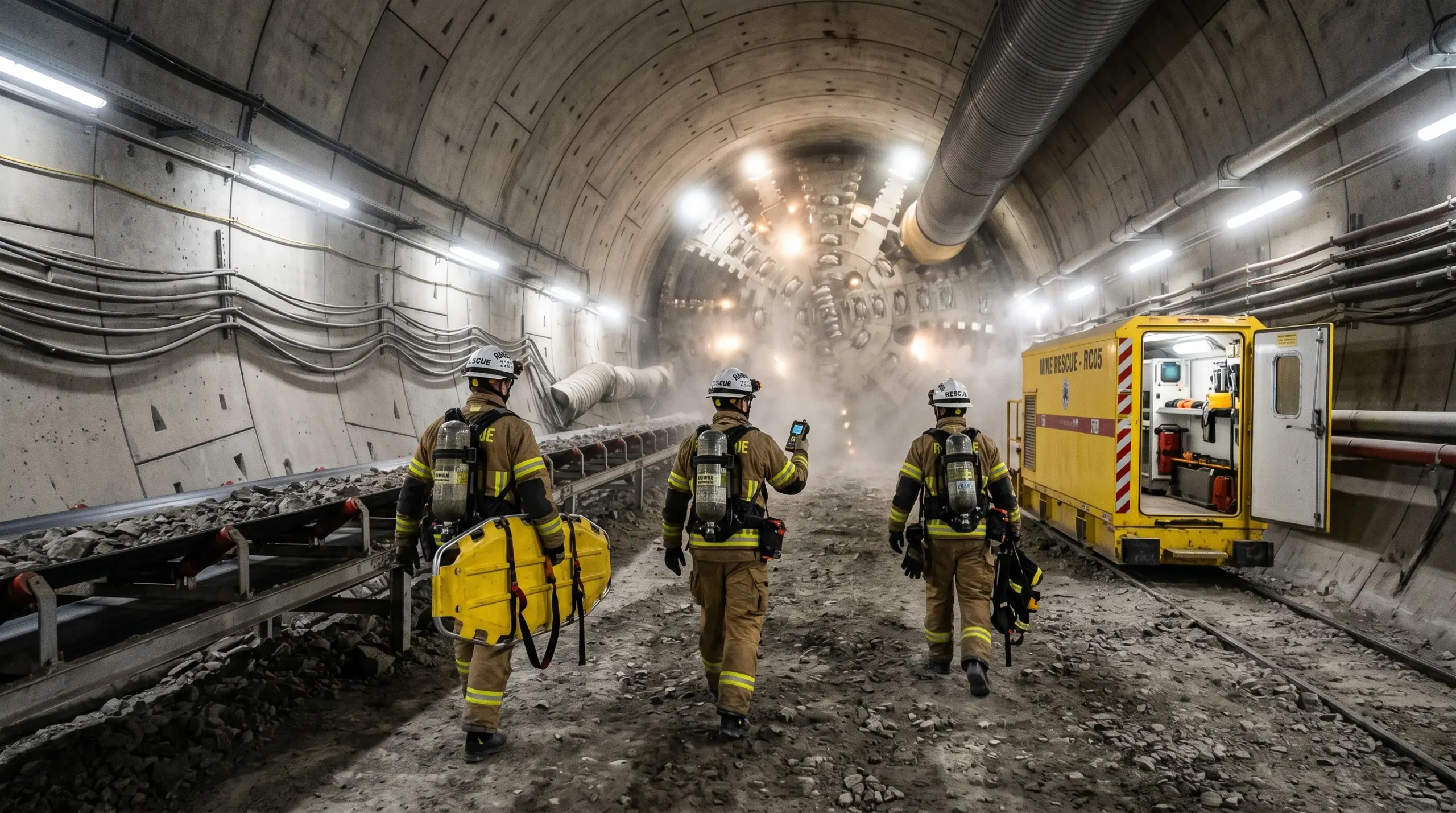
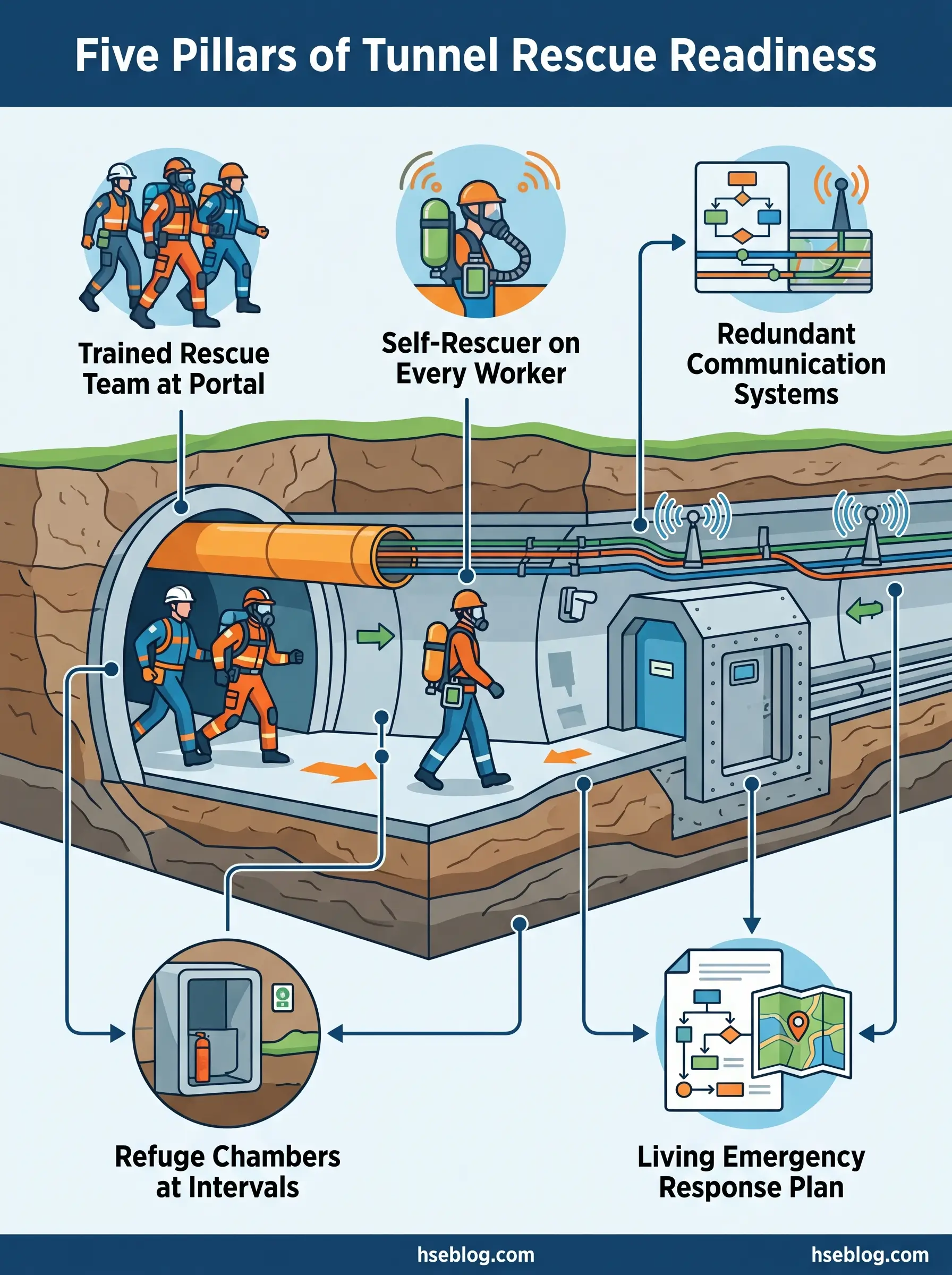
Emergency rescue in tunnel construction requires pre-positioned rescue teams, self-contained self-rescuers for every underground worker, refuge chambers at calculated intervals, redundant communication systems, and a continuously updated emergency response plan. Regulatory frameworks including OSHA 29 CFR 1926.800 (US), BS 6164:2019 (UK), and EU Directive 2004/54/EC establish minimum requirements for rescue team composition, equipment, training, and response capability during all construction phases.
In July 2025, 31 workers were trapped approximately 400 feet underground and 5–6 miles from the only access point when a partial collapse struck the Los Angeles Effluent Outfall Tunnel. All 31 were rescued without serious injury — workers climbed over debris and were transported out by tunnel vehicle — but the incident exposed a reality that separates tunnel construction rescue from every other emergency response discipline: the distance between the working face and the nearest exit can be measured in miles, not meters, and that distance changes every day the tunnel boring machine advances.
That single variable — evolving egress distance — drives everything covered in this article. It determines self-rescuer duration requirements, rescue team travel time, refuge chamber spacing, communication system reach, and the shelf life of every emergency response plan. In 2023, 1,075 fatal work injuries occurred in private construction in the United States alone (US Bureau of Labor Statistics, 2024), the highest of any industry sector. Tunnel construction concentrates several of the deadliest hazard categories — collapse, fire, atmospheric contamination, flooding — into a confined, elongated geometry where conventional surface rescue assumptions collapse alongside the ground.
What Is Emergency Rescue in Tunnel Construction and Why Does It Require Specialized Planning?
Tunnel construction rescue is a distinct discipline — separate from both operational tunnel emergency response and general confined space rescue — because the environment it operates in is fundamentally unstable and constantly changing. The tunnel’s geometry, ventilation capacity, egress distance, and ground conditions all evolve as construction progresses, making every rescue plan a snapshot that ages with each meter of advance.
Three features set it apart from operational tunnel emergencies (post-completion) and surface confined space rescue:
- Single egress point before breakthrough — until a tunnel connects to its destination, every worker underground shares one way out. Operational tunnels have multiple egress points and cross-passages; construction-phase tunnels typically do not.
- Temporary and incomplete ventilation — construction ventilation is ducted, mechanically supplied, and extends only as far as the ductwork reaches. It lacks the fixed, permanent, and redundant ventilation architecture of a completed tunnel.
- Constantly increasing ingress distance for rescue teams — a rescue team that could reach the working face in 15 minutes when the tunnel was 500 m long may need over an hour when it reaches 4 km.
Regulatory consensus across OSHA (US), BS 6164:2019 (UK), and EU Directive 2004/54/EC is clear on one point: rescue planning must begin before construction commences and must adapt throughout the project lifecycle.
A consistent failure pattern across published incident investigations is treating the rescue plan as a static document. The plan written at mobilization specifies evacuation routes, self-rescuer durations, and rescue team response times calibrated to a tunnel that is 200 m long. Eighteen months later, the working face is 5 km from the portal. The LA Effluent Outfall Tunnel collapse in July 2025 illustrated this starkly — workers were 5–6 miles from the only access point, a fundamentally different rescue scenario than conditions at the project’s start.
Key Hazards That Trigger Emergency Rescue During Tunnel Construction
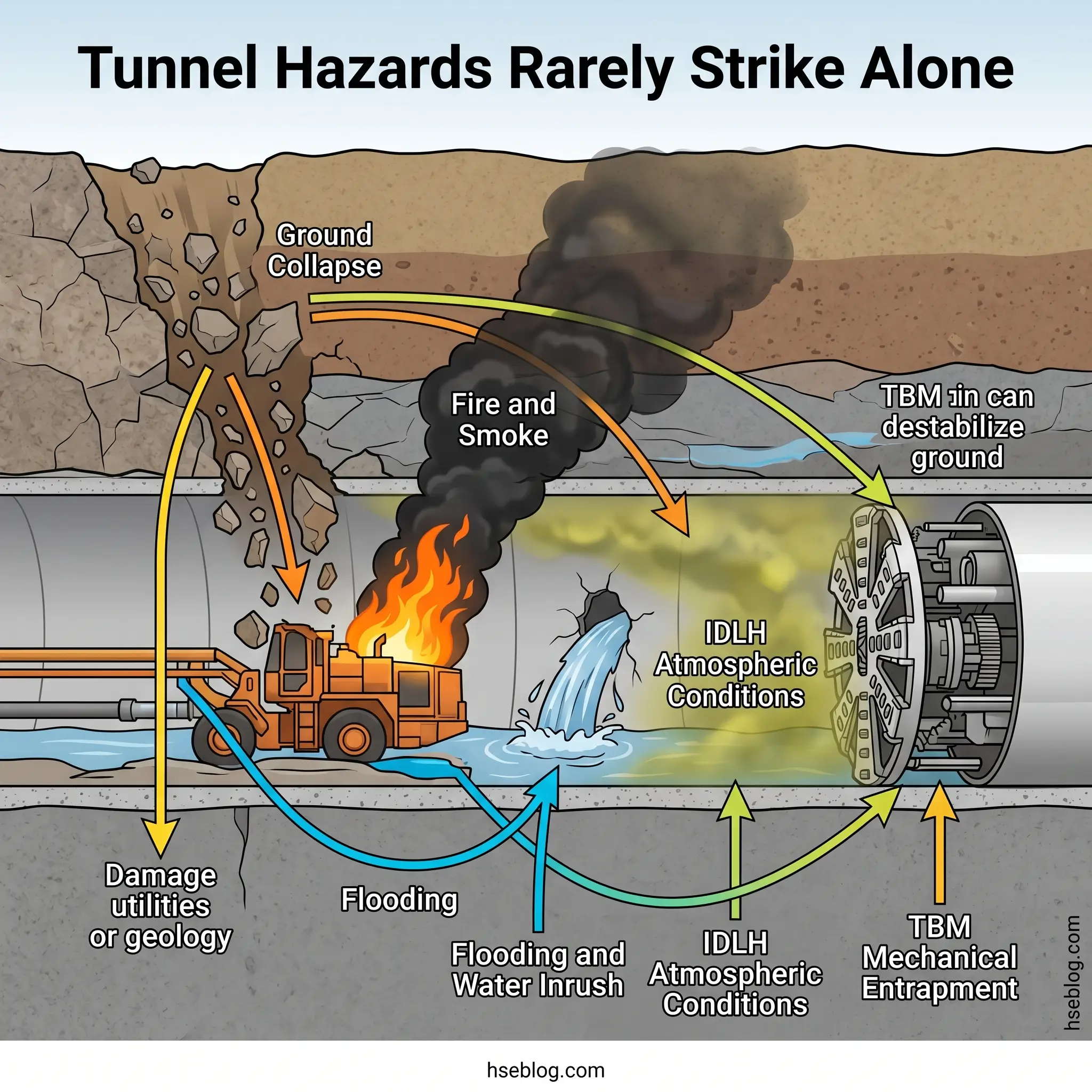
Every rescue scenario in tunnel construction begins with a hazard event, but the critical planning insight is that these hazards rarely present in isolation — a collapse may sever ventilation ducting, creating simultaneous structural entrapment and atmospheric contamination. Rescue planning must address compound scenarios.
Ground Collapse and Cave-In
Structural failure of unsupported or inadequately supported ground is the most immediately visible trigger. It creates physical entrapment, blocks egress routes, and may damage ventilation and communication infrastructure simultaneously.
Fire
Fire warrants dedicated attention because published research — including the PIARC tunnel fire studies and the Björnböle tunnel fire case in Sweden — consistently identifies fire during construction as the scenario most likely to overwhelm self-rescue capacity. Construction-phase fires are especially dangerous for three reasons:
- Temporary ventilation cannot manage smoke — ducted systems are not designed for smoke extraction, and shutting ventilation down to starve the fire traps smoke at the working face.
- Escape routes are long and unidirectional — workers must move through, not away from, the smoke layer.
- Fire loads are concentrated — hydraulic oil in TBM systems, conveyor belt material, diesel equipment, and timber support structures can produce rapid heat release rates.
Flooding and Water Inrush
Groundwater breach or surface water penetration can fill tunnel sections faster than pumping systems can respond. The India Srisailam tunnel collapse in February 2025 demonstrated how water ingress compounds rescue difficulty — 8 workers were trapped after a ceiling cave-in, and rescue was hampered by flooding and debris that prevented contact for over 100 hours.
Atmospheric Hazards
Methane accumulation in gassy operations, oxygen depletion from biological or chemical processes, toxic gas release from geological strata, and silica dust in drill-and-blast operations all create IDLH conditions that demand breathing apparatus for both self-rescue and team rescue. Between 2011 and 2018, approximately 1,030 workers died in confined spaces in the US, averaging roughly 129 fatalities per year (Bureau of Labor Statistics, 2020) — a figure that includes the type of IDLH atmosphere incidents tunnel rescue teams must be prepared for.
TBM-Specific and Mechanical Emergencies
Cutter-head entrapment, hyperbaric intervention chamber incidents, and electrical or mechanical entrapment present rescue scenarios unique to mechanized tunnelling that general confined space rescue teams are not equipped to handle without specialized training.
Regulatory Requirements for Rescue Teams in Tunnel Construction
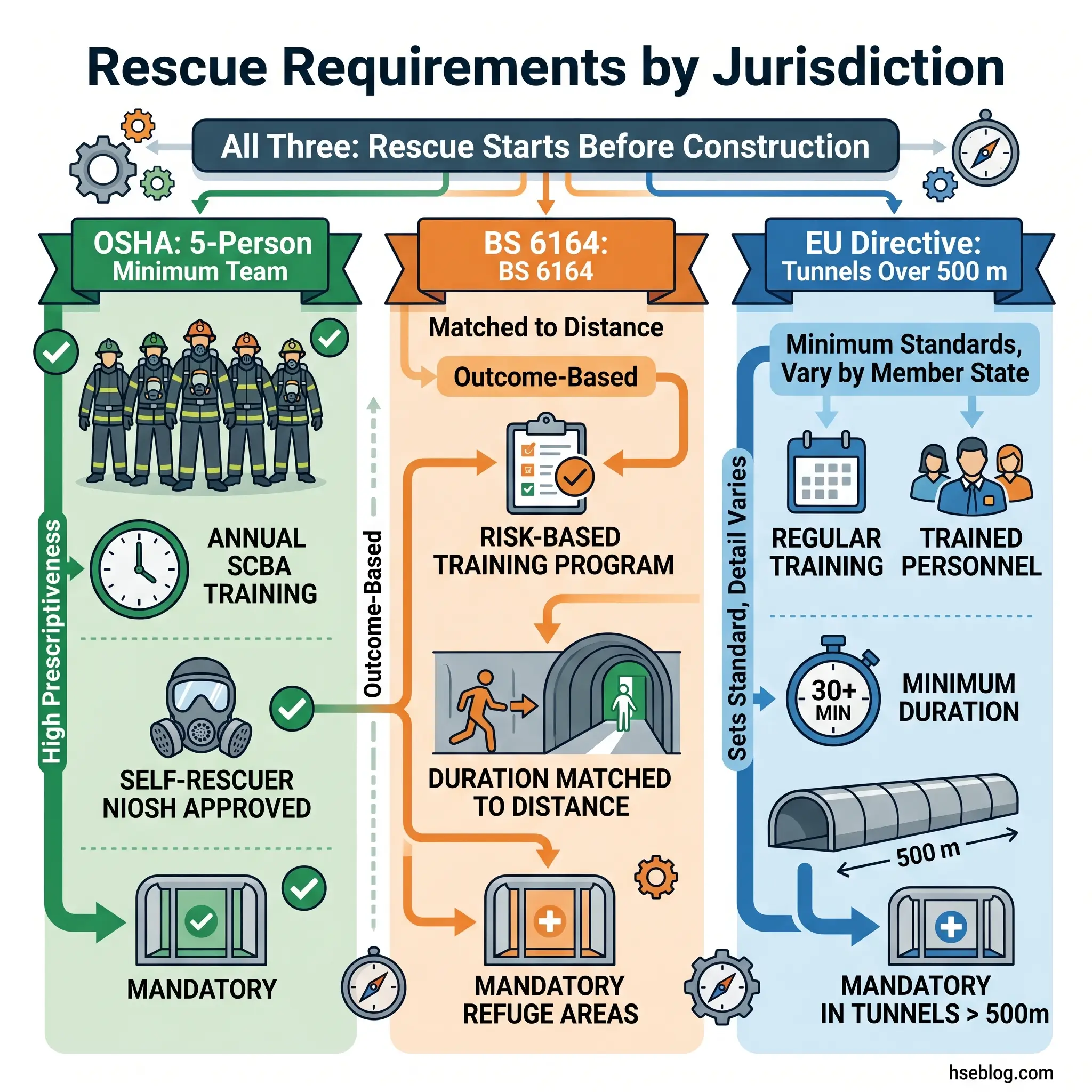
The legal obligation to provide a competent rescue team during tunnel construction is explicit across all three major jurisdictions — but the practical interpretation of “competent” is where most compliance failures occur. Listing a phone number on the emergency plan does not satisfy any of these requirements.
OSHA 29 CFR 1926.800 — United States
OSHA’s underground construction standard sets the most prescriptive rescue team requirements:
- Team composition — a minimum 5-person rescue team available on-site for projects with 25 or more underground workers. For smaller sites, the team must be within 30 minutes of travel time (1926.800(g)(5), US).
- Qualification — rescue team members’ qualifications must be reviewed annually. In gassy operations classified under 1926.800(h) (US), team members must practice SCBA donning monthly.
- Site familiarity — the rescue team must be familiar with actual jobsite conditions, not just the theoretical layout from the construction drawings.
A critical 1991 OSHA interpretation letter confirms that rescue team availability is required during all phases of underground tunnel construction — not only during primary structural work. This interpretation closes the gap that some contractors exploit by reducing rescue capacity during finishing or mechanical/electrical installation phases.
BS 6164:2019 — United Kingdom
BS 6164:2019 is a comprehensive code of practice covering emergency response planning, rescue team competency, and refuge chamber guidance aligned with ITA recommendations. It ties self-rescuer duration to egress distance — a more operationally specific approach than OSHA’s performance-based requirement.
The standard also functions as the default reference for the International Tunnelling Insurance Group, giving it practical reach well beyond the UK.
EU Directive 2004/54/EC
EU Directive 2004/54/EC establishes minimum safety requirements for tunnels over 500 m in the Trans-European Road Network, including those under construction or at design stage. It requires administrative authority oversight, emergency service coordination, and structural fire resistance provisions.
NFPA 1670 / NFPA 2500 and NFPA 1006
NFPA 1670 (consolidated into NFPA 2500 in 2022, US) defines three organizational capability levels for tunnel and mine rescue response — Awareness, Operations, and Technician. NFPA 1006 (US) specifies individual technician-level competencies. Together, they provide the framework for determining whether a responding organization actually has the capability to execute a tunnel rescue, not just the willingness.
| Requirement | OSHA 29 CFR 1926.800 (US) | BS 6164:2019 (UK) | EU Directive 2004/54/EC |
|---|---|---|---|
| Rescue team on-site threshold | 25+ workers underground | Risk-assessment driven | Tunnels over 500 m in TERN |
| Minimum team size | 5 persons | Not numerically specified | Not numerically specified |
| SCBA practice frequency | Monthly (gassy operations) | Per competency framework | Not specified |
| Self-rescuer duration basis | NIOSH-approved, duration per hazard assessment | Matched to egress distance | Not specified at equipment level |
| Refuge chamber requirement | Not explicitly mandated | References ITA guidelines | Not specified for construction phase |
The most common compliance gap is the “paper rescue team.” An employer names a local fire department as the designated rescue team, but never verifies whether that department has trained in confined underground environments, owns long-duration breathing apparatus, can respond within the time window matched to the tunnel’s current length, or has ever entered the specific tunnel. OSHA’s Appendix F to 29 CFR 1910.146 (US) is explicit: simply posting a phone number does not constitute compliance.
Emergency Response Plan: Components Specific to Tunnel Construction
A tunnel construction ERP that reads like a generic construction emergency plan will fail the first time it is tested under real conditions. The components below are specific to underground construction and must be treated as a living system revised as the tunnel advances.
- Check-in/check-out personnel accounting — OSHA 29 CFR 1926.800(c) (US) requires the employer to maintain an accurate count of every person underground at all times. This is not a sign-in sheet at the portal gate — it is a real-time accounting system that must survive the conditions (power loss, communication failure) that define an emergency.
- Designated surface coordinator — at least one person on the surface, at all times workers are underground, whose sole responsibility during an emergency is coordinating the response. This role must be occupied, not merely assigned.
- Evacuation routes with distance-to-egress calculations — updated as the tunnel face advances. A route that takes 10 minutes at 500 m becomes a 45-minute ordeal at 5 km. If that 45 minutes exceeds the rated duration of the issued self-rescuers, the evacuation plan has a fatal gap.
- Communication systems on independent power — OSHA 29 CFR 1926.800 (US) requires communication systems powered independently of the main tunnel power supply. Redundancy requirements are addressed in the Communication Systems section below.
- Alarm and notification protocols — including stench gas systems for ventilation-dependent alerting in areas beyond audible alarm range. The alarm must reach the furthest occupied workstation, not just the portal.
- External emergency service coordination — pre-planning with the local fire brigade, including joint exercises conducted inside the actual tunnel, not on a whiteboard at the station.
- Trigger points for plan revision — the ERP must specify the milestones that force a formal review and update. These include distance milestones (e.g., every 500 m of advance), geological condition changes, gassy classification upgrades under 1926.800(h) (US), and any incident or near-miss that reveals a plan deficiency.
The recurring failure mode across published incident analyses is an ERP that specifies what to do but not when it needs to change. The plan’s assumptions about response time, self-rescuer duration, and rescue team travel time become inaccurate as the tunnel grows — but nobody recalculates.
Self-Rescue Equipment: Self-Rescuers, Breathing Apparatus, and Emergency Lighting
The first line of defense in a tunnel emergency is not the rescue team — it is the individual worker’s ability to escape under their own power using personal emergency equipment. OSHA 29 CFR 1926.800(g)(2) (US) requires NIOSH-approved self-rescuers to be immediately available at all underground workstations where workers might be trapped by smoke or gas.
Self-Rescuer Types
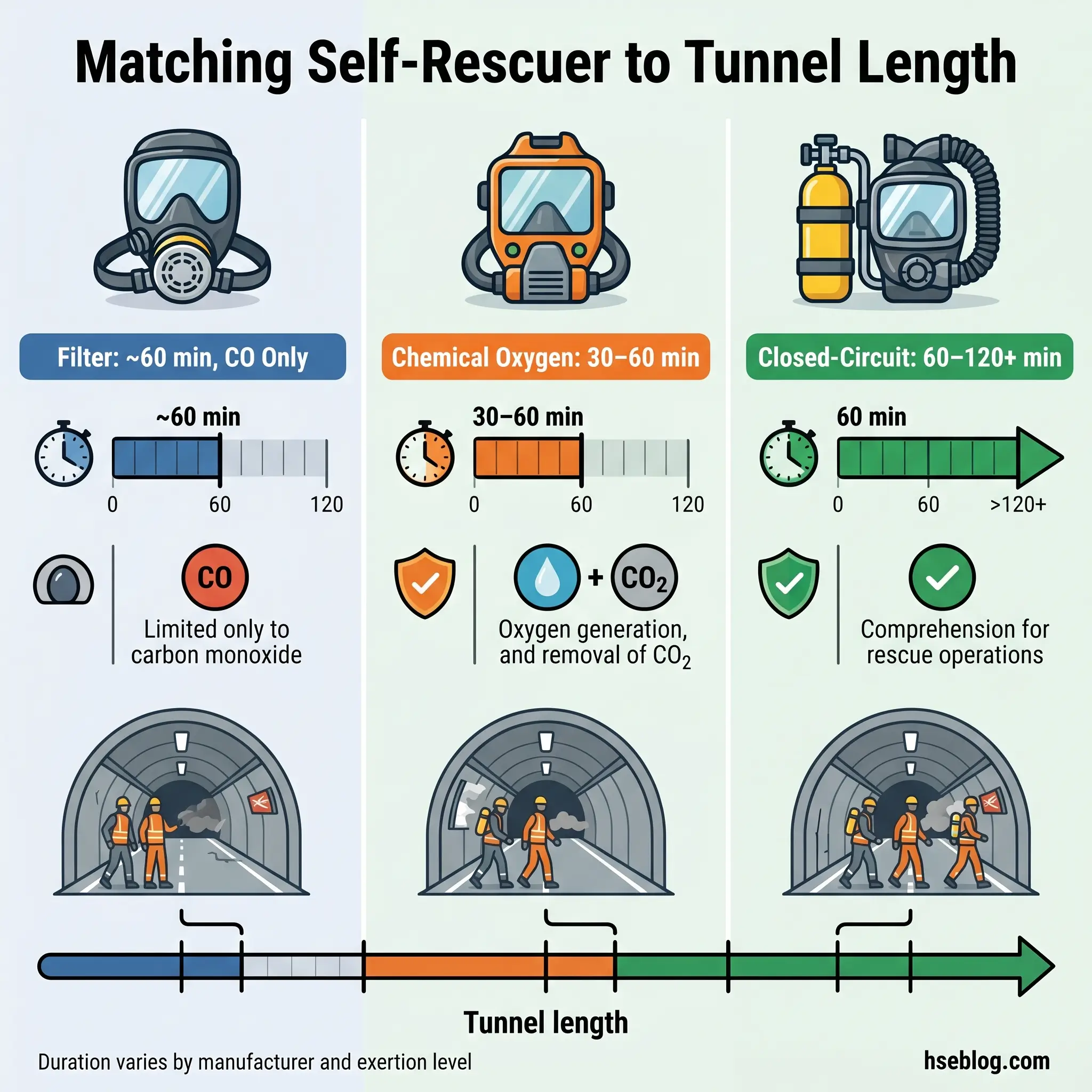
Self-contained self-rescuers (SCSRs) fall into three categories, each with different protection profiles:
| Type | Duration | Protection Scope | Weight | Best Application |
|---|---|---|---|---|
| Filter self-rescuer (FSR) | ~60 minutes | CO only — does not supply oxygen | Lightest | Short tunnels, CO-only risk |
| Chemical oxygen SCSR (KO₂-based) | 30–60 minutes | Generates oxygen, absorbs CO₂ | Moderate | Medium-length tunnels |
| Compressed oxygen closed-circuit | 60–120+ minutes | Full oxygen supply, independent of atmosphere | Heaviest | Long tunnels, IDLH environments |
The Duration-Distance Problem
OSHA mandates NIOSH-approved self-rescuers without specifying a minimum rated duration — leaving the duration determination to the employer’s hazard assessment. BS 6164:2019 (UK) ties duration explicitly to egress distance. The ITA and tunnelling industry consensus is that SCSR rated duration must exceed the maximum credible egress time from the furthest workstation to the nearest safe haven — portal or refuge chamber.
This creates a moving target. A 30-minute chemical oxygen SCSR may be adequate when the tunnel is 1 km long. When the face advances to 5 km, that same device falls short unless refuge chambers are positioned to break the egress distance into survivable segments.
Emergency Lighting
Each underground worker must carry a portable hand lamp or cap lamp for emergency escape (OSHA 29 CFR 1926.800(g)(4), US). In a power failure coinciding with smoke, this lamp is the only navigation aid between the worker and the portal.
Rescue Team Apparatus
Rescue team members require longer-duration closed-circuit breathing apparatus than the SCSRs issued to the general workforce. At extended ingress distances — the LA tunnel collapse involved a 5–6 mile approach — rescue team SCBA duration becomes the limiting factor on whether rescue can physically reach the incident site.
A practical tension exists between SCSR weight and worker compliance. Projects that issue belt-worn SCSRs consistently see higher carry rates than those relying on fixed stations. The reasoning is straightforward: in an emergency, workers move away from the hazard source, and the fixed station may be located precisely where they are fleeing from.
Refuge Chambers and Safe Havens in Tunnel Construction
Refuge chambers are the second line of defense when self-rescue evacuation is not possible — they buy time for rescue, but they do not replace rescue. Their purpose is to provide breathable air, physical protection, and communication capability for workers who cannot reach the portal.
Functional Requirements
ITA guidelines, referenced in BS 6164:2019 (UK), establish the baseline specifications:
- Breathable air duration — typically 24 hours minimum, maintained by compressed air supply and CO₂ scrubbing systems
- Atmospheric monitoring — internal gas detection for CO, CO₂, and oxygen levels
- Communication — hardwired or through-the-earth link to the surface, independent of the tunnel’s primary communication system
- Environmental control — cooling capacity to manage heat generated by occupants in a sealed space
Configuration Types
Refuge chambers in tunnel construction take several forms depending on the tunnelling method and project phase:
- TBM-mounted chambers — positioned at the rear of the tunnel boring machine, moving with the machine as it advances. These address the highest-risk zone — the working face — but their capacity is limited by the TBM gantry dimensions.
- Rail-mounted or MSV-mounted chambers — positioned at fixed intervals behind the TBM and repositioned as the tunnel advances. These cover the mid-tunnel gap between the TBM and the portal.
- Self-propelled rescue vehicles — units such as the MineARC TunnelSAFE or Dräger Mine Rescue Vehicle that can travel through the tunnel to reach stranded workers. These combine refuge chamber protection with mobility.
The Spacing Decision
The critical design judgment is placement interval. Chambers positioned too far apart relative to tunnel length create dead zones — stretches where a worker cannot reach either the portal or the nearest chamber within their SCSR duration.
This spacing calculation must be revisited every time the tunnel advances. A chamber interval that was adequate at 2 km may create a survivability gap at 4 km if no additional chambers have been deployed. The calculation inputs are straightforward — maximum egress distance divided by walking speed under emergency conditions (typically 1.5–2.5 km/h with SCSR donned, accounting for reduced visibility and potential obstacles) — but the discipline of recalculating is where projects fail.
No single global mandate requires refuge chambers in all tunnel construction. OSHA (US) does not explicitly mandate chambers but requires self-rescuers and rescue teams. BS 6164:2019 (UK) references ITA guidelines recommending them. Practical risk assessment on longer tunnels increasingly makes chambers a de facto requirement — the alternative is issuing every worker a 2-hour closed-circuit breathing apparatus, which introduces its own weight, training, and compliance problems.
How Are Tunnel Construction Rescue Operations Conducted?
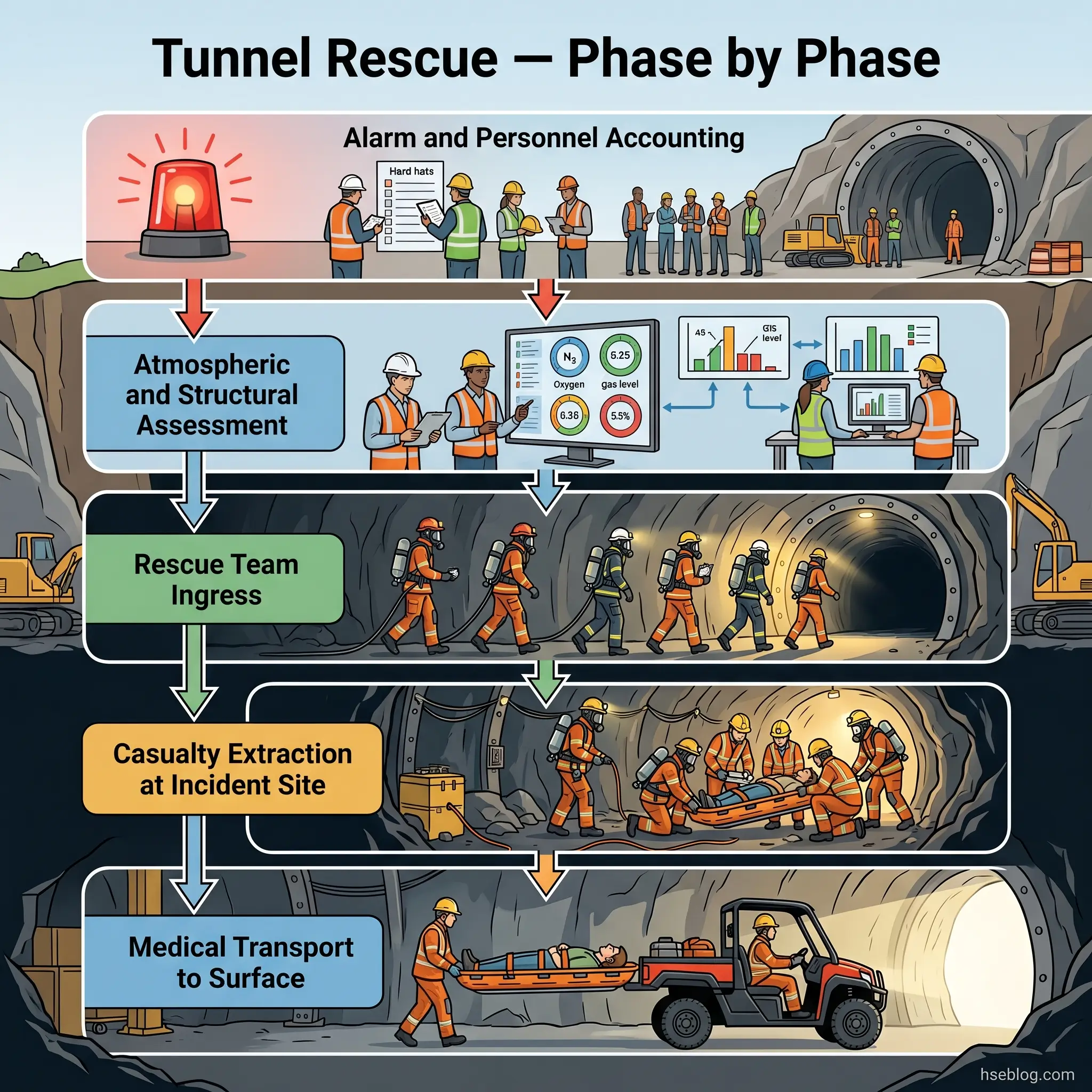
Tunnel rescue operations follow a broadly consistent sequence, but the defining characteristic that separates them from surface rescue is time scale — every phase takes longer underground, and the margin for error is narrower because the environment actively degrades during the response.
Alarm and Personnel Accounting
The sequence begins with initial alert — alarm activation, stench gas deployment if applicable, and immediate personnel accounting through the check-in/check-out system. The first question the surface coordinator must answer is: how many people are underground, and where were they last recorded? An inaccurate count leads either to unnecessary risk (rescue teams searching for workers who are already out) or catastrophic delay (assuming everyone is accounted for when someone is not).
Atmospheric and Structural Assessment
Before committing the rescue team underground, the incident must be characterized. Remote atmospheric monitoring — if gas sensors along the tunnel are still functioning — provides initial data. Structural assessment determines whether the access route is passable.
The judgment call at this stage is whether conditions permit immediate rescue team entry or require a stabilization phase first. Sending a rescue team into an unstable atmosphere or actively collapsing ground trades five rescuers for the workers already trapped.
Rescue Team Ingress
Rescue team ingress in a long tunnel is an operation unto itself. SCBA management becomes the limiting factor — team members must carry sufficient breathing apparatus for the approach, the working time at the incident site, and the return. At the distances involved in the LA tunnel collapse (5–6 miles), even long-duration closed-circuit apparatus requires careful gas management or staged air supply points.
Rescue vehicles become essential at extended distances. Foot ingress over multiple kilometers in full rescue equipment, carrying stretchers and tools, is physically unsustainable at the speed an emergency demands.
Casualty Extraction and Medical Care
Extraction techniques depend entirely on the entrapment type — collapsed ground requires shoring and manual excavation, flooded sections require dewatering, IDLH atmospheres require supplied-air zones. Medical care underground faces constraints that surface responders rarely encounter: limited space, extended transport times to definitive care, and the impossibility of helicopter evacuation.
Multi-Agency Coordination
Incident command must be adapted to the tunnel environment. The surface incident commander cannot see the incident site. Communication delays between the surface and the working face are common. PIARC’s tunnel emergency response guidance provides the international framework for coordinating multiple agencies in tunnel emergency response.
In the Swedish Björnböle tunnel fire, workers in the TBM refuge chamber waited 7 hours for extraction. Plans that assume surface-equivalent response times produce timelines that bear no relationship to underground reality.
Communication Systems for Tunnel Emergency Response
Communication is the capability most likely to fail during a tunnel emergency — and its failure cascades into every other function. Personnel accounting, atmospheric assessment, rescue team coordination, and refuge chamber status monitoring all depend on communication links that were designed for normal operations and may not survive emergency conditions.
OSHA 29 CFR 1926.800 (US) requires communication systems powered by an independent power supply, tested and maintained in working condition. But the standard does not specify redundancy, and a single-system approach creates a single point of failure.
System Types
- Leaky feeder (radiating cable) — coaxial cable running the length of the tunnel that acts as a distributed antenna. Effective for radio communication but vulnerable to physical damage from collapse or fire.
- Through-the-earth (TTE) communication — electromagnetic systems that transmit through rock. Independent of in-tunnel infrastructure but limited in bandwidth and data capability.
- Wi-Fi mesh networks — provide high-bandwidth communication and can support real-time location tracking. Dependent on powered access points that may fail in a power outage.
- Hardwired telephone systems — reliable and independent of wireless infrastructure, but fixed in location and unable to reach mobile workers.
Redundancy as Minimum Standard
The pattern that emerges from incident reviews is consistent: communication systems specified for normal operations are stress-tested only by the emergency that reveals their failure. A leaky feeder that works perfectly for daily shift handovers may be severed by the same collapse that created the emergency. A mesh network that provides excellent coverage fails when the tunnel loses power.
BS 6164:2019 (UK) recommends redundant communication systems. In practice, the minimum credible configuration is two independent systems using different transmission methods — for example, leaky feeder plus hardwired telephone, or mesh network plus TTE.
Integration with Personnel Tracking
Real-time location systems (RTLS) integrated with communication networks allow the surface coordinator to identify not just how many people are underground, but where they are. During the Silkyara tunnel collapse in India (November 2023), where 41 workers were trapped for 17 days, establishing contact and confirming the location and condition of the trapped workers was one of the most critical early challenges.
Communication with occupied refuge chambers is a specific design requirement. Surface teams must be able to determine which chambers are occupied, the number of occupants, the chamber’s atmospheric conditions, and the remaining air supply duration — all from the surface, through a link that survives the event that triggered the emergency.
Training and Emergency Drills for Tunnel Construction Rescue Readiness
Effective rescue readiness is measured by what happens in the first 15 minutes after an alarm — and that response quality is determined entirely by what happened in the months of training before it.
Regulatory Training Requirements
OSHA 29 CFR 1926.800(g)(5) (US) requires rescue team members to be qualified in rescue procedures, breathing apparatus use and limitations, and firefighting equipment. Qualifications must be reviewed annually. In gassy operations, monthly SCBA donning practice is mandatory.
NFPA 1006 (US) specifies technician-level competencies for individual tunnel and mine rescue responders. NFPA 1670/2500 (US) addresses organizational capability — whether the responding entity, as an institution, can sustain rescue operations at the Awareness, Operations, or Technician level.
General Workforce Training
Every tunnel worker — not only rescue team members — needs competency in three survival skills:
- SCSR donning and activation — under stress, in darkness, within the manufacturer’s specified donning time
- Evacuation route knowledge — current routes, updated as the tunnel advances, including the location of the nearest refuge chamber
- Refuge chamber activation — how to seal, activate air supply, initiate communication, and monitor internal atmosphere
The Drill Realism Gap
The most revealing test of rescue readiness is staging. A drill conducted at the portal when the working face is 3 km away tests mobilization logistics — how quickly the team assembles, dons equipment, and begins movement. It does not test rescue. It does not test whether the team can sustain SCBA use for the ingress duration, navigate the actual tunnel conditions, or perform extraction at the incident site after a multi-kilometer approach.
Effective programs meet a higher standard:
- At least one annual drill staged from the actual working-face distance, not the portal
- Joint exercises with external emergency services conducted inside the tunnel, not at the fire station
- Scenario-based drills addressing compound hazards — collapse plus atmospheric contamination, fire plus communication failure
- Post-drill critique with documented corrective actions, tracked to closure
The gap between minimum compliance (annual review, monthly SCBA donning) and genuine readiness (realistic drills at actual distance, joint exercises, compound scenarios) is the gap between a rescue team that exists on paper and one that can bring people out alive.
Lessons from Recent Tunnel Construction Rescue Incidents
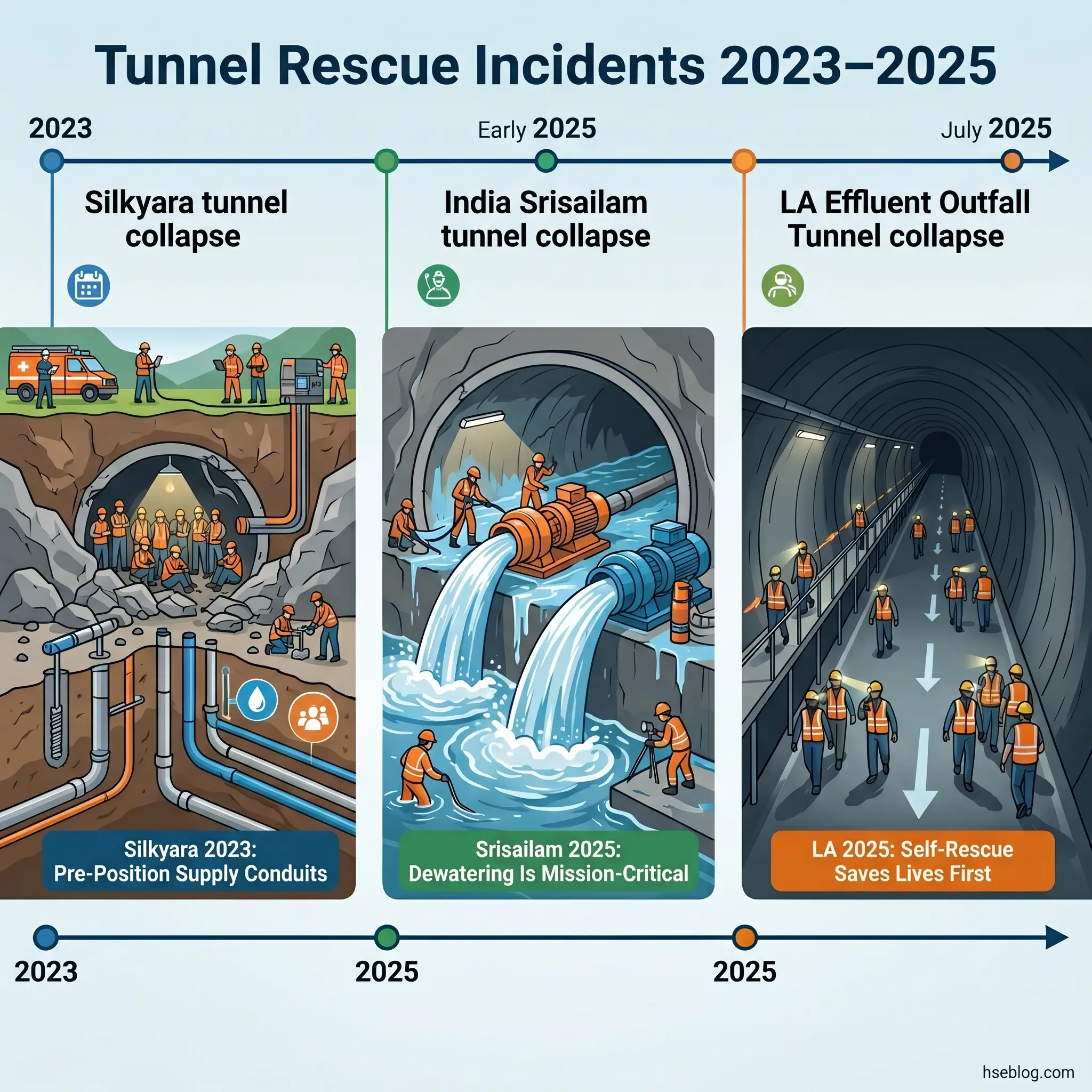
Three construction-phase tunnel incidents between 2023 and 2025 provide applied lessons that regulatory text alone cannot convey.
Los Angeles Effluent Outfall Tunnel — July 2025
Thirty-one workers were trapped approximately 400 feet underground and 5–6 miles from the only access point after a partial collapse. All were rescued without serious injury. Workers self-rescued by climbing over debris and were transported to the portal by tunnel vehicle. The project was halted indefinitely for investigation.
The applied lesson: the workforce’s ability to initiate self-rescue — climbing over debris, reaching the tunnel transport vehicle, maintaining composure over a multi-mile evacuation — was the decisive factor. External rescue at that ingress distance would have taken hours. Self-rescue capability, enabled by trained workers and available transport, compressed the timeline.
India Srisailam Tunnel Collapse — February 2025
Eight workers were trapped after a ceiling cave-in during irrigation tunnel construction. Rescue was hampered by continuous water ingress and debris. No contact was established with the trapped workers for over 100 hours.
The applied lesson: when rescue access is obstructed and dewatering capability is insufficient, the rescue timeline extends from hours to days. Communication conduits and dewatering capacity are not secondary considerations — they are as critical as the rescue team itself.
Silkyara Tunnel Collapse, Uttarakhand, India — November 2023
Forty-one workers were trapped for 17 days following a collapse that blocked the tunnel. Rescue required multiple simultaneous approaches: horizontal drilling, vertical shaft drilling, and manual excavation. Contact was eventually established through a narrow pipe pushed through the debris.
The applied lesson: pre-positioned communication and supply conduits through collapse zones — engineered into the tunnel’s design from the start, not improvised after the event — would have transformed the rescue timeline. The 17-day duration was driven primarily by the time required to establish access, not by the rescue operation itself.
The Consistent Pattern
Across all three incidents, the factor most strongly correlated with successful outcomes was whether the workforce had the training, equipment, and situational awareness to initiate self-rescue while waiting for external intervention. Research attributes 30% of tunnel construction accidents to human error alone, with 60% resulting from combined human factors and natural causes (IdentecSolutions, 2025). External rescue is inherently slow in tunnel environments. Self-rescue capability is the most time-critical variable.
Frequently Asked Questions
Conclusion
The lesson that recent incidents reinforce — from Silkyara’s 17-day ordeal to the LA tunnel’s 5-mile self-rescue — is that the industry’s most persistent failure is not a shortage of regulations or equipment. It is the gap between what the emergency response plan says and what the current tunnel conditions demand.
Three decisions separate projects that rescue workers from projects that recover them. First, match every piece of self-rescue equipment to the tunnel’s current length, not the length it was when the equipment was specified. Second, verify that the designated rescue team has actually trained in the tunnel, at the current working-face distance, under conditions that simulate a real emergency — not a tabletop exercise at the portal. Third, treat the ERP as infrastructure that changes with every advance of the tunnel face, with formal revision triggers that no one has the authority to skip.
The NFPA 502 2026 edition (US) now requires consulting local emergency response agencies early in the design process — a codification of what effective projects have always done. Emergency rescue in tunnel construction is not a plan written at mobilization and filed until something goes wrong. It is a system that must be as dynamic as the tunnel itself, recalculated at every stage, drilled under realistic conditions, and staffed by people who have walked the route they may one day need to carry someone through.