REACH Regulation: Employer Obligations & Compliance Guide (2026)

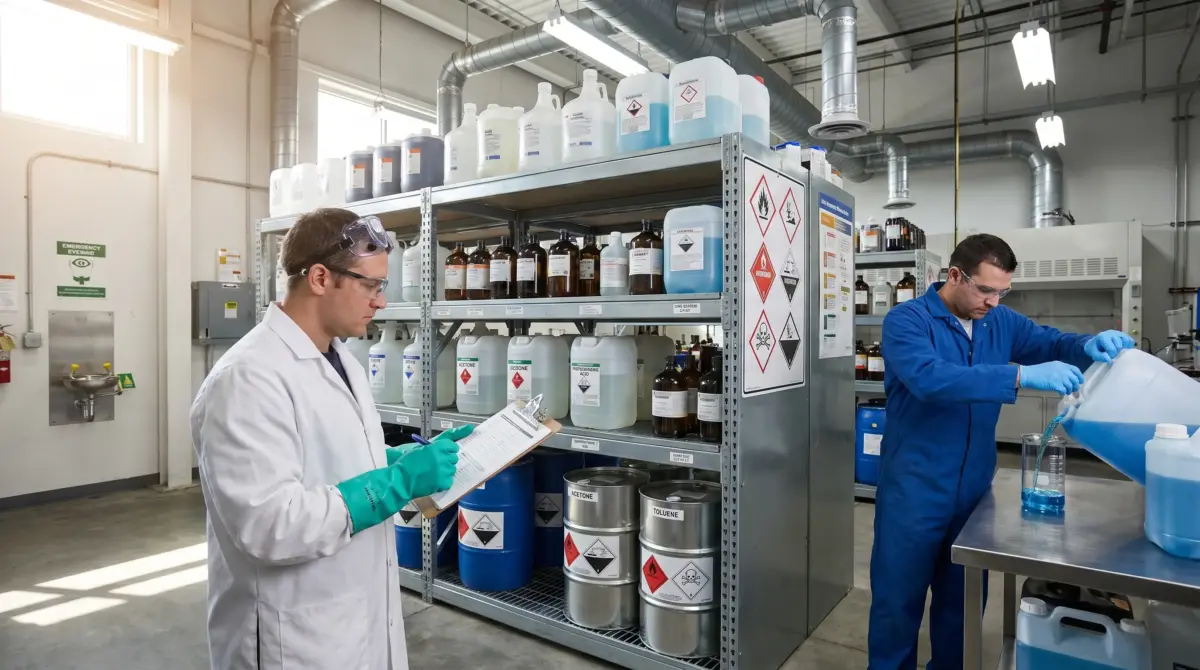
Two laboratory technicians in safety gear work in a chemical storage facility, with one checking inventory on a clipboard while the other handles hazardous materials from shelves containing labeled bottles and containers.

TL;DR REACH (Registration, Evaluation, Authorisation and Restriction of Chemicals) is the EU’s primary chemicals safety regulation (EC 1907/2006). It requires employers who use chemical substances in the workplace — known as downstream users — to follow safety data sheet instructions, verify that their use falls within registered exposure scenarios, implement recommended risk management measures, inform … Read more

Piling Safety: Hazards, Control Measures & Risk Assessment Guide

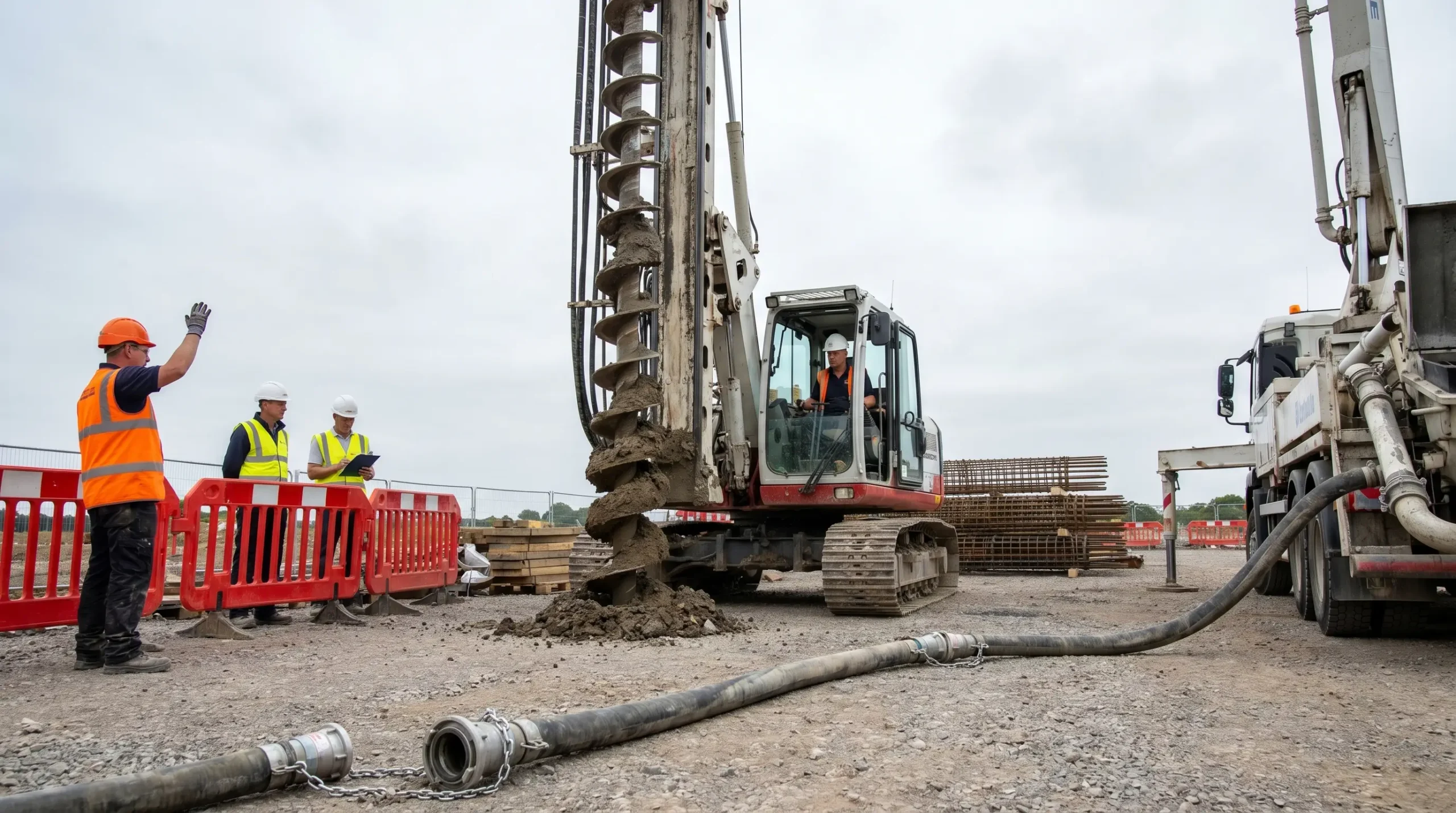
Construction workers in safety gear operate a pile driver machine on a muddy jobsite with red barriers, metal piping, and equipment visible in the background.

TL;DR Piling operations present elevated safety risks including struck-by injuries from falling hammers or swinging piles, entanglement in rotating auger parts, rig instability and collapse, underground service strikes, noise and vibration exposure exceeding occupational limits, falls from height on rig leads, and exposure to hazardous substances in contaminated ground. Effective piling safety requires controls at … Read more

Emergency Rescue in Tunnel Construction: Planning, Equipment & Regulations

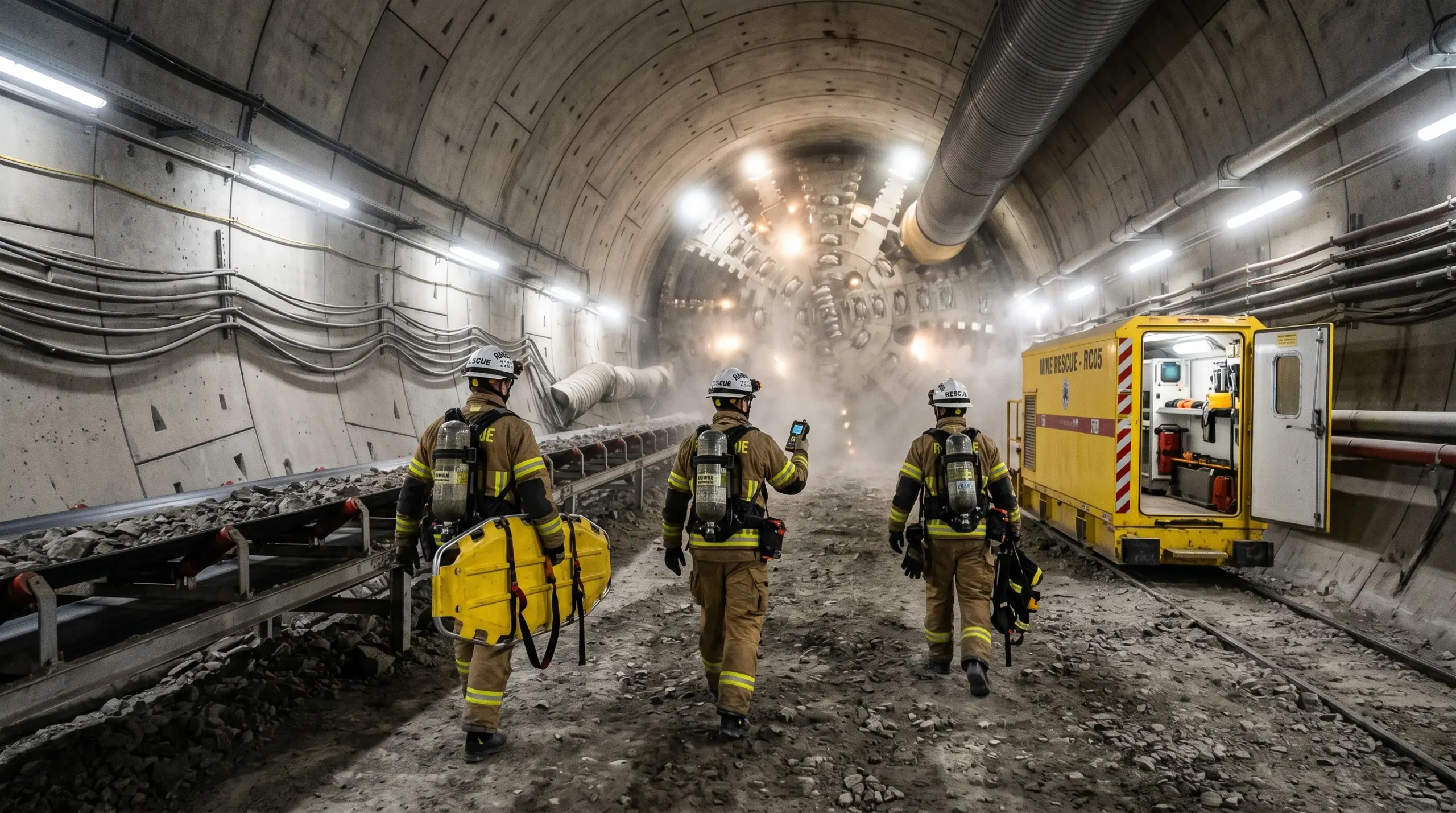
Four firefighters in full protective gear and helmets walk through a massive concrete tunnel under construction, carrying rescue equipment past a yellow emergency response vehicle and construction machinery.

TL;DR Emergency rescue in tunnel construction requires pre-positioned rescue teams, self-contained self-rescuers for every underground worker, refuge chambers at calculated intervals, redundant communication systems, and a continuously updated emergency response plan. Regulatory frameworks including OSHA 29 CFR 1926.800 (US), BS 6164:2019 (UK), and EU Directive 2004/54/EC establish minimum requirements for rescue team composition, equipment, training, … Read more

12 Reasons for a Review of the Health and Safety Policy

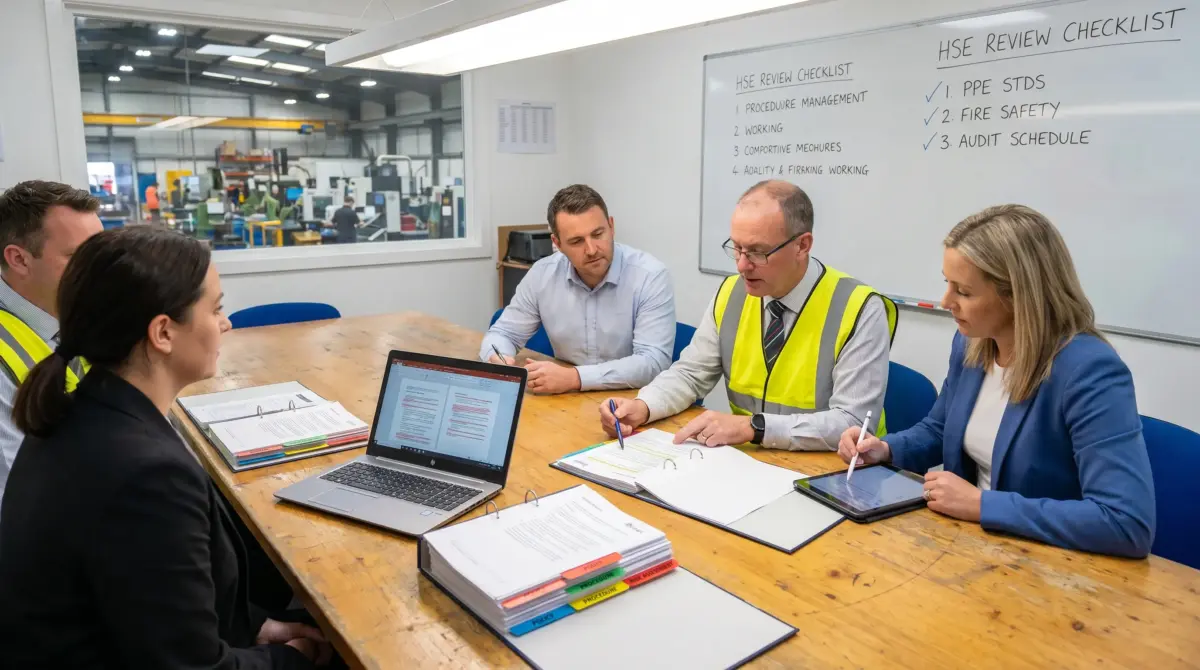
Team of five professionals reviewing HSE safety documentation and checklists at a wooden conference table in an industrial facility office, with whiteboards displaying health and safety procedures visible in background.

TL;DR A health and safety policy should be reviewed whenever a significant change occurs — organizational restructuring, new legislation, incidents, changes in personnel or work methods — and at minimum annually, as recommended by the HSE (UK), ISO 45001, and OSHA (US). The review ensures the policy remains legally compliant, operationally relevant, and effective at … Read more

Temporary Works Coordinator: Roles & Responsibilities

Two construction workers in safety vests and hard hats discuss plans on a building site with metal scaffolding, wooden beams, and industrial equipment visible in the background.

TL;DR A Temporary Works Coordinator (TWC) is a competent person appointed by a contractor to coordinate the planning, design, checking, implementation, use and dismantling of temporary works on a construction project. Under BS 5975-1:2024 and CDM 2015, the TWC ensures designs are produced, independently checked, and correctly implemented — and holds explicit authority to stop … Read more

Water Hygiene in the Workplace: Complete Guide | HSE Blog

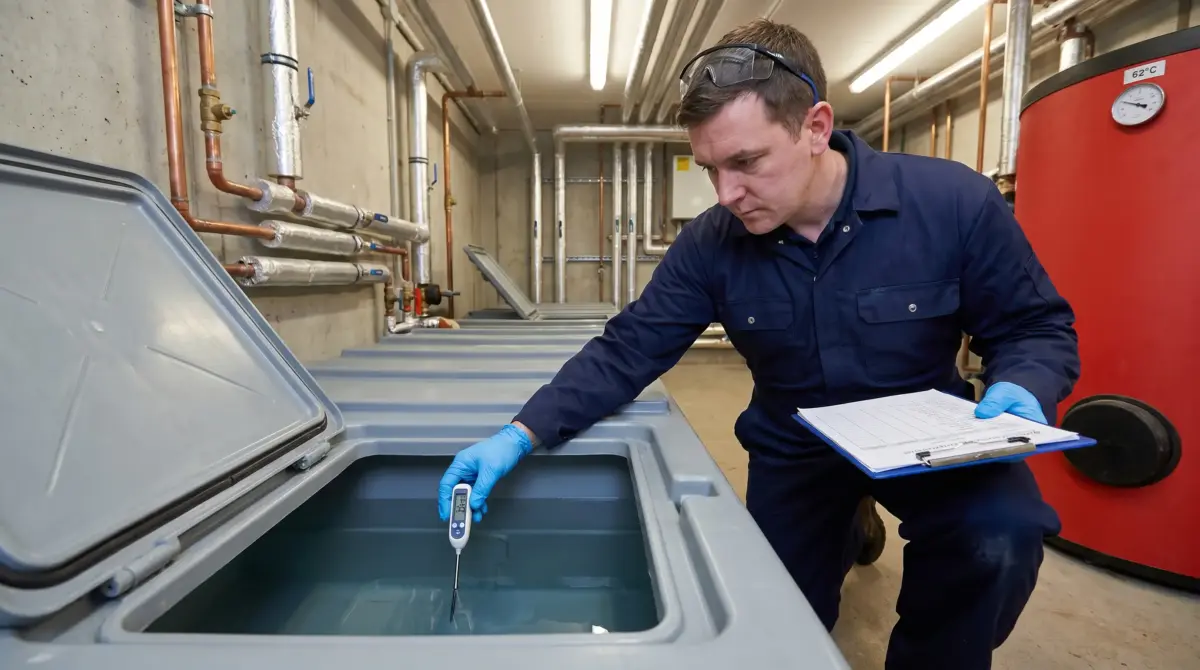
Technician in blue work uniform wearing safety glasses and gloves measures water temperature in a large tank while holding a clipboard in an industrial facility with pipes and equipment.

TL;DR Water hygiene in the workplace is the management of all building water systems to achieve two employer obligations: providing safe potable drinking water for every worker and controlling waterborne pathogens — primarily Legionella pneumophila — within stored and distributed water. Compliance requires a written risk assessment, temperature controls (hot water stored at ≥60°C, delivered … Read more

10 Night Shift Safety Tips Every Worker Should Follow

Two workers in high-visibility safety gear discuss operations at a nighttime port facility with stacked shipping containers, a cargo handler, and industrial cranes illuminated by floodlights.

The study wasn’t about drunk drivers. It was about night-shift workers heading home after a normal shift — no alcohol, no drugs, no medications. After a night of sleep, the near-crash rate across their test drives was zero. After a night shift, 37.5% of those drives produced a near-crash event, and every single one of … Read more

Electrostatic Discharge (ESD): Risks and Prevention Guide

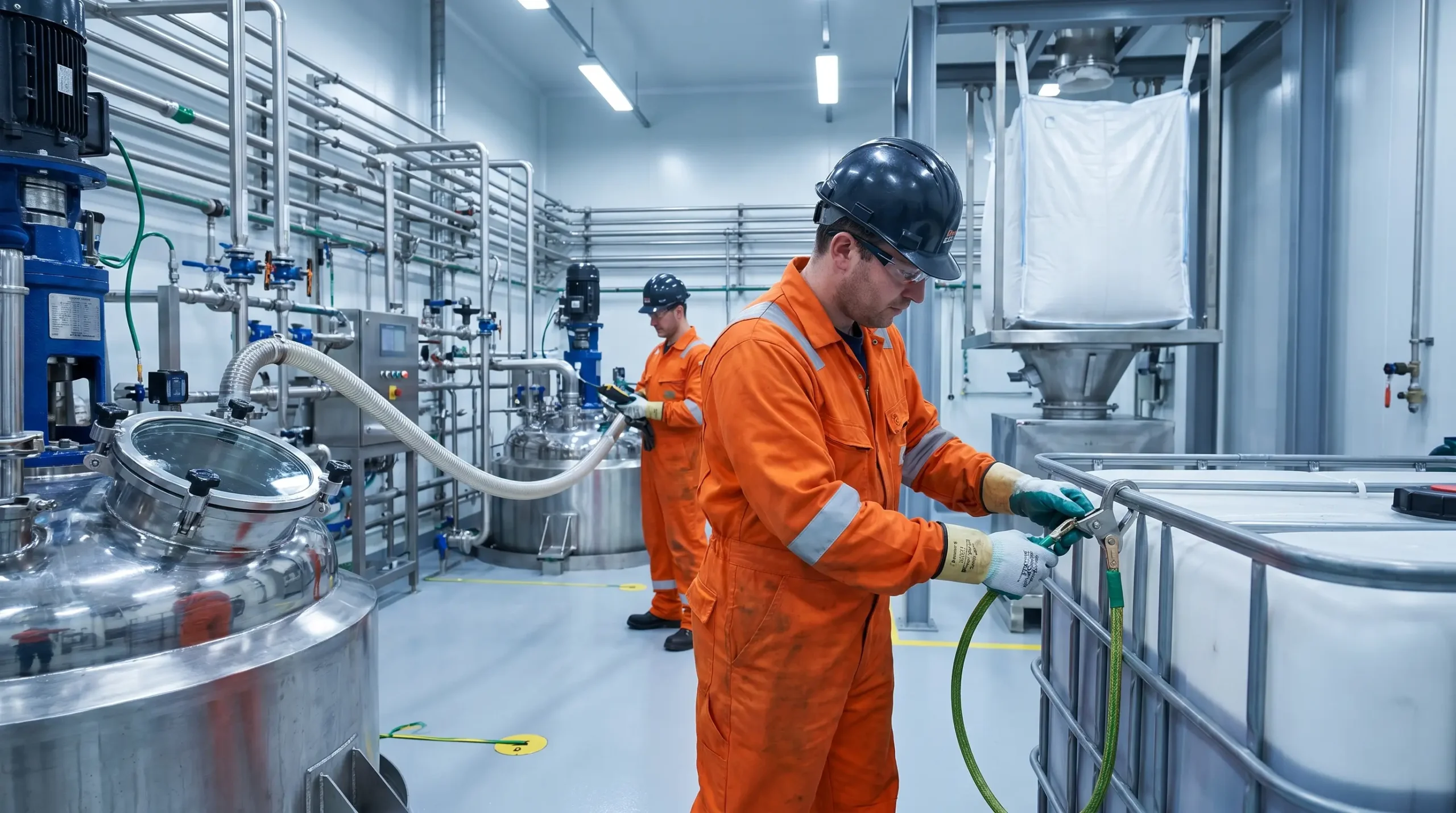
Industrial worker in orange safety suit and hard hat operating equipment in a modern manufacturing facility with stainless steel tanks and blue piping systems.

There is a moment during a FIBC discharge into a glass-lined reactor when the air above the receiving chute feels electrically loaded. Fine organic powder cascades in a continuous stream, and the particles scrape past each other at velocities that generate charge faster than it can bleed to ground. The operator’s gloved hand rests on … Read more

What Is a Fire Blanket? Types, Uses, and How It Works

What Is a Fire Blanket Types, Uses, and How It Works

I’ve walked into too many site kitchens and workshops where the fire blanket was tucked away in a drawer or, worse, still in its original plastic wrap inside a locked cabinet. A fire blanket is a highly flame-retardant sheet, typically made of woven fiberglass or occasionally Kevlar, designed to withstand temperatures up to 500°C or … Read more