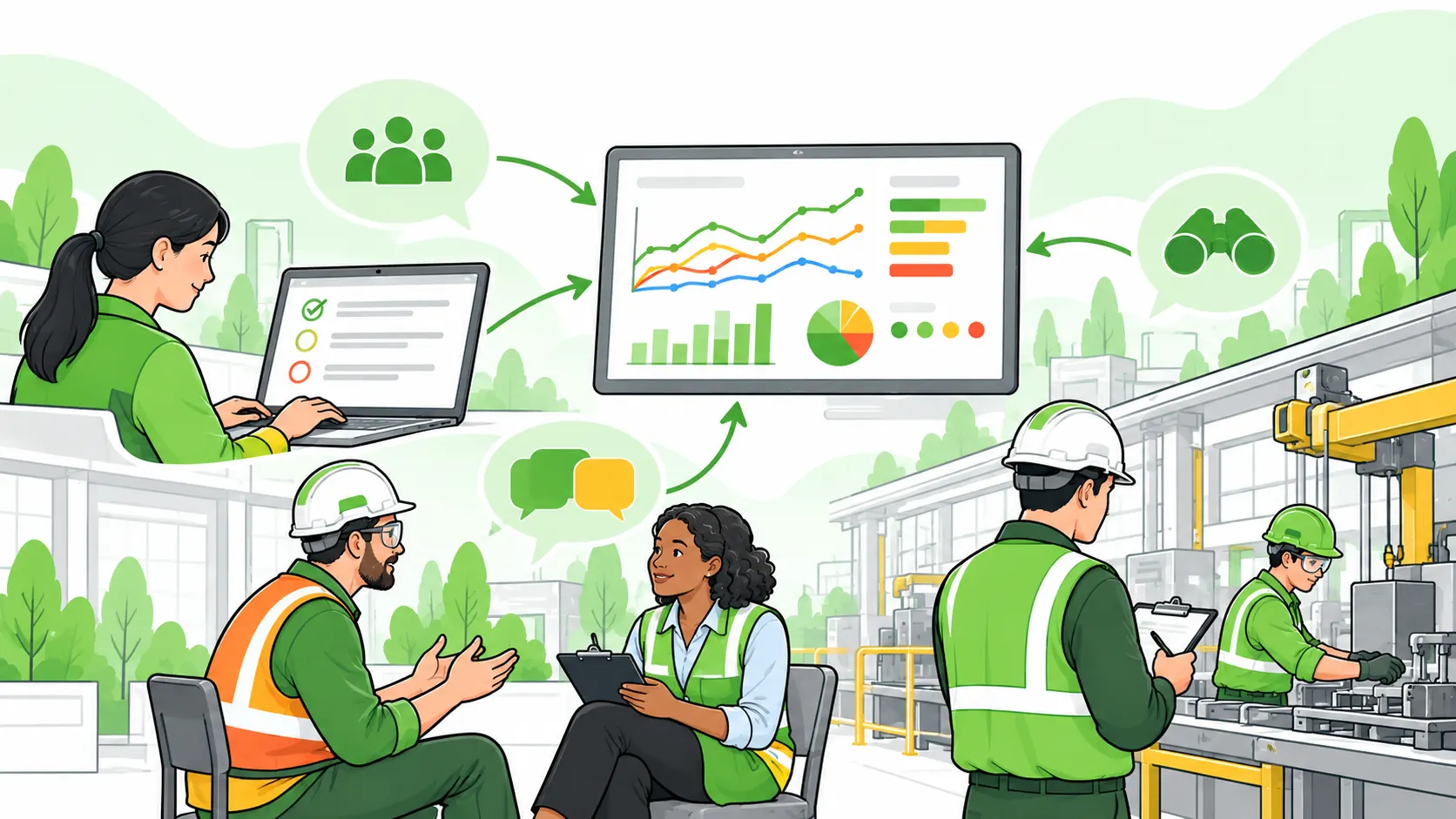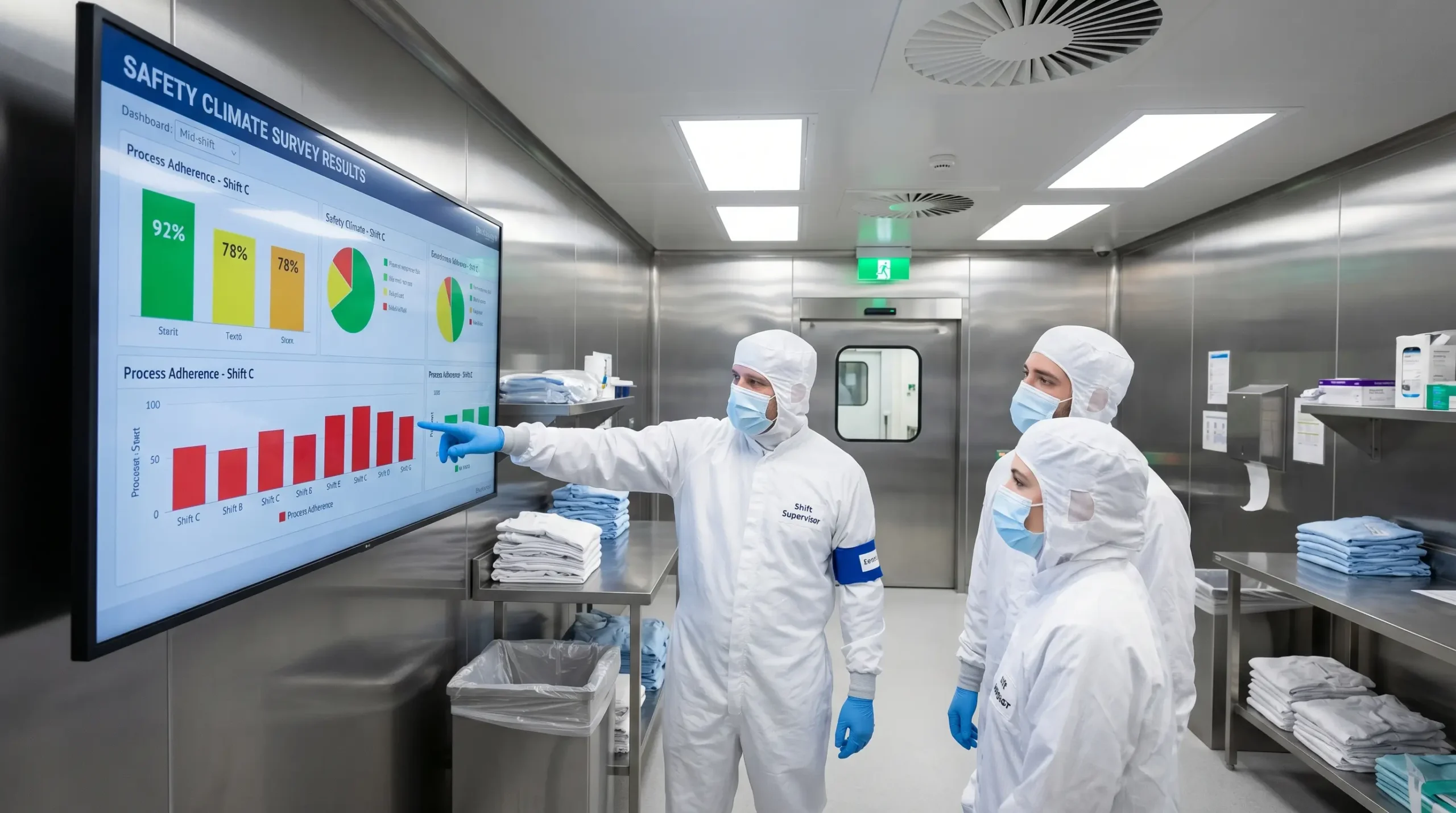
I sat through a leadership review last year where a plant director pointed at a row of green cells on a dashboard — lagging indicators, all favorable — and declared the facility had a "strong safety culture." Thirty minutes later, in a different room, I opened the results of an anonymous climate survey from the same site. The production floor scores on management commitment sat fifteen points below what leadership had self-assessed. That gap — the distance between what leaders believe about safety and what workers actually experience — is where incidents breed. The director wasn't lying. He was confusing two fundamentally different things.
Safety culture and safety climate are not interchangeable terms, and treating them as synonyms leads to misdiagnosed problems and wasted interventions. Nearly 3 million people die each year from work-related accidents and illnesses globally, according to the International Labour Organization. Behind many of those losses are organizations that believed their culture was sound because they never measured what their workforce actually perceived. This article unpacks the distinction between culture and climate with the specificity that field practitioners need — covering how each forms, how to measure them with validated tools, why the perception gap between management and frontline staff is a diagnostic goldmine, and how emerging approaches like behavioral nudges and predictive analytics are reshaping both concepts.
What Is Safety Culture? Defining the Foundation
Every pharmaceutical campus I've worked on has had safety policies mounted in acrylic frames along corridors. Every one. The question that actually matters is what happens when no one is checking whether those policies are followed — when the third shift runs short-staffed and a batch deadline looms. That is where safety culture lives.
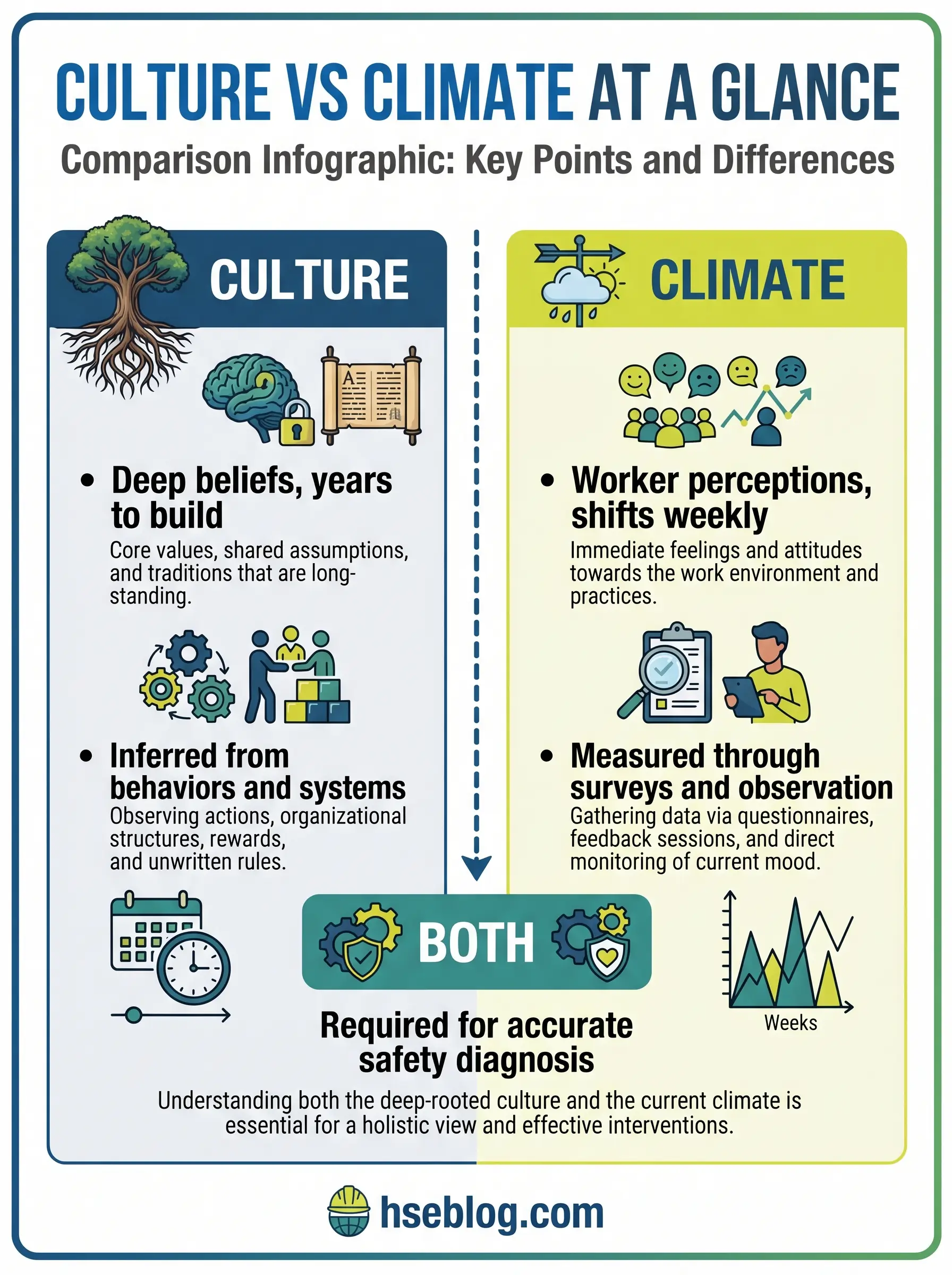
Safety culture encompasses the deeply held beliefs, attitudes, and values that interact with an organization's systems, practices, people, and leadership to establish unspoken norms about what is acceptable and what is not. It reflects the organization's personality around safety — shaped by rules, ethics, codes of conduct, and years of reinforced behavior. The concept itself entered the occupational safety lexicon after the 1986 Chernobyl disaster, when investigators identified a pervasive organizational attitude toward risk that no single procedure or regulation could have corrected.
A critical distinction exists between stated culture and demonstrated culture. Stated culture is what the policy says, what the CEO announces at the annual safety stand-down, what the induction presentation promises. Demonstrated culture is whether a supervisor stops a batch changeover when a gowning protocol is skipped, whether a technician feels comfortable reporting a near-miss on a Friday afternoon without fearing it will delay the weekend shutdown.
Positive safety culture exists when employees understand the importance of safety and exhibit safe behaviors without being prompted — wearing respiratory protection in synthesis areas without a supervisor present, completing pre-task risk assessments because they see personal value in them, reporting all incidents including minor ones. This doesn't happen from a single training campaign. It takes months to years of consistent leadership behavior, accountability mechanisms, and system design to embed. Every organization has a safety culture, whether intentionally built or passively inherited. The only variable is whether it protects people or quietly enables harm.
| Stated Culture | Demonstrated Culture |
|---|---|
| "We prioritize safety above production" | Supervisors stop work when controls are bypassed |
| "Report all incidents without blame" | Near-miss reports increase year-over-year |
| "Everyone has stop-work authority" | Workers exercise stop-work without retaliation |
| "Safety is a shared responsibility" | Cross-functional teams own risk assessments |
What Is Safety Climate? The Measurable Moment
During a turnaround at a sterile fill facility, I ran two identical climate surveys eight weeks apart. Between them, the organization replaced aging isolator gloves across all filling lines and introduced a structured pre-shift briefing. The scores on "management commitment to safety" jumped measurably — not because the underlying culture had changed, but because workers perceived a tangible investment in their protection. That shift in perception is safety climate in action.
Safety climate is the perceived value placed on safety in an organization at a particular point in time — a snapshot of employee perceptions of policies, procedures, and practices relating to safety at one specific moment. The concept was first articulated by Professor Dov Zohar in 1980, and its defining characteristic is responsiveness. Climate can change on a daily or weekly basis, influenced by recent events: a near-miss investigation handled transparently, a piece of equipment finally replaced after months of requests, a production manager overruling a safety hold.
What makes climate operationally powerful is that it measures what workers observe in supervisor and management behavior — not what policies communicate. The key factors include management commitment, employee involvement and empowerment, the quality of safety communication, perceived competence of the safety function, the balance between safety and production pressure, and the degree of supervisory and coworker support for safe practices.
A colleague who manages safety across multiple packaging sites once described climate as "the mood ring of your safety system." It tells you how the workforce feels about safety today — and that feeling, backed by decades of research, has predictive validity. Safety climate scores measured at a given point predict injury rates 6–12 months into the future across construction, manufacturing, healthcare, and oil and gas sectors.
Watch For: A sudden drop in voluntary near-miss reports often signals a climate shift before any survey confirms it. Workers stop reporting when they perceive that management has stopped listening.
Time Horizon: The Core Distinction Between Culture and Climate
The most reliable way to separate these two concepts is time. Safety culture develops over months and years through consistent organizational behavior. Safety climate changes within days or weeks based on what workers observe happening around them.
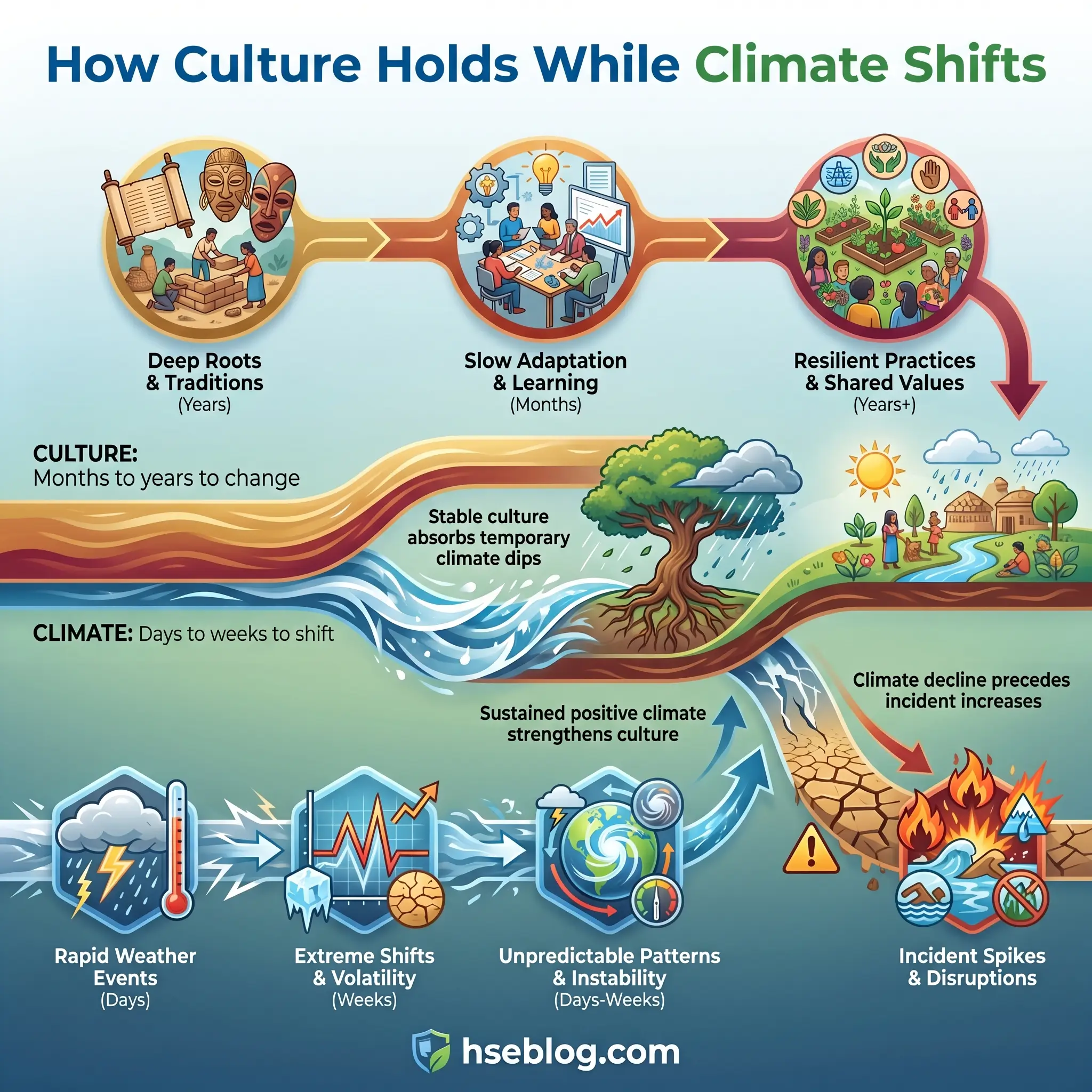
Consider a pharmaceutical facility operating under normal conditions: culture is stable, climate scores are healthy. A major client audit accelerates a production schedule, and suddenly supervisors are pressuring crews to defer equipment checks until after the production run. Within days, workers perceive that production has overtaken safety as the real priority. Climate drops. But the underlying culture — the accumulated beliefs, systems, and norms — hasn't changed. It's still there, beneath the surface pressure. If culture is genuinely strong, climate will rebound once the production crunch passes. If culture is weak, that temporary pressure becomes the new normal, and climate never recovers.
| Month | Safety Culture | Safety Climate |
|---|---|---|
| January | Stable — strong leadership commitment | High — new safety equipment installed |
| March | Stable | Moderate — production deadline pressure |
| May | Stable | Drops — supervisor bypasses procedure |
| July | Stable | Recovers — incident investigated transparently |
| September | Stable | High — worker suggestions implemented |
| November | Beginning to strengthen further | Consistently high — reinforcing culture |
This table illustrates a twelve-month window where culture remained fundamentally constant while climate fluctuated with operational events. The critical insight is in the final row: when climate remains consistently positive across multiple measurement points, it eventually feeds back into and strengthens the underlying culture through sustained behavioral reinforcement. An organization under commercial pressure will often see climate decline before incidents increase — and that early warning is only visible if you're measuring climate regularly.
The Bidirectional Relationship: Culture and Climate Are Mutually Formative
One of the most persistent misconceptions I encounter in management workshops is the idea that you build culture first and then climate follows. The reality, supported by organizational behavior research, is that culture and climate are mutually formative — a two-way arrow where each continuously shapes the other.
Strong safety culture produces consistent positive climate. When an organization's underlying values genuinely prioritize safety, workers perceive that commitment through daily leadership behaviors, resource allocation, and system design. That sustained positive perception reinforces safe behaviors, which in turn deepens and strengthens the culture. The cycle is self-reinforcing when both elements are healthy.
The reverse is equally important. When an organization systematically measures climate, responds visibly to findings, and adjusts management practices based on workforce feedback, it demonstrates a cultural commitment to listening. That demonstration builds trust, which deepens culture. I watched this happen on a packaging campus where quarterly climate surveys consistently revealed that second-shift workers felt excluded from safety decision-making. Leadership restructured safety committee membership to include second-shift representatives and communicated the change directly as a response to survey findings. Within two quarters, second-shift climate scores on "employee involvement" rose significantly — and more critically, voluntary hazard reporting from that shift doubled. Climate measurement became a culture-building mechanism.
The practical diagnostic implication is significant. If your organization has strong underlying culture, climate will bounce back to positive following temporary disruptions — an incident, a leadership transition, a production surge. If climate drops and doesn't recover, the problem is not climate. The problem is culture. Both metrics are required for accurate diagnosis: culture tells you what's systemically wrong; climate tells you why it's wrong right now.
Audit Point: During ISO 45001 surveillance audits, assessors increasingly ask for evidence of how climate survey findings were actioned — not just that surveys were conducted. The documented response cycle is what demonstrates the culture-climate feedback loop in practice.
Measuring Safety Climate: Tools and Methods
Climate measurement is where the conceptual distinction becomes operationally actionable. Unlike culture, climate can be assessed directly through perception surveys, structured interviews, and behavioral observation using well-developed psychometric methods.
The predictive validity of climate measurement is what gives it strategic weight. Research demonstrates that high safety climate scores predict significantly lower injury rates 6–12 months into the future, making climate surveys one of the most cost-effective leading indicators available to any safety function. The challenge is selecting and implementing the right instrument.
Three validated frameworks dominate the field:
- CPWR Safety Climate Assessment Tool (S-CAT): Developed by the Center for Construction Research and Training, the S-CAT measures eight leading indicators through multi-choice questions that assess both the presence of safety practices and worker perception of why those practices exist. The S-CATsc variant adapts the tool for small contractors, making it scalable across organization sizes.
- HSE Safety Climate Tool (UK): Developed by the UK Health and Safety Executive, this online questionnaire explores employee attitudes and perceptions across key health and safety dimensions, with automated reporting and benchmarking against industry standards.
- Custom Likert-Scale Surveys: Organizations frequently design internal instruments using 4-point or 5-point Likert scales (1 = strongly disagree to 5 = strongly agree) tailored to their specific operational context. These require validation through exploratory and confirmatory factor analysis to ensure reliability.
Each approach has trade-offs. Standardized tools like S-CAT offer benchmarking and cross-industry comparison but may not capture site-specific dynamics. Custom surveys offer precision but lack external benchmarks. Rubric-based methods using narrative descriptors — from "poor" to "exemplary" — complement quantitative surveys and may be more appropriate for benchmarking across diverse organizations within a single corporation.
| Method | Strengths | Limitations | Best For |
|---|---|---|---|
| CPWR S-CAT | Validated, benchmarkable, scalable | Construction-focused origins | Multi-site organizations |
| HSE Climate Tool | Automated reporting, UK benchmarks | Jurisdiction-specific norms | UK-regulated operations |
| Custom Likert Surveys | Tailored to site context | Requires statistical validation | Single-site deep assessment |
| Rubric-Based Assessment | Narrative clarity, qualitative depth | Subjective scoring risk | Cross-organization comparison |
Survey Administration Best Practices
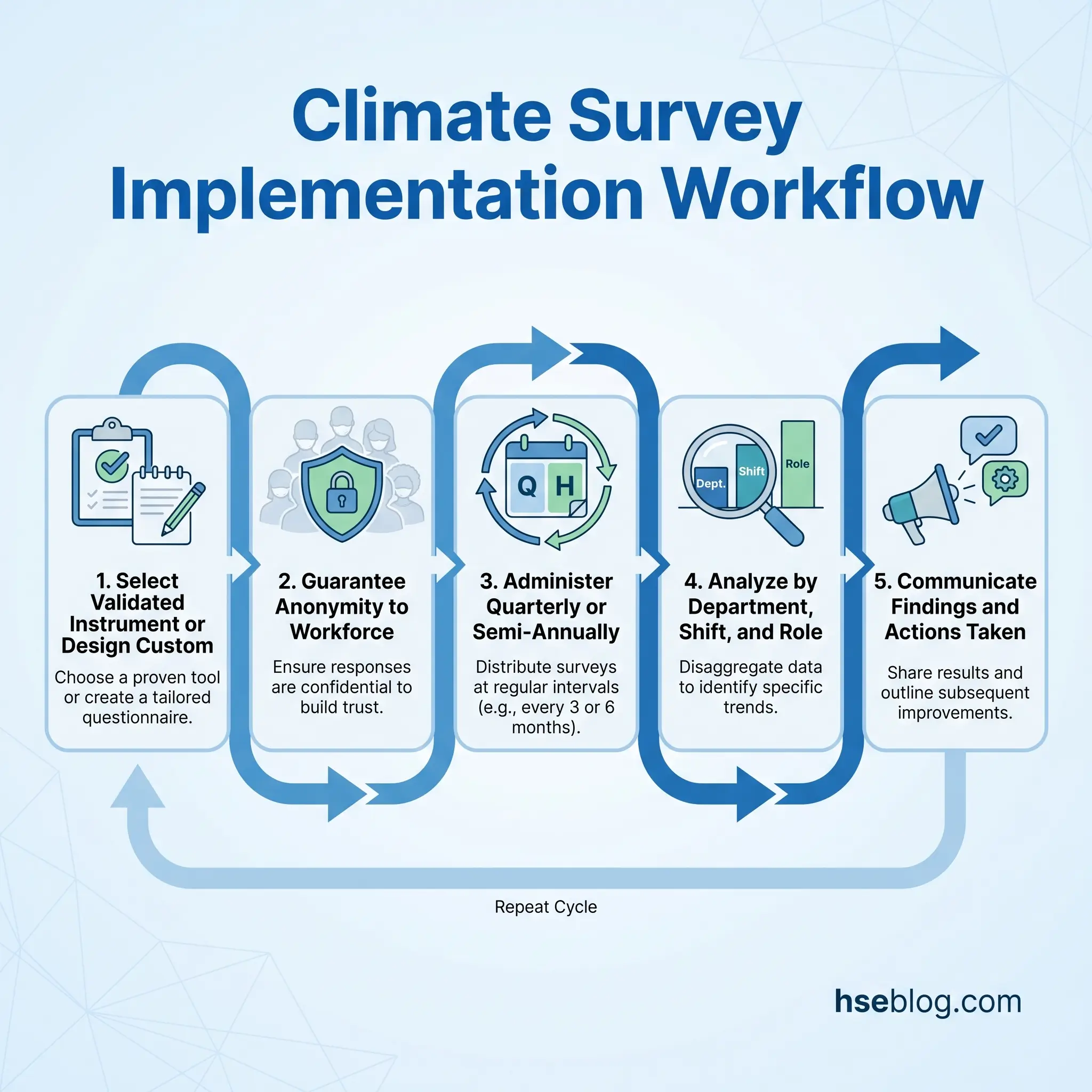
The timing of a climate survey affects its results profoundly. A survey administered during a safety recognition event yields rosier scores than the same survey administered the week after a serious incident. Neither result is wrong — both are genuine snapshots — but neither alone tells the full story. This is why single-point measurement is insufficient.
Effective climate assessment requires attention to several operational realities:
- Frequency matters more than perfection. Quarterly or semi-annual measurement establishes trends and separates one-time anomalies from persistent issues. Annual surveys miss too much.
- Anonymity is non-negotiable. Workers will not report honest perceptions if they believe responses can be traced. Guaranteed anonymity — communicated clearly and repeatedly — is the foundation of data quality.
- Separate group analysis reveals what aggregate scores hide. Analyzing results by department, shift, role, and tenure often uncovers localized climate problems invisible in plant-wide averages. I've seen facilities where overall scores were acceptable, but night-shift production crews scored twenty points below day-shift on supervisory support.
- The management-perception gap is diagnostic gold. Research consistently shows that managers perceive safety climate more positively than frontline staff. The size of that gap is itself a leading indicator — the wider the gap, the more disconnected leadership is from operational reality.
- Triangulate always. Surveys alone are insufficient. Combine quantitative survey data with structured interviews, focus groups, and direct jobsite observation for a comprehensive picture that no single method can provide.
Statistical validity requires sufficient response rates from the workforce, and results should only inform decisions if data quality meets minimum thresholds. Cross-cultural and linguistic considerations also matter in diverse workforces — survey items can be interpreted differently across cultural backgrounds, requiring careful translation and cultural adaptation rather than direct word-for-word conversion.
Measuring Safety Culture: Deeper Assessment Approaches
If climate is the temperature reading, culture assessment is the full diagnostic workup. Culture cannot be measured directly through surveys alone — it must be inferred from leadership behaviors, organizational systems, and long-term patterns of decision-making.
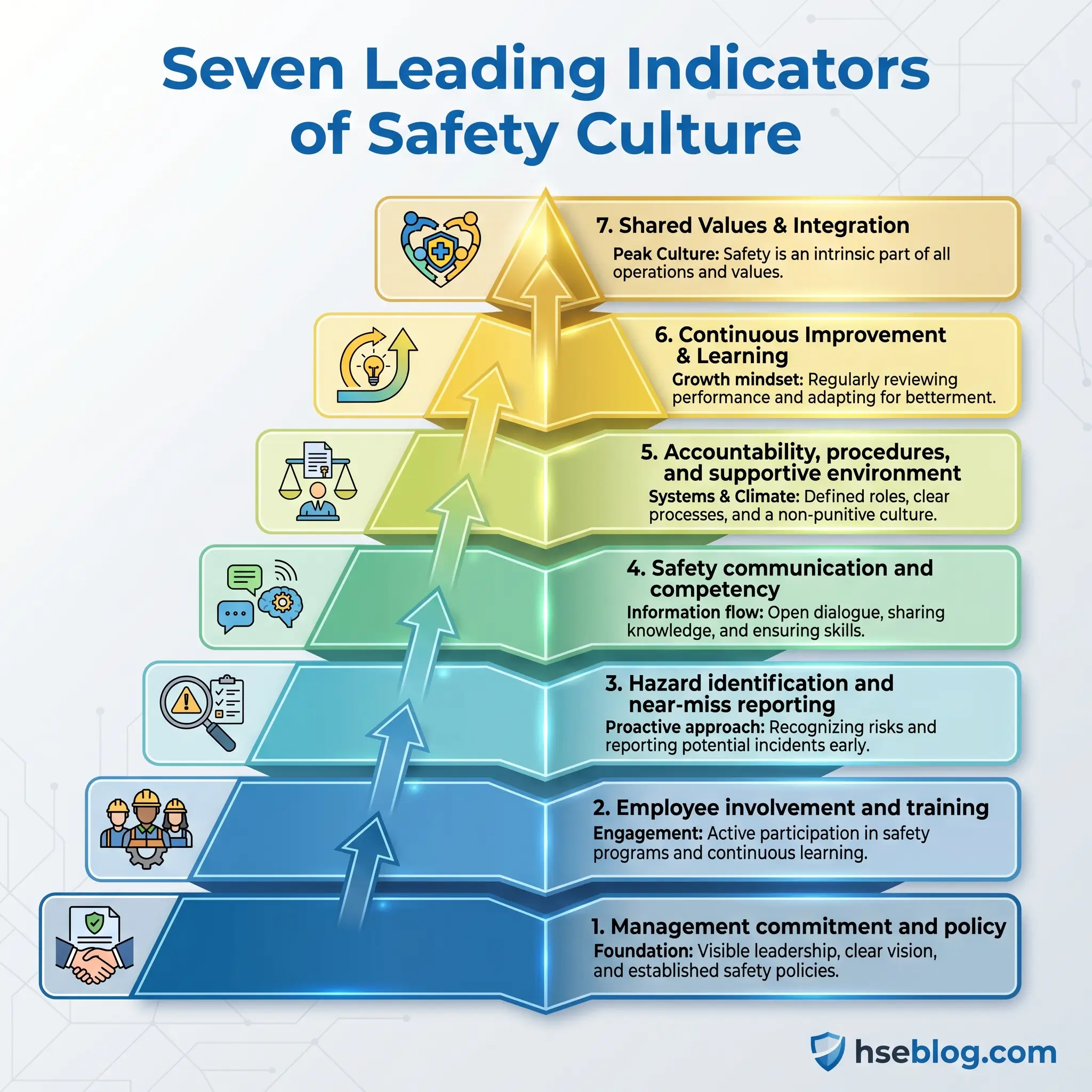
A comprehensive culture assessment examines seven groups of leading indicators: management commitment and safety policy, employee involvement and training, positive safety practices, safety competency, safety procedures, accountability and responsibility, and a supportive environment. Each group requires a different assessment method — policy review for management commitment, competency records for training, observation for practices, interview for psychological safety.
"How do you actually see culture?" a newly promoted safety coordinator asked me during a mentoring session. I told her to watch what happens when a hazard report creates an inconvenience. Does the supervisor investigate it or shelve it? Does the investigation find root causes or assign blame? Does the corrective action get resourced or deferred? That chain of responses — across dozens of similar moments over months — is culture made visible.
Culture assessment should be periodic, conducted annually or every 18 months, to inform long-term strategy and track evolution. The methods include examination of policies and procedures for consistency and enforcement, analysis of incident and near-miss investigation quality, review of organizational structure and accountability lines, direct observation of daily work practices, and confidential interviews probing the gap between what workers are told and what they experience.
The critical leading indicators that hold diagnostic value across industries include management commitment, hazard identification practices, near-miss reporting frequency and quality, safety communication effectiveness, training program relevance, audit findings trends, and incident investigation depth. When these indicators are healthy, culture is functional. When they deteriorate — especially when near-miss reporting declines or audit findings go unresolved — culture is eroding regardless of what any policy document says.
Why the Distinction Matters: Diagnostic Power and Intervention Targeting
A quality assurance director I worked with spent eighteen months and significant budget on a culture transformation program — external consultants, leadership workshops, values rebranding — after a cluster of recordable incidents. The program had no measurable impact on incident rates. When I reviewed the situation, the problem wasn't culture at all. The facility had clear values, competent leadership, and functional safety systems. The issue was a single production building where a recently promoted supervisor consistently prioritized throughput over safety holds during equipment changeovers. Workers in that building perceived — correctly — that safety was secondary. Climate was poor in one location, driven by one behavioral pattern. A targeted intervention — supervisor coaching, restructured changeover procedures, visible management presence during changeovers — resolved it within weeks. The culture program was a year-long solution to a problem that didn't exist at the cultural level.
This diagnostic precision is why the distinction matters operationally. Perception gaps between management and workers about safety priorities indicate exactly where the culture-climate disconnect lives. Those gaps are not measurement artifacts — they are the problem itself, pointing to where stated values and daily reality have diverged.
When climate is low but culture is fundamentally sound, the intervention is targeted and fast: identify which management behaviors, communication failures, or resource decisions are driving negative perceptions and fix them. When culture itself is weak — when the organization's underlying systems, accountability structures, and leadership behaviors are misaligned with safety — the intervention is systemic and slow. Confusing the two wastes time and money on the wrong level of intervention.
Climate decline often precedes incident increases. Organizations with strong cultures can detect and reverse climate drift before injuries occur — but only if they're measuring climate frequently enough to see the drift in time.
Field Test: Ask five frontline workers independently: "What happens here when someone reports a near-miss that delays production?" If the answers are consistent and positive, your culture is likely sound. If answers vary widely or include hesitation, you have a climate problem at minimum and possibly a culture problem underneath it.
Common Challenges and Misconceptions
Intellectual honesty demands acknowledging that the evidence base for culture and climate interventions is not equally strong. Research robustly supports the relationship between safety climate and occupational health and safety outcomes — higher climate scores correlate with and predict lower injury rates across multiple industries and longitudinal studies. The evidence for culture interventions directly improving safety performance is weaker. Culture transformation programs are difficult to study rigorously because they involve multiple simultaneous variables, long time horizons, and confounding organizational changes.
Some occupational health researchers argue that the construct of "safety culture" itself is analytically problematic — that practitioners should focus on observable, measurable things: leadership practices, organizational structure, management systems, and behavioral patterns. Rather than debating whether "culture" exists as a coherent entity, this perspective suggests focusing on how things are actually done and what systems enable or constrain safe work.
There is pragmatic value in both positions. Climate measurement provides actionable, quantifiable data with demonstrated predictive validity. Culture assessment provides the contextual narrative that explains why climate scores look the way they do and where systemic changes are needed. Neither alone is sufficient for comprehensive safety management.
Maturity models like the Bradley Curve can be helpful diagnostic frameworks, but their effectiveness in directly improving safety performance has not been definitively demonstrated through rigorous research. They are descriptive tools, not prescriptive solutions. Use them for organizational self-assessment and goal-setting, but don't mistake placement on a maturity model for actual cultural change.
One practical challenge that gets insufficient attention is survey fatigue. If climate surveys become routine paperwork — administered without visible follow-through on findings — workers learn that the surveys don't matter. Response quality degrades, data becomes unreliable, and the measurement tool itself becomes evidence of a climate problem: leadership asks for input but doesn't act on it.
Building Safety Culture While Measuring Safety Climate
The operational question every safety leader eventually asks is: "How do we work on both simultaneously?" The answer is that climate measurement is a culture-building activity — when done properly.
Companies with robust safety cultures report fewer injuries than organizations with weak cultures. But sustainable culture doesn't emerge from a single initiative. It requires consistent effort and genuine commitment from all organizational levels — not just the safety department and not just senior leadership.
Leadership commitment is the foundational element. Leaders demonstrate it not through safety slogans but through resource allocation, visible participation in safety activities, and how they respond when safety and production conflict. Highly engaged employees are 1.2 times as likely as less engaged counterparts to report that safety is a priority for their manager. That engagement is built through daily behaviors, not annual declarations.
Effective organizations embed safety into daily operational rhythms rather than isolating it as a separate compliance activity. Structured pre-shift briefings that include safety topics alongside production targets. Near-miss reviews that celebrate reporting rather than investigating reporters. Monthly safety walks where senior leaders observe and listen rather than inspect and judge. Forward-thinking managers use behavioral science-backed nudges — brief prompts delivered at critical decision points within daily workflows — to reinforce safe choices without relying on enforcement.
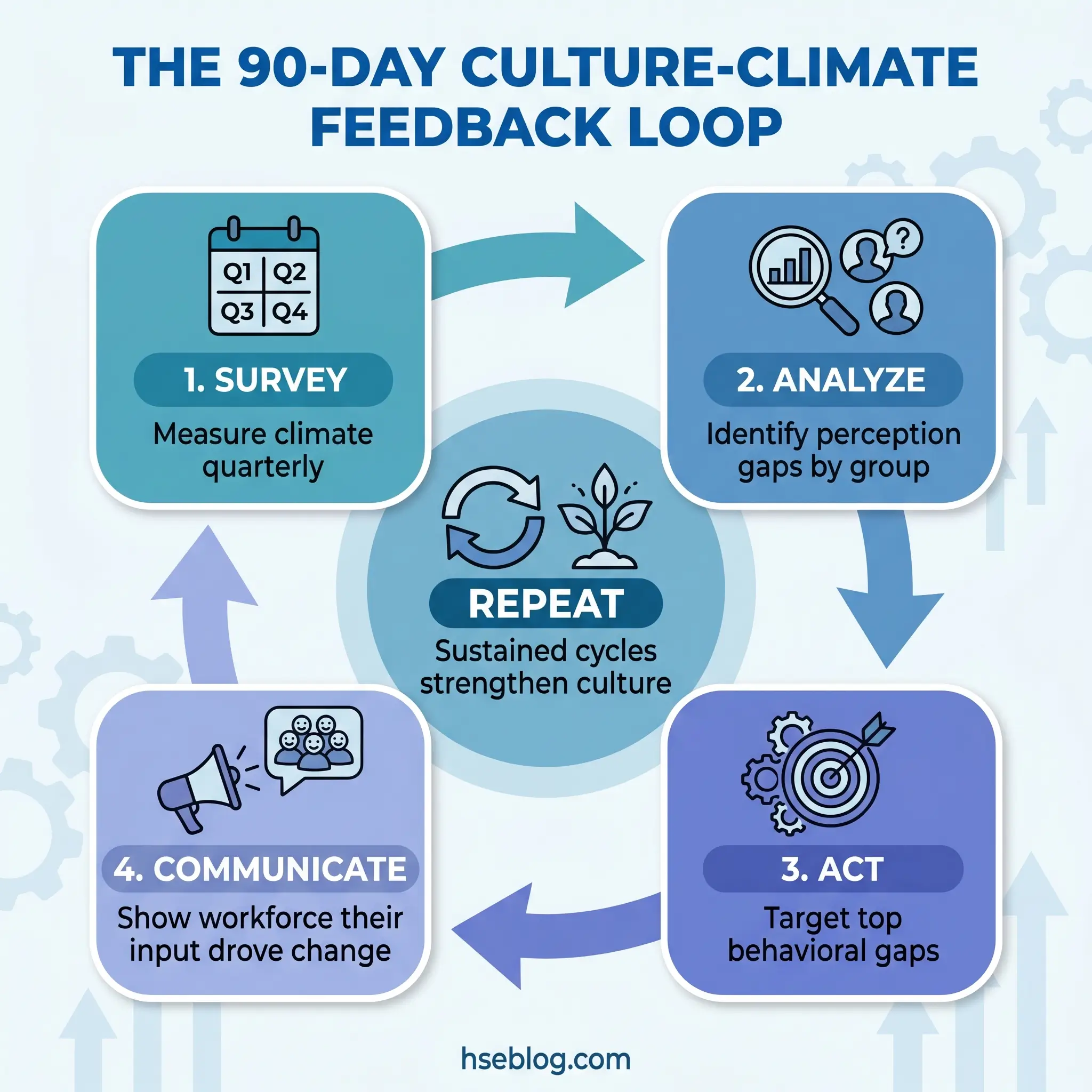
A practical integration approach over a 90-day cycle:
- Weeks 1–4: Administer a validated climate survey. Communicate purpose, guarantee anonymity, and set expectations for how results will be shared and used.
- Weeks 5–8: Analyze results by department, shift, and role. Identify the top three perception gaps between management and frontline. Share findings transparently with the workforce.
- Weeks 9–12: Implement targeted behavioral changes addressing the top gaps. Document changes. Communicate directly that these changes are responses to survey findings. Begin planning next survey cycle.
This cycle achieves two things simultaneously: it generates actionable climate data, and it demonstrates the cultural value that worker input matters and drives organizational change. When workers see their feedback translated into visible action, trust builds — and trust is the bedrock of culture.
Seventy-four percent of employees report improvements based on crowdsourced safety feedback when organizations use collaborative methods to co-create and prioritize safety solutions. That statistic underscores a fundamental truth: culture strengthens fastest when the workforce participates in building it, not when it is built for them.
Regulatory and Standards Context: ISO 45001, OSHA, and Beyond
ISO 45001:2018 moved safety culture from a best-practice recommendation to a certifiable requirement. Clause 5 — Leadership and Worker Participation — explicitly requires organizations to promote a healthy and safety culture and ensure meaningful worker participation in the occupational health and safety management system. This is not aspirational language. Certification auditors assess whether leadership allocates resources, sets measurable objectives, and demonstrates commitment through documented behaviors and decisions.
Clause 6.1 requires systematic hazard identification and risk assessment — processes that depend entirely on a positive safety culture and climate for effective reporting. If workers don't trust the reporting system, hazard identification is incomplete. If supervisors don't act on reported hazards, the risk assessment process becomes a compliance exercise detached from operational reality. Clause 8 requires implementation of controls aligned with organizational policy and objectives, and the consistency of that implementation across shifts, departments, and sites is a direct reflection of culture.
OSHA regulations under 29 CFR 1904 and 1910 require safety management systems, incident recording, and hazard communication but do not explicitly mandate culture assessment. However, OSHA enforcement increasingly references whether organizational culture contributed to violations, particularly in cases involving repeated citations or willful non-compliance. The practical implication is that culture and climate evidence — survey data, investigation quality, leadership accountability records — serves as both a compliance defense and a vulnerability depending on what it reveals.
The UK Health and Safety at Work Act 1974 requires employers to establish a positive health and safety culture, and the HSE's Safety Climate Tool was developed specifically to help organizations measure the perceived value placed on safety as a diagnostic of organizational health. Organizations pursuing any international safety certification benefit from systematic climate measurement as tangible evidence of worker participation and management commitment — requirements that auditors increasingly evaluate through outcome data, not policy documents alone.
Organizations using both leading and lagging metrics — with climate surveys sitting firmly in the leading indicator category — are more likely to build robust, sustainable safety management systems. Eighty-nine percent of organizations now use leading metrics including audits, risk assessments, inspections, and climate surveys to gauge safety program success.
Recent Trends: AI, Predictive Safety, and Psychological Safety
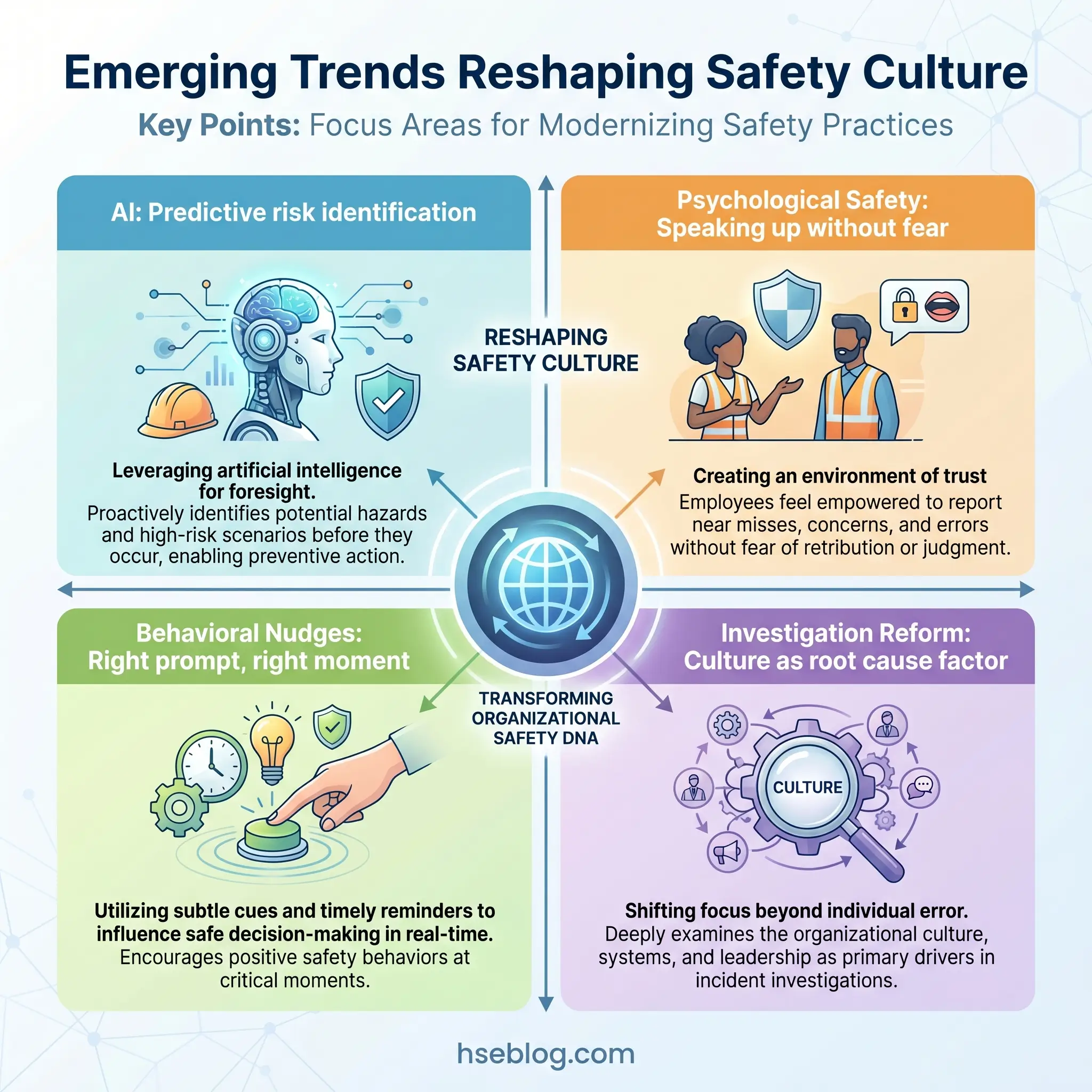
The landscape of culture and climate assessment is shifting in ways that would have been unrecognizable five years ago. The most significant development is the integration of artificial intelligence and machine learning into safety management — moving organizations from reactive incident analysis to predictive, proactive risk identification. Computer vision systems monitoring behavioral compliance in real time, natural language processing analyzing near-miss report text for emerging risk patterns, and dashboard analytics identifying cultural drift across sites before incident rates respond. These tools don't replace culture or climate — they amplify the organization's ability to detect and respond to both.
Psychological safety has emerged as a dimension that intersects directly with both culture and climate. Organizations that improved psychological safety — where workers feel safe to speak up, admit mistakes, ask questions, and challenge unsafe practices without fear of retribution — enhanced not just safety metrics but overall team performance. Seventy-eight percent of employees prioritize a healthy workplace culture for their mental health, and sixty-seven percent consider a safe and supportive environment equally vital. This data signals that the traditional boundary between occupational safety and organizational wellbeing is dissolving.
The 2024 ICMM safety benchmarking report revealed a troubling blind spot: over a quarter of all fatality incidents — twenty-seven percent — were attributed to failure to follow established rules or procedures, yet only a small fraction were formally classified as involving "safety culture" as a contributing factor. This disconnect indicates that incident investigators and organizations are under-recognizing cultural drivers of non-compliance. Procedural non-adherence is almost always a cultural symptom, not a root cause. Until investigation methodologies systematically assess culture and climate as contributing factors, the same failure patterns will repeat.
Emerging approaches like Intelligent Nudges — behavioral science-backed prompts delivered within daily digital workflows — represent a practical bridge between culture aspiration and climate reality. Rather than relying on annual training refreshers or poster campaigns, these nudges apply behavioral research at the exact decision point where a worker chooses between the safe method and the shortcut.
Frequently Asked Questions
How often should we measure safety climate versus safety culture?
Climate surveys work best on a quarterly or semi-annual cycle — frequent enough to detect trends, infrequent enough to avoid survey fatigue. Culture assessment operates on a longer cycle, annually or every eighteen months, because the underlying beliefs, systems, and values being assessed change slowly. Running climate surveys without corresponding periodic culture assessments gives you snapshots without context. Running culture assessments without regular climate data gives you a narrative without a timeline.
Can an organization have good safety climate with weak underlying culture?
Temporarily, yes. A visible safety investment — new equipment, a responsive supervisor, a well-handled incident investigation — can lift climate scores in the short term even if underlying systems and values remain weak. But weak culture cannot sustain positive climate. Once the visible investment fades or production pressure returns, climate reverts. If your climate scores are volatile — swinging between high and low depending on recent events — that volatility itself indicates a culture problem.
What is the management-perception gap and why does it matter?
Research consistently shows that managers rate their organization's safety climate more positively than frontline workers do. This gap is not a survey error. It reflects genuine differences in daily experience: managers see the policies they've written and the resources they've approved, while workers see whether those policies are enforced and whether those resources actually reach the floor. The size of this gap is itself a leading indicator. Narrowing it requires separate analysis of climate data by organizational level and transparent sharing of findings — including the uncomfortable ones — with leadership.
Is investing in safety culture change worth it compared to focusing on compliance?
Compliance is the legal minimum — it keeps you out of prosecution but doesn't prevent incidents driven by behavioral and systemic factors. Organizations with strong safety cultures report fewer injuries than those relying on compliance alone. Beyond incident reduction, strong culture improves employee retention, operational reliability, and organizational reputation. Compliance is the floor. Culture is the structure built on it. The return on culture investment compounds over time in ways that compliance spending alone cannot match.
How does psychological safety connect to organizational safety culture?
Psychological safety — the shared belief that a team is safe for interpersonal risk-taking — is increasingly recognized as a core enabler of both strong culture and positive climate. When workers feel safe to report errors, challenge unsafe practices, and ask questions without fear of ridicule or retaliation, hazard reporting increases, near-miss data improves, and the organization's collective ability to learn from operational experience accelerates. Clause 5 of ISO 45001 implicitly requires this through its mandate for meaningful worker participation. Without psychological safety, worker participation is performative rather than genuine.
Do we need to measure both culture and climate, or can we focus on one?
Best practice uses both because they answer different questions. Climate measurement is fast, frequent, and directly actionable — it tells you what workers perceive right now and predicts near-term incident trends. Culture assessment is deeper, less frequent, and systemic — it tells you whether the organizational structures, values, and leadership behaviors can sustain positive climate over time. Measuring climate without assessing culture is like monitoring a patient's temperature without ever running bloodwork. Measuring culture without tracking climate is like running annual physicals but never checking vital signs between visits.
Conclusion
The industry's most persistent diagnostic error is treating safety culture and safety climate as a single concept with two names. They are not. Culture is the accumulated architecture of organizational values, systems, and leadership behaviors built over years. Climate is the workforce's real-time perception of whether that architecture is functioning as designed. Confusing them leads to the most expensive kind of mistake in safety management — solving the wrong problem at the wrong organizational level.
The highest-impact change most organizations can make is deceptively simple: start measuring climate separately from culture, analyze the gap between management perception and frontline perception, and treat that gap as the primary diagnostic input for intervention design. Climate surveys with demonstrated predictive validity for injury rates 6–12 months out already exist — validated tools like the CPWR S-CAT and the HSE Safety Climate Tool are accessible and implementable. The barrier is not tooling. The barrier is whether leadership is willing to see the gap between what they believe about safety and what their workforce actually experiences — and then act on it visibly, consistently, and without defensiveness. That willingness, sustained over months and years, is how climate measurement becomes culture transformation.