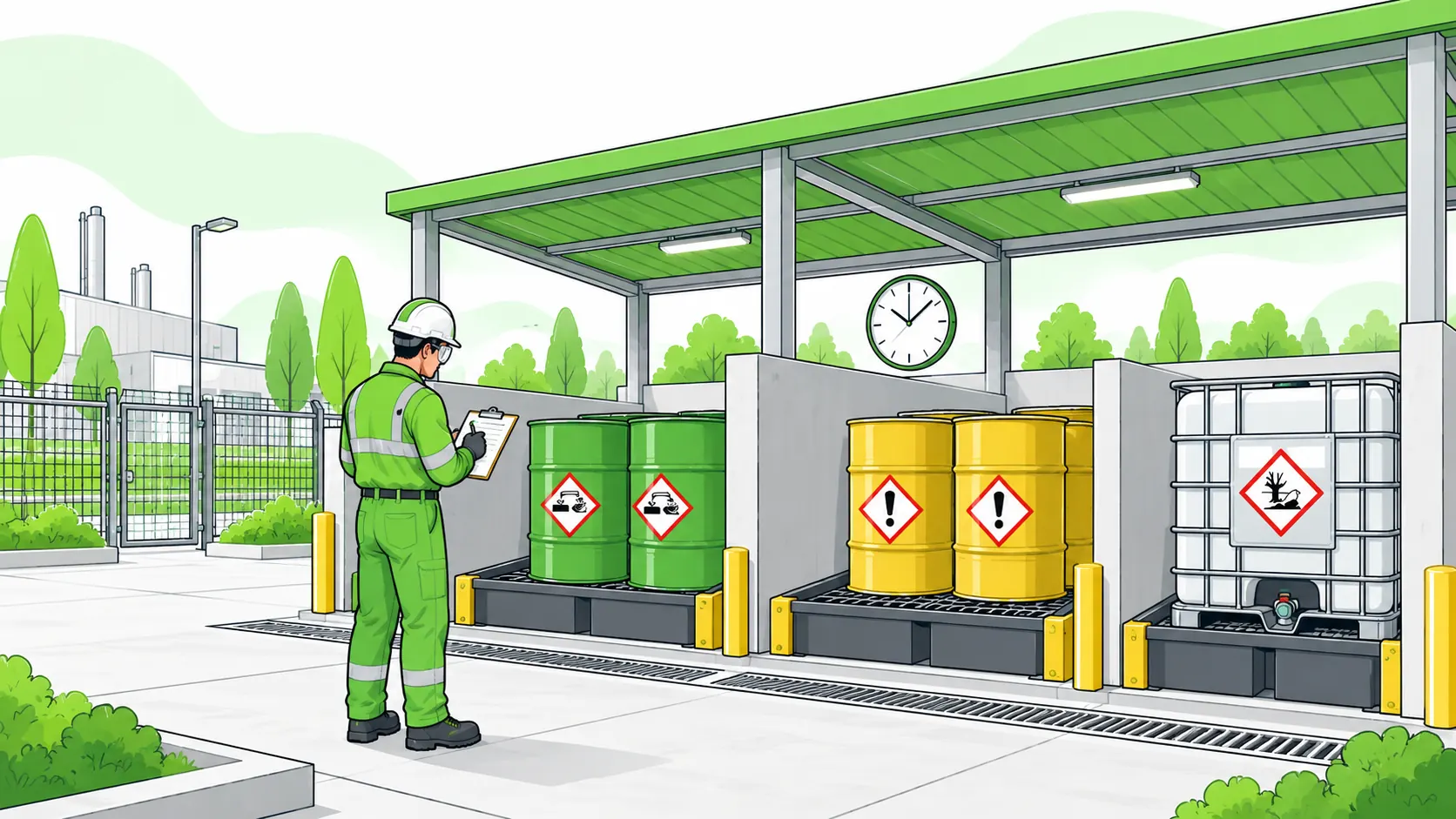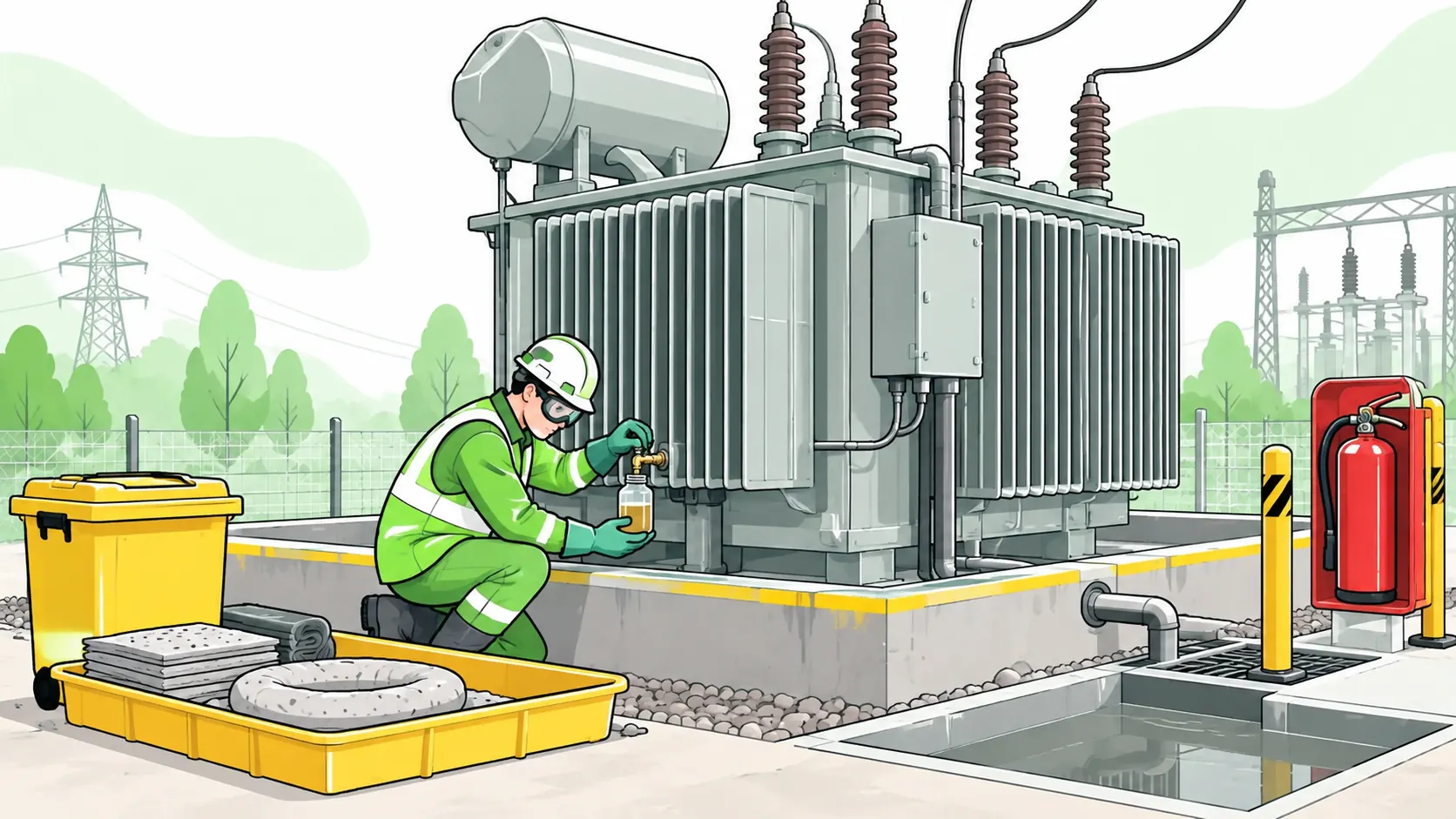
Transformer oil safety comes down to two linked dangers: the dielectric fluid can burn, and in legacy units that fluid may contain polychlorinated biphenyls (PCBs) that turn into far more toxic compounds in a fire. Your real exposure depends almost entirely on the fluid type and the transformer's age — not the word "oil."
The dangerous thing about transformer oil is how reasonable the old engineering decision looks in hindsight. Manufacturers adopted PCB-based askarel fluid precisely because it would not catch fire — and that same fire-safety logic created a persistent carcinogen that now sits inside ageing equipment worldwide. Treating every oil-filled transformer as one risk category is the first mistake; a 1970s askarel unit and a modern ester-filled unit sit at opposite ends of both the fire and the toxicity scale.
This article walks through that contradiction in technical detail: the combustion chemistry, the EPA concentration thresholds that decide your legal duties, the current toxicology, and the jurisdictional split between US, international, and UK/EU obligations. It is written for the people who actually decide whether a unit gets tested, kept, or removed — facility and maintenance managers, substation engineers, EHS officers, and building owners holding legacy oil-filled transformers.
Why Transformer Oil Is a Dual Hazard: Fire and Chemical Contamination
The hazard is never "oil" in the abstract — it is two separate failure families that share one tank. One is combustion and tank rupture; the other is persistent chemical contamination that can poison long after any flame is out.
Transformer oil does real work. It insulates the windings electrically and carries away heat, which is why "just drain it" is not a control option — a dry, un-cooled unit fails fast.
That dual function is exactly why the fluid choice matters so much. The same liquid that keeps the transformer alive is the thing that can burn or contaminate.
The two hazard families behave nothing alike:
- Combustion and explosion — mineral oil ignites readily, and an enclosed-tank fire can pressurise and rupture the tank, throwing burning fluid.
- Persistent toxic contamination — PCB-based fluid barely burns, but its breakdown products and residues are a long-lived carcinogenic hazard.
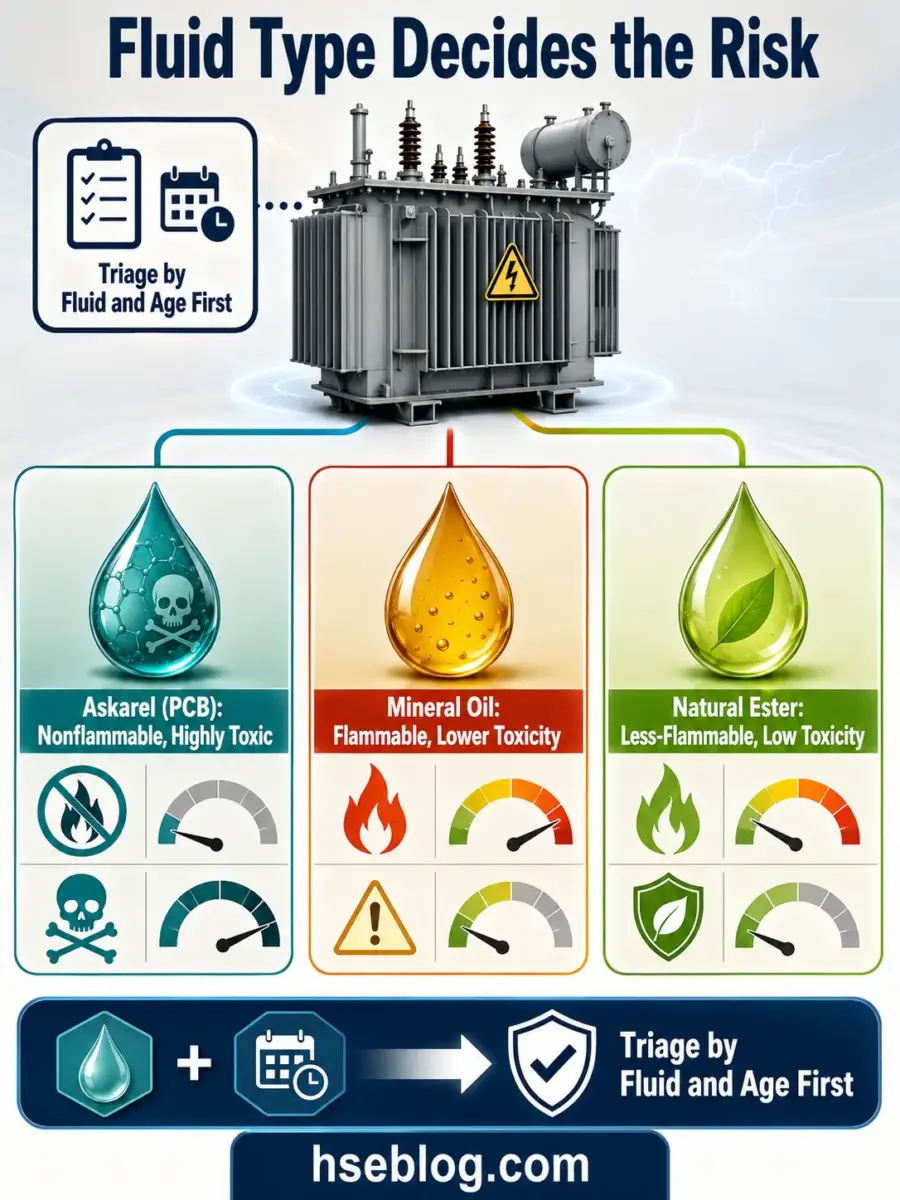
Age is the cleanest predictor of which problem you have. Pre-ban askarel units and mineral-oil units cross-contaminated through shared servicing equipment are the high-risk population; modern ester and dry-type designs are not.
A pattern worth naming from across the published record: practitioners who lump all oil-filled transformers into one "flammable equipment" bucket consistently mis-rank their own exposure. Triage by fluid type and vintage before you reach for a single generic control.
What Makes PCB-Contaminated Transformer Oil Dangerous in a Fire?
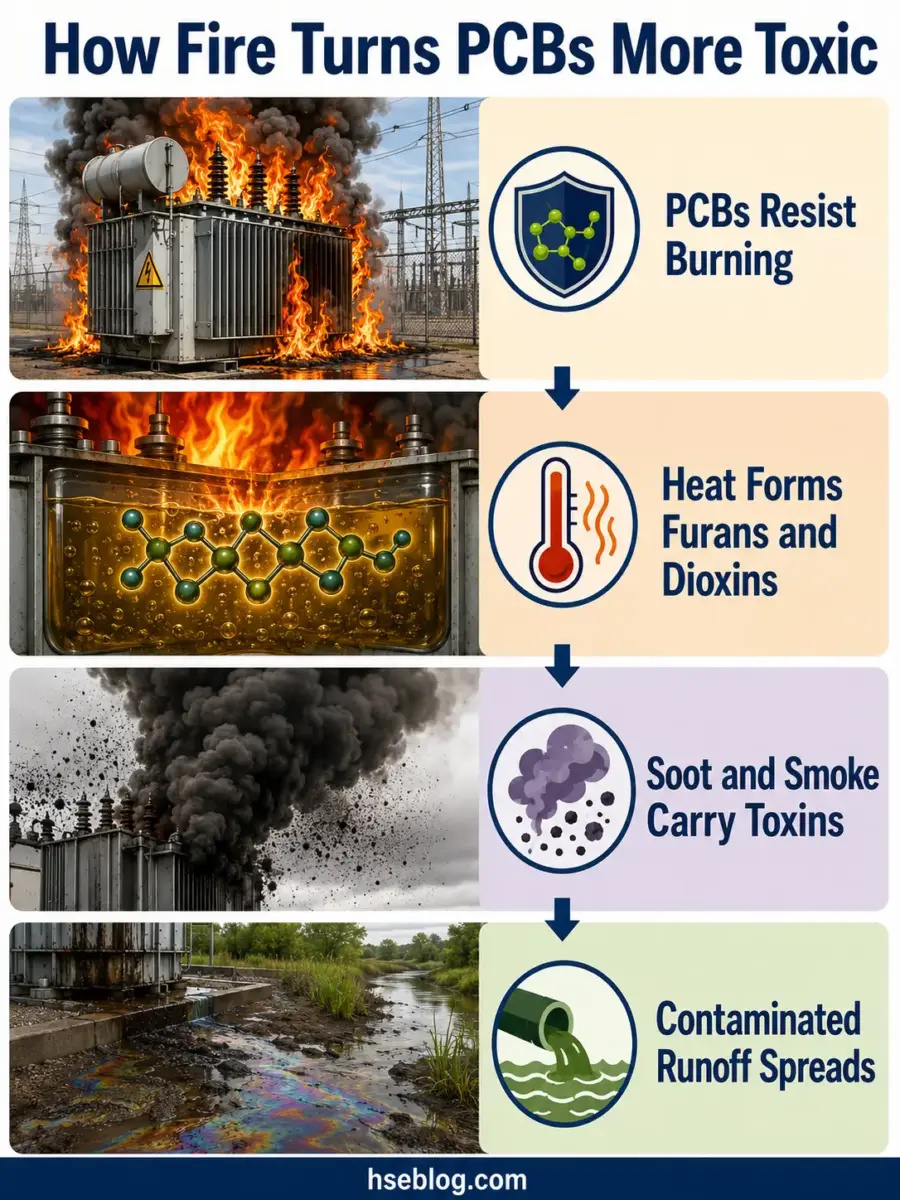
PCBs in transformer oil are nonflammable, but when a transformer burns, the heat converts them into polychlorinated dibenzofurans and dioxins — far more toxic byproducts that contaminate smoke, soot, and residue. The result is a persistent chemical-exposure hazard that often outweighs the immediate fire and lasts long after flames are out.
This is the counterintuitive heart of the topic. The property that made PCBs attractive — thermal stability and resistance to ignition — does not mean they vanish in a fire; it means they decompose into something worse.
Under fire conditions, PCBs form polychlorinated dibenzofurans (PCDFs) and polychlorinated dibenzo-dioxins (PCDDs). NIOSH chemical guidance for PCBs notes that combustion produces soot containing PCBs, furans, and chlorinated dioxins — which is why the smoke and residue, not only the flame, drive the exposure.
Mineral oil presents the opposite profile. It ignites readily, and in a sealed tank the rising pressure of a hydrocarbon fire can rupture the casing, turning a fire into an explosion that scatters burning oil.
A consistent failure mode in the published incident pattern: responders treat a transformer fire as a routine hydrocarbon event and underestimate the contamination footprint left behind. With a PCB unit, the toxic legacy of soot and runoff frequently exceeds the acute fire damage, and the cleanup obligation is the part that lingers.
| Fluid type | Flash point | Fire point | Flammability class | Toxicity in a fire |
|---|---|---|---|---|
| Mineral oil | ~145–155°C | ~160–165°C | Flammable | Lower; hydrocarbon smoke |
| Askarel (PCB) | Very high / nonflammable | Does not sustain | Nonflammable | High; forms PCDFs/PCDDs |
| Natural ester (FR3) | ~330°C | ~360°C | Less-flammable (Class K) | Low |
Fire-property figures: mineral oil and FR3 ester values (Cargill Bioindustrial FR3 technical data, current).
Flash Point, Fire Point, and "Less-Flammable" Fluid Classifications
Two thresholds separate a flammable transformer fluid from a "less-flammable" one, and both come from a standard test (ASTM D92). Flash point is the temperature at which vapour briefly ignites; fire point is the higher temperature at which the fluid sustains burning.
Mineral oil sits low on both: a flash point around 145–155°C and a fire point around 160–165°C (Cargill Bioindustrial FR3 technical data, current). That low fire point is why fire codes restrict mineral-oil transformers indoors and near occupied buildings.
The regulatory dividing line is the fire point. A fluid must reach a fire point of ≥300°C to qualify as "high-fire-point" or "less-flammable" — a threshold established in the US National Electrical Code (now NEC 450.23, originating in the 1978 NEC).
Natural ester fluid clears that bar comfortably, with a flash point around 330°C and a fire point around 360°C (Cargill Bioindustrial FR3 technical data, current), earning a Class K designation. The practical reading: "less-flammable" is an engineering category with a defined number behind it, not a marketing adjective.
How PCBs Got Into Transformers — and Why They're Still a Problem
The short answer: PCBs were deliberately added for fire safety, then banned for toxicity, but legacy units and cross-contamination keep the hazard alive in service today.
Askarel was the trade name for PCB-based dielectric fluid, adopted in the mid-twentieth century specifically because it would not propagate a fire. For decades that nonflammability was sold as a safety feature.
The phase-out came once the toxicity and environmental persistence of PCBs were understood. Globally, the Stockholm Convention on Persistent Organic Pollutants drove elimination, and an estimated 2.9 million tonnes of PCBs were produced worldwide (Secretariat of the Stockholm Convention, 2008 estimate).
The part that keeps facility managers up at night is cross-contamination. A unit originally filled with PCB-free mineral oil can pick up PCBs through shared servicing or top-up equipment that previously handled askarel.
That mechanism breaks the assumption people lean on most:
- The nameplate does not certify PCB status. It records design fluid, not what a contaminated service line later introduced.
- "Mineral oil" is not a clearance. Cross-contamination is invisible without analysis.
- Only a lab result settles it. Fluid sampling and laboratory analysis is the single conclusive test of status.
The recurring error across utilities is assuming a mineral-oil unit is PCB-free because it "isn't an askarel transformer." Until the fluid is sampled and tested, that is a hope, not a finding.
PCB Concentration Thresholds: How Transformers Are Classified
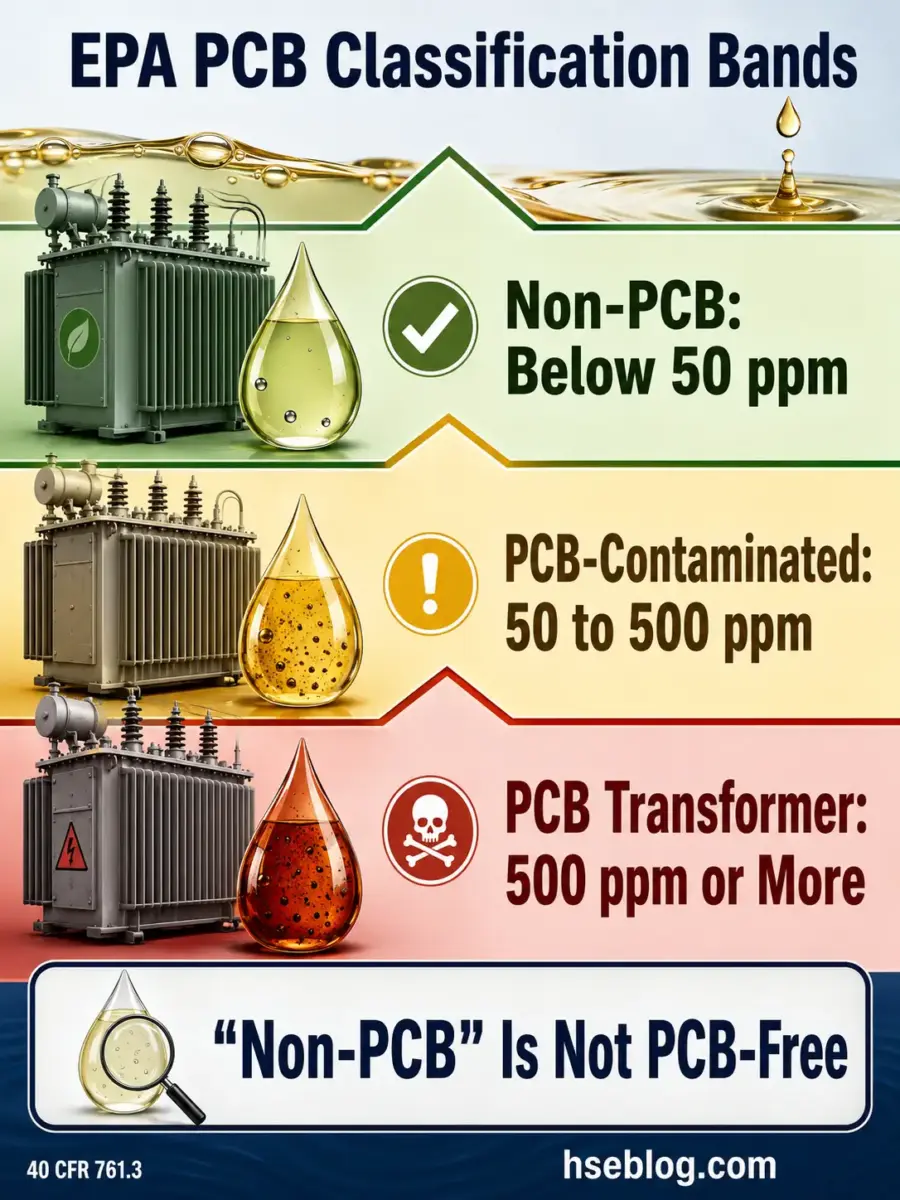
Concentration decides classification, and classification decides your duties. Under US EPA rules in 40 CFR 761.3, transformers fall into three bands by PCB content in parts per million.
| Classification | PCB concentration | What it means |
|---|---|---|
| Non-PCB | < 50 ppm | Below the US regulatory line — not "PCB-free" |
| PCB-Contaminated | ≥ 50 to < 500 ppm | Triggers contamination-level handling and disposal duties |
| PCB Transformer | ≥ 500 ppm | Full marking, registration, use, and disposal obligations |
These specific bands are the single most useful piece of hard information that vendor blogs routinely omit, and they map to the EPA PCB regulations under 40 CFR Part 761. Internationally, the Stockholm Convention uses 50 mg/kg (50 ppm) as its threshold for equipment and contaminated material.
Status is set by sampling and lab analysis, and a unit can move between bands — a contaminated transformer can sometimes be reclassified downward after fluid replacement and retesting, following the procedures the rule allows.
The practical trap is reading "non-PCB" as "PCB-free." Below 50 ppm is a regulatory cutoff that changes your disposal route, not a clean bill of health — there can still be measurable PCBs present, and non-specialists routinely misread the label.
Health Effects of PCB Exposure
This section covers occupational health effects and is for HSE practitioner reference. It is not medical advice. Workers with suspected exposure or specific symptoms should seek evaluation from an occupational physician or qualified medical professional.
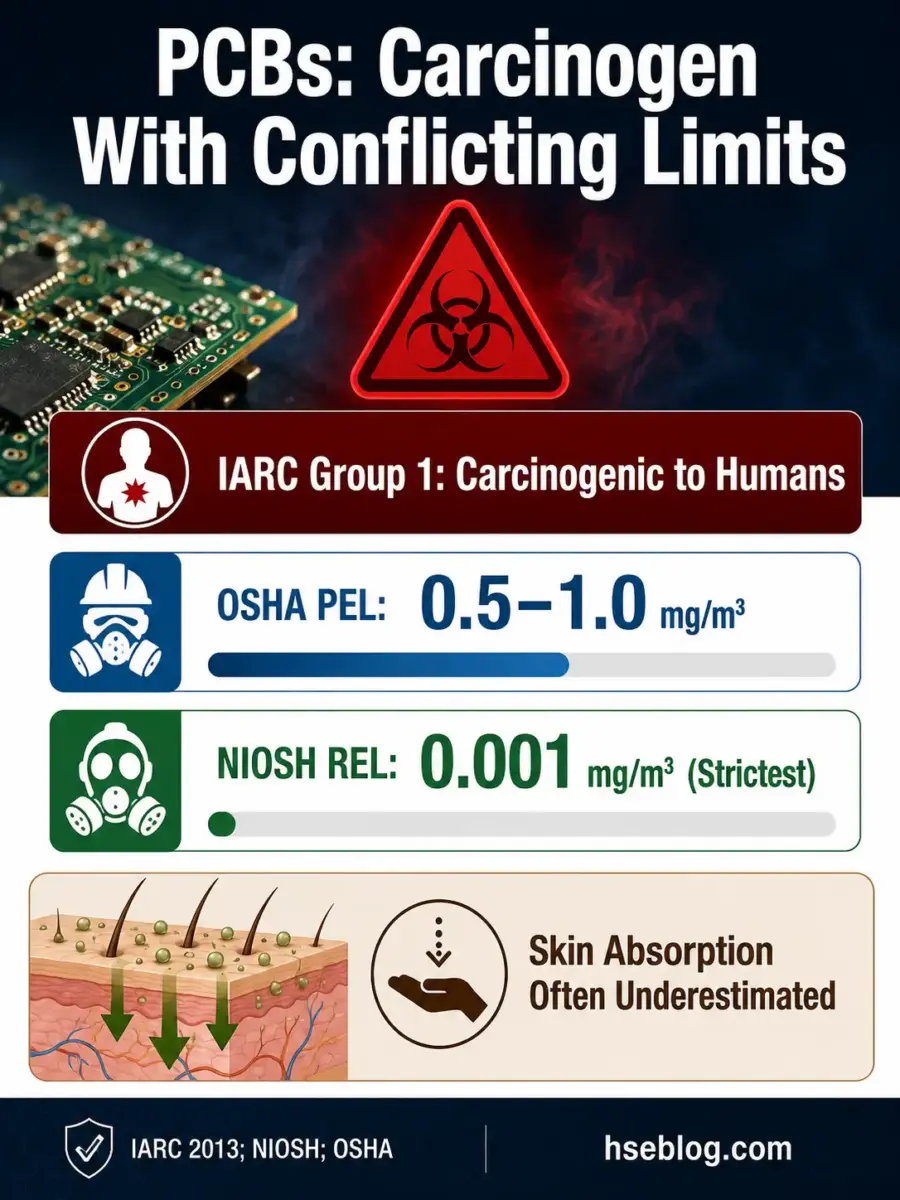
The headline fact corrects the most common error in competing content: IARC classifies PCBs as Group 1 — carcinogenic to humans (IARC, 2013, Monograph Vol. 107). The older "probably carcinogenic" framing still circulating online is out of date.
Beyond cancer, PCBs carry a range of documented non-cancer effects:
- Chloracne — a persistent, disfiguring skin condition strongly associated with PCB and dioxin-type exposure.
- Liver damage — the liver is a primary target of PCB toxicity.
- Reproductive and developmental effects — documented in the toxicological literature.
- Immune effects — alteration of immune response with sustained exposure.
Exposure reaches the body by inhalation, skin absorption, and ingestion, and because PCBs are persistent and bioaccumulative, the burden builds rather than clears. That persistence is what makes even low-level repeated contact significant.
Skin absorption is the route practitioners most often underestimate. The OSHA permissible exposure limits for chlorodiphenyl carry a "skin" notation precisely because dermal uptake can cause overexposure even when airborne concentrations look acceptable — a point reinforced by NIOSH chemical guidance for PCBs.
The airborne limits themselves diverge sharply, which matters when you set monitoring targets:
| Reference | Airborne limit | Basis |
|---|---|---|
| OSHA PEL (29 CFR 1910.1000, Z-1) | 1.0 mg/m³ (42% Cl); 0.5 mg/m³ (54% Cl), skin notation | Enforceable US workplace limit |
| NIOSH REL | 0.001 mg/m³ | Treated as a carcinogen; "lowest feasible" approach |
| NIOSH IDLH | 5 mg/m³ | Immediately dangerous concentration |
Exposure values: NIOSH Pocket Guide — Chlorodiphenyl; OSHA Table Z-1 (current).
Where these conflict, the stricter NIOSH REL of 0.001 mg/m³ should govern your protective design. NIOSH treats PCBs as a carcinogen with no established safe level, which is consistent with the IARC Group 1 classification.
Regulatory Obligations: Testing, Marking, Use, and Disposal
Regulatory content here reflects general HSE professional understanding of the cited requirements as of the last-reviewed date above. It is not legal advice. Specific compliance, enforcement, or prosecution questions should go to qualified legal counsel in the applicable jurisdiction.
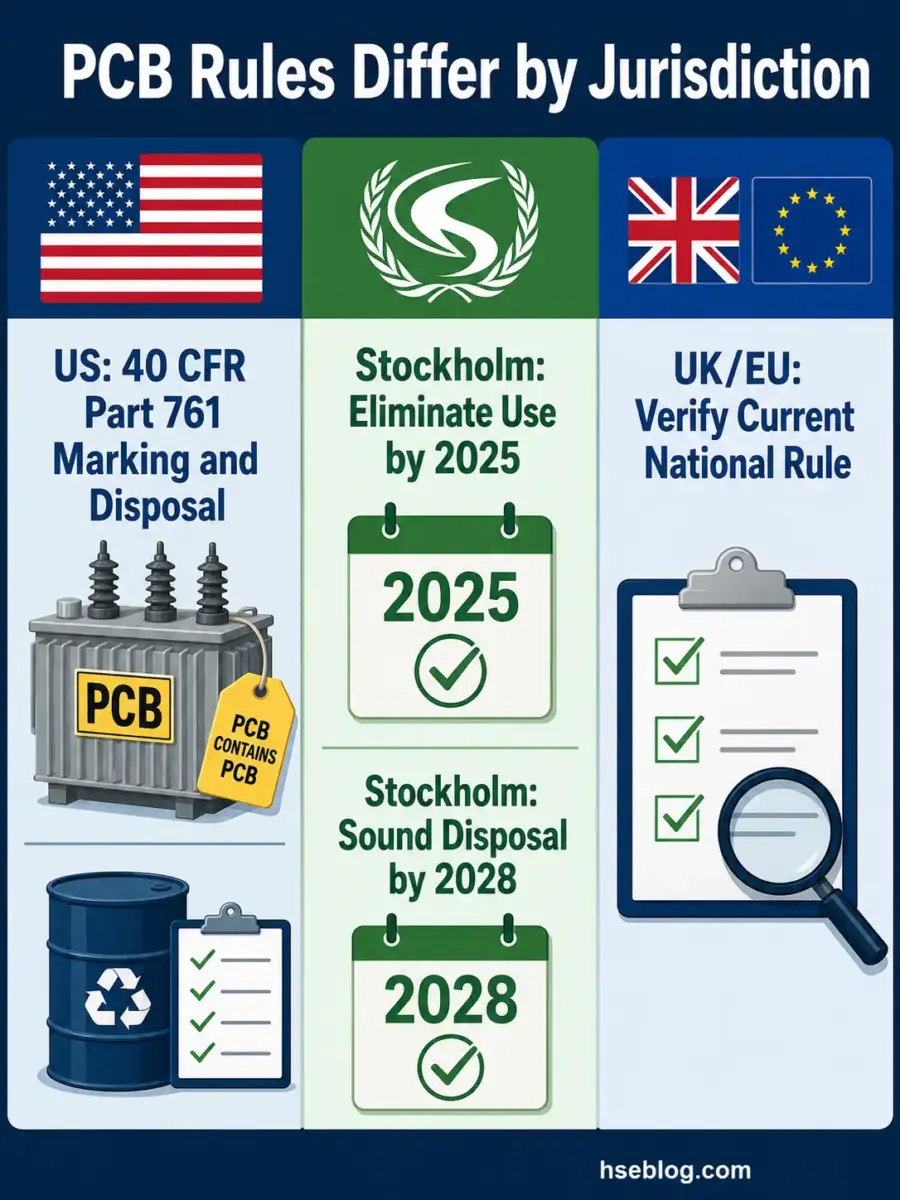
Obligations split cleanly by jurisdiction, and the duty that applies to you depends on where the equipment sits. Three frameworks dominate.
United States — TSCA and 40 CFR Part 761
In the US, the EPA PCB regulations under 40 CFR Part 761 govern marking, storage, recordkeeping, and disposal of PCB items. Underlying this, the TSCA §6(e) prohibition (codified in Part 761) treats manufacture, processing, and distribution of PCBs at ≥50 ppm as an "unreasonable risk of injury to health."
The practical compliance chain is: test, classify, mark and register PCB transformers, keep records, and route waste to authorised disposal — never general waste.
International — Stockholm Convention
Internationally, the Stockholm Convention (Annex A, Part 2, in force 2004) sets two milestones: eliminate PCB use in equipment by 2025, and achieve environmentally sound waste management of PCB liquids and contaminated equipment above 50 mg/kg by 2028.
That 2025 deadline has now arrived, and international bodies report many countries still hold active PCB transformers — UNEP and the BRS Secretariat continue to track elimination, keeping this a live compliance and contamination issue through 2025–2026.
UK / EU — verify the current instrument
Legacy-disposal obligations exist across the UK and EU, but the specific national statutory instrument and its clauses vary. Verify the current national regulation before relying on a particular clause rather than assuming a single pan-European rule.
A recurring compliance gap deserves naming: organisations often inventory and label their PCB units, then stall on disposal because of cost. Holding an identified PCB unit in service past the applicable deadline is itself a compliance exposure — not a neutral holding pattern.
One freshness point to factor into any disposal plan: the EPA's 2023 PCB cleanup and disposal rule (88 FR 59662, US, effective February 26, 2024) expanded accepted PCB extraction and analytical methods, added emergency-spill cleanup flexibility, and removed the roadbed-material disposal route for PCB bulk product waste.
What to Do If a PCB Transformer Leaks or Catches Fire
This article provides general HSE knowledge. Spill and fire response involving PCB transformers must be planned and supervised by a competent person with relevant training, jurisdiction-specific authorization, and a site-specific risk assessment. The information here does not replace that, or a site emergency plan.
The controlling priority in any PCB transformer incident is containment of contaminated material — soot, residue, and firewater runoff — because that contamination, not the flame, is the lasting hazard. The response framing below is an overview, not a step-by-step procedure.
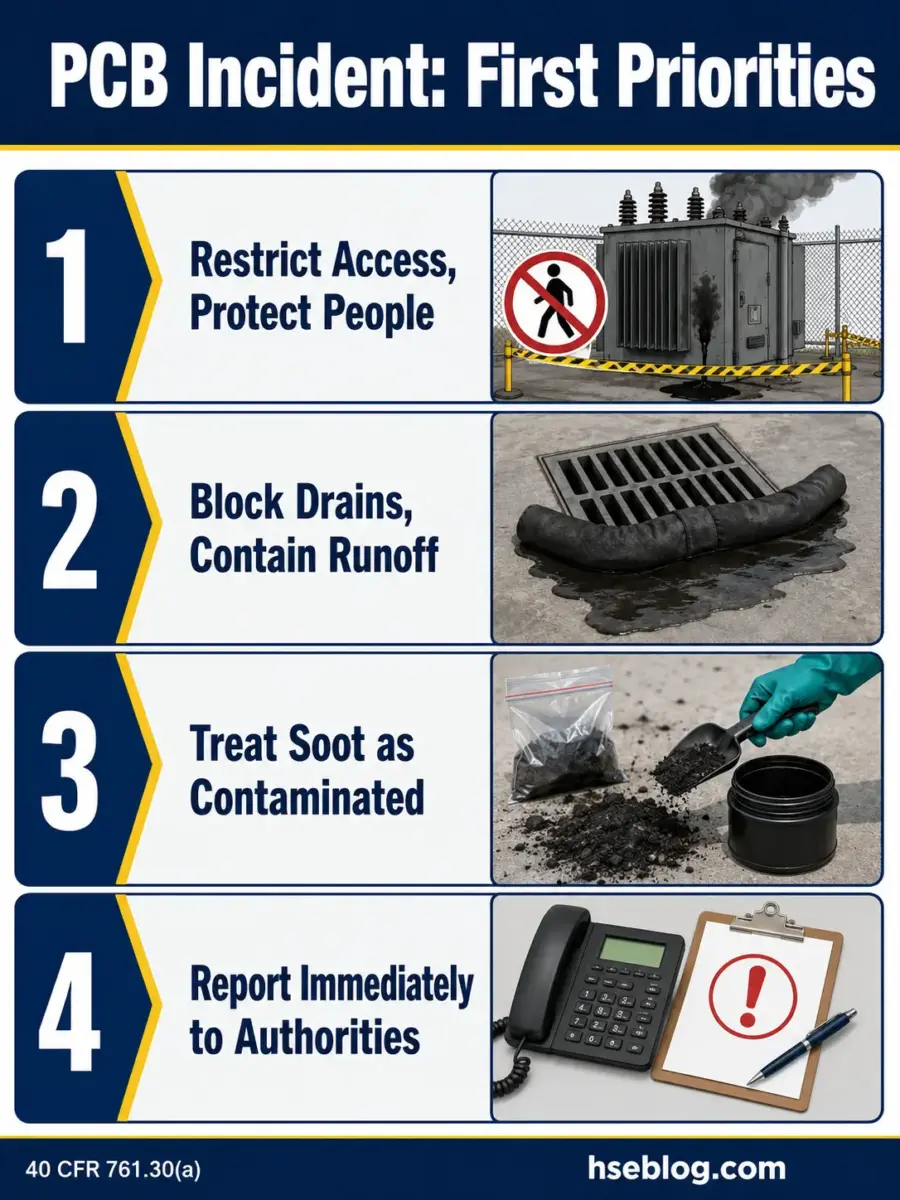
Immediate priorities, in order:
- Protect people first. Restrict and control access; standard firefighting agents have limits against oil fires, and responders need protection against contaminated smoke and soot.
- Contain the runoff. Block floor drains and control firewater so contaminated water cannot reach waterways or storm systems.
- Treat soot and residue as contaminated. Post-fire cleanup is specialist work, not routine washdown — the residue carries PCBs, furans, and dioxins.
- Report immediately. In the US, fire-related incidents involving PCB equipment must be reported immediately upon discovery under 40 CFR 761.30(a), with notification to the National Response Center.
Reporting and notification duties are jurisdiction-specific. The US duty above does not transfer automatically elsewhere; confirm the equivalent national requirement before relying on it.
The set-and-forget failure mode here is containment that exists on paper but not in practice. Secondary containment that was installed and then never maintained — drains left unblocked, containment pits silted up — is how a contained event becomes a waterway contamination incident.
Safer Alternatives: Ester and Dry-Type Transformers
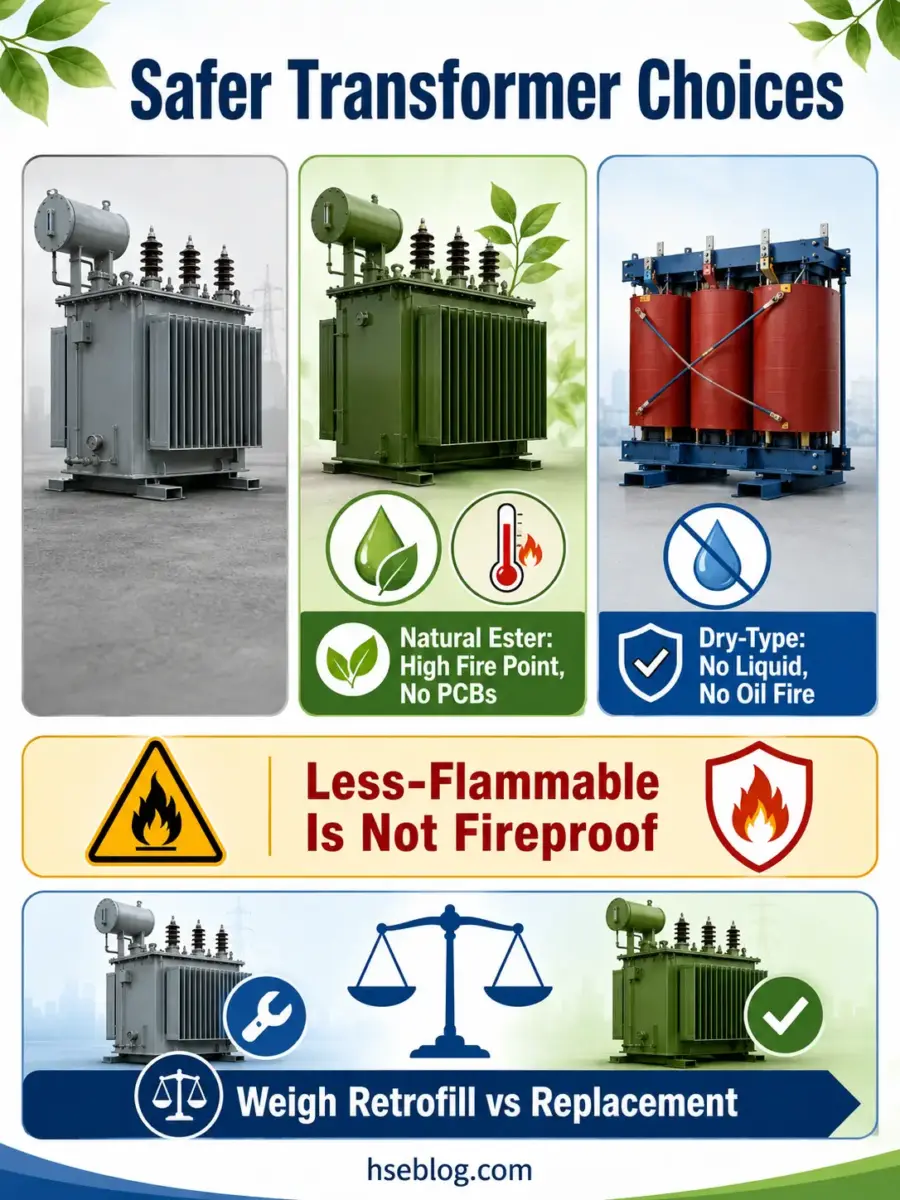
The risk-reduction pathway is straightforward at the design stage: choose a fluid or technology that removes both the PCB legacy and the low fire point. Two routes dominate.
Comparing the main options on the qualities that matter:
- Natural and synthetic esters — biodegradable fluids with a high fire point (≥300°C, "less-flammable" class) and no PCB content. They sharply reduce fire risk and eliminate the PCB question entirely.
- Dry-type transformers — no insulating liquid at all, which removes the oil-fire and PCB-contamination hazards together. Best suited to specific indoor and lower-power applications.
- The trade-offs — esters can carry cost and some application limits, and switching means weighing retrofill of an existing unit against full replacement.
One honest caveat closes the loop on the misconception that "less-flammable" means fireproof. A high fire point reduces ignition and propagation risk; it does not make a transformer immune to fire under severe fault conditions. The gain is real but bounded.
If you are specifying new equipment or planning end-of-life replacement, the alternatives above are where transformer oil safety stops being a containment problem and becomes a design decision.
Frequently Asked Questions
How can I tell if a transformer contains PCBs without lab testing?
You can gather clues but not confirmation. Askarel trade names on the nameplate and a manufacture date in the PCB-era window raise suspicion, yet cross-contamination means even a mineral-oil unit can exceed thresholds. Only fluid sampling and laboratory analysis confirms status — the nameplate and fluid type are starting points, not answers.
Does a "non-PCB" transformer label mean it is completely PCB-free?
No. Under US EPA rules in 40 CFR 761.3, "non-PCB" means the fluid tests below 50 ppm — a regulatory cutoff, not zero. Measurable PCBs can still be present below that line. The label changes your disposal duties; it does not certify the unit clean.
Is it still legal to keep a PCB transformer in service?
It depends on jurisdiction. Under the international Stockholm Convention, parties committed to eliminate PCB use in equipment by 2025; in the US, continued use is governed by the authorisations and conditions in 40 CFR Part 761. Confirm the rule for your location — this is general information, not legal advice.
What is the difference between askarel and mineral oil?
Askarel is PCB-based dielectric fluid: nonflammable, but highly toxic and a confirmed human carcinogen. Mineral oil is a flammable hydrocarbon with comparatively lower toxicity. In a fire they behave oppositely — mineral oil burns readily, while askarel resists burning but generates toxic furans and dioxins.
Are modern ester-filled transformers completely fire-safe?
No — they are "less-flammable," not fireproof. Natural esters reach a high fire point (≥300°C) that sharply reduces ignition and fire propagation compared with mineral oil. Under severe fault conditions, fire remains possible. The category lowers risk substantially without eliminating it.
How long do PCBs persist after a spill or after the transformer is removed?
Decades. PCBs bind tightly to soil, resist breakdown, bioaccumulate in living tissue, and can migrate toward groundwater. That persistence is exactly why cleanup and disposal obligations outlast the equipment itself — removing the transformer does not remove the contamination.
The One Change That Cuts the Most Risk
The industry's repeated mistake with transformer oil safety is judging a unit by what it looks like instead of what it contains. A nameplate, a fluid type, even a "non-PCB" sticker tells you about design intent — not about cross-contamination, not about what burning fluid will release, and not about which deadline you may already have crossed.
The highest-impact change is also the least glamorous: test legacy oil-filled units, classify them honestly against the 50 and 500 ppm thresholds, and move identified PCB equipment toward authorised disposal rather than parking it past the applicable deadline. Everything else — fire engineering, exposure control, emergency response — follows from knowing what is actually in the tank.
For practitioners building competence in this area, recognised pathways such as NEBOSH, IOSH, or OSHA outreach training, alongside the EPA and NIOSH primary sources cited throughout, are the right foundation. Transformer oil safety is won long before a fire — at the point someone decides the unit is finally worth testing.