TL;DR
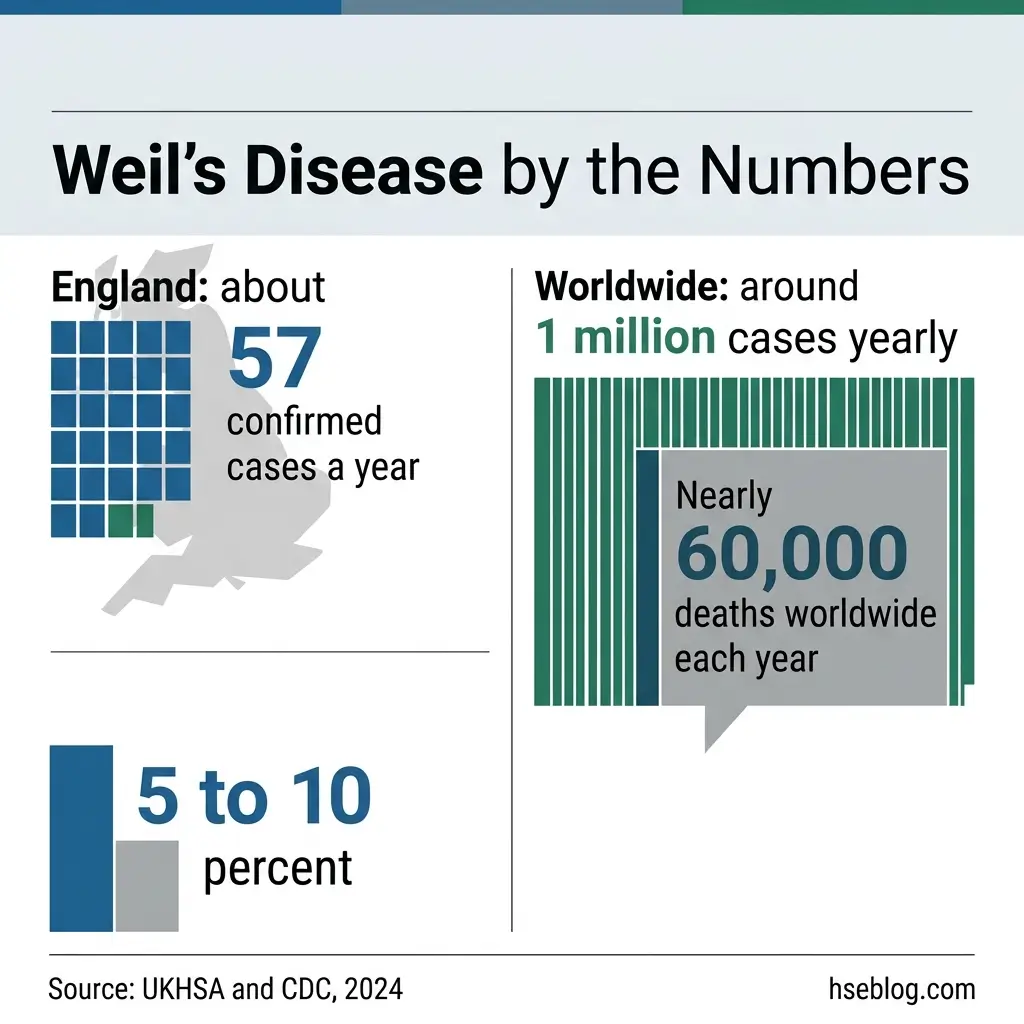
- Around 1 million cases and nearly 60,000 deaths occur worldwide each year, most in tropical regions (CDC Yellow Book, 2024).
- England averaged 57 laboratory-confirmed and 89 probable cases a year from 2020 to 2023, peaking in summer and autumn (UKHSA, 2024).
- Illness usually appears 5–14 days after exposure (range 2–30 days), often starting as flu-like symptoms (CDC, 2024).
- Severe “Weil’s disease” — jaundice, kidney failure, lung bleeding — develops in 5–10% of cases and can be fatal (CDC, 2024).
Weil’s disease is the severe form of leptospirosis, a bacterial infection spread mainly through the urine of infected rats and contaminated fresh water. Water and sewage workers are exposed when Leptospira enter cuts, grazes, or the eyes, nose and mouth. Early flu-like symptoms can progress to organ failure without prompt antibiotic treatment.
A flu-like illness a week after clearing a blocked drain is easy to dismiss as a seasonal bug — and that assumption is where leptospirosis turns dangerous. The infection is routinely mistaken for flu, and in travellers for malaria or dengue, which delays the early antibiotics that most change the outcome (CDC, 2024).
UK case counts look small on paper, yet leptospirosis is widely underdiagnosed and severe cases still reach intensive care. This article sets out how Weil’s disease reaches water and sewage workers, the symptoms and timing that matter, the controls that work, and the UK legal duties behind them.
This article is HSE practitioner reference, not medical advice. Anyone with symptoms or a specific exposure concern should see an occupational physician or qualified medical professional without delay.
Weil’s disease and why water work carries the risk
Weil’s disease is the severe, potentially fatal form of leptospirosis — a bacterial infection caused by pathogenic Leptospira carried in the kidneys of animals and shed in their urine. In the UK the classic culprit is rat urine carrying the serovar Icterohaemorrhagiae; cattle can pass a usually milder form (L. hardjo) to people who handle them.
Most infections are mild. The name “Weil’s disease” is reserved for the severe end — jaundice, acute kidney injury and, in the worst cases, bleeding into the lungs.
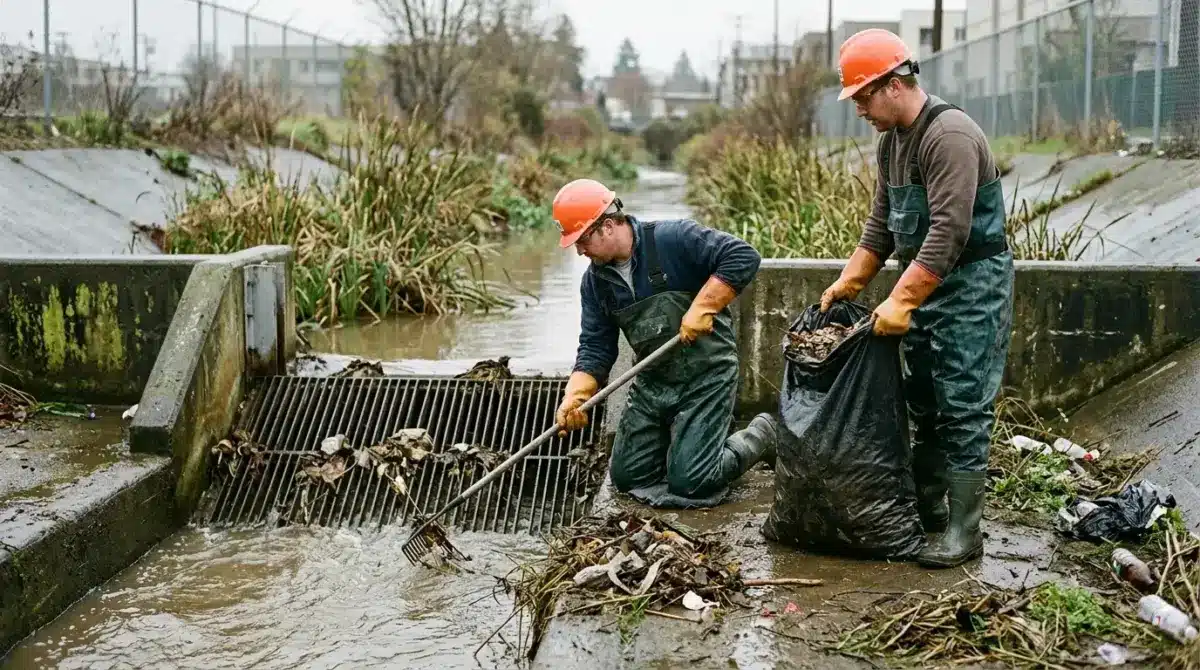
Water work concentrates the two ingredients the bacteria need: infected animals and standing fresh water. Rats live along canals, rivers, drains and sewers, and Leptospira survive for days to weeks in warm, still, slightly alkaline water and wet soil.
The people most exposed are predictable:
- Water and wastewater operatives — sewer and drainage work, pumping stations, treatment works.
- Canal, river and reservoir crews — bank clearance, dredging, lock and weir maintenance.
- Flood-response and grounds teams — anyone wading through or handling floodwater and silt.
- Related outdoor trades — groundworkers plus demolition and refurbishment crews on rat-prone sites, and farmers and vets exposed to animal urine.
UK surveillance backs this up. Many England cases report exposure to potentially contaminated water or direct rodent contact, and infections fall most often on adult men — a pattern driven by occupational and recreational exposure (UKHSA, 2024).
How does Leptospira get into the body at work?
The route into the body is narrow but efficient. Leptospira do not penetrate healthy, intact skin — they exploit breaks in it and the soft, wet tissue of the eyes, nose and mouth (CDC, 2024).
The exposure sequence is short:
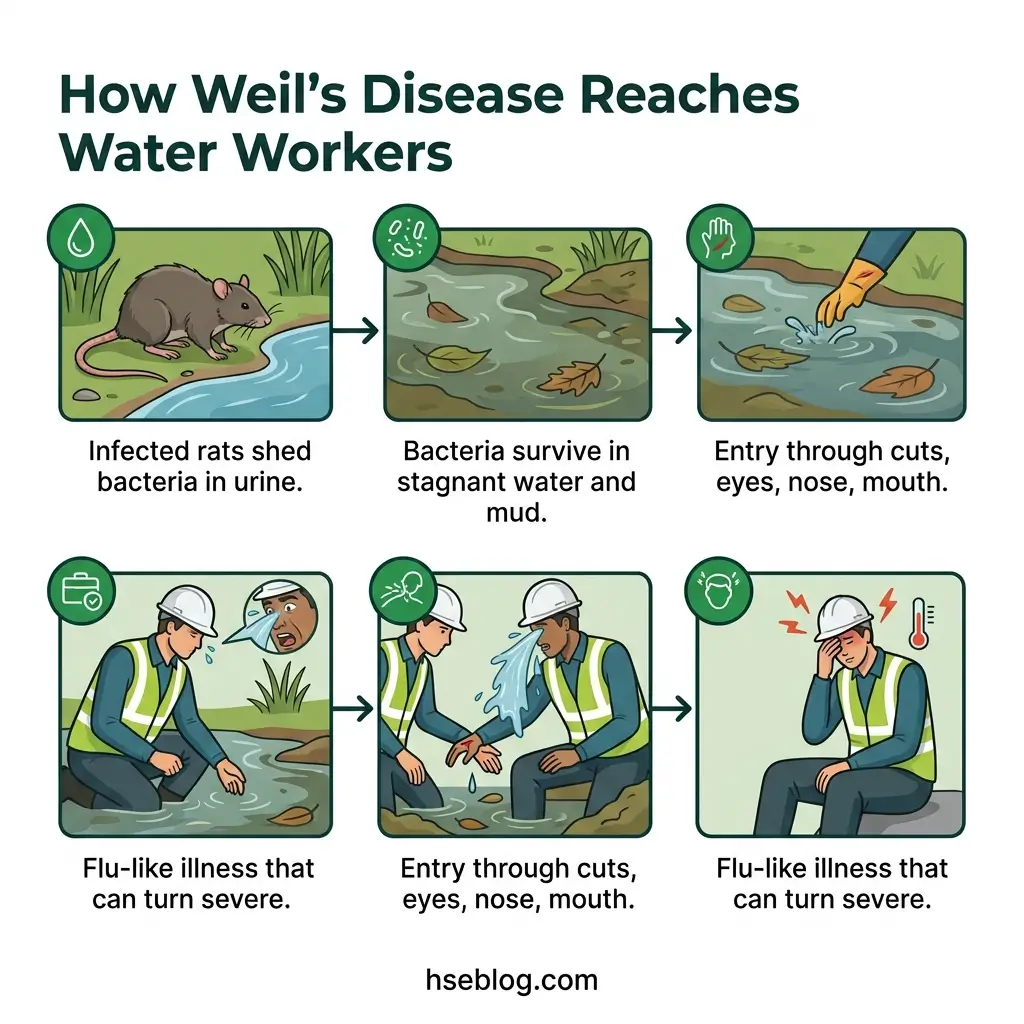
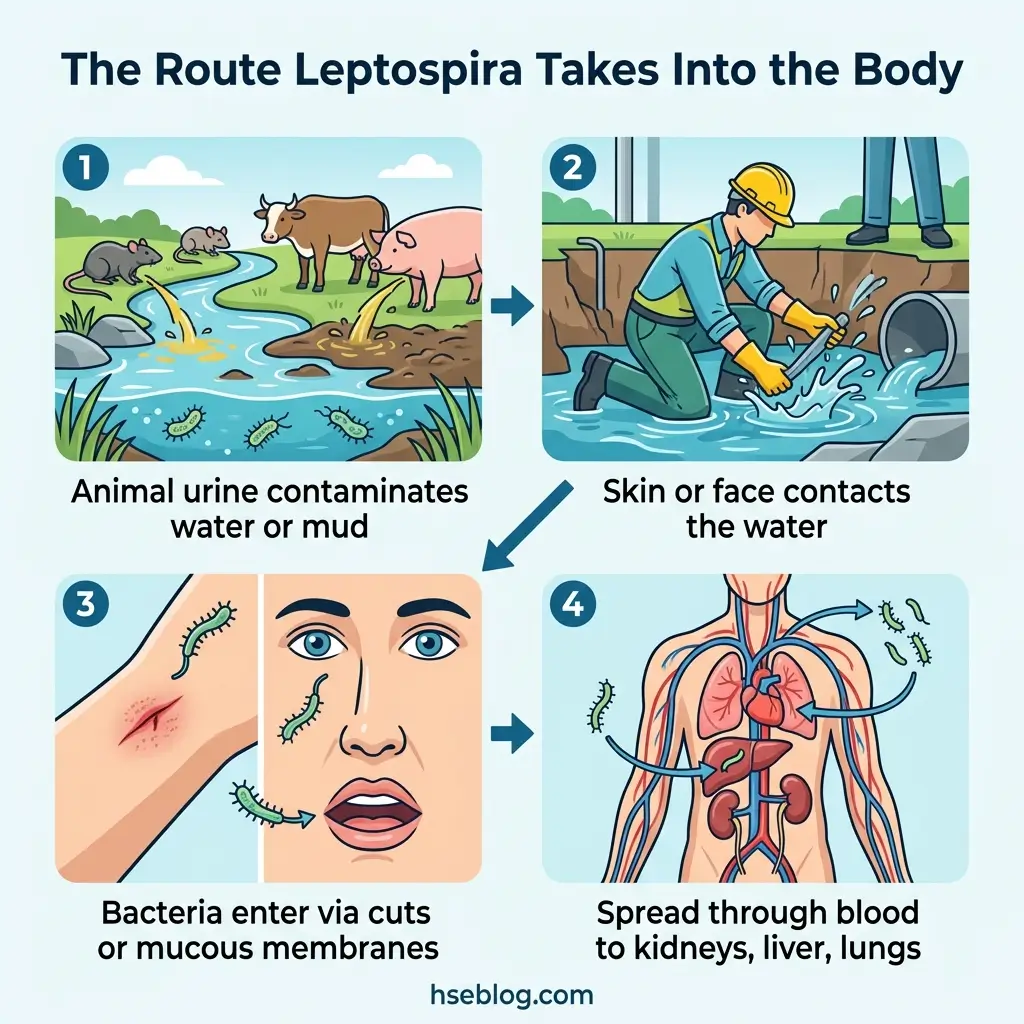
- Contamination — an infected animal sheds Leptospira in urine into water, mud or wet surfaces.
- Contact — a worker’s skin or face meets that water or a contaminated surface.
- Entry — bacteria pass through a cut, graze or softened waterlogged skin, or across the eyes, nose or mouth.
- Spread — bacteria enter the bloodstream and disseminate, damaging small blood vessels and reaching the liver, kidneys and lungs.
Two work realities widen the entry point. Prolonged immersion softens and macerates skin, and hand-to-face contact — rubbing an eye, eating without washing — carries contamination straight to a mucous membrane.
That is why a minor, half-healed graze matters on a wet site in a way it never would in an office.
Weil’s disease symptoms, timing, and the diagnosis trap
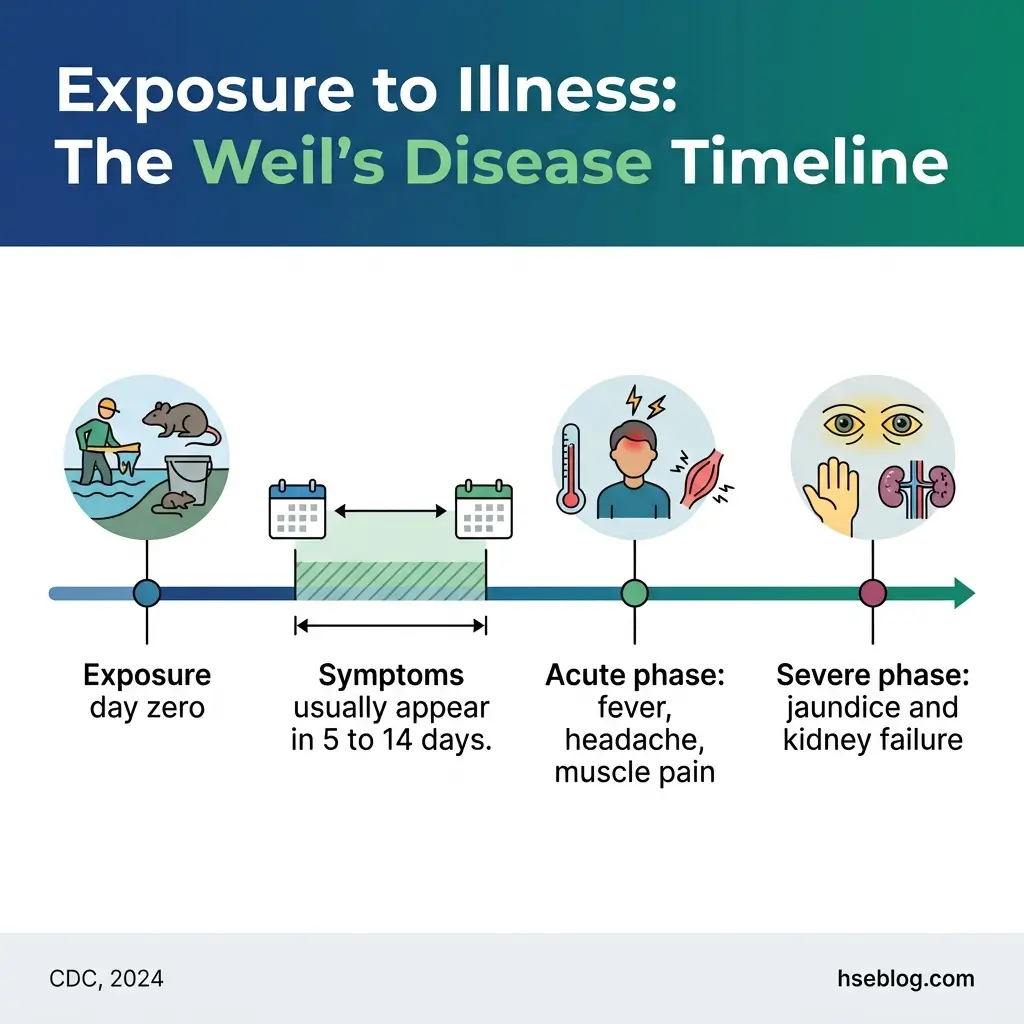
Symptoms usually appear 5–14 days after exposure and look, at first, like flu. That ordinary start is exactly what makes the disease dangerous.
Timings and features here follow CDC clinical guidance (2024).
| Stage | Typical timing | What it looks like |
|---|---|---|
| Incubation | 2–30 days (usually 5–14) after exposure | No symptoms |
| Acute (leptospiraemic) phase | First ~7 days of illness | Sudden fever, chills, severe headache, muscle pain in the calves and lower back, red eyes |
| Severe (Weil’s) disease | Days to weeks in, in 5–10% of cases | Jaundice, kidney failure, lung bleeding, meningitis |
The trap is that first phase. Because it mimics flu — and, in returning travellers, malaria or dengue — leptospirosis is frequently missed until the patient deteriorates (CDC, 2024).
A 2025 case report from Wales describes precisely this: a man treated for sepsis of unknown origin who crashed into intensive care before leptospirosis was identified — a reminder that severe disease still occurs in low-incidence settings (Cureus, 2025).
Treatment is straightforward when it starts early. Doxycycline is the drug of choice for mild illness and intravenous penicillin for severe cases, ideally begun on clinical suspicion rather than waiting for test results (CDC, 2024).
The single most useful thing an exposed worker can do is tell the doctor about the water or rodent contact. That one detail reframes a “viral illness” as a treatable bacterial infection.
Controlling the risk: what protects water workers
Protection comes from cutting the exposure pathway, not from any single piece of kit. HSE frames this as Assess, Control, Review — identify where rats and contaminated water put people at risk, apply layered controls, then check the controls are actually used (HSE, 2024).
Stop the source
- Control rodents — reduce rat populations around sites, banks and structures, and report infestation early.
- Keep areas clear — food waste and cover encourage rats; tidy sites lower the odds of contamination.
Break the contact
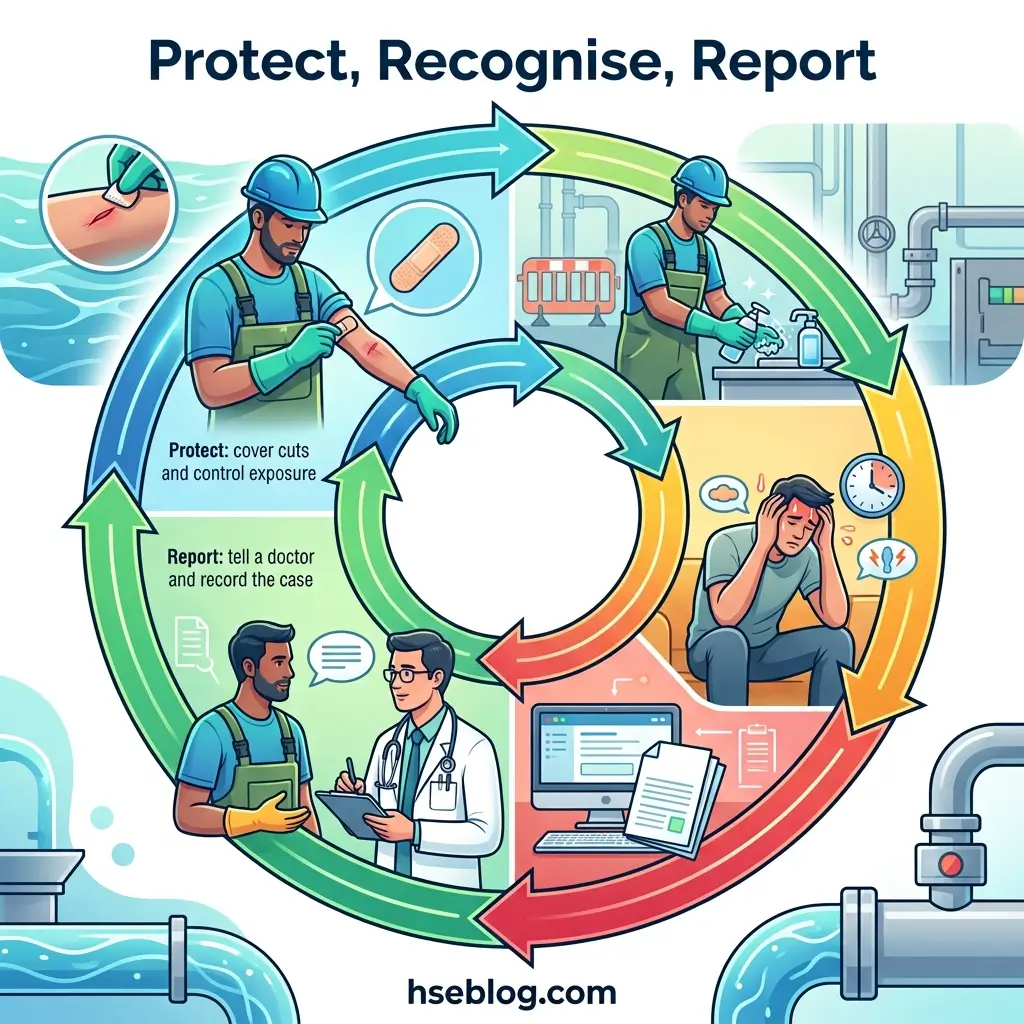
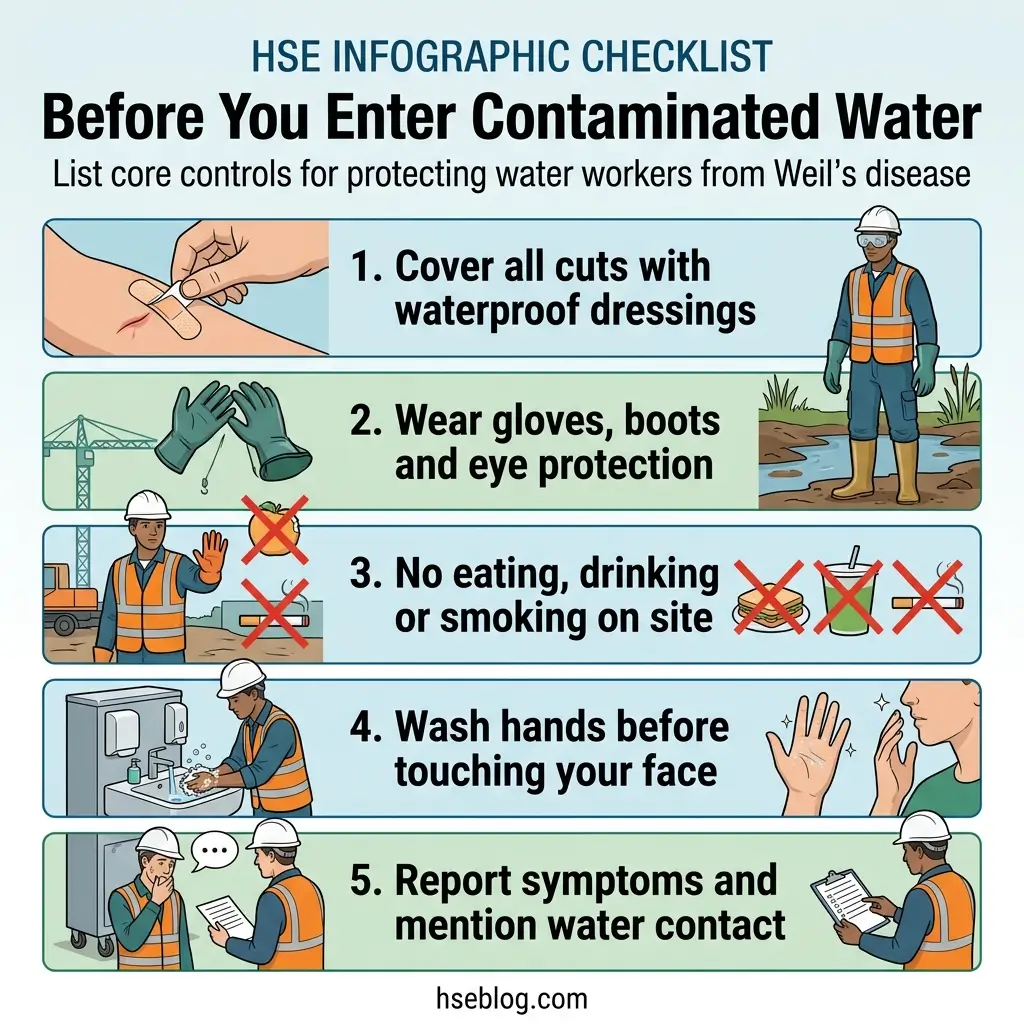
- Cover every break in the skin — waterproof dressings over all cuts and grazes, applied before the water touches them.
- Wear the right barriers — waterproof gloves, boots or waders, and eye or face protection where splashing is likely.
- Limit immersion — avoid working in obviously contaminated or stagnant water where the task allows, and cut down time in it.
Keep it out of your mouth and eyes
- No consumption on site — don’t eat, drink or smoke in the work area.
- Wash before you touch your face — clean hands and forearms first; don’t rub eyes with contaminated gloves.
- Treat wounds at once — wash any contaminated cut or graze immediately with soap and running water, then shower after work.
Prepare people, not just PPE
- Train for recognition — make sure workers know the symptoms and the exposure link, not just the controls.
- Issue the “leptospirosis card” — so a worker can flag the risk to a clinician fast.
- Use prophylaxis sparingly — the judgment call on doxycycline is that weekly dosing can reduce risk for defined short-term, high-exposure tasks, but it isn’t a substitute for the basics and isn’t for routine daily work (CDC, 2024).
Your legal duties: COSHH, RIDDOR and the worker card (UK)
In the UK, leptospirosis sits inside existing law rather than a standalone rule. Two duties do the heavy lifting.
| Instrument (UK) | What it requires |
|---|---|
| COSHH 2002 (as amended) | Treat Leptospira as a biological agent; assess the risk and control exposure; inform and train those affected |
| RIDDOR 2013 | Report leptospirosis to HSE where there is reasonable evidence it was caused by work; self-employed workers report themselves |
| HSE guidance (INDG84) | Sets out the risk-assessment approach and the worker “leptospirosis card” to show a doctor if symptoms appear |
COSHH requires employers to assess and control the biological risk, and RIDDOR requires a confirmed, work-related case to be reported to HSE (HSE, 2024).
The “leptospirosis card” is small but load-bearing. It tells the worker to report any illness to a doctor and to mention their work — closing the diagnosis gap that lets mild cases turn severe (HSE, INDG84).
Where a case occurs and controls were plainly inadequate, employers face not only enforcement but civil liability. In practice, auditors look for the simple things first: covered cuts, proper hygiene facilities, and evidence that workers were told about the risk.
Regulatory content here reflects general HSE understanding of UK requirements as of 2025. It is not legal advice. Specific compliance or enforcement questions should go to qualified legal counsel in the applicable jurisdiction.
Outside the UK the framing differs. The United States has no leptospirosis-specific federal safety standard — control leans on general occupational-health duties and CDC clinical guidance — while the EU tracks cases through ECDC surveillance. The hazard is the same; the legal machinery around it is not.
Where the risk is heading: flooding, climate and case trends
The exposure profile moves with the weather. Leptospira survive best in warm, standing water, so UK cases cluster in summer and autumn and fall away in winter when water sits below about 10°C (UKHSA, 2024).
- Storms drive outbreaks — heavy rain washes animal urine into standing water and puts more people in contact with it; a 2023 outbreak in Greece after Storm Daniel produced 5 confirmed and 17 probable cases (UKHSA, 2024).
- Flood response is front-line — crews wading through floodwater and silt meet the same pathway as sewer and canal workers, often without the same routine controls.
- The global picture is large — worldwide there are roughly 1 million cases and nearly 60,000 deaths a year, most in tropical regions but with steady European reporting (CDC Yellow Book, 2024; PLOS NTD, 2015).
As extreme-rainfall events become more common, the practical takeaway is not alarm but planning. Treat flood and standing-water work as leptospirosis-exposed by default, and keep the controls consistent across the year rather than only in warm months.
Frequently Asked Questions
Conclusion
The mistake with Weil’s disease is rarely the controls on paper — it is treating a low case count as a low risk, and treating a post-exposure fever as an ordinary bug. Underdiagnosis is the real hazard, because the illness is most treatable in the window when it looks least serious.
If there is a single change worth making, it is closing the gap between exposure and diagnosis. Cover cuts before the water touches them, and make sure every exposed worker can tell a clinician two things fast: they work around contaminated water, and they have had rodent or floodwater contact.
The controls for water workers are cheap, well understood, and set out plainly by HSE. Weil’s disease earns respect not because it is common, but because the cost of missing it — measured in kidneys, in intensive-care beds, in the occasional life — is so far out of proportion to the effort of preventing it.