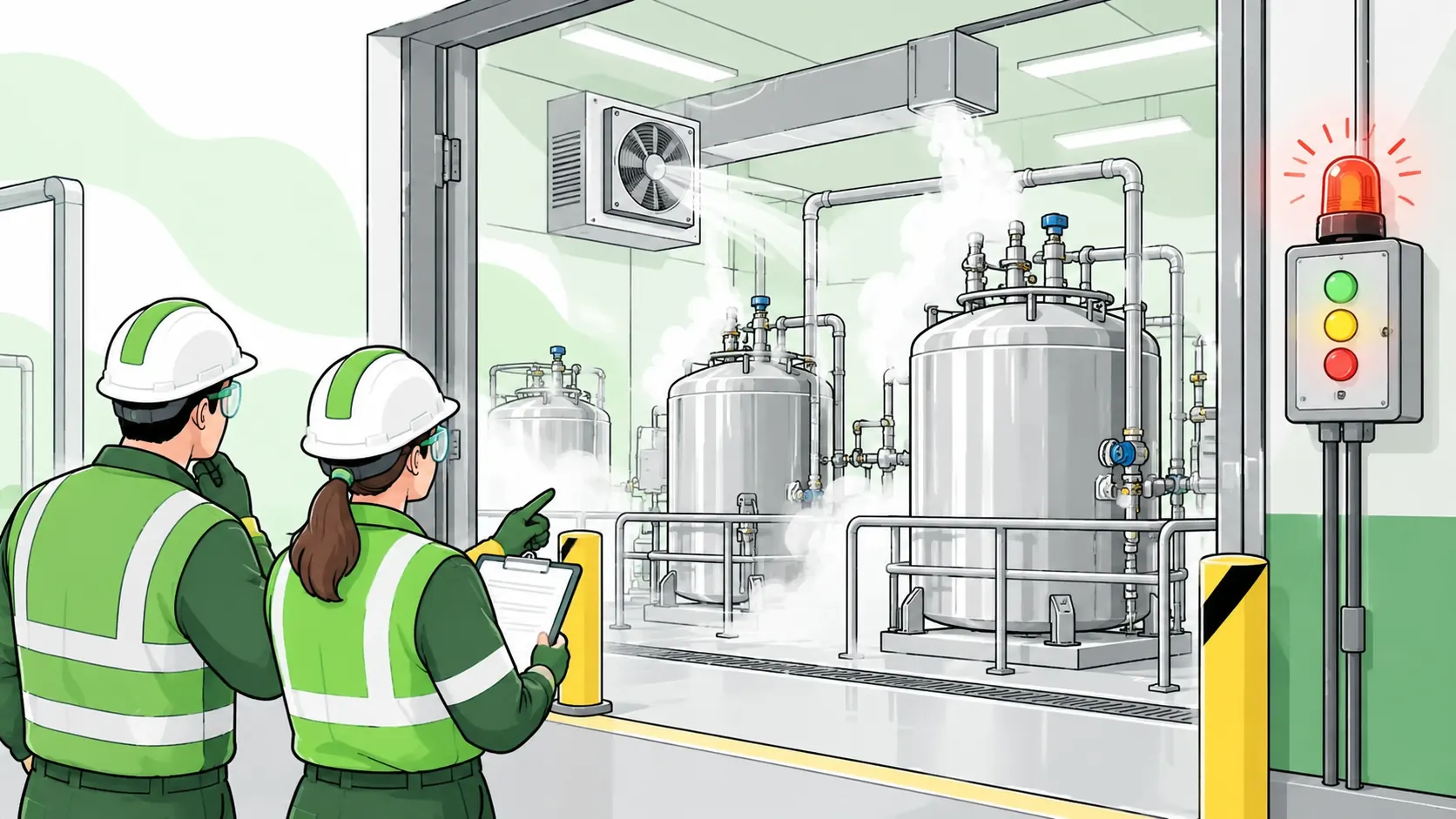
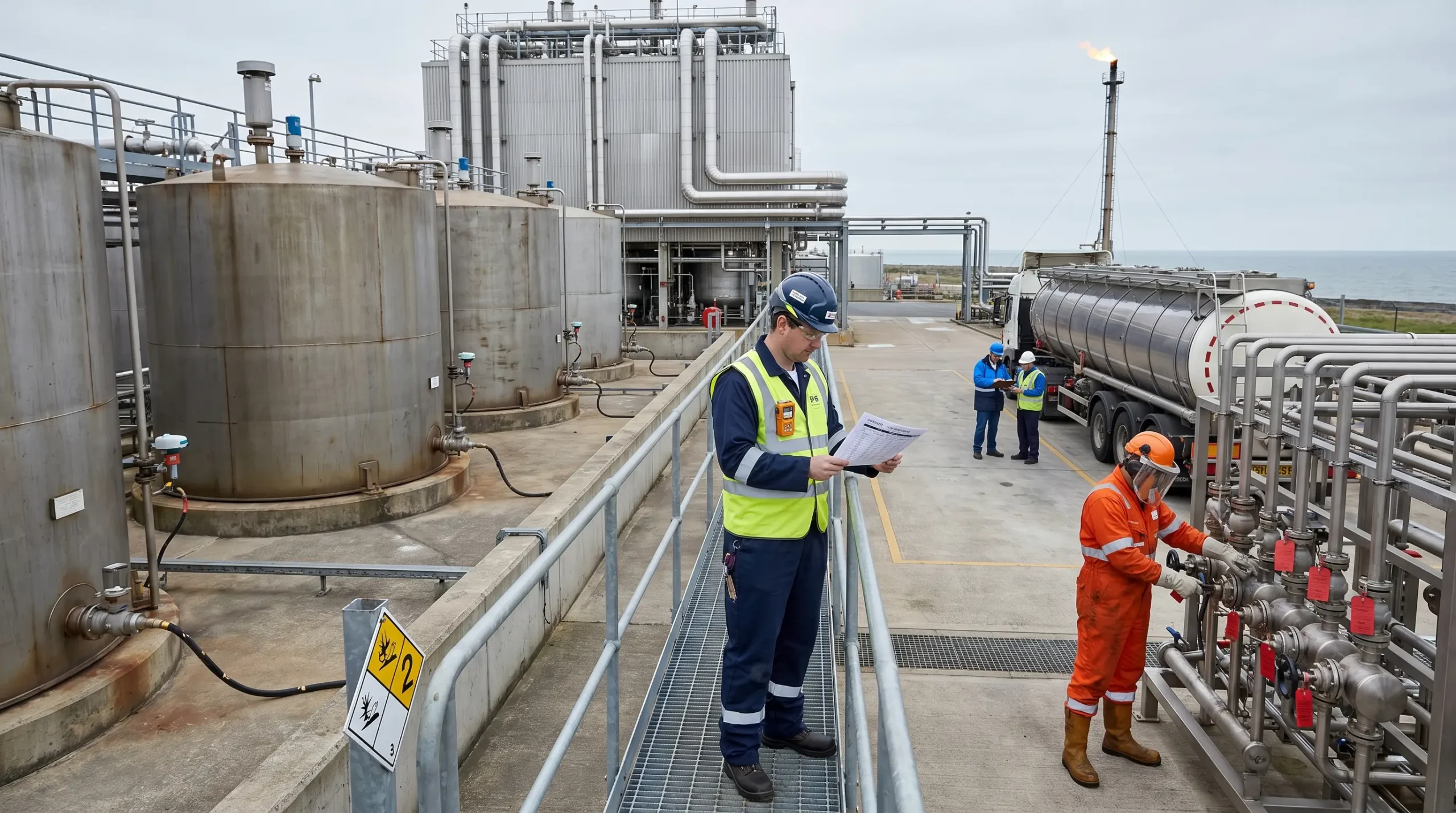
Two specialty chemicals establishments sit four miles apart on the coastal corridor where I run process-safety assurance. One holds around 280 tonnes of a flammable liquid plus two named toxic intermediates above their lower thresholds; the other holds nearly double that inventory, including an acutely toxic intermediate that tips it above the upper threshold. On paper they look similar — same sector, same rail link, near-identical CLP classifications on their substance inventories. Their legal worlds are not similar at all. One produces a concise Major Accident Prevention Policy and sees the regulator every three years. The other runs a full safety report cycle, supplies information for an external emergency plan, and pays significantly more under Competent Authority cost recovery every year.
That is the practical weight of the Upper Tier vs Lower Tier COMAH Sites split. Tier classification under the Control of Major Accident Hazards Regulations 2015 is not a labelling exercise — it drives how much you document, who writes your off-site emergency plan, how often you are inspected, and how much you pay when the Competent Authority comes through the gate. This article breaks down the duty-by-duty differences between the two tiers, walks through how tier is actually determined (including the aggregation maths that catches sites out), and covers the tier transitions and real incidents that show what each tier looks like when it fails.
What Are COMAH Sites? A Quick Refresher
COMAH 2015 came into force on 1 June 2015, replacing the 1999 Regulations and transposing the Seveso III Directive (2012/18/EU) into Great Britain. The Regulations apply where dangerous substances listed in Schedule 1 are present at an establishment in quantities at or above specified thresholds. The COMAH Competent Authority is a joint body — the Health and Safety Executive plus the Environment Agency in England, the Scottish Environment Protection Agency in Scotland, and Natural Resources Wales in Wales — with the Office for Nuclear Regulation handling nuclear establishments. Northern Ireland operates an equivalent regime through HSENI.
Establishments in scope typically fall into the following sectors:
- Chemical manufacturing and formulation — specialty and bulk chemicals, agrochemicals, pharmaceutical intermediates
- Oil, gas, and LPG storage and distribution — fuel terminals, LPG bottling plants, LNG and LPG import terminals
- Explosives and pyrotechnics manufacturing — licensed explosives sites, ammonium nitrate fertiliser handling
- Warehousing and distribution of dangerous goods — bonded stores, specialty distribution hubs
- Selected distilling, fertiliser, and power generation operations where threshold inventories of dangerous substances are held
Around 950 COMAH establishments are monitored across Great Britain, with 680 in England alone. The Environment Agency's 2024–25 Chief Regulator reporting confirms that 470 English sites — 69% of the total — are flagged as priority for regulatory attention, reflecting the sector's environmental-risk profile. The public COMAH establishments search lets anyone verify which local sites are in scope and their current tier.
The Two COMAH Tiers: Core Definition
Lower Tier COMAH applies where the inventory of dangerous substances — held at any one point in time — meets or exceeds the qualifying quantity in column 2 of Schedule 1 for named substances, or the equivalent threshold for generic CLP hazard categories. Upper Tier (still called "Top Tier" in older guidance) applies where the inventory reaches the higher qualifying quantity in column 3. Column 3 numbers are always larger than column 2, and the gap varies substantially by substance: for LPG the ratio is 50:200 tonnes, for chlorine 10:25 tonnes, for ammonium nitrate fertiliser 5,000:10,000 tonnes.
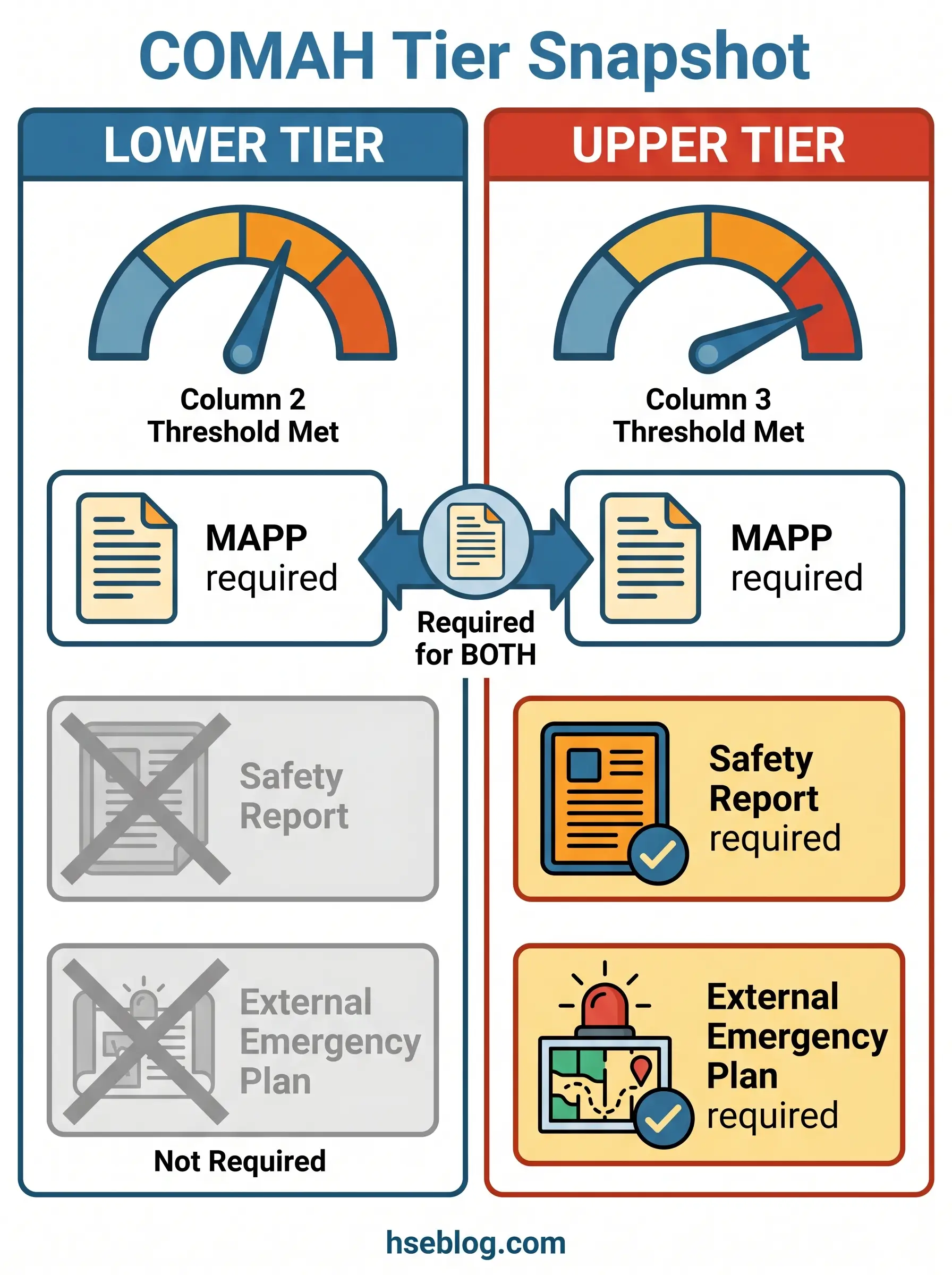
The legal consequence of that extra tonnage reshapes the entire compliance profile. Every duty a Lower Tier operator carries continues to apply at Upper Tier — with additional layers on top. The useful mental model: Lower Tier is the full process-safety regime minus the safety report, the external emergency plan, the Public Information Zone duties, and the deeper five-yearly review cycle.
How Tier Is Determined: Thresholds, Named Substances, and Aggregation
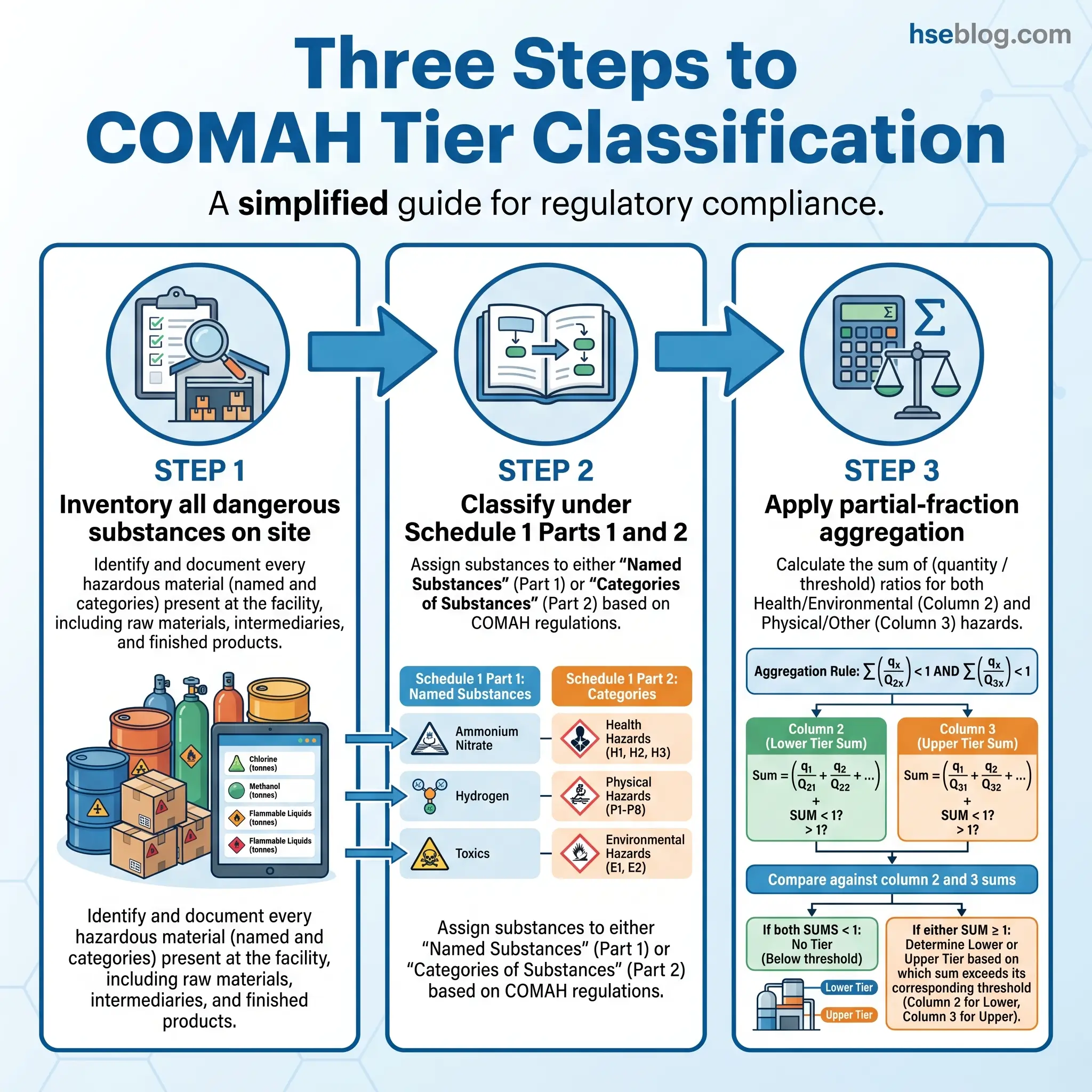
Tier determination is a three-step procedure that has to be documented and repeatable — not a gut-feel estimate.
- Inventory every dangerous substance held at any one time. Include raw materials, intermediates, finished product, by-products, waste, and anything temporarily on site during transport rest periods. Quantities at 2% or less of the qualifying quantity can be disregarded if their location cannot credibly initiate a major accident.
- Classify each substance against Schedule 1 of COMAH 2015. Part 1 covers generic hazard categories — acute toxicity, flammable gases, flammable liquids, oxidisers, pyrophorics, aquatic hazards — using CLP Regulation (EC) No 1272/2008 classifications. Part 2 names specific substances (chlorine, hydrogen, LPG, anhydrous ammonia, ammonium nitrate formulations, nickel compounds in powder form, and others) with their own thresholds. Named substances always use their Part 2 thresholds.
- Apply the aggregation (summation) rule. Substances in the same hazard grouping — physical (explosives, flammables, oxidisers, pyrophorics), health (acute toxics, carcinogens, STOT), or environmental (aquatic acute and chronic) — are aggregated using the partial-fraction method. Divide the quantity held by the qualifying quantity for each substance, then sum the fractions within each grouping. A sum of 1.0 or greater against column 2 thresholds makes the establishment Lower Tier; 1.0 or greater against column 3 makes it Upper Tier.
Watch For: The summation step is where tier determination most often goes wrong on first pass. A site that looks "obviously" Lower Tier can land in Upper Tier once a handful of smaller flammable liquid stocks are properly aggregated with a main bulk tank.
On one of the sites I support, the aggregation calculation was re-opened after a commissioning change added a 12-tonne reactive intermediate. Partial fractions for the physical grouping added to 1.03 against upper thresholds — the site crossed up, triggering a pre-construction notification and a new safety report before the process went live.
Example: A Worked Tier Calculation
Consider a specialty chemicals plant holding the following at a given moment:
- Acetylene (Part 2; column 2 = 5 t, column 3 = 50 t): 3 tonnes → fractions 0.60 / 0.06
- Mixed flammable gases (Part 1; 10 t / 50 t): 6 tonnes → 0.60 / 0.12
- Flammable liquids Category 2 (Part 1; 50 t / 200 t): 45 tonnes → 0.90 / 0.225
Physical-grouping sums: 2.10 against column 2; 0.405 against column 3. This site is Lower Tier — the column 2 sum clearly exceeds 1.0, triggering the lower threshold, but the column 3 sum is well under. Add another 100 tonnes of Category 2 liquid, lifting holding to 145 tonnes, and the column 3 sum rises to 0.905 — still Lower Tier, but with almost no margin left. At 160 tonnes of Category 2 liquid, column 3 sum reaches roughly 0.985 + existing fractions = 1.165: Upper Tier. That single inventory decision is the difference between a 6-page MAPP and a full COMAH safety report.
Side-by-Side Comparison: Upper Tier vs Lower Tier Duties
The central question operators bring to me is some version of "What does going up a tier actually cost me in obligations?" The matrix below covers every duty under COMAH 2015 that varies — or deliberately doesn't — between tiers. Lower tier COMAH duties vs upper tier duties are best read row-by-row: what's identical, what's additional, what's only at the top.
| COMAH 2015 Duty | Lower Tier | Upper Tier |
|---|---|---|
| General "all measures necessary" (Reg 5) | Applies in full | Applies in full |
| Notification to Competent Authority (Reg 6) | Required; standard details | Required; additional information specified in Reg 6(2) |
| Major Accident Prevention Policy (Reg 7) | Standalone MAPP document | MAPP embedded in the safety report |
| Safety Management System (Reg 7, Sch 2) | Required, proportionate to hazards | Required; tested against SRAM assessment criteria |
| Safety Report (Regs 8–10, Sch 3) | Not required | Mandatory; CA assesses and can refuse operation |
| ALARP demonstration | Not formally required (can be requested for complex sites) | Mandatory within safety report |
| Internal emergency plan (Reg 12, Sch 4) | Addressed through MAPP/SMS | Formal plan required; tested at least every 3 years |
| Info to local authority for external planning (Reg 13) | Not required | Required |
| External emergency plan (Reg 14) | Not produced | Local authority produces; tested every 3 years |
| Public information (Reg 17) | Basic details provided | Basic details + scenario and response information |
| Pro-active info to the public in the PIZ (Reg 18) | Not required | Required; delivered via local authority and operator |
| Safety report review | Not applicable | Every 5 years and after significant modification |
| CA inspection and cost recovery | Risk-based cycle; actuals-basis charging | More frequent cycle; actuals-basis; higher assessment cost |
| Enforcement tools (improvement, prohibition) | Fully available to the CA | Fully available to the CA |
The row I find most often misread is public information. Both tiers have something to deliver under Regulation 17, but only Upper Tier triggers the pro-active Regulation 18 duty — the information posted to householders and businesses inside the Public Information Zone without them having to request it.
Documentation Differences in Depth
The MAPP and the safety report occupy very different places in a compliance file. A Lower Tier MAPP is typically a 2–10 page document that states the operator's aims for preventing major accidents, is signed by a senior responsible officer, and cross-refers to the Safety Management System that implements it. Schedule 2 sets out the eight management elements that the SMS has to cover, from organisation and personnel through to monitoring and audit.
An Upper Tier safety report is a different animal. Schedule 3 prescribes the minimum content: a detailed site and surroundings description; process descriptions for all operations involving dangerous substances; identified major accident scenarios with probability and consequence analysis; risk-control measures; an ALARP demonstration; environmental receptors; and a description of the SMS. A well-written report for a mid-size specialty chemicals site typically runs 300–600 pages across the main report and annexes, with the CA working against the Safety Report Assessment Manual to check whether each requirement has been met. Upper tier COMAH safety report requirements include a five-yearly review cycle plus an obligation to revise whenever there is a significant modification or new safety information.
Emergency planning splits along the same line. The internal emergency plan covers on-site response — alarms, mustering, fire-water demand, spill containment, control-room command arrangements — and has to be tested at least every three years under Regulation 12. The external emergency plan, produced by the local authority for Upper Tier sites only under Regulation 14, covers off-site alerting, evacuation routes, multi-agency response, and casualty reception. Testing is coordinated with Category 1 responders under the Civil Contingencies Act 2004 on the same three-year cycle.
Audit Point: The commonest reason a safety report is returned for revision is not poor writing — it's a weak ALARP demonstration that relies on asserted good practice without quantified sensitivity analysis on the highest-consequence major accident scenarios.
What Makes Safety Reports Get Rejected or Returned
Assessment failures cluster around four recurring issues. Major accident hazard identification is sometimes incomplete — smaller inventories and rarely used transfer operations get skipped. The ALARP demonstration argues "good practice followed" without showing why no further reasonably practicable measures are available. Prima facie evidence for Electrical, Control and Instrumentation safety functions — functional safety standards, proof-test intervals, SIL verification — is often under-referenced. And the SMS description inside the report fails to match what auditors find on the ground when the CA follows up with a site inspection.
Regulatory Oversight: Inspections, Costs, and Enforcement
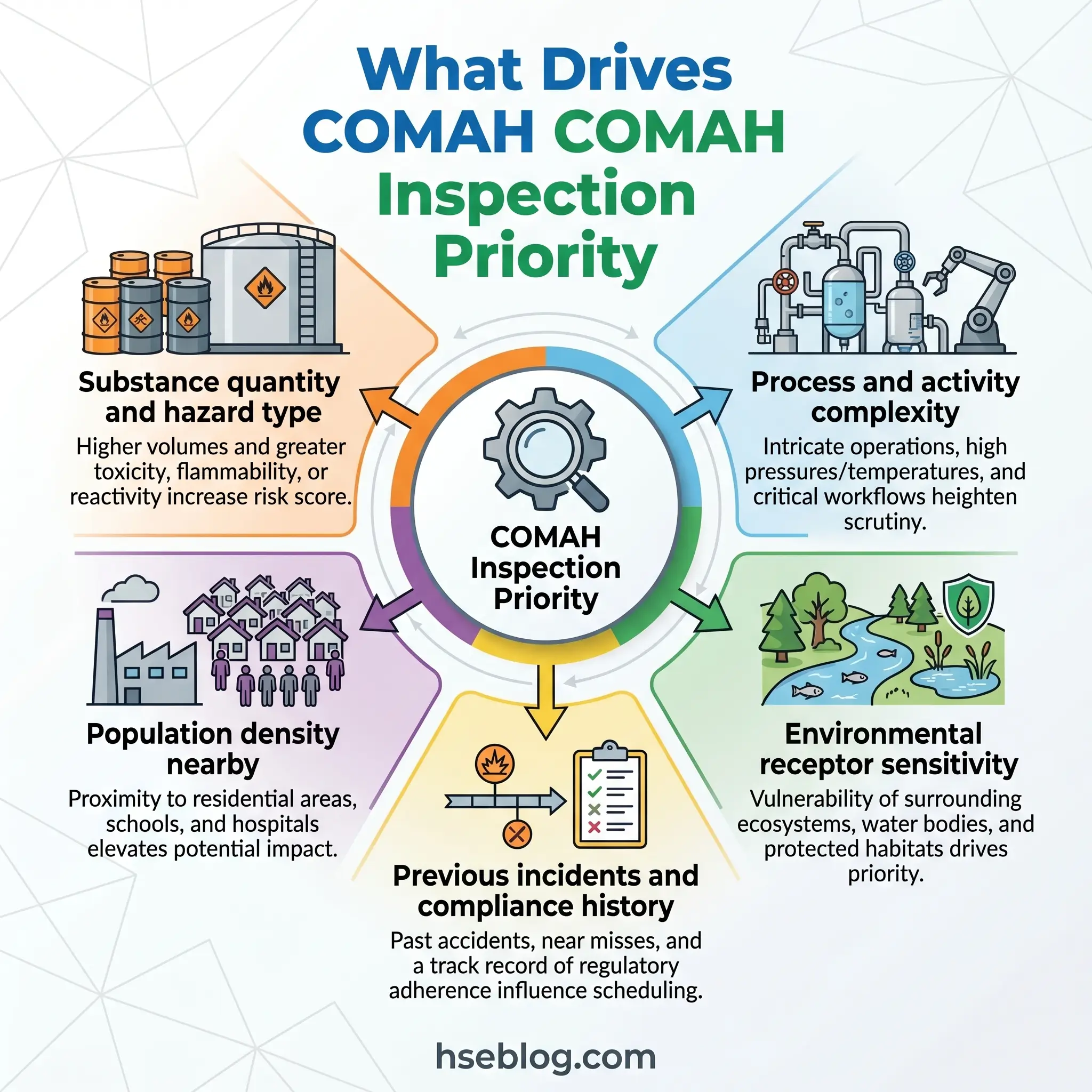
The Competent Authority takes a risk-based approach to both tiers, but the drivers push Upper Tier sites into shorter cycles. Inspection priority is shaped by:
- Substance quantity and hazard profile, weighted by aggregate inventory
- Process type and activity complexity — exothermic, pressurised, cryogenic systems escalate priority
- Population density and infrastructure in the surrounding area
- Proximity of sensitive environmental receptors, watercourses, and aquifers
- Prior incident history, compliance record, and the quality of recent safety report or MAPP revisions
Typical inspection frequency ranges from annual for high-hazard Upper Tier establishments to triennial for stable Lower Tier sites, with biennial cycles common in the middle. Cost recovery operates on an actual-hours basis for both tiers — there is no fixed fee. Upper Tier operators carry the additional cost of safety report assessment, which can account for a substantial share of annual CA charges in the year a report is submitted.
Enforcement tools are identical across tiers. The CA can issue improvement notices, prohibition notices, and — where major accident prevention or mitigation is seriously deficient — prohibit operation altogether. Prosecutions proceed under the Health and Safety at Work etc. Act 1974, carrying unlimited fines in the Crown Court. The HSE's core guidance on COMAH 2015 and the Approved Code of Practice L111 are the authoritative references for operators preparing for any of these engagements.
From 2025 onwards, the Competent Authority has been running inspection campaigns focused on climate resilience — specifically how upper and lower tier operators maintain safety integrity under flood, extreme heat, and storm-surge conditions. The programme draws on published Operational Delivery Guides on flood preparedness and on Natech (Natural Hazards Triggering Technological Disasters). Expect CA inspectors to ask for evidence that major accident scenarios have been re-examined against updated climate projections, regardless of tier.
Tier Change Events: Moving Up, Dropping Down, and New Entrants
Tier is not a static label. Three change events reshape the compliance profile during the life of an establishment.
Inventory increase crossing the upper threshold. The operator must notify the Competent Authority before the change takes effect and have a safety report in place before the higher-tier operation begins. Hazardous substances consent from the planning authority usually needs revision in parallel. This is the tier change that carries the longest lead time — typically 6–12 months of preparation for a mid-size site.
Inventory reduction dropping below the upper threshold. The establishment becomes Lower Tier, but the MAPP, SMS, and Regulation 5 duty still apply in full. The CA formally acknowledges the change; the site stops producing a safety report and loses the external emergency plan. Operators occasionally pursue this deliberately as a "de-COMAH'ing" strategy — reducing inventory, substituting dangerous substances with lower-hazard alternatives, or physically segregating stock into non-adjacent establishments that are separately classified.
Non-COMAH sites becoming COMAH. New substances, CLP reclassifications, or site expansions can pull a site into scope for the first time. The obligation here is a full establishment notification under Regulation 6 and, if applicable, pre-construction notification of the new installation. Sites miss this most often after CLP reclassification events, when an existing substance moves into a category that brings aggregate inventories above a threshold.
Real-World Examples: What Upper and Lower Tier Look Like
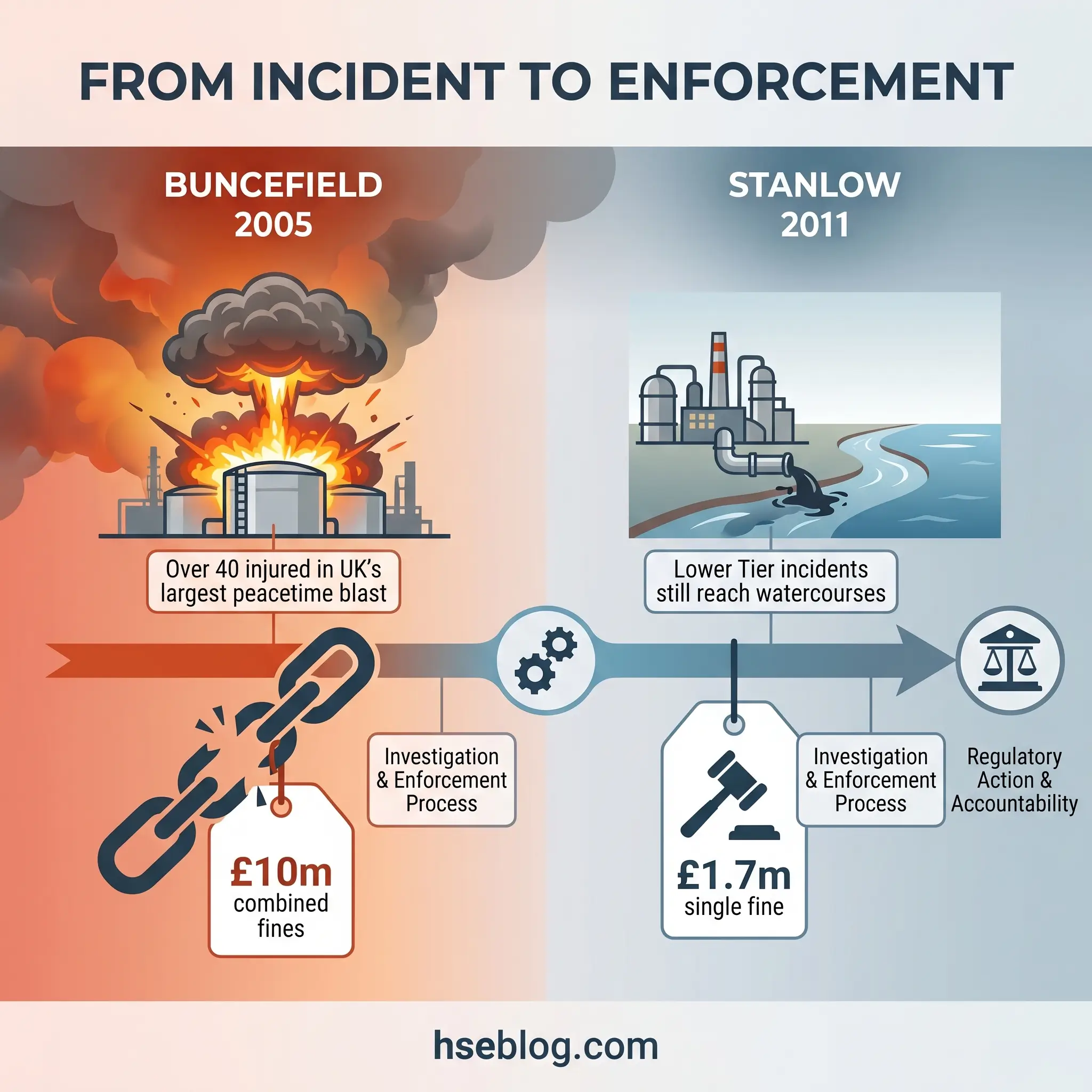
The Upper Tier case everyone cites is Buncefield. On 11 December 2005, overfilling of a petrol storage tank at the Hertfordshire oil depot led to the formation of a vapour cloud that ignited with force described as the largest peacetime explosion in Europe. Over 40 people were injured — widely cited as 43 — and five companies were later convicted under COMAH and related legislation, paying almost £10 million in combined fines and costs. Buncefield reshaped overfill protection standards (Process Safety Leadership Group recommendations, BS EN 16657 independent high-level systems) and is still the single most influential UK COMAH incident when safety report assessors consider tank-farm scenarios.
The often-forgotten Upper Tier case is the 2011 Stanlow refinery explosion operated by Essar. The company was fined £1.7 million — reported at the time as the largest COMAH fine since Buncefield — reinforcing that enforcement severity scales with consequence potential, not only actual harm.
Lower Tier sites are sometimes described as "light touch." The 2006 Cotswold chemical factory fire, involving swimming-pool chemicals, is the counter-example. A Lower Tier establishment produced a significant off-site plume and contaminated local watercourses — a reminder that lower tier does not mean low consequence, and that the MAPP's environmental elements deserve the same rigour as the health and safety ones.
Field Test: Walk your inventory list and ask, "If the biggest vessel of the worst-grouping substance fails completely, what's the credible off-site harm?" If the answer reaches watercourses, residential areas, or sensitive infrastructure, your MAPP or safety report needs to demonstrate how that specific scenario is managed — regardless of tier.
Sector typologies are consistent: Upper Tier typically covers oil refineries, LNG and LPG terminals, large chemical manufacturing complexes, fertiliser plants, and major explosives sites. Lower Tier often covers distribution centres, smaller fuel terminals, gas holders, some distilleries, and certain power generation assets.
Which Tier Are You? A Decision Checklist
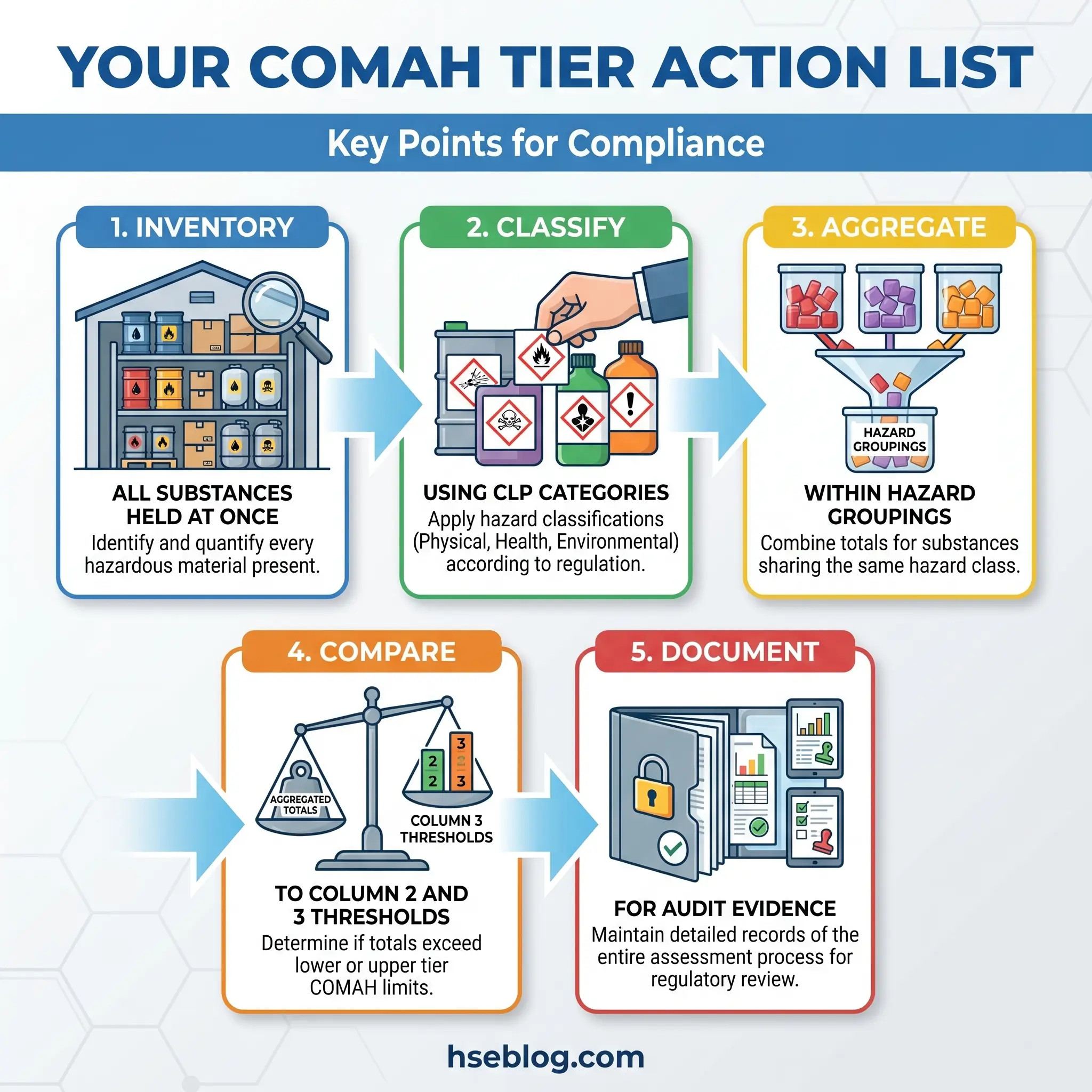
Run this sequence against your establishment before the CA does.
- Have you inventoried every dangerous substance held at any one time — including intermediates, by-products, commissioning chemicals, and waste?
- Have you classified each substance under the CLP Regulation and mapped it to Schedule 1 Parts 1 and 2?
- Have you applied the partial-fraction aggregation calculation across the physical, health, and environmental hazard groupings?
- Does any grouping return 1.0 or more against column 3 qualifying quantities? If yes, the site is Upper Tier.
- If column 3 is clear but any grouping returns 1.0 or more against column 2, the site is Lower Tier.
- Have you documented the calculation with date, reviewer, and underlying data as auditable evidence, and notified the CA within regulatory timescales?
Frequently Asked Questions
What is the main difference between upper tier and lower tier COMAH sites?
Inventory. Lower Tier sites hold dangerous substances at or above the column 2 qualifying quantities in Schedule 1; Upper Tier sites hold inventories at or above the higher column 3 quantities. The duty escalation that follows is significant — Upper Tier operators must prepare and maintain a safety report under Regulations 8–10, supply information for an external emergency plan, and meet the Regulation 18 pro-active public information duty inside the Public Information Zone. Lower Tier sites carry the MAPP, SMS, notification, and general Regulation 5 duty, but not the safety report.
How do I know if my site is upper tier or lower tier COMAH?
Work through the three-step tier determination. Inventory every dangerous substance held at any single moment, classify each under the CLP Regulation and Schedule 1 Parts 1 and 2, and apply the partial-fraction aggregation rule across the physical, health, and environmental groupings. If any grouping sums to 1.0 or more against column 3, the site is Upper Tier. If only the column 2 sum reaches 1.0 or more, it's Lower Tier.
Do lower tier COMAH sites need a safety report?
No. The safety report duty under Regulations 8–10 applies only to Upper Tier establishments. Lower Tier sites must produce a MAPP and implement a proportionate SMS under Regulation 7 and Schedule 2. The CA can request an ALARP-style demonstration from a complex Lower Tier site where justified, but the formal safety report assessment does not apply.
Does a lower tier COMAH site need an external emergency plan?
No. Regulation 14 places the external emergency plan duty on the local authority, and only for Upper Tier establishments. Lower Tier sites address emergencies through their internal response arrangements documented in the MAPP and SMS, without the off-site multi-agency plan that Upper Tier sites trigger.
How often are upper tier and lower tier COMAH sites inspected?
The Competent Authority uses a risk-based frequency — typically annual to triennial — driven by substance quantity, process complexity, surrounding population density, and environmental sensitivity. Upper Tier sites usually fall into the shorter cycles; Lower Tier sites in lower-risk sectors may see a full planned intervention every two or three years, with targeted topic inspections in between.
Can a COMAH site change tier?
Yes. Inventory increases can push a site up, requiring pre-change notification and a new safety report before operation. Inventory reductions can drop a site down, removing the safety report duty but keeping the MAPP, SMS, and Regulation 5 obligations in place. CLP reclassifications or site expansions can pull a previously non-COMAH site into scope entirely. The primary legislation — available on legislation.gov.uk — sets the notification timescales that apply in each case.
Conclusion
COMAH tier classification is a live obligation, not a one-off box to tick at commissioning. Inventory profiles drift, CLP classifications evolve, and the Competent Authority's expectations shift with each inspection campaign. Treating the Upper Tier vs Lower Tier COMAH Sites decision as a fixed status is the single biggest mistake I see — the next CLP reclassification or process change can move the site before anyone in the compliance team has opened the spreadsheet.
The direction of travel matters too. The CA's 2025–2026 focus on climate resilience, flood preparedness, Natech scenarios, PFAS-containing firefighting water, and environmental containment signals that safety report and MAPP quality will be judged against a broader set of consequences than the pre-2020 generation of documents assumed. Both tiers are being asked harder questions about environmental receptors, long-duration flood scenarios, and supply-chain dependencies under extreme weather.
The honest test for any operator is simple. Ask whether your current tier determination would stand up to a surprise CA re-visit next quarter, whether your MAPP or safety report reflects what your site actually holds and does today, and whether the aggregation calculation has been re-run since your last inventory or CLP change. If any of those answers feel uncertain, the work to close the gap is shorter than a CA improvement notice — and considerably cheaper.