EUROPEAN UNION — The European Commission highlighted two decades of NEPSI cooperation on respirable crystalline silica in an update published on 16 October 2026, following an anniversary conference on 14 October.
The Commission says the initiative now covers more than 9,170 industrial sites and 375,000 workers. NEPSI brings together employer organisations and trade unions to support safer handling of materials containing crystalline silica.
Practical tools for industrial workplaces
The Commission identified a common reporting framework, updated good-practice guidance, small-business toolkits, e-learning and a standardised exposure-measurement method among the agreement’s outcomes.
Activities involving materials processing can generate respirable dust. The Commission identifies silica exposure as a continuing occupational-health concern, associated with diseases including silicosis and lung cancer.
Anniversary update does not introduce a new limit
The Commission is considering whether existing EU occupational exposure limits remain appropriate in the context of a possible future revision of the Carcinogens, Mutagens and Reprotoxic Substances Directive. Its announcement does not establish a new binding silica limit or commencement date.
NEPSI’s own account records that the agreement was signed on 25 April 2006 following negotiations between industry and worker representatives. Its governance includes both employer and employee delegations.
What employers can take from the update
HSEBlog analysis: The practical question is whether guidance translates into reliable control at the point where dust is generated. Training, exposure monitoring and worker involvement serve different purposes and should support one another. Participation figures alone cannot demonstrate that every individual workplace has adequately controlled exposure.
Read more about industrial hygiene principles and the role of industrial hygienists.
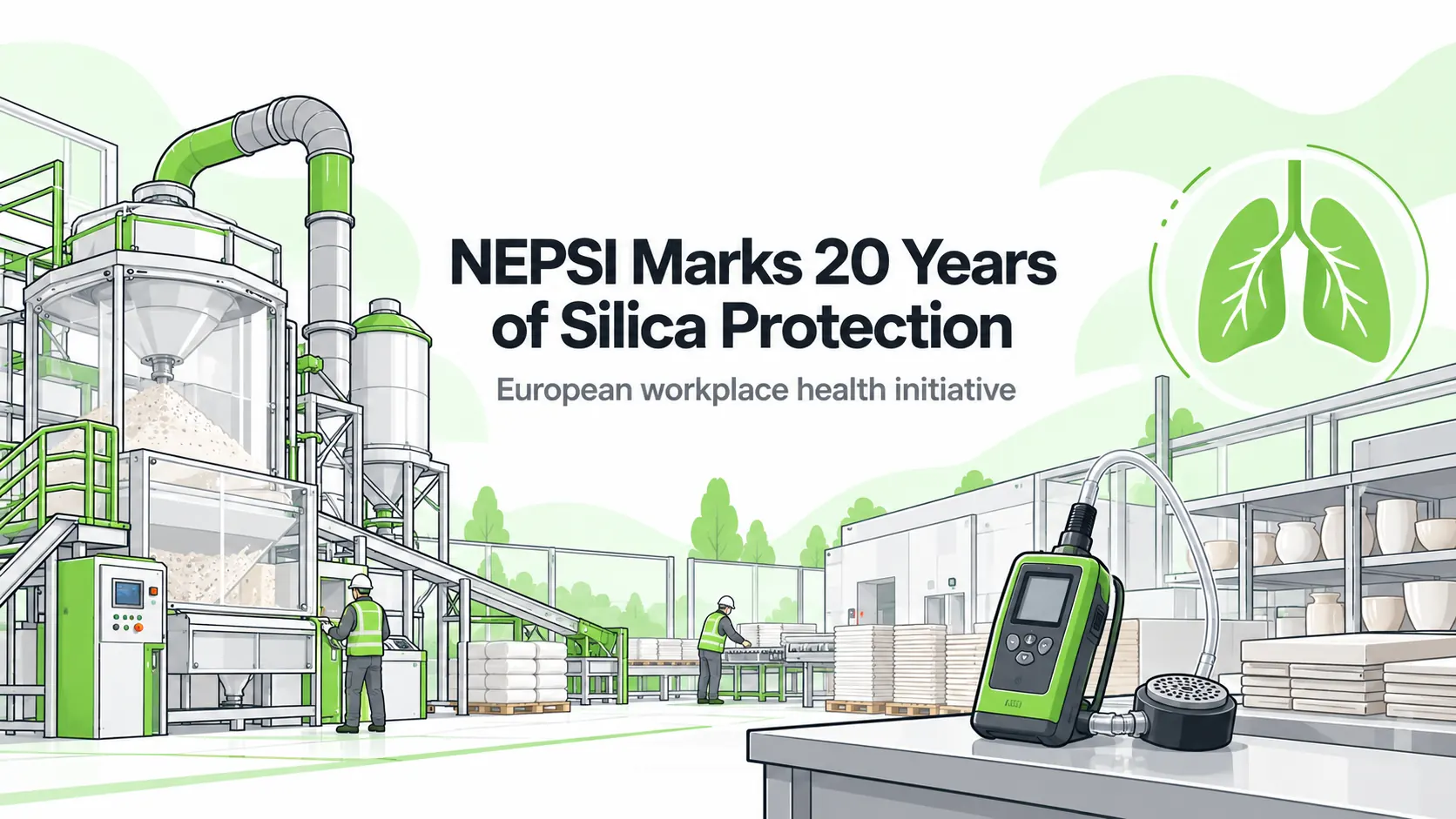
Sources: European Commission announcement, 16 October 2026; NEPSI agreement background. Featured artwork is an editorial illustration of dust-control equipment.
Source
European Commissionemployment-social-affairs.ec.europa.eu