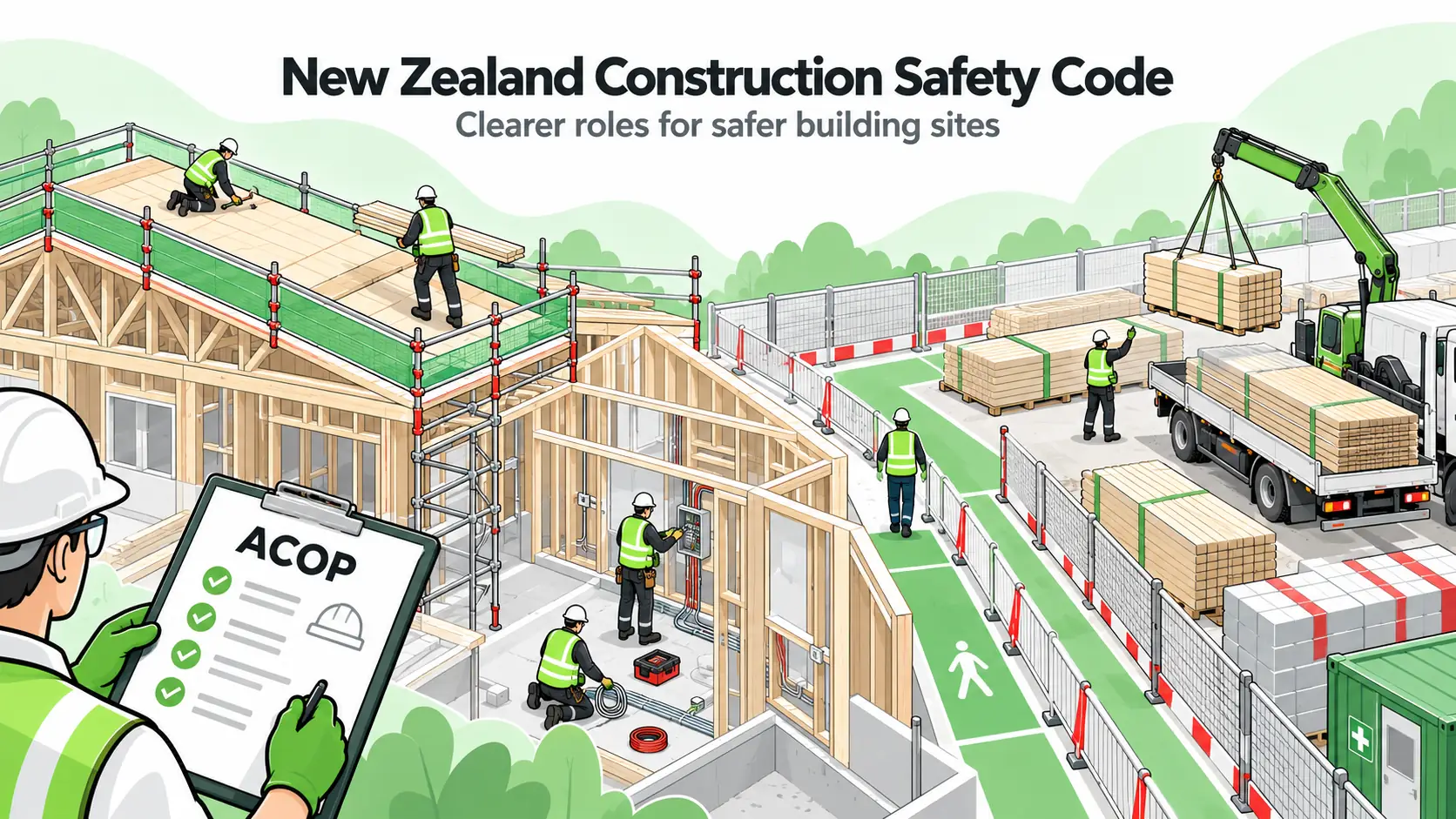
NEW ZEALAND — New Zealand launched a new Approved Code of Practice (ACOP) on 16 October 2026 to clarify health and safety responsibilities on residential construction sites. The announcement addresses how businesses and workers coordinate safety when multiple trades share a building project.
Clearer responsibilities across the site
The code, Identifying health and safety roles and responsibilities on a residential construction site, covers clients, principal contractors, contractors, subcontractors and workers. It takes effect on 1 April 2027, alongside amendments to the Health and Safety at Work Act.
According to the official government release, its purpose is to explain existing duties. When roofers, electricians and other trades work together, the lead contractor can use the code to clarify responsibility for key safety activities and coordinate work.
Voluntary guidance and conditional safe harbour
Following the ACOP is voluntary, although it establishes a recognised compliance standard. Safe harbour status remains a future possibility requiring consultation and ministerial reapproval after April 2027. It is not an existing automatic protection.
WorkSafe will support industry implementation. New Zealand Certified Builders welcomed the code, which was developed with sector input.
Preparing for implementation
Site teams can use the lead-in period to review responsibility allocation, shared-work communication and how safety controls are checked. These are general planning considerations rather than a substitute for the code or project-specific advice.
Related HSEBlog guides cover contractor safety rules, who should carry out risk assessments, and keeping risk assessments useful.
Sources
The original government release was cross-checked with Inside Government and Scoop. These reports draw on the same announcement and are not independent confirmations. The government release links to the WorkSafe code.
Source
New Zealand Governmentbeehive.govt.nz