NEWLYN HARBOUR, CORNWALL, UNITED KINGDOM — W. Stevenson & Sons Ltd has been fined £100,000 following the death of apprentice engineer Conor Moseley aboard the trawler Resurgam in Newlyn Harbour, Cornwall. The company also faces £27,906 in prosecution costs.
The Health and Safety Executive published its account on 16 October 2026, following sentencing at Truro Crown Court on 15 October. The underlying incident occurred on 15 November 2019; this is an enforcement update, not a new fatality.
Installation work created a shared risk
According to HSE’s investigation findings, a fire suppression system unexpectedly discharged during installation work. Hot, toxic gases filled the enclosed engine room. Moseley, 20, was unable to escape through its ladder-and-hatch access.
HSE found inadequate coordination of contractors, no safe installation work system and no effective emergency plan. It identified permit-to-work arrangements as a means of coordinating activities and limiting exposure.
The regulator distinguished responsibility for the discharge from responsibility for managing the work: it said Stevenson was not responsible for the unexpected activation, but should have considered foreseeable installation risks and arrangements for prompt rescue.
Guilty pleas and the company’s position
The company pleaded guilty to offences under sections 2(1) and 3(1) of the Health and Safety at Work etc. Act 1974. The fine is an imposed court sentence, not a proposed regulatory penalty.
BBC Cornwall’s court report, carried by AOL, independently confirms the fine and costs. It reports that defence lawyer Joss Ticehurst expressed the company’s remorse and said safety improvements had been made. The defence maintained that primary responsibility for the fatal event lay with other parties.
The BBC also reported that Judge Simon Carr criticised the lengthy delay between the incident and sentencing. These defence submissions are separate from HSE’s findings about contractor coordination and emergency planning.
HSE Blog analysis: plan the recovery, not just the task
For maintenance managers, this case highlights the interface between simultaneous work and emergency access. A written task plan needs to account for everyone sharing the area, how activities can affect one another, and whether a person can actually be recovered if conditions deteriorate.
Our background guides explain permit-to-work systems and interacting permits and planning rescue from restricted spaces. They do not replace site-specific assessment or applicable legal requirements.
Verification and photographs
Two reporting sources were available: the official HSE release and independent BBC court reporting. Syndicated copies were not counted as additional confirmations; five independent outlets were not found.
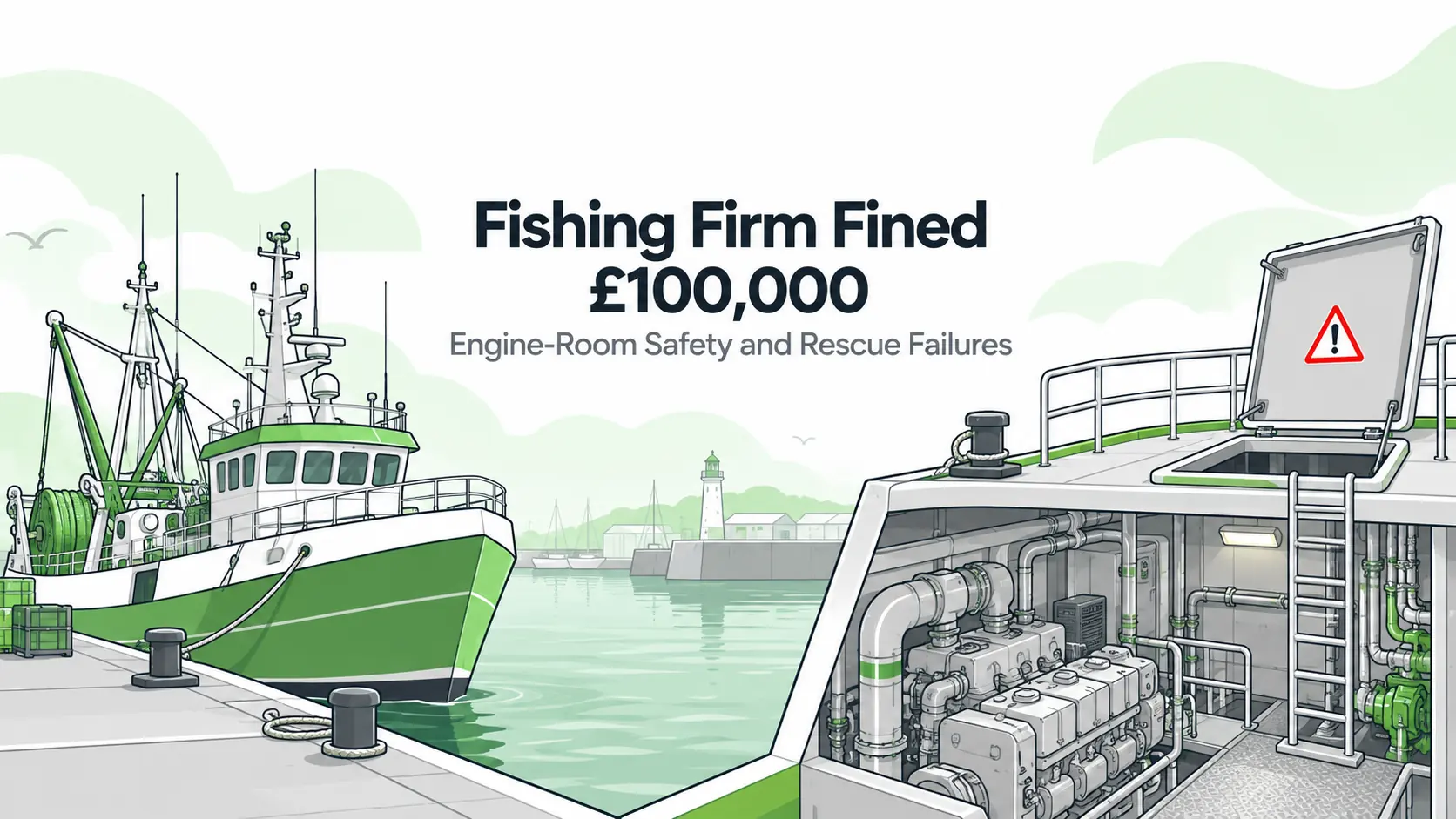
HSE’s linked release includes photographs of the engine room. Image-specific reuse rights were not confirmed, so those photographs are not reproduced here. The featured artwork is a newly created editorial illustration, not a photograph or reconstruction of the vessel.
Source
Health and Safety Executivepress.hse.gov.uk