EUROPEAN UNION — EU-OSHA published new workplace flood resources on 3 November 2026, giving small businesses a practical framework for preparing for flooding and protecting employees. The release combines an operational guide with a paper examining broader occupational safety and health implications.
Resources address preparedness and recovery
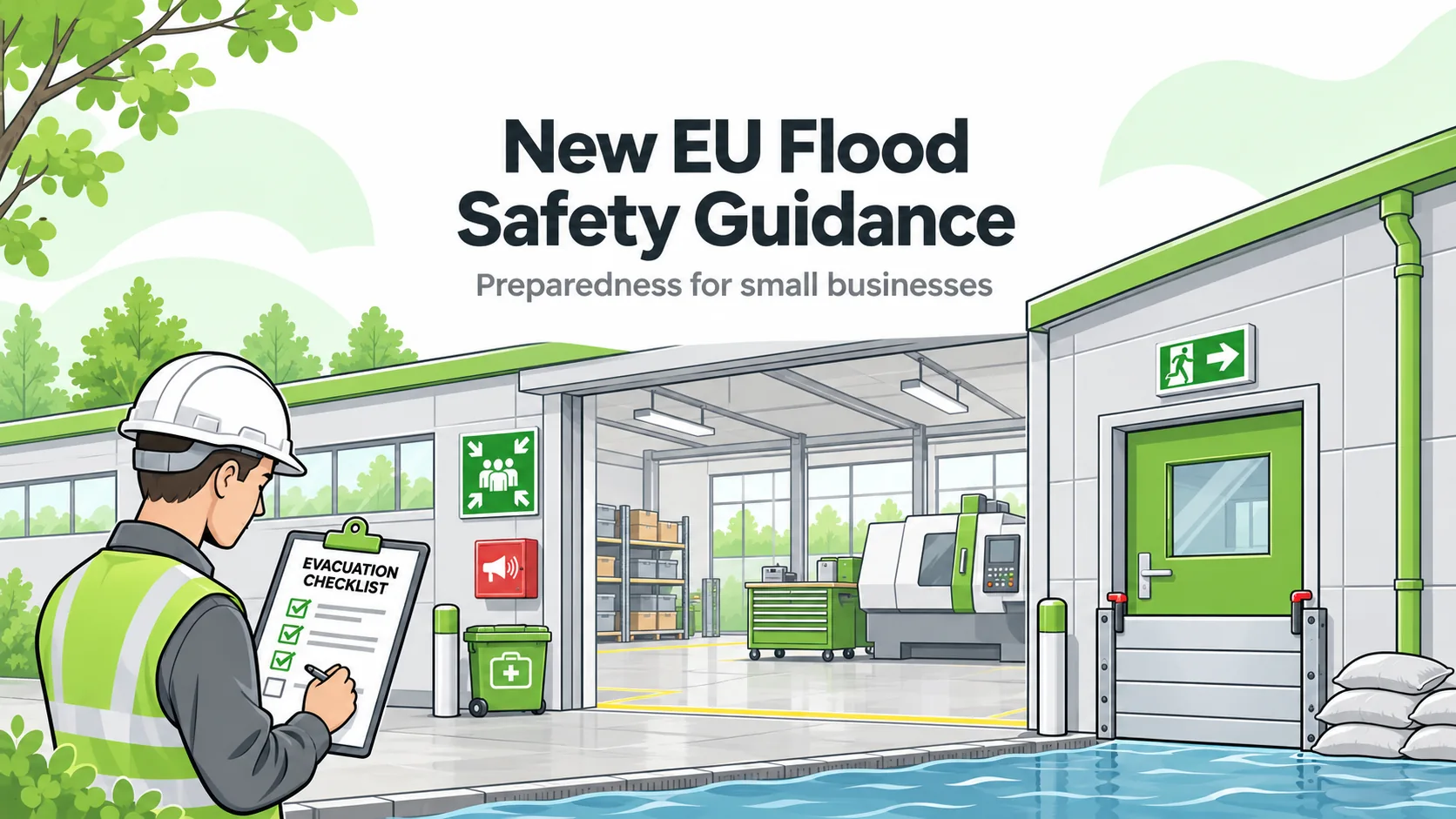
The 24-page guide, Flood risks at work: practical guidance on preparedness for safe and resilient small businesses, covers risk assessment, emergency arrangements, worker protection and recovery. Its checklists span the periods before, during and after flooding, linking employee safety with business continuity.
The agency says changing extreme-weather patterns can create new workplace hazards and worsen existing ones. It cites the 2024 Valencia floods as a reason for organisations to strengthen preparedness. The new development is the publication of guidance; the announcement does not establish a new EU legal deadline.
HSE Blog Analysis
For an employer, the practical test is whether a flood plan produces a timely decision about people. A useful review would identify who monitors warnings, who can suspend work, how employees receive instructions and whether the planned escape route remains usable when water levels rise. Arrangements also need to cover contractors and staff working outside normal hours.
Recovery deserves its own decision point. Pressure to reopen can precede a competent assessment of whether work can safely resume. Employers can use the guide to check who authorises re-entry and how temporary controls are communicated. These are editorial applications of the preparedness approach, rather than findings about a particular flooded workplace. Our discussion of keeping risk assessments useful in practice explains how to connect documented arrangements to actual work.
Sources and verification
The publication date and scope were checked against the EU-OSHA announcement and its guide catalogue entry. EHS News coverage was also checked. That is three pages from two organisations, with one original issuing authority; secondary coverage does not provide five independent confirmations. The featured image is a conceptual illustration.
Source
EU-OSHAosha.europa.eu