PENNSYLVANIA, UNITED STATES — OSHA has proposed $254,884 in penalties against a Pennsylvania excavation contractor following a fatal trench collapse, according to an agency announcement published on 7 October 2026.
The employer was identified as Jonas David Wagoner, doing business as J.D. Wagoner Excavating. OSHA said its investigation began on 2 April 2026 after a worker was engulfed by soil while a storm sewer was being installed in an inadequately protected, 12-foot-deep trench.
Inspection findings cover protection, supervision and access
The official release reports the following citations:
| Classification | Number | Issues cited |
|---|---|---|
| Willful | 1 | Cave-in protection |
| Repeat | 2 | Competent-person inspections and removal of workers from hazardous conditions |
| Serious | 3 | Hazard-prevention training, safe exit, material setbacks and roll-in hazards |
The citations and penalty amount are proposed, rather than a final adjudicated outcome. OSHA said the employer has 15 business days from receipt to seek an informal conference or contest the findings. Its establishment records should be checked for subsequent changes.
What trench protection requires in practice
OSHA’s trenching and excavation guidance identifies cave-ins as the greatest threat to workers in excavations. Its prevention guidance centres on three approaches:
- Sloping or benching: shaping the excavation walls to reduce collapse risk where appropriate.
- Shoring: supporting trench walls.
- Shielding: using a protective trench box.
Access and inspection are separate safeguards
The agency also calls for safe entry and exit, materials kept away from the edge, checks for water and atmospheric hazards, and inspection before workers enter. Soil assessment and the conditions of the excavation inform the protective approach; a ladder alone does not protect against a collapse.
HSE Blog analysis: review the complete excavation plan
For teams managing comparable work, the case is a reason to review how the excavation plan is implemented on site. The presence of equipment should be checked alongside the people, decisions and inspections needed to use it effectively.
A focused review can ask:
- Who is responsible for inspecting the excavation and responding to changing conditions?
- Does the protective arrangement suit the planned work and site conditions?
- Can workers reach a safe exit without obstacles?
- Are spoil, materials and equipment positioned to avoid additional hazards?
- Do workers understand when entry must stop and whom to contact?
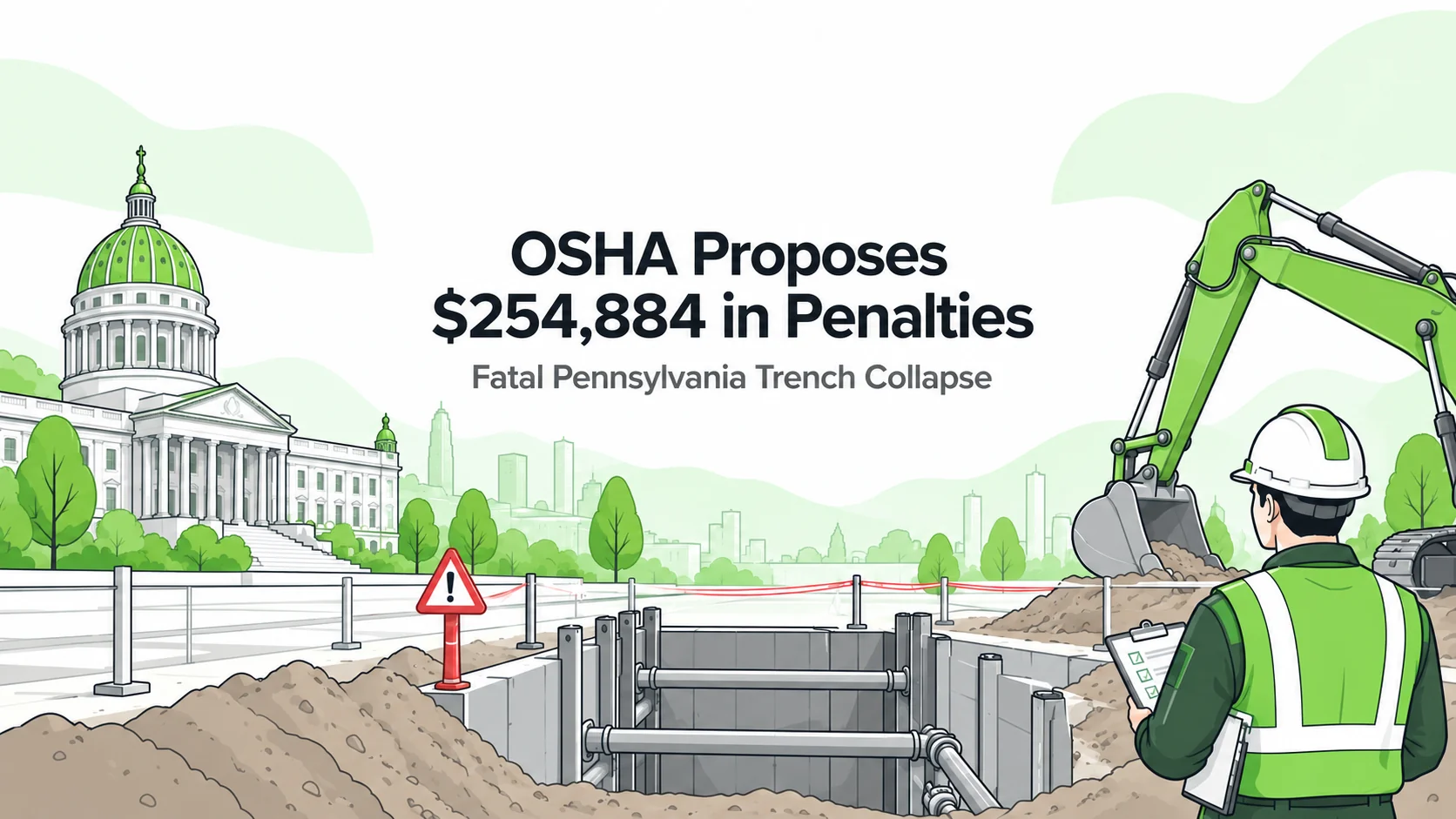
Featured image: AI-generated safety illustration in HSE Blog’s editorial style. It does not depict the actual worksite or incident.
Sources: U.S. Department of Labor / OSHA, release dated 7 October 2026; OSHA trenching and excavation guidance. The announcement date is distinct from the April investigation date.
Source
U.S. Department of Labor / OSHAosha.gov