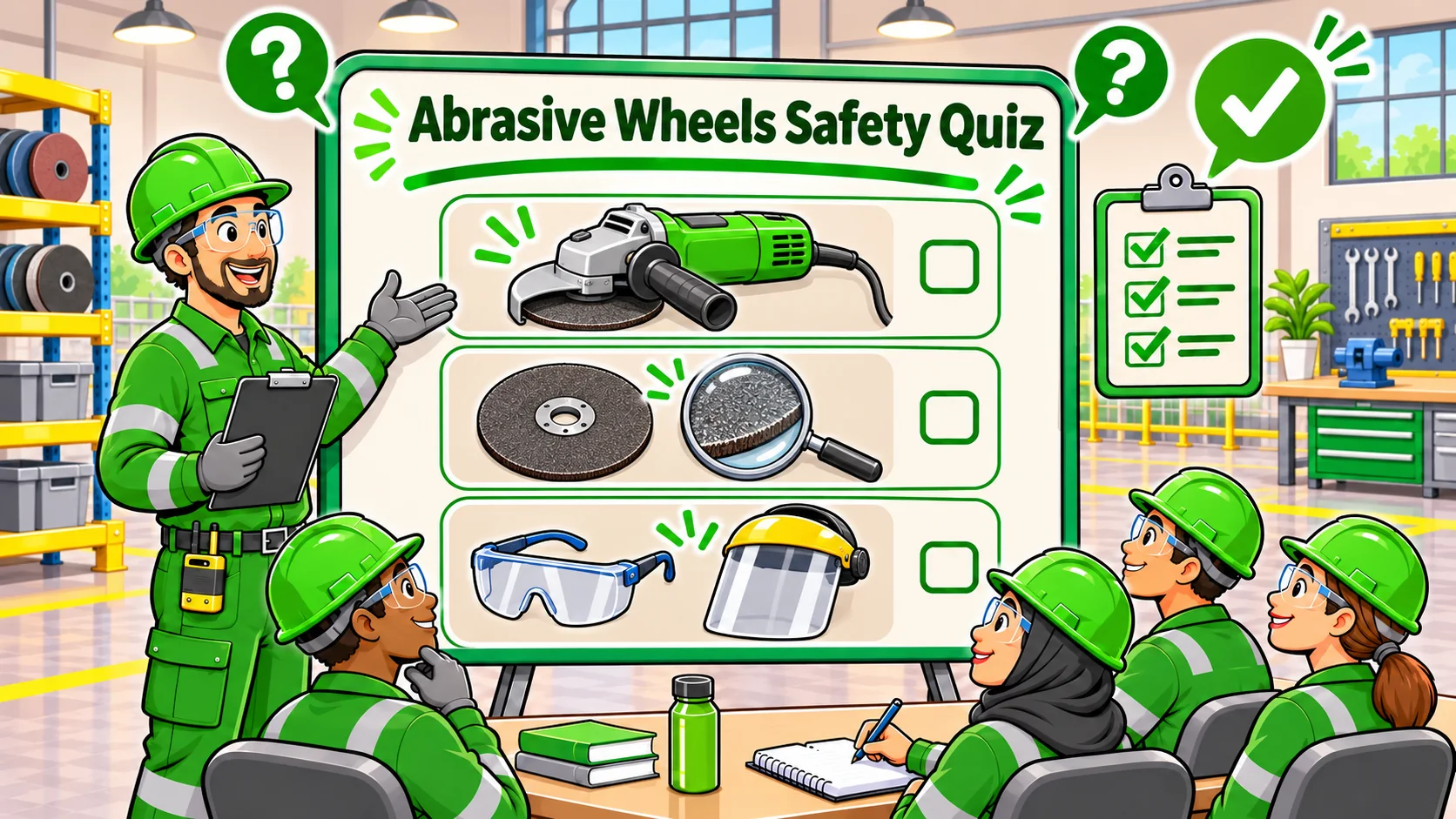
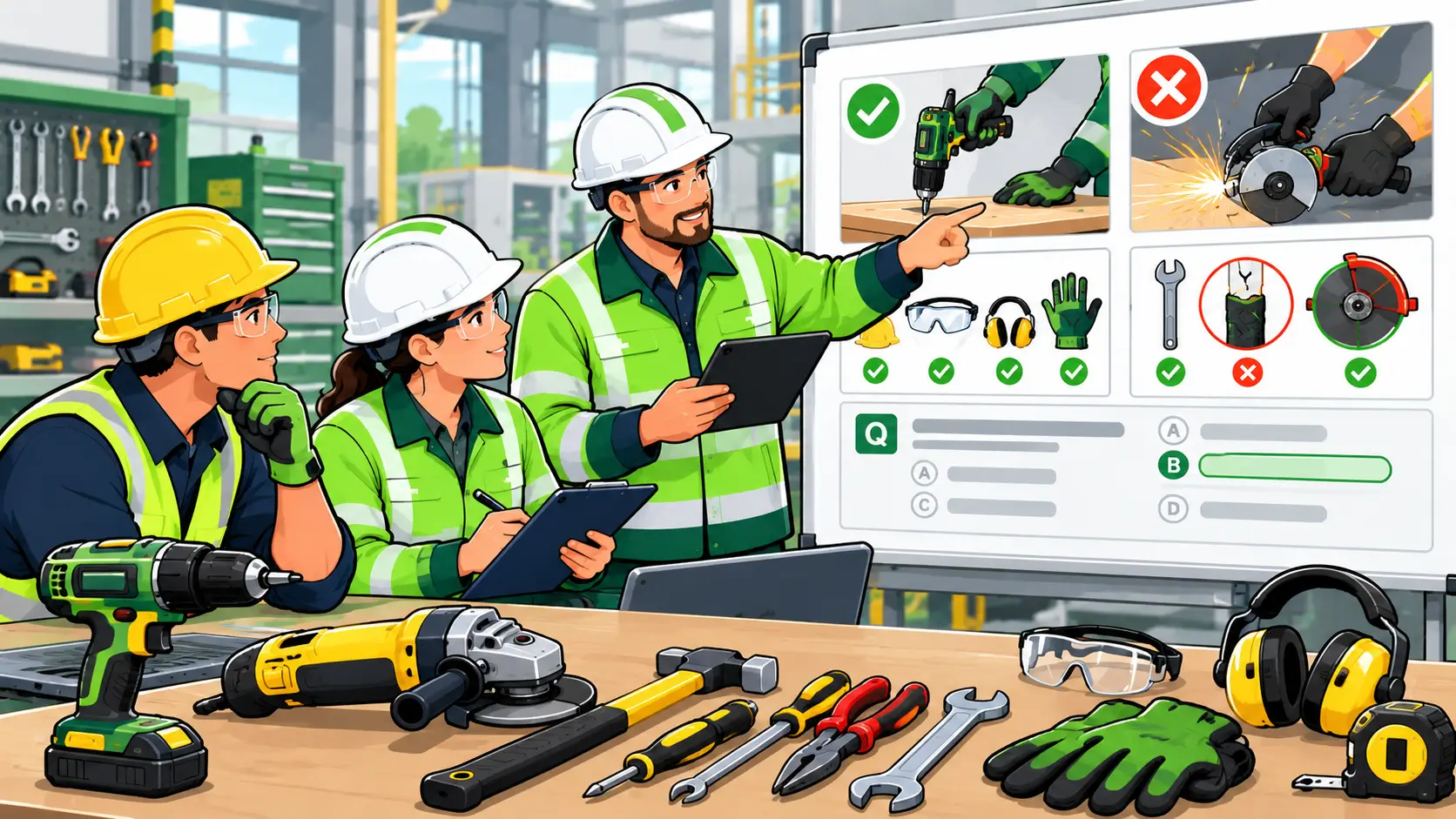
Abrasive Wheels Safety Quiz: Grinder Hazards and Wheel Checks
25 questions
About 13 min
Updated
0 of 25 answered
Score 0
Question 1 of 25
What is a principal danger of an abrasive wheel breaking?
Question 2 of 25
What should wheel selection consider?
Question 3 of 25
The grinder's maximum speed exceeds the wheel rating. What should happen?
Question 4 of 25
A disc's identification and speed marking are unreadable. What is appropriate?
Question 5 of 25
Why must diameter and bore match the machine specification?
Question 6 of 25
Who should mount abrasive wheels?
Question 7 of 25
What should precede wheel replacement?
Question 8 of 25
A wheel is cracked or chipped. What is the right action?
Question 9 of 25
What is true of a ring test?
Question 10 of 25
A wheel was dropped but looks intact. What should happen?
Question 11 of 25
How should wheel flanges be selected?
Question 12 of 25
Why avoid excessive tightening?
Question 13 of 25
When are blotters used?
Question 14 of 25
Why must the wheel guard remain correctly positioned?
Question 15 of 25
A guard prevents the chosen wheel from fitting. What should happen?
Question 16 of 25
What should a new wheel's trial run follow?
Question 17 of 25
Can a thin cutting-off disc be used for side grinding?
Question 18 of 25
How should a handheld workpiece be controlled for grinding?
Question 19 of 25
What should be done about nearby flammable materials?
Question 20 of 25
What is the best approach to grinding dust?
Question 21 of 25
How should eye and face protection be chosen?
Question 22 of 25
What should excessive vibration or unusual noise prompt?
Question 23 of 25
When may a handheld grinder be put down?
Question 24 of 25
Why maintain bench-grinder work-rest adjustment?
Question 25 of 25
Does a completed quiz authorise wheel mounting?
About This Quiz
Check the decisions that prevent wheel breakage and loss of control during grinding and cutting. These 25 original questions cover accessory compatibility, inspection, mounting, guards, safe operation, dust and protective equipment.
Scope and independent practice
Independent practice material, not an abrasive-wheel mounting qualification or practical competency assessment. This quiz uses HSE guidance for Great Britain. Follow current local requirements and the wheel and machine manufacturers' instructions. Ring testing and mounting arrangements depend on wheel type; one method does not suit every product.
How to use this quiz
Select one best answer and review the explanation. The practice pass mark is 70%, with shuffled answers and retakes. Never use an unknown, damaged or incompatible wheel to test a theory from a quiz. Obtain task-specific training and stop when safe suitability cannot be established.
Primary safety guidance
Reviewed on 12 November 2026. Check current local requirements and procedures before applying the learning.
Practise recognising and preventing occupational exposure to human blood and other potentially infectious materials. These 25 original questions cover sharps controls, gloves and face protection, hand hygiene, exposure response, vaccination and written control plans.
Test your understanding of mobile elevating work platform selection, setup and use. These 25 original questions cover scissor and boom lifts, ground support, loading, entrapment, traffic, fall protection and emergency lowering.
Good housekeeping makes everyday work safer when storage, waste, cleaning and access are planned together. These 25 original questions test how to keep routes usable, handle common defects and organise effective follow-up.