What does universal precautions mean in OSHA's bloodborne standard?
Question 3 of 25
Which is an occupational exposure incident?
Question 4 of 25
Who may need bloodborne-pathogen protection?
Question 5 of 25
What is an engineering control example?
Question 6 of 25
When should a used sharp generally be disposed of?
Question 7 of 25
How should sharps containers be managed?
Question 8 of 25
What is the routine rule for contaminated needle recapping?
Question 9 of 25
How should contaminated broken glass be picked up?
Question 10 of 25
What should guide glove selection?
Question 11 of 25
Do gloves replace hand hygiene?
Question 12 of 25
What if running-water handwashing is temporarily unavailable?
Question 13 of 25
When is eye and face protection needed?
Question 14 of 25
A glove tears during blood-contact work. What should happen?
Question 15 of 25
How should contaminated PPE be removed?
Question 16 of 25
What should happen after a needlestick?
Question 17 of 25
What should happen after blood splashes into an eye?
Question 18 of 25
Who should decide post-exposure treatment?
Question 19 of 25
Why report an exposure without delay?
Question 20 of 25
What does hepatitis B vaccination protect against?
Question 21 of 25
Under federal OSHA, how is hepatitis B vaccination offered to eligible exposed employees?
Question 22 of 25
What should a written exposure control plan cover?
Question 23 of 25
When must an OSHA exposure control plan be reviewed?
Question 24 of 25
How should blood-contaminated surfaces be cleaned?
Question 25 of 25
Does this quiz replace required bloodborne-pathogens training?
About This Quiz
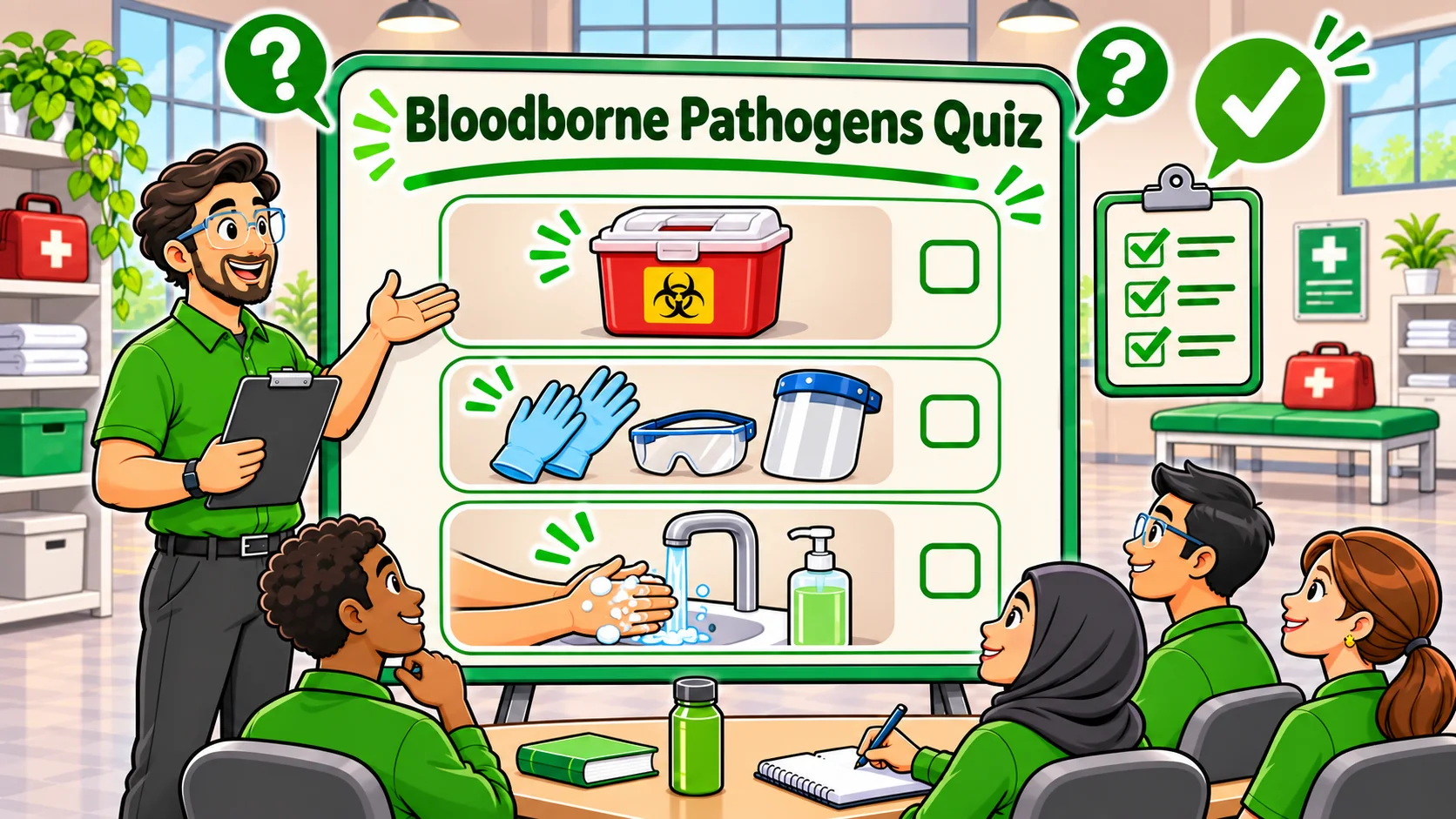
Practise recognising and preventing occupational exposure to human blood and other potentially infectious materials. These 25 original questions cover sharps controls, gloves and face protection, hand hygiene, exposure response, vaccination and written control plans.
Scope and independent practice
Independent knowledge practice, not an official OSHA test, certification or replacement for employer training. Regulatory questions refer specifically to the US federal OSHA Bloodborne Pathogens Standard, 29 CFR 1910.1030; other jurisdictions may differ. Clinical treatment decisions require a qualified healthcare professional. After an exposure, obtain immediate first aid, reporting and prompt medical evaluation rather than waiting for symptoms.
How to use this quiz
Choose one best answer and read the explanation. The practice pass mark is 70%, answers are shuffled and retakes are available. Apply your workplace's exposure control procedure and current clinical guidance. A quiz cannot assess practical PPE technique or determine whether post-exposure treatment is needed.
Primary safety guidance
Reviewed on 12 November 2026. Check current local requirements and procedures before applying the learning.
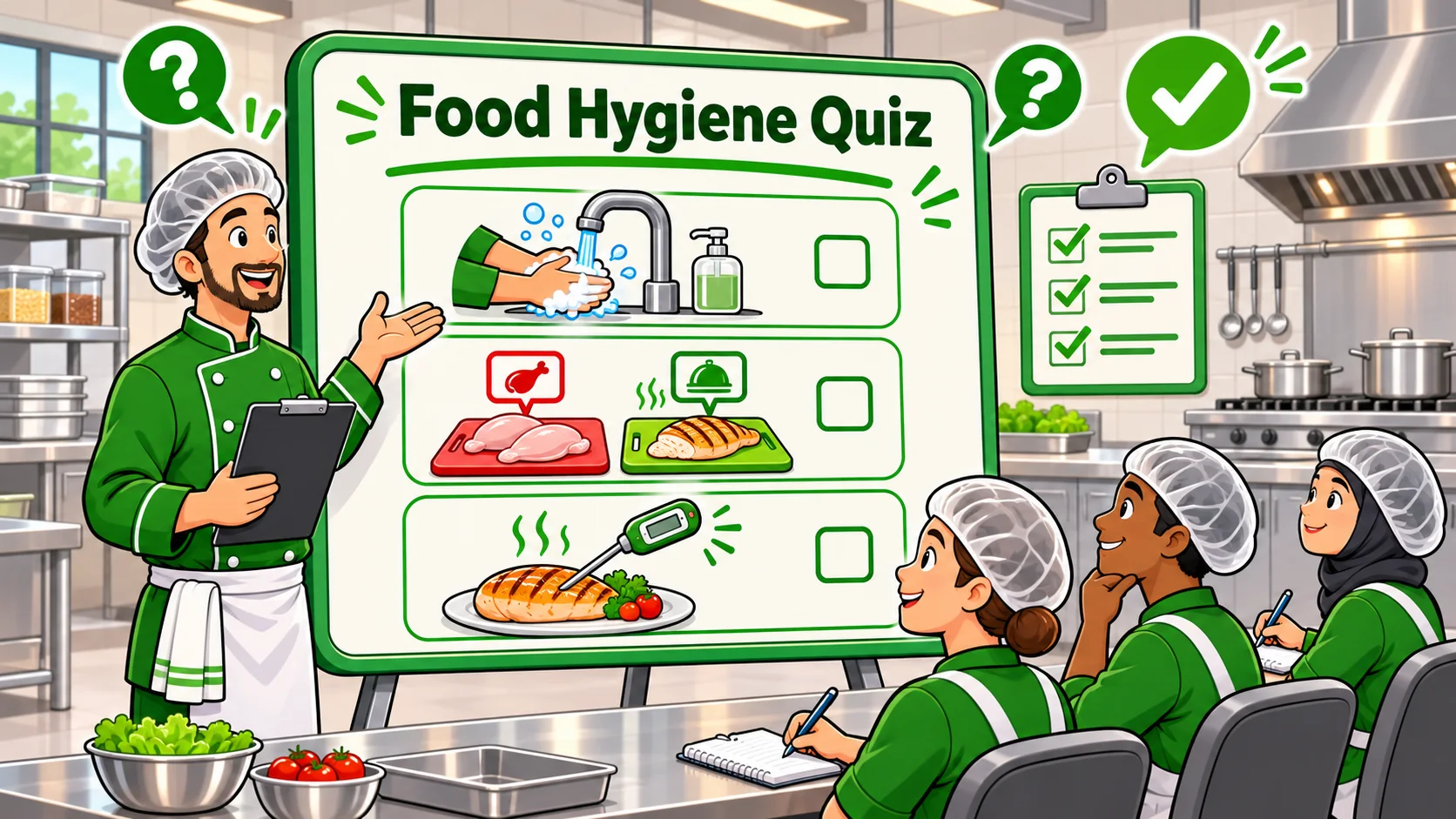
Review everyday food-handler decisions with 25 original multiple-choice questions on personal hygiene, contamination, temperature control, cleaning, allergens and safe storage. The focus is practical understanding for catering and food-service learners, rather than memorising a certificate question bank.
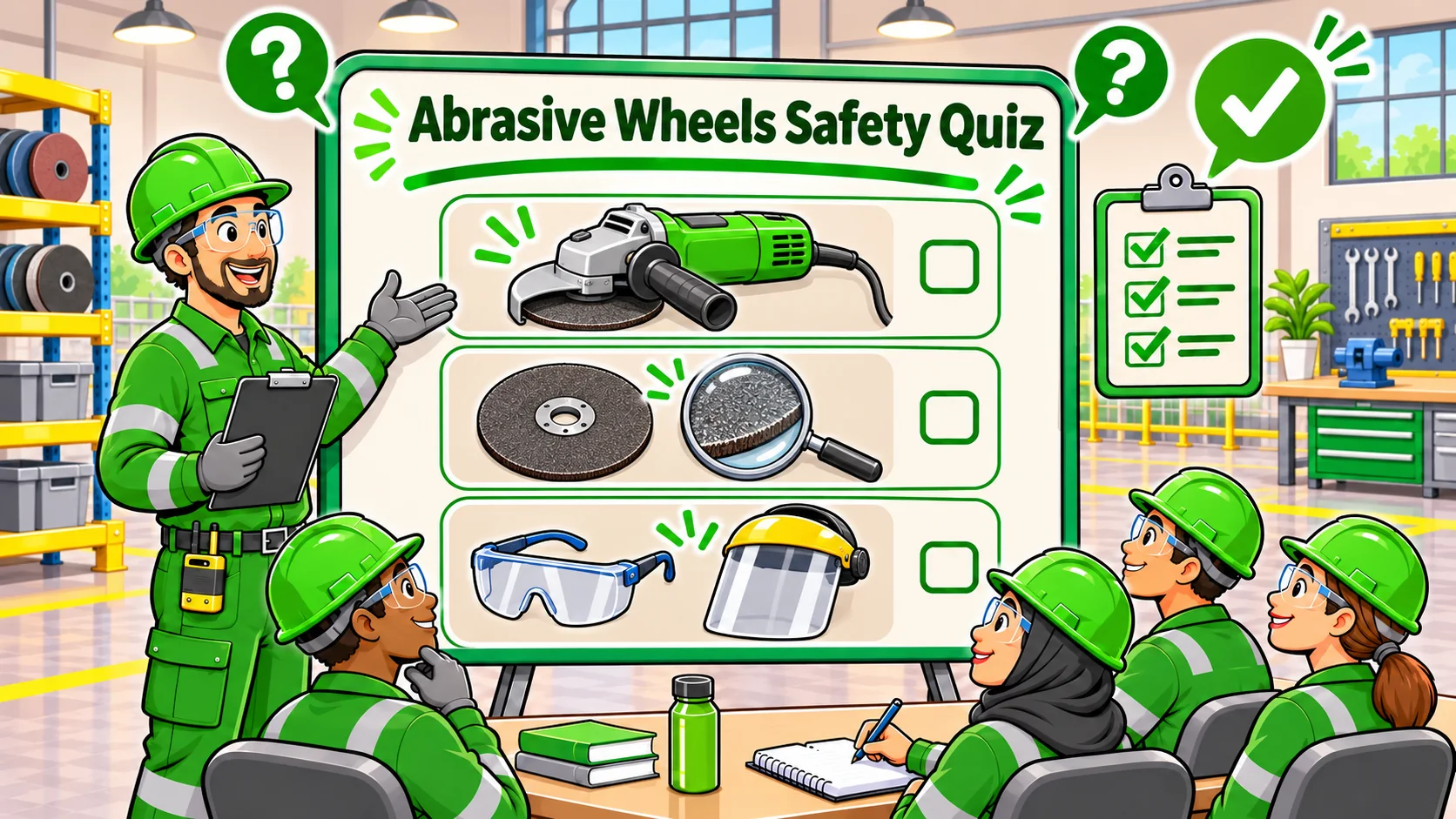
Check the decisions that prevent wheel breakage and loss of control during grinding and cutting. These 25 original questions cover accessory compatibility, inspection, mounting, guards, safe operation, dust and protective equipment.
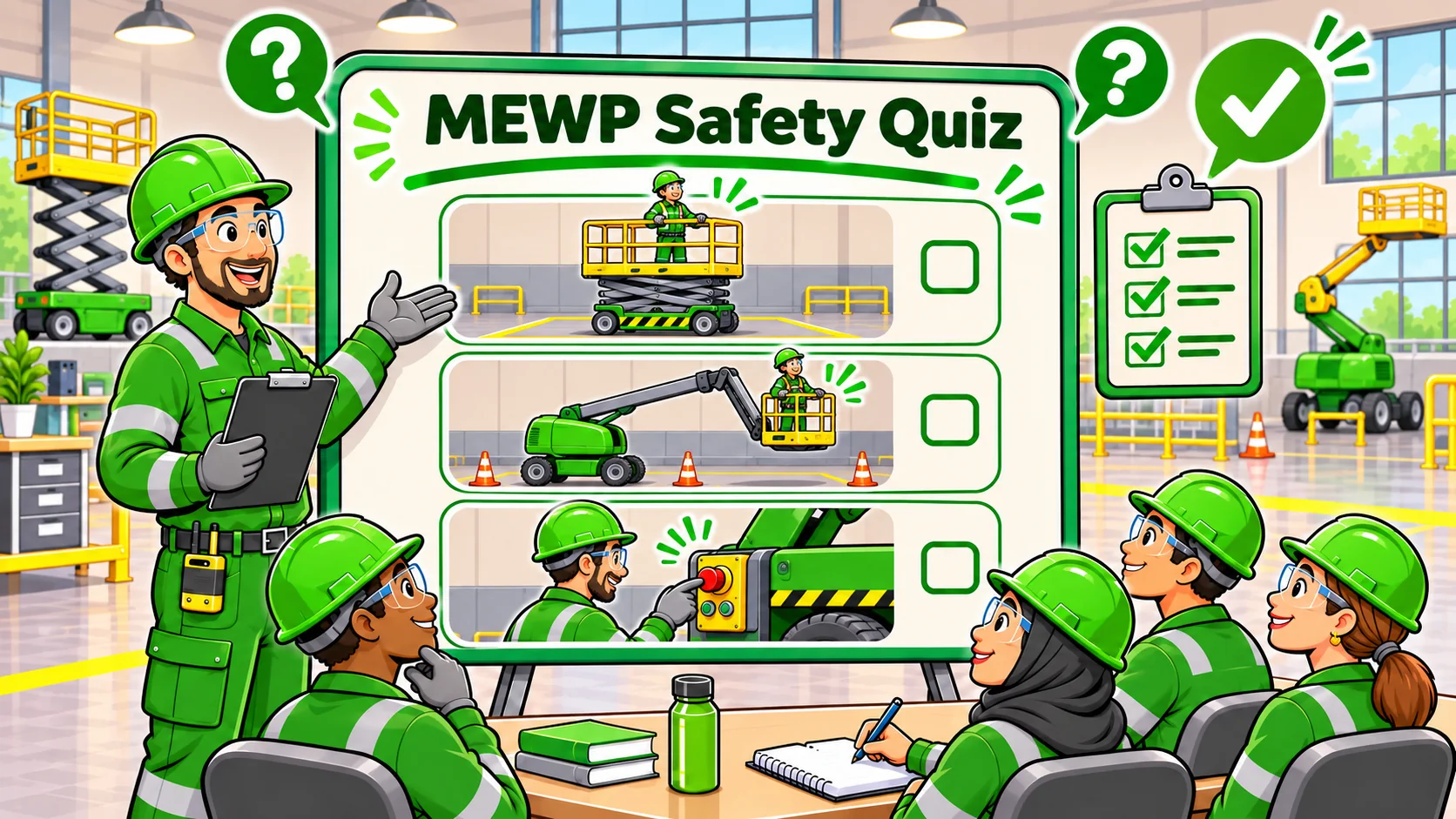
Test your understanding of mobile elevating work platform selection, setup and use. These 25 original questions cover scissor and boom lifts, ground support, loading, entrapment, traffic, fall protection and emergency lowering.
Good housekeeping makes everyday work safer when storage, waste, cleaning and access are planned together. These 25 original questions test how to keep routes usable, handle common defects and organise effective follow-up.