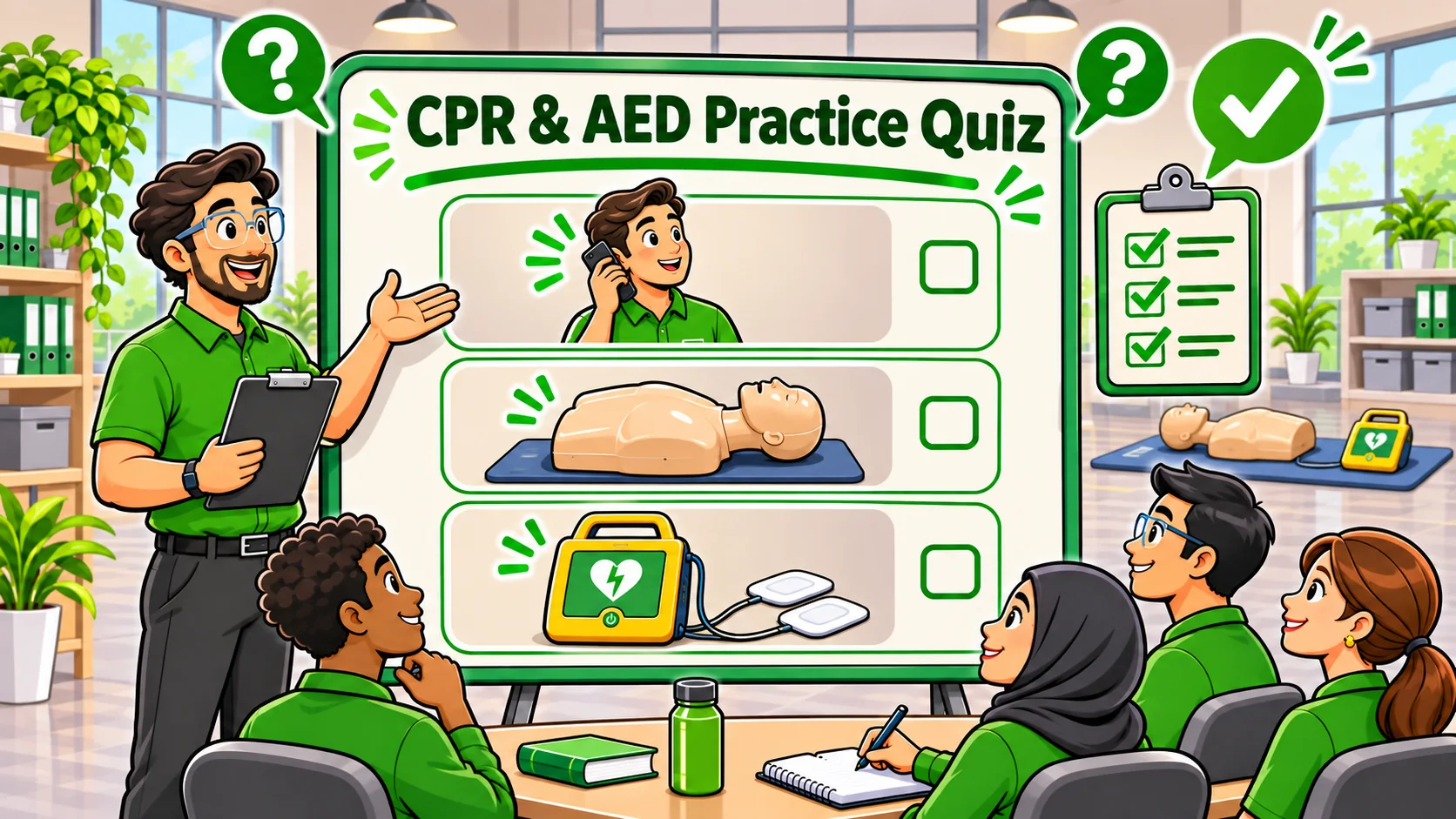
CPR and AED Practice Quiz: Adult Emergency Response
25 questions
About 13 min
Updated
0 of 25 answered
Score 0
Question 1 of 25
Before approaching a collapsed adult, what should a bystander check?
Question 2 of 25
Under RCUK 2025 guidance, what should happen once an adult is found unresponsive and a phone is available?
Question 3 of 25
An unresponsive adult is making occasional gasps. How should this be interpreted?
Question 4 of 25
What should be assumed when an adult is unresponsive and not breathing normally?
Question 5 of 25
What adult chest-compression rate is recommended?
Question 6 of 25
What adult compression depth does RCUK recommend?
Question 7 of 25
Where should the heel of the first hand be placed for adult compressions?
Question 8 of 25
What should happen after each compression?
Question 9 of 25
Why keep interruptions to chest compressions as short as possible?
Question 10 of 25
If trained to provide rescue breaths, what adult CPR ratio is recommended?
Question 11 of 25
What should an untrained bystander do if unable to give rescue breaths?
Question 12 of 25
How much air should a trained rescuer deliver with each rescue breath?
Question 13 of 25
When should an AED be used for suspected adult cardiac arrest?
Question 14 of 25
Who may use an AED in this situation?
Question 15 of 25
Where should AED pads be applied?
Question 16 of 25
What should rescuers do while the AED analyses the rhythm?
Question 17 of 25
If the AED advises a shock, what is essential before delivery?
Question 18 of 25
What should happen immediately after an AED shock is delivered?
Question 19 of 25
The AED says no shock is advised. What should the rescuer do if cardiac arrest is still suspected?
Question 20 of 25
If another bystander is available, how can they help once CPR is underway?
Question 21 of 25
Why use speakerphone for the emergency call when possible?
Question 22 of 25
A collapsed adult has brief seizure-like activity and remains unresponsive afterwards. What matters?
Question 23 of 25
Emergency responders arrive while CPR is in progress. What should the bystander do?
Question 24 of 25
The person clearly becomes responsive and breathes normally. What should happen?
Question 25 of 25
Does passing this independent quiz replace practical CPR and AED training?
About This Quiz
Practise the key decisions in helping an unresponsive adult: calling for help, recognising abnormal breathing, starting CPR and using an automated external defibrillator. These 25 original questions follow Resuscitation Council UK 2025 adult basic life support guidance.
Scope and independent practice
Independent educational practice material, not an official RCUK assessment, practical skills test or qualification. Scope: adult community response in the UK; 999 is the UK emergency number, so use your local emergency number elsewhere. Child, infant, drowning and advanced resuscitation protocols are outside this quiz. In a real emergency, act promptly and follow the emergency call handler and AED instructions.
How to use this quiz
Select one best answer and read the explanation. The practice pass mark is 70%, answers are shuffled and retakes are available. RCUK 2025 advises calling 999 immediately for an unresponsive person and assessing breathing while the call connects. This quiz supports, but cannot replace, hands-on CPR and AED practice.
Authoritative guidance
Reviewed against the following primary guidance on 10 November 2026. Recheck current guidance and local procedures when applying the learning.
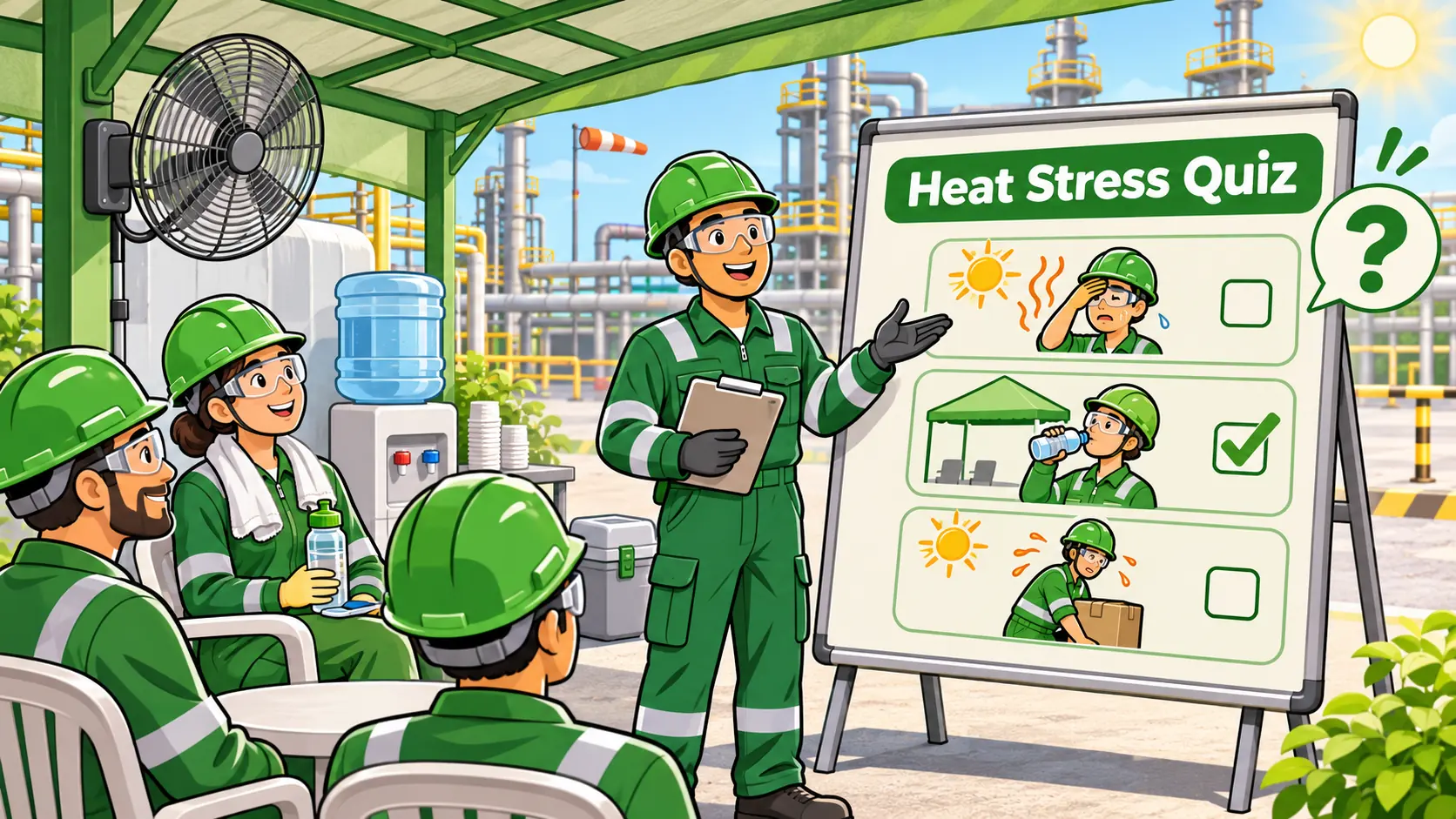
Heat exposure depends on weather, radiant heat, workload, clothing, and recovery opportunities. This quiz examines preventive planning and recognition of a person who may need urgent help.
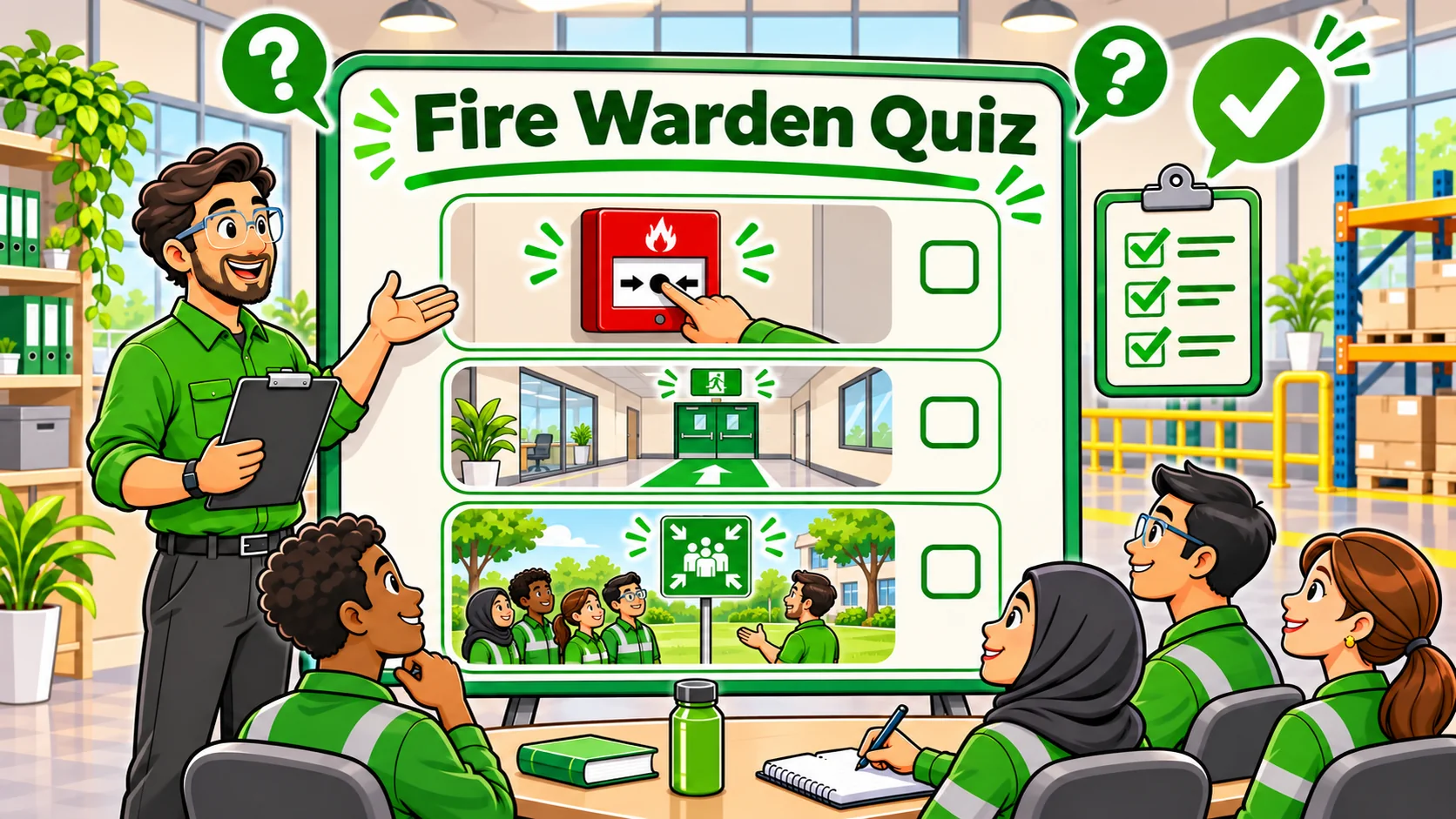
Check your understanding of a fire warden or marshal's role before, during and after an evacuation. These 25 original questions explore alarms, safe area checks, escape routes, accountability, assistance and communicating with responders.
Test how well you recognise and control common workplace slip and trip hazards. These 25 original questions cover contamination, cleaning, housekeeping, flooring, stairs, footwear and reporting.