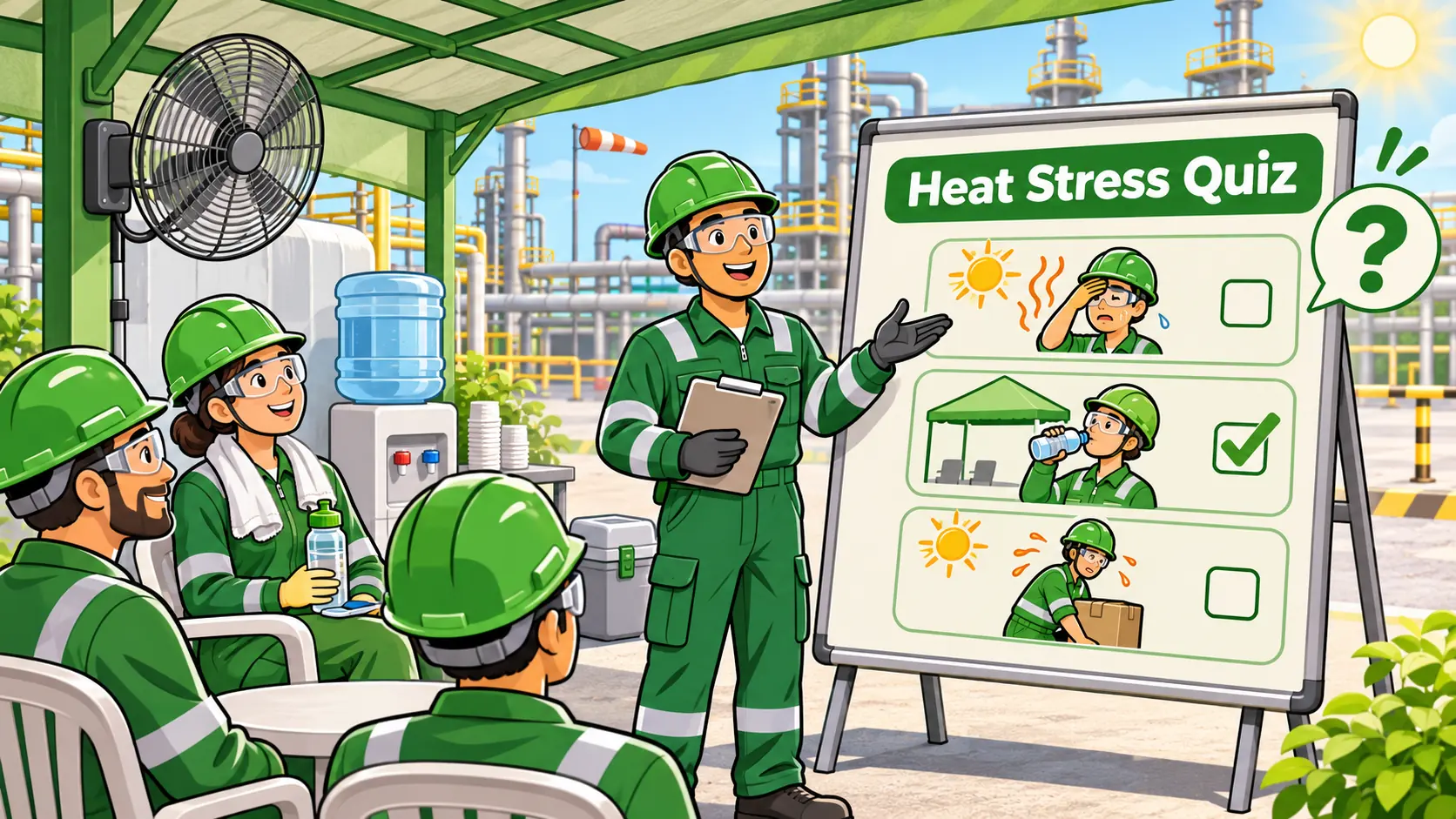
Which combination best describes workplace heat-stress risk?
Question 2 of 25
Can workers develop heat illness indoors?
Question 3 of 25
What does acclimatization mean in occupational heat guidance?
Question 4 of 25
A new worker starts a physically demanding job in hot conditions. What is appropriate?
Question 5 of 25
Why should a returning worker's heat exposure be reviewed after time away?
Question 6 of 25
Which is an engineering control for radiant heat?
Question 7 of 25
Which measure primarily changes work organization to reduce heat exposure?
Question 8 of 25
Why should drinking water be readily accessible near hot work areas?
Question 9 of 25
A worker plans to drink an extreme volume of water at once to avoid breaks. What is the best advice?
Question 10 of 25
Does removing required protective clothing without assessment provide an acceptable heat-control plan?
Question 11 of 25
A worker in heat becomes confused and has slurred speech. What should coworkers do?
Question 12 of 25
Does continued sweating rule out heatstroke?
Question 13 of 25
While emergency help is being called for suspected heatstroke, what should others do?
Question 14 of 25
A heat-affected worker is unconscious. Should you give them a drink?
Question 15 of 25
Which symptoms can be consistent with heat exhaustion?
Question 16 of 25
A worker with possible heat exhaustion is alert and can swallow. What is appropriate while arranging medical evaluation?
Question 17 of 25
Why is a buddy system useful during hot work?
Question 18 of 25
A hot-weather worker has severe muscle pain and dark, cola-coloured urine after heavy exertion. What is needed?
Question 19 of 25
What should determine heat-related work and recovery arrangements?
Question 20 of 25
Why can high humidity make hot conditions harder to tolerate?
Question 21 of 25
Can some health conditions or medicines affect heat tolerance?
Question 22 of 25
What should workers do when they notice early heat-illness symptoms?
Question 23 of 25
Where should recovery breaks occur where practicable?
Question 24 of 25
A heatwave is forecast for a physically demanding job. What should management do?
Question 25 of 25
Which feature makes a heat-emergency plan practical?
About This Quiz
Heat exposure depends on weather, radiant heat, workload, clothing, and recovery opportunities. This quiz examines preventive planning and recognition of a person who may need urgent help. This practice resource is intended for outdoor workers, supervisors, occupational-health learners, and industrial teams.
Topics covered
The focus is on practical understanding and decisions relevant to everyday work. Use these learning objectives to guide your preparation.
Recognize heat-risk factors and the need for gradual acclimatization.
Understand water, cooling, recovery time, and work-planning measures.
Distinguish warning signs and recognize when an emergency response is needed.
This quiz contains 25 multiple-choice questions. Select one answer for each question. It has a 70% pass mark, no time limit, and repeat attempts. Review the answer explanations after submitting to understand the reasoning behind each response. Use feedback to identify topics for further study; a knowledge score is only one part of learning and does not establish practical competence.
Standards and scope
NIOSH workplace recommendations provide the main reference framework. Heat plans must reflect the task, workers, and local requirements; a single air-temperature reading does not describe every heat exposure.
References
Consult NIOSH workplace heat-stress recommendations for the primary reference material. Apply the requirements relevant to the industry, equipment, and country in which the work takes place.
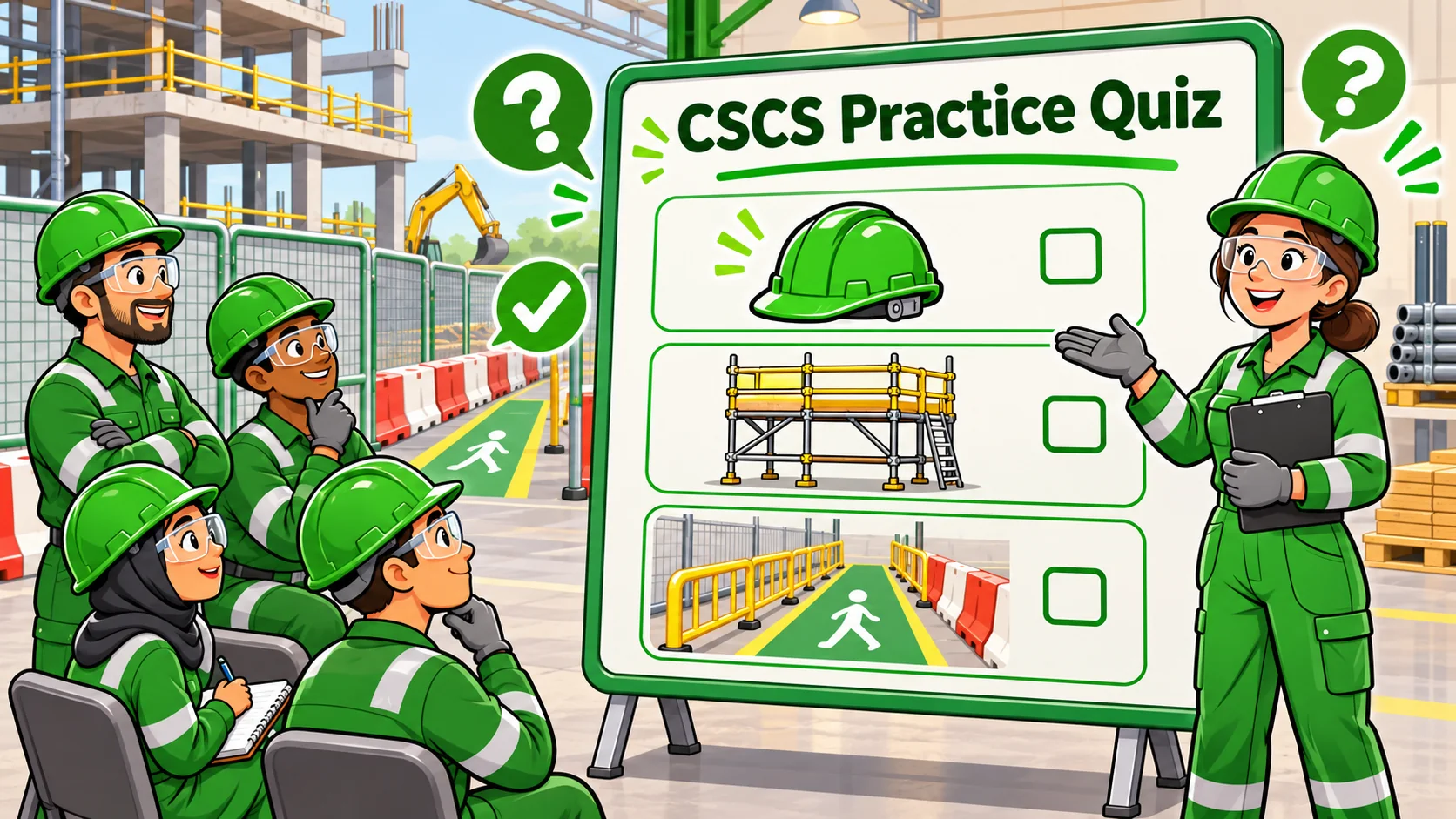
Revise practical construction safety with 25 original multiple-choice questions covering site induction, occupational health, safe access, plant movements, excavation hazards and emergency response. The scenarios focus on the decisions an operative may face when conditions change or a control is missing.
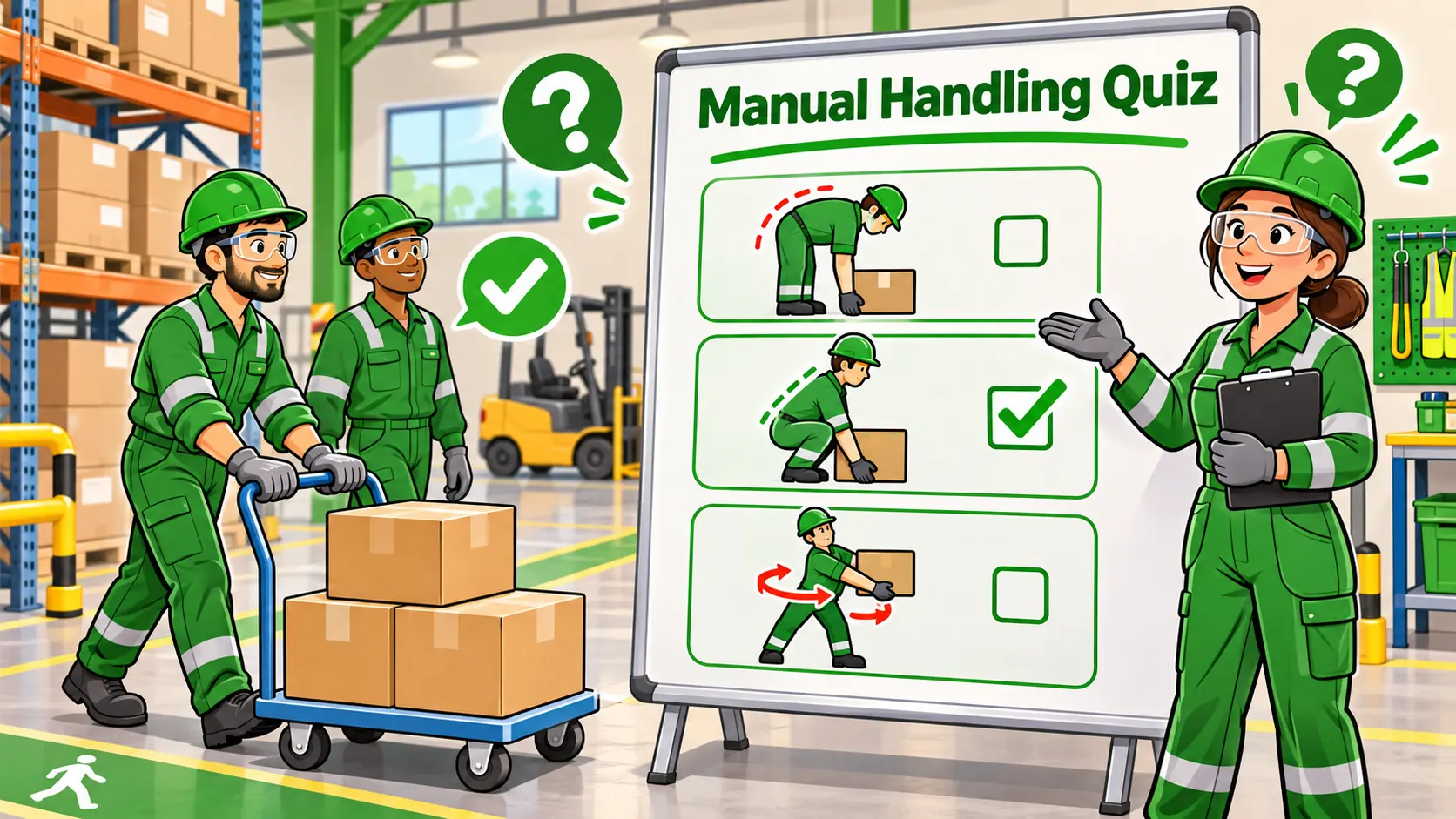
Manual handling includes lifting, lowering, carrying, pushing, and pulling. This quiz examines how to assess a task and reduce physical demands before relying on lifting technique.
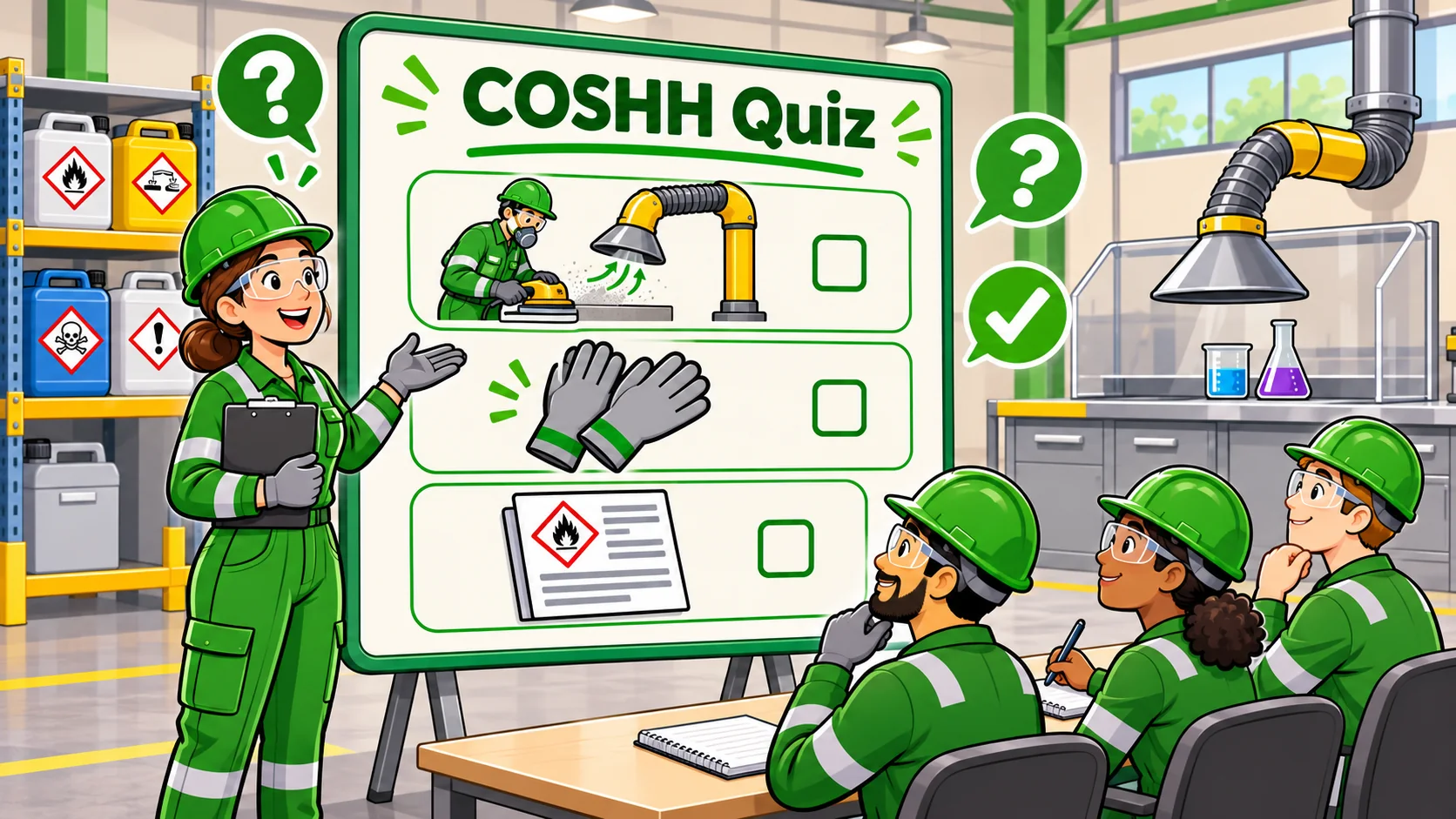
Test your understanding of hazardous-substance assessment and practical exposure controls with 25 original questions. This learning resource is useful for workers, supervisors and safety learners handling chemicals or working with processes that generate harmful dust, fume, vapour or biological exposure.