Demolition Safety Quiz: Planning, Stability, and Exclusion Zones
25 questions
About 13 min
Updated
0 of 25 answered
Score 0
Question 1 of 25
What should precede selection of a demolition method?
Question 2 of 25
Why investigate previous alterations?
Question 3 of 25
Who should develop the demolition method?
Question 4 of 25
When should demolition arrangements be documented?
Question 5 of 25
What is a load path?
Question 6 of 25
Why must the demolition sequence be controlled?
Question 7 of 25
What should happen if site conditions differ from the survey?
Question 8 of 25
What should determine exclusion-zone dimensions?
Question 9 of 25
The site lacks space for the proposed debris zone. What is appropriate?
Question 10 of 25
Does an ordinary access scaffold restrain a building during demolition?
Question 11 of 25
Can scaffold automatically justify a smaller exclusion zone?
Question 12 of 25
Who should decide the need for temporary structural support?
Question 13 of 25
How should designed props and bracing be managed?
Question 14 of 25
Why control debris accumulation on floors?
Question 15 of 25
What must be checked before placing plant on a floor?
Question 16 of 25
How should utilities be addressed before demolition?
Question 17 of 25
What is needed for potential asbestos before destructive work?
Question 18 of 25
An unknown suspect material is exposed. What should happen?
Question 19 of 25
What should guide demolition dust controls?
Question 20 of 25
Why consider neighbouring structures?
Question 21 of 25
What protects pedestrians near the site?
Question 22 of 25
What should be done if movement or cracking suggests instability?
Question 23 of 25
Why coordinate plant and pedestrian movements?
Question 24 of 25
How should a revised demolition sequence be introduced?
Question 25 of 25
Does passing this quiz establish demolition-engineering competence?
About This Quiz
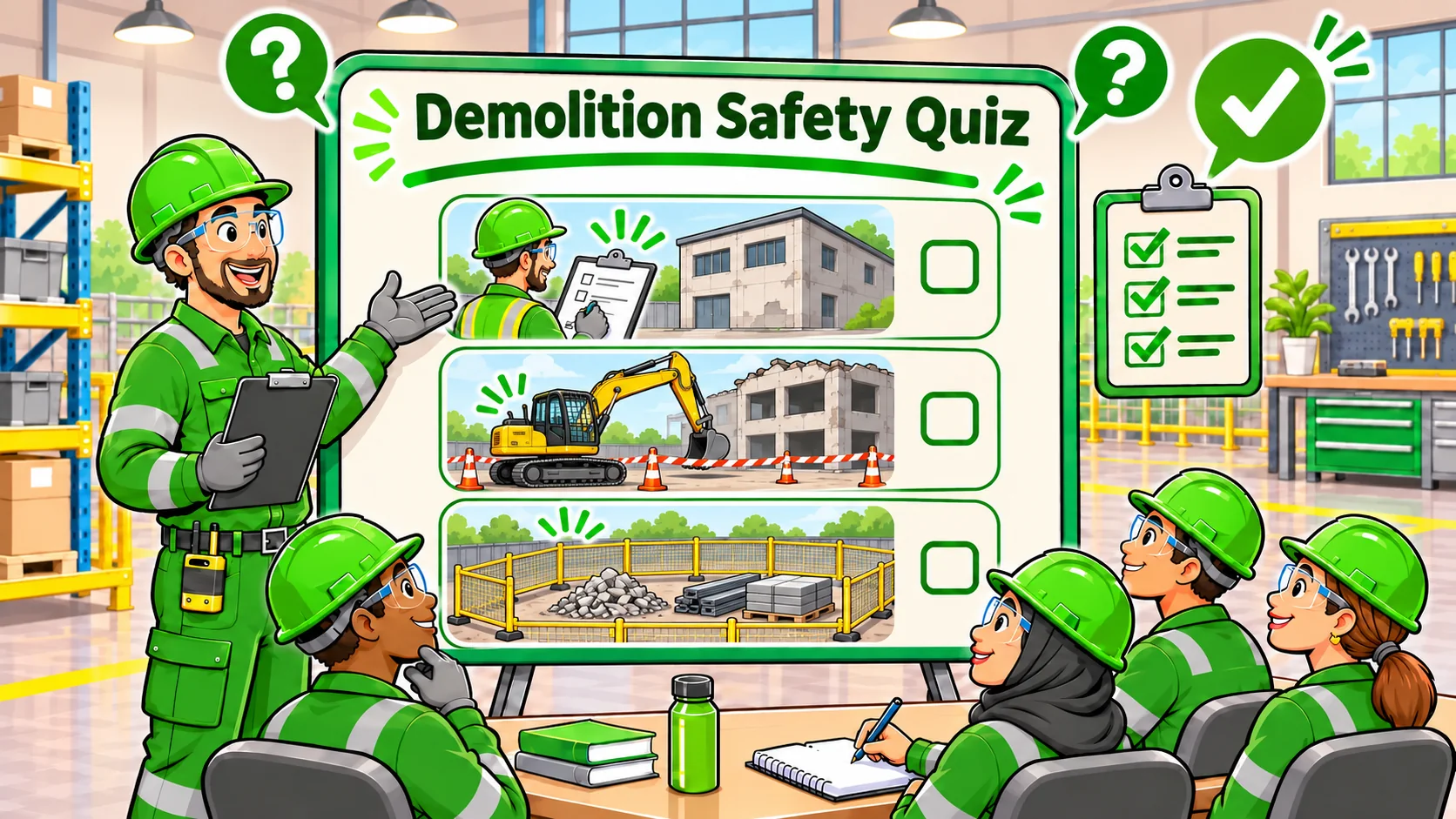
Practise recognising the decisions that prevent uncontrolled collapse and exposure during demolition. These 25 original questions cover survey information, load paths, sequencing, temporary works, debris, utilities, hazardous materials and protection of neighbouring areas.
Scope and independent practice
Independent awareness material, not a demolition engineering qualification or a method for bringing down a structure. The guidance context is Great Britain. A competent engineer and appropriately skilled project team must assess the actual building and site. No universal demolition sequence or exclusion distance is prescribed by this quiz.
How to use this quiz
Select one best answer and read the explanation. The practice pass mark is 70%, with shuffled answers and retakes. Stop affected work when unexpected conditions undermine the method. Practical engineering review and communication of approved changes are essential.
Primary safety guidance
Reviewed on 15 November 2026. Check current local requirements and procedures before applying the learning.
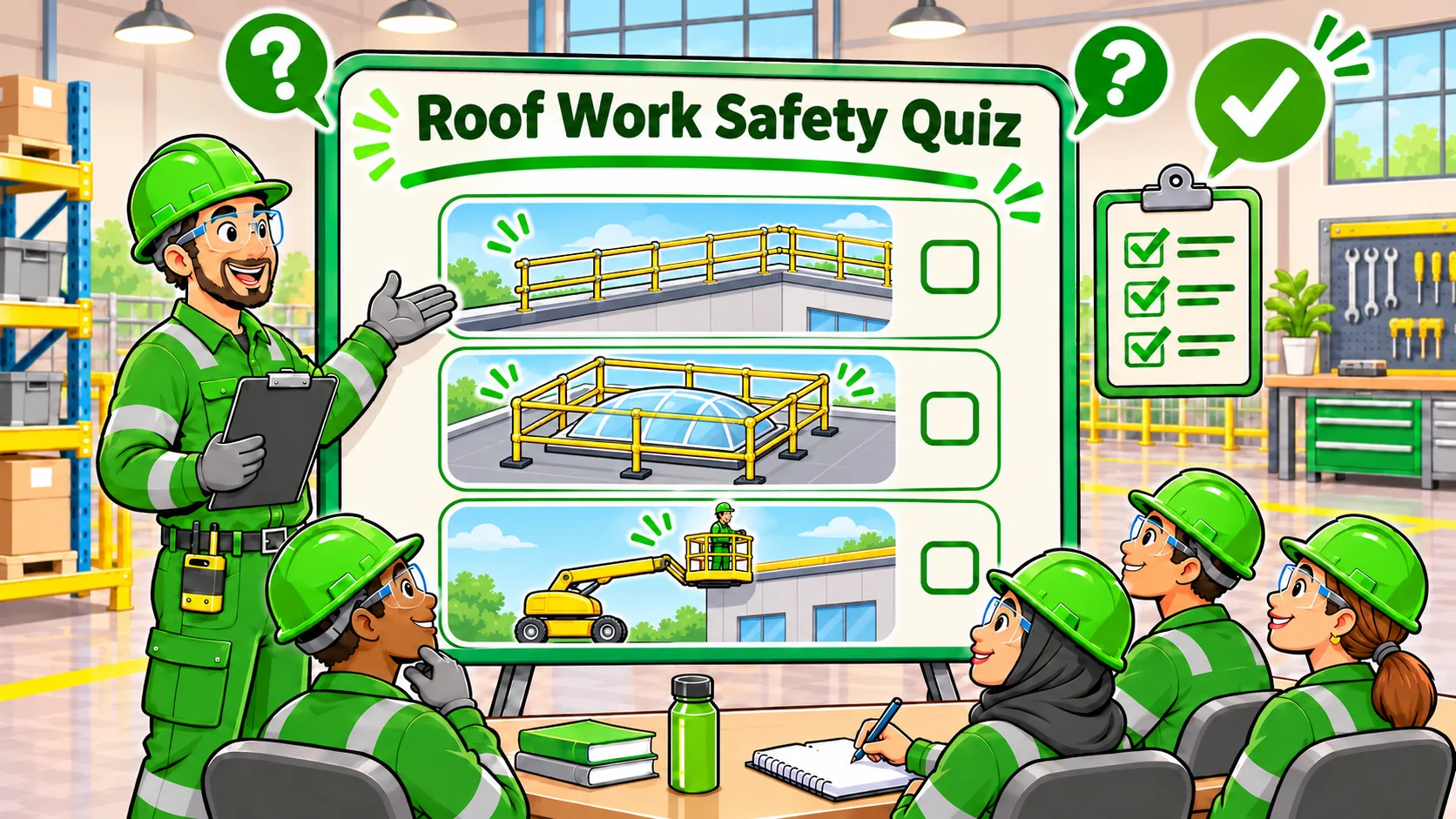
Check the decisions that prevent falls from and through roofs. These 25 original questions cover fragile surfaces and rooflights, safe access, edge protection, temporary loading, weather, personal protection systems and rescue readiness.
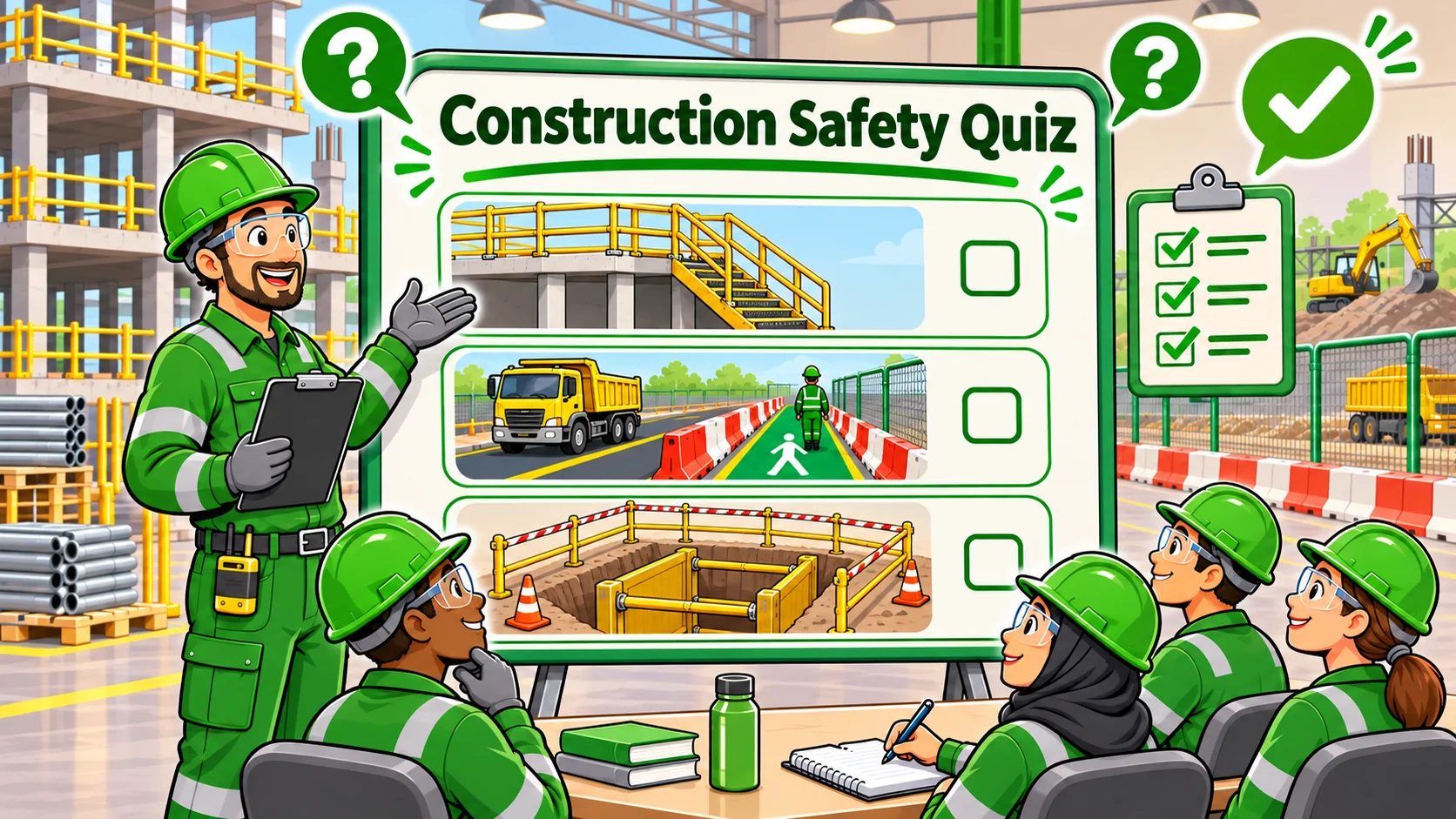
Use 25 original multiple-choice scenarios to review practical construction safety: site induction, safe access, vehicle movements, height work, excavation and lifting interfaces, occupational health and emergency response. The quiz focuses on recognising when conditions require action, reporting or a revised method before work continues.
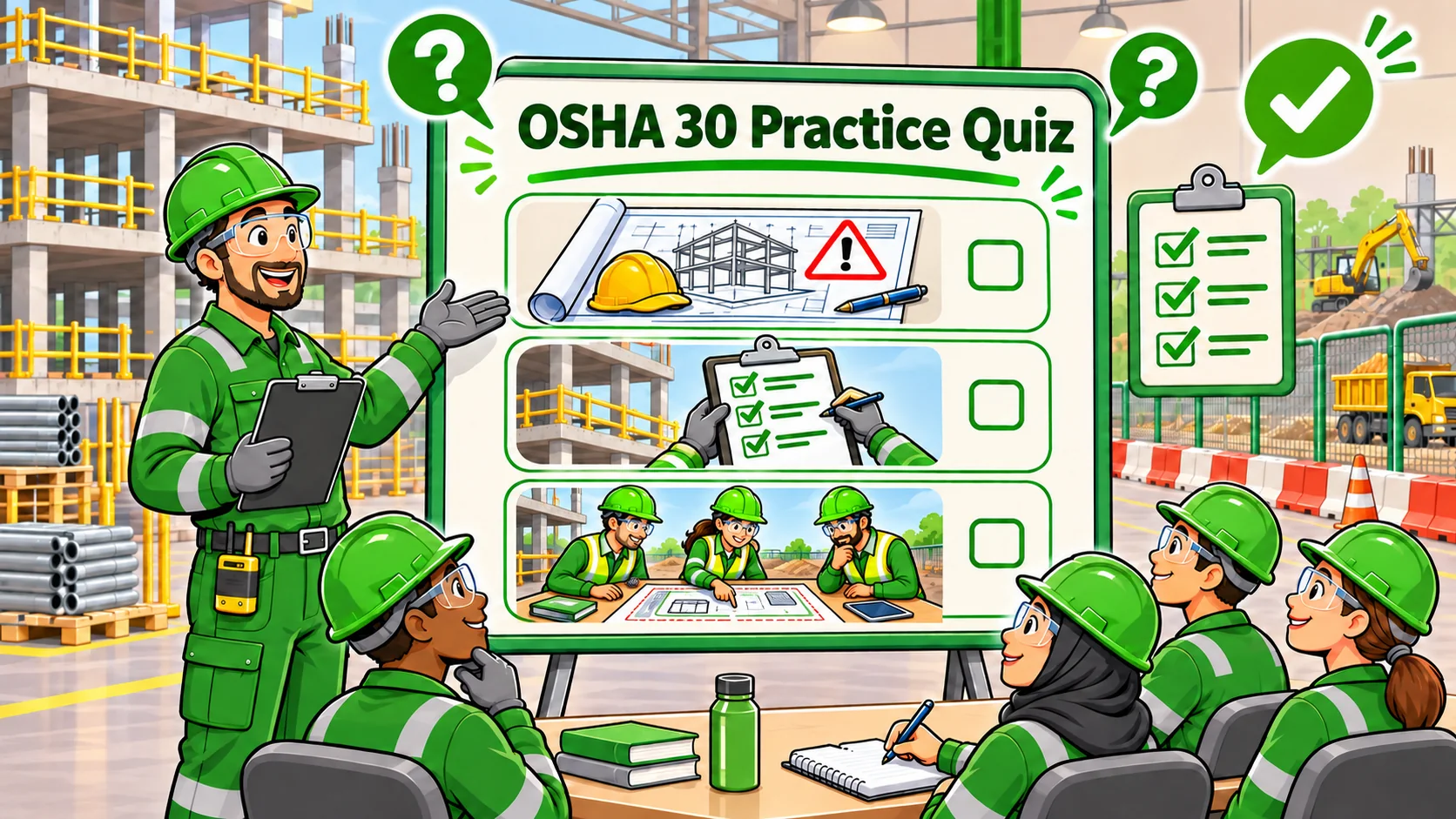
Develop your understanding of construction safety supervision with 25 original scenarios about planning, contractor interfaces, critical controls, training and follow-up. These questions emphasise decisions made by people with safety responsibilities, extending beyond the basic hazard recognition covered in our OSHA 10 practice resource.
Practise recognising common US construction hazards through 25 original multiple-choice questions. Review worker rights, the Construction Focus Four, safe equipment use, electrical hazards, access, excavations and emergency decisions. Explanations connect each answer to practical prevention rather than relying on recall alone.