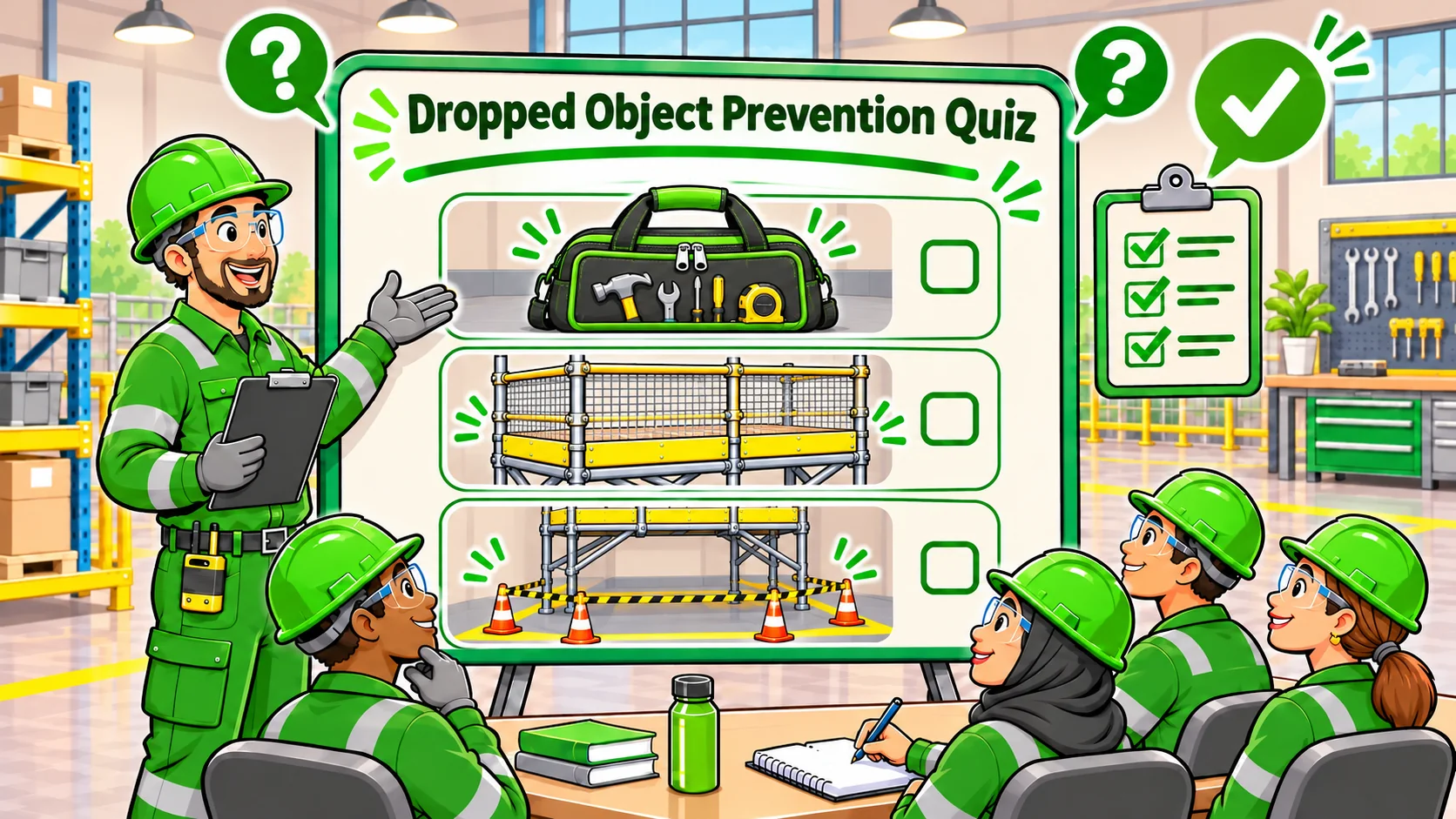
Dropped Object Prevention Quiz: Working Safely Above Others
25 questions
About 13 min
Updated
0 of 25 answered
Score 0
Question 1 of 25
Which approach comes first in controlling falling objects?
Question 2 of 25
A platform edge has loose fittings beside it. What should happen?
Question 3 of 25
What is a toe board's role?
Question 4 of 25
When might additional mesh or brick guards be needed?
Question 5 of 25
Does high-visibility barrier netting automatically contain falling debris?
Question 6 of 25
What must be considered before attaching debris netting to a scaffold?
Question 7 of 25
What should determine an exclusion zone's extent?
Question 8 of 25
How should an exclusion zone be maintained?
Question 9 of 25
A member of the public could pass beneath the work. What is needed?
Question 10 of 25
When may a covered walkway be relied on?
Question 11 of 25
How should tools be taken to an elevated work area?
Question 12 of 25
What should tool tether selection consider?
Question 13 of 25
Where should a tool tether attach?
Question 14 of 25
What new risk can an unsuitable tether introduce?
Question 15 of 25
What is appropriate for small fixings at height?
Question 16 of 25
Can a hard hat replace source controls?
Question 17 of 25
A tool tether is damaged. What should happen?
Question 18 of 25
What should be checked before work resumes after strong winds?
Question 19 of 25
Why coordinate work at different levels?
Question 20 of 25
What should happen before removing a guard or containment panel?
Question 21 of 25
How should waste be lowered from height?
Question 22 of 25
An object falls but hits nobody. What should follow?
Question 23 of 25
What makes a dropped-object inspection useful?
Question 24 of 25
Someone enters the drop zone during work. What is appropriate?
Question 25 of 25
What does this quiz provide?
About This Quiz
Test the decisions that keep tools, fittings and materials from injuring people below. These 25 original questions cover source control, secure transport and storage, containment, tool tethers, exclusion zones and coordination between work levels.
Scope and independent practice
Independent awareness practice, not a lifting qualification or permission to undertake overhead work. The legal context is Great Britain, using HSE guidance and the Work at Height Regulations 2005. Local rules may differ. Protective systems, attachment points and exclusion distances must suit the actual task; a hard hat or generic warning sign is not a complete control.
How to use this quiz
Choose one best answer and review its explanation. The practice pass mark is 70%, answers are shuffled and retakes are available. Use missed questions to review your work area with the responsible supervisor. Preventing a drop and keeping people outside the danger area need practical, maintained arrangements.
Primary safety guidance
Reviewed on 14 November 2026. Check current local requirements and procedures before applying the learning.
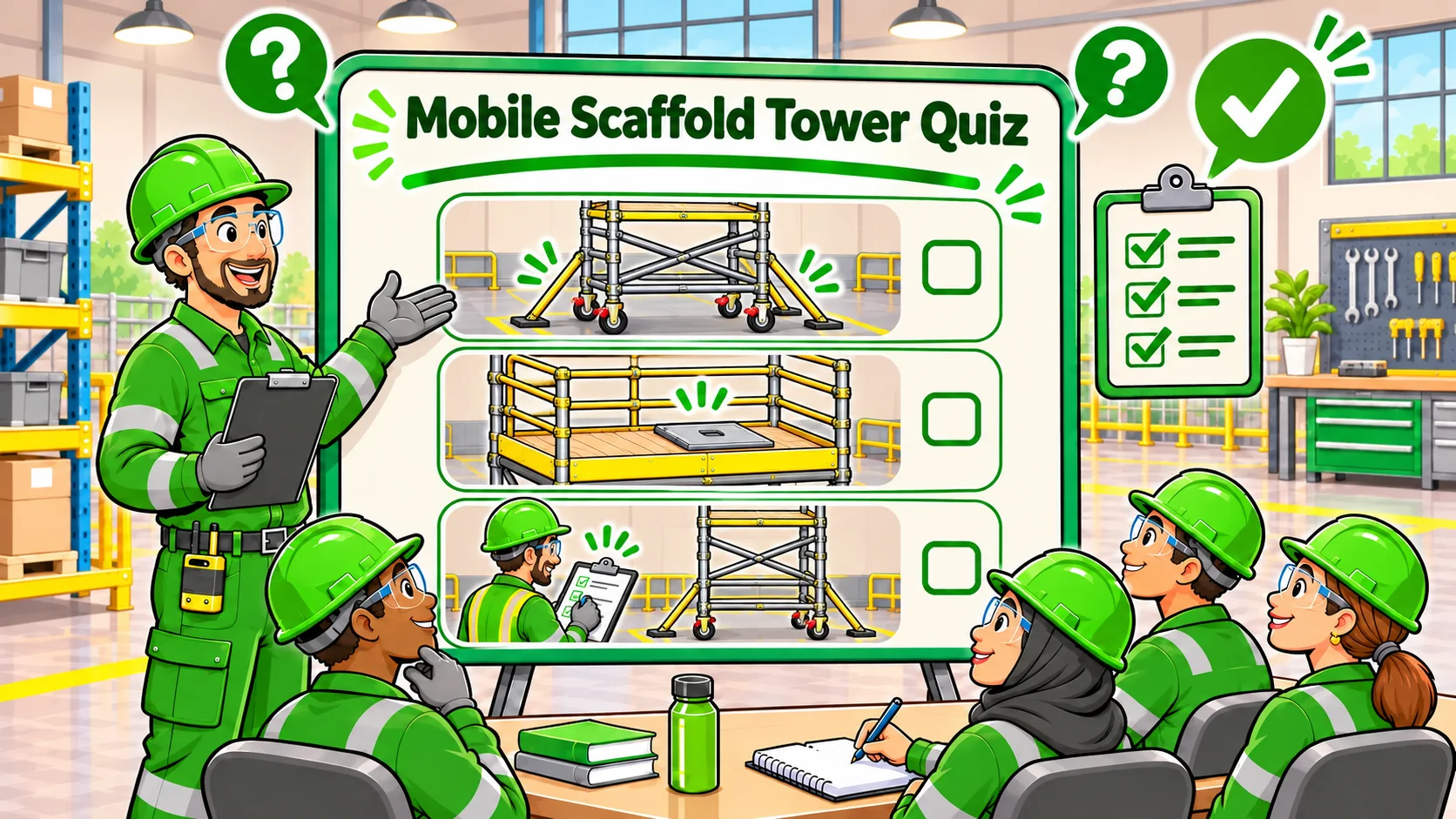
Check the choices that keep a mobile scaffold tower stable and its users protected. These 25 original questions cover competent assembly, compatible parts, base support, stabilisers, protected access, loading, movement and inspection.
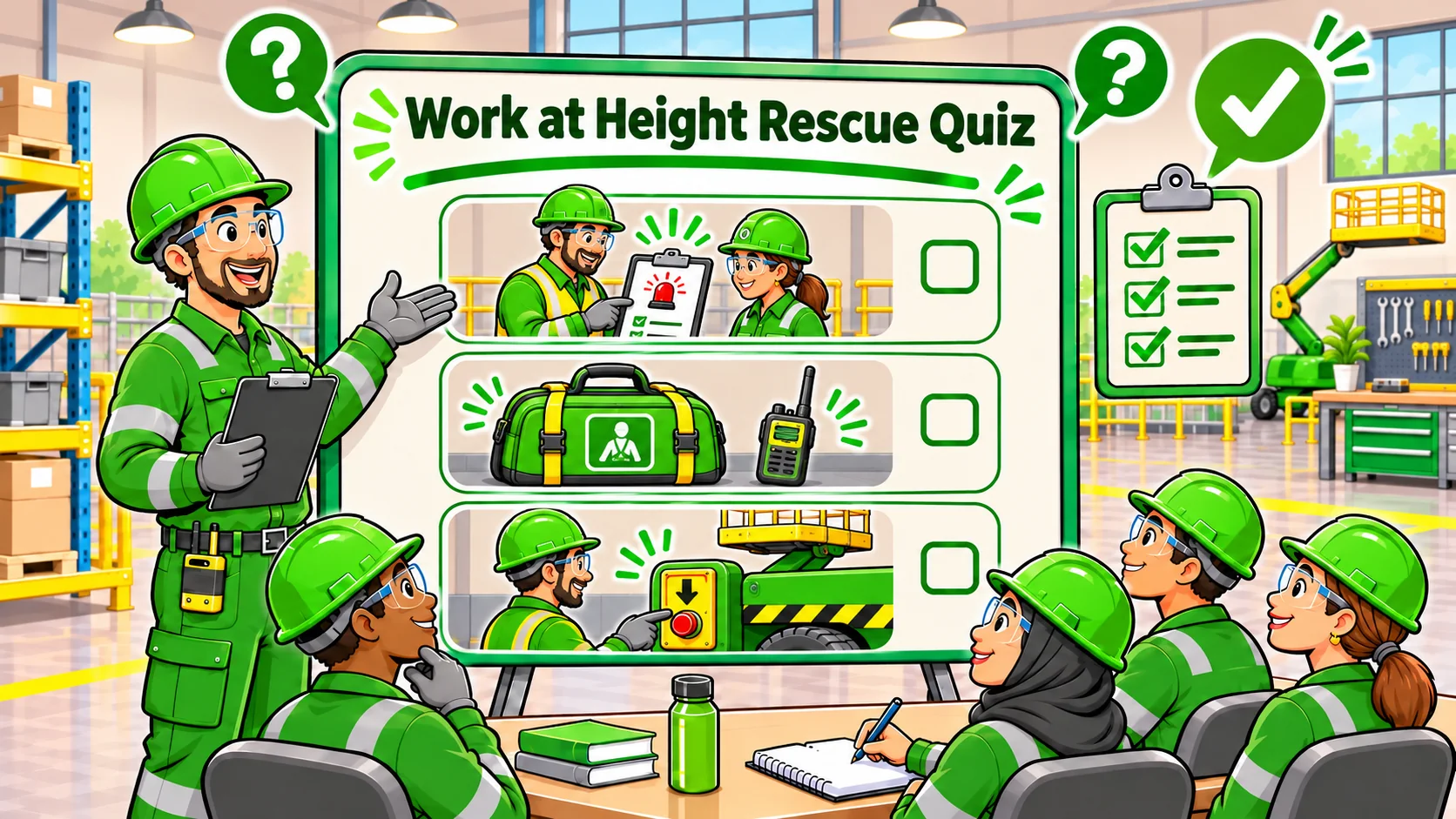
Practise planning a viable response before work at height begins. These 25 original questions explore foreseeable emergencies, rescue roles, communications, equipment readiness, trained assistance, drills and handover to medical care.
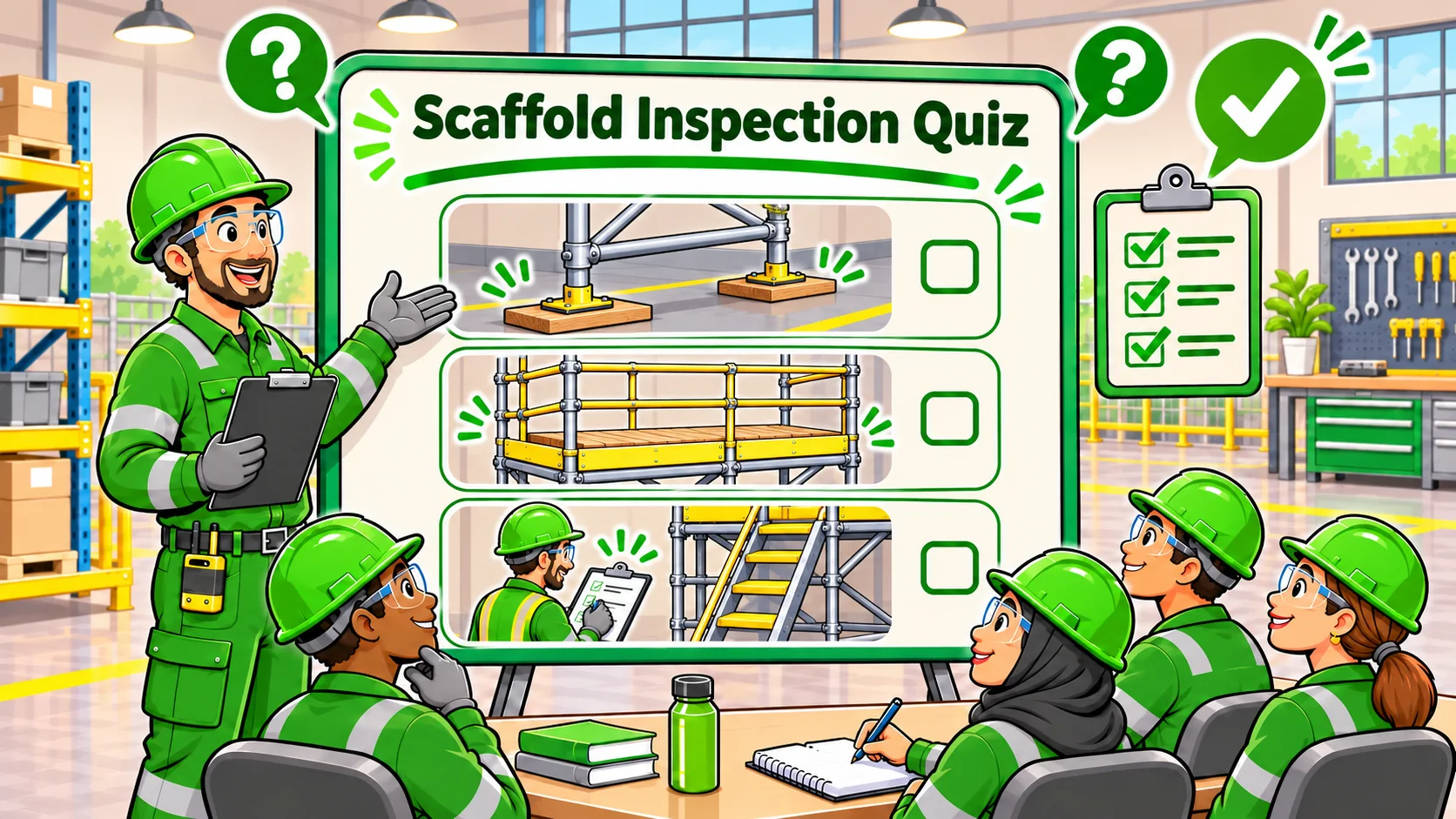
Practise identifying conditions that can make a scaffold unsafe. These 25 original questions cover foundations, ties and bracing, platforms, access, edge protection, loads, alterations and inspection records.
Test your understanding of mobile elevating work platform selection, setup and use. These 25 original questions cover scissor and boom lifts, ground support, loading, entrapment, traffic, fall protection and emergency lowering.