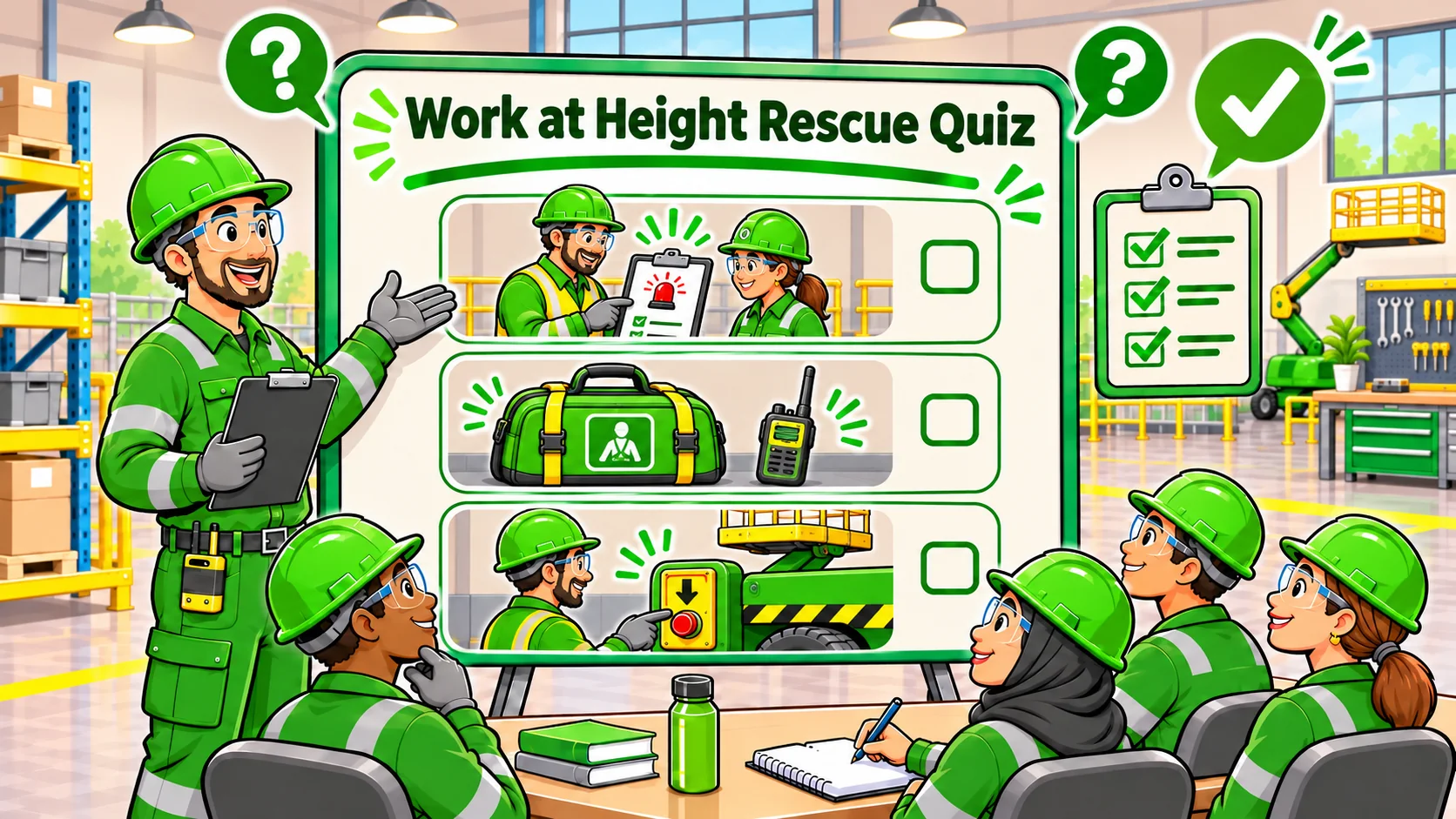
Work at Height Rescue Planning Quiz: Emergency Preparedness
25 questions
About 13 min
Updated
0 of 25 answered
Score 0
Question 1 of 25
When should rescue arrangements be planned?
Question 2 of 25
Can a plan rely solely on the fire service?
Question 3 of 25
What is the starting point for a rescue plan?
Question 4 of 25
Why consider avoiding work at height first?
Question 5 of 25
Who should develop and validate the plan?
Question 6 of 25
What should rescue roles identify?
Question 7 of 25
Why must shift cover be considered?
Question 8 of 25
Which information should be available for an emergency call?
Question 9 of 25
Why test communication at the work location?
Question 10 of 25
A suspended worker may be unable to help themselves. What must planning address?
Question 11 of 25
Why does suspension after a fall require prompt action?
Question 12 of 25
What should be checked about rescue equipment?
Question 13 of 25
Why assess rescue anchor arrangements?
Question 14 of 25
Can an untrained colleague improvise a rope rescue?
Question 15 of 25
What protects rescuers from the original hazard?
Question 16 of 25
Why include electrical or machinery hazards in a rescue assessment?
Question 17 of 25
For a MEWP emergency, what should ground assistance know?
Question 18 of 25
A rescue bag is locked where nobody on shift has access. Is the plan ready?
Question 19 of 25
Why practise the planned response?
Question 20 of 25
What should a drill finding of delayed access trigger?
Question 21 of 25
What should happen if weather undermines the planned rescue method?
Question 22 of 25
Why plan the casualty's destination after recovery?
Question 23 of 25
What should first aid after rescue follow?
Question 24 of 25
When should a rescue plan be reviewed?
Question 25 of 25
Does this quiz qualify someone as a height rescuer?
About This Quiz
Practise planning a viable response before work at height begins. These 25 original questions explore foreseeable emergencies, rescue roles, communications, equipment readiness, trained assistance, drills and handover to medical care.
Scope and independent practice
Independent planning-awareness material, not a rescue qualification, practical training course or instruction in rope-rescue manoeuvres. Uses HSE guidance for Great Britain. A competent person must determine a task-specific method and the necessary equipment, staffing and training. Do not rely solely on external emergency services or assume a universal safe suspension time.
How to use this quiz
Select one best answer and read the explanation. The practice pass mark is 70%, with shuffled answers and retakes. Apply your site's emergency procedure in a real incident and do not attempt an improvised rescue beyond your competence. Clinical care follows current first-aid training and emergency professional advice.
Primary safety guidance
Reviewed on 14 November 2026. Check current local requirements and procedures before applying the learning.
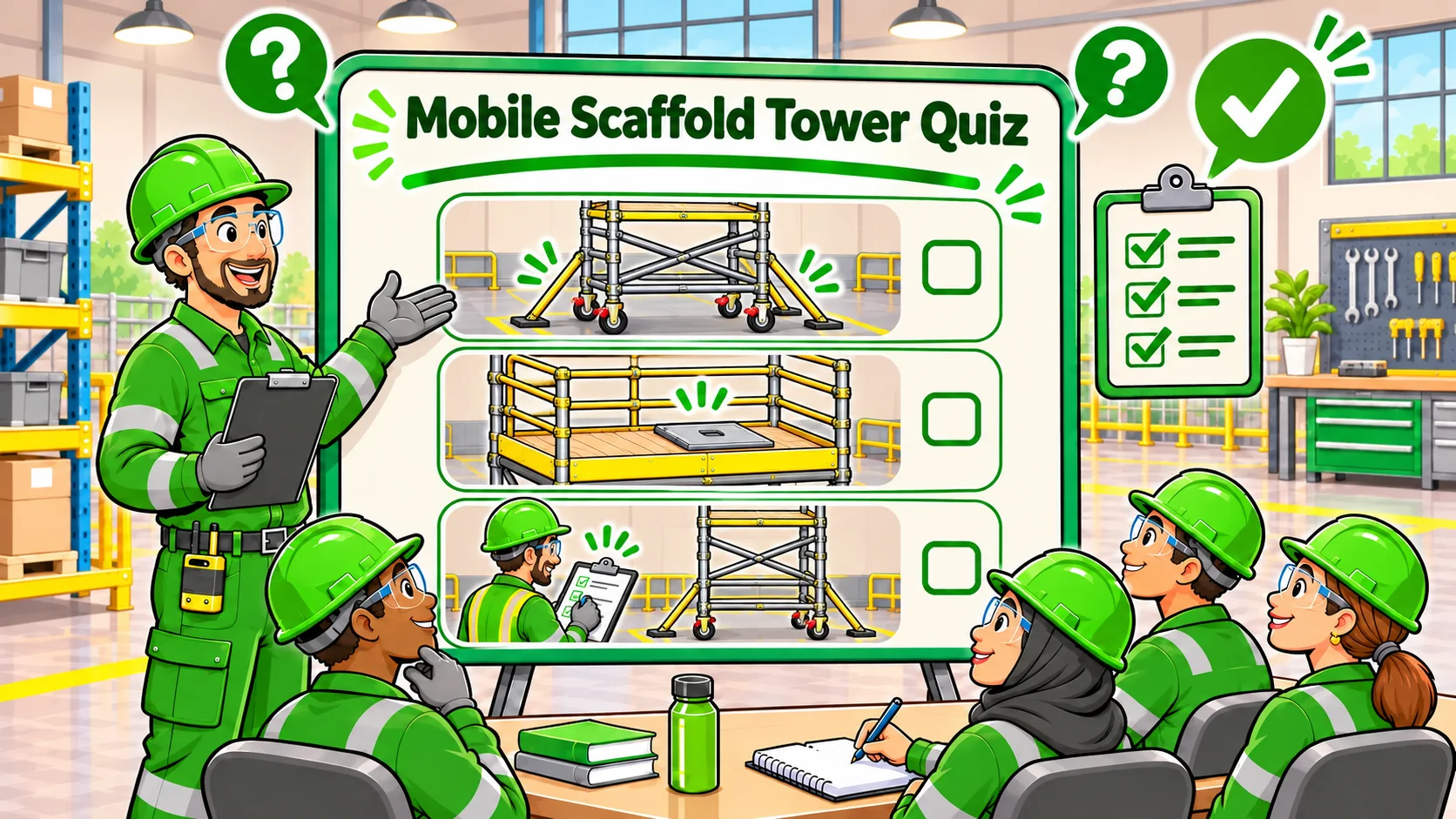
Check the choices that keep a mobile scaffold tower stable and its users protected. These 25 original questions cover competent assembly, compatible parts, base support, stabilisers, protected access, loading, movement and inspection.
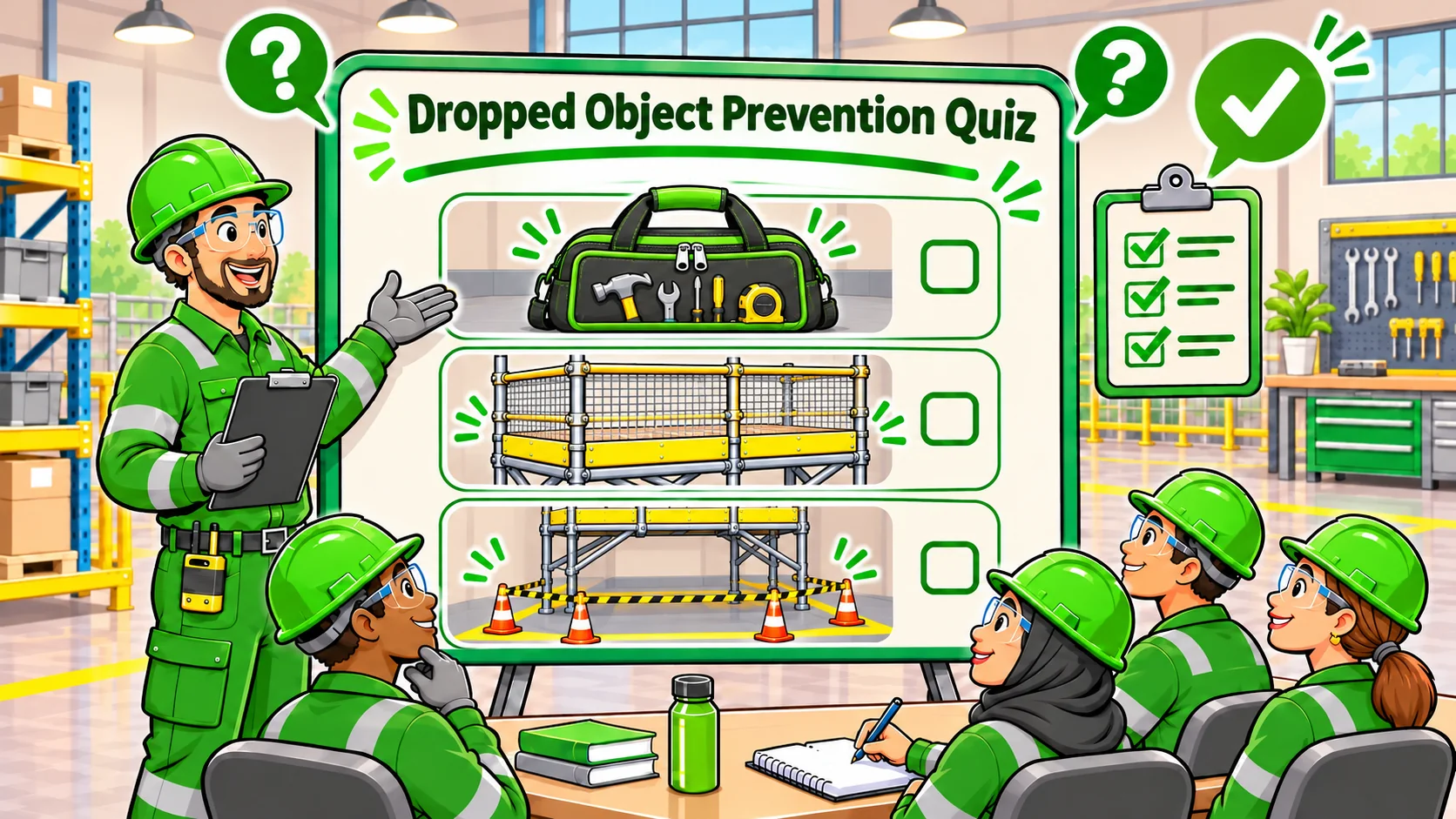
Test the decisions that keep tools, fittings and materials from injuring people below. These 25 original questions cover source control, secure transport and storage, containment, tool tethers, exclusion zones and coordination between work levels.
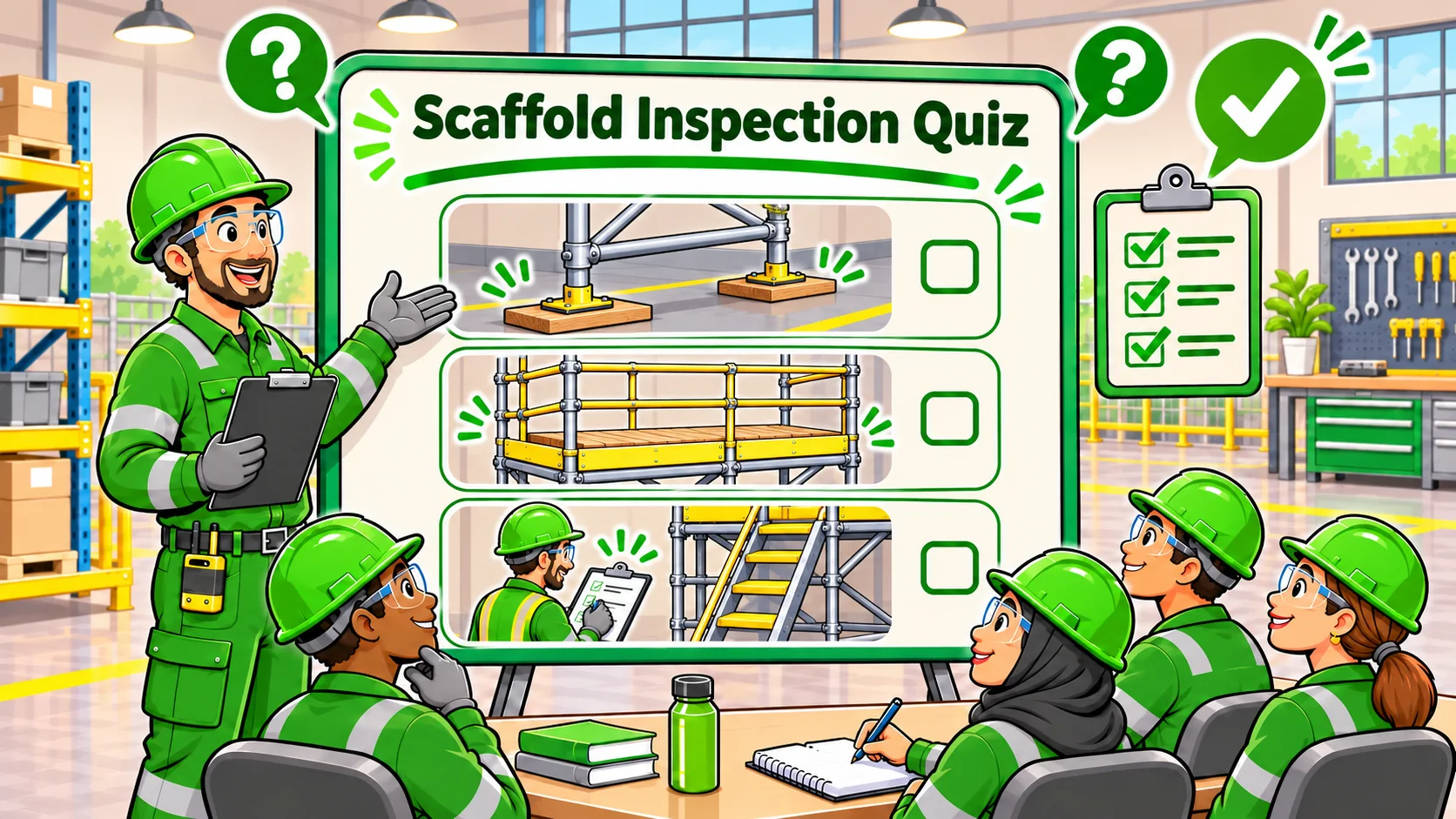
Practise identifying conditions that can make a scaffold unsafe. These 25 original questions cover foundations, ties and bracing, platforms, access, edge protection, loads, alterations and inspection records.
Test your understanding of mobile elevating work platform selection, setup and use. These 25 original questions cover scissor and boom lifts, ground support, loading, entrapment, traffic, fall protection and emergency lowering.