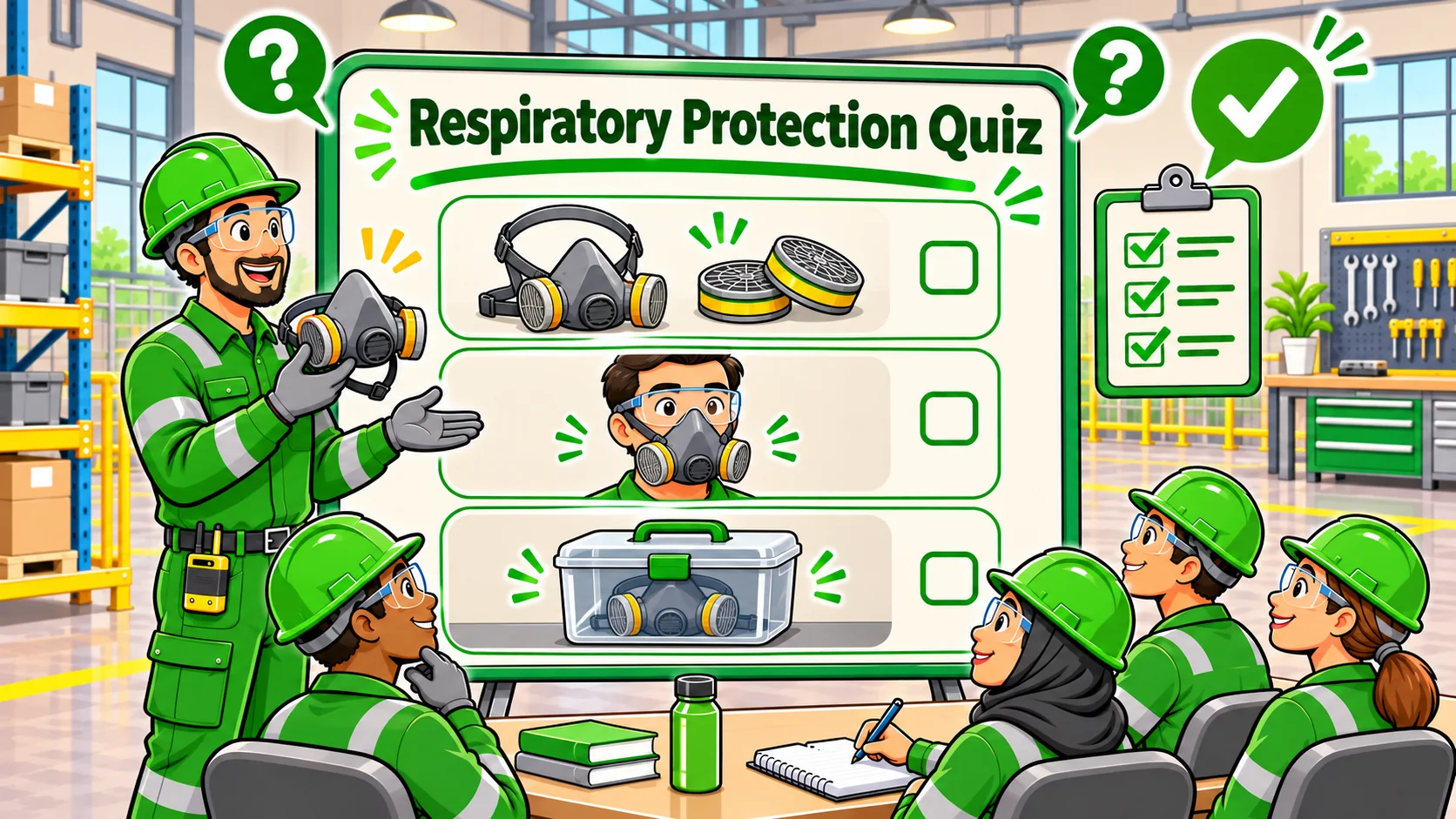
Respiratory Protection Quiz: Masks, Filters, and Safe Use
25 questions
About 13 min
Updated
0 of 25 answered
Score 0
Question 1 of 25
What should be considered before relying on a respirator to control exposure?
Question 2 of 25
Which information is essential for selecting respiratory protection?
Question 3 of 25
What does a particulate filter protect against when correctly selected?
Question 4 of 25
Can a filtering facepiece alone protect against an oxygen-deficient atmosphere?
Question 5 of 25
An atmosphere's hazards and exposure cannot be identified. What should a worker do?
Question 6 of 25
What is the purpose of a fit test for a tight-fitting respirator?
Question 7 of 25
When should a user seal check be performed?
Question 8 of 25
Is a user seal check a substitute for a required fit test?
Question 9 of 25
Why can beard growth in the sealing area be unacceptable?
Question 10 of 25
A worker cannot use a tight-fitting facepiece because of facial hair. What is appropriate?
Question 11 of 25
Why check respirator compatibility with goggles and other PPE?
Question 12 of 25
Under US OSHA 1910.134, when is an initial medical evaluation required for required respirator use?
Question 13 of 25
Under US OSHA 1910.134, how often is fit testing required for a tight-fitting facepiece after initial testing?
Question 14 of 25
A different make or size of tight-fitting respirator is issued. What should happen?
Question 15 of 25
How should gas or vapour cartridges be selected?
Question 16 of 25
Why is smell alone an unreliable cartridge-change method?
Question 17 of 25
If a filter becomes damaged or breathing resistance increases, what should the wearer do?
Question 18 of 25
What should happen if a wearer notices leakage or dizziness during use?
Question 19 of 25
How should a reusable respirator be cleaned?
Question 20 of 25
Where should a clean respirator be stored?
Question 21 of 25
Why inspect valves, straps and the facepiece before use?
Question 22 of 25
May filters from unrelated systems be mixed if their connectors seem to fit?
Question 23 of 25
What should training enable the wearer to do?
Question 24 of 25
What should happen when a process introduces a new airborne contaminant?
Question 25 of 25
What does passing this quiz establish?
About This Quiz
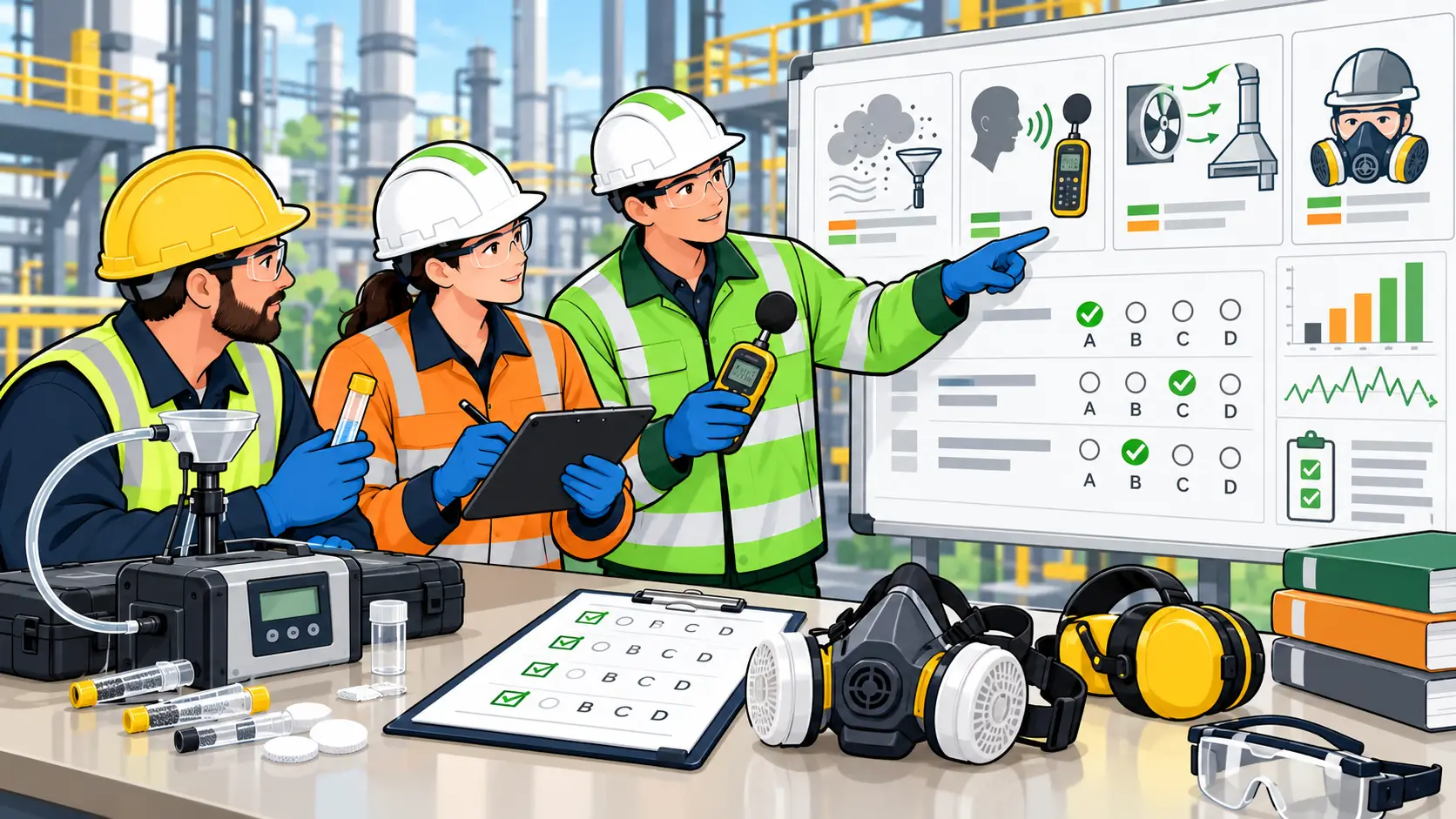
Review practical respiratory protection decisions with 25 original multiple-choice questions covering hazard assessment, filter limitations, facepiece fit, safe use, inspection and care. The scenarios help workers and supervisors recognise when a familiar mask is unsuitable and when a changed task requires a fresh assessment.
Scope and independent practice
Independent awareness practice from HSEBlog, not a fit test, medical evaluation, qualification or authorisation to enter a hazardous area. General guidance draws on HSE and NIOSH. Questions expressly citing US OSHA 1910.134 concern its particular requirements, including medical evaluation and fit-test timing; those rules must not be treated as universal international requirements. Follow applicable law, the respiratory protection program and manufacturer instructions. Unknown, oxygen-deficient or immediately dangerous atmospheres need specialist assessment and appropriate arrangements.
Study before you start
Distinguish particles from gases and vapours before considering filter selection. Review why an air-purifying respirator cannot supply missing oxygen. A fit test, a seal check and correct filter selection address different parts of protection, so none substitutes for the others. Think through what the wearer should do if the device leaks, becomes damaged or causes difficulty during a task.
Practice format
Answer 25 original multiple-choice questions, selecting one answer per question. The learning pass mark is 70%, with no time limit. Answers are shuffled, explanations are shown after submission and retakes are allowed. Use the feedback to identify topics to review before another attempt. A knowledge score does not establish practical competence.
Related learning
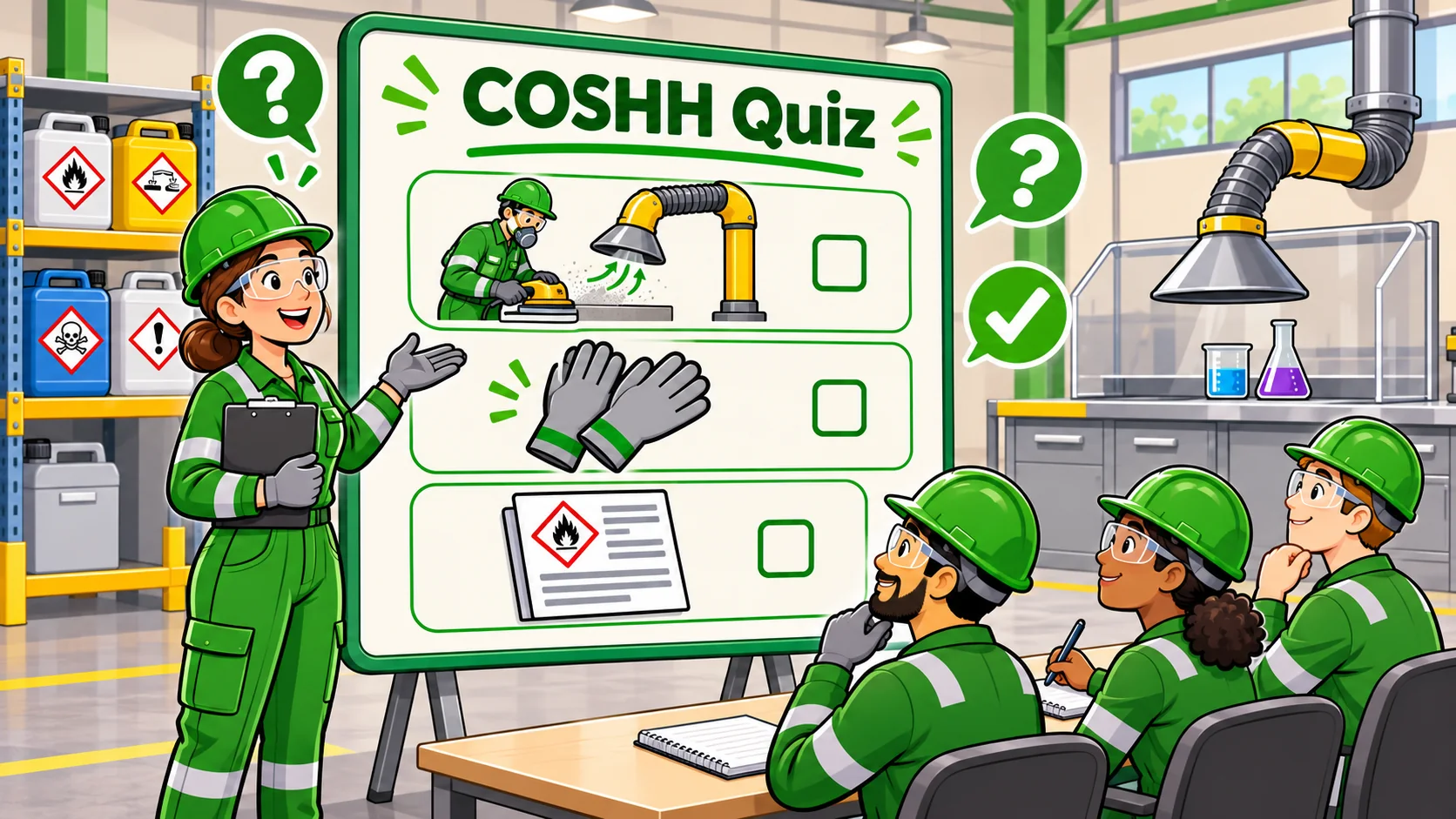
Continue with our COSHH hazardous substances quiz. Compare the examples with the procedures and controls used in your workplace.
Primary references
Reference information checked on 9 November 2026. Consult current applicable law, equipment instructions and task-specific procedures.
Test your understanding of hazardous-substance assessment and practical exposure controls with 25 original questions. This learning resource is useful for workers, supervisors and safety learners handling chemicals or working with processes that generate harmful dust, fume, vapour or biological exposure.