Banksman and Slinger Signaller Quiz: Lifting Safety Questions
25 questions
About 13 min
Updated
0 of 25 answered
Score 0
Question 1 of 25
In HSE terminology, what is a vehicle banksman's primary role?
Question 2 of 25
What is a crane signaller's role?
Question 3 of 25
What does a slinger do as part of the lifting team?
Question 4 of 25
Why is a banksman not the first answer to every reversing risk?
Question 5 of 25
Who should undertake banksman duties?
Question 6 of 25
Before directing a manoeuvre, what should the banksman and driver agree?
Question 7 of 25
Where should a banksman or signaller be positioned?
Question 8 of 25
A driver using visual banksman signals loses sight of the banksman. What should the driver do?
Question 9 of 25
What is the purpose of distinctive high-visibility clothing for a signaller?
Question 10 of 25
Why should standard hand signals be agreed before work?
Question 11 of 25
Two people give different routine movement signals at once. What is the safest response?
Question 12 of 25
Under US crane rule 1926.1419, can someone other than the designated signal person give a stop or emergency-stop signal for a safety problem?
Question 13 of 25
Under US 1926.1419, what happens when communication required for signalling is interrupted?
Question 14 of 25
Before radio-controlled signalling begins, what should be checked?
Question 15 of 25
Why identify the intended crane when several share a communication system?
Question 16 of 25
The operator cannot see the landing area. What is needed before the lift proceeds?
Question 17 of 25
A pedestrian enters the exclusion area during a movement. What should happen?
Question 18 of 25
What should happen if the planned route becomes obstructed?
Question 19 of 25
Why consider lighting and weather in a signalling plan?
Question 20 of 25
What should a signaller do if a requested movement conflicts with the lift plan or appears unsafe?
Question 21 of 25
When are hands safe to place between a sling and load?
Question 22 of 25
Before signalling that a load can be unslung, what should be verified?
Question 23 of 25
Does a crane signaller's training automatically establish competence to direct every reversing vehicle operation?
Question 24 of 25
How should a handover between signallers be managed?
Question 25 of 25
What does this quiz establish?
About This Quiz
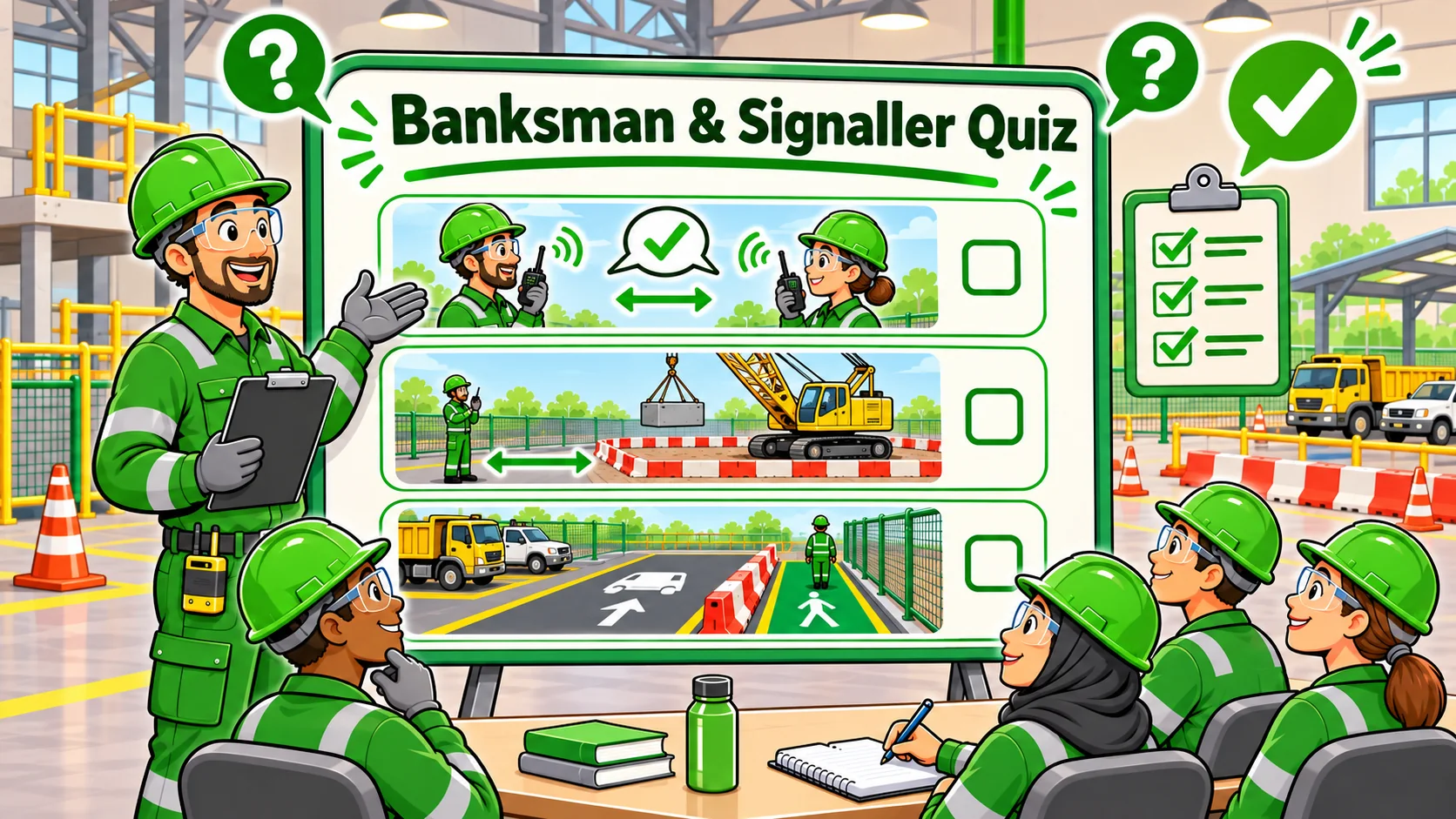
Check your understanding of the people and communication arrangements needed for safe vehicle and lifting movements. These 25 original questions cover vehicle banksman duties, crane signalling, slinging interfaces, protected positions, radio checks, lost communication and controlled handovers. The terms describe related activities, but each role needs the competence required for its actual work.
Scope and independent practice
Independent awareness practice, not an official CPCS, NPORS or other practical assessment. Passing does not qualify a person to direct vehicles, sling loads or signal a crane. General role descriptions follow Great Britain HSE terminology. Questions that cite US crane rule 1926.1419 concern that specific federal construction standard. Use the correct national and site signal system and relevant training; this is not an illustrated hand-signal recognition test.
Study before you start
Identify who is directing the movement and what the operator must understand before it starts. Think about the signaller's own safety as well as the route or load. Distinguish a routine instruction from a safety-stop alert, and consider what happens if visibility, radio reception or the route changes. Never treat high-visibility clothing or a combined job title as proof of practical competence.
Practice format
Answer 25 original multiple-choice questions, selecting one answer per question. The learning pass mark is 70%, with no time limit. Answers are shuffled, explanations are shown after submission and retakes are allowed. Use the feedback to identify topics to review before another attempt. A knowledge score does not establish practical competence.
Related learning
Continue with our rigging and slinging safety quiz. Compare the examples with the procedures and controls used in your workplace.
Primary references
Reference information checked on 8 November 2026. Consult current applicable law, equipment instructions and task-specific procedures.
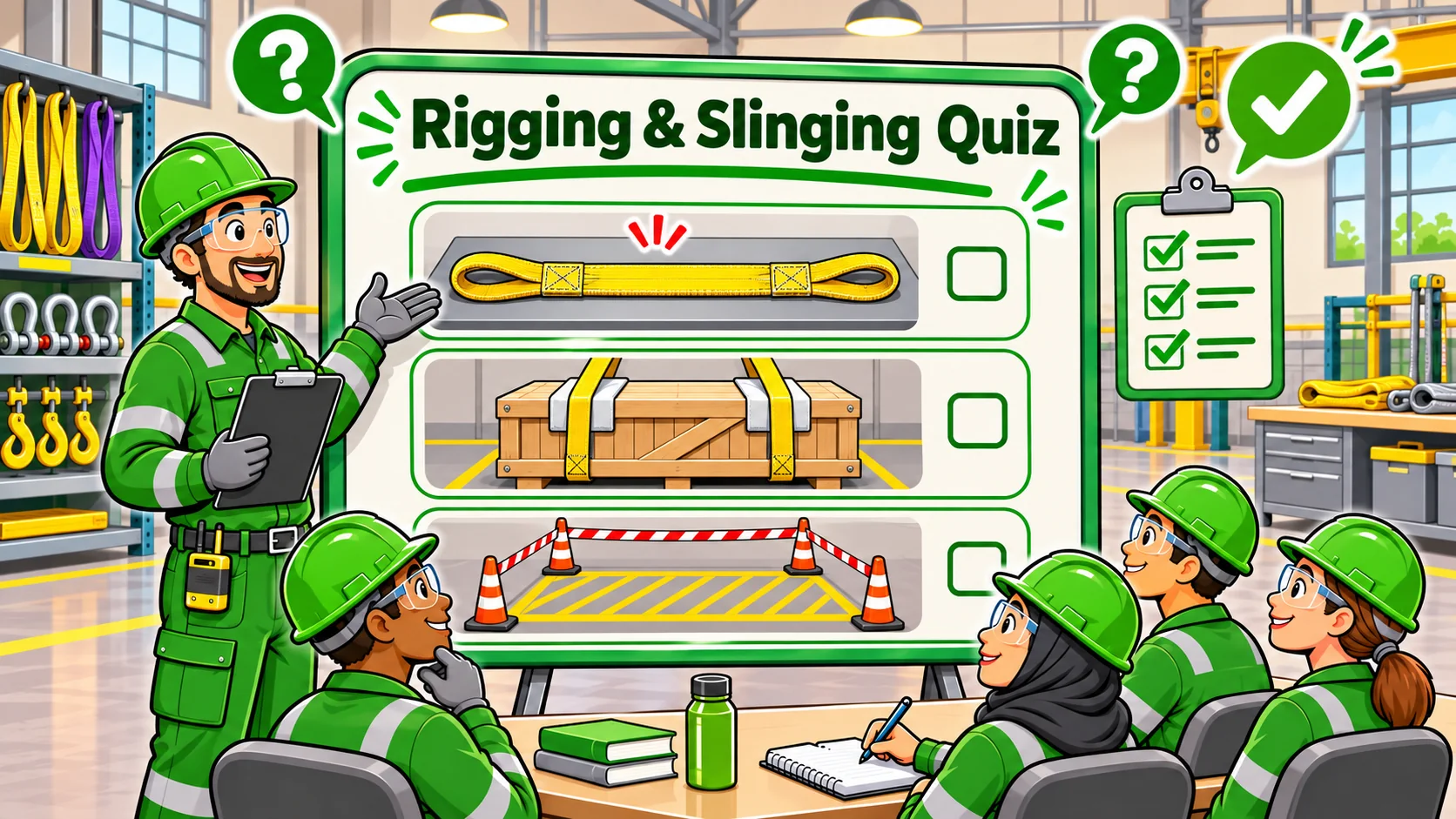
Review the decisions that help keep lifting operations controlled with 25 original multiple-choice questions. Topics include load information, sling configuration, capacity identification, equipment condition, edge protection, safe positions and landing arrangements. The focus is understanding why an arrangement is safe, rather than learning a shortcut for choosing equipment.
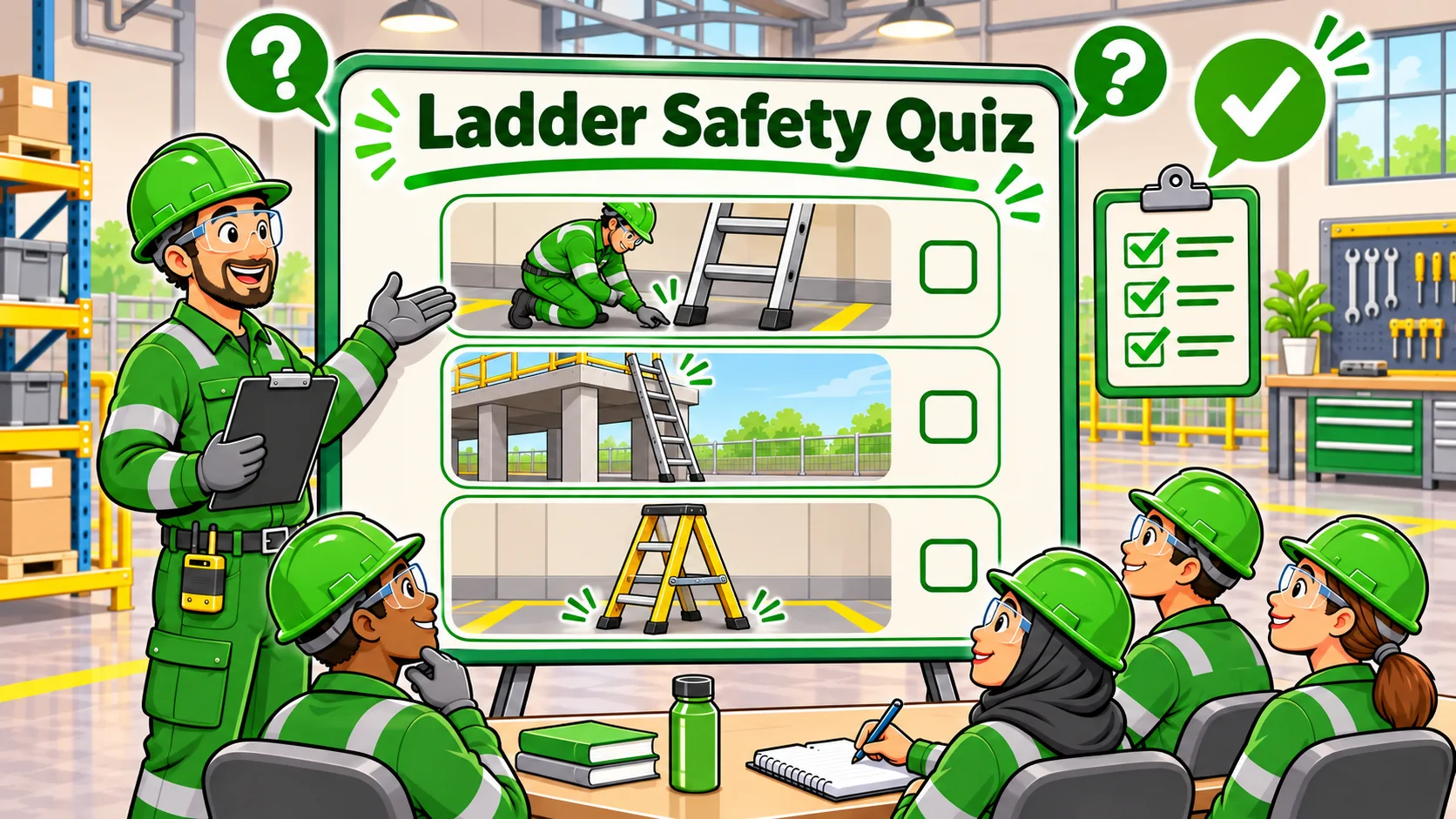
Test practical ladder awareness with 25 original questions on deciding whether a ladder suits a task, checking its condition, setting it up securely and using it without losing support. Scenarios include leaning ladders, stepladders and telescopic designs, with explanations for the choices that prevent common falls.
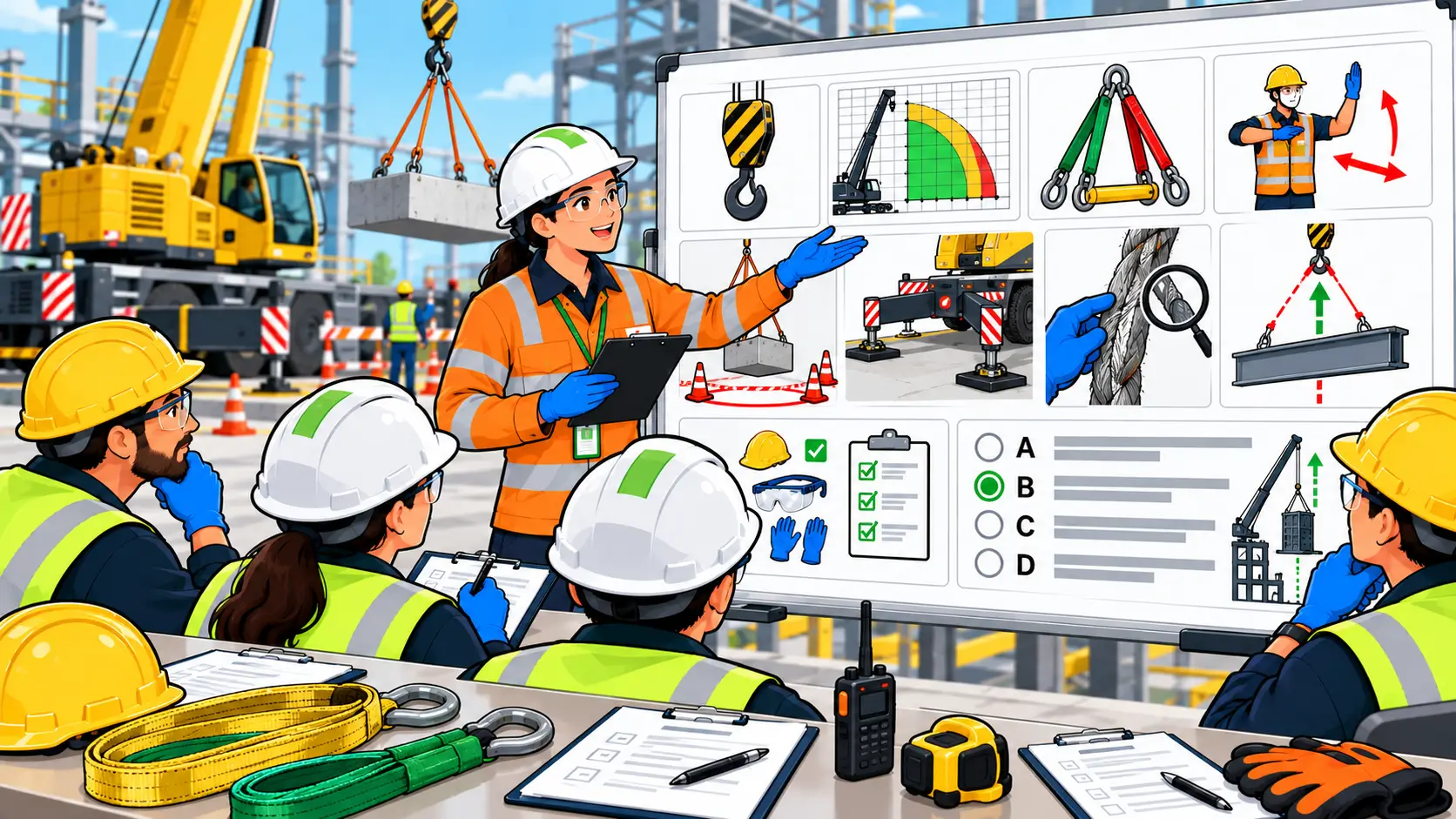
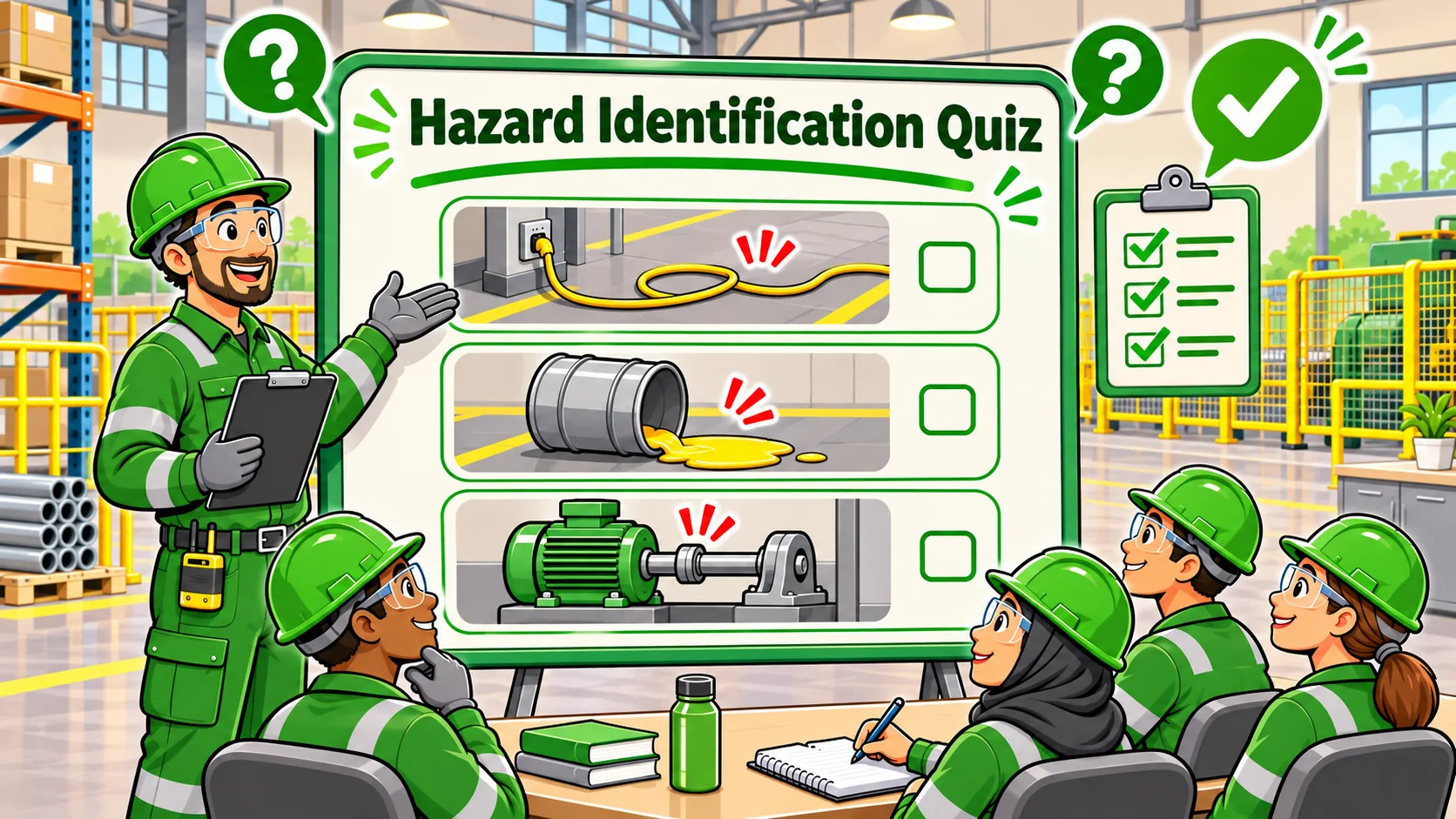
Practise spotting hazards through 25 written workplace scenarios involving access, machinery, chemicals, vehicles, ergonomic demands and less visible health risks. Each question asks you to interpret a described condition and choose the safest recognition or follow-up decision. The featured illustration introduces the theme; the questions are text-based, not an interactive image test.