Workplace Hazard Identification Quiz: Spot the Hazards
25 questions
About 13 min
Updated
0 of 25 answered
Score 0
Question 1 of 25
An electrical lead runs across a busy walkway. What is the main observable hazard?
Question 2 of 25
What distinguishes a hazard from risk?
Question 3 of 25
A guard is missing beside a rotating shaft. What should the observer do?
Question 4 of 25
A container leaks beside a floor drain. What should be identified first?
Question 5 of 25
Boxes obstruct an emergency exit. Why is this a hazard?
Question 6 of 25
A pedestrian passes behind a reversing forklift. Which hazardous interaction is present?
Question 7 of 25
A worker leans repeatedly across a bench to lift parts. Which hazard deserves attention?
Question 8 of 25
A worker grinds material with no visible dust cloud. What can be concluded?
Question 9 of 25
A cleaner uses an unfamiliar spray in a small room. Which information is useful?
Question 10 of 25
Why include cleaning and maintenance in hazard identification?
Question 11 of 25
A machine stops but a raised component remains suspended. What may still be present?
Question 12 of 25
A tank has a small access hatch and uncertain internal conditions. What should happen before entry?
Question 13 of 25
A worker uses a noisy tool for long periods. What should be checked?
Question 14 of 25
A night shift has poor lighting at stairs. What hazard is increased?
Question 15 of 25
Work is moved outdoors during very hot weather. What should a hazard review consider?
Question 16 of 25
A worker is threatened by a customer during a lone shift. Which hazard is present?
Question 17 of 25
Which people should be considered when identifying who may be harmed?
Question 18 of 25
Why ask workers about a task rather than rely only on a checklist?
Question 19 of 25
Which record may help reveal an otherwise overlooked hazard?
Question 20 of 25
A previously safe task now uses a new chemical. What should happen?
Question 21 of 25
How should corrective priorities be set?
Question 22 of 25
Which action illustrates eliminating a hazard?
Question 23 of 25
After changing a process to control one hazard, what should be checked?
Question 24 of 25
What belongs in a useful hazard report?
Question 25 of 25
When can a hazard-identification exercise be considered enough on its own?
About This Quiz
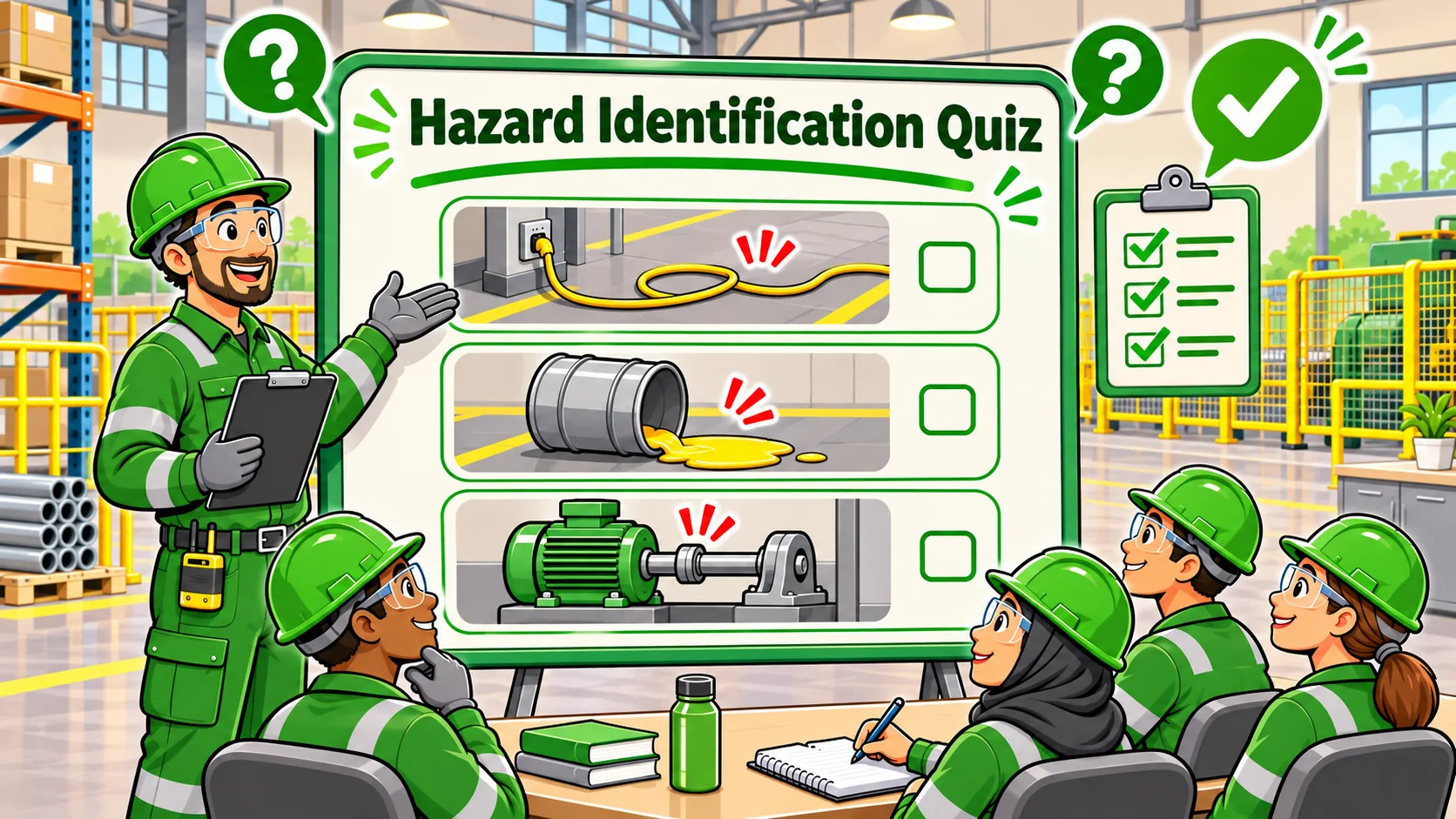
Practise spotting hazards through 25 written workplace scenarios involving access, machinery, chemicals, vehicles, ergonomic demands and less visible health risks. Each question asks you to interpret a described condition and choose the safest recognition or follow-up decision. The featured illustration introduces the theme; the questions are text-based, not an interactive image test.
Scope and independent practice
Independent awareness practice from HSEBlog for workers, supervisors and safety learners. The scenarios teach general hazard-recognition principles using OSHA, HSE and NIOSH guidance; they do not declare that a particular country's legal limits apply worldwide. This is not a workplace risk assessment, qualification or permission to inspect dangerous equipment by approaching it. Follow applicable law and the site's reporting, isolation and emergency procedures.
Study before you start
Describe the condition and credible harm without inventing an incident or assuming that visible appearance proves safety. Look beyond normal production to cleaning, maintenance, changing weather and work organisation. Consider contractors, visitors and other people who could be affected. After identifying a hazard, assess the risk, select effective controls and verify the result; a completed checklist alone does not make work safe.
Practice format
Answer 25 original multiple-choice questions, selecting one answer per question. The learning pass mark is 70%, with no time limit. Answers are shuffled, explanations are shown after submission and retakes are allowed. Use the feedback to identify topics to review before another attempt. A knowledge score does not establish practical competence.
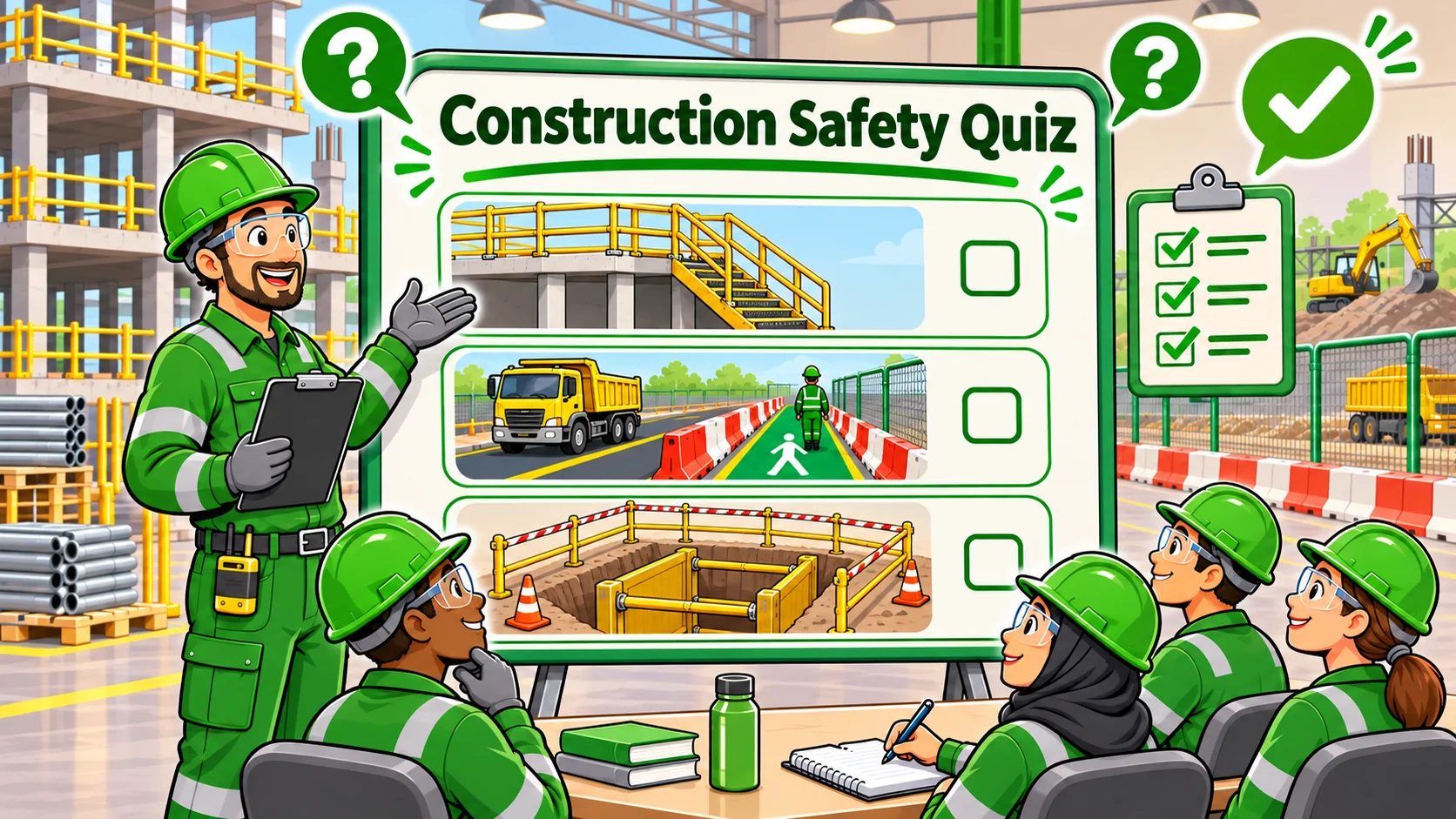
Use 25 original multiple-choice scenarios to review practical construction safety: site induction, safe access, vehicle movements, height work, excavation and lifting interfaces, occupational health and emergency response. The quiz focuses on recognising when conditions require action, reporting or a revised method before work continues.
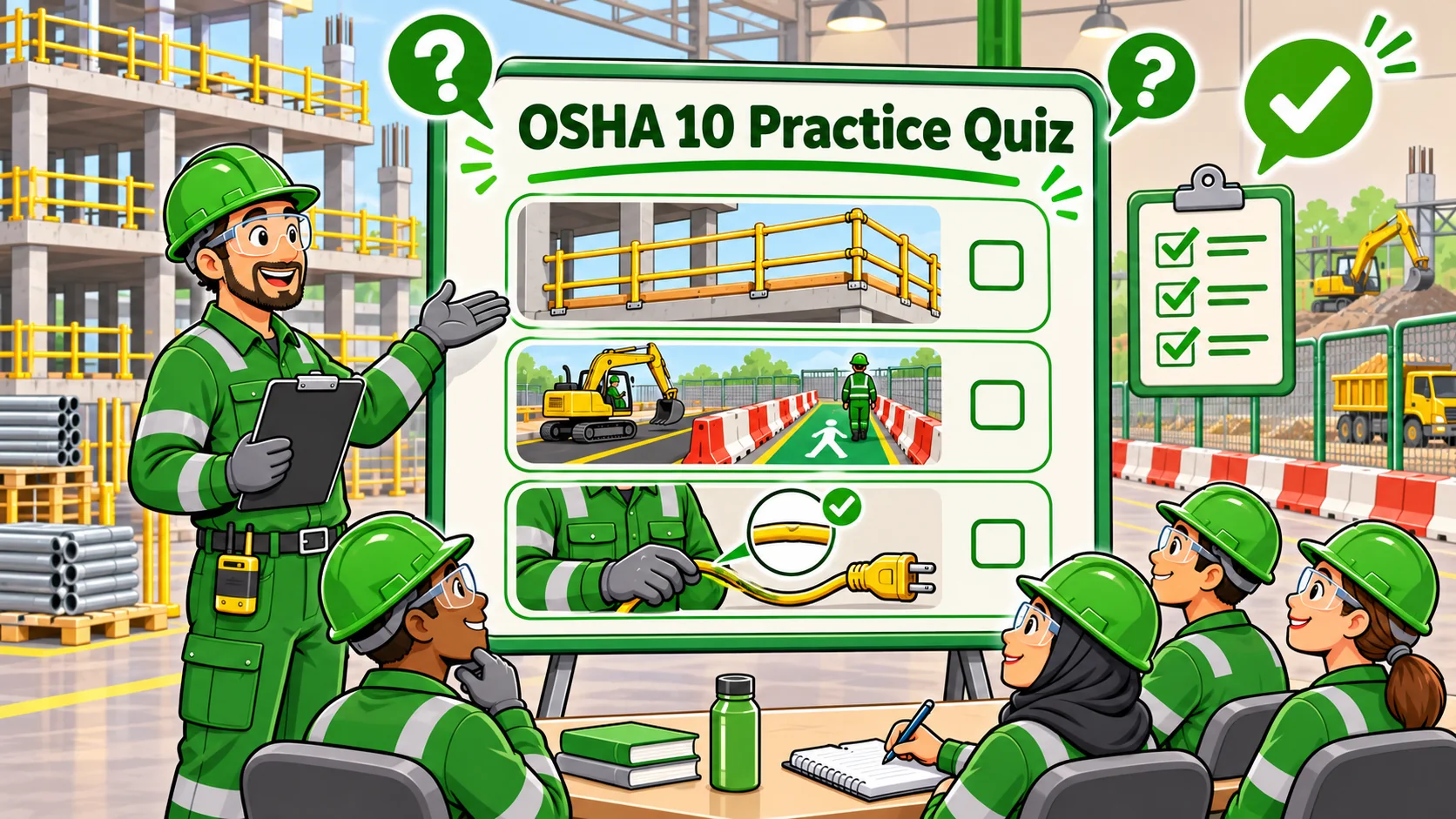
Practise recognising common US construction hazards through 25 original multiple-choice questions. Review worker rights, the Construction Focus Four, safe equipment use, electrical hazards, access, excavations and emergency decisions. Explanations connect each answer to practical prevention rather than relying on recall alone.
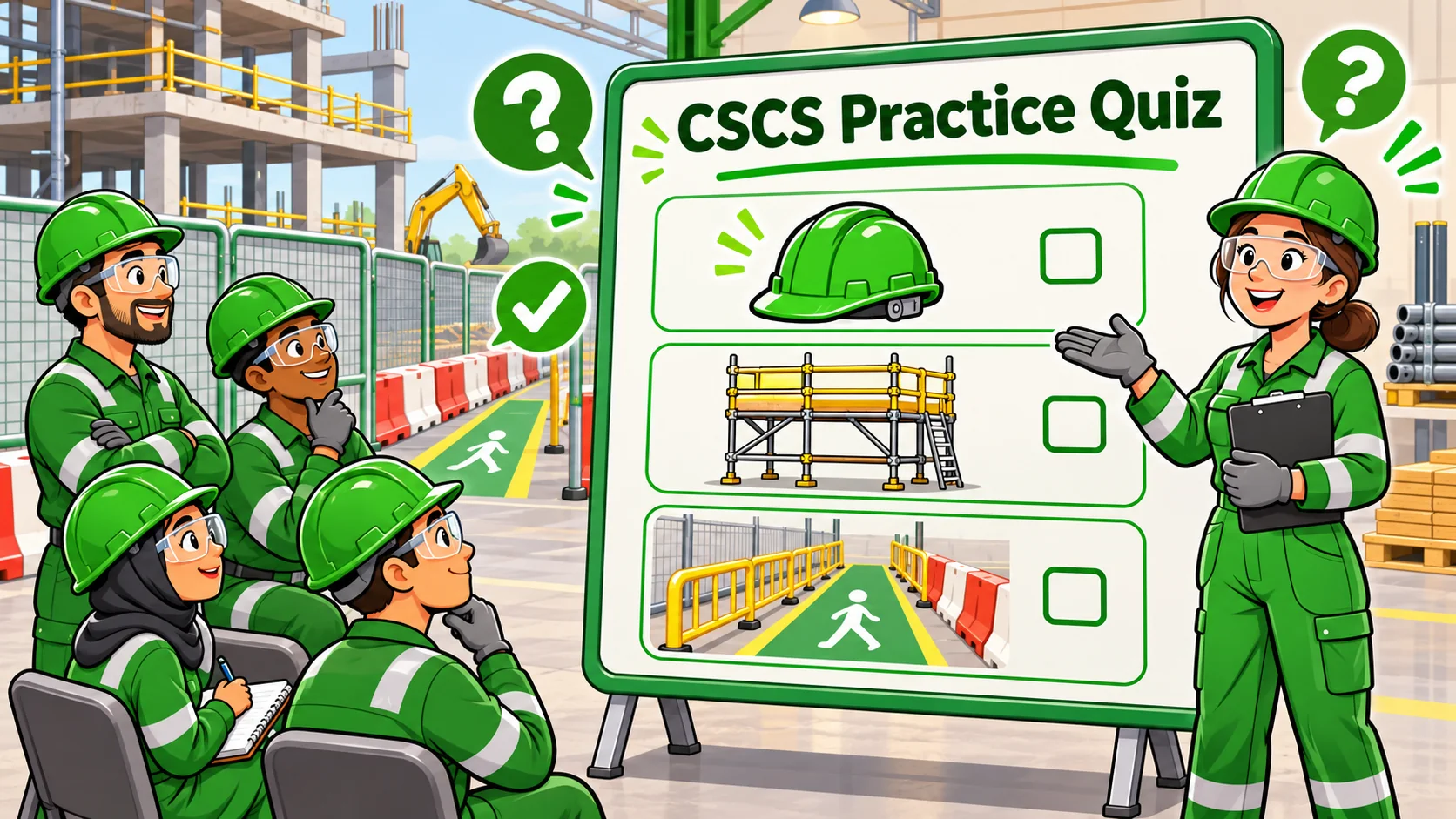
Revise practical construction safety with 25 original multiple-choice questions covering site induction, occupational health, safe access, plant movements, excavation hazards and emergency response. The scenarios focus on the decisions an operative may face when conditions change or a control is missing.
Asbestos awareness begins with knowing when materials may need specialist assessment and avoiding disturbance. This quiz focuses on safe decisions before maintenance, repair, or refurbishment.