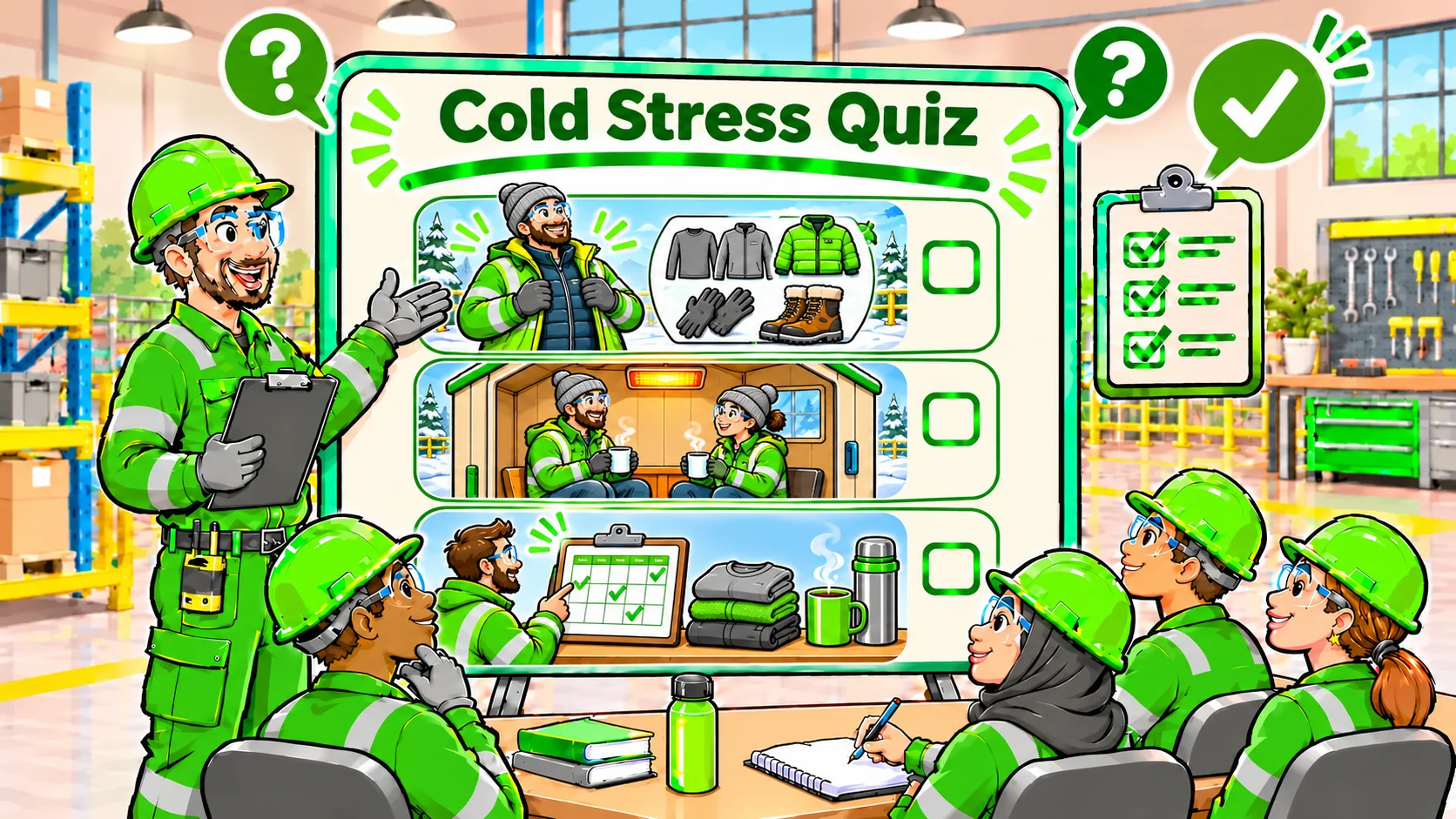
Cold Stress Quiz: Hypothermia, Frostbite, and Prevention
25 questions
About 13 min
Updated
0 of 25 answered
Score 0
Question 1 of 25
What is cold stress?
Question 2 of 25
Which workers may face cold stress?
Question 3 of 25
Why can wet clothing increase cold risk?
Question 4 of 25
Can hypothermia occur without freezing air temperatures?
Question 5 of 25
What does hypothermia mean?
Question 6 of 25
Which combination suggests possible hypothermia?
Question 7 of 25
A very cold, confused person stops shivering. What should be assumed?
Question 8 of 25
What is an appropriate first response to suspected hypothermia?
Question 9 of 25
What should be done with wet clothing while helping a cold casualty in shelter?
Question 10 of 25
When may a warm non-alcoholic drink be offered to a person with cold exposure?
Question 11 of 25
Which action should be avoided for suspected hypothermia?
Question 12 of 25
What causes frostbite?
Question 13 of 25
Which finding may indicate frostbite?
Question 14 of 25
Why should frostbitten skin not be rubbed or massaged?
Question 15 of 25
Why is direct heat unsafe on a numb frostbitten area?
Question 16 of 25
What should a worker with suspected frostbite do?
Question 17 of 25
What is trench foot or immersion foot associated with?
Question 18 of 25
Which clothing arrangement supports cold protection?
Question 19 of 25
Which footwear is appropriate for cold, wet work?
Question 20 of 25
Why should cold-weather work include warm sheltered breaks?
Question 21 of 25
What is a useful buddy-system practice in cold conditions?
Question 22 of 25
Which planning choice can reduce cold exposure?
Question 23 of 25
Why should workers avoid touching very cold metal with bare skin?
Question 24 of 25
Why is alcohol unsuitable for preventing or treating cold stress?
Question 25 of 25
What should be reviewed when weather or a worker's condition worsens?
About This Quiz
Cold stress can affect outdoor workers and people in unheated or refrigerated spaces. Wet clothing, inadequate protection and prolonged exposure can make a task hazardous even without a snowstorm. This quiz connects prevention decisions with early recognition of potentially serious cold-related illness.
What this quiz covers
Check cold stress knowledge with 25 questions on hypothermia and frostbite recognition, clothing, shelter, buddy checks and basic first-response awareness.
How to use the quiz
Answer 25 multiple-choice questions with one correct answer each. The practice pass mark is 70%, requiring at least 18 correct answers. There is no time limit. Answer options are shuffled, explanations are available and retakes are allowed. Review the explanations and official guidance for topics you miss.
Scope and limits
Independent awareness practice, not a first-aid certificate, medical diagnosis or authorisation to provide advanced treatment. Prevention follows NIOSH guidance; basic first-response questions draw on NIOSH and NHS advice. The below-35°C hypothermia definition concerns body temperature, not a legal workplace temperature limit. No single air temperature or exposure duration is presented as universally safe. Suspected hypothermia is an emergency; obtain local emergency medical help and follow trained first-aid and dispatcher instructions. Suspected frostbite also needs medical assessment.
Sources and further reading
Guidance checked on 28 November 2026. Use current applicable requirements and the arrangements for the actual task and workplace.
Practise lead exposure prevention with 25 questions on source controls, personal hygiene, protective equipment, contamination and medical surveillance.