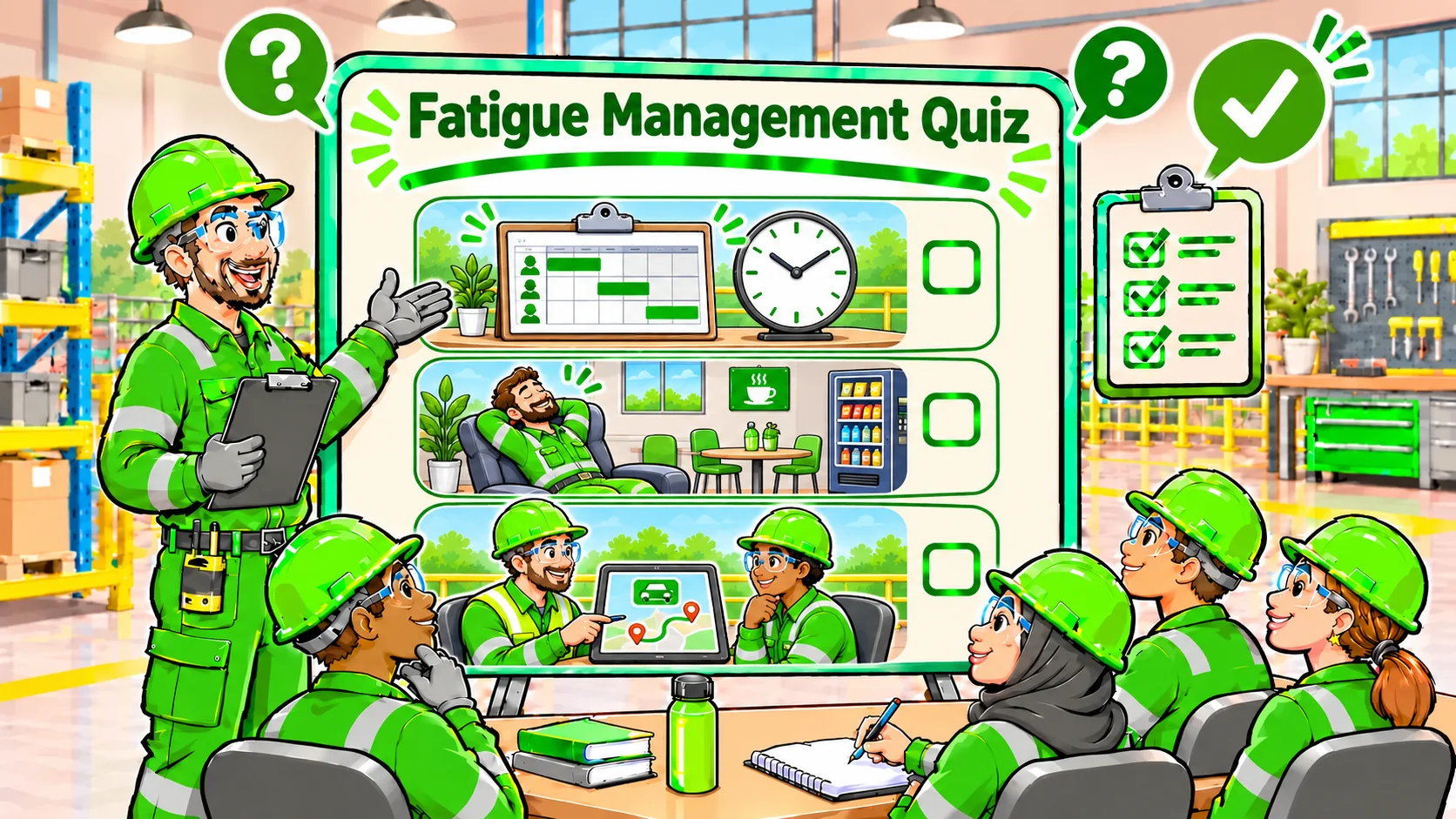
Fatigue Management Quiz: Shift Work, Sleep, and Safe Decisions
25 questions
About 13 min
Updated
0 of 25 answered
Score 0
Question 1 of 25
Which description best captures work-related fatigue?
Question 2 of 25
Which change can indicate fatigue during a safety-critical task?
Question 3 of 25
Why can night work increase fatigue risk?
Question 4 of 25
A worker says they are too sleepy to operate equipment safely. What should happen?
Question 5 of 25
Which is an organisational control for fatigue?
Question 6 of 25
What should a fatigue assessment consider?
Question 7 of 25
Why should overtime and shift swaps be recorded?
Question 8 of 25
Does willingness to work extra shifts prove fatigue risks are acceptable?
Question 9 of 25
Under HSE's Great Britain guidance, is compliance with working-time rules alone enough to manage fatigue?
Question 10 of 25
Why may several consecutive demanding shifts be concerning?
Question 11 of 25
What is the main purpose of planned rest breaks?
Question 12 of 25
Which task can contribute to fatigue even without heavy physical work?
Question 13 of 25
What should happen before significantly changing shift hours?
Question 14 of 25
Why should staffing levels be reviewed when overtime becomes routine?
Question 15 of 25
What is a useful first step before a commute after a tiring shift?
Question 16 of 25
A driver feels sleepy on the journey home. What is appropriate?
Question 17 of 25
What can caffeine do for fatigue?
Question 18 of 25
Why is alcohol unsuitable as a sleep aid after a shift?
Question 19 of 25
Which arrangement supports daytime sleep after night work?
Question 20 of 25
Why should workers discuss shift patterns with household members?
Question 21 of 25
How should possible medication-related drowsiness be handled?
Question 22 of 25
Why is a non-punitive fatigue-reporting culture useful?
Question 23 of 25
A fatigue risk calculator gives a low score. What should the supervisor conclude?
Question 24 of 25
What should an investigation consider after a fatigue-related near miss?
Question 25 of 25
When should someone seek health advice about sleep difficulties?
About This Quiz
Fatigue can slow reactions and weaken attention, memory and judgement. Managing it requires more than telling workers to sleep better: shift design, workload, breaks, staffing and actual hours all matter. This quiz explores decisions that protect performance at work and during the journey home.
What this quiz covers
Answer 25 fatigue management questions on shift patterns, sleep and recovery, actual working hours, alertness, reporting and safe commuting.
How to use the quiz
Answer 25 multiple-choice questions with one correct answer each. The practice pass mark is 70%, requiring at least 18 correct answers. There is no time limit. Answer options are shuffled, explanations are available and retakes are allowed. Review the explanations and official guidance for topics you miss.
Scope and limits
Independent knowledge practice, not an official qualification, fitness-for-duty test or medical assessment. HSE guidance informs the prevention principles; the question about working-time compliance specifically concerns Great Britain. The quiz does not prescribe a universally safe shift length, break interval or roster. Local law, sector rules, task demands and individual circumstances must guide the assessment. Persistent sleep problems or medication concerns need suitable health advice.
Sources and further reading
Guidance checked on 28 November 2026. Use current applicable requirements and the arrangements for the actual task and workplace.
Check cold stress knowledge with 25 questions on hypothermia and frostbite recognition, clothing, shelter, buddy checks and basic first-response awareness.
Practise lead exposure prevention with 25 questions on source controls, personal hygiene, protective equipment, contamination and medical surveillance.