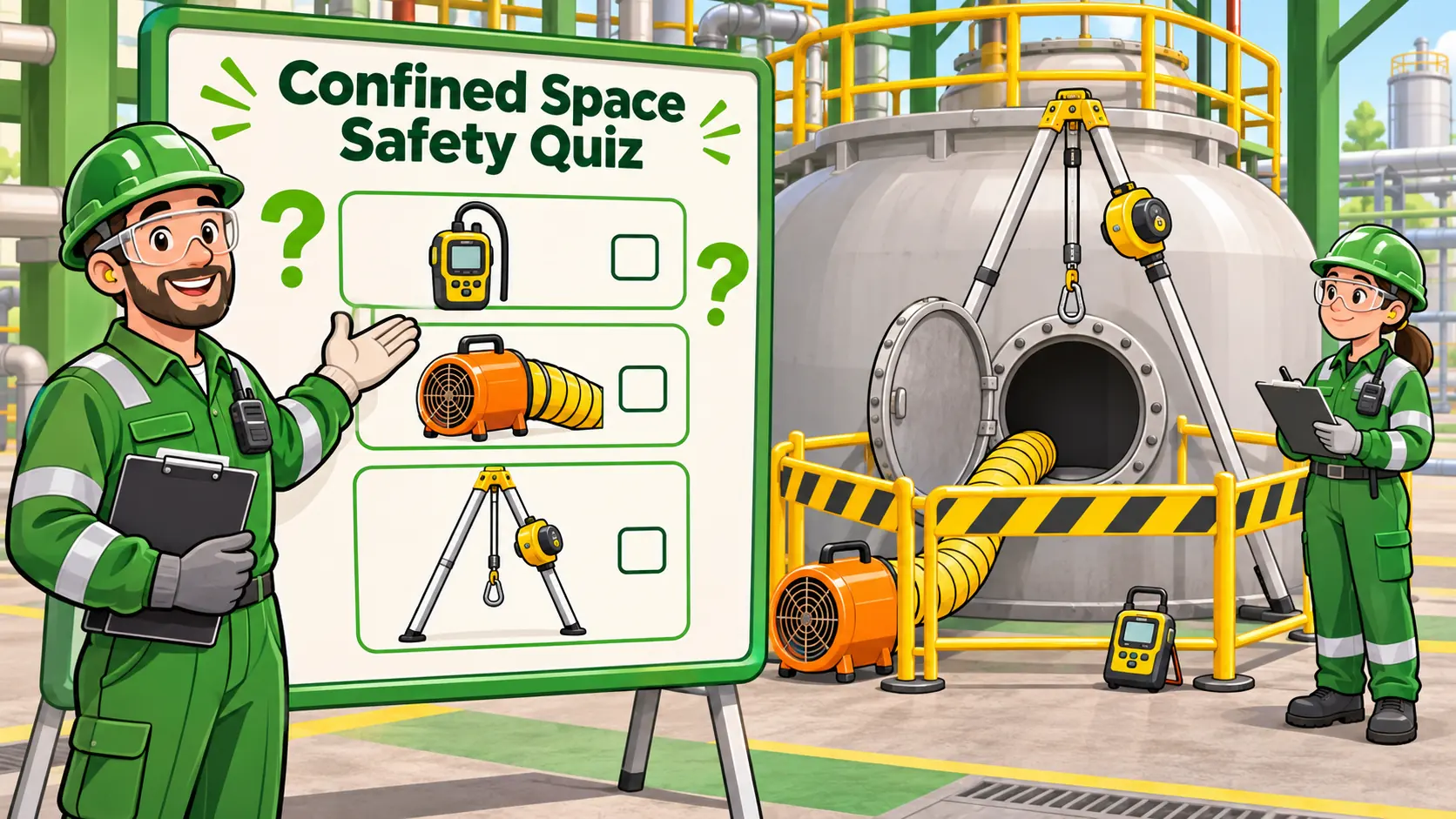
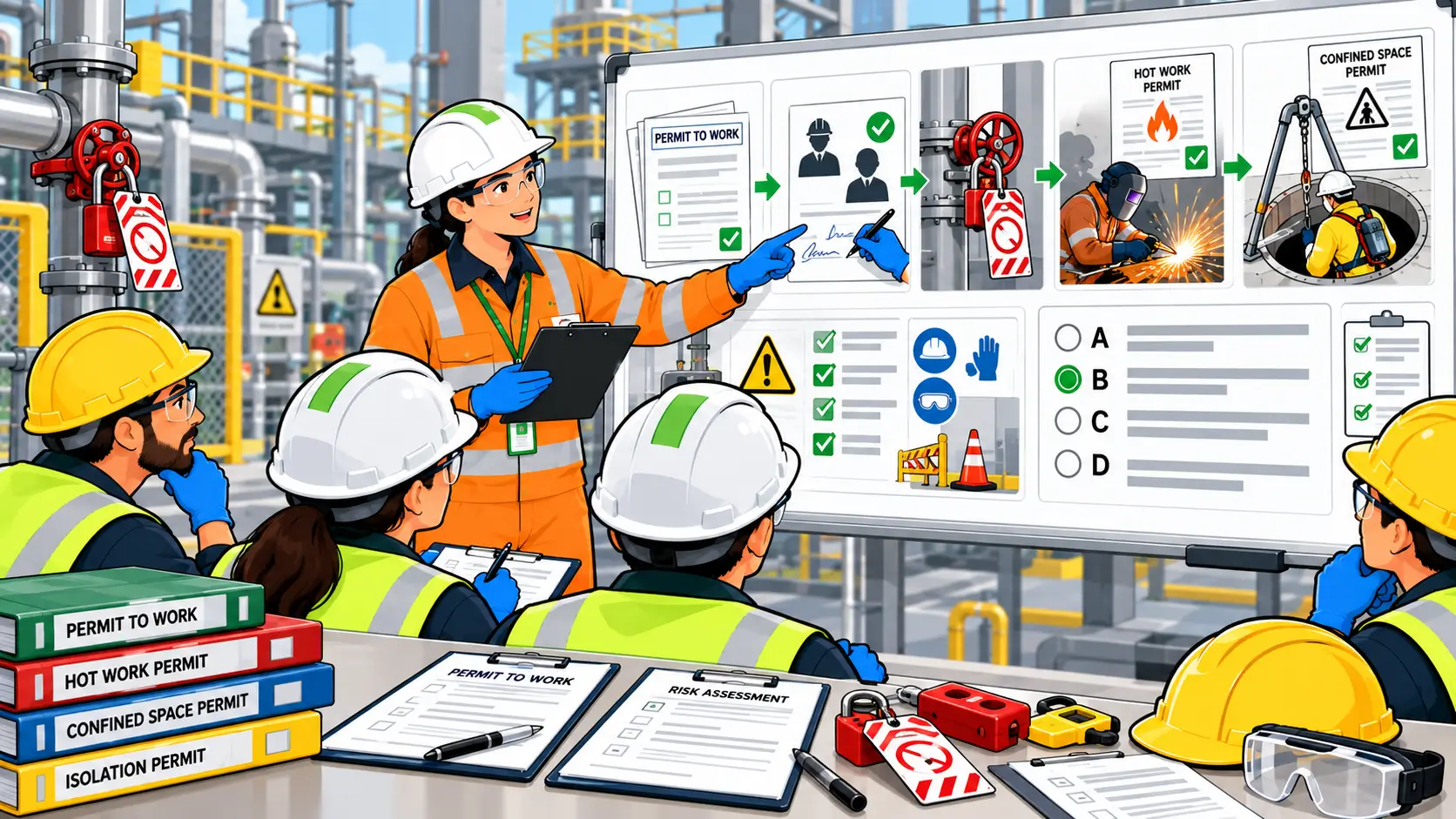
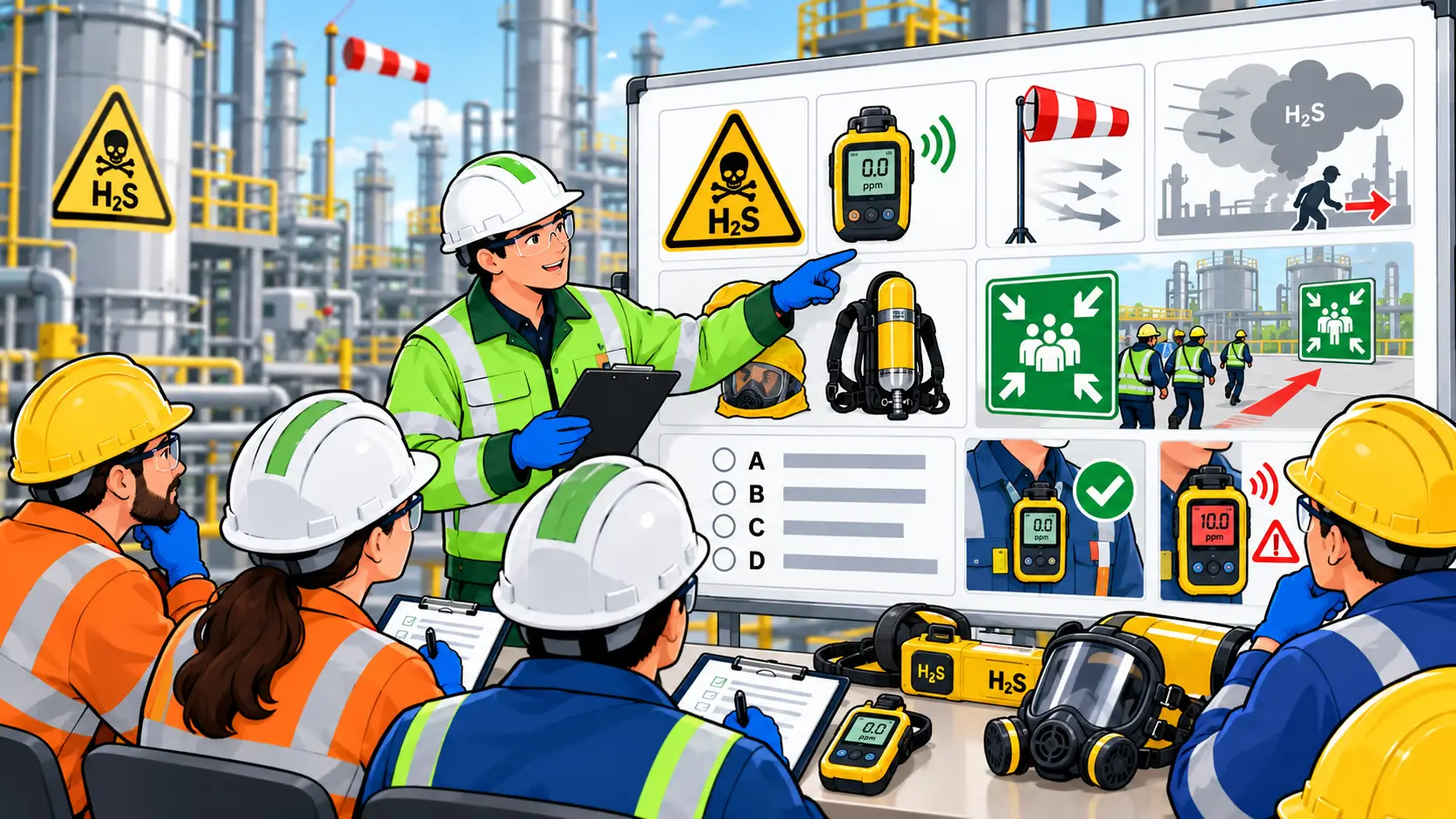
Under US OSHA general industry rules, which description best fits a confined space?
Question 2 of 25
Which condition can make a confined space permit-required under OSHA 1910.146?
Question 3 of 25
Why should air be tested from outside a space before entry where atmospheric hazards may exist?
Question 4 of 25
A tank was safe yesterday but has been closed overnight. What should the entry team do?
Question 5 of 25
What is the principal purpose of an entry permit?
Question 6 of 25
Which action belongs to an attendant's role during permit-space entry?
Question 7 of 25
An entrant's gas detector alarms during work. What should the entrant do?
Question 8 of 25
Why is oxygen enrichment dangerous in a confined space?
Question 9 of 25
A space smells normal. What can the team conclude about its atmosphere?
Question 10 of 25
Which hazard is an example of engulfment?
Question 11 of 25
Before maintenance inside a mixer, what must the team address beyond air quality?
Question 12 of 25
What is the role of ventilation in entry safety?
Question 13 of 25
A ventilation fan supplying a permit space stops unexpectedly. What is the safest response?
Question 14 of 25
Why should a gas detector be checked according to its manufacturer instructions before use?
Question 15 of 25
The team expects a solvent vapor not measured by its available detector. What should happen?
Question 16 of 25
What should rescue planning establish before permit-space entry?
Question 17 of 25
A coworker collapses inside a tank. What should an untrained observer do?
Question 18 of 25
What is a potential advantage of a suitable non-entry retrieval system?
Question 19 of 25
A contractor will enter a host employer's permit space. What is needed?
Question 20 of 25
Which event should trigger review of the entry authorization?
Question 21 of 25
Why must the team know who is inside the space?
Question 22 of 25
An entrant cannot maintain the required communication with the attendant. What should happen?
Question 23 of 25
Does an ordinary air-purifying respirator make an oxygen-deficient space safe to enter?
Question 24 of 25
Under OSHA 1910.146, when is entry into a permit space considered to have occurred?
Question 25 of 25
After work is complete, what should happen to the entry authorization?
About This Quiz
Confined spaces can contain hazards that are difficult to recognize from outside. This quiz focuses on the decisions made before entry, during work, and when conditions change. This practice resource is intended for entrants, attendants, entry supervisors, and safety learners.
Topics covered
The focus is on practical understanding and decisions relevant to everyday work. Use these learning objectives to guide your preparation.
Recognize confined-space hazards and the need for an entry assessment.
Understand atmospheric testing, ventilation, isolation, and permit controls.
Distinguish entrant, attendant, and supervisor duties and planned rescue arrangements.
This quiz contains 25 multiple-choice questions. Select one answer for each question. It has a 70% pass mark, no time limit, and repeat attempts. Review the answer explanations after submitting to understand the reasoning behind each response. Use feedback to identify topics for further study; a knowledge score is only one part of learning and does not establish practical competence.
Standards and scope
The scope is entry-safety awareness. US OSHA requirements must be distinguished from other jurisdictions and site procedures; requirements for construction and general industry can differ.
References
Consult OSHA confined spaces for the primary reference material. Apply the requirements relevant to the industry, equipment, and country in which the work takes place.
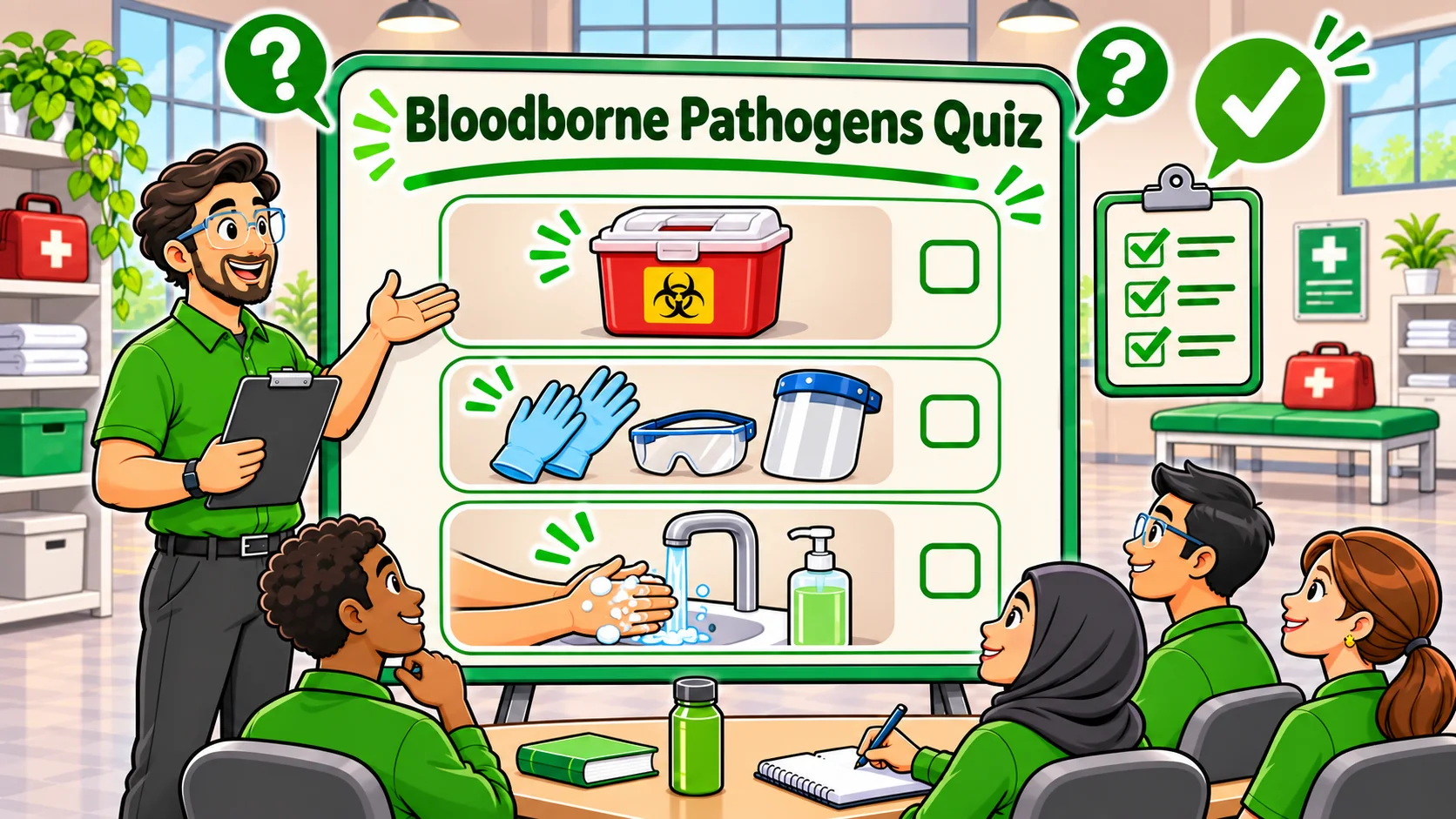
Practise recognising and preventing occupational exposure to human blood and other potentially infectious materials. These 25 original questions cover sharps controls, gloves and face protection, hand hygiene, exposure response, vaccination and written control plans.
Check the decisions that prevent wheel breakage and loss of control during grinding and cutting. These 25 original questions cover accessory compatibility, inspection, mounting, guards, safe operation, dust and protective equipment.