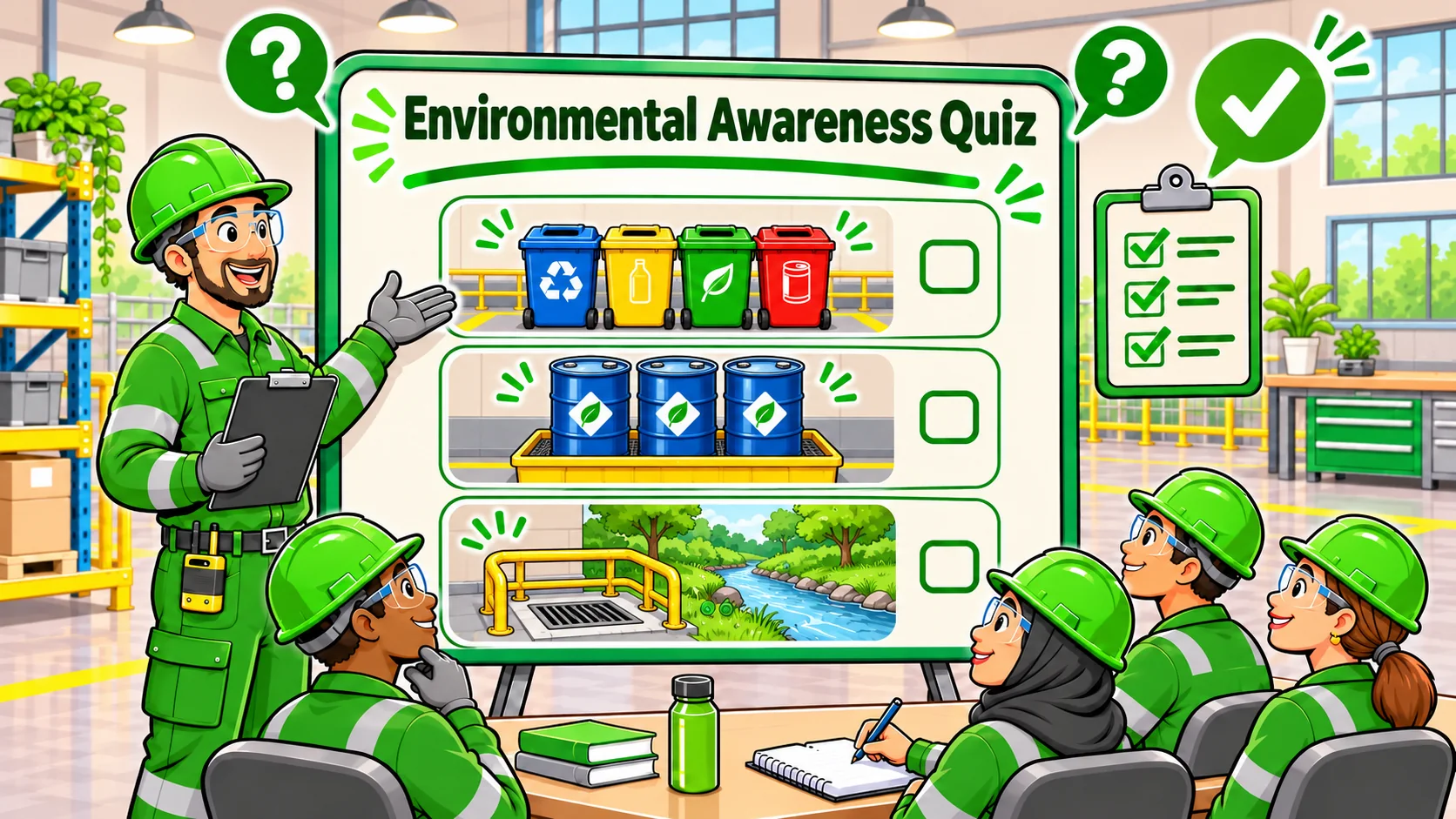
Environmental Awareness Quiz: Workplace Pollution and Waste
25 questions
About 13 min
Updated
0 of 25 answered
Score 0
Question 1 of 25
What is the best first option in the waste hierarchy?
Question 2 of 25
A process repeatedly produces surplus material. What should be reviewed first?
Question 3 of 25
Why separate recyclable materials correctly?
Question 4 of 25
An unlabelled liquid container is found. What should happen?
Question 5 of 25
What is secondary containment intended to do?
Question 6 of 25
Rainwater has accumulated in a bund. What is appropriate?
Question 7 of 25
Why maintain an accurate drainage plan?
Question 8 of 25
May contaminated wash water enter a surface-water drain?
Question 9 of 25
Can trade effluent always be poured into a foul sewer?
Question 10 of 25
Why can spilled milk or food liquid harm a watercourse?
Question 11 of 25
A small oil leak is approaching a drain. What is the priority?
Question 12 of 25
What should guide spill-kit selection?
Question 13 of 25
An employee has not been trained for a significant chemical spill. What should they do?
Question 14 of 25
What should happen to used contaminated absorbent?
Question 15 of 25
Why supervise delivery transfers?
Question 16 of 25
How should incompatible substances be stored?
Question 17 of 25
What should a workplace environmental incident plan identify?
Question 18 of 25
In England, what should happen if pollutants have entered or could enter a watercourse or ground?
Question 19 of 25
Before transferring business waste, what should be checked?
Question 20 of 25
Why give an accurate waste description?
Question 21 of 25
What is appropriate for windblown litter from outside storage?
Question 22 of 25
How can dusty stockpiles affect the environment?
Question 23 of 25
A water meter shows unexplained high use overnight. What should follow?
Question 24 of 25
How should environmental improvements be checked?
Question 25 of 25
What does this quiz establish?
About This Quiz
Check how everyday workplace decisions can prevent pollution and reduce waste. These 25 original questions cover waste prevention and segregation, liquid storage, drainage, spill response, transfer responsibilities and resource use.
Scope and independent practice
Independent learning material, not an environmental qualification, permit or compliance audit. Regulatory context: England, using Environment Agency guidance; the waste duty of care code also covers Wales. Requirements elsewhere differ. Follow your site's incident plan, authorisations and local rules rather than assuming one universal discharge or containment limit.
How to use this quiz
Choose one best answer and read the explanation. The practice pass mark is 70%, answers are shuffled and retakes are available. The quiz focuses on preventing releases at source and identifying when trained responders or the environmental lead must act.
Primary safety guidance
Reviewed on 13 November 2026. Check current local requirements and procedures before applying the learning.
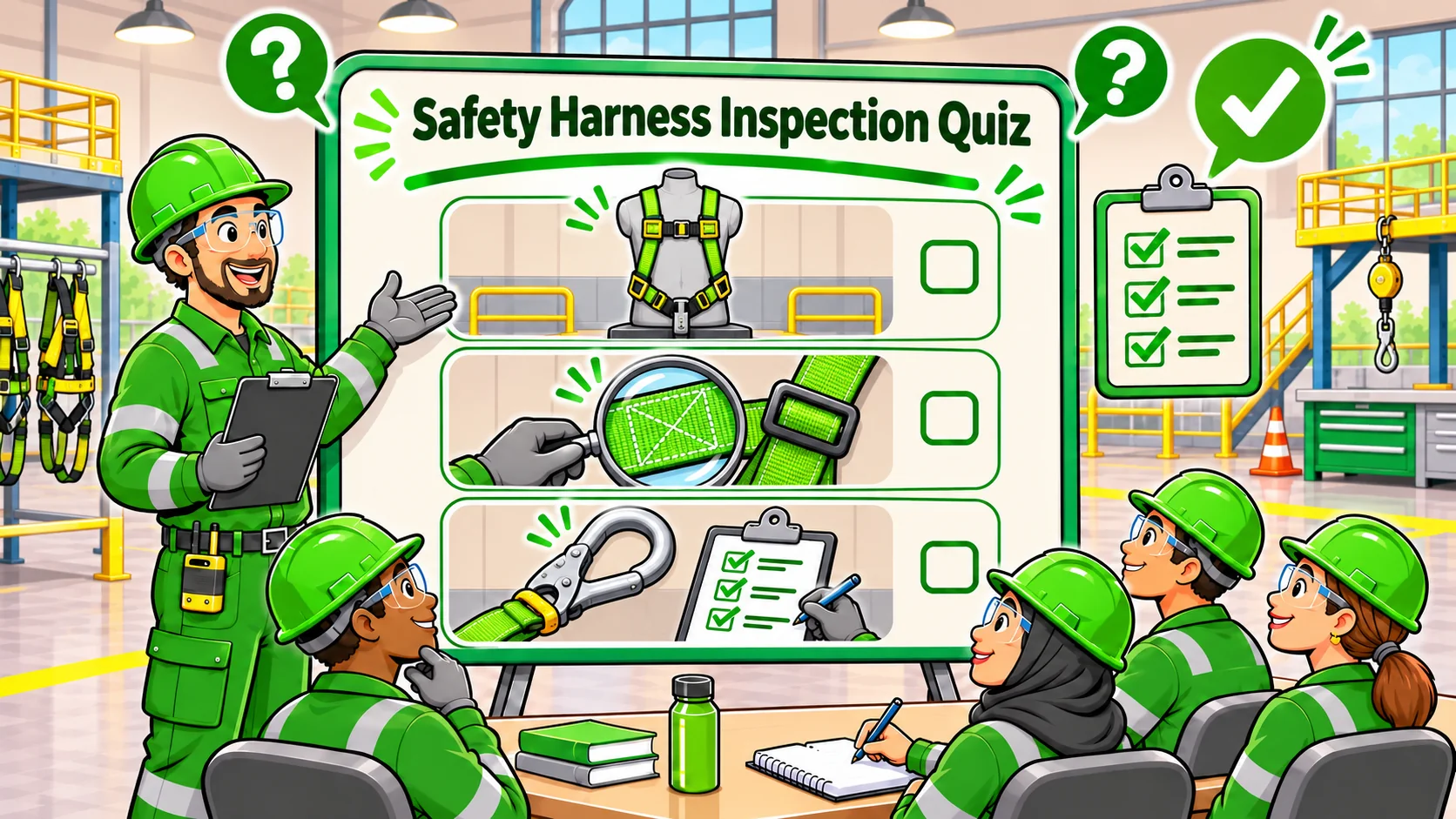
Learn what to look for before relying on a safety harness and associated fall-arrest equipment. These 25 original questions explore webbing, stitching, hardware, identification, exposure history, inspection records and quarantine.
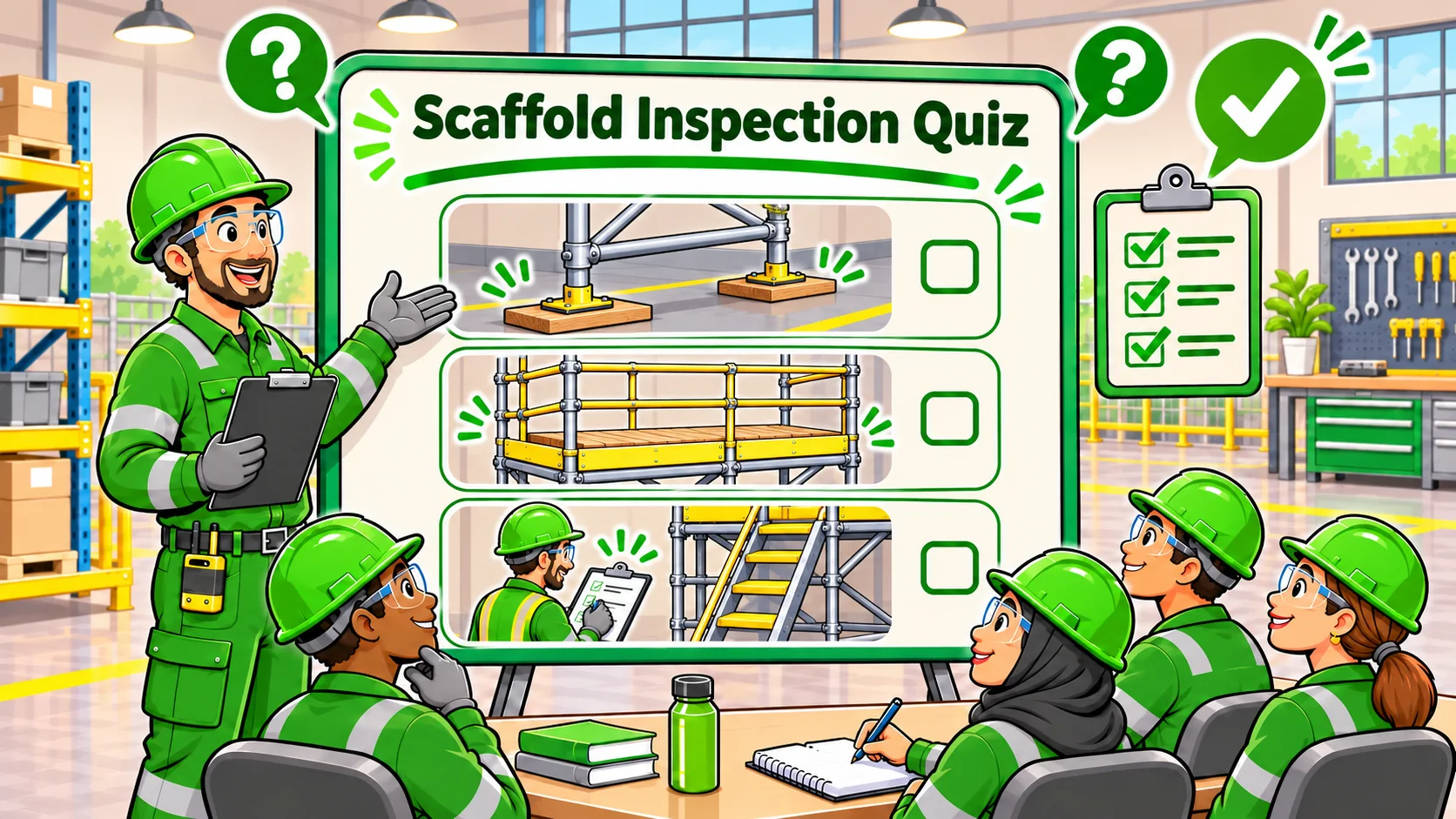
Practise identifying conditions that can make a scaffold unsafe. These 25 original questions cover foundations, ties and bracing, platforms, access, edge protection, loads, alterations and inspection records.
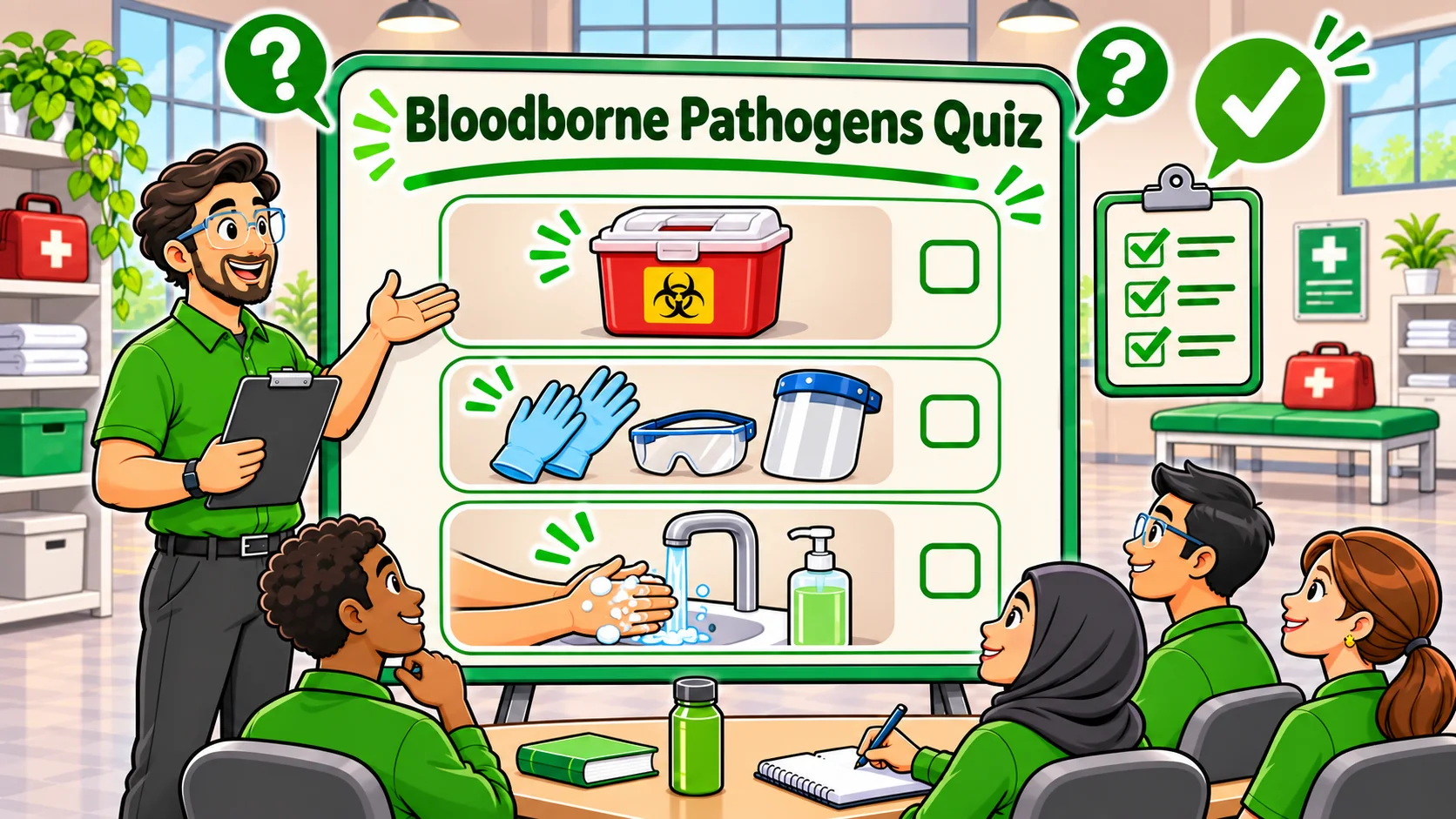
Practise recognising and preventing occupational exposure to human blood and other potentially infectious materials. These 25 original questions cover sharps controls, gloves and face protection, hand hygiene, exposure response, vaccination and written control plans.
Check the decisions that prevent wheel breakage and loss of control during grinding and cutting. These 25 original questions cover accessory compatibility, inspection, mounting, guards, safe operation, dust and protective equipment.