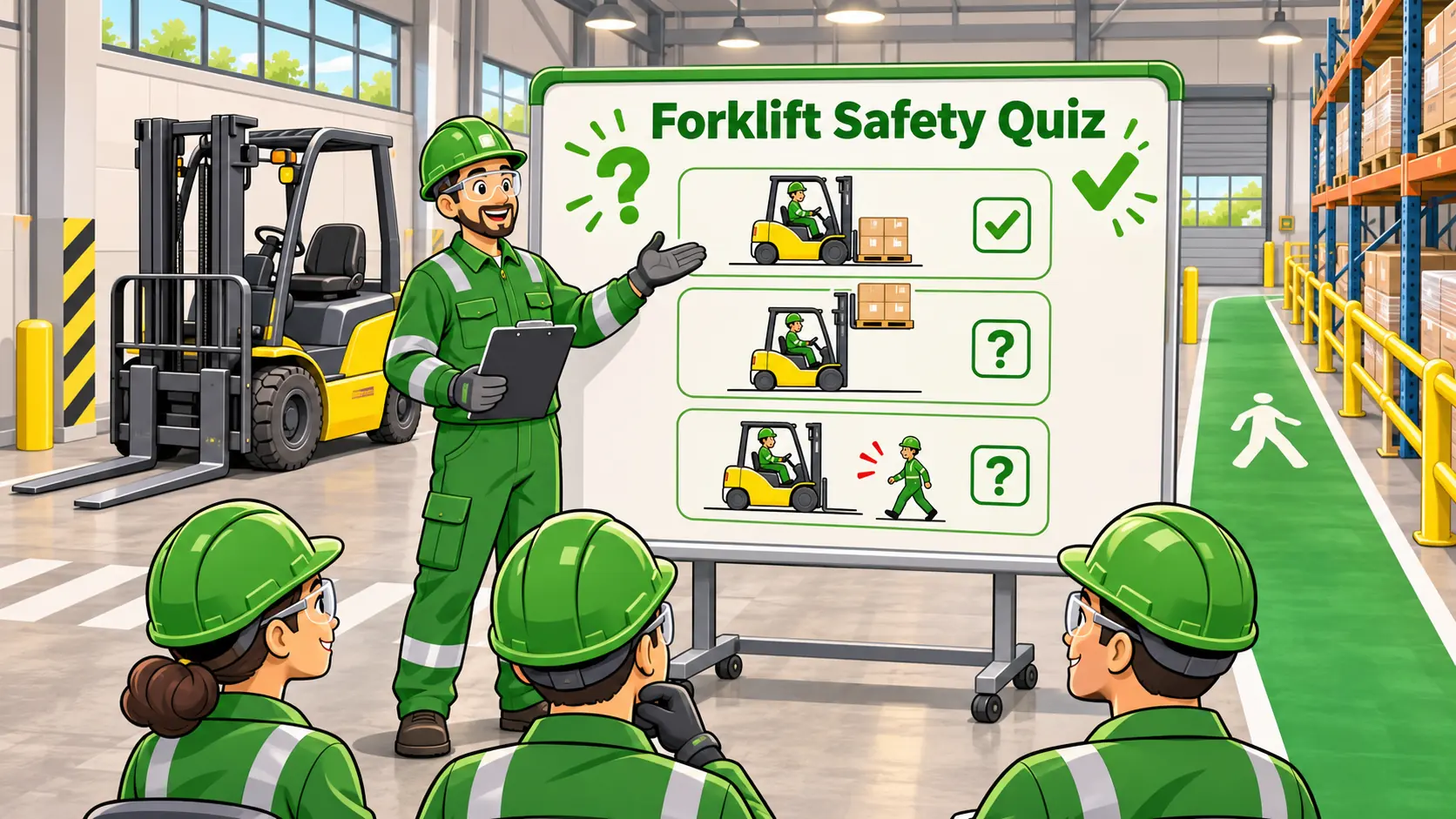
Before operating an unfamiliar forklift attachment, what should an operator verify?
Question 2 of 25
What should happen when a pre-use inspection finds a safety-related defect?
Question 3 of 25
What does a forklift capacity plate help the operator determine?
Question 4 of 25
Why can a load with its centre farther forward reduce stability?
Question 5 of 25
Which practice reduces pedestrian collision risk most effectively?
Question 6 of 25
At a blind intersection, what should the operator do?
Question 7 of 25
A bulky load blocks the forward view on a level route. What is generally appropriate?
Question 8 of 25
Why should a loaded forklift travel with the load kept low as instructed?
Question 9 of 25
What is the safest approach to turning a counterbalanced forklift?
Question 10 of 25
What should an operator do before entering a trailer with a forklift?
Question 11 of 25
How should an operator approach the edge of a loading dock?
Question 12 of 25
Under US OSHA rules, how should a loaded truck travel on a grade greater than 10 percent?
Question 13 of 25
Can a worker ride on the forks to reach a shelf?
Question 14 of 25
What is the rule for standing or passing under an elevated forklift load?
Question 15 of 25
What should an operator do with an unstable or poorly secured load?
Question 16 of 25
Why should forks be spaced and engaged correctly under a load?
Question 17 of 25
A forklift must travel over a floor opening covered by a plate. What must be checked?
Question 18 of 25
What should happen before an operator leaves an unattended forklift?
Question 19 of 25
Is a successful online knowledge quiz alone sufficient operator qualification under OSHA?
Question 20 of 25
What is a reason for forklift refresher training?
Question 21 of 25
A liquid spill makes a travel route slippery. What should the operator do?
Question 22 of 25
What is important when charging a lead-acid forklift battery?
Question 23 of 25
An internal-combustion forklift is proposed for a poorly ventilated indoor area. What needs assessment?
Question 24 of 25
What should happen when a forklift attachment changes the truck's capacity?
Question 25 of 25
A pedestrian unexpectedly enters the truck's travel path. What is the operator's priority?
About This Quiz
Safe forklift operation depends on the truck, its load, the travel route, and the people nearby. This quiz brings these factors together through everyday operating decisions. This practice resource is intended for forklift operators, warehouse teams, supervisors, and trainees.
Topics covered
The focus is on practical understanding and decisions relevant to everyday work. Use these learning objectives to guide your preparation.
Recognize stability, load-centre, and capacity considerations.
Identify inspection defects and unsafe travel, ramp, and parking practices.
Understand pedestrian separation, visibility, and operator responsibilities.
This quiz contains 25 multiple-choice questions. Select one answer for each question. It has a 70% pass mark, no time limit, and repeat attempts. Review the answer explanations after submitting to understand the reasoning behind each response. Use feedback to identify topics for further study; a knowledge score is only one part of learning and does not establish practical competence.
Standards and scope
The quiz supports awareness and refresher learning. Operator training and practical evaluation must follow the applicable rules and the specific truck and workplace; a knowledge score does not authorize operation.
References
Consult OSHA powered industrial trucks for the primary reference material. Apply the requirements relevant to the industry, equipment, and country in which the work takes place.
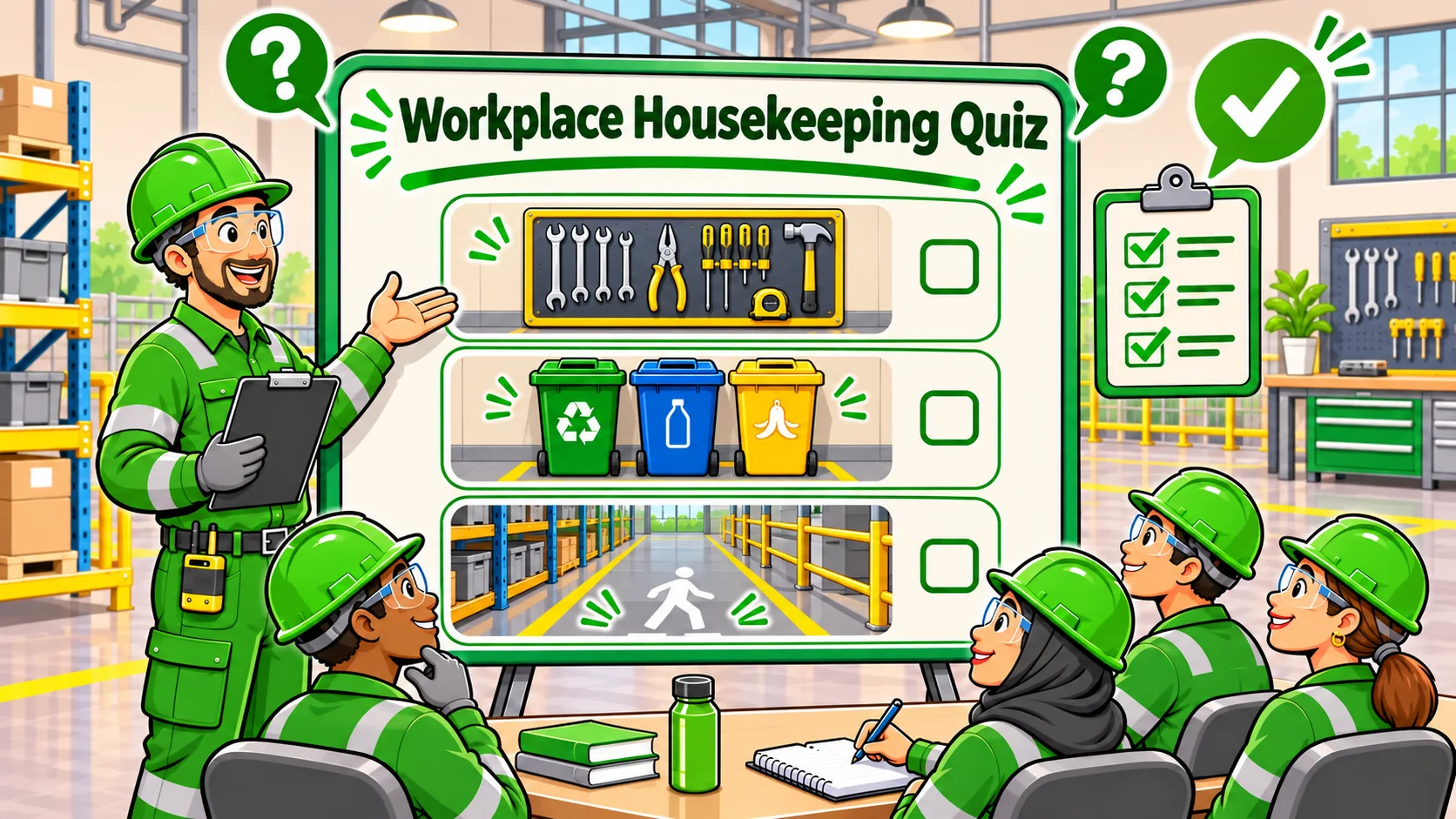
Good housekeeping makes everyday work safer when storage, waste, cleaning and access are planned together. These 25 original questions test how to keep routes usable, handle common defects and organise effective follow-up.
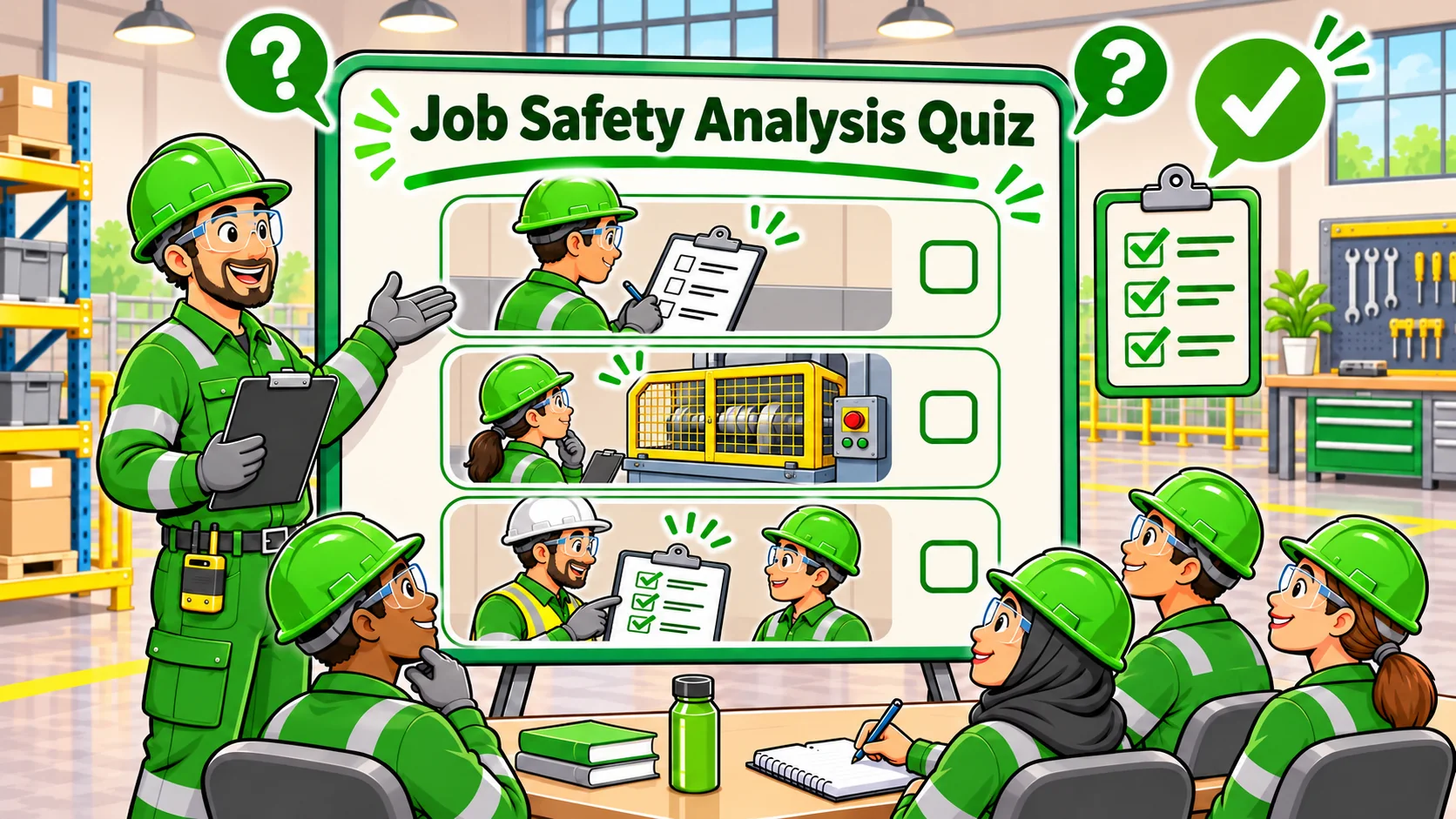
Learn to turn a list of job steps into practical hazard controls. This 25-question quiz explores job safety analysis, also called job hazard analysis, from selecting work to analyse through worker consultation, implementation and review.
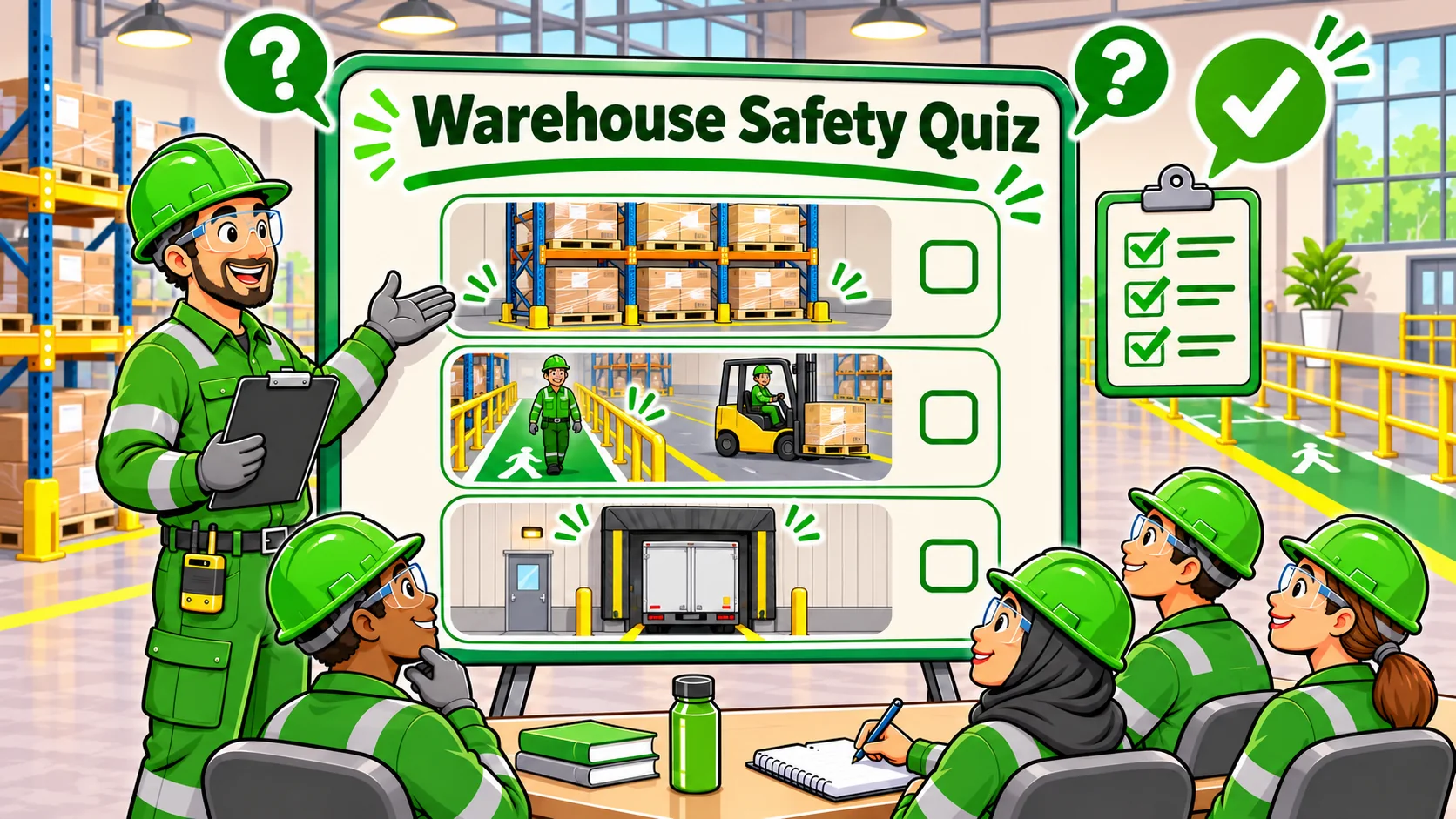
Practise recognising warehouse risks before they lead to injury. These 25 original multiple-choice questions cover racking and pallets, pedestrian separation, loading docks, handling tasks and safe coordination with visiting drivers.
Practise the key decisions in helping an unresponsive adult: calling for help, recognising abnormal breathing, starting CPR and using an automated external defibrillator. These 25 original questions follow Resuscitation Council UK 2025 adult basic life support guidance.