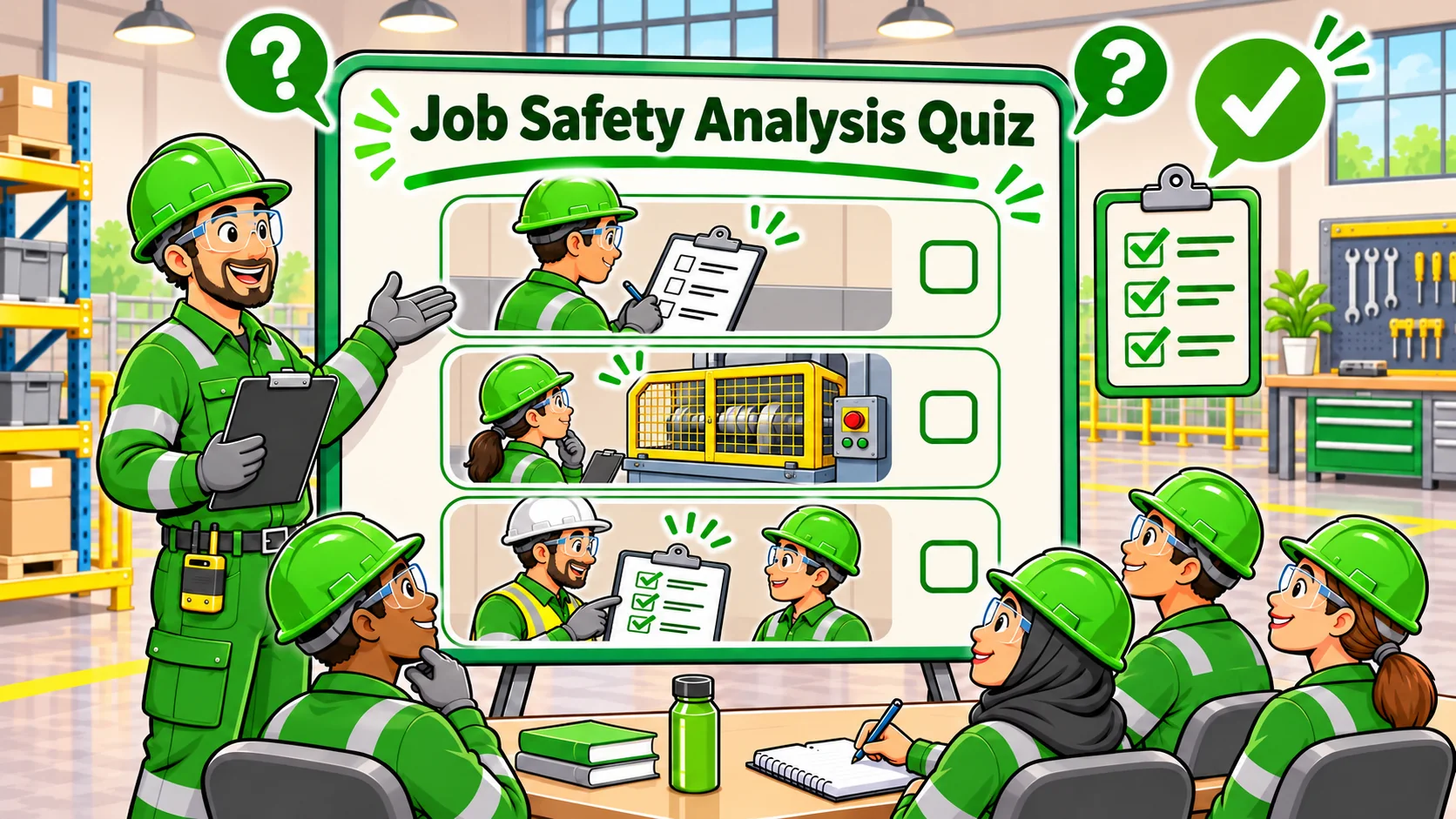
Job Safety Analysis Quiz: JSA and JHA Practice Questions
25 questions
About 13 min
Updated
0 of 25 answered
Score 0
Question 1 of 25
What is the main purpose of a JSA or JHA?
Question 2 of 25
How are JSA and JHA commonly used in OSHA guidance?
Question 3 of 25
Which job deserves early analysis?
Question 4 of 25
Who should help develop the analysis?
Question 5 of 25
What should be explained when observing a worker?
Question 6 of 25
What makes a useful breakdown of job steps?
Question 7 of 25
Should setup and cleanup be considered?
Question 8 of 25
Which is a hazard rather than an injury outcome?
Question 9 of 25
What is the most useful hazard description?
Question 10 of 25
Why identify who may be exposed?
Question 11 of 25
A serious immediate danger is found during a JHA. What should happen?
Question 12 of 25
Which control is highest in the hierarchy?
Question 13 of 25
Replacing a hazardous product with a safer suitable one is what type of control?
Question 14 of 25
A fixed enclosure prevents access to moving parts. What type of control is this?
Question 15 of 25
A written safe-work instruction is primarily what type of control?
Question 16 of 25
How should PPE be selected in a JHA?
Question 17 of 25
Why consult equipment instructions and safety data?
Question 18 of 25
Can a generic JHA be used unchanged at every site?
Question 19 of 25
Why consider simultaneous nearby work?
Question 20 of 25
What should happen before a revised method is used?
Question 21 of 25
How can control effectiveness be checked?
Question 22 of 25
Why assign action owners and completion dates?
Question 23 of 25
A machine or process changes. What should happen to its JHA?
Question 24 of 25
What should a related near miss prompt?
Question 25 of 25
Does an approved JHA automatically replace a required permit or isolation procedure?
About This Quiz
Learn to turn a list of job steps into practical hazard controls. This 25-question quiz explores job safety analysis, also called job hazard analysis, from selecting work to analyse through worker consultation, implementation and review.
Scope and independent practice
Independent practice material using OSHA's job hazard analysis approach, not an official OSHA examination or certification. Legal requirements vary by jurisdiction and industry. A JSA does not replace required permits, safe isolation, specialist assessments or site-specific authorisation.
How to use this quiz
Choose one best answer and review the explanation, especially where a control depends on behaviour rather than removing the hazard. The practice pass mark is 70%, answers are shuffled and retakes are available. Apply the method to real work only with suitable worker involvement, supervision and technical support.
Primary safety guidance
Reviewed on 11 November 2026. Check current local requirements and procedures before applying the learning.
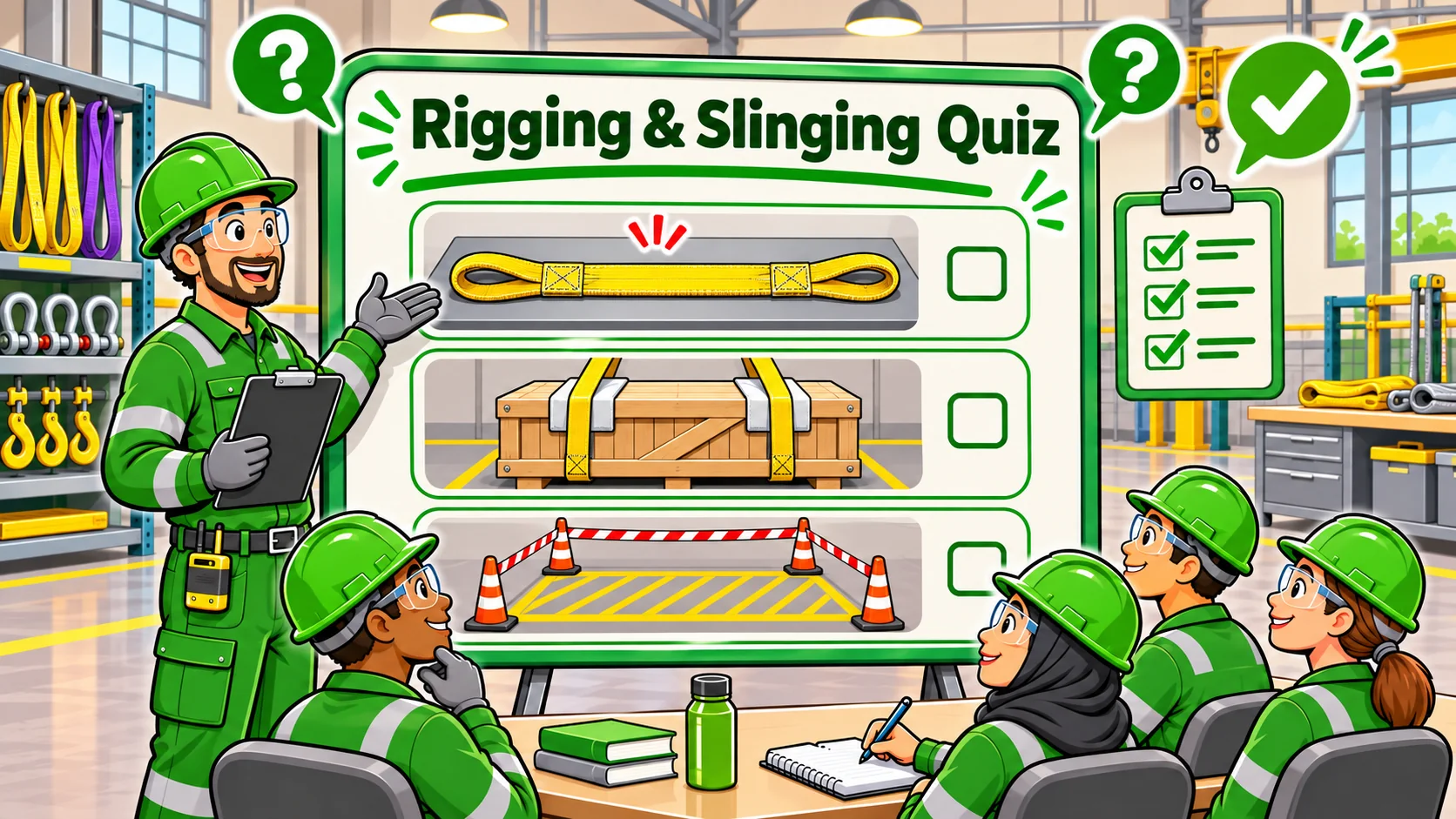
Review the decisions that help keep lifting operations controlled with 25 original multiple-choice questions. Topics include load information, sling configuration, capacity identification, equipment condition, edge protection, safe positions and landing arrangements. The focus is understanding why an arrangement is safe, rather than learning a shortcut for choosing equipment.
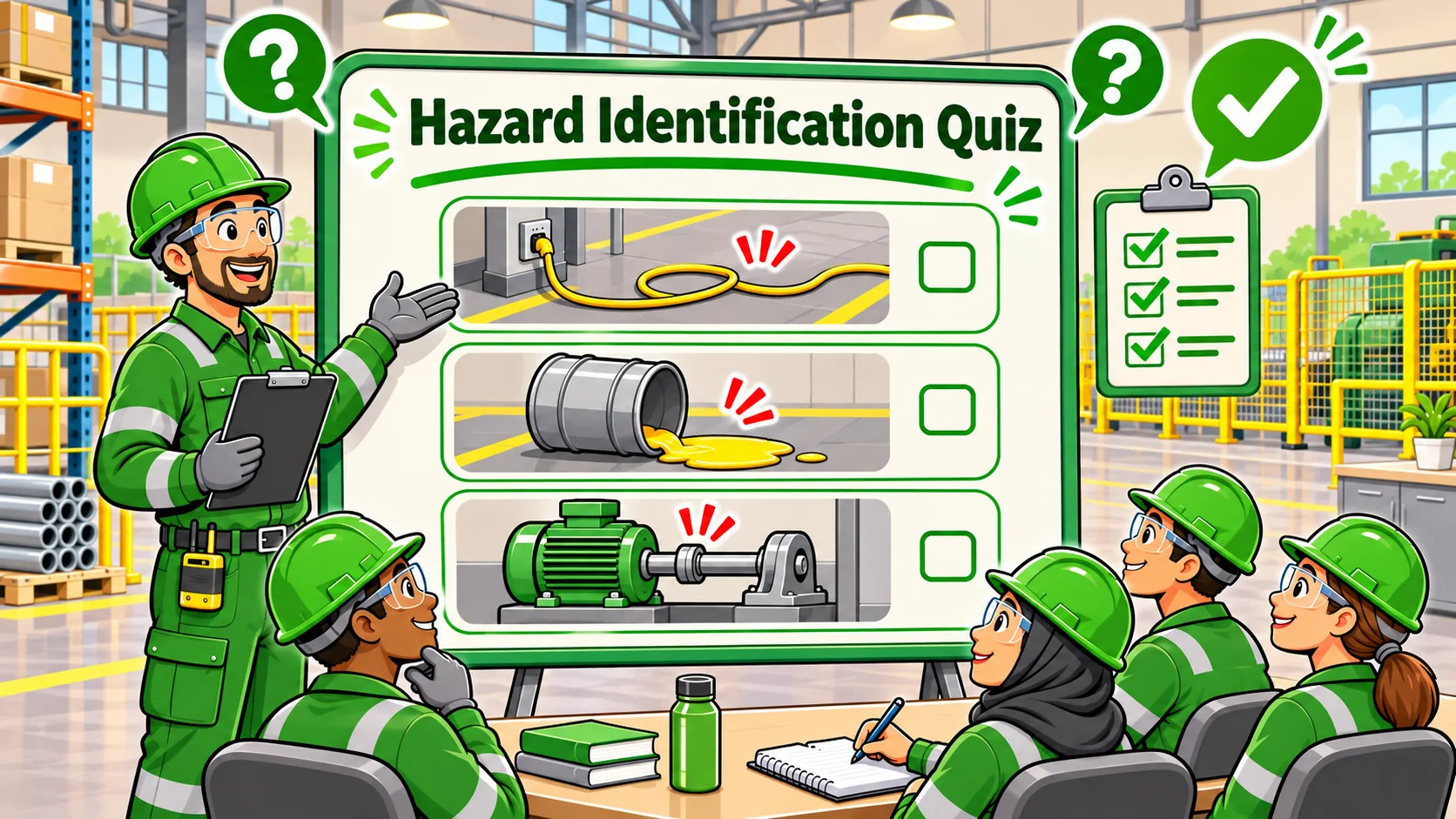
Practise spotting hazards through 25 written workplace scenarios involving access, machinery, chemicals, vehicles, ergonomic demands and less visible health risks. Each question asks you to interpret a described condition and choose the safest recognition or follow-up decision. The featured illustration introduces the theme; the questions are text-based, not an interactive image test.
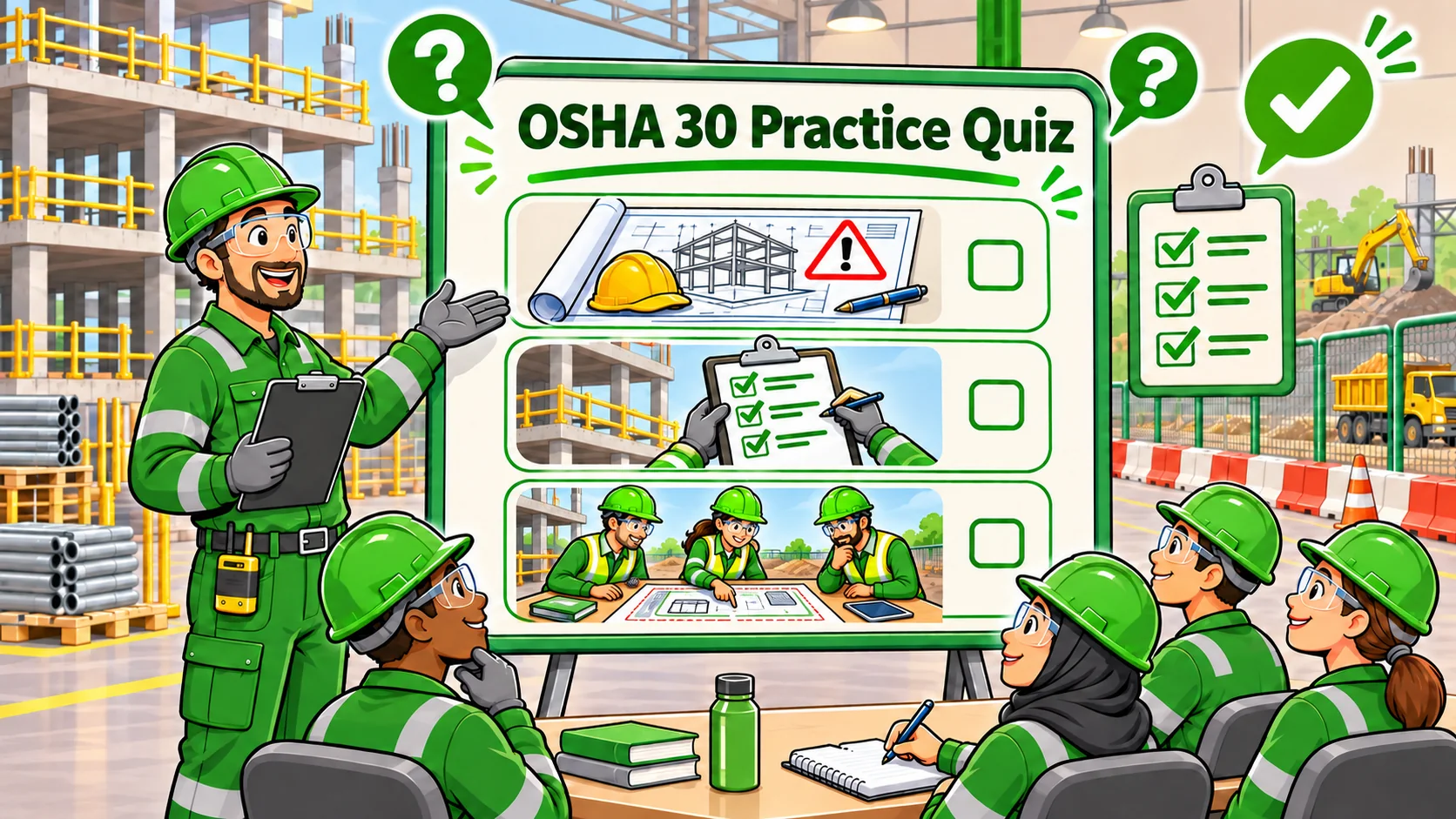
Develop your understanding of construction safety supervision with 25 original scenarios about planning, contractor interfaces, critical controls, training and follow-up. These questions emphasise decisions made by people with safety responsibilities, extending beyond the basic hazard recognition covered in our OSHA 10 practice resource.
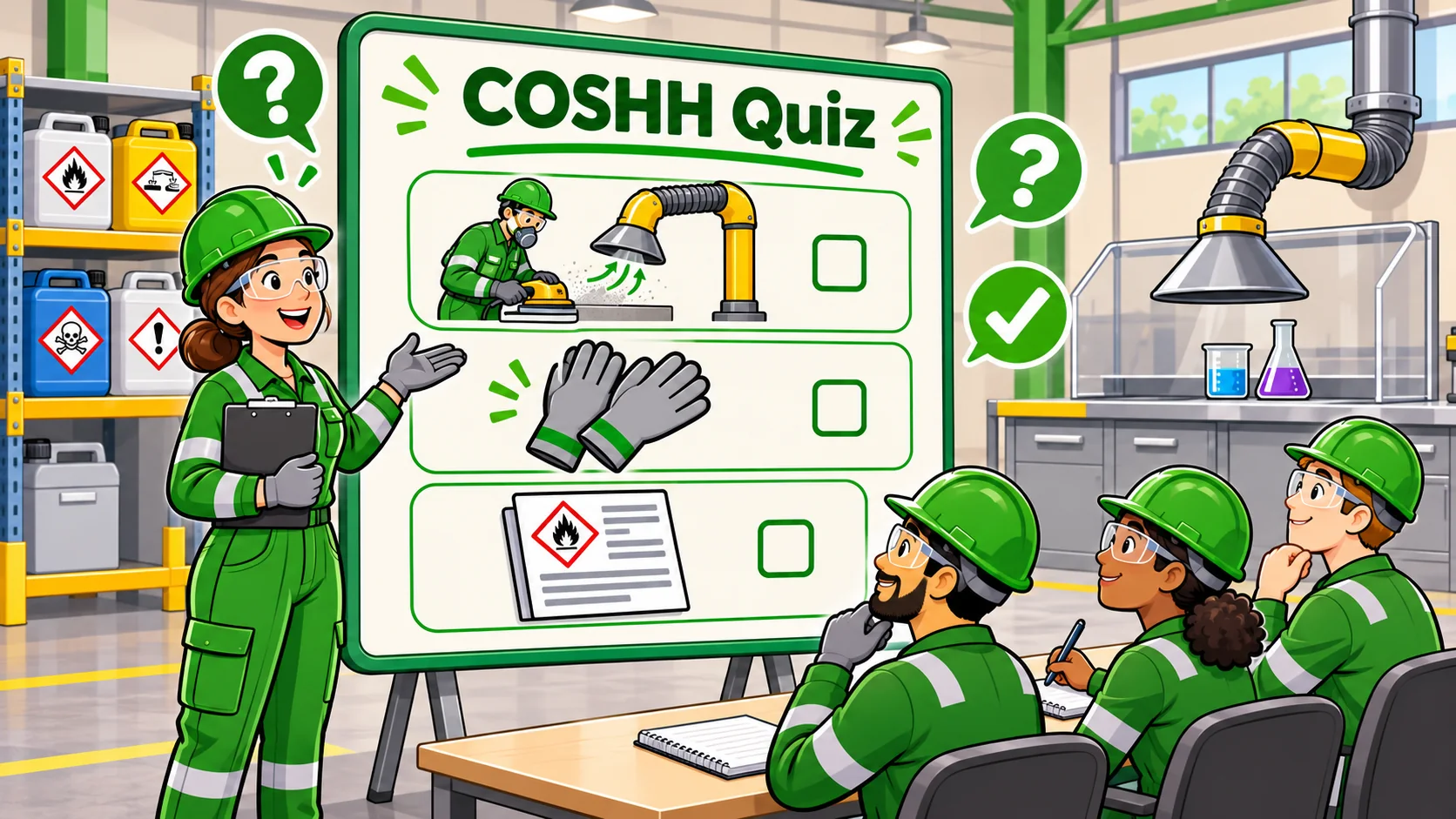
Test your understanding of hazardous-substance assessment and practical exposure controls with 25 original questions. This learning resource is useful for workers, supervisors and safety learners handling chemicals or working with processes that generate harmful dust, fume, vapour or biological exposure.