Gas Testing Quiz: Oxygen, Flammable Gas, and Toxic Atmospheres
25 questions
About 13 min
Updated
0 of 25 answered
Score 0
Question 1 of 25
What should determine which atmospheric hazards a gas detector must measure?
Question 2 of 25
Does a normal oxygen reading prove the whole atmosphere is safe?
Question 3 of 25
Under US OSHA 1910.146, oxygen deficiency means which condition?
Question 4 of 25
Under US OSHA 1910.146, oxygen enrichment means which condition?
Question 5 of 25
What does a reading expressed as %LEL describe?
Question 6 of 25
What does 100% LEL mean conceptually?
Question 7 of 25
Under OSHA 1910.146, flammable gas above what proportion of its lower flammable limit is a listed hazardous-atmosphere condition?
Question 8 of 25
What is the atmospheric test order specified in OSHA 1910.146(d)(5)(iii)?
Question 9 of 25
Why can oxygen deficiency affect some combustible-gas readings?
Question 10 of 25
What does a bump test primarily confirm?
Question 11 of 25
What does a calibration check do?
Question 12 of 25
What is full calibration?
Question 13 of 25
What does OSHA's monitor-testing bulletin recommend before each day's use?
Question 14 of 25
If a detector fails a bump test or calibration check, what is appropriate?
Question 15 of 25
What test gas should be used for calibration?
Question 16 of 25
Where should a detector be zeroed?
Question 17 of 25
Why allow the specified response time when sampling?
Question 18 of 25
Can a single sample at an opening prove the entire space has the same atmosphere?
Question 19 of 25
What should happen if a remote-sampling hose or inlet is blocked?
Question 20 of 25
Can an instrument detect a toxic gas for which it has no suitable sensor or method?
Question 21 of 25
Why does an unknown or interfering gas matter to detector readings?
Question 22 of 25
Does acceptable pre-entry testing remove the need for monitoring during an entry?
Question 23 of 25
What should an entrant do if an evacuation alarm or prohibited condition is detected?
Question 24 of 25
Does a gas-test result alone authorise confined-space entry?
Question 25 of 25
A person collapses inside a suspect atmosphere. What should an untrained coworker do?
About This Quiz
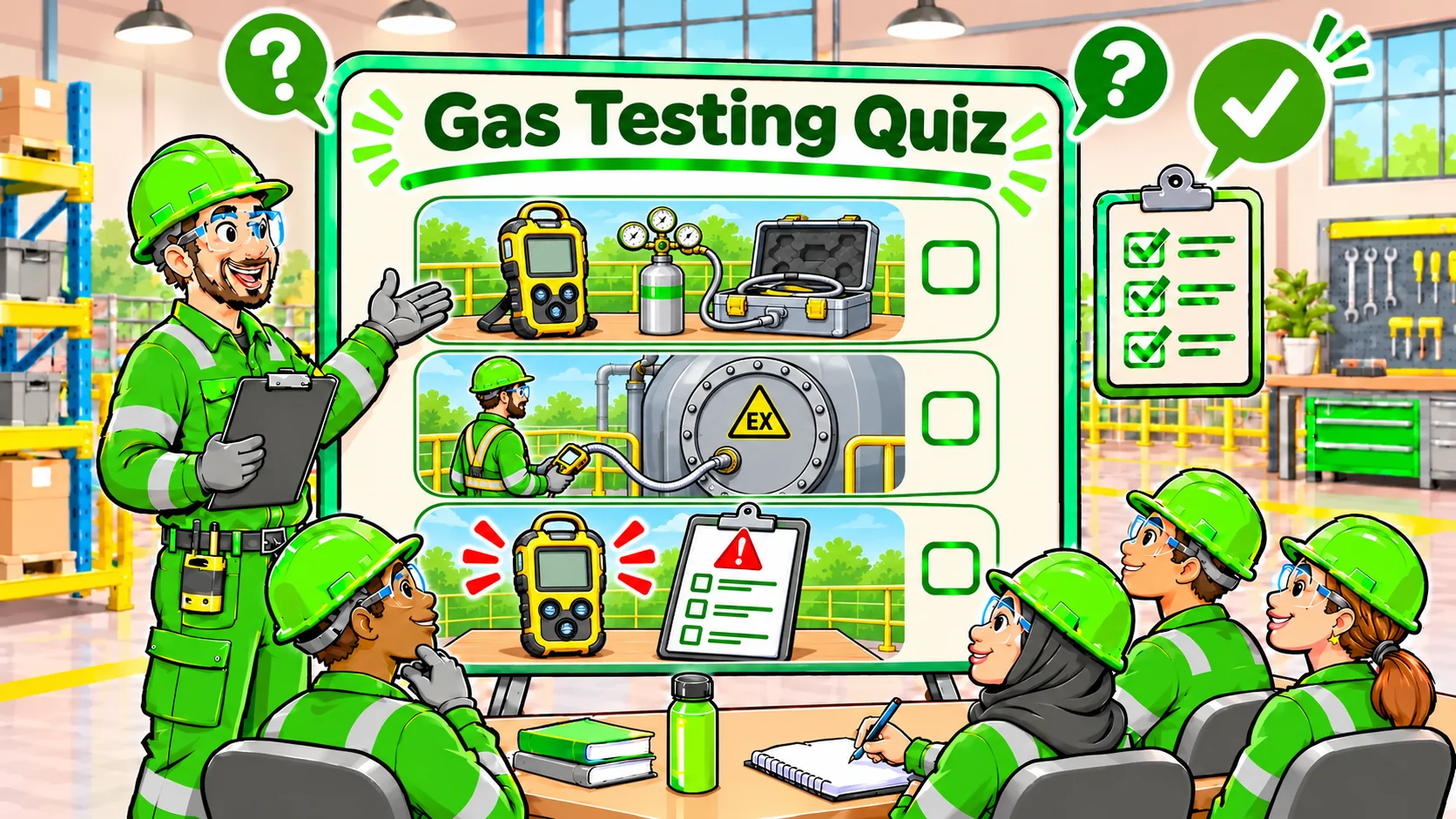
A gas detector provides useful information only when it is suitable for the hazards and used correctly. This gas testing quiz covers oxygen, flammable and toxic atmospheres, bump tests, calibration, sampling and the limits of detector readings. It also checks why atmospheric testing must sit within a complete safe entry system.
What this quiz covers
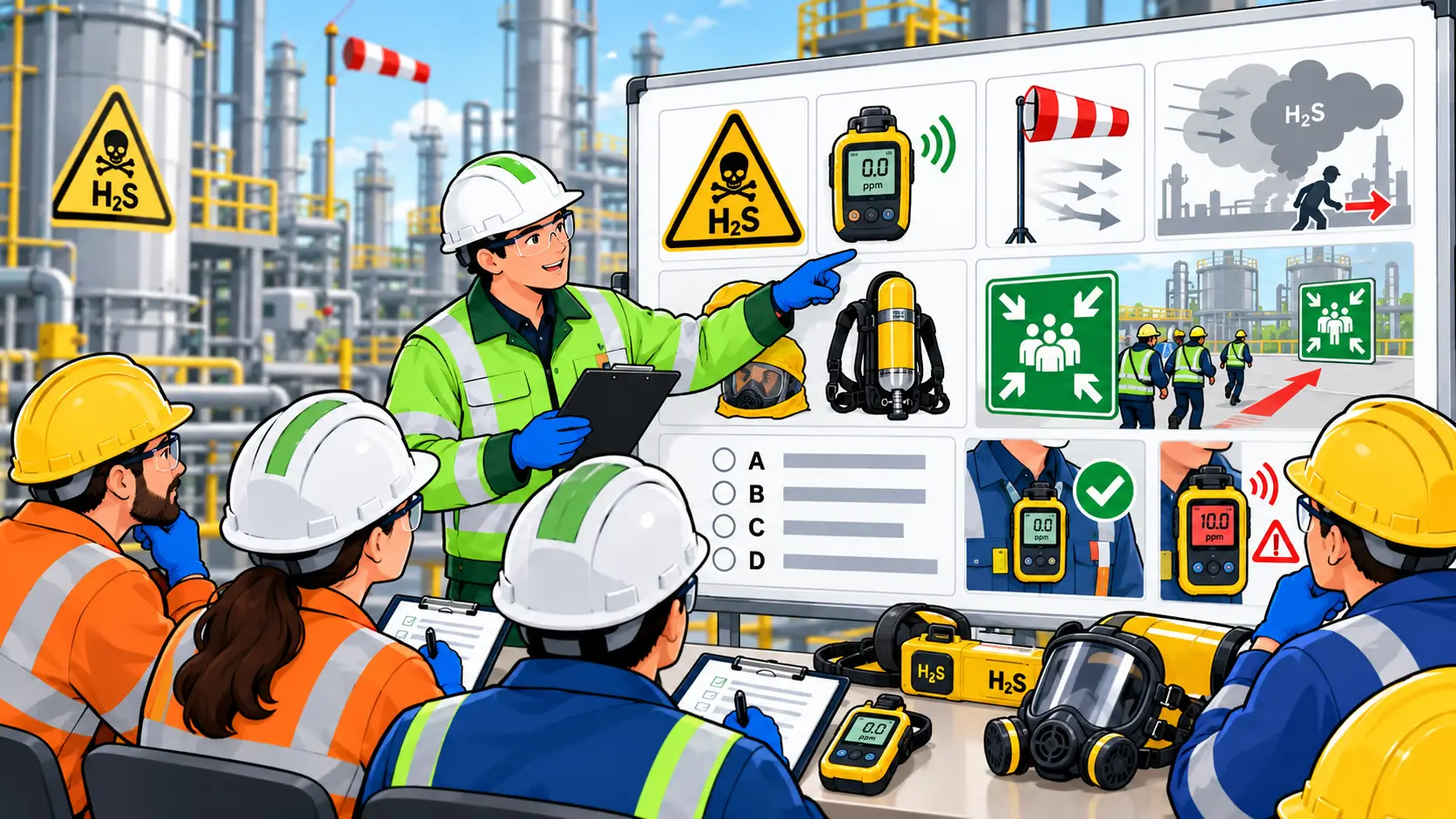
Practise atmospheric gas testing with 25 questions covering oxygen, flammable and toxic gases, detector checks, sampling limitations and safe entry decisions.
How to use the quiz
Answer 25 multiple-choice questions with one correct answer each. The practice pass mark is 70%, requiring at least 18 correct answers. There is no time limit. Answer options are shuffled, explanations are available and retakes are allowed. Review the explanations and official guidance for any missed topics.
Scope and limits
Independent knowledge practice, not a gas-tester qualification, permit or authority to enter a confined space. Numeric oxygen and flammability definitions explicitly refer to US OSHA 1910.146, which applies to general industry and excludes construction, agriculture and shipyard employment. They are not universal entry or hot-work limits. Detector checks follow OSHA's advisory monitor-testing bulletin and the manufacturer's instructions; different sensors have different capabilities. Use site-specific assessment, accepted entry conditions, the complete permit system and planned rescue arrangements. Never improvise an unprotected rescue.
Sources and further reading
Guidance checked on 25 November 2026. Use current official requirements and the instructions and procedures for the actual equipment, substances and task.
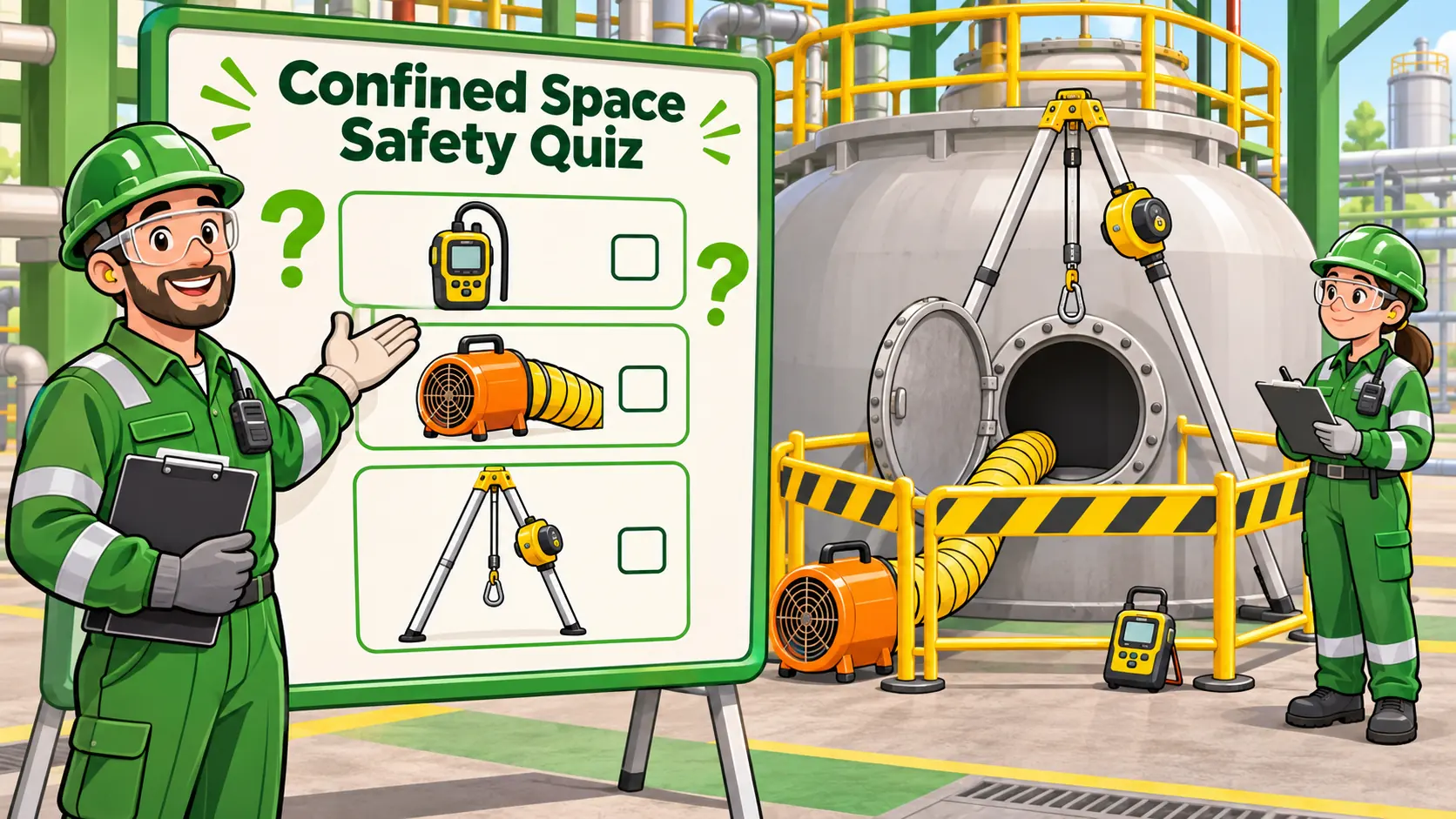
Confined spaces can contain hazards that are difficult to recognize from outside. This quiz focuses on the decisions made before entry, during work, and when conditions change.
Test combustible-dust safety with 25 questions about the explosion pentagon, secondary explosions, hidden deposits, housekeeping and protective systems.