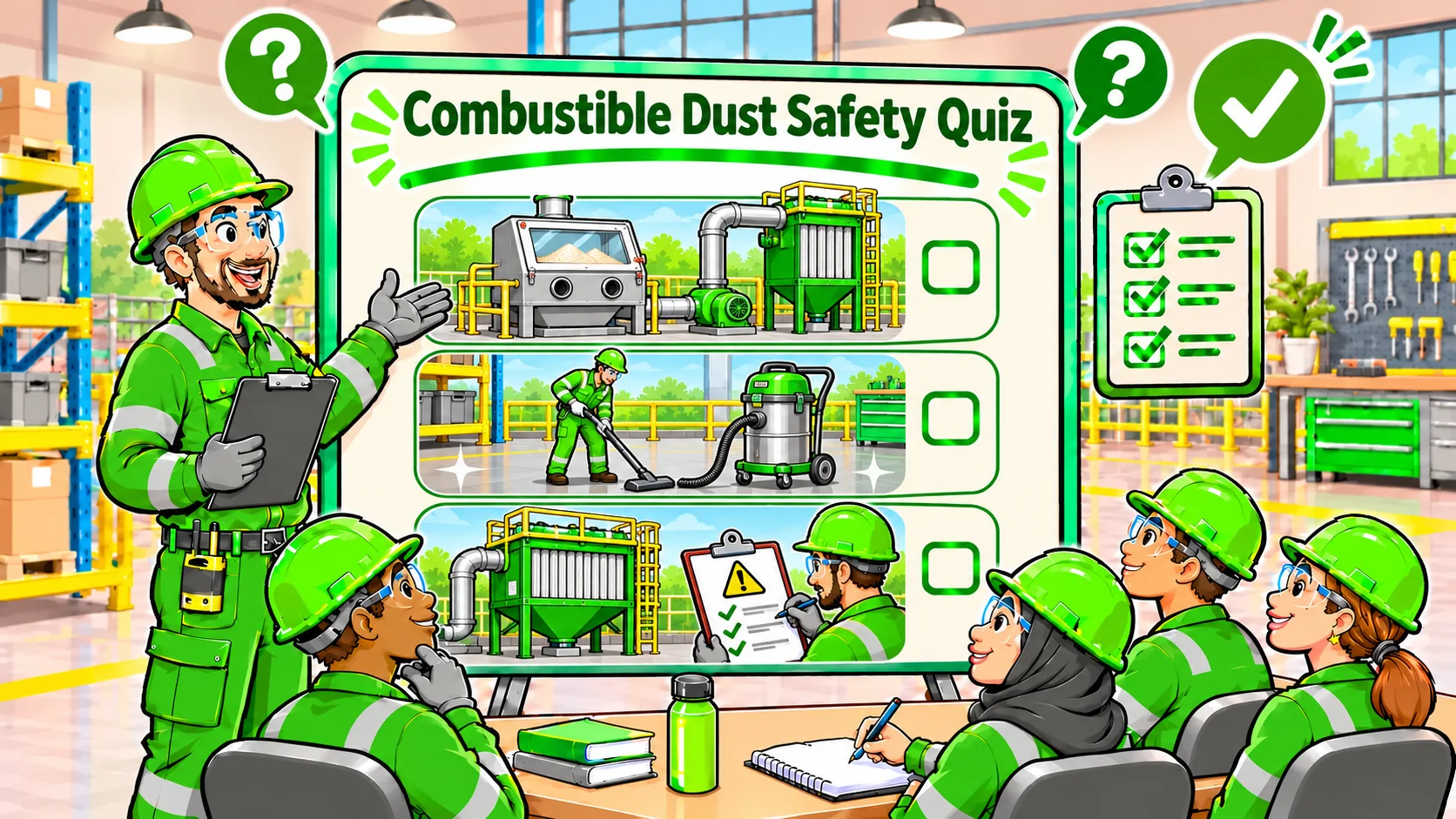
Combustible Dust Safety Quiz: Fire and Explosion Prevention
25 questions
About 13 min
Updated
0 of 25 answered
Score 0
Question 1 of 25
What is combustible dust?
Question 2 of 25
Which familiar material can form combustible dust?
Question 3 of 25
Which two factors are added to the fire triangle in the dust-explosion pentagon?
Question 4 of 25
Why does dispersing combustible dust into air increase concern?
Question 5 of 25
What role can confinement play in a dust explosion?
Question 6 of 25
Can combustible dust still create a fire hazard when the full explosion pentagon is absent?
Question 7 of 25
What is a secondary dust explosion?
Question 8 of 25
Why inspect overhead beams and concealed spaces?
Question 9 of 25
What should a dust-hazard assessment consider?
Question 10 of 25
What is the purpose of suitable dust collection at the process?
Question 11 of 25
Is any domestic vacuum suitable for combustible-dust cleanup?
Question 12 of 25
Why avoid routine compressed-air cleaning of combustible-dust deposits?
Question 13 of 25
What should determine housekeeping methods and frequency?
Question 14 of 25
Does a clean floor prove that dust-explosion risk is controlled?
Question 15 of 25
Which is a possible dust ignition source?
Question 16 of 25
What is the purpose of suitable bonding and grounding?
Question 17 of 25
Why remove foreign material from a process where it could strike equipment?
Question 18 of 25
What should happen if a dust collector leaks into an occupied work area?
Question 19 of 25
Does extracting dust remove the need to assess the collector for explosion hazards?
Question 20 of 25
What is the purpose of engineered explosion isolation?
Question 21 of 25
Where should explosion vents discharge?
Question 22 of 25
Can a single visible dust-layer thickness be treated as universally safe for all materials and layouts?
Question 23 of 25
Should hot work near combustible-dust equipment proceed merely because the visible floor is clean?
Question 24 of 25
What should workers do if a dust-related fire or explosion warning occurs?
Question 25 of 25
Does passing this quiz establish that a dust-handling plant is safe?
About This Quiz
Flour, sugar, wood and other familiar materials can create serious hazards as fine combustible dust. This combustible dust safety quiz examines how dust fires and explosions develop, why secondary explosions can be destructive, and how safe collection, housekeeping, ignition control and engineered protection work together.
What this quiz covers
Test combustible-dust safety with 25 questions about the explosion pentagon, secondary explosions, hidden deposits, housekeeping and protective systems.
How to use the quiz
Answer 25 multiple-choice questions with one correct answer each. The practice pass mark is 70%, requiring at least 18 correct answers. There is no time limit. Answer options are shuffled, explanations are available and retakes are allowed. Review the explanations and official guidance for any missed topics.
Scope and limits
Independent knowledge practice based primarily on US OSHA's combustible-dust hazard guidance, with general awareness principles rather than a plant-design specification. It is not an official examination, dust-hazard analysis or certification of equipment or a workplace. The cited OSHA fact sheet is advisory and does not itself create new legal obligations. Applicable laws and current engineering requirements depend on the material, sector and jurisdiction. Do not assume one dust-layer limit, vacuum type, extinguishing medium or explosion-protection design is suitable for every powder.
Sources and further reading
Guidance checked on 25 November 2026. Use current official requirements and the instructions and procedures for the actual equipment, substances and task.
Check your understanding of a fire warden or marshal's role before, during and after an evacuation. These 25 original questions explore alarms, safe area checks, escape routes, accountability, assistance and communicating with responders.
Welding, cutting, grinding, and related work can ignite materials beyond the immediate work point. This quiz looks at preparation, authorization, monitoring, and safe completion of hot work.