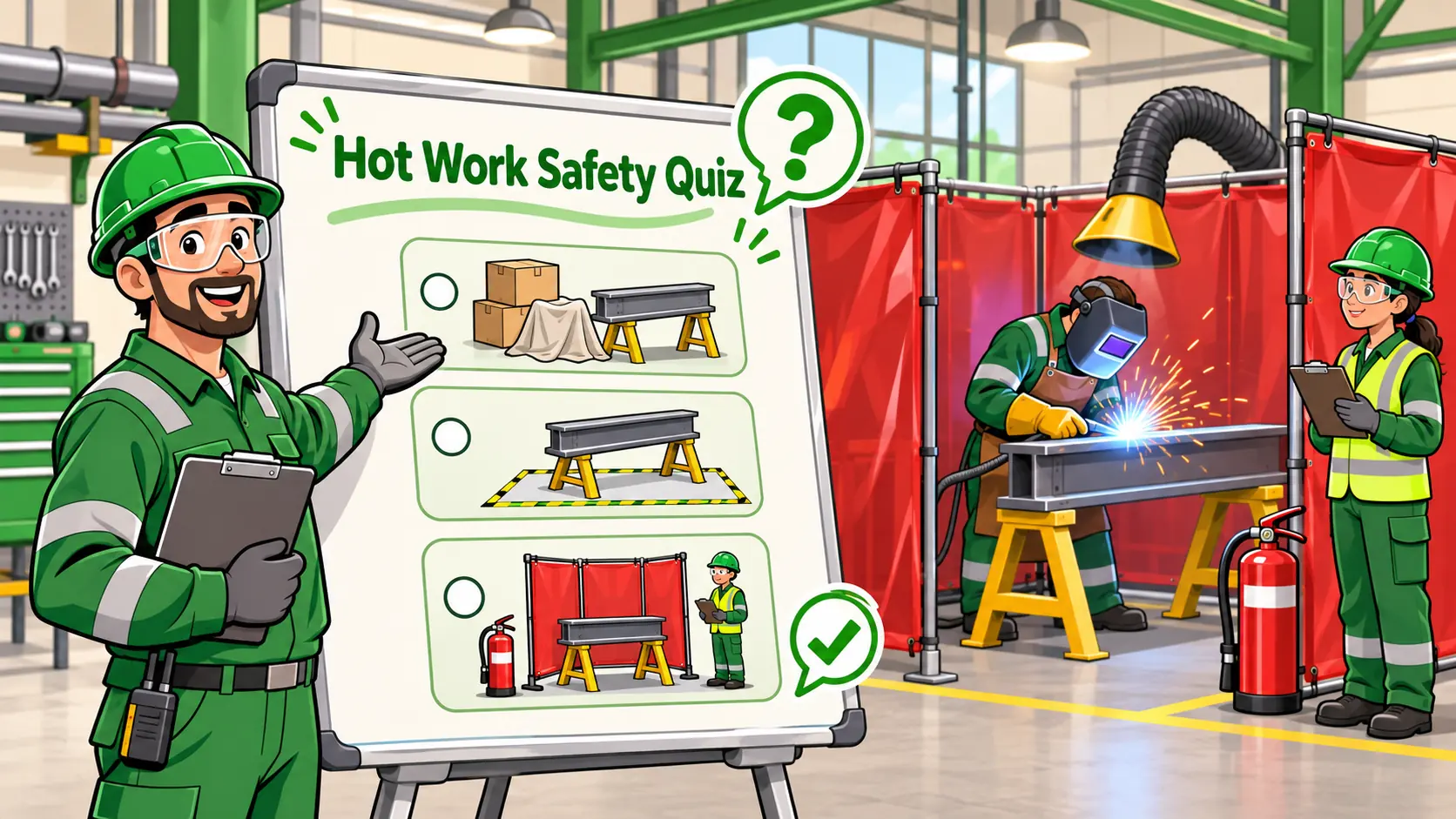
Which activity can be hot work even without an open flame?
Question 2 of 25
What should be considered before choosing hot work in a hazardous location?
Question 3 of 25
What is the main purpose of a hot-work permit?
Question 4 of 25
Before hot work, what should happen to movable combustible materials nearby?
Question 5 of 25
Combustible material cannot be removed and cannot be effectively protected. What should happen?
Question 6 of 25
Why inspect the opposite side of a metal partition before welding on it?
Question 7 of 25
What should be assessed about wall and floor openings near hot work?
Question 8 of 25
What is a core duty of a fire watch?
Question 9 of 25
A fire watch sees a fire beyond the capacity of available equipment. What should they do?
Question 10 of 25
How should a hot-work fire-watch duration be determined?
Question 11 of 25
A hot-work area develops a flammable-vapor alarm. What should the team do?
Question 12 of 25
Why is welding on an uncleaned drum that once held flammable liquid dangerous?
Question 13 of 25
Can a normal hot-work permit alone authorize entry into a permit-required confined space?
Question 14 of 25
Why must oxygen never be used to ventilate a welding space?
Question 15 of 25
What must ventilation for welding account for?
Question 16 of 25
A painted component is to be welded. What needs checking?
Question 17 of 25
Why are welding screens used around arc welding?
Question 18 of 25
How should eye and face protection for welding be selected?
Question 19 of 25
A welding lead has damaged insulation. What should happen?
Question 20 of 25
Why must oxygen equipment be kept free from oil and grease?
Question 21 of 25
What should be done with gas cylinders used for hot work?
Question 22 of 25
A gas hose leaks during setup. What is the correct response?
Question 23 of 25
Hot work is planned in an area where required sprinkler protection is impaired. Under OSHA 1910.252, what should happen?
Question 24 of 25
Why is a general-purpose plastic sheet not automatically suitable as a spark barrier?
Question 25 of 25
After hot work ends, what should closeout include?
About This Quiz
Welding, cutting, grinding, and related work can ignite materials beyond the immediate work point. This quiz looks at preparation, authorization, monitoring, and safe completion of hot work. This practice resource is intended for welders, fire watches, permit teams, supervisors, and safety learners.
Topics covered
The focus is on practical understanding and decisions relevant to everyday work. Use these learning objectives to guide your preparation.
Recognize ignition pathways and combustible-material hazards.
Understand permit checks, ventilation, cylinder precautions, and fire-watch duties.
Identify changes that require work to stop and precautions after work ends.
This quiz contains 25 multiple-choice questions. Select one answer for each question. It has a 70% pass mark, no time limit, and repeat attempts. Review the answer explanations after submitting to understand the reasoning behind each response. Use feedback to identify topics for further study; a knowledge score is only one part of learning and does not establish practical competence.
Standards and scope
The reference framework includes US OSHA welding, cutting, and brazing guidance. Permit procedures and fire-watch duration must be based on applicable rules and the assessed worksite rather than assumed universal values.
References
Consult OSHA welding, cutting, and brazing for the primary reference material. Apply the requirements relevant to the industry, equipment, and country in which the work takes place.
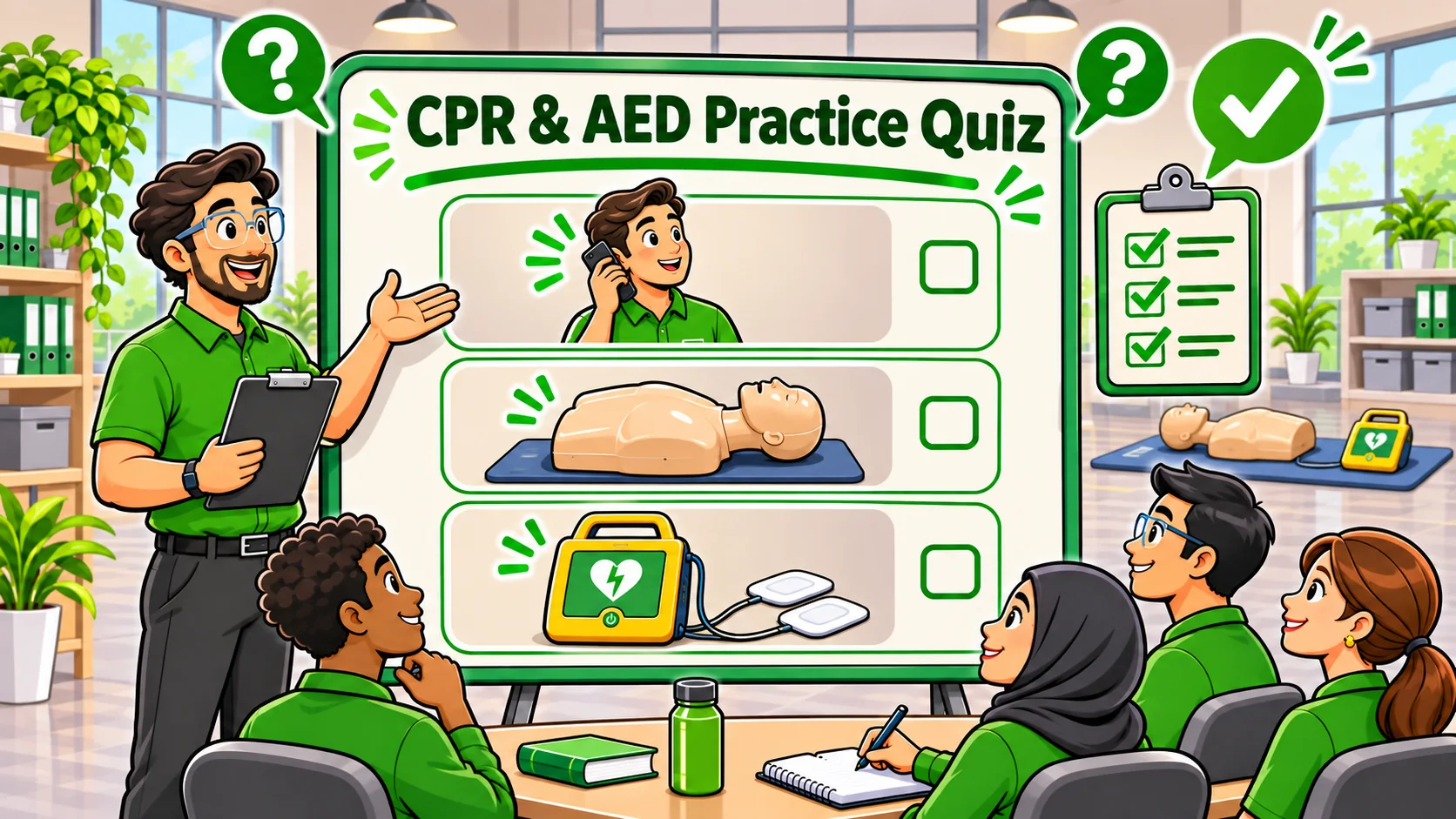
Practise the key decisions in helping an unresponsive adult: calling for help, recognising abnormal breathing, starting CPR and using an automated external defibrillator. These 25 original questions follow Resuscitation Council UK 2025 adult basic life support guidance.
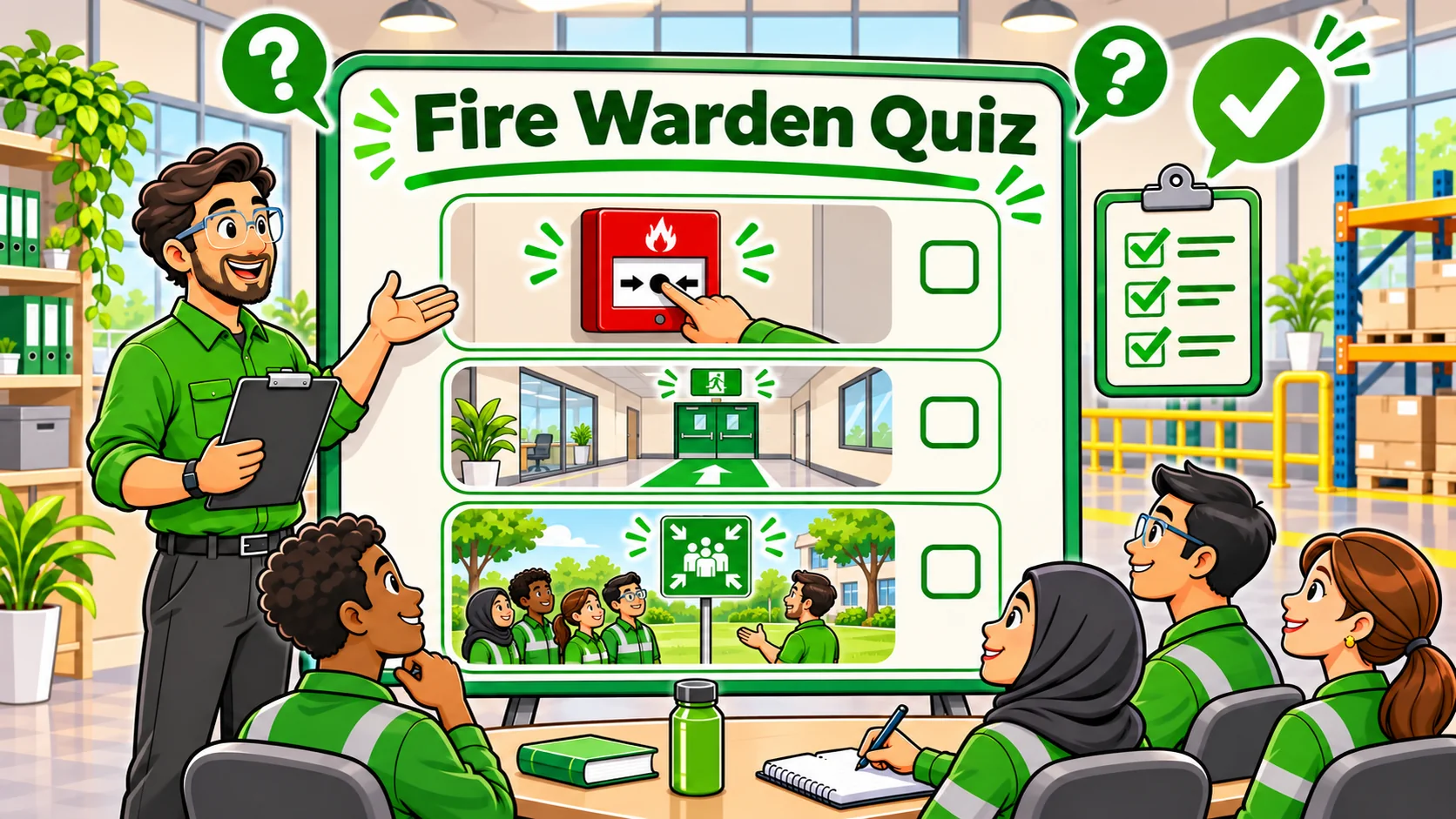
Check your understanding of a fire warden or marshal's role before, during and after an evacuation. These 25 original questions explore alarms, safe area checks, escape routes, accountability, assistance and communicating with responders.
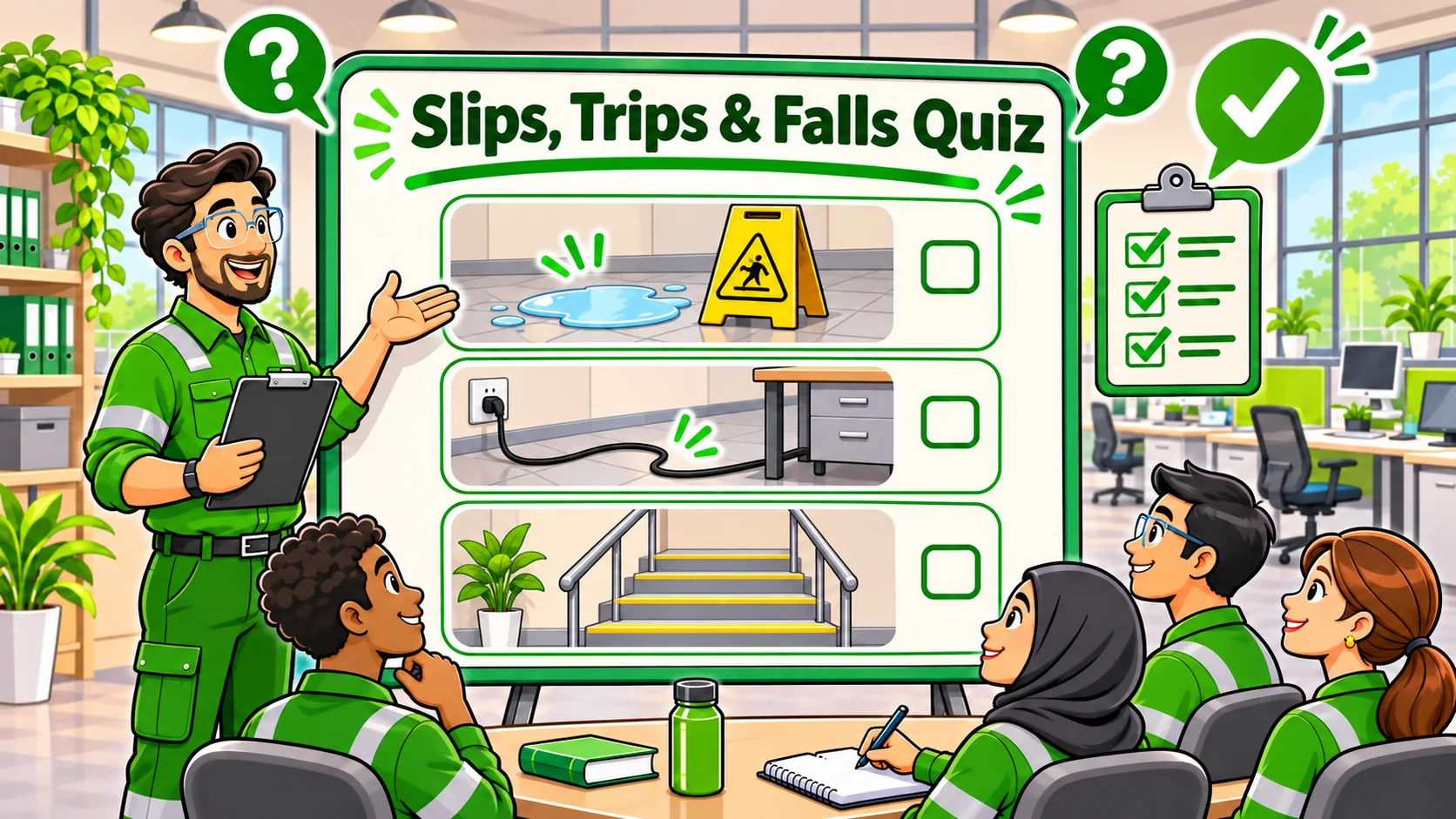
Test how well you recognise and control common workplace slip and trip hazards. These 25 original questions cover contamination, cleaning, housekeeping, flooring, stairs, footwear and reporting.
Review workstation setup and healthy computer-work routines with 25 original multiple-choice questions. Scenarios cover seating, foot support, comfortable reach, screen viewing, glare, laptops, shared desks and work from home. The emphasis is fitting work to the person and varying activity rather than imposing one rigid posture.