Office Ergonomics Quiz: Workstation Setup and Healthy Working
25 questions
About 13 min
Updated
0 of 25 answered
Score 0
Question 1 of 25
What is the main aim of office ergonomics?
Question 2 of 25
What should a workstation assessment examine?
Question 3 of 25
How should a chair be adjusted?
Question 4 of 25
What is appropriate if feet do not reach the floor after setting a suitable working height?
Question 5 of 25
What should the backrest support?
Question 6 of 25
Why is clearance under the desk important?
Question 7 of 25
Where should a frequently used keyboard normally be placed?
Question 8 of 25
What is a useful wrist position for typing?
Question 9 of 25
Where should the mouse normally be positioned?
Question 10 of 25
How should a mouse be used?
Question 11 of 25
Where should the main monitor be located?
Question 12 of 25
A worker leans forward to read small text. What should be considered?
Question 13 of 25
Why might a person using bifocal or progressive lenses need a different screen height?
Question 14 of 25
What is an appropriate response to screen glare?
Question 15 of 25
How should regularly referenced paper documents be arranged?
Question 16 of 25
What can improve prolonged laptop work?
Question 17 of 25
A worker changes to a hot desk. What should happen?
Question 18 of 25
Do home workstations need consideration?
Question 19 of 25
Which routine is generally preferable for prolonged computer work?
Question 20 of 25
Does Great Britain's DSE guidance prescribe one legally fixed break duration for every user?
Question 21 of 25
Does a standing desk mean standing all day is best?
Question 22 of 25
What should be done about persistent or recurring workstation discomfort?
Question 23 of 25
Why should a workstation assessment be reviewed after equipment or task changes?
Question 24 of 25
What is the role of ergonomics training?
Question 25 of 25
What does passing this quiz establish?
About This Quiz
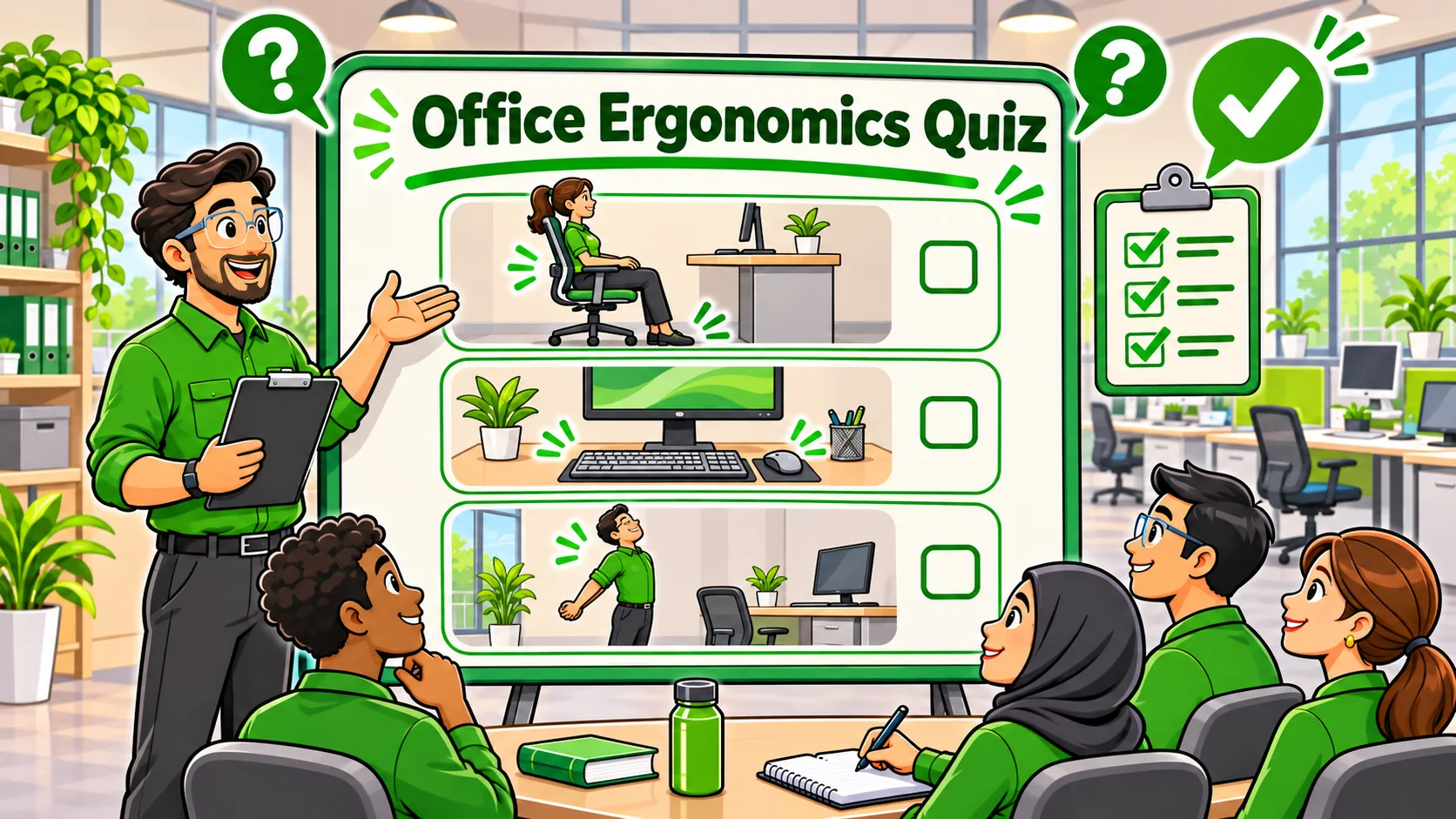
Review workstation setup and healthy computer-work routines with 25 original multiple-choice questions. Scenarios cover seating, foot support, comfortable reach, screen viewing, glare, laptops, shared desks and work from home. The emphasis is fitting work to the person and varying activity rather than imposing one rigid posture.
Scope and independent practice
Independent educational practice from HSEBlog, not medical advice, a clinical assessment or a certificate that a workstation is suitable. Questions about Great Britain's DSE duties refer to HSE guidance and should not be treated as universal legal rules. OSHA workstation material is ergonomic guidance, not a specific US computer-workstation standard. Individual needs, visual requirements, tasks and persistent symptoms may require suitable workplace or health-professional advice.
Study before you start
Look at the whole arrangement rather than adjusting a chair or screen in isolation. Check whether the user can read comfortably, reach input devices with relaxed shoulders, support the feet and change posture. Consider whether task organisation allows movement and recovery from repetitive work. A standing desk or expensive chair does not automatically solve an unsuitable setup; assess the person and task and review changes in practice.
Practice format
Answer 25 original multiple-choice questions, selecting one answer per question. The learning pass mark is 70%, with no time limit. Answers are shuffled, explanations are shown after submission and retakes are allowed. Use the feedback to identify topics to review before another attempt. A knowledge score does not establish practical competence.
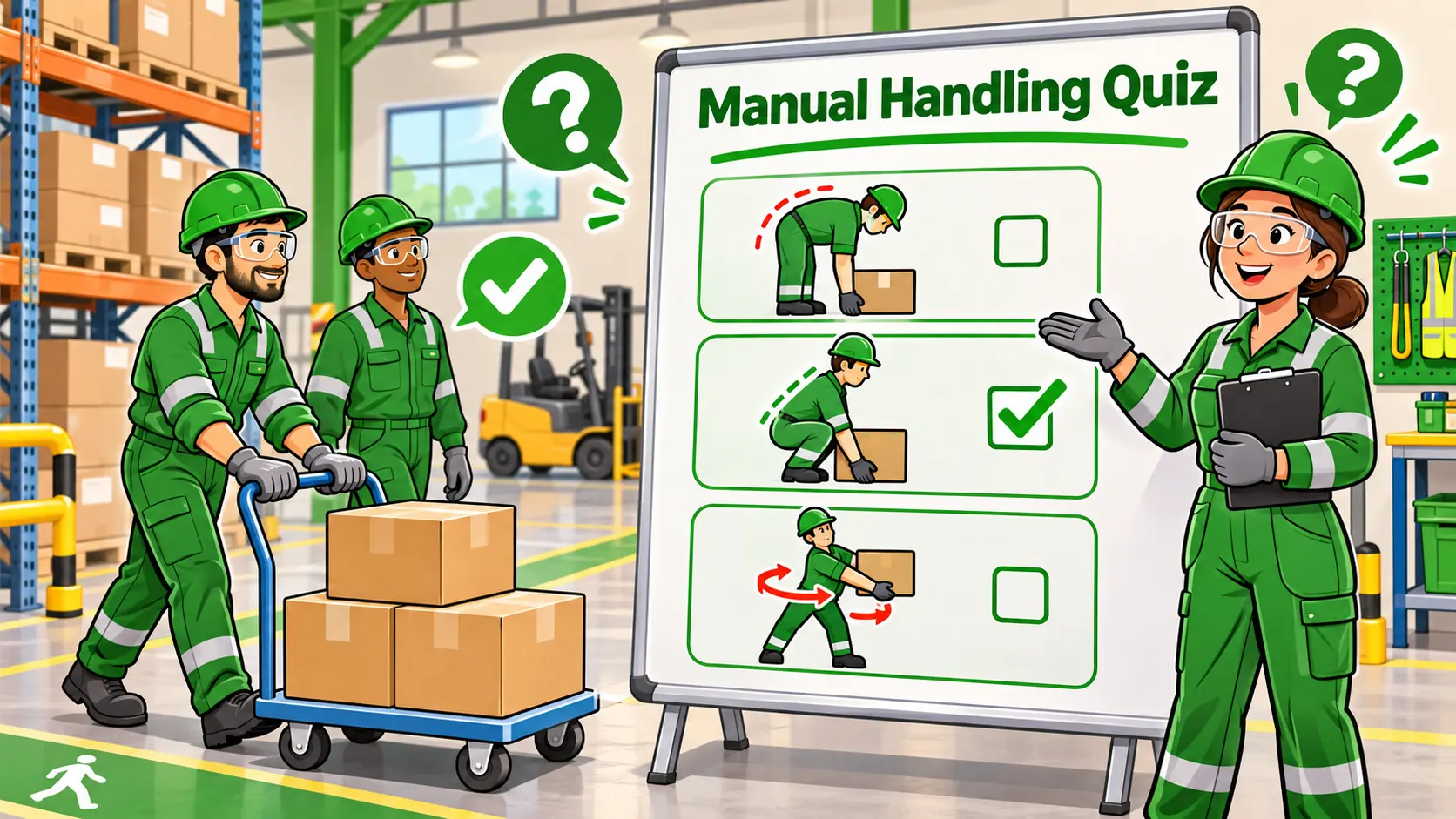
Manual handling includes lifting, lowering, carrying, pushing, and pulling. This quiz examines how to assess a task and reduce physical demands before relying on lifting technique.
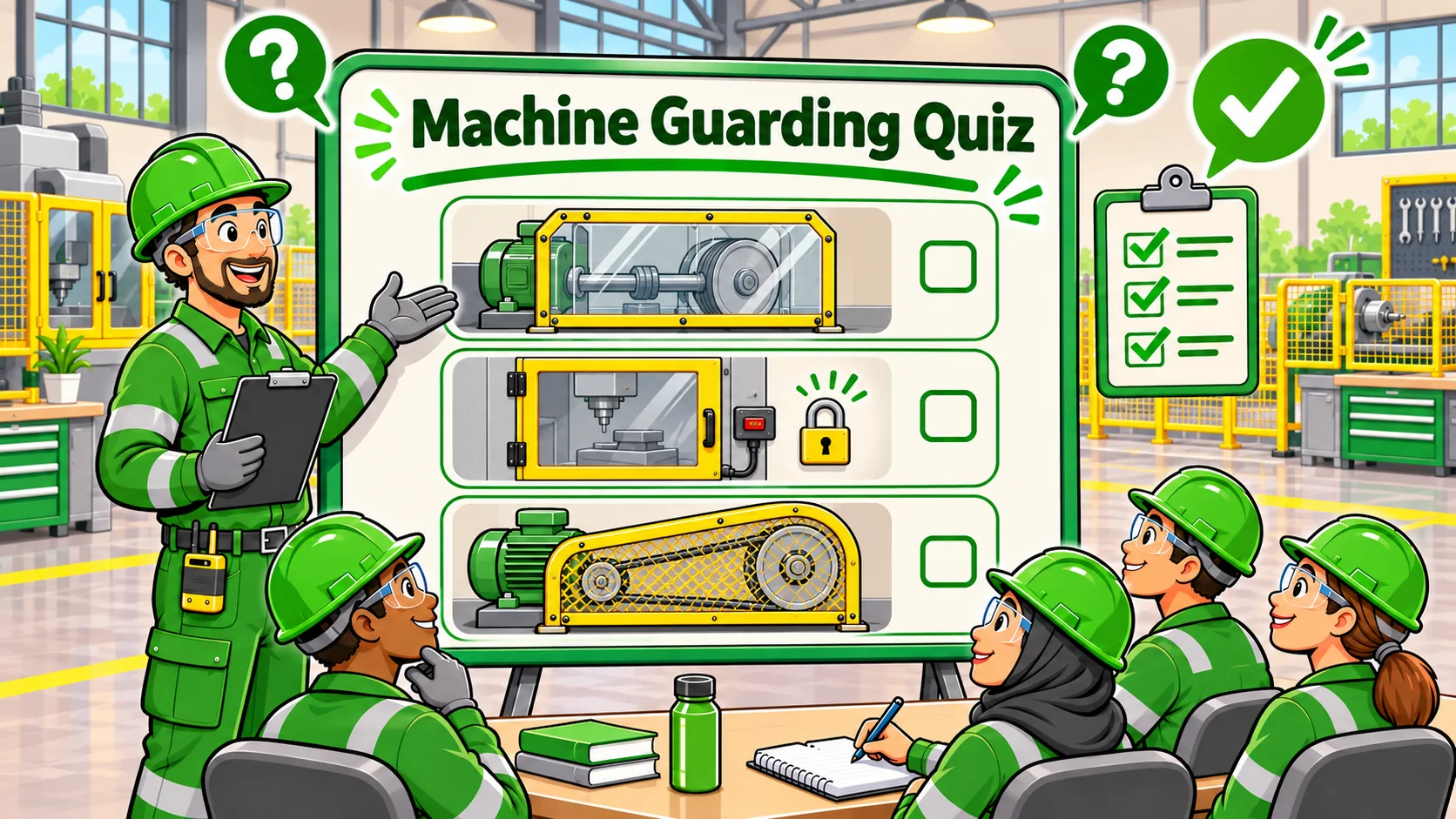
Check your understanding of machinery hazards and safeguards with 25 original questions on points of operation, rotating parts, trapping points, fixed guards, interlocks and protective devices. Scenarios also examine defect reporting, safe servicing and the controlled restoration of guards after maintenance.
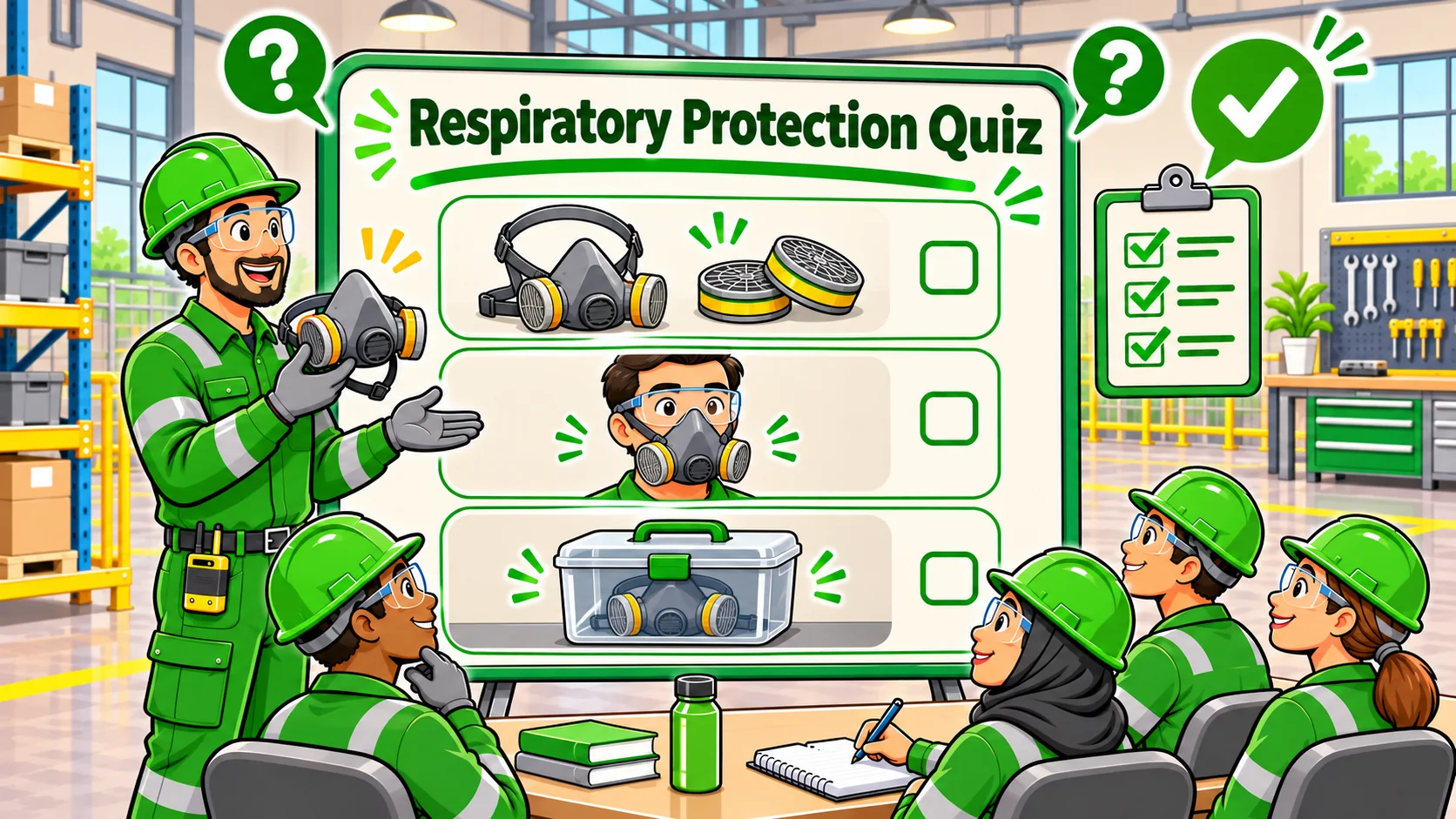
Review practical respiratory protection decisions with 25 original multiple-choice questions covering hazard assessment, filter limitations, facepiece fit, safe use, inspection and care. The scenarios help workers and supervisors recognise when a familiar mask is unsuitable and when a changed task requires a fresh assessment.
Test practical ladder awareness with 25 original questions on deciding whether a ladder suits a task, checking its condition, setting it up securely and using it without losing support. Scenarios include leaning ladders, stepladders and telescopic designs, with explanations for the choices that prevent common falls.