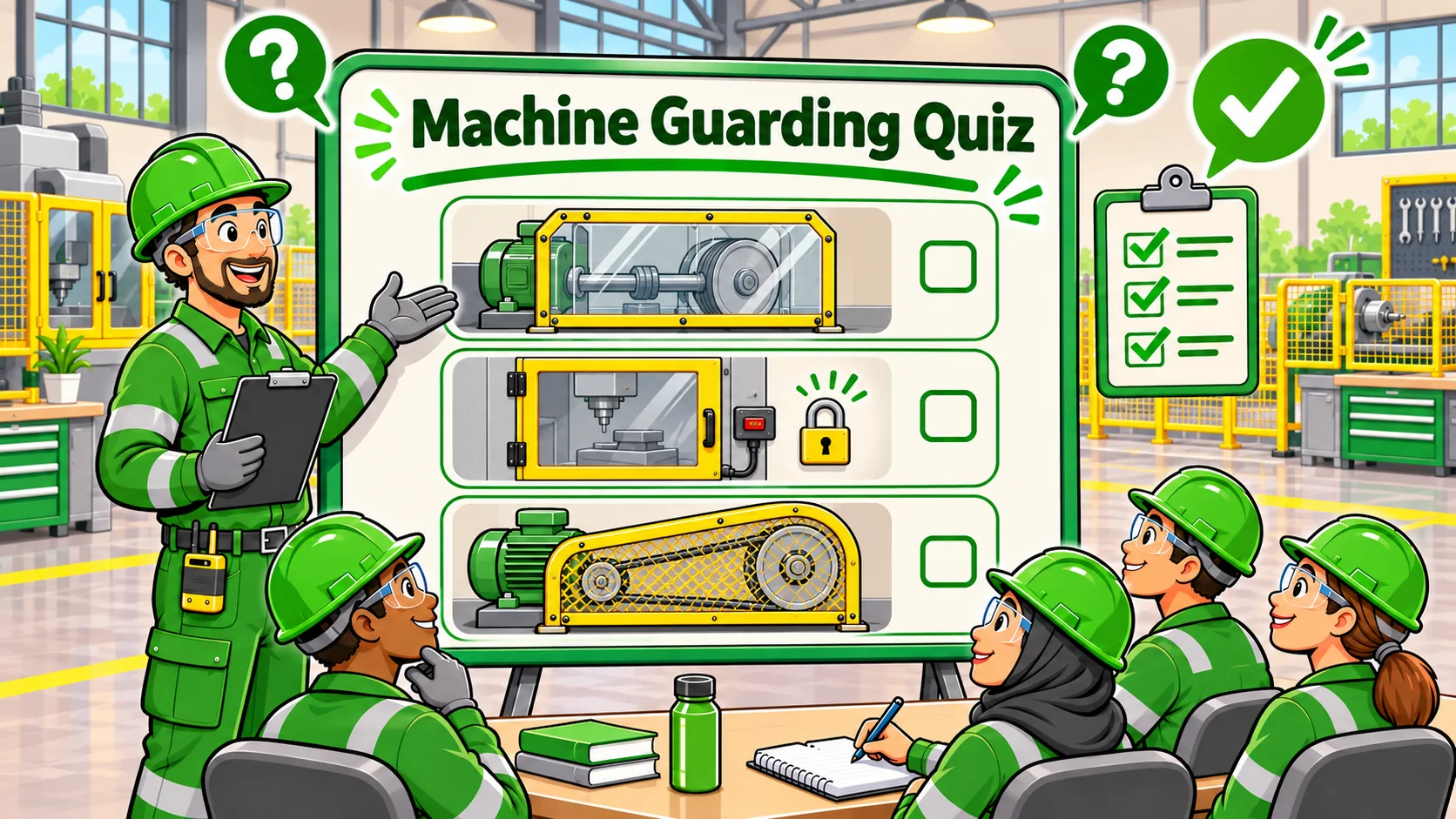
A rotating shaft is exposed. Which hazard needs control?
Question 5 of 25
What characterises a fixed guard?
Question 6 of 25
What should an interlocked guard normally achieve?
Question 7 of 25
Why can guard locking be necessary on some machines?
Question 8 of 25
Does an interlock automatically provide safe isolation for maintenance?
Question 9 of 25
A worker has defeated an interlock to reduce delays. What is appropriate?
Question 10 of 25
What should happen when a guard is missing or damaged?
Question 11 of 25
Can a guard introduce a new hazard?
Question 12 of 25
Why do guard openings and distance from the hazard matter?
Question 13 of 25
Who should select or modify a machine safeguard?
Question 14 of 25
A machine ejects chips towards nearby workers. What should be considered?
Question 15 of 25
Do special hand tools for feeding or removing material replace required guards?
Question 16 of 25
What should a worker do before clearing a jam inside a danger zone?
Question 17 of 25
Why must stored energy be considered during servicing?
Question 18 of 25
What is the role of an emergency-stop device?
Question 19 of 25
Why must light curtains or presence-sensing devices be properly assessed?
Question 20 of 25
What can happen if a machine restarts unexpectedly when a guard closes?
Question 21 of 25
Why should all shifts report recurring guard faults?
Question 22 of 25
After a guard is removed for authorised maintenance, what is needed before normal production resumes?
Question 23 of 25
What should operator instruction cover?
Question 24 of 25
Does an experienced operator still need suitable guarding?
Question 25 of 25
What does passing this independent quiz authorise?
About This Quiz
Check your understanding of machinery hazards and safeguards with 25 original questions on points of operation, rotating parts, trapping points, fixed guards, interlocks and protective devices. Scenarios also examine defect reporting, safe servicing and the controlled restoration of guards after maintenance.
Scope and independent practice
Independent safety-awareness practice, not an engineering assessment, machinery certification or authorisation to operate or modify equipment. The quiz uses US OSHA general-industry requirements where expressly identified and Great Britain HSE machinery guidance for wider learning. Applicable machinery-specific standards and local duties must be checked. Guard design, safety-control performance and energy isolation require competent assessment for the actual equipment; an interlock or emergency stop is not automatically a maintenance isolation system.
Study before you start
Identify how a person could reach the danger zone and whether the machine could still move when access occurs. Consider both operators and others nearby, including maintenance workers. Understand how fixed barriers, interlocks, guard locking and presence-sensing devices differ, and why defeating any safeguard can undermine the design. Review the safe method for jams and servicing rather than relying on a normal stop command.
Practice format
Answer 25 original multiple-choice questions, selecting one answer per question. The learning pass mark is 70%, with no time limit. Answers are shuffled, explanations are shown after submission and retakes are allowed. Use the feedback to identify topics to review before another attempt. A knowledge score does not establish practical competence.
Related learning
Continue with our lockout tagout quiz. Compare the examples with the procedures and controls used in your workplace.
Primary references
Reference information checked on 9 November 2026. Consult current applicable law, equipment instructions and task-specific procedures.
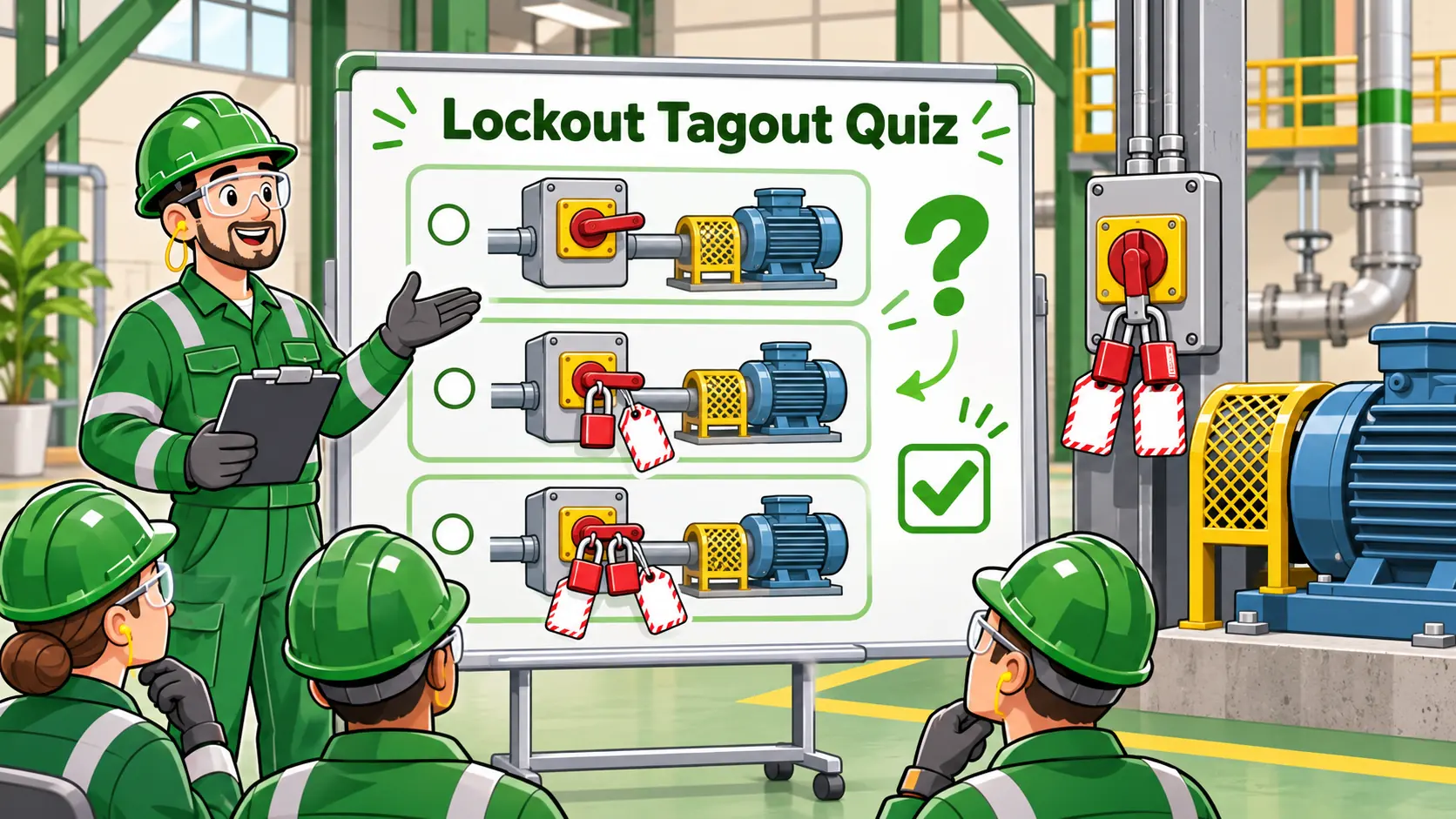
Unexpected startup and released stored energy can injure people during maintenance. This quiz focuses on recognizing all relevant energy sources and following a verified energy-control procedure.
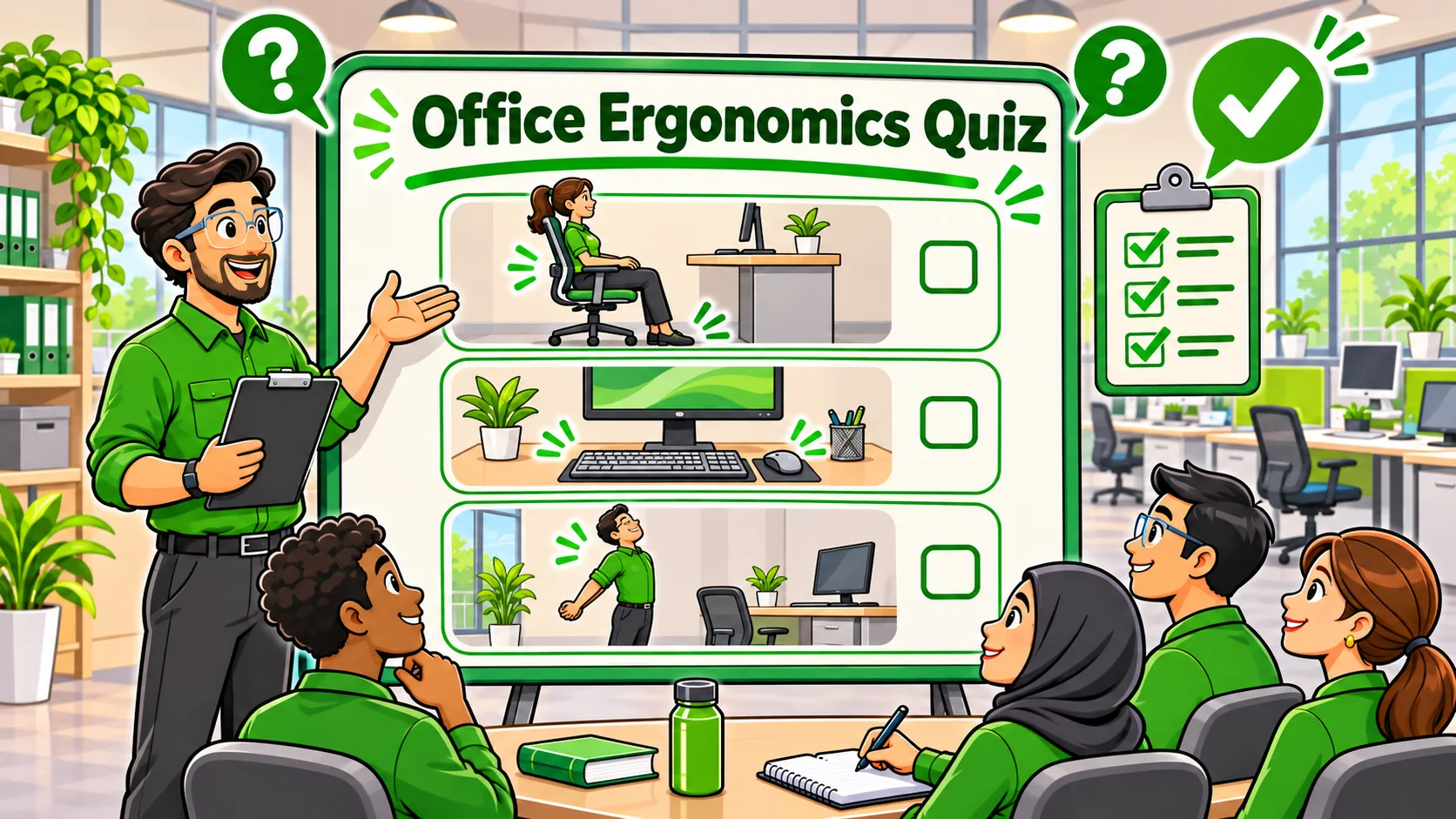
Review workstation setup and healthy computer-work routines with 25 original multiple-choice questions. Scenarios cover seating, foot support, comfortable reach, screen viewing, glare, laptops, shared desks and work from home. The emphasis is fitting work to the person and varying activity rather than imposing one rigid posture.
Review practical respiratory protection decisions with 25 original multiple-choice questions covering hazard assessment, filter limitations, facepiece fit, safe use, inspection and care. The scenarios help workers and supervisors recognise when a familiar mask is unsuitable and when a changed task requires a fresh assessment.