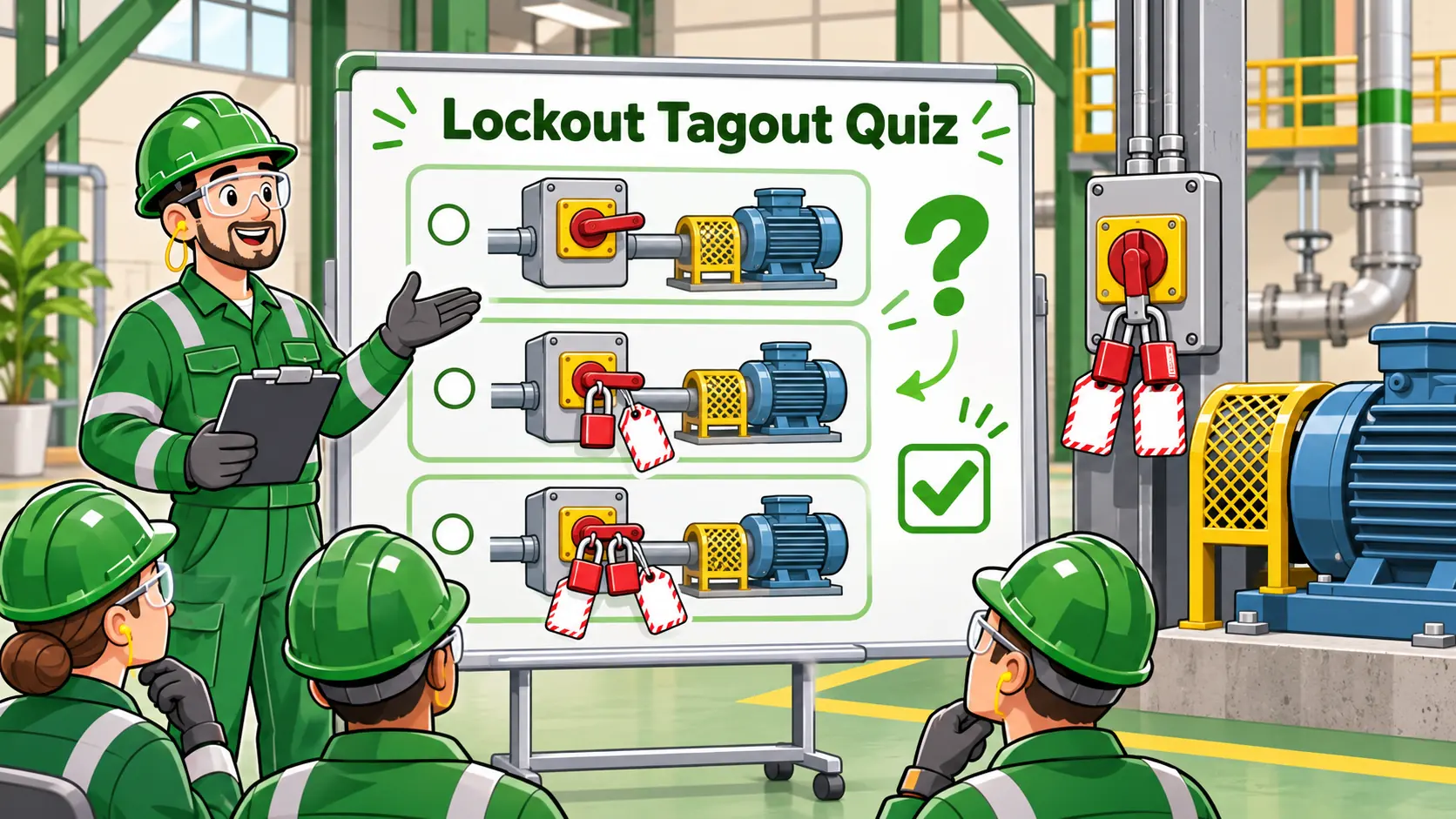
What hazard does lockout/tagout primarily address during servicing?
Question 2 of 25
Which is an energy-isolating device under OSHA 1910.147?
Question 3 of 25
A machine has stopped after its emergency stop was pressed. Is it necessarily safe for maintenance?
Question 4 of 25
Who is an authorized employee in OSHA's LOTO terminology?
Question 5 of 25
Who is an affected employee in OSHA's LOTO terminology?
Question 6 of 25
What should happen before shutdown for planned energy isolation?
Question 7 of 25
What is a required step before starting isolated maintenance work?
Question 8 of 25
A hydraulic accumulator remains pressurized after the power is disconnected. What is needed?
Question 9 of 25
A raised machine part could fall under gravity during maintenance. What control is appropriate?
Question 10 of 25
What does a tagout device provide by itself?
Question 11 of 25
Under OSHA, if an isolating device can be locked out, what is generally required?
Question 12 of 25
Who normally removes an employee's personal lockout device?
Question 13 of 25
An employee has left the site with their lock still applied. What should happen?
Question 14 of 25
How should protection be maintained during a shift change?
Question 15 of 25
What is essential in a group lockout arrangement?
Question 16 of 25
Outside contractors will service a machine at a host site. What is required?
Question 17 of 25
What must be considered when pressure can build up again after initial relief?
Question 18 of 25
Before restoring energy after servicing, what should be checked?
Question 19 of 25
When should affected employees be notified before restart after LOTO?
Question 20 of 25
Testing requires temporary re-energization of serviced equipment. What is the correct approach?
Question 21 of 25
What does OSHA require for periodic inspection of an energy-control procedure?
Question 22 of 25
Which change can require LOTO retraining?
Question 23 of 25
A machine has both electric power and a compressed-air supply. What must the isolation plan consider?
Question 24 of 25
What should a worker do if the actual isolation points do not match the procedure?
Question 25 of 25
For an ordinary cord-and-plug tool under OSHA's specific exception, what condition is essential when unplugging controls the hazard?
About This Quiz
Unexpected startup and released stored energy can injure people during maintenance. This quiz focuses on recognizing all relevant energy sources and following a verified energy-control procedure. This practice resource is intended for maintenance personnel, authorized and affected employees, and supervisors.
Topics covered
The focus is on practical understanding and decisions relevant to everyday work. Use these learning objectives to guide your preparation.
Distinguish shutdown, isolation, lockout, tagout, and verification.
Recognize stored electrical, mechanical, hydraulic, and pneumatic energy.
Understand group work, shift handover, and controlled return to service.
This quiz contains 25 multiple-choice questions. Select one answer for each question. It has a 70% pass mark, no time limit, and repeat attempts. Review the answer explanations after submitting to understand the reasoning behind each response. Use feedback to identify topics for further study; a knowledge score is only one part of learning and does not establish practical competence.
Standards and scope
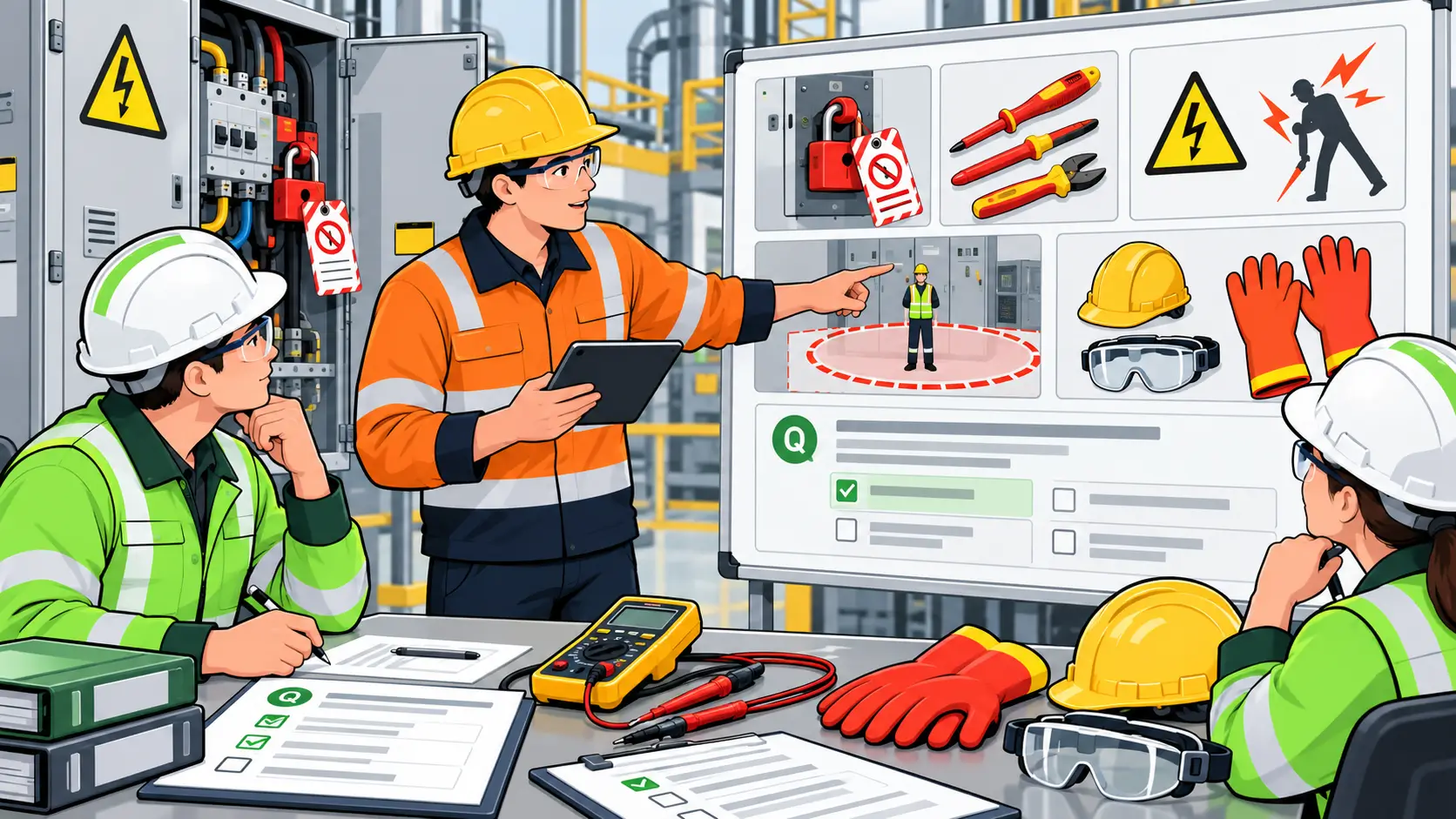
The reference framework is US OSHA control of hazardous energy. Electrical safe-isolation duties, exceptions, and site procedures require their own assessment; a tag is a warning device rather than physical restraint.
References
Consult OSHA control of hazardous energy for the primary reference material. Apply the requirements relevant to the industry, equipment, and country in which the work takes place.
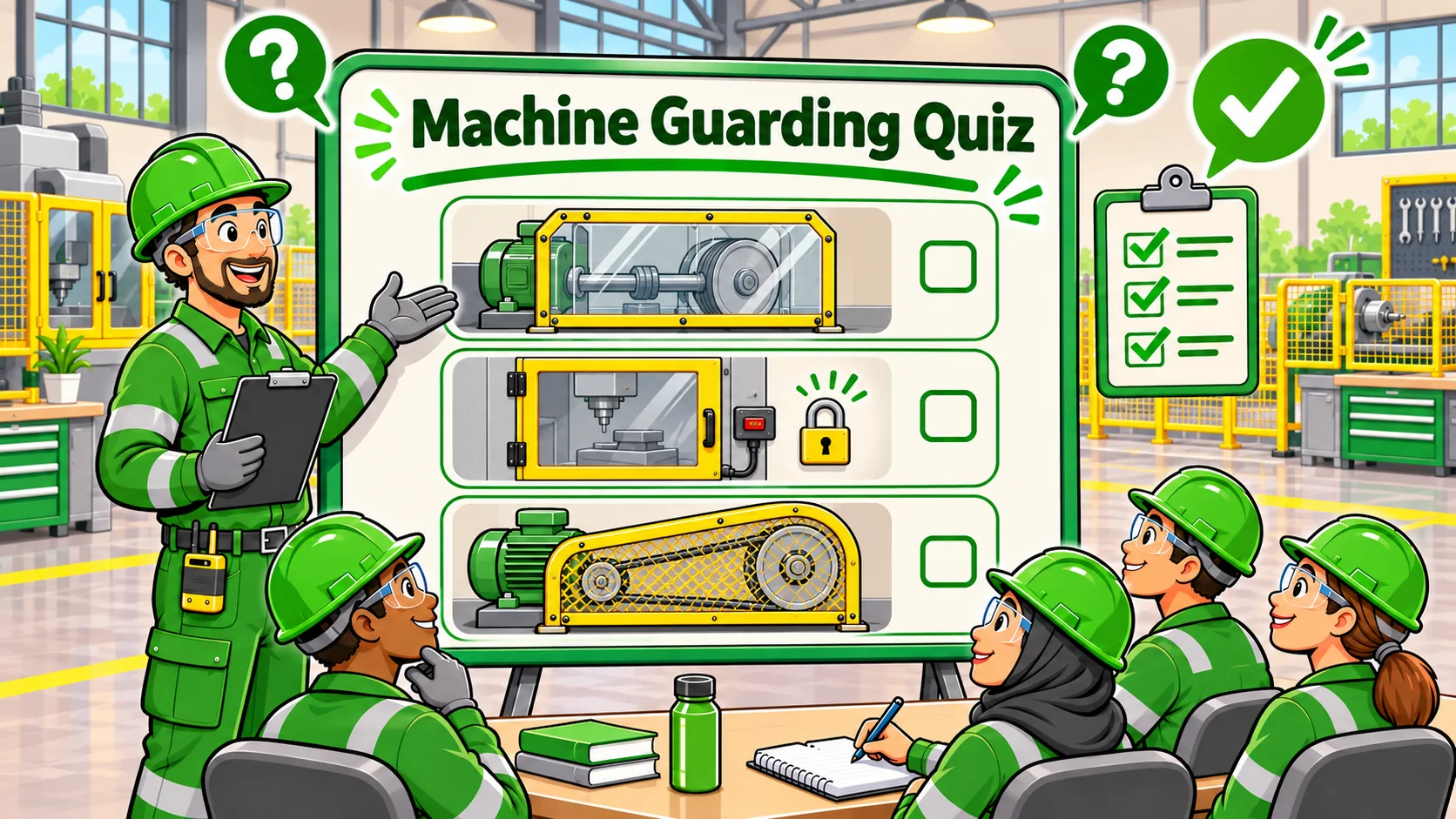
Check your understanding of machinery hazards and safeguards with 25 original questions on points of operation, rotating parts, trapping points, fixed guards, interlocks and protective devices. Scenarios also examine defect reporting, safe servicing and the controlled restoration of guards after maintenance.
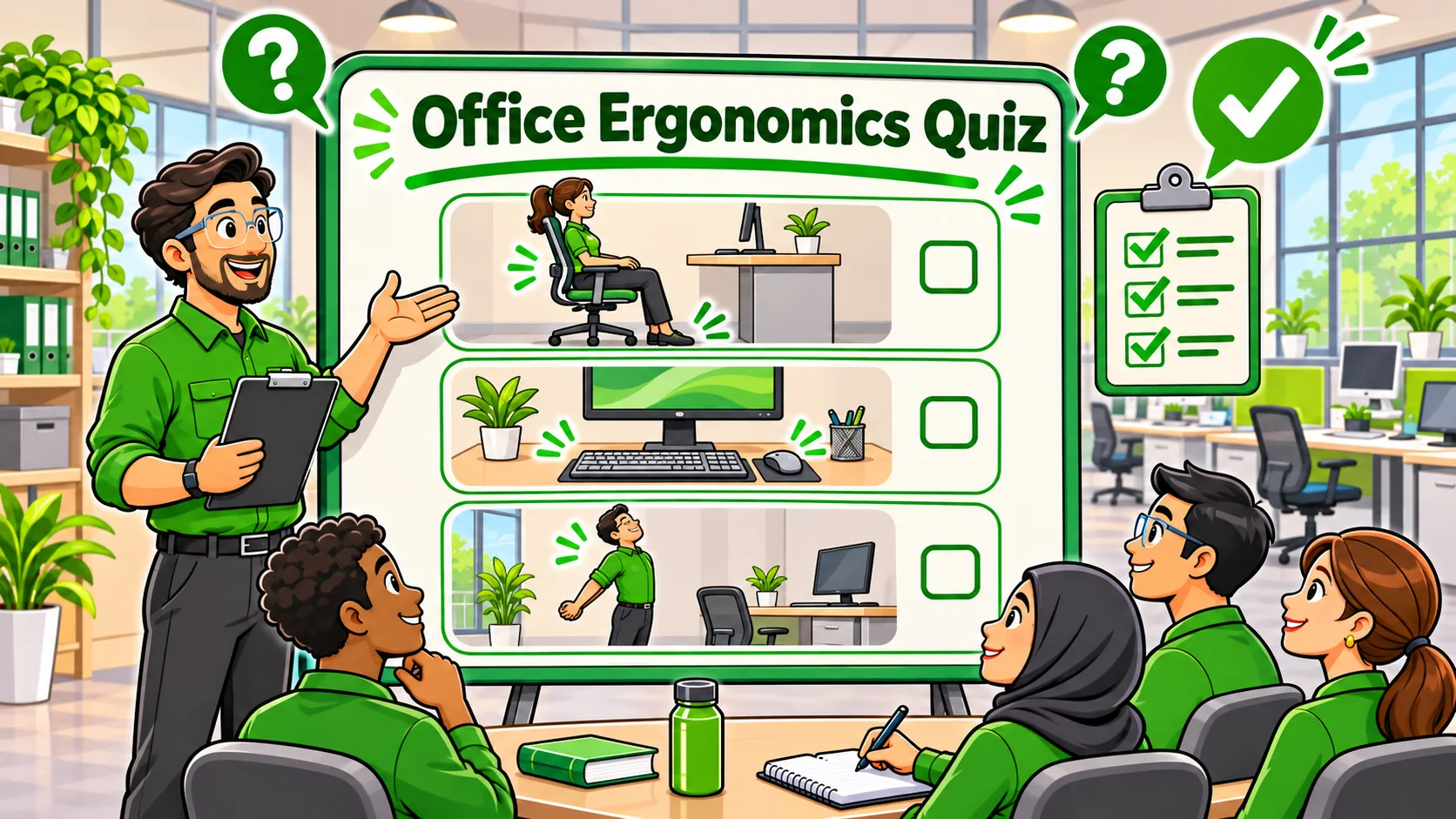
Review workstation setup and healthy computer-work routines with 25 original multiple-choice questions. Scenarios cover seating, foot support, comfortable reach, screen viewing, glare, laptops, shared desks and work from home. The emphasis is fitting work to the person and varying activity rather than imposing one rigid posture.
Review practical respiratory protection decisions with 25 original multiple-choice questions covering hazard assessment, filter limitations, facepiece fit, safe use, inspection and care. The scenarios help workers and supervisors recognise when a familiar mask is unsuitable and when a changed task requires a fresh assessment.