Oxygen and Acetylene Safety Quiz: Gas Cutting and Flashback Prevention
25 questions
About 13 min
Updated
0 of 25 answered
Score 0
Question 1 of 25
What is oxygen's main role in an oxy-acetylene flame?
Question 2 of 25
Why must oxygen never be used to blow dust from clothing?
Question 3 of 25
May oxygen be released into a confined space to improve its air quality?
Question 4 of 25
Oil is found on an oxygen regulator. What should happen?
Question 5 of 25
What must an oxygen regulator be suitable for?
Question 6 of 25
What is a backfire?
Question 7 of 25
What can contribute to a backfire?
Question 8 of 25
What makes a flashback especially dangerous?
Question 9 of 25
What can create a flashback mixture inside a hose?
Question 10 of 25
Do non-return valves by themselves stop an established flashback?
Question 11 of 25
Where does HSE INDG297 recommend flashback arresters for a typical portable oxy-fuel setup?
Question 12 of 25
What additional arrangement does INDG297 describe for long hose lengths?
Question 13 of 25
Does fitting flashback arresters replace training and safe operating practices?
Question 14 of 25
Which lighting method does HSE identify for oxy-fuel torches?
Question 15 of 25
What should determine gas pressures and nozzle selection?
Question 16 of 25
A hose is cracked and has been scorched. What should happen?
Question 17 of 25
How should hoses be routed?
Question 18 of 25
Why check hidden spaces around hot work?
Question 19 of 25
An apparently empty drum once held flammable liquid. May it be cut without specialist precautions?
Question 20 of 25
What is the purpose of a hot-work permit system where used?
Question 21 of 25
Can cutting fume be ignored because the work uses a gas flame rather than an electric arc?
Question 22 of 25
An acetylene cylinder becomes hot or vibrates after a flashback. What should an ordinary worker do?
Question 23 of 25
Can an acetylene cylinder remain dangerous after the external fire has gone out?
Question 24 of 25
What should happen after a flashback before equipment returns to service?
Question 25 of 25
Should a user copy another torch's shutdown sequence without checking their own instructions?
About This Quiz
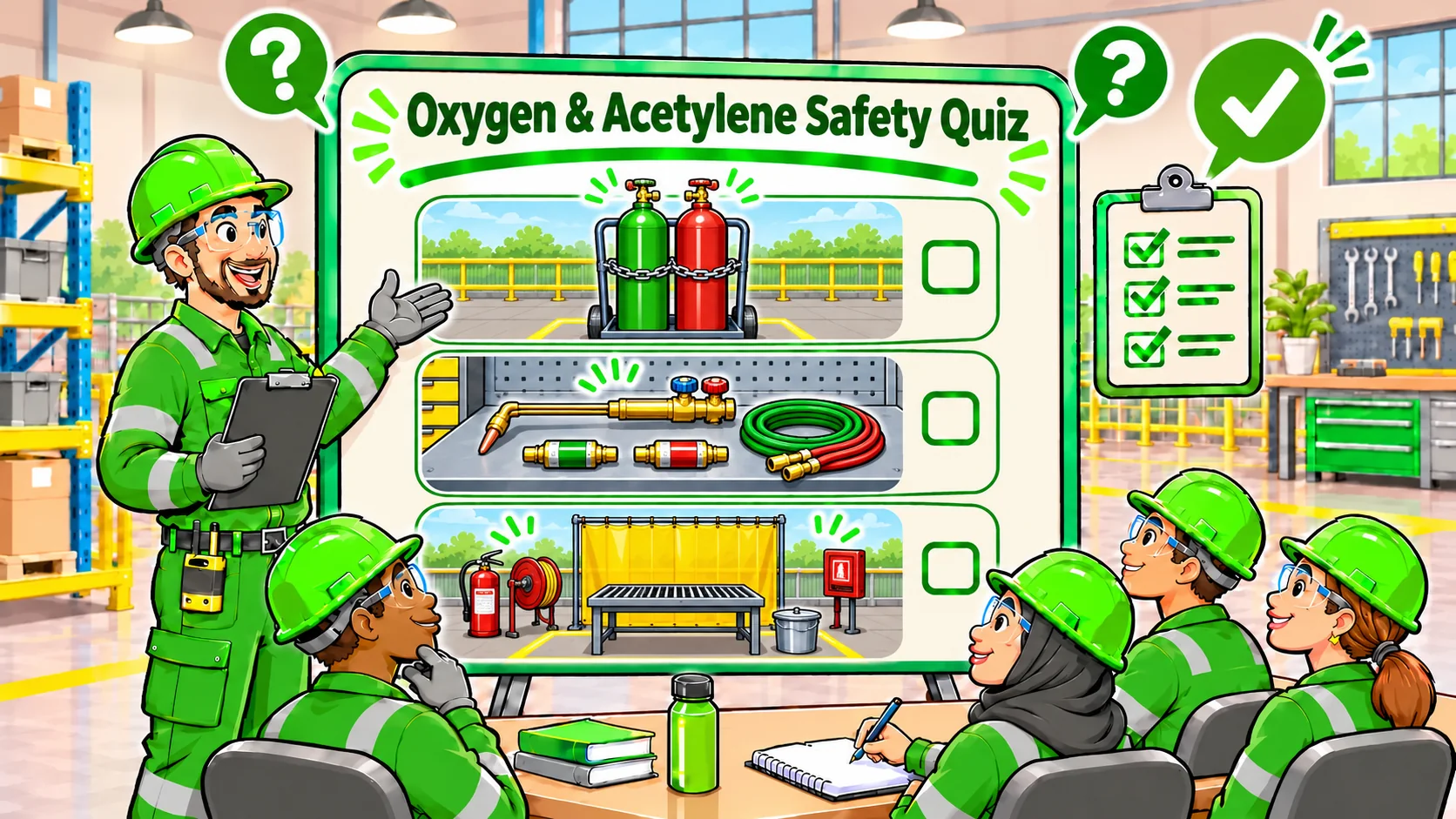
Oxy-acetylene equipment combines a highly flammable fuel with oxygen that can make fires burn much more fiercely. This oxygen and acetylene safety quiz checks your understanding of backfires, flashbacks, protective devices, hose condition and the precautions needed around gas cutting.
What this quiz covers
Test oxy-acetylene safety knowledge with 25 questions on oxygen hazards, backfires, flashback protection, hoses, hot work and acetylene emergencies.
How to use the quiz
Answer 25 multiple-choice questions with one correct answer each. The practice pass mark is 70%, so at least 18 correct answers are needed. There is no time limit. Answer options are shuffled, explanations are available and retakes are allowed. Read each explanation and review the source guidance for any missed topic.
Scope and limits
Independent awareness practice based on Great Britain HSE guidance, not an official HSE examination, trade qualification or operating manual. The questions do not provide a complete lighting, purging, pressure-setting, shutdown or emergency sequence. Those steps must come from training and the instructions for the actual equipment. An acetylene cylinder affected by heat or a flashback may remain dangerous after flames disappear: withdraw and obtain emergency fire-service help rather than moving or venting it. Assess cutting-fume controls using current exposure guidance as well as gas-equipment precautions.
Sources and further reading
Guidance checked on 21 November 2026. Use the current official guidance and applicable local requirements for real work.
Practise welding-fume safety with 25 questions covering health risks, source capture, respiratory protection, maintenance and protection of nearby workers.
Practise compressed gas cylinder safety with 25 multiple-choice questions on identification, storage, transport within the workplace, regulators and emergency awareness.
Welding, cutting, grinding, and related work can ignite materials beyond the immediate work point. This quiz looks at preparation, authorization, monitoring, and safe completion of hot work.
Practise site electrical safety with 25 questions on temporary power, RCDs, cable protection and inspections. Includes correct answers and explanations.