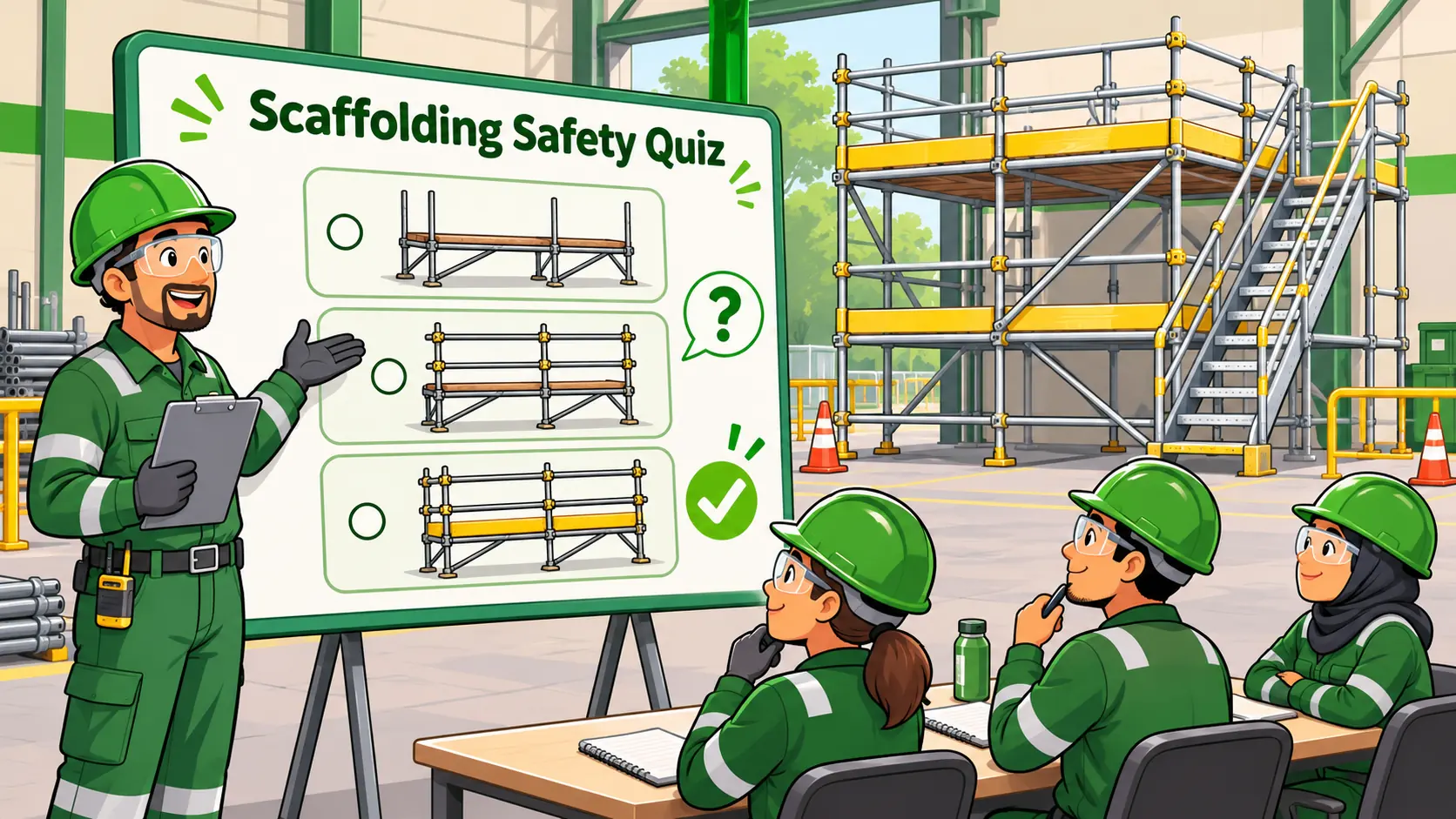
What should a worker confirm before using a scaffold?
Question 2 of 25
Under US OSHA construction rules, when must a scaffold be inspected for visible defects?
Question 3 of 25
Who may alter a scaffold under OSHA construction rules?
Question 4 of 25
A guardrail obstructs delivery of materials. What should a scaffold user do?
Question 5 of 25
What is the purpose of sound scaffold foundations?
Question 6 of 25
Which item is unsuitable as an improvised scaffold support?
Question 7 of 25
Why are ties and bracing important?
Question 8 of 25
A user finds a damaged platform unit. What should happen?
Question 9 of 25
How should workers reach a scaffold platform?
Question 10 of 25
A platform is being used to store extra blocks. What must be checked?
Question 11 of 25
Why is good housekeeping important on scaffold platforms?
Question 12 of 25
What is a toe-board intended to help prevent?
Question 13 of 25
People must work below a scaffold. What should be assessed?
Question 14 of 25
Strong winds develop during scaffold work. What should happen?
Question 15 of 25
Why can adding sheeting to a scaffold require design review?
Question 16 of 25
An electrical line runs near the proposed scaffold. What is needed?
Question 17 of 25
Is a green scaffold tag alone proof that conditions are safe now?
Question 18 of 25
What should a worker do if a scaffold tie has been removed?
Question 19 of 25
Why is placing a box on a platform to gain extra height unsafe?
Question 20 of 25
What should be done about snow or ice on a scaffold platform?
Question 21 of 25
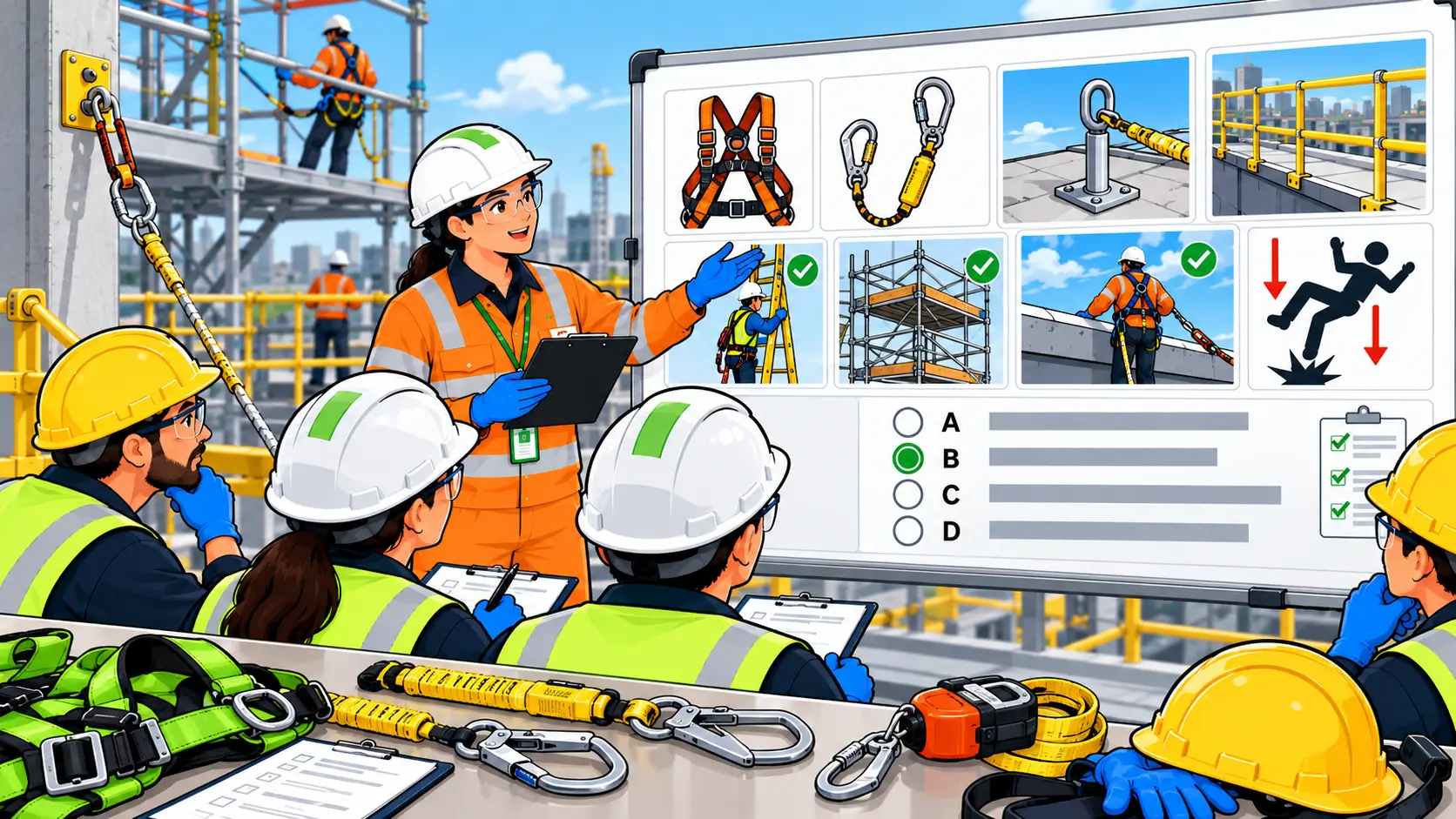
Under US OSHA construction rules, what is the general scaffold fall-protection trigger above a lower level?
Question 22 of 25
Can wearing a harness compensate for an unsafe scaffold foundation?
Question 23 of 25
What information helps users prevent scaffold overloading?
Question 24 of 25
Which training is relevant to a scaffold user?
Question 25 of 25
A scaffold has been struck by moving equipment. What should happen before reuse?
About This Quiz
A scaffold must be suitable for its purpose, erected correctly, and kept safe as work changes. This quiz concentrates on recognizing unsafe conditions and using an authorized scaffold properly. This practice resource is intended for scaffold users, construction supervisors, and access-safety learners.
Topics covered
The focus is on practical understanding and decisions relevant to everyday work. Use these learning objectives to guide your preparation.
Identify safe access, platform, edge-protection, and loading arrangements.
Recognize the importance of foundations, ties, and environmental conditions.
Know when defects or unauthorized alterations require stopping use and reporting.
This quiz contains 25 multiple-choice questions. Select one answer for each question. It has a 70% pass mark, no time limit, and repeat attempts. Review the answer explanations after submitting to understand the reasoning behind each response. Use feedback to identify topics for further study; a knowledge score is only one part of learning and does not establish practical competence.
Standards and scope
US OSHA construction guidance provides the regulatory reference. Inspection intervals, competence requirements, and tagging systems must follow the applicable rules; tag colours alone are not a universal legal system.
References
Consult OSHA scaffolding for the primary reference material. Apply the requirements relevant to the industry, equipment, and country in which the work takes place.
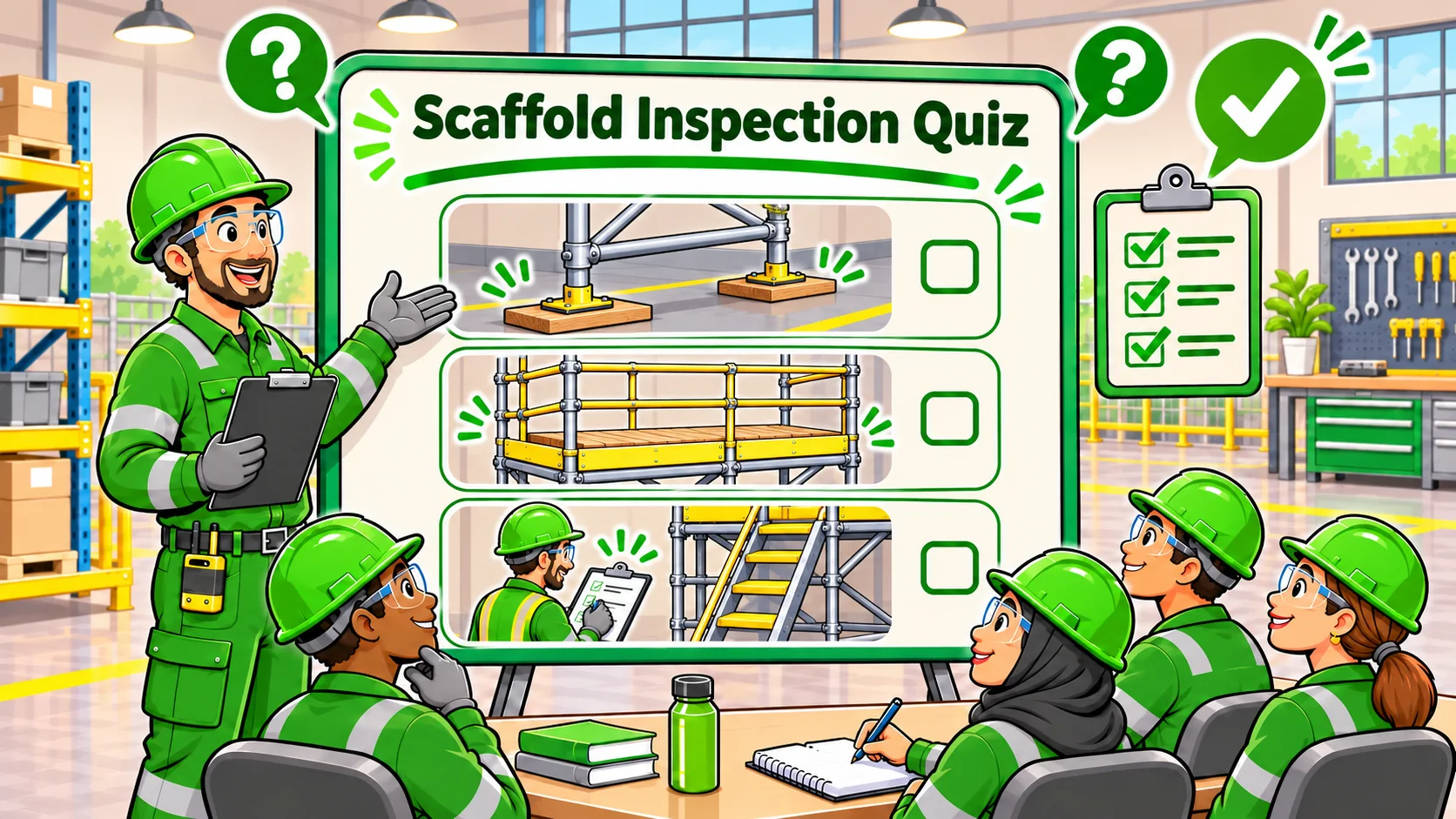
Practise identifying conditions that can make a scaffold unsafe. These 25 original questions cover foundations, ties and bracing, platforms, access, edge protection, loads, alterations and inspection records.
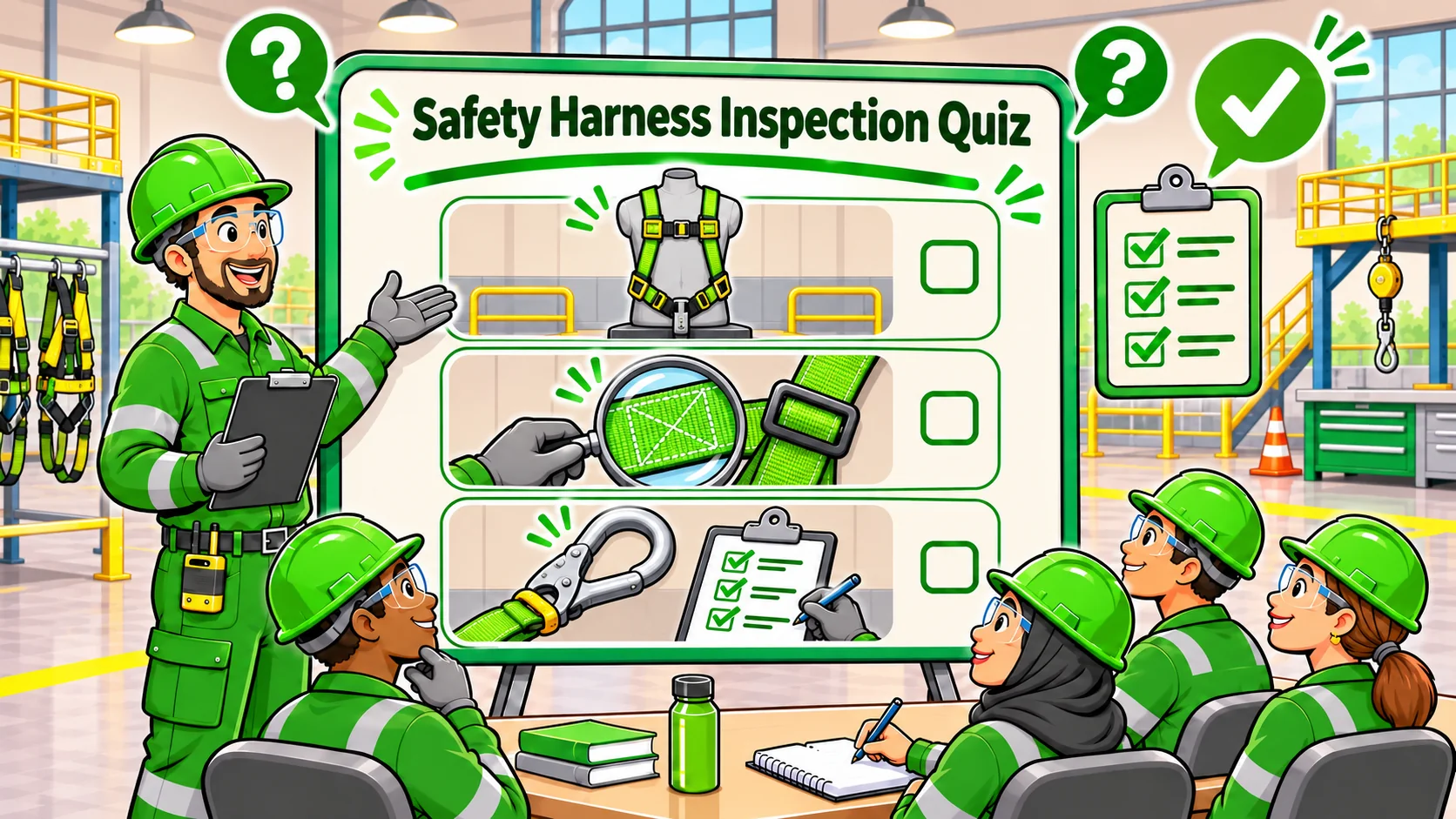
Learn what to look for before relying on a safety harness and associated fall-arrest equipment. These 25 original questions explore webbing, stitching, hardware, identification, exposure history, inspection records and quarantine.
Check how everyday workplace decisions can prevent pollution and reduce waste. These 25 original questions cover waste prevention and segregation, liquid storage, drainage, spill response, transfer responsibilities and resource use.