Underground Services Safety Quiz: Avoiding Cable and Pipe Strikes
25 questions
About 13 min
Updated
0 of 25 answered
Score 0
Question 1 of 25
What are HSG47's three basic elements of safe work near buried services?
Question 2 of 25
What do utility plans generally provide?
Question 3 of 25
Why obtain information from all relevant service owners?
Question 4 of 25
No plan is available for urgent work. What is appropriate?
Question 5 of 25
Why inspect surface features such as covers and meter positions?
Question 6 of 25
Who should use a cable locator?
Question 7 of 25
Does no locator signal prove that no buried service exists?
Question 8 of 25
What checks should a locator receive?
Question 9 of 25
When should locating be repeated?
Question 10 of 25
Why mark identified routes on the ground?
Question 11 of 25
What if markings are lost or unclear?
Question 12 of 25
Why use planned trial holes?
Question 13 of 25
What should guide the excavation method near a service?
Question 14 of 25
Why excavate carefully alongside a located service?
Question 15 of 25
Do insulated hand tools make cable contact acceptable?
Question 16 of 25
An unidentified cable appears in the excavation. What should happen?
Question 17 of 25
A cable looks old and unused. What is the safe assumption?
Question 18 of 25
Why must service isolation be verified through the appropriate arrangements?
Question 19 of 25
Can service colour alone establish identity?
Question 20 of 25
What should a permit-to-dig contribute?
Question 21 of 25
What should happen when work extends beyond the assessed area?
Question 22 of 25
A service is damaged but still appears to operate. What should happen?
Question 23 of 25
A suspected gas release occurs. What should workers do?
Question 24 of 25
What should backfilling around exposed services achieve?
Question 25 of 25
What does this independent quiz establish?
About This Quiz
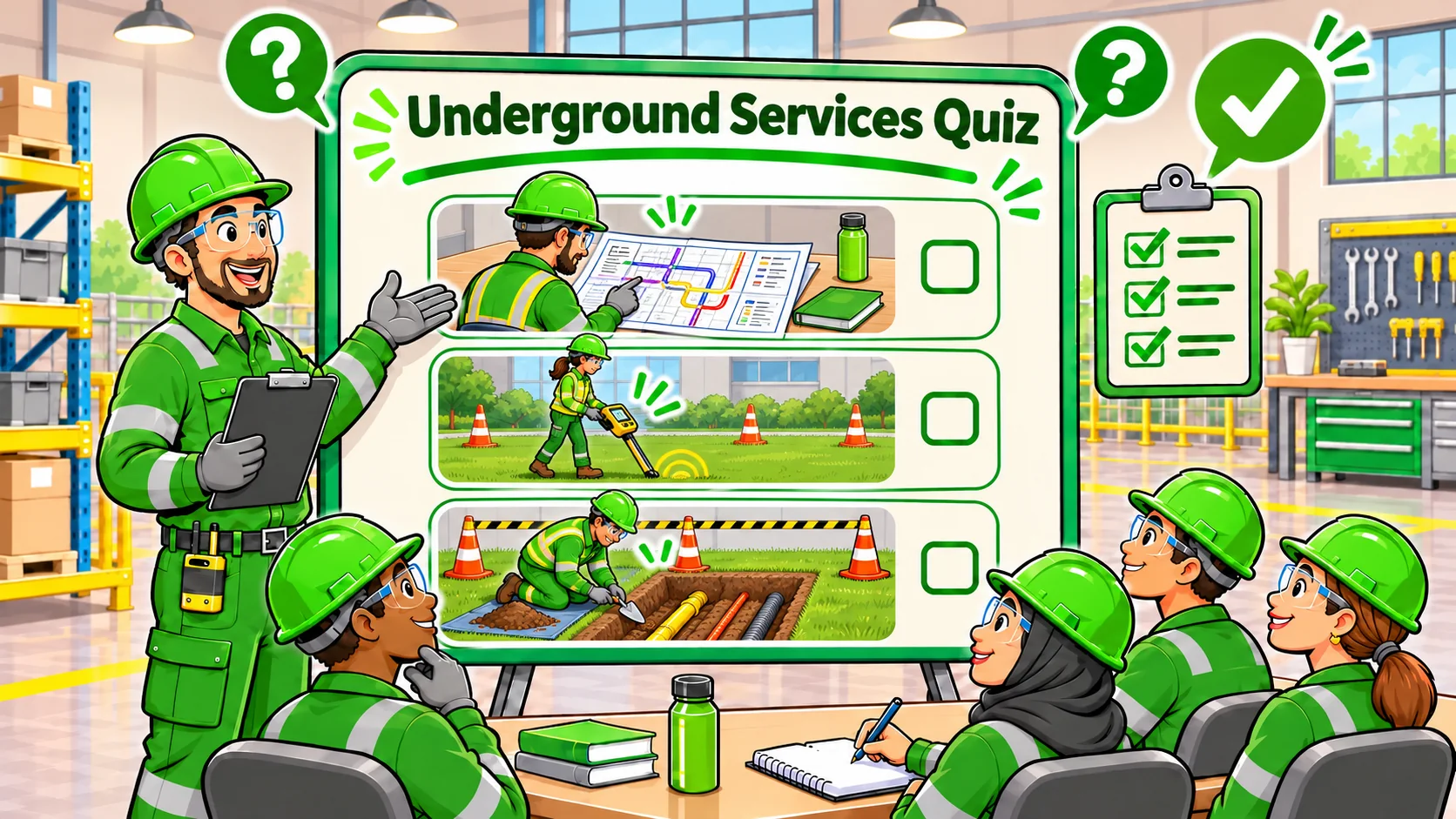
Test your understanding of avoiding cable and pipe strikes before and during excavation. These 25 original questions cover service records, locator limitations, repeated checks, trial holes, safe exposure, authorisation, damage reporting and service protection.
Scope and independent practice
Independent knowledge practice, not a locator qualification, permit to dig or confirmation that any area is clear. Uses HSE HSG47 guidance for Great Britain. Follow current local rules, service-owner requirements and the site-specific safe system. A blank plan, no locator signal or apparently abandoned cable does not establish safety.
How to use this quiz
Choose one best answer and review the explanation. The practice pass mark is 70%, answers are shuffled and retakes are available. Planning, locating and identifying services, and safe excavation work together. Changed or uncertain conditions require reassessment; do not attempt utility repairs beyond your authority.
Primary safety guidance
Reviewed on 15 November 2026. Check current local requirements and procedures before applying the learning.
Excavation hazards extend beyond a trench collapse. This quiz covers planning, ground conditions, nearby services and loads, access, and the checks needed when conditions change.
Practise recognising the decisions that prevent uncontrolled collapse and exposure during demolition. These 25 original questions cover survey information, load paths, sequencing, temporary works, debris, utilities, hazardous materials and protection of neighbouring areas.
Check the decisions that prevent falls from and through roofs. These 25 original questions cover fragile surfaces and rooflights, safe access, edge protection, temporary loading, weather, personal protection systems and rescue readiness.
Check the choices that keep a mobile scaffold tower stable and its users protected. These 25 original questions cover competent assembly, compatible parts, base support, stabilisers, protected access, loading, movement and inspection.